22 Front Yard Layout Tricks With the Golden Ratio for Effortless Curb Appeal
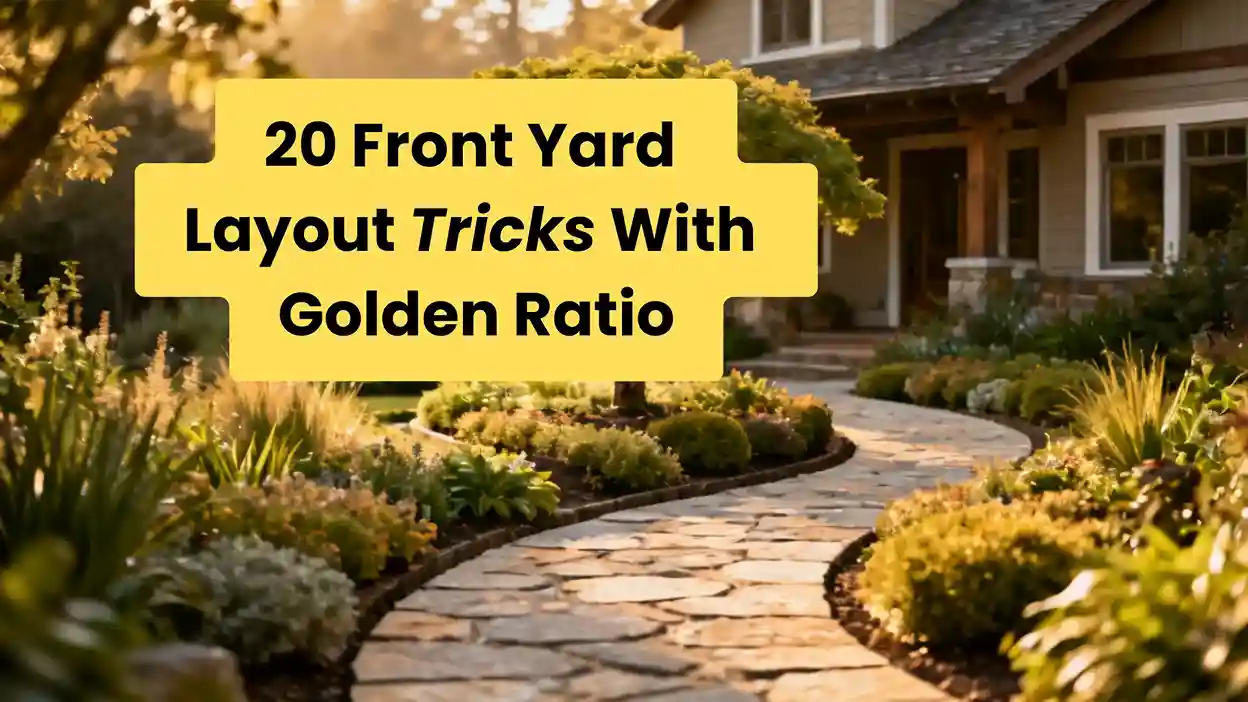
Front Yard Layout Tricks With Golden Ratio. The secret behind every landscape that looks impossibly perfect the front yards that make you stop your car and stare is rarely expensive plants or a huge renovation budget. Most of the time, it’s proportion. Specifically, front yard layout tricks with the golden ratio: nature’s own mathematical blueprint for beauty. The golden ratio, approximately 1:1.618, appears throughout nature in nautilus shells, flower petals, tree branching, and the human face, creating an innate sense of harmony and rightness that we perceive as beautiful even without consciously recognizing why. Apply these 22 front yard layout tricks with the golden ratio to your landscape and create curb appeal that looks professionally designed, effortlessly proportioned, and genuinely extraordinary. Landscape design planning apps and grid mapping tools let you design your front yard layout to golden ratio proportions before spending a single dollar on plants or materials. The front yard sets the first impression for the entire home. These layout tricks apply the same principles behind great home decorating ideas to the space everyone sees first.
This post contains affiliate links. As an Amazon Associate, I earn from qualifying purchases. If you buy through these links, I may earn a small commission at no extra cost to you.
Why This is Top of Mind
Most front yards that feel “off” or uninspiring aren’t suffering from a lack of plants or a bad color scheme. They’re suffering from proportion problems: beds that are too narrow, pathways that are too wide, trees planted in the wrong spot, or a focal point that competes with everything around it rather than commanding the space. The golden ratio solves proportion problems by providing a natural, mathematically grounded framework for every design decision you make. Front yard layout tricks with the golden ratio work because they align your design choices with the same proportional system found throughout the natural world, creating landscapes that feel instinctively, deeply right without the observer ever needing to know why. Layout is the foundation; once you have the structure right, browse all our outdoor decorating ideas to layer in the plants, materials, and color that bring it to life.
1. Apply the Golden Ratio to Pathway Width

Your front walkway width should relate to the visual width of your home’s front facade in golden ratio proportions. As a practical guideline, a front pathway should be approximately 1.618 times wider than your garden border width on each side. If your border is 24 inches wide, your pathway should be approximately 39 inches wide. This ratio creates a walkway that feels perfectly balanced within the landscape: not too narrow to feel cramped, not so wide that it dominates the planting beds on either side. Among front yard layout tricks with the golden ratio, pathway proportioning is the single change that most immediately improves the visual quality of an average front yard design. A basic garden measuring wheel or long tape measure makes calculating these proportions accurate rather than eyeballed, which matters more here than it might seem since a few inches off can be the difference between “balanced” and “slightly wrong” in a way most people can sense without being able to name it. If your plans include a greenhouse or any freestanding structure, these backyard structure placement ideas will help you site it so it enhances rather than overwhelms the yard.
EDITOR’S PICK
🛒Garden Measuring Wheel
Zozen measuring wheel with 9,999.11‑ft capacity, curved/straight accuracy, one‑key reset, TPR tires, ergonomic handle, and backpack.
(paid link)
2. Golden Spiral Planting Bed Layout
Use the golden spiral, derived from the Fibonacci sequence, to determine the shape and flow of your front yard planting beds. A golden spiral curves outward from a tight center point, gradually widening as it unwinds, and this shape naturally creates planting beds with a strong focal point at the tight end that gracefully widen outward from there. Lay a garden hose in a golden spiral curve to determine the bed shape before digging, adjusting the curve by eye until it feels right rather than trying to calculate exact coordinates. This is one of the more advanced but visually stunning front yard layout tricks with the golden ratio, creating planting beds whose organic curves feel both naturalistic and intentionally designed at the same time a combination that’s genuinely hard to achieve any other way.
3. Tree Placement Using the Rule of Thirds
Place a single specimen tree at the golden section point, one-third of the way from either the left or right boundary of your front yard rather than dead-center. The golden ratio and the rule of thirds are closely related, and this off-center placement creates dynamic visual tension that’s far more interesting than a centered tree ever manages. A tree placed dead-center in a front yard divides the space equally and feels static, almost like an afterthought despite being the most prominent living feature in the yard. One placed at the golden section instead creates a natural focal point that draws the eye and gives the landscape a genuine sense of composition and movement. This is one of the most transformative front yard layout tricks with the golden ratio for yards that already have mature, established trees in place.
4. Golden Ratio Lawn-to-Garden Ratio
Determine the ideal balance between lawn area and planted garden beds using the golden ratio: your planted areas should constitute approximately 38% of your total front yard space, with lawn occupying 62%, or invert this proportion entirely in garden-heavy designs. This 38/62 split, which approximates the golden ratio, creates a visual balance between soft planted areas and open green space that almost always reads as harmonious and attractive from the street. Most problematic front yards have either too much lawn, which reads as boring and flat, or too much planting, which reads as overwhelming and cluttered rather than considered. The golden ratio lawn-to-garden split is one of the most reliable front yard layout tricks for finding the right visual balance without needing to guess or eyeball the proportion.
5. Fibonacci-Inspired Stepping Stone Pattern
Lay stepping stones in a Fibonacci sequence spacing pattern: place stones at intervals of 1, 1, 2, 3, 5, 8 inches, or scaled versions of these numbers such as 6, 6, 12, 18, and 30 inches for a full-size path. The gradually increasing spacing creates a rhythm that feels organic and naturally paced rather than mechanically uniform, the way evenly spaced stones typically read. This subtle application of the golden ratio to hardscape is one of the most refined front-yard layout tricks on this entire list. Most visitors won’t consciously notice the proportional spacing, but they’ll feel that the path flows with unusual elegance and ease even without being able to say why. Use natural flat stones or concrete steppers for the most effective result, since a consistent, flat surface matters more here than the exact material chosen.
EDITOR’S PICK
🛒Natural Flat Stones
Fibonacci-spaced stepping stones (scaled intervals like 6,6,12,18,30 inches) create an organic, naturally paced rhythm that feels more elegant than uniform spacing; use flat stones for the best effect.
(paid link)
6. Golden Rectangle Entry Porch Design
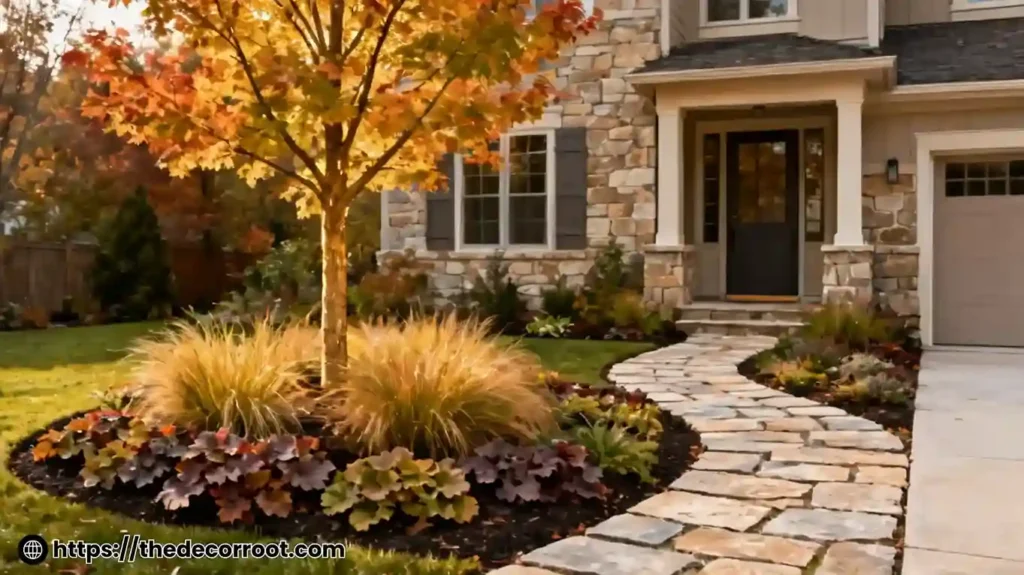
If your front porch or entry landing is square or awkwardly proportioned, reshape it or visually reframe it to approximate a golden rectangle, where the length is 1.618 times the width. A golden rectangle front porch feels perfectly proportioned for furniture placement and human movement in a way a square or oddly proportioned landing never quite manages, even when the square footage is identical. If you can’t physically change the porch dimensions, create the illusion of golden rectangle proportions through the strategic placement of furniture, potted plants, and lighting within the existing space instead. Among front yard layout tricks with the golden ratio, the golden rectangle porch application brings the most immediate lift to the entire front facade of the home, since the porch is typically the single most photographed and most scrutinized element from the street.
7. Golden Ratio Hedge Heights
When designing layered hedge or shrub plantings along your front property line or boundary, use golden ratio height progressions: if your lowest hedge layer is 18 inches, the next layer should be approximately 29 inches, and the tallest layer approximately 47 inches. These proportional height jumps between layers feel natural and visually harmonious because they mirror the proportional height relationships found in natural plant communities rather than an arbitrary, evenly stepped progression. Among front yard layout tricks with the golden ratio, layered hedge proportioning is most effectively applied to formal English or Japanese-inspired front yard designs, where clean, structured hedging is already a primary design element the rest of the landscape is built around.
8. Layered Planting in Golden Proportions
Design layered planting borders where plant heights progress in golden ratio increments from front to back: groundcovers at 6 inches, mid-border plants at 10 inches, back border plants at 16 inches, and structural shrubs at 26 inches. The ratios between these heights, roughly 6:10:16:26, approximate the Fibonacci sequence and the golden ratio simultaneously, which is part of why the resulting progression reads as so naturally correct. The result is a planting border that reads as harmoniously layered from the street, the classic “graduated height” technique, now grounded in mathematical proportion rather than guesswork. This is one of the most practically useful front yard layout tricks with the golden ratio for gardeners designing new planting borders or reworking existing ones that never quite looked right.
9. Golden Ratio Driveway-to-Green Space Ratio
Your driveway’s width should be in golden ratio proportion to the green space, lawn plus planting beds, visible beside it from the street. A driveway that’s too wide visually dominates the front yard and reduces curb appeal, while one that’s too narrow looks pinched and undersized for the home behind it. Use the golden ratio, 1:1.618, to calculate the ideal driveway-to-greenspace width ratio. If your driveway is 12 feet wide, your flanking green space should ideally be approximately 19 feet wide. Among front yard layout tricks with the golden ratio, driveway-to-green space proportioning is most relevant for homes on wider lots, where these two elements genuinely compete for visual dominance rather than one obviously taking precedence. Clean landscape edging along the driveway’s border makes this proportional line read crisply rather than blurring into the surrounding lawn.
EDITOR’S PICK
🛒Landscape Edging
Golden-ratio driveway proportion: if driveway is 12 ft wide, flanking green space should be ~19 ft wide; clean edging reinforces the line.
(paid link)
10. Focal Point Placement at Golden Mean
Every front yard needs a clear focal point: a specimen tree, a garden sculpture, a bold container planting, or a defined entry feature, and placement matters as much as the choice of feature itself. Place your focal point at the golden mean of your front yard’s visual field: approximately 61.8% of the way from the boundary you approach from, typically the street. This off-center placement gives your focal point maximum visual impact while still maintaining overall compositional balance across the rest of the yard. Among all front yard layout tricks with the golden ratio, correct focal point placement is the single change that most immediately transforms a front yard from visually confused to beautifully composed, since the golden mean placement guides the eye naturally and instinctively toward exactly where it’s meant to land.
11. Golden Ratio Color Blocking in Landscaping
When using two contrasting plant colors or textures in a front yard bed, apply the golden ratio to their proportions: 61.8% of the bed in one color or texture, 38.2% in the second. Resist the urge to split planting combinations 50/50; equal proportions create visual tension rather than harmony, which is counterintuitive but consistently borne out once you compare the two side by side. A 60/40 or golden ratio split between any two colors or textures will always read as more naturally balanced and beautiful than an even split does. Among front yard layout tricks with the golden ratio, color proportion is the most immediately applicable concept, one you can apply to any existing planting bed without digging or replanting anything, simply by adding more of the dominant color where it’s currently underrepresented.
12. Golden Spiral Water Feature Placement
If you include a water feature, fountain, birdbath, or small pond in your front yard, position it at the center point of a golden spiral overlaid on the space. Imagine tracing a golden spiral across your front yard: the tightest, innermost point of the spiral is where your water feature belongs, with surrounding plantings that naturally radiate outward following the spiral’s curve. This positioning creates a composition where the water feature feels organically placed rather than arbitrarily dropped into the landscape as an afterthought. Among front yard layout tricks with the golden ratio, water feature placement using the golden spiral creates the most naturalistic and intentional-feeling garden compositions on this entire list.
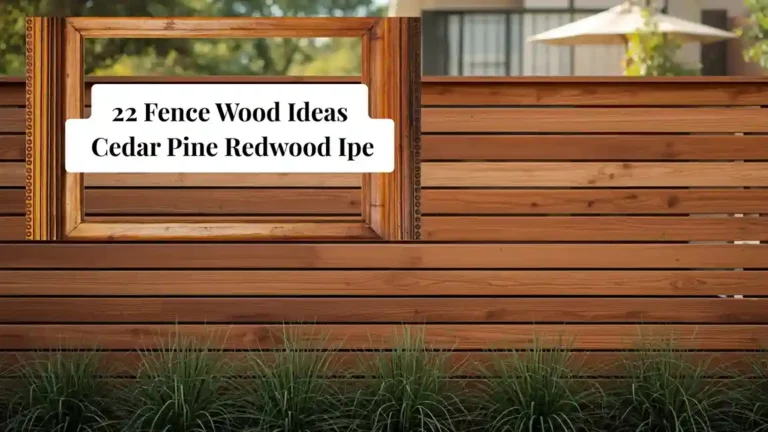
13. Golden Ratio Fence and Gate Proportions
Your front fence height should relate to your gate height in golden ratio proportions. If the fence panel is 48 inches tall, a gate or pillar feature at 78 inches 48 times 1.618) creates a naturally proportioned entry statement rather than one that feels arbitrarily taller or shorter than its surroundings. Similarly, the open space between fence posts should relate to fence panel width in the same golden ratio. These precise proportional relationships between vertical elements are what give formal front yard entry designs their sense of architectural elegance and order, even when a casual observer couldn’t explain exactly why the entry feels so put-together. A complete fence panel and gate hardware kit makes it far easier to hit these proportions precisely than building each piece separately from raw lumber.
EDITOR’S PICK
🛒Fence Panel And Gate Hardware Kit
Golden-ratio fence proportion: 48-inch panels paired with 78-inch gates (×1.618) create balanced entry statements; use a kit for precise alignment.
(paid link)
14. Canopy Tree Placement at Golden Section
Place a large canopy tree at the golden section of your front yard’s depth, measured from street to house. If your front yard depth is 40 feet, the golden section is approximately 24.7 feet from the street, 40 divided by 1.618. A tree at this position creates the most visually effective framing for your home: close enough to the street to read as a genuine front yard element, but positioned proportionally to frame and enhance the house rather than block it from view entirely. Among front yard layout tricks with the golden ratio, canopy tree placement is the most significant long-term decision on this list, since trees grow for decades; getting the golden section position right from the beginning pays dividends for the life of the home in a way few other single decisions do.
15. Golden Ratio for Seasonal Color Rotation
When planning seasonal color plantings, annuals, bulbs, and perennials, in your front yard beds, allocate colors in golden ratio proportions: dedicate 61.8% of the bed’s color capacity to your primary seasonal color and 38.2% to secondary accent colors. In spring, that might mean 60% tulips in a dominant color and 40% in accent tones; in summer, 60% lavender and 40% salvia; in autumn, 60% ornamental kale and 40% marigolds. This proportional approach to seasonal color rotation is one of the most practical front yard layout tricks with the golden ratio, because it gives clear, actionable guidance for one of the most common front yard design questions homeowners ask: how much of each color should I actually plant?
16. Golden Mean in Hardscape vs. Softscape
The ratio of hard surfaces, pavers, concrete, and stone, to soft, planted areas in your front yard should approximate the golden ratio for the most visually balanced result overall. In a garden-forward front yard, aim for 38% hardscape and 62% softscape; in a more minimal, contemporary design, these ratios can be inverted entirely. Hardscape-heavy front yards tend to feel cold, utilitarian, and unwelcoming, while softscape-heavy yards can feel untamed or overgrown if the balance tips too far the other direction. The golden ratio between hardscape and softscape is one of the most reliable front yard layout tricks for creating a front yard that feels both functional and genuinely beautiful from the moment guests arrive at the curb.
17. Golden Ratio Mulch Bed Sizing
Size your mulched planting beds in golden ratio proportions relative to the total planted area of your front yard. A bed that’s too narrow relative to the lawn panel it borders looks weak and insignificant, while one that’s too wide overwhelms the overall composition and crowds out the lawn entirely. Apply the 1:1.618 ratio to bed-width-to-lawn-width relationships. If your lawn panel is 15 feet wide, the flanking beds should be approximately 9.3 feet wide 15 divided by 1.618. Among front yard layout tricks with the golden ratio, bed sizing is the most overlooked application on this entire list, yet correctly proportioned beds make the single largest visual difference in how balanced and designed a front yard appears overall. A simple landscape bed edging kit helps hold these proportions cleanly in place once you’ve calculated them, rather than letting bed lines drift over successive seasons of mulching.
EDITOR’S PICK
🛒Landscape Bed Edging Kit
Golden‑ratio planting beds (15‑ft lawn → 9.3‑ft beds) are the most overlooked but highest‑impact front‑yard layout trick; edging kits keep proportions intact.
(paid link)
18. Asymmetric Balance Using Golden Ratio
Achieve visually satisfying asymmetric balance in your front yard by placing elements of different visual weights at golden ratio distances from the center of the composition. A heavy element, such as a large tree, boulder, or mass of shrubs, placed 38% from the center should be balanced by lighter elements, like smaller plants or lower groundcovers, placed 62% from the center on the opposite side. This asymmetric golden ratio balance is the hallmark of naturalistic garden design, and it’s part of why Japanese-influenced gardens manage to look simultaneously dynamic and perfectly calm at once. Among front yard layout tricks with the golden ratio, asymmetric balance is the most sophisticated application on this list, and it consistently produces the most naturally beautiful results once a homeowner gets comfortable with the underlying logic.
19. Photography-Ready Curb Appeal with Golden Ratio
Design your entire front yard composition with the golden ratio of the photographic frame in mind. When viewed through a standard smartphone camera frame, your front yard should have its strongest visual element the front door, a specimen tree, or a dramatic planting positioned at the golden ratio point of the frame, approximately 61% from the left or right edge. This is the same compositional technique professional photographers use instinctively without necessarily naming it as the golden ratio at all. Designing your front yard to look extraordinary in photographs ensures it photographs beautifully for real estate listings, social media posts, and, most importantly for many homeowners, Pinterest. Among front yard layout tricks with the golden ratio, designing for photographic composition is the most directly relevant application for anyone who wants maximum curb appeal in the digital age.
20. Golden Ratio Window Box and Planter Proportions
Window boxes and freestanding planters near the entry should be sized in golden ratio proportion to the window or door frame they sit beneath, rather than chosen purely by what happens to be available at the garden center. A window box roughly 61.8% of the width of the window above it reads as considered and architectural, while one that’s noticeably wider or narrower can subtly throw off the entire facade’s sense of proportion even when nothing else about the entry has changed. This is a small-scale application compared to several others on this list, but it’s also one of the cheapest and fastest to correct, since swapping a mismatched planter for a properly sized one takes an afternoon rather than a full season of planning and installation.
21. Golden Ratio Outdoor Lighting Placement
Path lights and accent lighting fixtures placed at golden ratio intervals along a walkway or bed edge create a more natural, less mechanically even rhythm than lights spaced at identical, uniform distances. Rather than placing fixtures every three feet exactly, vary the spacing using golden ratio proportions, closer together near the highest-traffic entry point and gradually widening further from the house, echoing the same spiral logic used elsewhere in this list. This also has a practical lighting benefit beyond the aesthetics: tighter spacing near the entry provides more light exactly where safety and wayfinding matter most, while the wider spacing further out avoids the slightly sterile look of a runway-style, evenly lit path. A solar landscape lighting kit with individually placeable fixtures makes this variable spacing far easier to achieve than a fixed, pre-wired lighting run.
EDITOR’S PICK
🛒Solar Landscape Lighting Kit
Golden-ratio spaced path lights: closer by the entry, wider further out for natural rhythm and practical safety.
(paid link)
22. Golden Ratio Approach for Symmetrical Colonial Facades
Traditional colonial-style homes are built on strict bilateral symmetry, which can make golden ratio front yard design feel like a contradiction at first glance, since so many of the tricks above rely on intentional asymmetry. The resolution is to keep the yard’s major structural elements symmetrical, matching foundation plantings, mirrored porch containers, and a centered front walk, while applying golden ratio proportions within each symmetrical half rather than across the whole yard. A matched pair of foundation shrubs, for instance, can still use golden ratio height progression from the house wall outward on each side, preserving the formal symmetry the architecture demands while still avoiding the flat, static feeling a perfectly even, unvaried planting scheme can create. This is the approach most relevant to anyone working with a traditional or historic home style where breaking the overall symmetry outright would look out of place rather than intentional.
Layout and color work as a pair once your zones are mapped. Refine the palette with exterior color and curb appeal ideas that make the composition feel finished.
Design Roadmap
- Start by measuring your front yard’s total dimensions and sketching a simple overhead plan; even a rough one drawn by hand is enough to work from for the calculations ahead.
- From there, identify your focal point and calculate its golden section position by dividing the total depth by 1.618 to find the ideal distance from the street.
- Next, calculate your ideal lawn-to-bed ratio at roughly 38% planted to 62% lawn (or the inverse for garden-forward designs) and mark the proposed bed edges accordingly, before applying golden ratio proportions to pathway width, hedge heights, and any color blocking planned for the beds.
- Rather than tackling everything at once, implement one golden ratio change per weekend, starting with the highest-impact items, focal point placement and bed sizing, and working outward from there toward the more refined applications like stepping stone spacing and lighting placement.
Frequently Asked Questions (FAQs)
Conclusion
These 22 front yard layout tricks with the golden ratio give you a mathematical foundation for design decisions that most homeowners make by guesswork alone. From pathway proportions to focal point placement, applying the golden ratio transforms not just how your front yard looks but how it feels, creating a landscape that radiates the kind of natural harmony that stops people in their tracks. Start with one or two principles this weekend, and watch proportion change everything. Once your layout is planned, fill the beds with intention; these heuchera front yard planting ideas show how to use color and texture to make every zone pop.
📌 Love these front yard layout tricks with the golden ratio? Save this post to your Landscaping Ideas board on Pinterest and share it with anyone planning a front yard makeover!
⏱ …