24 Mud Kitchen Setup Ideas for Sensory Play Your Kids Will Love
If you are looking for a way to get your kids off screens and into the great outdoors, mud kitchen setup ideas for sensory play are exactly what you need. A mud kitchen is a simple outdoor play station where children mix, pour, stir, and create with mud, water, sand, leaves, and natural materials. It builds creativity, fine motor skills, and a love of nature, all while keeping children entertained for hours without a single battery. These 24 mud kitchen setup ideas range from weekend DIY builds to simple repurposed finds so that every family can create a magical sensory play space regardless of budget. Build your mud kitchen from the same timber you use for enclosing the yard. These fence wood ideas include weather-resistant species that work just as well for outdoor furniture and play structures.
The Purpose
Sensory play, including mud play, is recognized by child development experts as essential for early childhood brain development. A mud kitchen is proof that the best home decorating ideas are the ones that invite people, especially kids, actually to use and love the space. Moreover, A mud kitchen is just the beginning. Explore all our outdoor decorating ideas to design an outdoor space that works for the whole family.
Pallet Wood Mud Kitchen Frame
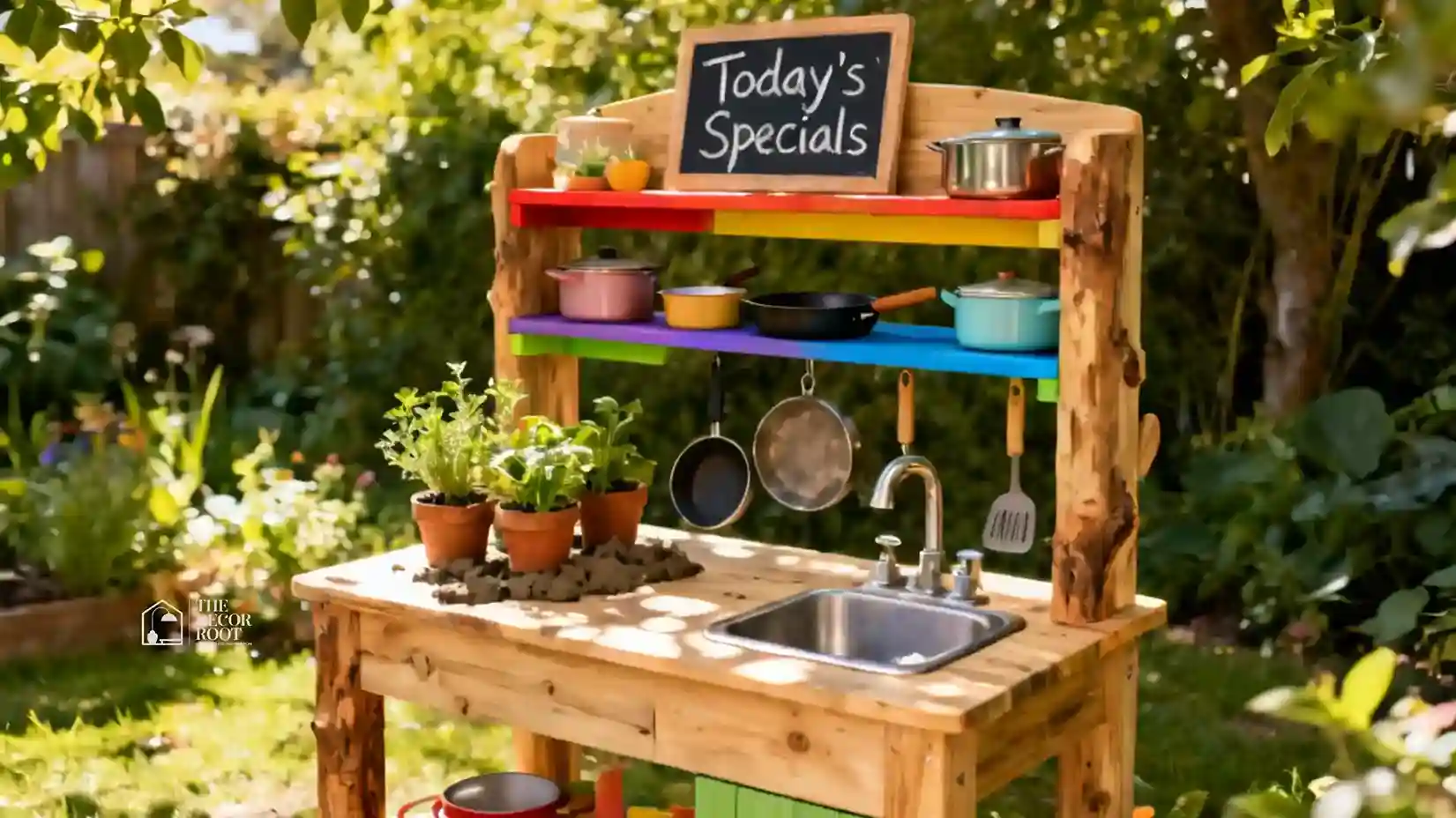
Start with the most budget-friendly of all mud kitchen setup ideas: a repurposed pallet wood frame. Source heat-treated pallets (stamped HT) from local businesses, sand all surfaces smooth to remove splinters, and build a simple kitchen frame with an upper shelf and a lower storage level. Use L-brackets to connect pallet sections and add a piece of salvaged wood as the countertop. Paint in a cheerful outdoor-safe color like sage green, mustard yellow, or soft white. Seal all surfaces with weatherproof wood sealant for longevity. This build can be completed in a single weekend for under $30 and is endlessly customizable as your child grows. Kids’ outdoor sensory play tool sets include mini gardening tools, measuring cups, and mixing bowls designed for mud kitchen sensory play.
Repurposed Cabinet Mud Kitchen
Transform a discarded kitchen cabinet or old dresser into a stunning mud kitchen setup for sensory play. Check Facebook Marketplace, thrift stores, or curbside pickups for solid wood cabinets. Remove unnecessary drawers, add a plywood countertop, and cut a circle for an inset bowl “sink.” Sand, prime, and paint in a kid-friendly outdoor color. Add knobs, hooks for hanging tools, and a small shelf above for mud kitchen accessories. This repurposed approach creates a mud kitchen that looks polished and intentional, far beyond a basic build at a fraction of the cost of a purpose-built unit.
Outdoor Sink with Running Water
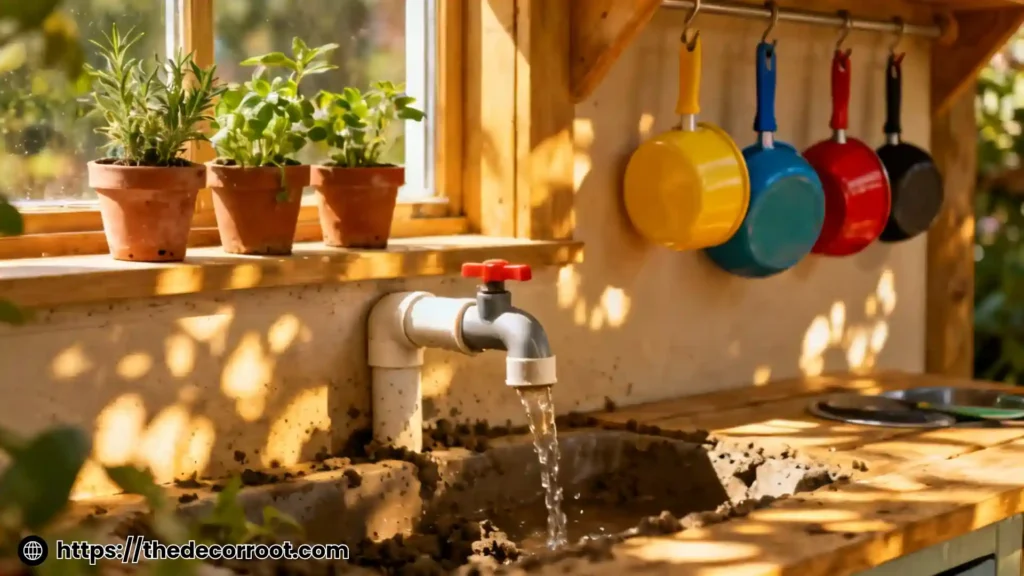
Elevate your mud kitchen setup for sensory play by adding a functioning outdoor sink with a faucet connected to your garden hose. Purchase a utility sink or use a repurposed basin mounted to the mud kitchen frame. Connect a garden hose at the rear and add a tap handle for easy child operation. A running water source completely transforms sensory play. Children can fill, pour, and experiment with water flow for hours. Ensure water drains safely into a bucket or a graveled drainage area below. This is one of the mud kitchen setup ideas that children immediately gravitate toward and use the most during outdoor play sessions.
Sensory Bin Station
Incorporate a dedicated sensory bin station into your mud kitchen design by adding a series of shallow bins or trays along the counter surface. Fill each bin with a different sensory material: kinetic sand, dried beans, pebbles, wood chips, or herb-scented soil. Children can move between stations, mixing and comparing textures while engaging all their senses simultaneously. Use weatherproof storage containers or repurposed baking tins as the bins. This modular approach to mud kitchen setup ideas for sensory play is especially effective for toddlers and younger children who benefit from multiple simultaneous sensory inputs in a structured but open-ended play environment.
Chalkboard Menu Board
Add a chalkboard panel to the back of your mud kitchen setup to create a “menu board” where children can write today’s specials and pretend recipes. Use chalkboard paint on a piece of plywood cut to size and mount it at child height. Provide chalk and an eraser so kids can update the menu daily. This simple addition dramatically enhances imaginative and dramatic play. Children love roleplaying as chefs and restaurant owners. It also sneaks in early literacy and number practice in a joyful, pressure-free way. Among mud kitchen setup ideas for sensory play, the chalkboard menu is one of the most universally loved features across all age groups.
Mud Kitchen with Herb Garden
Integrate a small herb garden directly into your mud kitchen setup by adding window box planters to the side or back panel. Plant easy-growing herbs like mint, rosemary, chives, or lavender. Children can snip herbs and add them to their mud “recipes,” creating authentic sensory experiences with real fragrance and texture. This also teaches basic gardening and plant care as a natural extension of play. Choose child-safe herbs and ensure no toxic plants are nearby. Among mud kitchen setup ideas for sensory play, an integrated herb garden is one of the most educational and enriching additions you can make for children aged 3 and up.
PVC Pipe Water Feature
Create an engaging water play element by installing a PVC pipe “water wall” on the back panel of your mud kitchen. Run a hose through a series of elbow joints, funnels, and clear tubing attached to a pegboard. When turned on, water cascades through the system. Children can rearrange the pipes to create new water pathways. This engineering-focused play element develops early STEM thinking and is irresistible to children of all ages. PVC pipe and connectors are inexpensive at any hardware store. Among mud kitchen setup ideas for sensory play, water walls generate the longest sustained play sessions and are endlessly reconfigurable.
Multi-Level Play Surface
Build a mud kitchen with two or three counter heights to accommodate children of different ages and developmental stages. A lower surface (around 18 inches) suits toddlers, while a mid-level counter (24–28 inches) works for preschool and school-age children. Include an upper shelf for display and storage. This multi-level mud kitchen setup is one of the best sensory play ideas for families with children spanning multiple age groups, as it grows with your family and reduces conflict by giving each child their own designated workspace. Use sturdy lumber and secure all levels firmly to ensure structural stability for active play.
Mud Kitchen Spice Rack with Natural Materials
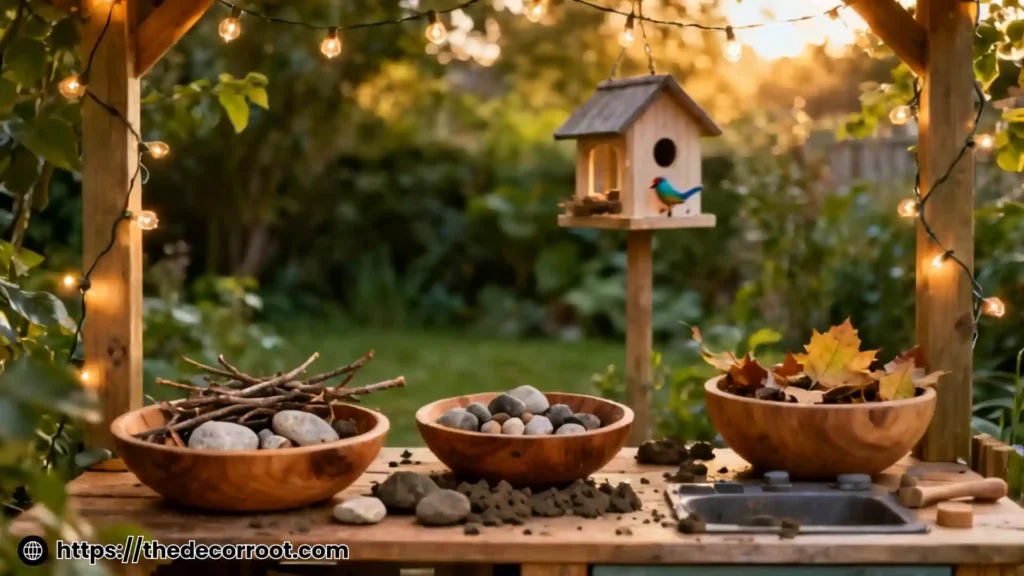
Mount a small wooden spice rack or repurposed ladder shelf to the mud kitchen wall to display glass jars filled with natural “spices” for play: dried lavender, flower petals, bark chips, coffee grounds, and pebbles. Label each jar with a hand-written tag. Children use these natural loose parts as “ingredients” in their mud kitchen recipes, building sensory awareness and creativity simultaneously. Replace contents seasonally with new natural materials, pinecones and acorns in autumn, flower petals in spring. This detail transforms a basic mud kitchen setup for sensory play into a rich, nature-connected learning environment with almost zero cost.
Seasonal Decoration Corner
Designate one corner or shelf of your mud kitchen for seasonal decorations and themed play materials. In autumn, fill with mini pumpkins, fall leaves, and pinecones. In spring, add flower seeds, soil, and sprouting trays. In winter (in mild climates), offer pine needles, berries, and twigs. In summer, feature shells, sand, and dried botanicals. Rotating seasonal materials is one of the most effective mud kitchen setup ideas for sensory play because it keeps the space fresh, stimulates curiosity, and connects children to the natural rhythms of the year, an invaluable but often overlooked dimension of outdoor early childhood education
Mud Kitchen Storage Solutions
A well-organized mud kitchen gets used. Build in smart storage from the start: hang metal S-hooks below the countertop for hanging pots and pans, mount a pegboard above the workspace for hanging tools, and add labeled baskets for different play materials. Include a covered bin for mud or soil storage. Use waterproof baskets or galvanized steel containers for rust resistance. Among mud kitchen setup ideas for sensory play, storage is the detail most often skipped and most often regretted. Organized kitchens invite more creative play and make cleanup significantly easier, meaning children (and parents) enjoy the space far more.
Weatherproof Paint Finish
The longevity of your mud kitchen setup depends heavily on the quality of your exterior paint and sealant. Use a high-quality exterior paint in a satin or semi-gloss finish for maximum moisture resistance. Apply a weatherproof wood primer first, then two coats of exterior paint. Finish with a clear outdoor polyurethane or varnish seal coat. This finish protects the wood from rain, humidity, and UV damage, extending the life of your mud kitchen dramatically. Choose colors that complement your garden or outdoor space. Sage green, terracotta, sky blue, or natural wood tones all look beautiful in an outdoor sensory play context.
Kid-Height Counter Design
The most important dimension in any mud kitchen setup for sensory play is counter height. The ideal countertop height is approximately the child’s hip level, typically 18–22 inches for toddlers and 24–28 inches for preschoolers. A counter that is too high causes hunching and frustration; too low causes stooping. Build adjustable-height legs if your children span multiple ages. Getting the ergonomics right from the beginning ensures children stand comfortably and play longer. This practical design consideration is often skipped in favor of aesthetics, but it is one of the most critical features of any functional, child-centered mud kitchen setup.
Mud Kitchen with Sand Table
Extend your mud kitchen setup for sensory play by attaching a sand table at one end. Use a simple frame built from 2×6 lumber, lined with a pond liner, and filled with play sand or kinetic sand. Position it at the same counter height as the mud kitchen for a cohesive play station. Children can move between mud, water, and sand play within one seamlessly integrated sensory zone. This combination setup is particularly powerful for early childhood settings, childcare environments, or families with multiple children, as it allows for varied simultaneous play without crowding or competition for resources.
Natural Loose Parts Display
Create a loose parts library within your mud kitchen setup by dedicating a section of shelving to a curated collection of natural objects: pinecones, stones, seed pods, shells, dried flowers, twigs, and bark. Arrange them in labelled wooden bowls or glass jars at child height. Children incorporate these materials freely into their sensory play, building creativity, sorting skills, and scientific observation naturally. Replenish and rotate the collection seasonally. Among mud kitchen setup ideas for sensory play, the loose parts approach is strongly supported by early childhood education research as one of the highest-value, lowest-cost play materials you can provide.
Mud Kitchen Roof or Canopy
Add a small roof or canopy over your mud kitchen setup to protect it from rain and sun, extending outdoor play into light rain and hot days. Use a simple lean-to design with two back posts and a sloped corrugated metal or cedar shingle roof. Alternatively, install a retractable canopy or sun shade sail overhead. A covered mud kitchen means children can play outdoors year-round regardless of weather, significantly increasing the value and frequency of use. This is one of the most practical mud kitchen setup ideas for sensory play in climates that experience frequent rain, and it also makes the kitchen look even more like a real outdoor kitchen.
Sensory Color Stations
Divide your mud kitchen countertop into color-coded sensory stations: a blue zone for water play, a brown zone for mud and soil, a green zone for plant materials, and a yellow zone for sand. Use outdoor-safe paint to delineate each zone on the countertop surface. Provide coordinating color-coded tools for each station. This organizational strategy not only keeps the space tidy but also helps younger children understand boundaries, categorization, and color concepts through play. Color-coded mud kitchen setup ideas for sensory play are particularly effective in childcare and preschool settings where multiple children use the space simultaneously, and clear visual organization reduces conflict.
Mud Kitchen with Potting Station
Combine gardening and sensory play by adding a potting station alongside your mud kitchen setup. Include a section of countertop designated for planting activities: seed trays, small pots, potting mix, trowels, and watering cans. Children can plant seeds, tend seedlings, and observe plant growth as an extension of their mud kitchen play. This integration of gardening and sensory play builds scientific thinking, responsibility, and a deep connection with the natural world. It also creates a natural narrative for mud play. Children are not just making mud pies; they are growing a garden, which gives their play a meaningful, real-world context.
Recycled Kitchen Appliances
Salvage old kitchen appliances for your mud kitchen setup. A discarded toaster, kettle, or timer adds incredible imaginative play value. Remove all cords and sharp parts, smooth any rough edges with sandpaper, and give them a coat of outdoor paint to protect from weathering. Children love using realistic-looking appliances in their mud kitchen play, as it mirrors adult behaviors and enriches dramatic play scenarios. Check charity shops, garage sales, and online marketplaces for free or low-cost appliances. Among mud kitchen setup ideas for sensory play, adding real-but-safe appliances consistently produces the longest and most engaged play sessions.
Mud Kitchen Night Light Feature
Add a weatherproof outdoor string light or small solar-powered fairy lights to your mud kitchen setup to enable evening play sessions. Wrap fairy lights around the frame or hang a small solar lantern above the countertop. Evening play in the garden with soft lighting creates a magical, sensory-rich atmosphere that is completely different from daytime play. Ensure all lighting is outdoor-rated and positioned safely away from water play areas. This simple addition extends the usable hours of your mud kitchen dramatically and makes it a special, memorable feature of your family’s outdoor space throughout the warmer months of the year.
Mud Kitchen Measurement Wall
Mount a height measurement ruler and basic measurement markings directly onto the mud kitchen frame, cups, pints, and liters marked on the wall beside the sink, and weight markings near a small scale. Children naturally begin to use measurement language and concepts in their play when the tools are visible and available. This sneaks early math learning into sensory play effortlessly. Pair with measuring cups and a small kitchen scale as standard equipment. Among mud kitchen setup ideas for sensory play, the measurement wall is one of the simplest literacy and numeracy enrichments you can add with nothing more than a permanent marker and a few minutes.
Nature-Inspired Color Palette
When painting your mud kitchen setup, choose a nature-inspired color palette that blends beautifully with your outdoor environment. Forest green, warm terracotta, sky blue, or soft clay tones all look stunning and age-proof. Avoid bright primary colors that can feel jarring in a garden setting and fade quickly in sunlight. Use two coordinating colors, one for the main frame and one as an accent on shelves or doors. A thoughtfully chosen color palette elevates the visual appeal of your mud kitchen from a basic play structure to a designed garden feature that enhances the beauty of your entire outdoor space.
Mud Kitchen with Bird Feeder Station
Incorporate a small bird feeder post at the rear of your mud kitchen setup to add a wildlife observation element to sensory play. Fill feeders with seed and encourage children to observe visiting birds while they play. This simple addition connects children to wildlife, builds patience and observation skills, and creates spontaneous science learning moments. Pair with a simple field guide to local birds and a pair of children’s binoculars. Among mud kitchen setup ideas for sensory play, the wildlife element is one of the most underused and high-value additions, transforming a play kitchen into a full nature education station.
Community or Group Mud Kitchen Setup
Design an extra-large mud kitchen with multiple workstations for group or community play, ideal for childcare settings, school gardens, or homes with multiple children and frequent playdates. Build an L-shaped or U-shaped counter with at least three to four individual workspaces, each with its own set of tools and materials. Install multiple water sources and multiple sensory bins. Large group mud kitchen setups teach cooperation, turn-taking, and collaborative play while multiplying the sensory play benefits for every child involved. This is the ultimate mud kitchen setup idea for sensory play at scale, and it is more achievable than most people expect.
Immediate Next Steps
- Day 1: Choose your mud kitchen design and gather materials (pallets, cabinet, or lumber).
- Day 2: Build or assemble the frame and attach shelving.
- Day 3: Sand all surfaces and apply weatherproof paint and sealant.
- Day 4: Add accessories, hooks, bins, a chalkboard, and sensory materials.
- Day 5: Fill sensory bins with natural materials and introduce the kitchen to your child. Watch the magic happen!
Pair a mud kitchen with a dedicated outdoor activity zone. These outdoor deck and play area ideas show how to create a cohesive backyard that keeps children engaged all day.
FAQs
Conclusion
These 24 mud kitchen setup ideas for sensory play show just how accessible, creative, and developmentally powerful outdoor mud play can be. Whether you build from scratch or repurpose what you already have, a mud kitchen is one of the most beloved gifts you can give your child, an invitation to explore, create, and connect with the natural world. Start simple, add features over time, and enjoy watching their imagination flourish. Before you build, sketch the whole yard. These outdoor layout planning tips help you carve out the perfect spot for a mud kitchen without sacrificing space for other activities.
This post contains affiliate links. If you purchase through them, I may earn a small commission at no extra cost to you.
📌 Love these mud kitchen setup ideas for sensory play? Pin this post to your Kids Activities board so you can come back to it anytime!