22 Grass-Free Front Yard Ideas That Look Lush Without the Lawn Maintenance
If you’re tired of mowing, watering, and fighting weeds, these grass-free front yard ideas are exactly what you’ve been looking for. The traditional American lawn is costly, time-consuming, and increasingly controversial in drought-prone areas. But going grass-free doesn’t mean going bare; it means going smarter. From lush ground covers to pollinator gardens and elegant gravel landscapes, there are endless ways to have a front yard that looks stunning, stays green (or beautifully doesn’t need to), and lets you reclaim your weekends. Explore the full range of outdoor decorating ideas on The Decor Root, including curb appeal, backyard design, landscaping, and pool styling, all in one place. Here are 22 ideas to inspire you, from five-minute swaps to full weekend projects.
What Makes the Difference
Traditional grass lawns consume enormous amounts of water, pesticides, and time, and that cost only grows as water restrictions tighten across more regions each year. In drought-prone areas specifically, grass is increasingly restricted by local ordinances, which is pushing what used to be a niche landscaping choice into the mainstream far faster than it might have moved otherwise. Beyond the practical concerns, grass-free front yards often support more biodiversity, require less chemical input, and actually look more interesting and intentional than a flat green lawn ever manages to. Making this shift is one of the most time-saving landscaping decisions a homeowner can make, full stop, regardless of which specific approach from this list ends up being the right fit. A well-designed front yard is one of the most impactful home decorating ideas you can invest in; it shapes how your home reads from the street before anyone even reaches the front door.
1. Replace Grass with Decomposed Granite Paths and Planted Beds
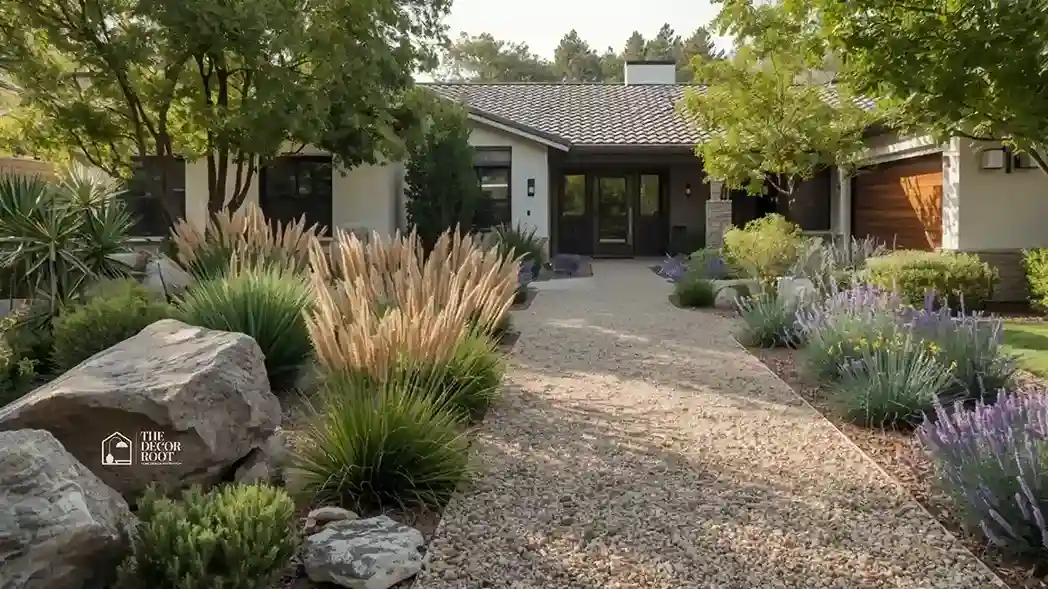
Decomposed granite, often shortened to DG, is a popular grass-free front-yard option that provides a natural, earthy look while eliminating lawn maintenance almost entirely. Use it as a base between planted beds or as a pathway connecting the driveway to the front door, and lay landscape fabric first to suppress weeds before they get a foothold underneath. The warm tan tones complement virtually every home exterior color, and DG looks especially stunning alongside lavender, rosemary, and ornamental grasses, which share its sun-loving, low-water needs. A decomposed granite starter kit with landscape fabric and edging included makes it easier to plan the project as one cohesive purchase rather than sourcing materials piecemeal from several different suppliers. If you still want the look of planted greenery without traditional turf, ornamental grass landscaping ideas offer the best of both worlds: texture, movement, and minimal maintenance.
EDITOR’S PICK
🛒Decomposed Granite Starter Kit
Decomposed granite with landscape fabric offers a low-maintenance, earthy front yard that pairs with sun-loving plants.
(paid link)
2. Create a Pollinator Garden with Native Plants
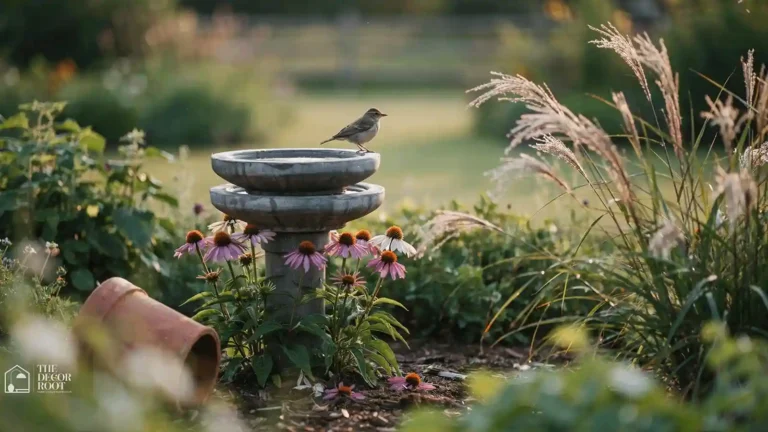
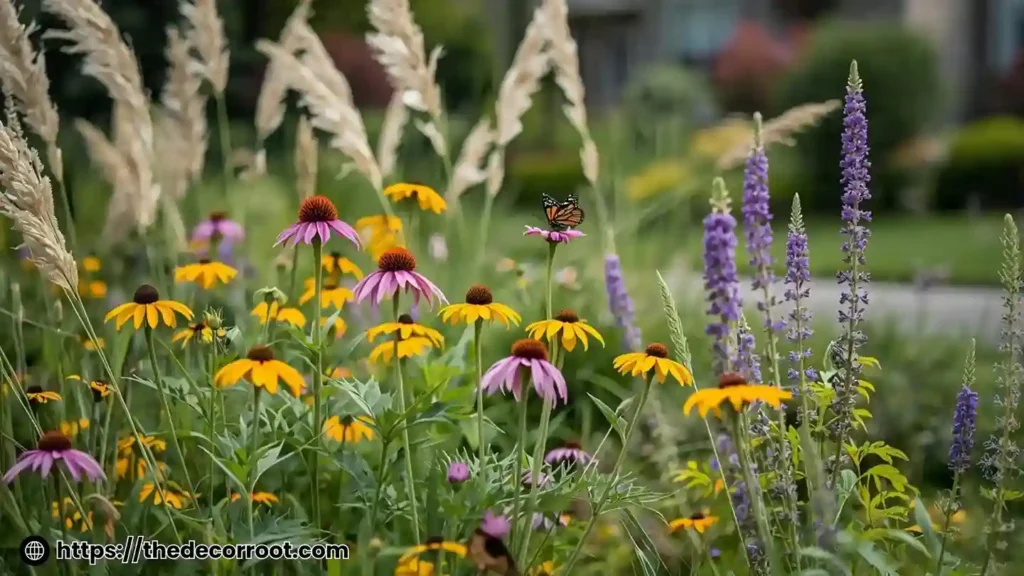
Replacing lawn with a native plant pollinator garden is one of the most beautiful and ecologically valuable grass-free front-yard ideas available, and it’s also one of the lowest-maintenance once it’s fully established. Choose plants native to your specific region: coneflowers, black-eyed Susans, milkweed, and salvia are reliable choices across much of the country for maximum color with minimum ongoing care. Once established, these plants generally require no supplemental irrigation or fertilizer at all, since they’ve evolved specifically for your regional rainfall and soil conditions rather than needing to be coaxed along artificially. They also attract butterflies and bees in real numbers, creating a living, dynamic landscape that changes visibly through the seasons rather than staying static the way a mowed lawn does year-round.
3. Install a Flagstone or Paver Patio in the Front Yard
Who says the front yard can’t have a sitting area? A flagstone patio surrounded by low groundcovers or flowering perennials is a sophisticated grass-free front yard idea that adds genuine function alongside the beauty, turning unused lawn space into somewhere people actually want to sit. Use irregular flagstone for a natural, organic look, or uniform pavers for a more modern, architectural feel that suits contemporary home exteriors better than rustic stone would. Add outdoor seating and potted plants around the edges for a welcoming, European-style front garden that invites conversation with neighbors rather than just serving as a pass-through space between the sidewalk and front door.
4. Use Low-Growing Ground Covers Instead of Grass
Ground covers like creeping thyme, sedum, clover, or dymondia are excellent grass alternatives that stay low, spread naturally, and require minimal ongoing maintenance once they’ve taken hold. Many bloom seasonally, adding color and texture that a mowed lawn simply never provides across the year. Creeping thyme in particular releases a wonderful fragrance when walked on and produces tiny purple flowers each spring, making it a genuine sensory upgrade rather than just a visual one. These are some of the most underrated grass-free front yard ideas for small spaces specifically, since ground covers can fill in gaps and edges that larger plantings would overwhelm. Pair with outdoor planter box ideas filled with drought-resistant plants for vertical interest, and the result looks intentional, layered, and far more interesting than grass ever did.
5. Try a Moss Lawn for Shady, Difficult-to-Grow Areas
Most grass-free advice assumes full sun, but moss solves the opposite problem: the shady, root-filled patch under a mature tree where grass has always struggled anyway. Moss thrives in exactly the conditions that make grass fail: low light, compacted soil, and consistent moisture, and it creates a genuinely striking, velvety green carpet that most people have only ever seen in photographs of Japanese gardens. It requires no mowing at all, ever, and once established it needs only occasional watering during extended dry spells rather than a regular irrigation schedule. This is one of the more specialized entries on this list, since moss won’t tolerate foot traffic or full sun well, but for the specific shady problem area many yards already have, it’s a genuinely elegant, low-effort solution.
6. Design a Zen-Inspired Gravel Garden
A gravel garden with carefully placed stones, ornamental grasses, and minimal plantings creates a serene, meditative front yard that requires almost zero ongoing maintenance beyond the occasional raking or weed check. Use raked gravel or smooth river rock around a few statement plants a Japanese maple, ornamental grasses, or a sculptural agave rather than filling the space with dense planting, since restraint is what makes this style read as intentional rather than simply empty. This grass-free front yard idea photographs beautifully and feels fresh, modern, and considered in a way few other low-maintenance options manage. A basic zen garden rake and gravel tool set makes the occasional maintenance genuinely enjoyable rather than a chore, turning the raking itself into part of the appeal.
EDITOR’S PICK
🛒Zen Garden Rake And Gravel Tool Set
Raked gravel or river rock with sparse statement plants creates a low-maintenance, meditative front yard; a zen rake set makes upkeep enjoyable.
(paid link)
7. Plant a Lavender Field for Fragrance and Beauty
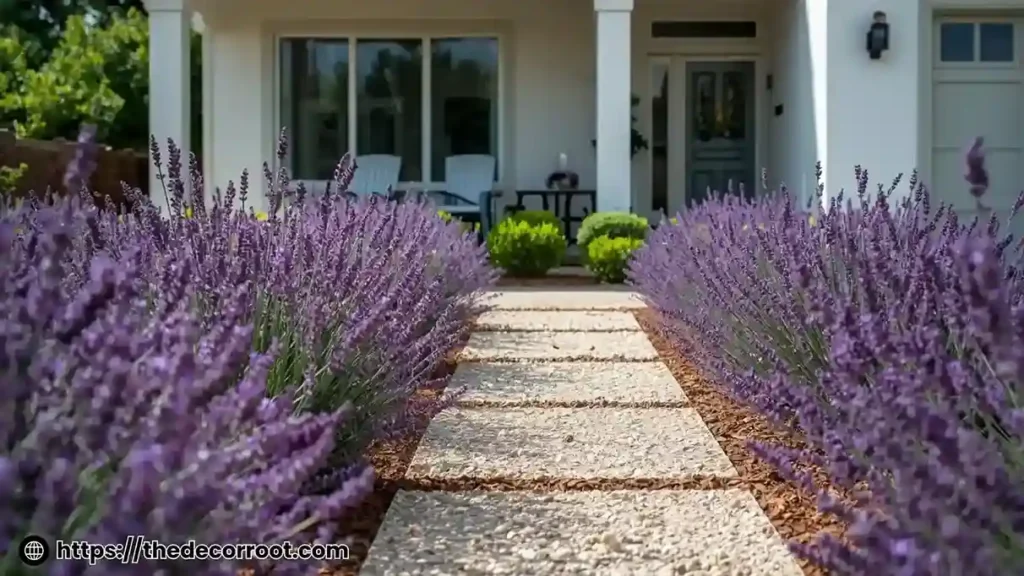
A sea of lavender is one of the most breathtaking grass-free front yard ideas for full-sun gardens, and it’s genuinely hard to overstate how different a lavender-filled front yard feels compared to a standard lawn from the street. Lavender is drought-tolerant, deer-resistant, and beloved by pollinators, which makes it one of the lower-maintenance flowering options on this entire list despite how dramatic the visual payoff is. Plant in rows or drifts across the front yard for a genuine Provençal effect, since lavender’s impact multiplies dramatically with quantity in a way many other plants don’t. The silver-green foliage looks beautiful even through winter when the blooms are gone, and the purple blooms each summer are genuinely spectacular against a backdrop of white gravel or decomposed granite.
8. Establish a Clover Lawn as a Living Green Alternative
For homeowners who want something that still looks and functions like a traditional lawn soft underfoot, uniformly green, walkable but without grass’s water and chemical demands, clover is the closest substitute available. Clover stays low without mowing, fixes its own nitrogen in the soil (which actually improves soil health over time rather than depleting it), and tolerates moderate foot traffic far better than most of the other options on this list. It also flowers periodically, drawing in bees and pollinators the way a mowed grass lawn never does, adding a layer of ecological benefit on top of the practical maintenance savings. This is one of the easiest transitions for anyone nervous about a dramatic visual change, since clover reads as “lawn” from a distance while requiring a fraction of the upkeep.
9. Install Artificial Turf for a Perpetually Perfect Look
High-quality artificial turf has come a long way in recent years and now looks remarkably realistic, close enough that most passersby won’t clock it as artificial from the sidewalk. For homeowners who love the look of a traditional lawn without any of the maintenance, this is a premium grass-free front yard idea worth the higher upfront investment. Modern turf is pet-friendly, entirely drought-proof, and lasts fifteen to twenty-five years depending on quality and installation, which changes the cost calculation considerably once it’s spread across that lifespan. While the upfront cost is meaningfully higher than most other options on this list, the elimination of water bills, mowing, and chemical treatments makes premium artificial turf genuinely cost-effective over the long term for anyone planning to stay in the home for years rather than a season or two.
EDITOR’S PICK
🛒Premium Artificial Turf
Realistic, low‑maintenance artificial turf is pet‑friendly, drought‑proof, and lasts 15–25 years; higher upfront cost pays off over time.
(paid link)
10. Build Raised Planting Beds Across the Front Yard
Raised beds filled with flowering perennials, edible plants, or ornamental shrubs create a structured, intentional grass-free front yard that’s both beautiful and genuinely productive rather than purely decorative. Use cedar, corrugated metal, or stone for the bed walls, choosing a material that complements your home’s existing exterior finishes rather than clashing with them. Fill with quality soil and choose plants with multi-season interest, so the beds don’t go visually flat the moment spring blooms fade. This is an especially popular grass-free front yard idea for families who want to combine ornamental beauty with genuinely edible gardening, since raised beds make it far easier to control soil quality than planting directly into whatever the yard’s native soil happens to be.
11. Create a Succulent Rock Garden for Extreme Low Maintenance
Succulents and rock gardens are a natural pairing, since both thrive on neglect and punish overwatering far more than underwatering ever would. Arrange a mix of agave, echeveria, sedum, and other cold-hardy succulent varieties among larger boulders and gravel for a striking, textural landscape that requires watering only a handful of times per year in most climates. This is one of the most forgiving options on this entire list for anyone who travels frequently or simply doesn’t want to think about the yard between seasons, since succulents store their own water reserves and can go weeks without attention. The visual effect also tends to look more sculptural and considered than a typical planted bed, since the plant forms themselves rosettes, spikes, paddles carry more architectural interest than most flowering perennials do on their own.
12. Use Mulch Beds with Bold Plantings
Deep mulch beds with bold, architectural plants hostas, ornamental grasses, hydrangeas, or native shrubs are a classic grass-free front yard idea that works reliably in nearly any climate zone. Choose a dark hardwood mulch for contrast against the plantings, and plan to refresh it annually as it breaks down and lightens in color over the year. This approach is genuinely inexpensive to implement compared to hardscaping options like flagstone or DG, suppresses weeds naturally by blocking light to the soil beneath, and creates a lush, rich look that actually improves with each passing year as the plants mature and fill in.
13. Design a Cottage-Style Cutting Garden
For anyone who misses having a lawn mainly because it felt like “a garden,” a cottage-style cutting garden delivers the romantic, abundant feeling of a traditional garden without any grass at all. Dense plantings of zinnias, cosmos, dahlias, and other classic cutting-garden flowers create a deliberately informal, overflowing look that reads as charming rather than unkempt when done well. The practical bonus here is real: a cutting garden actually produces flowers for the house, meaning the front yard is quite literally supplying fresh arrangements throughout the growing season rather than just looking nice from the street. This is a higher-maintenance option than several others on this list, since most cutting garden flowers are annuals requiring replanting each year, but the payoff in cut flowers and color variety is proportionally larger too.
14. Try Xeriscaping for Maximum Water Savings
Xeriscaping, designing a garden around drought-tolerant plants and water-wise principles, is one of the most forward-thinking grass-free front yard ideas available, and it’s increasingly incentivized rather than just tolerated by local governments. Use a combination of succulents, ornamental grasses, native perennials, and gravel or decomposed granite as groundcover, layering textures and heights so the overall effect doesn’t read as sparse despite using relatively few plants. Many municipalities now offer rebates for xeriscaped front yards specifically, sometimes covering a meaningful portion of the installation cost, which is worth checking before starting the project rather than after. The result is a genuinely striking yard that practically takes care of itself once established, needing only occasional attention rather than a weekly maintenance routine.
15. Plant Edible Landscaping With Herbs and Vegetables
Front-yard vegetable gardening has moved well past its once-fringe reputation, and a well-designed edible landscape can look just as intentional as a purely ornamental one while also producing real food. Mix rosemary, sage, and thyme as structural, evergreen elements with seasonal vegetables like chard, lettuce, and peppers tucked into the gaps between them for color and productivity. The key to making this read as designed rather than haphazard is treating it like any other landscape bed, considering height, texture, and repetition rather than planting in the straight utilitarian rows a backyard vegetable patch might use. A raised garden bed kit provides the structure to keep an edible front yard looking tidy and defined rather than sprawling.
EDITOR’S PICK
🛒Raised Garden Bed Kit
Design edible front yards like ornamental beds, mix structural herbs with seasonal vegetables, and use a raised kit for a tidy, intentional look.
(paid link)
16. Use Boulders and Stone as Landscape Accents
Large boulders and stone accents add permanence and visual weight to a grass-free front yard in a way that plants alone can’t quite achieve, especially in the first year or two before plantings have fully matured and filled in. Placed thoughtfully among gravel, ground cover, or mulch, boulders read as a natural, geological feature rather than an obvious landscaping decision, particularly when sourced in a stone type that’s native to your region rather than an obviously imported variety. This is also one of the only entries on this list that requires zero ongoing maintenance whatsoever once installed, since stone doesn’t need water, doesn’t die back seasonally, and doesn’t need replacing. The main consideration is scale: a boulder that’s too small looks like landscaping gravel, while properly sized stone reads as a genuine feature.
17. Install a Vertical Garden or Living Wall Feature
For front yards with limited horizontal space, or simply for homeowners who want a genuine focal point, a vertical garden or living wall turns an underused fence or exterior wall into the yard’s main visual feature instead of an afterthought. Modular planting systems make this far more achievable than it sounds, allowing a mix of trailing plants, herbs, and flowering varieties to be arranged in a grid that can be rearranged as plants grow or as the seasonal mix changes. This approach works particularly well for smaller urban or suburban lots where a traditional expansive planting bed simply isn’t an option due to space constraints. A modular living wall planter system makes installation and plant swaps considerably easier than building a custom vertical structure from scratch.
EDITOR’S PICK
🛒Modular Living Wall Planter System
A modular living wall turns underused walls into flexible, space-saving focal points for smaller yards.
(paid link)
18. Build a Rain Garden for Stormwater Management
A rain garden is a shallow, planted depression designed to capture and absorb rainwater runoff from a roof, driveway, or sloped section of yard, turning a drainage problem into a genuine landscape feature rather than just solving it invisibly underground. Fill it with plants that tolerate both periodic flooding and dry spells; many native perennials handle this range surprisingly well, and the result functions as a small, ecologically active garden that also protects your foundation and reduces runoff into storm drains. This is one of the more functionally sophisticated ideas on this list, genuinely solving a drainage issue many homes have without ever addressing it, while still reading as an intentional, attractive garden feature from the street rather than a utility fix.
19. Plant a Meadow-Style Wildflower Lawn
A wildflower meadow trades the uniform, manicured look most people associate with a “finished” yard for something looser, more seasonal, and considerably lower-maintenance once established. A regionally appropriate wildflower seed mix, sown across the full front yard or just a defined section of it, produces a shifting display of color through spring and summer that a static planted bed can’t replicate. This does require some upfront patience, since a wildflower meadow typically needs a full growing season or two to fill in and look intentional rather than patchy, and an annual cutback in late fall or early spring to reset for the following year. For homeowners comfortable with a less controlled aesthetic, this is one of the lowest-cost, most ecologically valuable options on this entire list.
20. Add a Stepping Stone Pathway Through Groundcover
A simple stepping stone path set into a bed of low groundcover like creeping thyme or dymondia solves the practical problem of how to actually walk through a grass-free yard without compacting the plantings underfoot. Space the stones for a natural walking stride, and let the groundcover fill in the gaps between them over a season or two until the path reads as though it’s always been there. This is one of the more affordable entries on this list, since it requires only the stones themselves and whatever groundcover is already planned for the surrounding bed, and it adds a genuine sense of destination and movement to a front yard that might otherwise read as a static planting.
21. Create a Dry Creek Bed as a Design Feature
A dry creek bed is a winding channel lined with river rock and boulders, designed to look like a natural waterway even when it’s bone dry most of the year, is both a functional drainage solution and a striking design feature in its own right. It works especially well on yards with any slope, directing runoff during heavy rain while looking entirely intentional the rest of the time rather than like an obvious drainage ditch. Line the edges with ornamental grasses or drought-tolerant perennials to soften the transition between the rock and surrounding plantings. A curated river rock and dry creek bed stone set in varied sizes creates a far more natural, layered look than a single uniform gravel size ever manages.
EDITOR’S PICK
🛒River Rock And Dry Creek Bed Stone Set
A river‑rock dry creek bed with varied stone sizes directs runoff on sloped yards and adds natural design; soften edges with ornamental grasses or perennials.
(paid link)
22. Line the Foundation With an Ornamental Grass Border
A continuous border of ornamental grasses running along the home’s foundation is one of the simplest ways to soften the transition between house and yard without committing to a full grass-free redesign of the entire front yard at once. Varieties like feather reed grass, blue fescue, or fountain grass add movement and texture that stays interesting through fall and winter, when most flowering perennials have already died back for the season. This is a strong starting point for anyone easing into a grass-free yard gradually rather than all at once, since a foundation border can be installed in a single weekend and expanded outward in later phases as budget and ambition allow.
A grass-free front yard is one of the most effective curb appeal transformation ideas for any home. It signals intentional design from the moment someone pulls up, which a mowed lawn, however well-kept, simply can’t communicate on its own.
Quick Action Plan
- Start in week one by choosing your design direction, a pollinator garden, a gravel and stone approach, a groundcover replacement, or any combination from this list, and sketching a simple plan for how it will be laid out across the yard.
- In week two, kill the existing grass using cardboard sheet mulching or solarization rather than resorting to chemical herbicides, giving the process the two to four weeks it typically needs to fully work.
- Week three is for installing landscape fabric and your chosen base material, whether that’s gravel, mulch, or decomposed granite, since this layer needs to go down before any plants go in the ground.
- Use week four to plant your chosen selections and add finishing touches like a stepping stone path, a boulder accent, or edging, and from month two onward, water new plants regularly until they’re established before gradually reducing irrigation to the minimal, long-term maintenance level most of these options settle into.
FAQs
Conclusion
Grass-free front yard ideas have never been more beautiful, more practical, or more in style. Whether you choose a fragrant lavender field, a gravel zen garden, or a native plant meadow, you’ll save time, save water, and gain a front yard that’s uniquely, memorably yours. Start with one section and watch the transformation unfold.
⏱ …