23 Laundry Closet Ideas That Fix Daily Chaos for Good
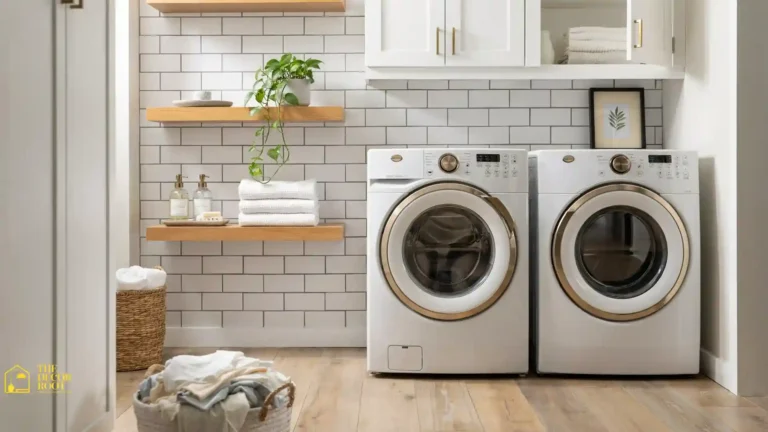
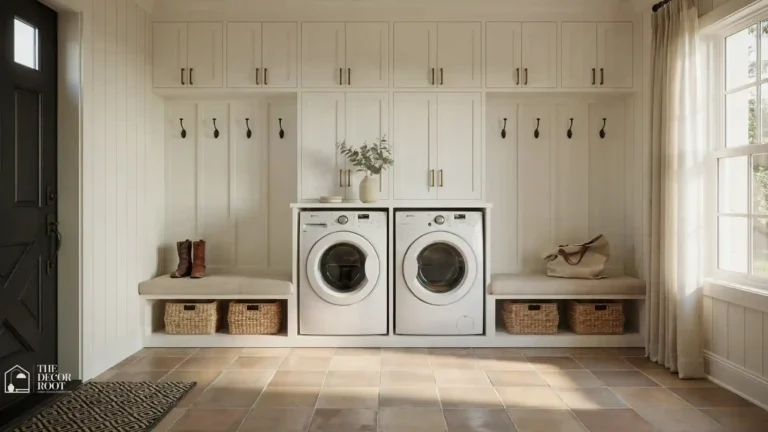
Your laundry closet is the room you never show guests, but it controls your mornings more than your alarm clock does. If you’re wading through tangled hangers, losing single socks into the void, or folding clothes on a dryer lid because there’s literally nowhere else, you already know the chaos is costing you. These 23 laundry closet ideas aren’t about aesthetic upgrades for their own sake. They’re about eliminating the daily friction that makes laundry feel like punishment. Whether you’re working with a slim bi-fold-door closet or a slightly more generous alcove, every idea here is actionable, budget-aware, and designed to stick. A laundry closet that fixes daily chaos is one of the most practical home decorating ideas available, because solving the organization and workflow of a two-foot-deep closet has a bigger positive effect on daily life than decorating almost any other space in the home. A laundry closet can be extended into a mini mudroom by adding a hook rail above and a shoe shelf below. These laundry and utility storage ideas show how combining both functions in a tight space actually resolves the daily chaos of coats, bags, and laundry appearing in the same spot.
This post contains affiliate links. As an Amazon Associate, I earn from qualifying purchases. If you buy through these links, I may earn a small commission at no extra cost to you.
What Makes a Laundry Closet Actually Work
The difference between a chaotic laundry closet and an efficient one rarely comes down to size; it comes down to zones. Every functional closet has three: a washing zone, a drying zone, and a storing zone. When those three zones are clearly defined, even in a 30-inch-wide space, the chaos stops. The ideas below are organized with that principle in mind. A laundry closet and a small laundry room face the same fundamental constraints: minimal square footage, limited ventilation options, and the need to stack or consolidate every function. These small laundry room ideas show how to solve those problems in a slightly larger format that still applies directly to a closet configuration.
The Hidden Cost of Closet Chaos
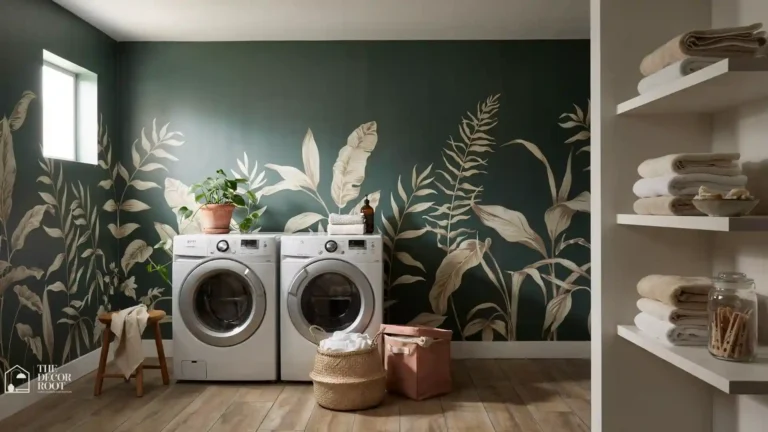
Studies on household stress consistently link cluttered utility spaces to elevated cortisol levels. Your laundry closet might feel like a minor annoyance, but if you’re fighting it daily, it’s draining mental bandwidth you need for everything else. Fixing it isn’t a luxury; it’s maintenance for your sanity. A laundry closet is the most constrained version of the laundry room design challenge. These farmhouse laundry room ideas show the full toolkit of cabinetry, shelving, and workflow solutions that scale down naturally into a closet setting. A laundry closet is the ideal place for bold wallpaper; the small surface area means even an expensive paper is affordable, and the enclosed format amplifies the pattern in a way that feels intentional rather than overwhelming. These laundry closet wallpaper ideas show which scales and motifs translate best to a confined space.
1. Stack Your Washer and Dryer Vertically
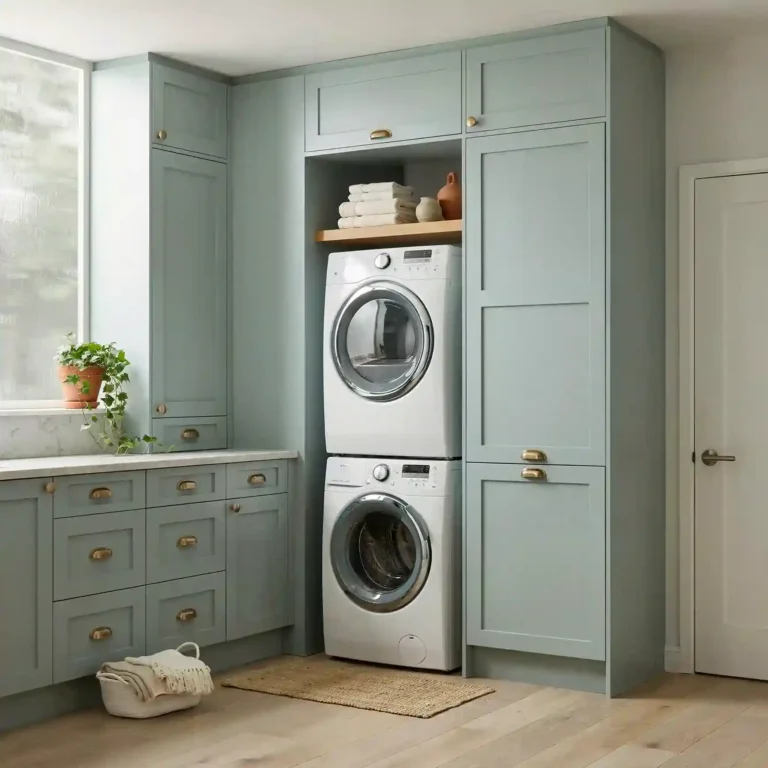
If you’re still running a side-by-side setup in a narrow closet, you’re sacrificing your most valuable real estate: floor-to-ceiling height. A stacked washer-dryer combo instantly reclaims the top half of your closet. Use that freed horizontal space for slim rolling hampers or a pull-out folding shelf. Most front-load pairs stack natively with a stacking kit, with no extra purchase needed beyond the hardware. Stackable washer-dryer kits and slim laundry pedestals with drawer storage.
2. Install a Wall-Mounted Folding Station
The number one complaint in small laundry closets: nowhere to fold. A wall-mounted drop-leaf table solves this with zero permanent footprint. Fold it flat when the washer is running; flip it down when you need a surface. Pair it with a small strip of pegboard above for scissors, lint rollers, and stain sticks all within arm’s reach.
3. Use the Full Door with Over-Door Organizers
The back of your laundry closet door is prime storage you’re almost certainly ignoring. Over-door organizers with clear pockets hold detergent pods, dryer sheets, stain removers, and small tools vertically and visibly. Choose a unit with adjustable pocket sizes so it scales with what you actually store.
4. Label Everything, Seriously, Everything
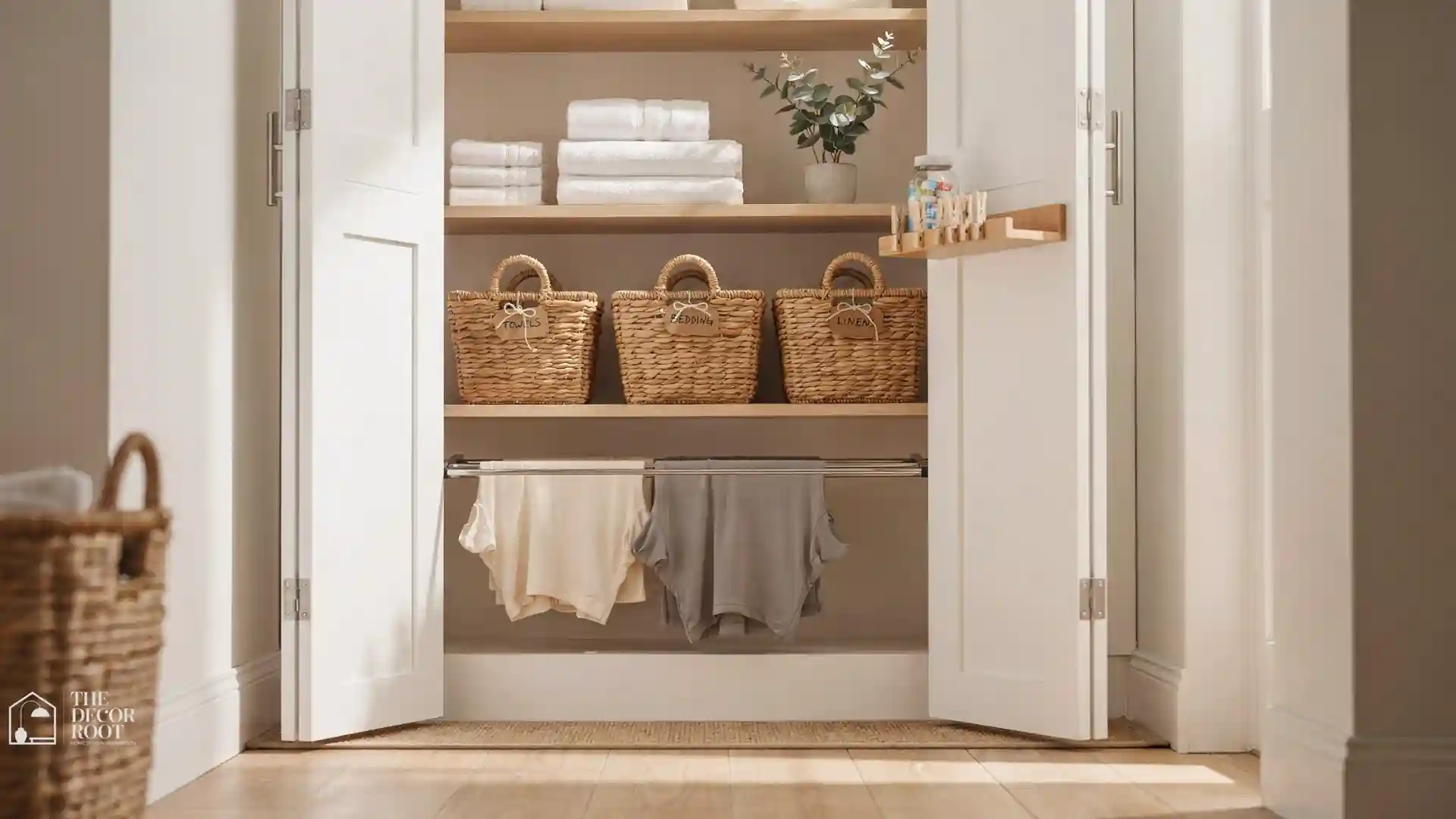
Labels are the silent enforcers of an organized laundry closet. When each bin, shelf, and hook is labeled, every member of your household knows where things go, which means things actually go there. Use a label maker for clean, washable labels on baskets. Color-code by family member for laundry sorting that runs on autopilot.
5. Add a Tension Rod for Hang-Drying
A single tension rod installed above your washer is one of the cheapest, most impactful laundry closet ideas on this list. Hang delicates directly from the washer straight onto the rod no transfer to a separate drying rack needed. It holds more than you’d think and takes under five minutes to install.
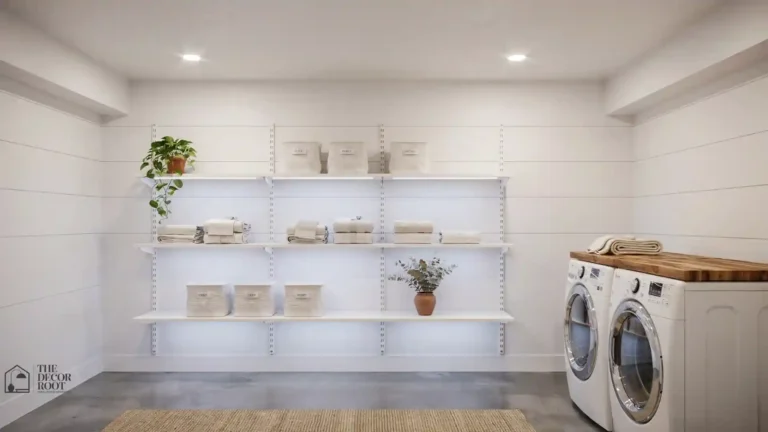
6. Swap Wire Shelving for Solid Shelves
Wire shelves are the default in most builder-grade laundry closets, and they’re terrible for actually using. Detergent bottles tip, small items fall through, and nothing sits flat. Replace them with melamine or birch plywood shelves for a stable surface, easy to wipe clean, and dramatically more useful.
7. Install Pull-Out Hamper Drawers
Built-in pull-out hamper drawers keep dirty laundry completely contained and out of sight. Two-section pull-outs let you sort darks and lights as you go, so laundry day starts already sorted. These fit neatly under a stacked washer-dryer unit and give the space a custom, built-in feel.
8. Use Slim Rolling Carts Between Appliances
If there’s even four inches between your washer and the wall, a slim rolling laundry cart will fit. These narrow carts slide out for access and disappear when not in use. They’re perfect for bottles, pods, dryer balls, and all the small supplies that otherwise live in a chaotic pile on top of the machine.
9. Mount a Retractable Drying Rack
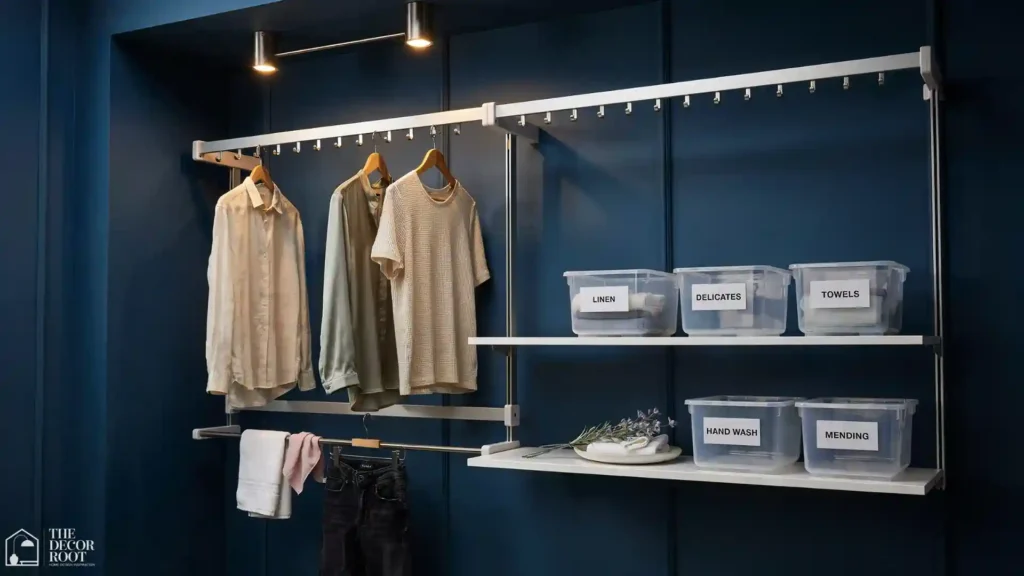
Wall-mounted retractable drying racks are the laundry closet equivalent of a fold-down Murphy bed; they hold enormous amounts when extended and take up almost no space when folded. Look for stainless-steel models rated for at least 40 lbs. Mount above the dryer to use exhaust heat for faster air-drying. Wall-mounted retractable drying racks with multiple arm tiers.
10. Dedicate a Shelf Specifically to Lost-and-Found Items
Single socks, forgotten receipts from pockets, hair ties, coins every laundry closet needs a dedicated catch-all spot for these. A small tray or shallow basket on one shelf keeps the chaos contained rather than spreading across every surface. Check it weekly and return items to their rightful owners.
11. Paint the Interior a High-Contrast Color
Most laundry closets are the same builder-white as everything else, which means nothing stands out, and finding items takes longer than it should. Paint the interior back wall a deep navy, sage green, or charcoal. The contrast makes your white towels and labeled bins pop instantly, and it makes the space feel intentional rather than incidental.
12. Add Hooks at Multiple Heights
Single-hook rows are inefficient. Install a row of hooks at shoulder height for in-progress garments, a second row at hip height for reusable bags and spare aprons, and adhesive hooks inside the door for smaller items. Multi-height hook systems triple your vertical hanging capacity without adding a single shelf.
13. Build a Shoe Cleaning Station
If your laundry closet is near an entryway, integrate a compact shoe-cleaning zone: a small brush holder, a stain pen, and a drip tray for wet shoes. This eliminates the habit of muddy shoes migrating to every other room in the house and keeps the entry-to-laundry transition clean.
14. Use Magnetic Strips for Small Metal Tools
Seam rippers, safety pins, stainless scissors, and small sewing tools are always needed and never found. A magnetic strip mounted at eye level inside the closet keeps every metal tool visible, accessible, and never buried in a drawer again.
15. Hang a Chalkboard or Whiteboard Panel
A small chalkboard panel on the inside of the closet door becomes a functional household hub: track whose laundry is in the machine, note low-stock supplies, and leave quick reminders. It costs almost nothing and eliminates the five daily ‘whose clothes are in the dryer?’ conversations.
16. Add Under-Shelf Hanging Baskets
Under-shelf hanging baskets clip onto existing shelves and create a bonus storage tier without drilling a single hole. They’re ideal for storing dryer sheets, mesh laundry bags, and folded cloth napkins. Look for coated wire baskets; they’re lightweight but sturdy and easy to wipe clean.
17. Create a Stain Treatment Station
A dedicated stain treatment zone, one shelf with your go-to spray, a stain brush, baking soda, and white vinegar means you treat stains while clothes are still in hand rather than forgetting until after the wash. This one change alone reduces ruined clothing by a measurable amount over a year.
18. Use Clear Bins So You Can See Without Searching
Opaque bins are visually tidy but functionally frustrating; you can never find what you need without opening everything. Clear acrylic bins with labels give you the organizational benefit of containers plus the visibility you need to grab things in one motion. Stack them vertically for maximum use of your shelf height.
19. Install a Compact Ironing Board Holder
If your full-size ironing board currently lives leaning against something (a wall, the washer, your hopes and dreams), a wall-mounted ironing board holder gives it a dedicated slot. Some holders include a small shelf for the iron itself, so both pieces live together and come out together.
20. Use Woven Baskets for Sorted Laundry
Woven baskets work better than plastic hampers in a visible laundry closet because they photograph well, hold their shape over years of use, and add texture that makes the space feel designed rather than purely utilitarian. Label each basket with a clip-on tag for easy relabeling if your sorting system changes.
21. Put Frequently Used Items at Eye Level
The golden zone in any storage space is eye level to just above the waist. Detergent, pods, fabric softener, and the tools you use every single laundry day should live here. Reserve upper shelves for rarely used items like spare washing machine parts, extra bulk supplies, and seasonal items.
22. Run a Power Strip Inside for Small Appliances
A portable steamer, a garment shaver, and a smart plug for scheduling your washer are all easier to use when they have dedicated power. Run a slim power strip along the back wall of the closet so everything charges and operates in place rather than being dragged to another room.
23. Add LED Strip Lighting
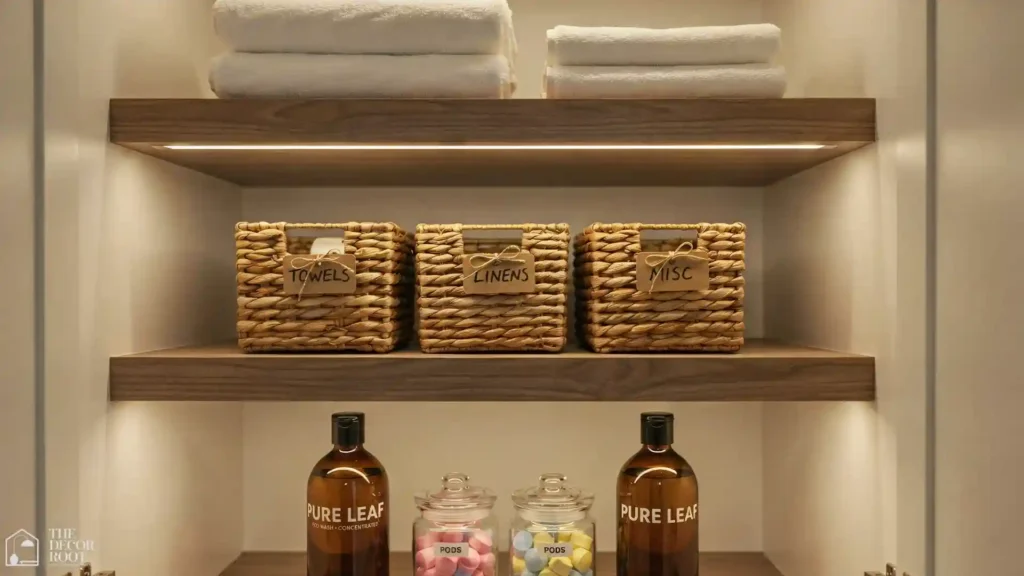
Bad lighting is the silent villain of most laundry closets. You’re sorting darks from darks in near darkness, missing stains, and misreading care labels. LED strip lighting along the underside of each shelf takes under an hour to install and changes the entire usability of the space. Opt for daylight-temperature LEDs (5000K) for accurate color rendering. LED under-shelf strip light kits and adhesive sensor lights for closets.
Quick Action Plan
- Weekend 1: Clear out the closet entirely. Sort every item: keep, donate, trash. Install new solid shelving if replacing wire.
- Weekend 2: Add labels, over-door organizer, and tension rod. Tackle the lighting upgrade.
- Week 2: Identify your three zones (wash, dry, store) and arrange remaining items accordingly.
- One month in: Evaluate what’s working and swap out one bin or hook system that isn’t pulling its weight.
FAQs
Conclusion
The right laundry closet ideas don’t just tidy a space; they remove daily friction from your entire household routine. Start with one zone, solve one real problem, and build from there. The chaos isn’t inevitable; it’s just a design problem waiting for a practical solution.
This post contains affiliate links. If you purchase through them, I may earn a small commission at no extra cost to you.
Save this to Pinterest; your future self will thank you. Found an idea that clicks? Pin this post to your Home Organization board so you can come back to it when you’re ready to tackle the project.