21 Home Office Design Ideas That Boost Focus Every Day
If your home office design ideas have been stuck on ‘just push a desk against the wall,’ you’re leaving serious productivity on the table. Whether you work from home full-time or just need a quiet corner for deep work, the way your workspace looks and feels directly affects how well you think. These 21 home office design ideas are built around one goal: helping you focus better, work smarter, and actually enjoy showing up to your desk every morning. A home office that boosts focus is one of the most practically valuable home decorating ideas you can invest in because the design decisions you make in that room directly affect your output, your mood, and how many hours of the day you feel genuinely productive.
What Makes a Home Office Actually Work for Focus
The most productive home offices share three things: intentional lighting, visual calm, and smart organization. When your space reduces friction, you can find what you need, the chair feels right, and the room doesn’t distract you; your brain can do what it’s designed to do: think deeply and work well. Color is the single most powerful environmental variable in a home office. These color psychology ideas for focus and productivity explain which hues measurably improve concentration, reduce fatigue, and support the kind of sustained deep work that a well-designed office should enable.
Why This Matters
Studies consistently show that workspace design affects concentration, mood, and output quality. A cluttered, poorly lit, or uncomfortable office triggers low-grade stress that compounds over hours. Investing in even modest home office design improvements pays back in focus, fewer headaches, and better work every single day you sit down. A home office is one of the most personal rooms to design. Browse all our interior decorating ideas to see how color, furniture arrangement, lighting, and storage work together to create a workspace that genuinely supports how you think.
1. Zone Your Space with a Rug
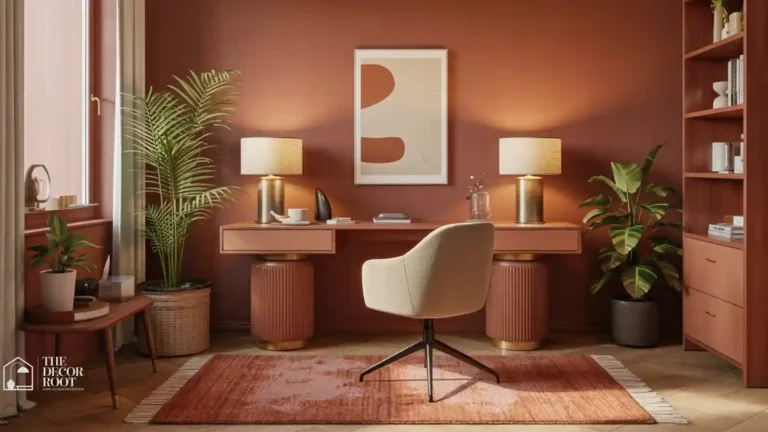
Even in a shared room, an area rug physically defines your workspace and signals to your brain that this is a ‘work zone.’ Choose a low-pile rug in a neutral or subtle pattern to anchor the desk without adding visual noise. This boundary trick works especially well in open-plan apartments or bedroom offices where separation is otherwise impossible. Ergonomic office chairs link to top-rated chairs on Amazon (e.g., Branch Ergonomic Chair, Flexispot options)
2. Maximize Natural Light for Home Office Design Ideas
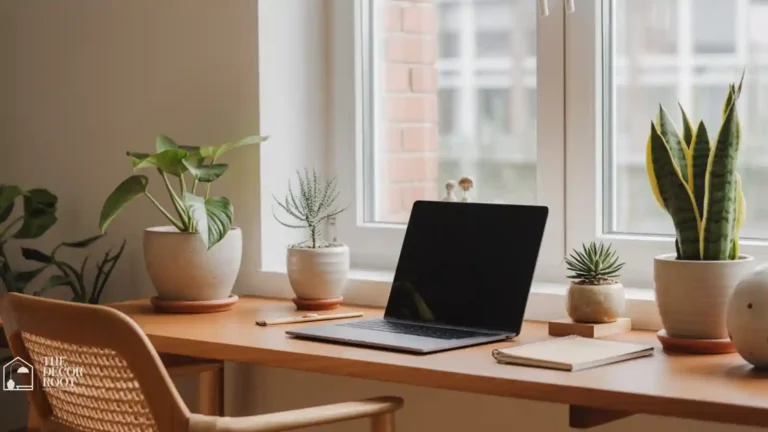
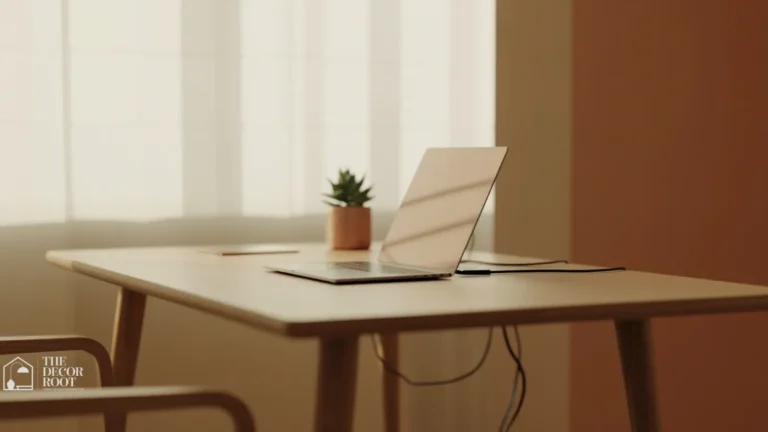
Position your desk perpendicular to the nearest window, not facing it (glare) and not with your back to it (shadows on your screen). Natural light reduces eye strain and helps regulate your circadian rhythm, keeping you alert in the morning and winding down naturally by evening. Sheer curtains let light in while softening harsh midday sun.
3. Choose a Neutral, Warm Color Palette
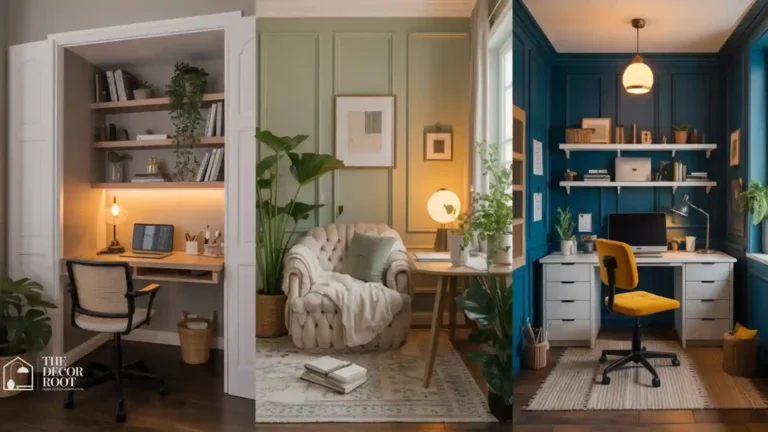
Soft whites, warm greiges, and muted sage greens all promote calm, sustained focus. Avoid high-saturation colors on walls; they’re stimulating in short bursts but fatiguing over a workday. If you want color, bring it in through a throw pillow on your chair or a piece of artwork, not the walls. Some of the most productive home offices are also the moodiest; deep walls, warm task lighting, and a sense of enclosure can create a focus environment that feels like a private study rather than a makeshift desk corner. These moody atmospheric interior ideas show how to build that feeling deliberately.
4. Invest in an Ergonomic Chair
Your chair is the single most impactful piece of furniture in any home office. Poor lumbar support leads to physical discomfort that kills concentration within hours. Look for adjustable seat height, armrest height, and lumbar support. You don’t need a $1,500 chair; many quality options exist in the $200–$400 range.
5. Use Cable Management to Reduce Visual Clutter
Visible cables are a surprisingly powerful distraction. Use cable clips, under-desk cable trays, or a simple cable sleeve to bundle and hide cords. Cleaner visual field = cleaner mental state. This is one of those home office design ideas that takes 30 minutes to implement and pays back for years.
6. Add a Statement Wall (Not Wallpaper)
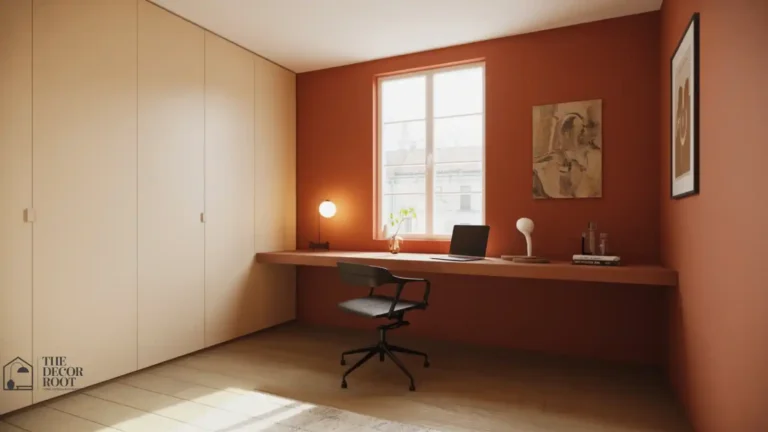
A single accent wall in a muted, textured tone, plaster effect paint, limewash, or even a large canvas adds depth and personality without overwhelming the space. It gives your video call backgrounds an intentional, professional look, too.
7. Go Floating with Wall-Mounted Storage
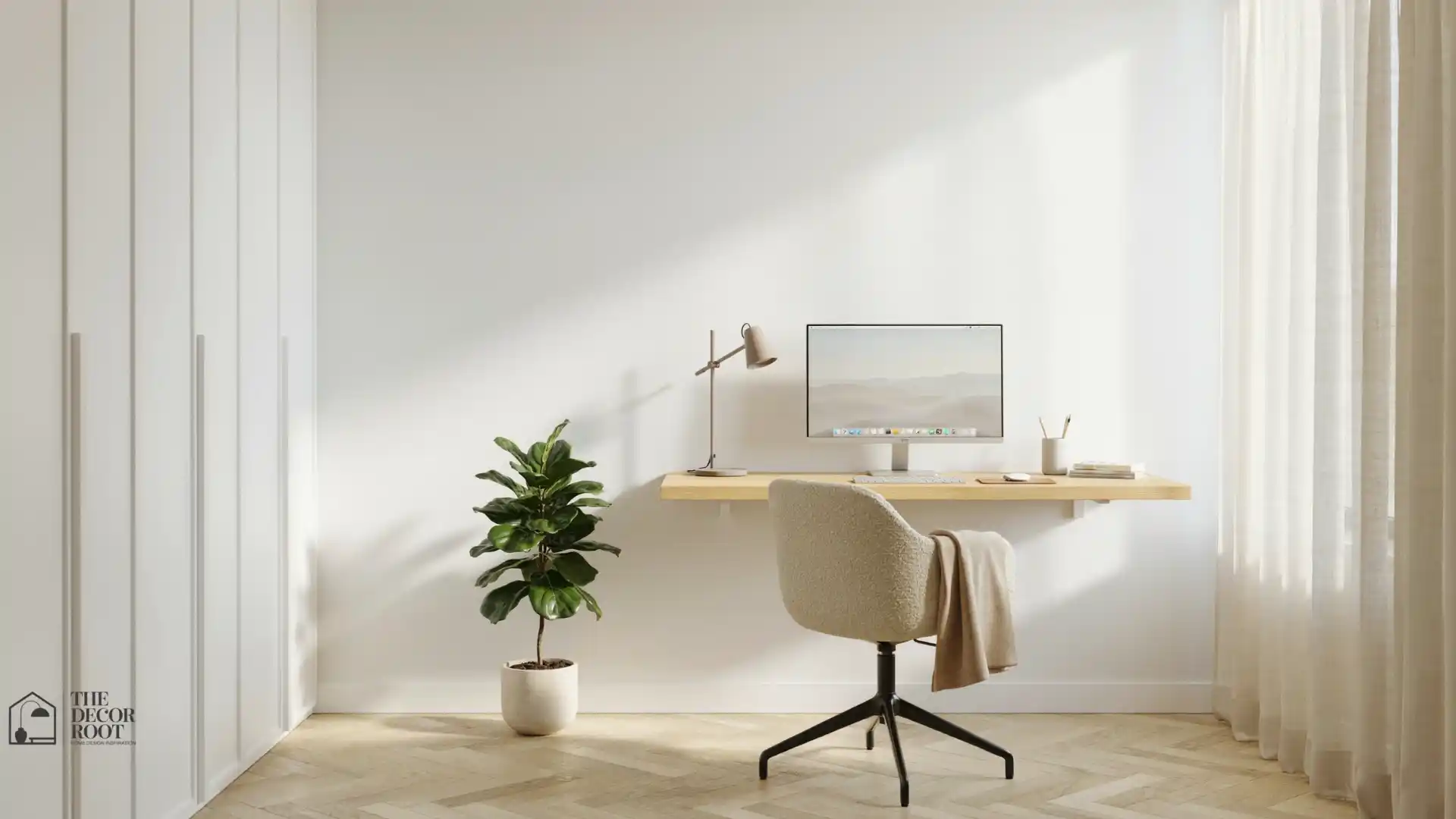
Wall-mounted shelves keep your floor clear, which makes any room feel larger and less chaotic. Use them for books, plants, or decorative storage boxes. Keeping your desktop clear of items you rarely use is one of the easiest home office design ideas to implement today.
8. Layer Your Lighting
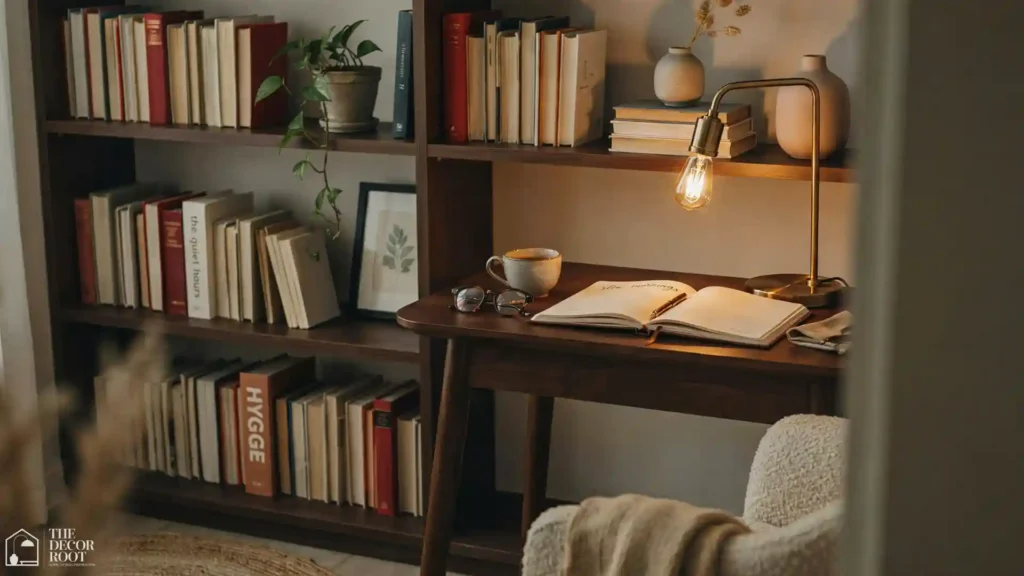
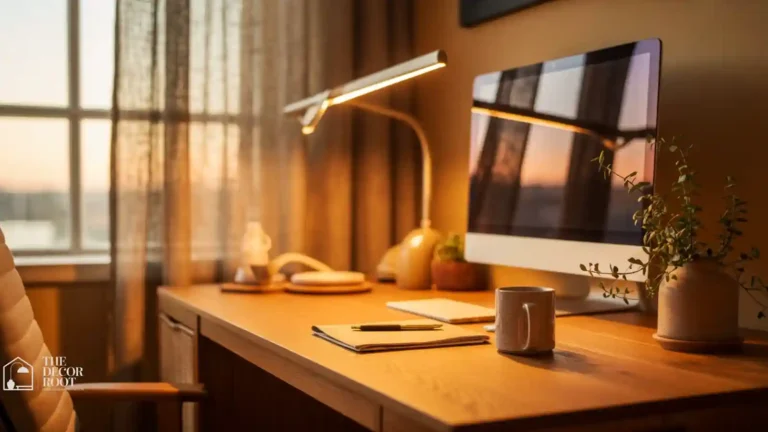
Overhead lighting alone creates flat, fatiguing illumination. Layer it with a warm-toned desk lamp (for task lighting) and a floor lamp or shelf light (for ambient fill). This removes harsh shadows and lets you adjust brightness as the day progresses.
9. Incorporate Plants for Air and Focus
Studies from NASA and multiple universities confirm that indoor plants reduce stress, improve air quality, and even boost productivity by up to 15%. Snake plants, pothos, and ZZ plants thrive in low-light office conditions and require minimal care.
10. Use a Monitor Riser or Arm
Raising your monitor to eye level eliminates neck strain and frees up valuable desk real estate underneath for a keyboard, notebook, or small storage tray. Monitor arms are especially useful for home office design ideas in tight spaces.
11. Create a Dedicated ‘Inbox’ Tray
Physical paper chaos is a focus killer. A single inbox tray on your desk handles all incoming documents without letting them spread across your workspace. Process it at the same time each day, and your desk stays clear by default. Desk organizers & cable management kits link to Amazon desk organization bundles.
12. Install Blackout or Light-Filtering Blinds
For afternoon workers or anyone dealing with west-facing windows, light-filtering cellular shades balance brightness without glare. Blackout blinds are perfect for video calls or when you need deep focus without visual interruption.
13. Choose a Desk with Hidden Storage
Desks with built-in drawers or cable management holes keep your essentials accessible without cluttering the surface. This is one of the smartest home office design ideas for small rooms. Storage built into the desk means no extra furniture footprint.
14. Hang a Pegboard for Flexible Organization
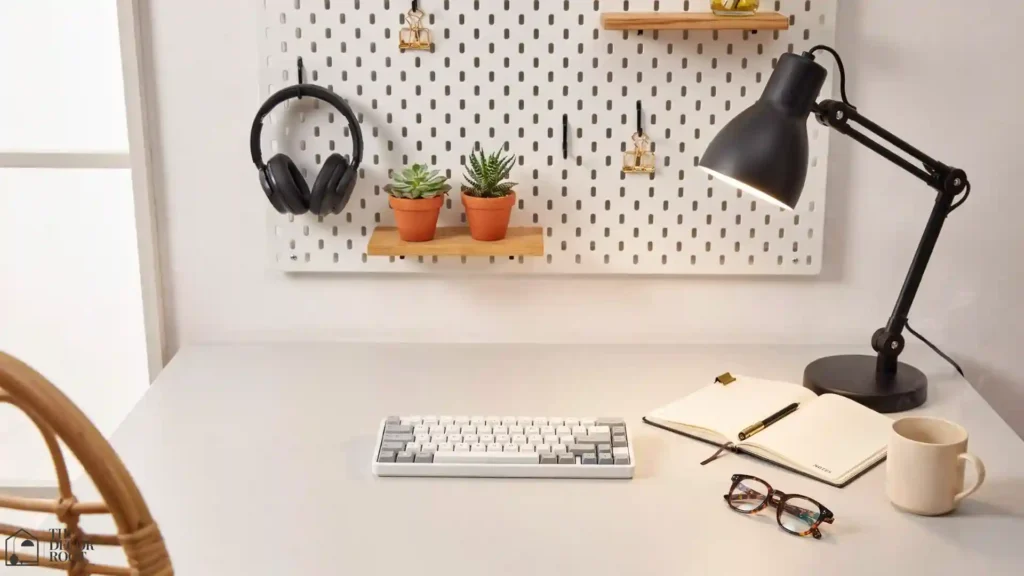
A pegboard above your desk has infinitely configurable hooks for headphones, small shelves for supplies, and clips for notes. It puts everything within arm’s reach without eating desk space, and it looks intentional rather than messy.
15. Use a Standing Mat If You Have a Sit-Stand Desk
Anti-fatigue mats reduce leg and back discomfort during standing work periods. Pair them with a good standing desk converter for a setup that keeps blood flowing and energy levels higher through long work sessions.
16. Frame Your Vision Board or Goals
Having your goals visually present in your workspace provides constant, subconscious motivation. Frame them properly. A pinboard with loose papers looks chaotic, but a framed print or magnetic board looks intentional and inspiring.
17. Pick the Right Desk Depth
A desk that’s too shallow forces your monitor too close; too deep, and your arms strain to reach your keyboard. The sweet spot is 24–30 inches of depth. This small ergonomic detail makes a massive difference in comfort over long work sessions.
18. Use Scent to Anchor Your Focus State
A consistent desk-side scent, rosemary, peppermint, or citrus via a small diffuser, trains your brain to associate that smell with focused work. Over time, catching that scent becomes a Pavlovian focus trigger.
19. Add Acoustic Panels or Soft Textiles
Hard surfaces reflect sound, creating echo and background noise that fragment attention. Adding a rug, curtains, an upholstered chair, or even a fabric wall panel dramatically improves the acoustic environment, especially important for calls.
20. Invest in a Quality Keyboard and Mouse
Your hands interact with your workspace tools for hours daily. A quiet mechanical keyboard and ergonomic mouse reduce repetitive strain and make the physical act of working feel more premium and less fatiguing.
21. Refresh Your Desk Setup Seasonally
Swapping out your desk mat, plant, or small decor piece every season keeps your workspace feeling fresh rather than stale. This tiny ritual reconnects you with your environment and prevents the slow creep of ‘desk blindness’ that makes you stop seeing and caring for your space. Adjustable standing desks & converters link to FlexiSpot or Uplift desk options.
Your Next Steps
- Weekend 1: Declutter your desk completely, add cable management, and reposition your monitor to eye level.
- Weekend 2: Add a desk lamp with warm-toned bulbs, bring in one plant, and hang a shelf or pegboard.
- Week 3: Evaluate your chair comfort and consider a supportive seat cushion or new chair. Month 2: Paint an accent wall or add a textured element to personalize and inspire.
- Small consistent upgrades compound into a workspace you genuinely love.
FAQs
Conclusion
These 21 home office design ideas aren’t just about looks, they’re about building an environment that supports how your brain actually works. From ergonomic basics to sensory details like scent and acoustics, every small upgrade compounds into a workspace that helps you focus longer, feel better, and do your best thinking. Start with one idea this weekend and see how much a thoughtful space can change your work.
This post contains affiliate links. If you purchase through them, I may earn a small commission at no extra cost to you.
📌 Loved these ideas? Save this post to your Home Office board on Pinterest so you can refer back whenever you’re ready to upgrade your space!