12 Color Ideas From Psychology for Every Room in Your Home
The colors surrounding you right now are actively shaping how you feel, your energy levels, your stress, your focus, even your appetite. This isn’t an interior design opinion; it’s backed by decades of environmental psychology research. Color ideas from psychology give us a science-informed framework for choosing hues that don’t just look good, but genuinely feel good to live with. Whether you’re redecorating a single room or reimagining your entire home, understanding the psychological impact of color will completely change how you approach every paint chip and fabric swatch. Color psychology is the foundation beneath the best home decorating ideas. When you understand why a color feels the way it does, every design decision becomes faster, more confident, and a lot less trial and error.
This post contains affiliate links. As an Amazon Associate, I earn from qualifying purchases. If you buy through these links, I may earn a small commission at no extra cost to you.
Where to Start Mentally
Environmental psychology studies how physical spaces affect human behavior and mental states, and color is one of the most potent variables in that relationship. Research shows color can influence heart rate, cortisol levels, perceived room temperature, and even how long people linger in a space before feeling the urge to leave. But context matters enormously: the same blue that calms a bedroom can feel clinical in a kitchen, and the same charcoal that feels dramatic in a dining room can feel oppressive in a home office with no natural light. The goal isn’t to apply blanket rules across every room, but to understand the psychological principles behind each color and apply them intentionally to that room’s purpose. Focal points deserve extra psychological consideration, too, since they’re where the eye lands first: these fireplace and focal point color ideas explore how the colors you choose around a hearth affect how the entire room feels, well beyond the fireplace wall itself.
The home is where we recover, connect, create, and restore ourselves, and when our color environment is misaligned with what a room actually needs a stimulating red in a space meant for winding down, say we experience subtle but constant psychological friction, even if we can’t name why a room feels “off.” Conversely, when color choices align with a room’s purpose and our own personal psychology, the home becomes a genuinely restorative environment rather than just a decorated one. Given that most people now spend the majority of their time indoors, making psychologically informed color choices has never been more consequential for everyday well-being. Psychology gives you the theory; browse all our interior decorating ideas to see it applied across every room type, from calming bedrooms to energizing kitchens.
1. Soft Blue for Bedrooms: The Calm Color
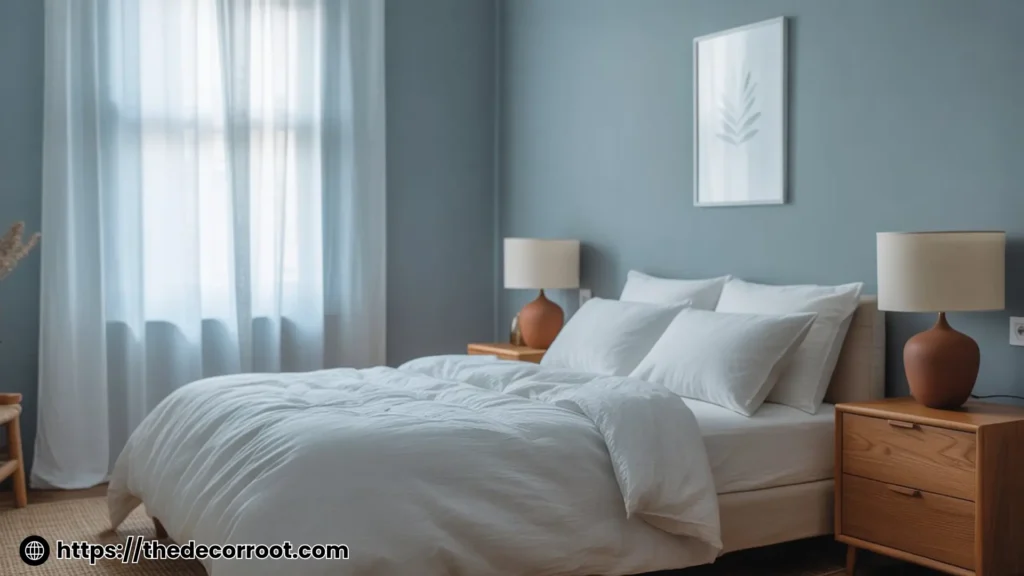
Blue is consistently ranked as the world’s most universally liked color, and from a psychological perspective, it’s easy to understand why. Soft, muted blues- think dusty cornflower, faded denim, or pale slate activate the parasympathetic nervous system, which is the body’s rest-and-digest response, lowering heart rate and blood pressure in the process. In the bedroom specifically, a soft blue wall encourages the body’s natural relaxation response before sleep even begins, supporting better sleep quality over time rather than just looking peaceful in photos. The key is staying muted rather than saturated: a bright, clear blue can read as energizing rather than calming, which defeats the purpose in a room meant for winding down. Pair a soft blue with warm white trim and natural linen bedding to prevent the color from tipping cold or clinical, and consider a warm wood headboard or nightstand to anchor the palette with some grounding warmth against all that cool tone.
2. Warm Terracotta for Living Rooms: Grounded Energy
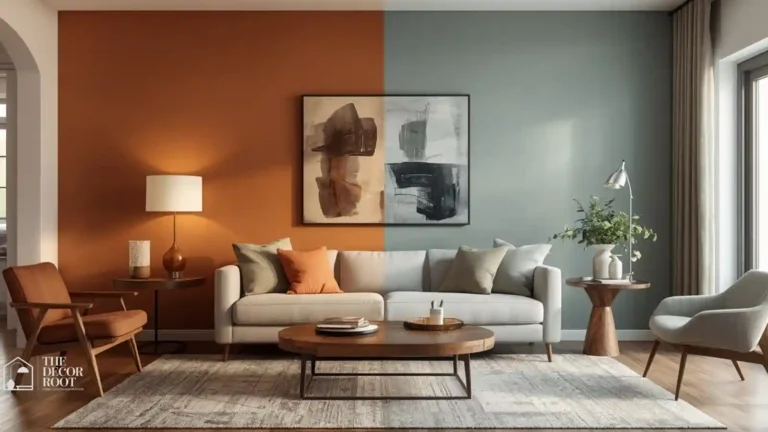
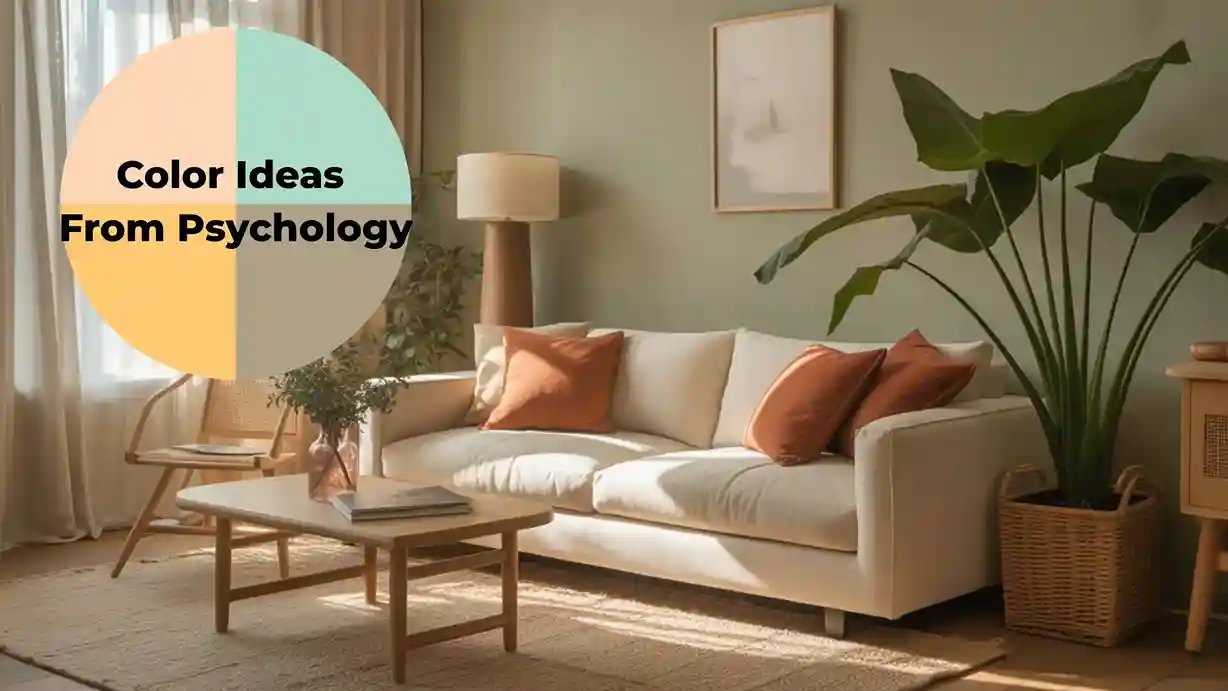
Terracotta and warm earthy oranges draw from color psychology’s findings on grounding and social warmth. Unlike a stimulating bright orange, the muted, clay-like quality of terracotta creates a sense of comfort and belonging; it’s the psychological color of fireside gatherings and unhurried conversation, which makes it a natural fit for a living room where people actually gather rather than just pass through. Use it as a feature wall behind a sofa for a contained dose of warmth, or go all-over for a living room built around socializing; either way it reads as sophisticated and current while remaining emotionally approachable rather than trendy for trendiness’s sake. Before committing to a full wall, peel-and-stick paint sample cards or a premium interior paint tester set let you live with the color across a few days and different lighting conditions, which matters enormously with a color this light-reactive. The living room is the ideal place to put color psychology into practice more broadly; these living room color palette ideas show exactly how warm, cool, and neutral hues perform in a real, lived-in space rather than a showroom.
EDITOR’S PICK
🛒Peel-And-Stick Paint Sample Cards
Terracotta’s muted clay warmth evokes fireside gatherings and unhurried conversation, perfect for a living room feature wall; test peel‑and‑stick samples across different lighting before committing.
(paid link)
3. Forest Green for Home Offices: Focus and Calm
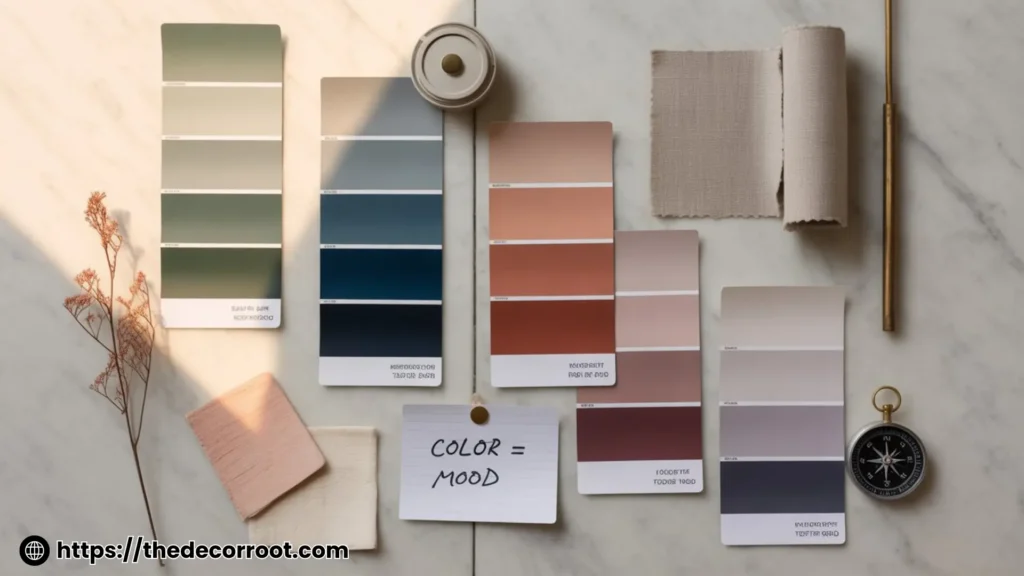
Green occupies the exact center of the visible light spectrum, which means the eye requires virtually no adjustment to focus on it, making it the single least visually fatiguing color available. Environmental psychology research links exposure to green tones with reduced mental fatigue and improved sustained concentration, which is exactly what a home office needs across a full workday. For a home office or study, deep forest green or warm sage on the walls creates an environment that supports focused, productive work without inducing the low-grade alertness-related anxiety that stark whites and grays can trigger over long hours at a desk. This matters more than most people expect: a home office painted in a color that quietly fatigues the eyes compounds over an eight-hour day in a way a single glance at a paint chip never reveals. Pair forest green with warm wood furniture and brass task lighting to keep the space feeling grounded rather than corporate, and consider leaving one wall lighter if the room lacks strong natural light, so the green doesn’t tip the space too dark to work in comfortably.
4. Warm Yellow for Kitchens: Energy Without Anxiety
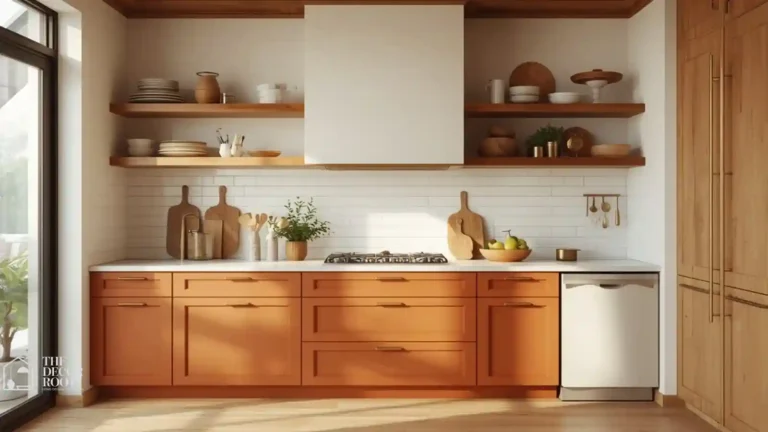
Yellow stimulates serotonin production and is psychologically associated with optimism, creativity, and appetite stimulation, making it a natural fit for kitchen spaces where all three of those things are already part of the room’s job. However, intensity matters enormously here. Bright, saturated yellow creates visual anxiety over time with repeated daily exposure, even if it photographs beautifully in a single shot; soft, warm yellows like buttercream, maize, or antique gold feel energizing without ever tipping into overwhelming. Use warm yellow as a background for white cabinetry, where it reads as a cheerful backdrop rather than the main event, or reserve it as an accent in tiles, a kitchen island, or soft furnishings if a full-wall commitment feels like too much. The difference between a warm yellow that ages well and one that starts to grate after a few months usually comes down to exactly this saturation choice, so lean muted over vibrant whenever you’re unsure which direction to go.
5. Soft Lavender for Children’s Rooms: Creativity and Calm
Lavender and soft purple tones occupy an interesting psychological middle ground: they combine the calming properties of blue with the creative stimulation of red, blended into a muted, balanced tone that doesn’t lean too hard in either direction. Research from environmental psychology literature suggests that lavender environments support both imaginative play and emotional regulation in children, which makes it a genuinely functional choice rather than just a pretty one for a child’s bedroom or playroom. Use soft lavender on the walls with warm white woodwork to keep the palette from feeling cold, and introduce pops of yellow or peach in bedding, art, or rugs for a complementary, playful contrast that keeps the room from feeling one-note. Lavender also tends to age well with a child rather than needing an immediate repaint as they grow, since its softness reads as sophisticated rather than babyish once other elements of the room mature around it.
6. Charcoal and Near-Black for Dining Rooms: Drama and Intimacy
Dark, enveloping colors in dining spaces create a psychological sense of intimacy and occasion that lighter colors simply can’t replicate. When the walls visually recede into shadow, attention focuses inward toward the table, the food, the faces of the people sitting across from you rather than outward toward the room itself. This is part of why some of the most celebrated restaurant interiors lean on deep charcoal, navy, or near-black for exactly this effect. Candlelight bouncing off dark walls creates a warmth and richness that pale walls simply cannot match, since light reflects differently off a deep, matte surface than it does off something bright and flat. This is one of the boldest and most rewarding color ideas from psychology on this list precisely because it runs counter to the instinct most people have to keep dining rooms light and airy a counterintuitive choice that tends to pay off the moment the first dinner party happens in the space.
7. Warm White and Cream for Hallways: Expansion and Welcome
First impressions matter, and the psychology of color at the threshold of a home is more significant than most homeowners realize. Pure, stark white in a hallway reads as institutional and cold, almost like a waiting room; warm whites, with undertones of yellow, pink, or beige, feel welcoming and expansive instead. They bounce light effectively in often window-free hallway spaces while creating a smooth visual transition into the rest of the home, rather than a jarring shift in tone the moment you step through the front door. Add interest through texture rather than color contrast here: linen curtains, rattan hooks, and natural fiber runners all layer warmth into the space without competing with the wall color itself. For anyone weighing multiple warm-white options, color psychology books and home color guides are genuinely useful, evidence-based resources for narrowing the field before you start collecting paint chips at random.
EDITOR’S PICK
🛒Home Color Guides
Warm white hallways with yellow, pink, or beige undertones feel welcoming and light‑bouncing; avoid stark white, and layer texture with linen and rattan while using color guides to narrow your choice.
(paid link)
8. Dusty Rose for Dressing Rooms or Bathrooms: Self-Care Energy
Baker-Miller pink, the specific saturated shade studied extensively in institutional settings for its calming effect, is too intense for most domestic use, but its softer cousin, dusty rose, carries similar calming properties without any of that clinical baggage. Psychologically, muted rose tones are linked to self-nurturing, care, and gentle energy qualities that suit a bathroom or dressing room far better than a bold, high-energy color would. In a bathroom or dressing room specifically, dusty rose creates an environment that feels genuinely nurturing rather than merely decorated, which makes it a fitting backdrop for morning routines and end-of-day wind-down rituals alike. It also photographs flatteringly under most bathroom lighting, which matters more in this room than almost any other, since bathroom lighting tends to be less forgiving than lighting elsewhere in the home. Pair with brushed brass or warm gold fixtures to keep the overall palette feeling soft rather than sweet.
9. Bright White With Warm Undertones for Art Spaces: Neutral Clarity
If you make art, photograph, or engage in visual creative work at home, a near-neutral background is psychologically important, since it prevents the eye from making constant color adjustments that distort how you perceive your own work. But pure, brilliant white creates visual fatigue over time with repeated exposure, even in a space designed for precision. A warm white with a slight yellow or pink undertone is the sweet spot here: perceptually neutral enough for accurate color work and honest judgment of your materials, but warm enough to feel genuinely livable over extended creative sessions rather than sterile. This distinction matters more than it might seem on a paint chip. A wall that reads as “basically white” in the store can shift how colors and materials appear once it’s surrounding hours of focused work, so testing under your actual studio lighting before committing is worth the extra step.
10. Navy Blue for Libraries and Reading Nooks: Deep Focus
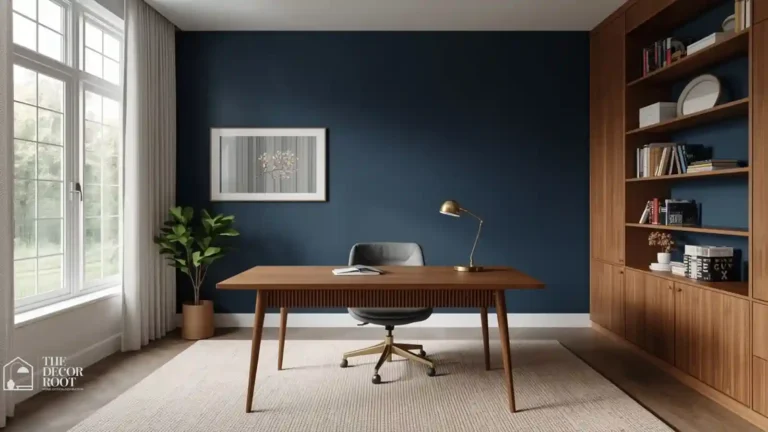
Navy and midnight blue create a sense of depth and enclosure that many people find deeply focusing and comforting rather than confining. The color is associated psychologically with reliability, intelligence, and depth qualities we instinctively want surrounding us while we read or think through something difficult. A library or reading nook painted in rich navy, furnished with warm brass lighting and worn leather, creates one of the most psychologically satisfying domestic environments imaginable, precisely because the darkness of the walls does the opposite of what you’d expect: instead of making the room feel smaller, it makes the space feel like a defined, purposeful retreat rather than just another corner of an open room. This effect tends to work best in smaller, more enclosed nooks rather than large open-plan spaces, where navy can read as heavy rather than cozy without enough architectural definition to contain it.
11. Sage Green for Kitchens and Dining Rooms: Nature-Informed Calm
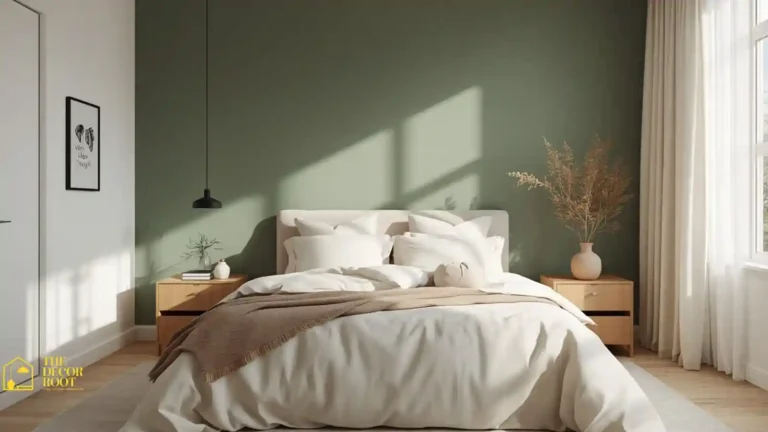
Biophilic design research consistently shows that colors referencing natural environments reduce stress responses and improve mood more reliably than purely aesthetic color choices. Sage green, with its visual reference to living plants, outdoor landscapes, and fresh herb gardens, is one of the most effective nature-inspired colors for domestic interiors precisely because it doesn’t require any conscious effort to register as “natural”; the association is nearly instant. Unlike a deeper forest green, sage is light enough to work in kitchens and dining rooms without feeling dark or heavy, which matters in rooms that also need to function well for everyday tasks and gatherings. Pair it with warm wood tones, natural stone countertops, and wicker or rattan accessories for a complete biophilic effect that reinforces the color choice rather than working against it, and consider echoing the tone in a few potted herbs or plants nearby to close the loop between the wall color and the real thing it’s referencing.
12. Color Drenching in Your Favorite Color: Psychological Authenticity
One of the most powerful but underused color ideas from psychology is the concept of personal chromatic resonance: the deeply individual way each person responds to specific colors based on memory, culture, and personal association, separate from any universal color-theory rule. Color drenching, meaning using a single color across walls, trim, ceiling, and furnishings, in a shade with strong positive personal associations, creates an environment of deep psychological comfort that a textbook-perfect neutral palette often can’t match. Trust your instincts here: research consistently shows that personal positive associations with a color are more predictive of well-being than any universal color rule, which means the “correct” color psychology answer for your own bedroom might genuinely differ from what works for someone else’s. Room-specific paint sets and digital color consultation tools can help you find your perfect shade without the guesswork, especially if you already know a color you love but aren’t sure how to translate it into a full room.
EDITOR’S PICK
🛒Digital Color Consultation Tools
Personal color associations, not universal rules, drive well‑being; color drenching in a personally loved shade creates deep comfort, and paint sets and digital tools help find your perfect tone.
(paid link)
12. Warm Gray for Open-Concept Living Spaces: Balanced Neutral
Open-concept homes present a specific psychological challenge that separate rooms don’t: one wall color has to work for cooking, relaxing, and entertaining all at once, often within view of each other at the same time. Warm gray solves this better than almost any other neutral, since it carries just enough underlying warmth usually a whisper of beige or taupe to avoid the flat, sterile feeling cool gray can produce across a large connected space. Psychologically, warm gray reads as calm and unifying rather than attention-grabbing, which lets furniture, art, and lighting do more of the personality work in a room that’s really several rooms pretending to be one. It also photographs consistently under both daylight and evening lamp light, which matters more here than in a single-purpose room, since lighting conditions shift dramatically across one continuous wall as the day goes on. For anyone testing options across a large floor plan, a digital color visualizer tool lets you preview warm gray across your actual layout before committing to a full-space repaint.
EDITOR’S PICK
🛒Digital Color Visualizer Tool
Warm gray with beige or taupe undertones unifies open-concept spaces, reads calm, photographs well in all light, and should be previewed with a digital visualizer before repainting.
(paid link)
13. Coral and Peach for Creative Studios: Energized Calm
Coral and peach occupy a psychologically interesting middle ground between red’s stimulation and pink’s calm, which makes them unusually well-suited to spaces meant for focused creative output rather than pure relaxation. In a craft room, sewing studio, or home art space, a muted coral on one wall can lift energy and mood without tipping into the visual agitation that a true saturated red or orange can cause during long working sessions. The color performs best paired with plenty of white or warm cream elsewhere in the room, so it reads as an accent of energy rather than an overwhelming backdrop competing with whatever’s actually being created on the desk or easel. Natural light interacts strongly with coral, shifting it noticeably warmer at midday and softer toward evening, so it’s worth observing a sample through a full working day if the studio doubles as an evening space too. This is a color that genuinely rewards restraint; a single coral wall does more psychological work here than four would.
14. Deep Teal for Powder Rooms: Small-Space Drama
Powder rooms are one of the few spaces in a home where going bold costs almost nothing, since the room is used briefly and mostly by guests rather than lived in for hours at a stretch, which makes it the ideal testing ground for colors psychology suggests are powerful but risky elsewhere in the home. Deep teal sits at the intersection of blue’s calm and green’s restorative quality, and in a small, enclosed powder room it creates a jewel-box effect that reads as intentional luxury rather than overwhelming, the way the same color might feel across an entire open living space. Pair with brass or warm gold fixtures and a single dramatic light fixture to lean fully into the moment rather than diluting it with too many competing finishes. Because a powder room’s walls are usually visible in full from the doorway in one glance, deep teal here photographs exceptionally well for anyone who hosts, and it remains one of the lowest-risk ways to bring a genuinely bold color into an otherwise neutral home.
15. Warm Taupe for a Whole-Home Neutral Base: Cohesive Flow
For homeowners who want the psychological benefits of warm color theory without committing to a different hue in every single room, warm taupe offers a genuinely versatile base that can run through hallways, living spaces, and bedrooms alike while still leaving room for bolder accent walls elsewhere in the home. Its underlying warmth a blend of gray, brown, and a touch of pink or gold depending on the exact formulation keeps it from reading as flat or builder-grade the way plain beige often can, while still functioning as a true neutral that won’t clash with whatever furniture or art comes next. Psychologically, a cohesive neutral base like this reduces the subtle friction of walking between rooms that feel disconnected from one another, creating a sense of a considered whole rather than a series of separately decorated spaces stitched together. It’s an especially smart choice for anyone planning to introduce bold colors in just a few rooms, since taupe lets those bolder choices stand out precisely because the surrounding spaces stay calm and consistent.
16. Burnt Orange for Entryways: Welcoming First Impression
The entryway sets the emotional tone for a home before a guest has even fully stepped inside, and burnt orange, a deeper, more muted version of pure orange, is psychologically associated with warmth, energy, and hospitality without tipping into the visual loudness of a brighter orange. Used on a front door or a small entryway accent wall, it creates an immediate sense of welcome that pale neutrals, however tasteful, simply can’t generate on their own in those first few seconds. Because entryways are typically small and briefly occupied spaces, burnt orange here avoids the visual fatigue risk that the same color might create across a larger, more heavily used room like a living room or kitchen. Pair with natural wood tones and warm brass hardware to keep the overall effect grounded rather than costume-like, and consider carrying a lighter echo of the same warm tone into an adjacent hallway so the transition into the rest of the home doesn’t feel abrupt or disconnected.
17. Soft Gray-Blue for Guest Rooms: Restful Neutrality
A guest room has a slightly different psychological job than a primary bedroom: it needs to feel calming and comfortable to someone unfamiliar with the space, often for just a night or two, rather than reflecting the personal color preferences of whoever lives there full-time. Soft gray-blue threads this needle well, carrying blue’s proven calming, heart-rate-lowering effects while staying neutral enough that it won’t clash with a guest’s own taste or belongings during their stay. It also tends to photograph beautifully for anyone who lists the room on a short-term rental platform, since gray-blue reads as fresh and hotel-quality rather than overly personal or dated. A quality premium interior paint tester kit makes it easy to compare a few gray-blue options side by side before settling on the exact undertone that suits the room’s natural light and existing furniture.
EDITOR’S PICK
🛒Premium Interior Paint Tester Kit
Soft gray‑blue offers calming, neutral appeal for guest rooms, photographs well for rentals, and should be tested with a paint sampler in the room’s light.
(paid link)
18. Mustard Yellow Accents for Media Rooms: Cozy Energy
A media or family room needs to support two seemingly opposite psychological states: relaxed enough for a lazy movie night, but energized enough for game nights and lively family gatherings on other evenings. Mustard yellow, used as an accent rather than a full wall commitment, threads that needle by carrying yellow’s optimism and warmth in a deeper, more grounded tone that doesn’t compete for attention the way a brighter yellow would against a television screen. It works especially well on a single accent wall behind seating, in throw pillows, or in a media cabinet, where it adds warmth and personality without overwhelming a room that also needs to function well in low light during movie nights specifically. Because mustard reads warmer under incandescent and lamp lighting than under daylight, it’s worth testing the color specifically in the evening lighting conditions the room will actually be used in most often, rather than judging it in a bright afternoon glance.
19. Cream and Ivory for Nurseries: Gentle Calm
Nurseries carry unique psychological stakes, since the room needs to support both an infant’s developing visual system and a caregiver’s own need for calm during long nights and early mornings spent in the space. Cream and ivory tones, warmer and softer than a stark white, create a gentle, low-stimulation environment that doesn’t overstimulate a newborn’s still-developing color perception while still feeling warm and intentional rather than clinical or empty. Unlike some of the more saturated colors elsewhere on this list, cream’s real advantage here is longevity: it transitions gracefully as a child grows from infant to toddler without needing an early repaint, and it provides a genuinely calm, blank canvas for whatever colorful toys, books, and artwork inevitably accumulate in the space over time. Pair with natural wood furniture and soft, textured textiles to add warmth without introducing additional color complexity into a room that benefits most from visual quiet.
20. Deep Burgundy for Home Bars and Studies: Rich Sophistication
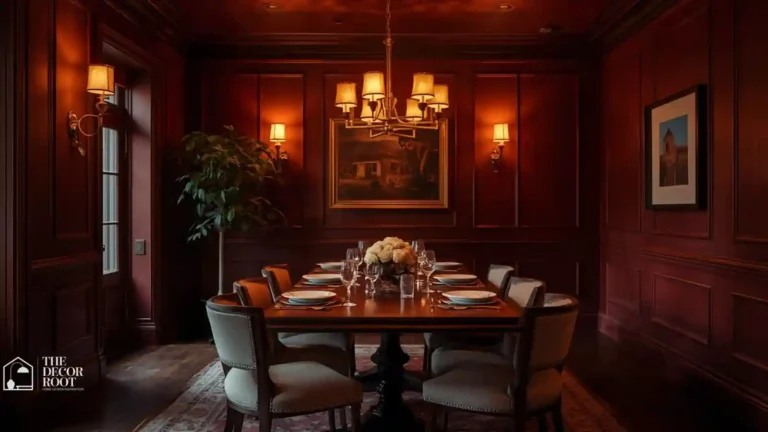
Deep burgundy carries a specific psychological weight: sophistication, depth, and a kind of confident maturity that makes it a strong fit for spaces designed around adult ritual: a home bar, a study, a small library corner tucked off a hallway. The color’s richness works particularly well under warm, low lighting, where it takes on an almost velvet quality that flatter, lighter colors simply can’t replicate under the same conditions. In a home bar specifically, burgundy pairs naturally with the amber and brown tones already present in most spirits and glassware, creating a color story that feels considered rather than incidental or accidental. In a study, that same depth that makes burgundy feel indulgent in a bar setting instead reads as focused and serious, supporting the kind of concentrated, unhurried thinking the room is meant for in the first place. As with charcoal and navy elsewhere on this list, burgundy performs best in a genuinely enclosed space rather than an open-plan area, where its intensity has room to feel intentional rather than simply heavy.
21. Pale Aqua for Sunrooms: Fresh Coastal Calm
Sunrooms and three-season spaces already do a lot of the psychological work of connecting indoor and outdoor living, and pale aqua reinforces that connection rather than working against it the way a fully unrelated color choice might undercut the room’s purpose. The tone sits close enough to both sky and water to feel inherently fresh and calming, while staying light enough not to compete with whatever view or garden the sunroom actually looks out onto through its windows. Because sunrooms typically receive more direct daylight than any other room in the home, pale aqua here shifts noticeably across the day, reading cooler and crisper at midday and warmer toward golden hour an effect worth observing before committing, since it’s more pronounced in this room than almost anywhere else on this list. Pair with natural rattan, linen, and plenty of greenery to fully commit to the coastal, biophilic effect the color is already halfway toward on its own.
22. Color Drenching in Your Favorite Color: Psychological Authenticity
One of the most powerful but underused color ideas from psychology is the concept of personal chromatic resonance: the deeply individual way each person responds to specific colors based on memory, culture, and personal association, separate from any universal color-theory rule. Color drenching, meaning using a single color across walls, trim, ceiling, and furnishings, in a shade with strong positive personal associations, creates an environment of deep psychological comfort that a textbook-perfect neutral palette often can’t match on its own. Trust your instincts here: research consistently shows that personal positive associations with a color are more predictive of well-being than any universal color rule, which means the “correct” color psychology answer for your own bedroom might genuinely differ from what works for someone else’s space entirely. Room-specific paint sets and digital color consultation tools can help you find your perfect shade without the guesswork, especially if you already know a color you love but aren’t sure how to translate it into a full room.
EDITOR’S PICK
🛒Digital Color Consultation Tools
Personal color associations, not universal rules, drive well‑being; color drenching in a personally loved shade creates deep comfort, and paint sets and digital tools help find your perfect tone.
(paid link)
Color psychology doesn’t stop at the front door, either. These outdoor color psychology ideas apply the same principles of hue and mood to exterior paint, landscaping, and curb appeal, so the same instincts you use indoors carry outside just as well.
Quick Action Plan
- Start this weekend by walking through each room in your home and writing down one word for how you actually want to feel there- calm, focused, energized, cozy– rather than jumping straight to color swatches.
- Match those feelings to the colors covered above, order paint samples for your top choices, and live with them on the wall for at least 48 hours before committing to anything larger, watching closely for how each one shifts between morning light and evening lamplight, since a color that reads perfectly at noon can feel completely different by 8 pm.
- Over the following month, start with just one room, ideally the one where a color change would have the biggest daily impact on how you feel, and document the before and after, both photographically and in a quick mood journal, so you can actually notice how the color shift affects your daily routines and emotional state rather than just assuming it will.
FAQs
Conclusion
The best color ideas from psychology are those that align the visible qualities of a room with its intended emotional experience. Blue for calm, green for focus, terracotta for warmth, navy for depth- these aren’t arbitrary aesthetic choices; they’re evidence-informed decisions about how you want to feel in your own home. Start with one room, trust the research, trust your instincts, and watch how profoundly a color change can transform your daily experience of a space you already thought you knew.
📌 Found this helpful? Save this post to your Pinterest home decor board and come back to it every time you’re planning a room refresh!