
Cottagecore Bedroom Ideas: Collected, Cozy, and Easy to Live In
cottagecore bedroom ideas fail most often not from too little decor but from buying pieces in the wrong order. A new floral duvet, lamp, and rug can all be lovely alone, and still combine into a room that looks like a shop display instead of a room someone lives in. The pieces arrive before the room has a direction, so nothing repeats, nothing settles, and the eye finds no place to rest.
This article gives you the order that works. One audit first, so you know what to fix before you buy anything. Six named problems second, each with a fix and a researched pick, so you can act on one problem without reading the whole piece. A stop rule last, so collected never tips into clutter.
The result is a room that looks found over time, even when every piece is new. It suits small bedrooms and rentals too, because every step below works without paint or drilling. Buy the quilt first, fix the light second, add one pattern at a time, and stop when the room can be tidied in ten minutes.
How these picks were chosen: This article is research based curation, not hands on testing. Picks were researched from listing and source pages, and checked at the publish date. No star rating is claimed for any pick. Before ordering, check size, color, and contents on the listing, because listings and variants change.
Affiliate Disclosure: This article contains affiliate links to products on Amazon. As an Amazon Associate I earn from qualifying purchases. The price you pay stays the same, and the commission helps keep The Decor Root running.
The Cottagecore Bedroom Audit
Run five checks before you buy anything, because each check points to a different problem section. First, what does the room already have that stays. Wall color, bed frame, and wood tones are the givens, and every new piece must sit happily beside them.
Second, check the light at night. If the only light is overhead, evenings will feel stark no matter how pretty the bedding is, and you should jump to Problem 2 first. If pools of warm light already sit at bed height, light is not your first fix.
Third, run the bed test. Stand at the door and ask whether the bed looks slept in or staged. A staged looking bed usually has one flat duvet, no contrasting texture layer, and no turned down edge. That is Problem 1. A bed that already has layers but still looks busy has a pattern problem, not a layering problem, and the pattern formula below is the fix.
Fourth, run the wall test. Count the walls that shout. One bare wall is a gap for Problem 3. Every wall covered in art and shelves leaves no resting place for the eye, so remove before you add, and keep one art moment per wall.
Fifth, run the clutter test: can the room be tidied in ten minutes. If not, the room needs homes for what it already holds, and Problem 6 is your starting point. This test is also the stop rule for the whole article: when the room passes it, shopping stops.
Draw the style lines plainly first, because readers buy the wrong pieces when styles blur. A cozy farmhouse bedroom is cleaner, more neutral, and more modern in its wood than cottagecore, which is softer, more floral, and more collected. An earthy boho bedroom is global in pattern and texture, while cottagecore is garden floral and vintage domestic. Shabby chic is paler, more distressed white, and more ornate than cottagecore.
Quick Decision Table: What to Fix First
Find your problem, buy the first fix, and skip the rest for now. Each row points to the section that explains the fix in full.
| Room problem | First fix | Effort | Skip for now |
|---|---|---|---|
| Bed looks flat and new | Floral quilt first, then one texture layer | One afternoon | Matching curtain and bedding sets |
| Light too harsh at night | One warm lamp per bedside | Under an hour | Overhead fixture replacement |
| Walls bare and flat | One art moment per wall, hung low | One afternoon | Covering every wall |
| Floor cold underfoot | One faded rug big enough for feet at the bedside | One afternoon | Wall to wall carpet or layering two rugs |
| Windows bare | Soft fabric hung higher and wider than the window | Under an hour | Heavy blackout drapes in a cottage palette |
| Collected turned into clutter | One home per category, starting with the nightstand | One weekend | Any new decorative object |
The 3 Color Rule and the Pattern Mixing Formula
Two rules prevent the most common cottagecore failure, which is pattern overload tipping into costume. Rule one is the 3 color rule: three colors only, one hero color plus two supporting neutrals, repeated through bedding, curtains, and art. A dusty rose hero with cream and sage supports works because the eye meets the same three colors everywhere. A fourth color must wait until the first three are settled.
Rule two is the pattern mixing formula: same color family, different print scales. Use one large floral, one small ditsy print, and one check or stripe, and never three large prints at once. The large floral sets the direction, the small print adds the collected feeling, and the check or stripe gives the eye a rest. Three large prints compete, and the room looks loud instead of layered.
The pillow count rule follows from the same idea: three pillows is enough. Two sleeping pillows plus one decorative pillow keeps the bed soft without turning it into a pillow display. More pillows mean more laundry, more remaking, and a bed that looks staged.
The stop rule ties the two rules together. If a fourth pattern enters the room, one existing pattern leaves. That rule stops the slow creep where a new throw, cushion, and curtain each seem harmless alone and together push the room over the edge. Keep a spare basket for patterns on probation.
Problem 1: The Bed Looks Flat and New
New bedding reads as a showroom because it has one flat surface and no story. One duvet, one pillow pair, and a tucked in edge give the eye nothing to follow, so the bed looks new even when the pieces are good. The fix order matters: quilt first, because it sets the room direction and the palette, then a contrasting texture layer, then shams with softness at the edges.
Fold the top edge down once or twice so the reverse side shows, because that single fold breaks the flat surface and makes the bed look slept in. Add white linen layers underneath a floral quilt when the print feels strong, since plain linen calms a bold floral without hiding it. Keep ruffles on shams rather than a bed skirt if laundry is a chore, because shams wash easily while a skirt gathers dust and needs ironing.

The second layer is texture, not color. A chunky knit throw at the foot of the bed adds weight and shadow, so the bed stops looking sweet and flat and starts looking grounded. Drape it across the lower third of the bed, not folded into a neat rectangle, because a slightly loose drape reads as lived in while a tight fold reads as staged. In summer, the same throw lives folded on the bench instead of on the bed, so the room keeps its texture without extra warmth.
Also solves this: the bed looks flat and sweet with no grounding texture
YAAPSU Chunky Knit Throw Blanket: 51 by 63 inches, Beige
A hand knitted cable knit throw in chenille yarn, in the verified Beige colourway, that adds weight at the foot of the bed. Its open, holey knit texture is part of the design, not a defect, and it works as a texture layer rather than a standalone warm blanket. Not for: readers who want one blanket to keep them warm alone on a cold night.
Check Price on Amazon → (paid link)

The third layer is the pillow edge. Plain pillows look new because their edges are sharp and their fabric is flat. Ruffled shams soften that edge at once, and they do it without a new color, which keeps the 3 color rule intact. Use the check as the single check accent in the pattern mix, not as a second large print, so the quilt stays the hero and the shams play a supporting role.
Also solves this: pillows look plain and new, with no soft heirloom edge
Mywinlle Navy Blue/White Plaid Pillow Shams: Standard Size, Set of 2
Standard size covers, 20 by 26 inches, in 100 percent washed cotton with a yarn dyed fabric, handmade ruffles, and an envelope closure. These are covers, and no insert is stated in the verifying source, so keep your existing inserts. Not for: readers who want a second large print, because this navy check works best as the one check accent beside a floral quilt.
Check Price on Amazon → (paid link)
Problem 2: The Light Is Too Harsh at Night
Overhead light is for cleaning, not for winding down. It flattens texture, washes out florals, and makes a soft room feel stark, which is why light is the second fix after the bed. The goal is pools of warm light at bed height, one per side where possible, plus one low glow option for evenings when even a lamp feels like too much.
Use warm white bulbs, not bright white, because cool light turns cream bedding blue and makes florals look cold. Fabric shades soften light, but they collect dust, so a quick lint roller pass keeps them crisp. Where real flame is a worry, with pets, children, or rentals, flameless options give the same low glow without open flame near bedding and curtains.

Place one lamp per side when the room allows it, because matching pools of light frame the bed and make the room feel settled from the doorway. When only one nightstand fits, place the lamp on the side you use most, and put the flameless glow on the other side. That pairing keeps the light balanced.
Also solves this: the reader wants candlelight warmth without open flame near bedding and curtains
CANDLE CHOICE Battery Operated Flameless Votives: 6 Pack with Remote
Six flameless votive candles with a remote control, daily cycle timers of 2, 4, 6 and 8 hours that repeat each day, and a realistic flicker with a black wick and wax drip design in the source description. Not for: readers who want room lighting, because votives give low evening glow only. No battery type is claimed for this pick, because none was printed in the verifying source.
Check Price on Amazon → (paid link)
Set the timer once and let the glow become a habit. A votive that switches itself on at the same hour each evening does more for the room than a lamp you must remember to light, because the ritual becomes automatic. Keep the votives in one cluster on a tray or a dish, not scattered across every surface, so the glow reads as one intentional moment.
Problem 3: The Walls Feel Bare and Flat
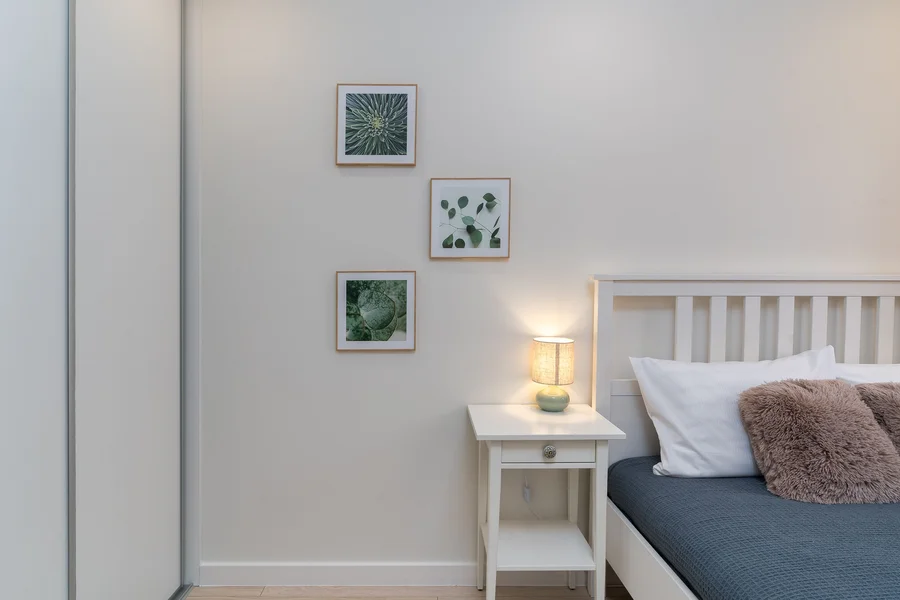
Bare walls make even good bedding look unfinished, because the eye travels from the bed to an empty wall and finds nothing to complete the story. Covering every wall makes the opposite mistake, because the room starts shouting and no single piece gets attention. The fix is one art moment per wall, hung lower than expected, since cottage rooms feel grounded when art sits near eye level, not near the ceiling.
Botanical prints suit this job better than abstract art, because they repeat the garden feeling without repeating the exact print. Keep the art print smaller than the quilt floral, so the bed stays the hero. If the quilt is bold, choose neutral botanicals, and if it is pale, a deeper botanical adds weight.
Also solves this: bare walls with no collected, garden feeling
Cuspin Framed William Morris Canvas Wall Art: Set of 3, 16 by 24 inches
Three framed panels, each 16 by 24 inches, in a vintage neutral botanical floral subject. These are canvas prints, not original artwork. Hang one art moment per wall, not all three crowded on one wall. Not for: readers who want one oversized statement piece, because this set works as three separate moments.
Check Price on Amazon → (paid link)
A mirror does different work from art, because it bounces light instead of adding pattern. Hang it where it catches window light, opposite or beside the window, not facing a blank wall where it doubles nothing. In a dark room, that one bounce can lift the whole space, and it does it without a new color or a new print. Keep the frame vintage in feeling, so the mirror reads as collected rather than modern.
Also solves this: the room feels dark and flat, and a plain modern mirror would break the vintage mood
JIINGYO Arched Mirror for Wall: 20 by 30 inches, Antique Gold
An arch shape wall mirror, 20 by 30 inches, in an antique gold finish with a metal floral frame. At 20 by 30 inches this is a wall accent mirror, not a full length mirror, so place it where it bounces window light rather than using it as a dressing mirror. Not for: readers who need a full length mirror for getting dressed.
Check Price on Amazon → (paid link)
Wall treatment for renters is covered in full in the small rooms section below. Peel and stick wallpaper and beadboard give walls history without paint or drilling, and belong on one wall only. One treated wall plus one art moment plus one mirror is a finished room.
Problem 4: The Floor Feels Cold Underfoot
Bare floors make a cottage bedroom feel unfinished and echoey, because the softest room in the house still meets hard ground at the bedside. The fix is one faded pattern rug big enough that feet land on it when getting out of bed. Low pile matters here, because it vacuums easily and never fights the door or the bench. A faded pattern matters too, because it hides everyday life in a way a crisp new pattern never will.
Size the rug to the bed, not to the room: it should extend past the sides where feet land, and past the foot by enough to step onto in the morning. When a full under bed rug is out of budget, a smaller rug at the bedside still solves the cold floor problem, because the first step of the day is the one that matters. Keep the rug pad note in mind either way, since a pad keeps corners from curling and softens the feel underfoot.

Choose the faded pattern over a bright one when the room already has a floral quilt, because two strong patterns will compete. Let the quilt carry the color and let the rug carry the age, so each piece has one job and does it quietly.
Problem 5: The Windows Feel Bare
Windows are the cheapest place to add cottage feeling, and the easiest place to get wrong. Bare windows leave hard daylight that makes the room feel stark, while heavy drapes shut out the light that cottage rooms need. The fix is soft fabric that moves, hung higher and wider than the window, so the room looks taller and the window looks larger than it is.
Hang the rod close to the ceiling and extend it past the window frame on both sides, so the curtains stack on the wall rather than on the glass when open. That one habit adds height and light at the same time, and it costs nothing beyond a longer rod. Two routes work from there. Go all in with a small floral print when the bedding is plain, or stay soft and simple with white or cream sheers and keep the florals elsewhere.

Also solves this: bare windows and hard daylight that make the room feel stark
ENJOYBRIDAL Pink Floral Curtains: 84 Inches Long, 2 Panels, Floral01 colourway
Two panels, each 52 by 84 inches, in polyester with a floral pattern and a cottage style, semi sheer with a rod pocket of 1.8 inch diameter in the source description. Semi sheer means light filtering, not blackout and not full privacy at night, so pair them with a blind where night privacy matters. The fibre is polyester, and no linen claim is made for this pick. Not for: readers who need blackout or full night privacy from curtains alone.
Check Price on Amazon → (paid link)
Renters can use tension rods for lightweight sheers, and the higher and wider habit still applies as far as the rod allows. If the curtain and the quilt share a color family, the room holds together. If they fight, change the curtain, not the quilt, because the quilt sets the direction.
Problem 6: Collected Turned Into Clutter
Collected is not the same as crowded, and this is the failure mode no rival names plainly. A collected room has a story in every object. A crowded room has objects with no story and no home, piled where they were last used. The difference is not taste, it is storage, and storage is the fix.
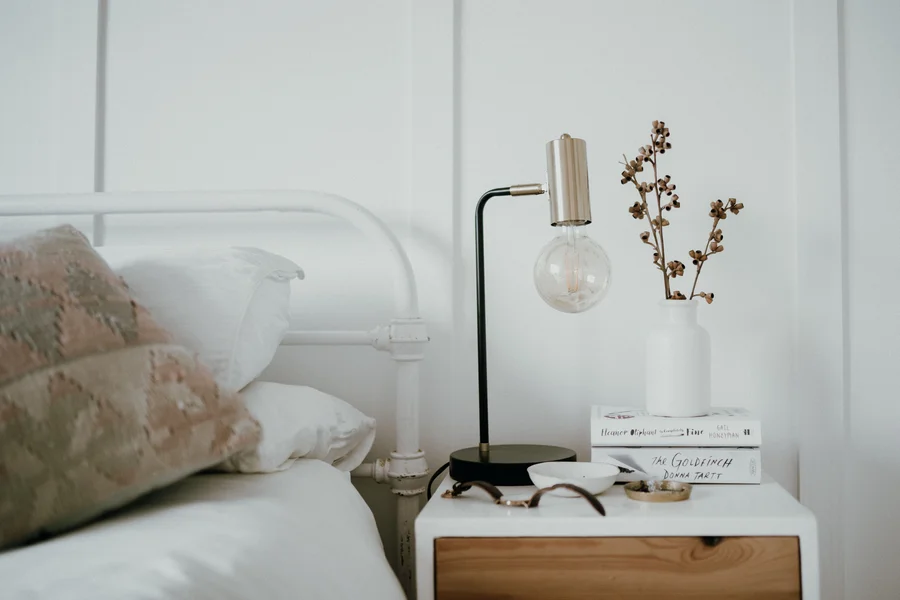
Start with the nightstand rule: three things only, a lamp, one small dish, and one charming item. The dish holds the small things that otherwise spread, like rings and clips. The charming item is the vignette, and it must be one thing, not five small things competing for the same few inches. When the nightstand holds more than three things, something leaves the room, not moves to another surface.
The bench rule comes next. One bench at the foot of the bed holds extra quilts and hides baskets underneath, so the throws that otherwise pile on chairs and the floor finally have a home. The basket rule finishes the system: every loose category gets one woven home, or it leaves the room. Throws get one basket, books get one basket, chargers get one dish, and no category gets two homes.
Baskets carry the storage story further, because rattan and wicker accents add natural texture while they hide the mess. Use nesting baskets so the set adapts as categories grow or shrink, and label nothing, since one home per category is label enough. A small bedroom closet stays usable when baskets hold the overflow, because the closet stops being the place where everything without a home gets pushed.
Also solves this: small categories such as throws, books, and chargers spread across every surface
happimess Avery Bohemian Cottage Handwoven Hyacinth Baskets: Set of 3, Brown
Three nesting cylinder baskets in handwoven natural hyacinth fibre, in brown, with half circle handles, made for living room and bedroom storage. Natural fibre baskets vary slightly, so measure the shelf or bench space before ordering for a tight fit. No individual basket sizes are claimed for this set, because none were printed in the verifying source. Not for: readers who need exact sized bins for a tight shelf, since sizes vary and are not stated.
Check Price on Amazon → (paid link)
The vignette formula keeps the nightstand charming without crowding it: something with height, something with texture, and something personal. A small bud vase with dried stems gives height and texture in one object, and a book or a photograph adds the personal note. Dried stems collect dust fast, so fewer, larger vignettes beat many tiny ones, and one vignette per surface is the limit. Dust gently and replace stems when they fade, because tired dried flowers make a collected room look neglected.
Also solves this: the nightstand looks either empty or crowded, with no single charming focal point
xin’s convey Dried Flowers Bouquet with Vase: White colourway
A hand tied and pre arranged dried flower bouquet with a small ceramic vase included, holding pampas, rabbit tail grass, oatmeal, baby’s breath, and palm leaves, in 100 percent natural flowers in the source description. This is one small nightstand vignette, not a tall floor arrangement, and no vase size is claimed, because none was printed in the verifying source. Before ordering, confirm the White colourway is orderable on this listing. Not for: readers who want a large floor arrangement or fresh flowers that change weekly.
Check Price on Amazon → (paid link)
Cottagecore Bedroom Ideas for Small Rooms and Rentals
Small rooms have a secret advantage: they naturally feel cocoon like, which is exactly the feeling cottagecore wants. A small room needs fewer pieces to feel full, so the audit works faster. The system here is the same audit, with no drill options and visual tricks doing the work that architecture does in larger rooms.
No drill options come first. Tension rods hold lightweight sheers, adhesive hooks rated for the weight hold art and small mirrors, and peel and stick wallpaper and beadboard add history without paint or holes. Beadboard 36 to 48 inches high in white or cream adds history without shrinking the room, because it stops below eye level.
Visual tricks come second. A mirror opposite or beside the window bounces light into dark corners. One large pattern moment, usually the quilt, beats many small ones, because small rooms cannot absorb competing prints. In summer, a cooling bedroom approach helps too, with breathable layers swapped in and heavy throws moved to the bench.
What to skip matters as much as what to buy. Skip four poster beds with canopies, which swallow the ceiling. Skip matching curtain, bedding, and lampshade sets, which read as a display with nowhere to hide. Skip heavy dark throws, and keep the throw light in color and loose in drape.

Steal This Look: Two Cottagecore Palettes, Named
Palette one is garden rose: dusty rose hero, cream and sage supports, a small ditsy floral plus gingham, and antique brass. Shop it through the problem sections: the quilt carries the rose, the shams carry the gingham check, the lamp carries the brass, and the art carries the sage.
Palette two is sage cottage: sage hero, cream and faded blue supports, a trailing vine floral plus a ticking stripe, and aged wood with brass touches. Here the quilt carries the sage, the rug carries the faded blue, the bench carries the aged wood, and the mirror carries the brass.
Choose the palette that matches what the room already has, not the one that photographs best. Warm dark wood suits sage cottage, while cream walls and a pale frame suit garden rose. A palette that fights the givens costs twice as much to fix later.
6 Cottagecore Bedroom Mistakes
- Three large prints at once. The fix is the pattern formula: one large floral, one small print, one check or stripe, and nothing else until one print leaves.
- Matching everything from one shop, which reads as a display. The fix is to buy the quilt first and let later pieces come from different places over time, so the room looks collected rather than delivered.
- Overhead only lighting. The fix is one warm lamp per bedside where possible, plus a low flameless glow for evenings, so the room has pools of light instead of one flat glare.
- Ruffles and linen with no laundry plan. The fix is ruffles on shams rather than a bed skirt, a wash routine you actually keep, and a relaxed wrinkle grade for everyday bedding.
- Collecting without a home for each category. The fix is the basket rule: one woven home per category, or the category leaves the room, starting with the nightstand.
- Copying attic or farmhouse architecture into a room that does not have it. Beams, canopies, and fireplaces belong to rooms that were built with them, and faking them in a flat ceiling room reads as costume, not cottage.
Budget Plans
The low effort starter plan buys the quilt, the throw, and the light fix, and nothing else. That trio changes the bed surface, the bed texture, and the evening feeling. It also doubles as a guest bedroom refresh, because a fresh quilt, a throw, and warm light make a spare room feel cared for without a full redecoration.
The mid plan adds the rug, the curtains, and the art to the starter trio. Those three finish the room envelope, floor, window, and wall, so the room feels complete from the doorway. This is the right plan when the bed already works and the room still feels unfinished.
The full room plan adds the bench, the baskets, the mirror, and the vignette to the mid plan. Those four finish the storage and the collected feeling, so nothing piles and every surface has one intentional moment. Buy in the order listed, so a paused budget leaves a finished looking room at every step.
FAQs
1. What is the difference between cottagecore and farmhouse bedroom style?
Ans: Cottagecore is softer, more floral, and more collected than farmhouse, which is cleaner, more neutral, and more modern in its wood. Farmhouse leans on plain neutrals and straight lines, while cottagecore leans on garden florals, ruffles, and pieces that look found over time. If the room feels like a garden indoors, it is cottagecore. If it feels like a calm modern barn, it is farmhouse.
2. How do I mix floral patterns without the room looking busy?
Ans: Use three colors only, one hero plus two supporting neutrals, and mix print scales inside one color family: one large floral, one small ditsy print, and one check or stripe. Never use three large prints at once, because they compete and the room looks loud instead of layered. When a fourth pattern enters, one existing pattern leaves, which stops the slow creep into overload.
3. Can I do cottagecore in a small bedroom or a rental?
Ans: Yes, and small rooms have an advantage, because they naturally feel cocoon like, which is the feeling cottagecore wants. Use tension rods for lightweight sheers, adhesive hooks rated for the weight, and peel and stick wallpaper or beadboard, all without drilling or paint. Keep one large pattern moment, usually the quilt, and skip canopies and matching sets, which swallow a small room.
4. How do I keep a cottagecore bedroom from looking cluttered?
Ans: Give every category one woven home, or let it leave the room, and run the ten minute tidy test before buying anything new. Keep the nightstand to three things only: a lamp, one small dish, and one charming item. Use one bench at the foot of the bed for extra quilts, and one vignette per surface, because fewer, larger vignettes beat many tiny ones.
5. How do I wash and care for ruffled linen, quilts, and dried flowers?
Ans: Put ruffles on shams rather than a bed skirt, so laundry stays easy, and wash quilts and shams on a gentle cycle, following the care label on each piece. Dry fully before storing, and store quilts where air can move, never sealed in plastic. Dust dried stems gently, keep them to one vignette, and replace them when they fade, because tired dried flowers make a collected room look neglected.
Bottom Line
Buy the quilt first, fix the light second, add one pattern at a time, and stop when the room can be tidied in ten minutes. That audit order is the whole article in one line, and it is also the order to shop in. If a purchase does not fit the step you are on, it waits, no matter how good it looks in a photo.
One rule to remember: collected means every object has a home and a story, not that every surface is full. Keep the three colors, the pattern formula, and the nightstand to three things, and the room will look found over time instead of decorated in a day. Carry that feeling into the boho bathroom next.
Save this cottagecore bedroom audit before your next decor buy: quilt first, warm light second, one pattern at a time, and stop when the room tidies in ten minutes, so your collected room never tips into clutter.
Photos via Pexels: Erik Mclean, Alina Vilchenko, Juan Pablo Serrano, Mateusz Pielech, Andrea Davis, Татьяна Чернышова, Taryn Elliott.