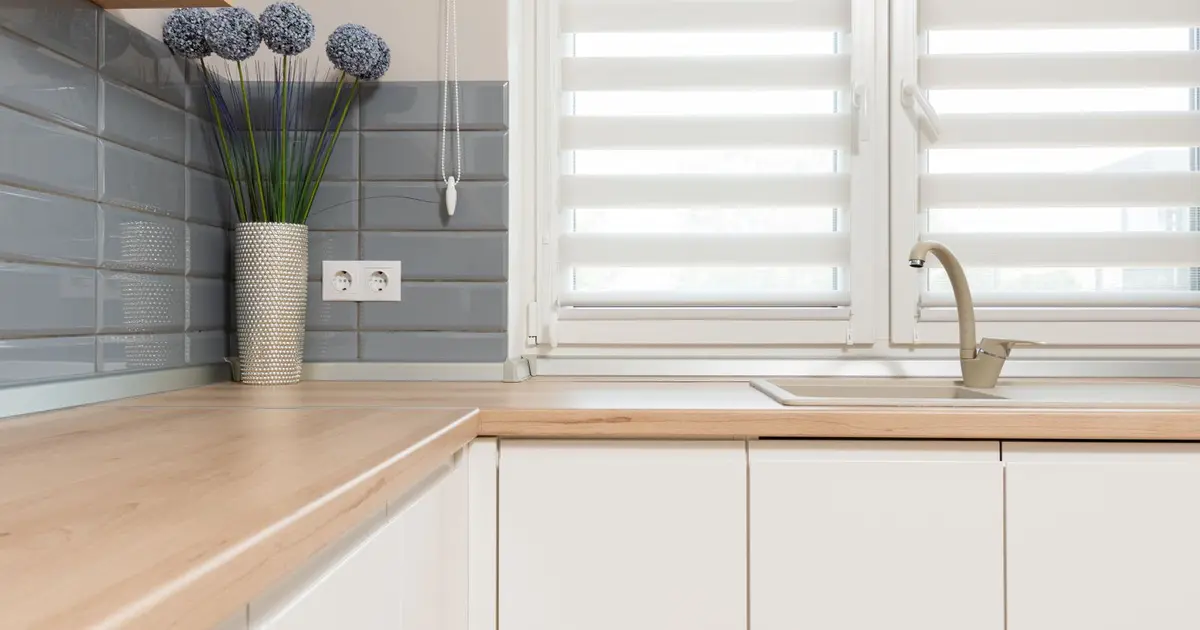
Japandi Kitchen Ideas: Warm Wood, Quiet Stone, and Calm That Cooks
japandi kitchen ideas work best when one warm wood gets the stage and the rest of the room stays calm. Pale oak, warm greige, and one black accent can turn a cold kitchen warm, but only when each one has a clear job. The style fails when the white is cold, the wood is mixed, and the counters are crowded, and it works when one warm wood, one stone, and one calm layer each get a turn.
This article promises a kitchen that cooks as well as it calms. You get a warmth audit, a wood-tone rule, a counter-edit system, a light-temperature rule, a no-renovation plan for rentals, budget tiers in spend order, and 12 researched picks mapped two per problem. Nothing here asks you to buy everything at once.
This article is research based curation, not hands on testing. Where a detail could not be verified, it is left out rather than guessed, and you should check size, color, and contents on the live listing before ordering.
How these picks were chosen: each pick was researched from listing and source pages and checked at the publish date. No star rating is claimed for any pick. Check size, color, and contents on the listing before ordering, because listings and variants change. Where a detail cannot be verified, it is left out rather than guessed.
Affiliate Disclosure: This article contains affiliate links to products on Amazon. As an Amazon Associate I earn from qualifying purchases. The price you pay stays the same, and the commission helps keep The Decor Root running.

The Japandi Kitchen Audit for Japandi Kitchen Ideas
Run seven checks in order before you spend on objects.
First, run the warmth check. Stand in the kitchen at midday and again at dusk. If the white reads blue or grey, the undertone is cold, and the fix is warm wood first, never more white. A kitchen that glows at dusk is a kitchen that feels warm, so judge it at dusk, not at noon.
Second, run the wood check. Count the wood tones on the cabinets, the floor, and the counters. One wood belongs across the cabinets, with a pale default of white oak or ash, and walnut only as an accent. If two pale woods fight, remove one before buying anything.
Third, run the counter check. Clear every counter to bare, then return only what is used daily. Everything else hides in a drawer or leaves the room. A counter that cannot be cleared in two minutes before dinner has too many objects, not too little storage.
Fourth, run the light check. One warm 2700K layer belongs over the island, one under-cabinet layer belongs on the work surface, and one dimmable layer belongs for dinner. If the only light is a cool white overhead, the wood will read cold whatever else changes.
Fifth, run the rental check. If paint and drilling are off limits, hardware, backsplash, textiles, and a freestanding cart carry the style, with no renovation needed. A room that needs paint to read as Japandi has the wrong plan for a rental.
Sixth, run the styling check. Count the objects on the open shelves. If a shelf holds more than five objects, it is storage, not styling, and one shelf comes down before anything goes up. Leave one third of every shelf empty, because the empty space is what makes the objects read as chosen.
Seventh, run the Tuesday check. Does the kitchen work for an ordinary Tuesday dinner, or only when freshly styled? If only when freshly styled, the kitchen needs everyday Japandi first: warm bulbs, a clear counter, and a drawer that holds the utensils.
japandi kitchen ideas are about warmth first and minimalism second, not about an empty room. A room with one warm wood, one stone, and one calm layer reads as a Japandi kitchen, while a room with nothing in it reads as a room that was never finished.
This article works the cabinets, the counters, and the light, while rest and soft textiles live in japandi bedroom ideas, and the table and the gathering live in the Japandi dining room.
Quick Decision Table: By Starting Point
Find your starting point, then move to the next section.
| Starting point | First move |
|---|---|
| Kitchen that photographs sterile and cold | Warm wood on the counter first, warm greige on one wall, 2700K bulbs, one black accent, never more white |
| Kitchen with flat slab cabinets that read blank | Matte black pulls, a wood cutting board set on the counter, a stone slab backsplash, never glossy hardware |
| Kitchen where counters never stay clear | Drawer organizer, three canisters, one utensil holder, everything else hides or leaves |
| Kitchen where the light turns warm wood cold | Rattan pendant over the island, 2700K bulbs everywhere, one dimmer, never a cool white overhead alone |
| Rental with no renovation allowed | Peel-and-stick backsplash, hardware swap, freestanding island cart, linen-look runner, photograph the original hardware first |
| Kitchen that feels empty and unfinished | Handmade ceramics on one open shelf, one wooden bowl, one plant, never a second shelf of decor |
| Household where one partner loves warm wood and one loves clean white | White uppers, wood lowers, one stone, so each side of the room reads differently |
| Kitchen with low natural light | Warm white uppers, pale oak lowers, one rattan pendant as the glow, mirrored backsplash tile, never a dark accent wall |
The rental row needs the most discipline, because a rental has no paint to do the zoning. The hardware, the backsplash, the textiles, and the cart are the four markers, and the table and the gathering that sit beside them are shown in japandi dining room ideas.
Problem 1: The Cold White Kitchen That Photographs Sterile
The failure is white cabinets plus white counters plus white walls plus cool white light, so the kitchen photographs like a clinic and feels cold at dusk. The room looks clean in a photo and cold in real life, because nothing in it holds warmth.
The reason the fix works is not colour, it is comfort. The brain reads warm wood tones and soft matte textures as safe and comfortable, while all-white glossy surfaces read as clinical, even sterile. Swapping even 20 percent of the kitchen’s surfaces to natural materials shifts that whole emotional response, so the fix is warmth in the materials, not more colour.
The fix starts with the warmth fork, in order. Set the wood tone first, then the undertone, then the light. A kitchen that skips the wood and paints the wall first stays cold, because the wall is not where the warmth lives.
The wood rule puts warmth on the counter before any wall change. A cutting board set, a wooden bowl, and a utensil holder give the eye warm wood at hand height, where the cooking happens. One warm wood on the counter does more than a whole wall of warm paint. Two or three boards leaned against the backsplash double as storage and styling.
The undertone rule keeps the wall honest. Warm greige beats plain white, so Benjamin Moore Pale Oak OC-20 or Sherwin-Williams Accessible Beige SW 7036 on one wall warms the room without darkening it. Never use a blue-white, because a blue-white turns the whole kitchen grey at dusk.
The textile rule warms the lower half of the room. A striped cotton towel in beige hung on a drawer pull and a linen-look runner on the floor soften the hard surfaces. A woven jute or linen table runner on the island does the same work on the stone counter. Textiles are the cheapest warmth in the kitchen, and they wash.
The seat rule gives the room somewhere to sit. Warm wood bar stools with simple, rounded silhouettes replace metal or acrylic ones, so the seating warms the room instead of cooling it.
The accent rule keeps the warmth from turning yellow. Exactly one black accent belongs in the room, a pull, a faucet, or a frame, never a second black that turns the room graphic. One black line gives the warm palette its edge.
The photo rule decides when the room is done. If the kitchen still photographs cold, the light is the problem, not the paint. Change the bulbs before you change the wall color, because a cold bulb makes every warm wall read grey.

The board set below is the warm wood anchor for this system: an acacia cutting board set of 3, for the counter, where warm wood does the whole job before any wall change.
The towels below are the warm textile layer for this system: a cotton towel set in beige, for the drawer pull, where a striped towel warms the lower half of the room.
Also solves this: the white kitchen that needs a warm textile, not another white object
LANE LINEN Cotton Kitchen Towels and Dish Cloths Set, 6-Pack, Absorbent, Quick-Drying Dish Towel, 18″ x 28″, Soft, Premium Hand and Tea Towels – Beige
Set of 6, 18 by 28 inches, 100 percent cotton, absorbent, quick-drying, beige, as printed. Ships from Amazon, sold by Homespun Global, as printed. Not for: a reader who wants linen towels, because the material is cotton and this listing is cotton only.
Check Price on Amazon → (paid link)
Warmth earns its place on the counter, so judge it there, at dusk, with the bulbs on, as shown in the colour and warmth fork in color psychology ideas for kitchens.
Problem 2: Cabinets That Read Flat, Not Calm
The failure is flat slab cabinets with no hardware, no grain, and no shadow line, so the wall reads blank instead of calm. The cabinets are clean, the wall is clean, and the room feels unfinished, because nothing gives the eye a place to land.
The fix starts with the hardware rule. Matte black pulls at one size, 5-inch hole center, run across the whole kitchen, because mixed sizes read as a mistake. One pull size, one finish, one line down the wall is what turns a blank cabinet into a calm one.
The faucet rule gives the sink wall its strong line. A matte black pull-down faucet matches the pulls and gives the room one dark vertical, so the eye has a place to rest. The faucet and the pulls must match, because two black finishes read as two decisions. A single ceramic soap dispenser at the sink replaces a plastic bottle and ties the sink area into the rest of the palette.
The grain rule gives the eye the texture the cabinets withhold. Visible grain on the counter, a wood board set, a wooden bowl, a utensil holder, tells the hand the room is made of real material. Flat cabinets need grain somewhere, or the room feels printed, not built.
The shadow rule adds depth without adding pattern. Finger grooves or a slim shadow gap on slab fronts add a line of shadow where the door meets the frame. That shadow is the detail that keeps a flat front from reading as a flat wall.
The two-tone note keeps this section brief on purpose. Warm white uppers with wood lowers is the safe split, and the full two-tone guide is a separate article, so this section states the split and moves on. One stone across the perimeter and the island keeps the split calm.
The gloss rule finishes the cabinet plan. Nothing glossy belongs on the cabinet fronts, and the stone stays honed and matte. Gloss on a flat front glares under the light, while matte absorbs it and lets the wood do the warming.
The glass rule gives glass-front cabinets their texture. Fluted or reeded glass hides the contents while adding texture, so a glass front reads as a detail, not a display case.
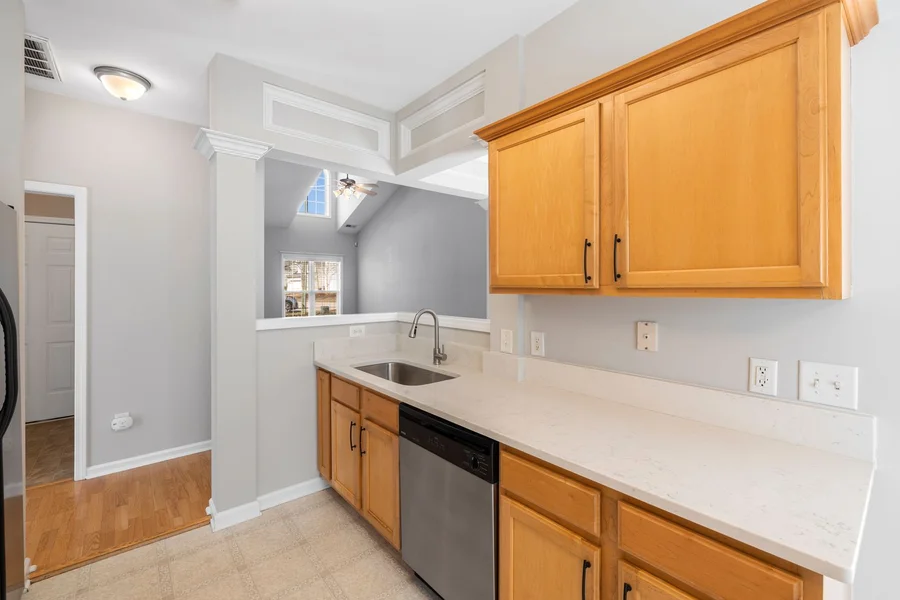
The pulls below are the hardware layer for this system: a matte black pull set, for the cabinet fronts, where one pull size runs across the whole kitchen.
Also solves this: the flat cabinet wall that needs one black line, not a new cabinet
Ravinte Hardware 10 Pack Matte Black Cabinet Pulls, 5 Inch (128mm) Hole Center Zinc Alloy Drawer Handles for Kitchen Cabinets, Cupboards, Dressers, Square Solid Metal Hardware
Pack of 10, 5 inch (128mm) hole center, overall length 5-25/32 inches (147mm), projection 31/32 inches, bar width 9/16 inches, zinc alloy, matte black, square solid metal, as printed. Measure the existing hole spacing before ordering, because the hole center is 5 inches. Not for: a reader who needs a different hole spacing, because this pull fits a 5-inch hole center only.
Check Price on Amazon → (paid link)
The faucet below is the sink wall anchor for this system: a matte black pull-down faucet, for the sink, where one strong black line meets the pulls.
Cabinets earn their calm from one hardware size and one grain, so judge them there, with the pulls on and the counter set, as shown in the warm texture register in boho kitchen ideas.
Problem 3: Counters That Collect Everything
The failure is a counter that holds the knife block, the coffee maker, the fruit bowl, the mail, the charging cable, and the plant, so the room reads as cluttered whatever the cabinets do. The cabinets are calm, the counters are crowded, and the calm is lost at the work surface.
The fix starts with the counter-edit system. Clear every counter to bare, then return only what is used daily. Everything else hides in a drawer or leaves the room. A counter that holds only the daily tools reads as a kitchen that is used, not a kitchen that is stored on. The air fryer and the stand mixer live in a cabinet, because empty counter space is part of the design, not wasted space.
The drawer rule gives the utensils a home. One expandable bamboo organizer with 7 to 9 slots holds the cutlery and the cooking tools, so the counter holds none of them. Measure the drawer first, because the organizer expands to 20 inches and a narrower drawer will not take it.
The canister rule gives the dry goods a home. Three ceramic canisters with bamboo lids hold coffee, tea, and sugar, so no bags or boxes sit out on the counter. One set, three jars, one material, and the counter keeps its calm.
The basket rule gives the produce a home. A woven basket holds onions, garlic, and root vegetables, so the produce sits in a warm material instead of a plastic bin.
The holder rule gives the cooking tools a home. One rotating acacia utensil holder holds the spoons and spatulas, so the crock is the only object on the counter. Measure the counter depth first, because the holder is 5.9 inches square and a narrow counter will not take it.
The one-shelf rule gives the daily dishes a home. One open shelf holds the daily bowls, and a second shelf holds nothing until the first shelf earns it. A shelf that holds five objects at most reads as styling, while a shelf that holds fifteen reads as storage.
The Tuesday rule tests the whole system. If the counter cannot be cleared in two minutes before dinner, the system has too many objects, not too little storage. Remove one object, not one more organizer, because the organizer is not the problem when the counter stays crowded.
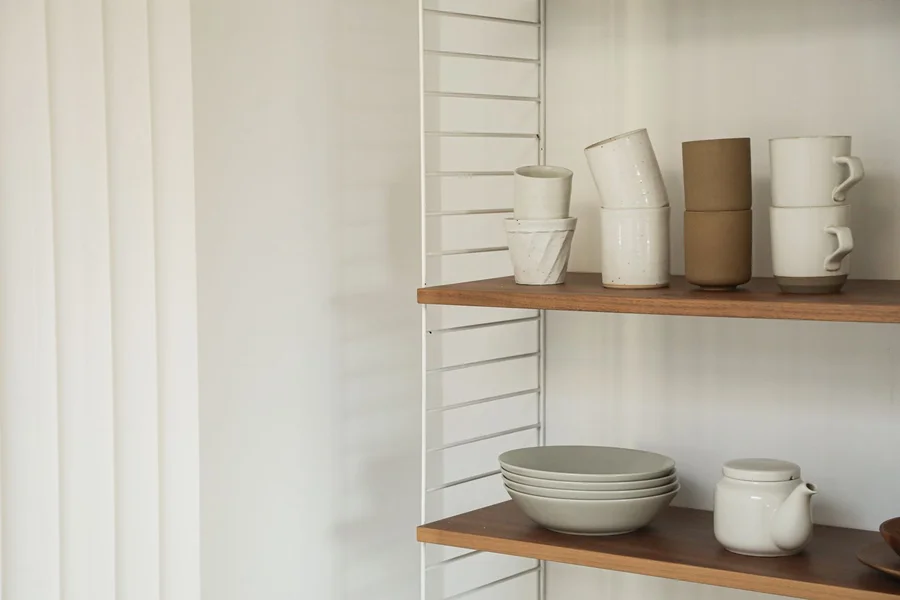
The organizer below is the counter edit layer for this system: an expandable bamboo drawer organizer, for the utensil drawer, where the tools hide so the counter stays bare.
Also solves this: the crowded counter that needs its utensils in a drawer, not on display
Purawood Bamboo Drawer Organizer – Expandable Silverware Organizer & Utensil Organizer, Cutlery Tray with Dividers, 7-9 Slots – Premium Kitchen Drawer Organizer for Utensils & Flatware (Black)
17.5 inches long, 2 inches deep, 13 inches wide with 3 compartments, expanding to 20 inches with 9 compartments, bamboo, as printed. Measure the drawer before ordering, and confirm the colour on the listing, because the verifying source shows the Black variant. Not for: a reader who wants a fixed tray, because this organizer expands to fit the drawer.
Check Price on Amazon → (paid link)
The canisters below are the counter storage layer for this system: a ceramic canister set of 3, for the counter, where coffee, tea, and sugar live in one set instead of three bags.
Also solves this: the counter that holds three open bags where one set should stand
KOOV Kitchen Canisters Set with Bamboo Lids, Ceramic Coffee Canister Sets for Kitchen Counter Set of 3, 74oz Tea Sugar Coffee Canister Set for the Kitchen Airtight, Embossed Series (White)
Set of 3, 70 oz at 5.51 by 5.51 by 7.87 inches, 40 oz at 4.53 by 4.53 by 6.3 inches, 25 oz at 3.54 by 3.54 by 5.12 inches, porcelain, embossed pattern, bamboo lids, silicone seal, airtight, white, as printed. Confirm the sizes and the airtight seal on the listing before ordering, and check availability on the live listing. Not for: a reader who wants a single large canister, because this listing is a set of 3.
Check Price on Amazon → (paid link)
Counters earn their calm from what leaves them, so judge them there, with the drawer shut and the canisters closed, as shown in the counter edit and the daily ritual in coffee bar ideas.
Problem 4: Light That Turns Warm Wood Cold
The failure is one cool white overhead fixture, so pale oak reads grey, white reads blue, and the room feels cold at night. The wood is warm, the stone is warm, and the light is cold, so the room fights itself every evening.
The fix starts with the Kelvin rule. Use 2700K warm white everywhere, and nothing above 3000K in the kitchen. Warm bulbs at the island carry the evening, while cool white bulbs overhead keep the room alert and cold.
The pendant rule gives the room its warm pool of light. One rattan or woven pendant over the island gives the room a woven texture and a glow at hand height, hung low enough to feel connected to the island. One pendant, not a row, is the Japandi dose.
The bulb rule keeps the pendant warm. Dimmable G25 globe bulbs at 2700K go in the pendant, so the light can drop for dinner. Confirm dimmable on the live listing for the 6-pack before ordering, because a 12-pack variant prints non-dimmable and the pack size matters.
The layer rule gives the room three heights of light. A pendant over the island, an under-cabinet light on the work surface, and one dimmable layer for dinner give the room its layers. Never a single overhead alone, because one overhead flattens every surface it touches.
The shade rule softens the daylight. Bamboo roman shades filter the light softly and echo the wood tones elsewhere in the room, so the window warms the room instead of glaring into it.
The black rule keeps the warm light from turning the room yellow. One black accent in the light, a matte black faucet or a black pull, holds the warm glow in place. Warm light with no black in the room reads as a yellow wash, while one black line gives it an edge.
The dusk rule decides when the room is done. Test the light at dusk, not at noon, because a kitchen that glows at dusk is a kitchen that feels warm. A room that passes at noon and fails at dusk needs a warmer bulb, not a warmer wall.
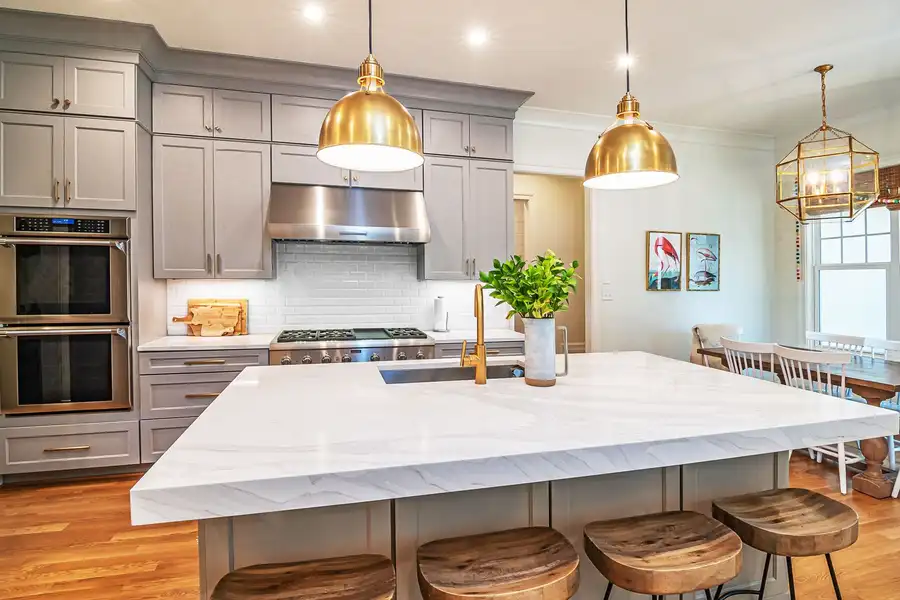
The pendant below is the warm light anchor for this system: a bamboo rattan pendant light, for the island, where one woven pendant gives the room its warm pool of light.
The bulbs below are the warm light layer for this system: a 6-pack of dimmable G25 globe bulbs, for the pendant, where 2700K light drops for dinner.
Also solves this: the pendant that glows too bright to eat under
TORCHSTAR 6-Pack G25 Globe Light Bulbs LED Dimmable 2700K Soft White
Pack of 6, G25 globe, 4.5W, 60W equivalent, 500 lumen, dimmable 10 to 100 percent, E26 base, 2700K soft white, as printed. Confirm dimmable on the live listing for the 6-pack before ordering, because a 12-pack variant prints non-dimmable. Not for: a reader who wants a frosted bulb or a cool white bulb, because these are clear globe bulbs at 2700K soft white.
Check Price on Amazon → (paid link)
Light earns its place at dusk, so judge it there, with the pendant dimmed and the under-cabinet light on, as shown in the warm light and wood register in modern farmhouse dining room ideas.
Problem 5: The No Renovation Japandi Kitchen for Rentals
The failure is a renter who waits for permission to renovate, and the kitchen stays cold for years. The walls stay blank, the hardware stays builder grade, and the Japandi plan never starts because renovation was treated as the first step.
The fix starts on the wall behind the sink. Peel-and-stick subway tile in stone beige, 3 by 6 inches, changes the wall without touching it, and it comes down at move out. State the piece count and the size only, and check the coverage on the live listing before ordering, because sources conflict on the coverage for this tile.
The hardware rule comes next. Swap the pulls, keep the originals in a labelled bag, photograph the original hardware first, and put it all back at move out. The pulls are the cheapest change in the kitchen, and they are the first thing a visitor touches.
The cart rule adds a work surface with no drilling. A rolling island with a drop-leaf top, a spice rack, and a towel rack adds a counter and storage in one piece. The material is engineered wood plus metal, not solid wood, so measure the floor space first, because the island is 27.6 inches deep by 43.3 inches wide.
The textile rule warms the room for the price of a lunch. Beige cotton towels on the drawer pull and a linen-look runner on the floor soften the hard surfaces. Textiles are the fastest warmth in a rental, and they move with you.
The plant rule keeps the living layer to one pot. One herb pot on the windowsill is the only living thing the kitchen needs, and it gives the room a green note without a row of plants. A herb pot counts as the plant, so no second plant goes up.
The lease rule protects the deposit. Check the lease before any adhesive or hardware change, and keep every receipt, because most leases allow reversible changes and prohibit permanent ones. A no-renovation plan is also a deposit safe plan when every change comes down.
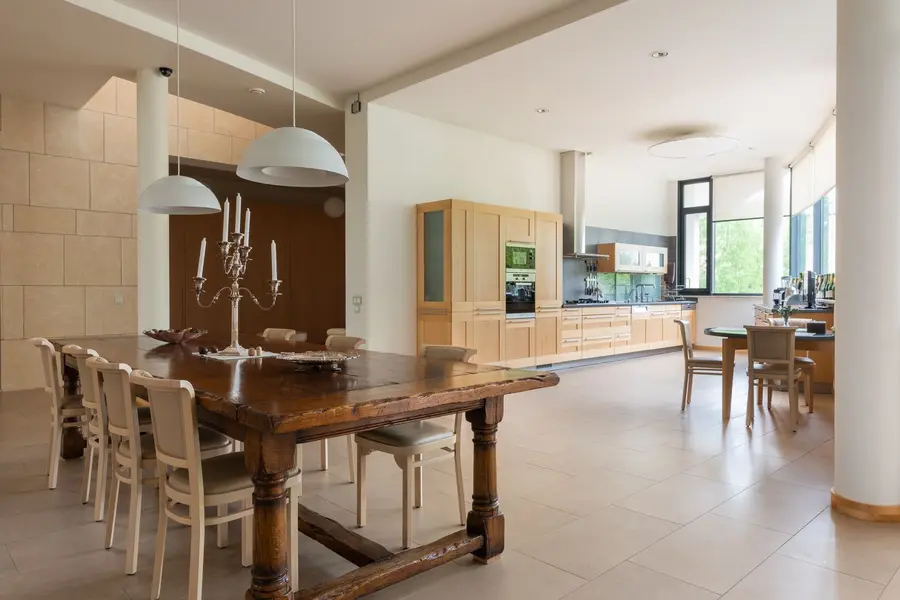
The tile below is the rental wall layer for this system: a 102-piece peel-and-stick subway tile set, for the backsplash, where a stone beige wall appears without touching the old one.
Also solves this: the blank rental backsplash that needs a stone beige wall, not a renovation
Art3d 102-Piece Peel and Stick Wall Tile for Kitchen Backsplash, Bathroom, Fireplace, 3in. × 6in. Stick on Subway Tile Stone Beige
102 pieces, 3 by 6 inches each, PVC, peel and stick, waterproof, heat resistant, stain resistant, scratch resistant, stone beige, as printed. Check the coverage on the live listing before ordering, because sources conflict on the coverage for this tile. Not for: a reader who wants real stone tile, because this is PVC peel-and-stick tile.
Check Price on Amazon → (paid link)
The island below is the rental work surface anchor for this system: a rolling kitchen island on wheels, for the center of the room, where a work surface and storage arrive without drilling.
A rental Japandi kitchen earns its look from reversible changes, so judge it there, with nothing drilled and everything labelled, as shown in the lived-in kitchen register in farmhouse cottage kitchen ideas.
Problem 6: Styling That Tips Into Clutter
The failure is open shelves filled with every bowl, mug, and vase in the house, so the shelves read as storage, not styling. The ceramics are handmade, the wood is warm, and the shelf is still cluttered, because the count is wrong, not the objects.
The shelf swap comes first. Replace one run of upper cabinets with floating oak shelves, and a wall of flat white doors breaks at once, before a single object goes up.
The fix starts with the five-object rule. A shelf holds five objects at most, and one shelf comes down before anything goes up. A shelf that holds five objects reads as chosen, while a shelf that holds fifteen reads as a cupboard with no doors.
The handmade rule gives the shelf its wabi-sabi texture. Handmade ceramics, a porcelain bowl set with a hand-painted gradient, a speckled pitcher, a wooden bowl, give the shelf the imperfection that flat white dishes cannot. The flaw is what makes the room feel human, not staged.
The repeat rule keeps the shelf calm. Repeat one material, wood, ceramic, or stone, across the shelf, never three materials fighting. One material repeated reads as a choice, while three materials at once read as a collection with no theme.
The empty-space rule gives the objects their air. Leave one third of every shelf empty, because the empty space is what makes the objects read as chosen. A shelf with no empty space has no calm, whatever the objects cost.
The plant rule keeps the living layer to one pot. One plant, never a row of plants, and a herb pot counts as the plant. A single green note on the shelf warms the ceramics, while a row of plants turns the shelf into a garden. A trailing pothos or an olive tree works as that one plant, and one plant well placed beats five scattered ones.
The rotation rule keeps the shelf fresh without buying anything new. Swap one object per season, so the shelf changes with the year and the room never feels stale. One object out, one object in, and the shelf stays a styling choice, not a storage habit.
The wall rule finishes the room with one piece. A single textured piece above the open shelving, a woven wall hanging or one framed print, completes the look without crowding the wall.
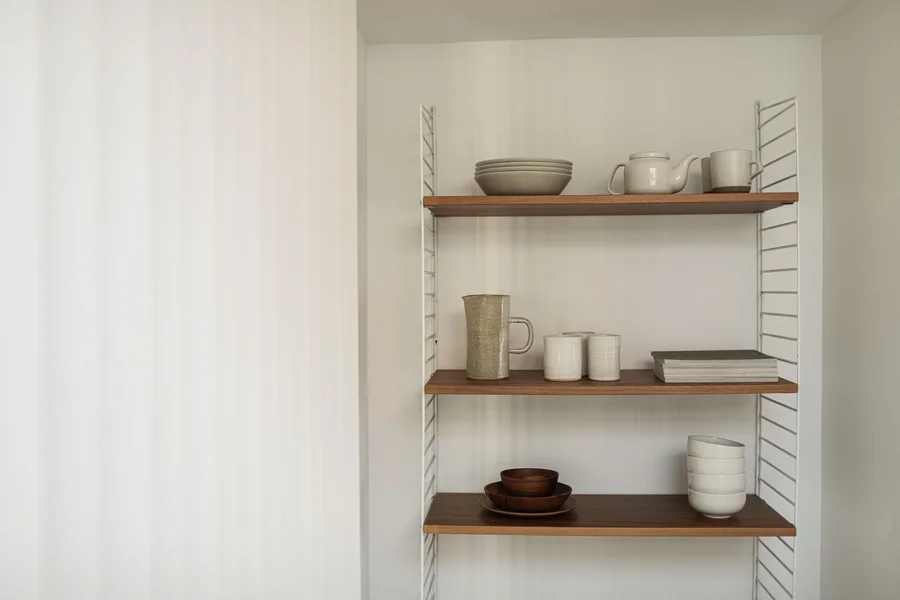
The bowls below are the handmade styling layer for this system: a porcelain bowl set of 6, for the open shelf, where a hand-painted gradient gives the shelf its wabi-sabi texture.
Also solves this: the shelf of flat white dishes that reads as storage, not styling
Sweese 20 Oz Porcelain Bowls Set of 6 – Durable for Cereal, Soup, Rice, Pasta, Salad, Oatmeal – Microwave Dishwasher Safe, White
Set of 6, 20 oz each, high-temp fired porcelain, hand-painted gradient, microwave and dishwasher safe, white, as printed. Ships from Amazon, sold by Kitchen Lifestyle Solutions, as printed. Each bowl carries a unique hand-painted gradient, so the 6 bowls are not identical. Not for: a reader who wants six identical bowls, because the gradient is unique per bowl.
Check Price on Amazon → (paid link)
The holder below is the counter styling layer for this system: a rotating acacia utensil holder, for the counter, where the cooking tools stand in one holder instead of a crowded crock.
Also solves this: the counter crock that holds every tool in the drawer at once
Acacia Wood Utensil Holder, 360 Rotating, Large Countertop Organizer, Farmhouse Kitchen Decor
5.9 by 5.9 by 7.3 inches, holds 15 plus utensils, acacia wood, 360 degree rotating, as printed. Measure the counter depth before ordering, because the holder is 5.9 inches square and a narrow counter will not take it. Not for: a reader who wants a fixed holder, because this holder rotates.
Check Price on Amazon → (paid link)
Styling earns its place on one shelf, so judge it there, with five objects and one third empty, as shown in the warm wood and clean line register in mid-century modern kitchen ideas.
Steal This Look: Two Japandi Kitchen Palettes, Named
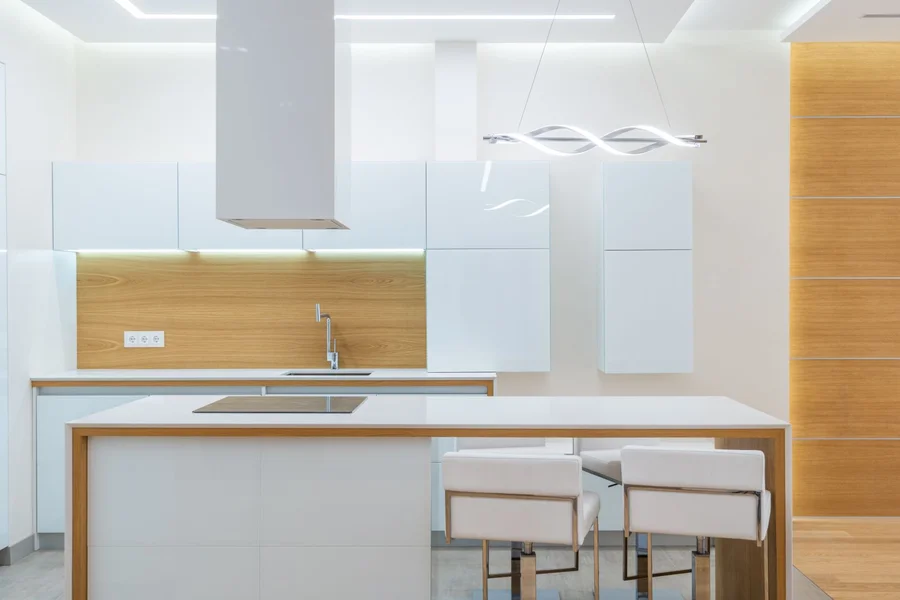
Palette one, Pale Oak and Warm Greige: Benjamin Moore Pale Oak OC-20 or Sherwin-Williams Accessible Beige SW 7036 on the walls, white oak or ash cabinets, honed quartz or warm-cream stone counters, matte black pulls, one rattan pendant, and linen towels in beige. The pale wood does the warmth, the greige does the calm, and the black pull gives the glow its edge.
Palette two, Walnut and Warm Charcoal: Farrow and Ball Ammonite or Elephant’s Breath No.229 on the walls, walnut as the single dark wood accent, warm charcoal on one lower run or the island base, aged brass hardware, soapstone or honed quartz counters, and handmade ceramics in white and stone. The walnut does the mood, the charcoal does the depth, and the brass warms the whole room.
Choose by the givens, not by taste alone. Rooms with strong daylight suit Pale Oak and Warm Greige, because bright light keeps pale wood crisp. Rooms with low natural light suit Walnut and Warm Charcoal, because the dark wood gives the room a glow to hold. Cooks who want calm at the counter suit Pale Oak and Warm Greige, while hosts who want mood suit Walnut and Warm Charcoal.
The one-wood rule still holds in both palettes. One wood belongs across the cabinets, and walnut stays an accent, one shelf, one island edge, never the whole kitchen. A room with two pale woods fighting reads as a mismatch, not a match, whatever the palette name says.
6 Japandi Kitchen Mistakes
A mistake list works as a system, so run it before you buy the next piece.
- Going so minimal the kitchen is uncomfortable, with nowhere to sit, nothing to touch, and no warmth at the counter.
- Two pale woods fighting, so the cabinets and the floor read as a mismatch, not a match.
- Walnut used as the main wood, so the room turns dark and heavy instead of warm and calm.
- Glossy cabinet fronts and glossy stone, so the room glares under the light.
- A cool white overhead as the only light, so pale oak reads grey and white reads blue.
- Open shelves filled like storage, so the styling reads as clutter and the calm is lost.
Budget Plans
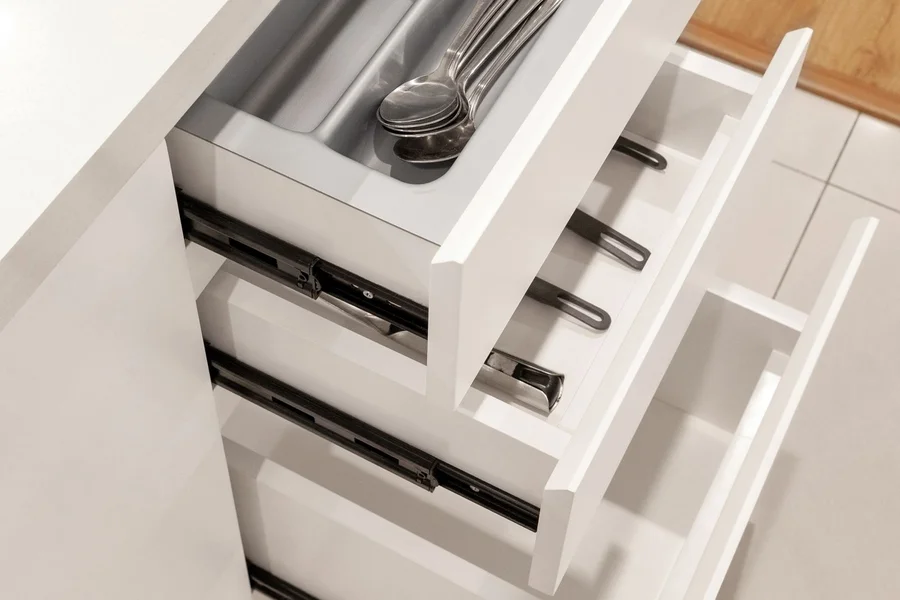
The cosmetic plan costs the least and changes the most. The drawer edit first, then the hardware swap, then the towels and the wooden bowl, then the 2700K bulbs, nothing else. This plan suits renters, and it proves the palette before any wall work is bought.
The refresh plan adds the peel-and-stick backsplash, the rolling island cart, the rattan pendant, and the three canisters, to the cosmetic plan. The backsplash gives the room its wall, the cart gives it its work surface, and the pendant gives it its glow.
The remodel plan adds flat-front cabinets in white oak or ash, honed quartz counters, one stone slab backsplash, integrated appliances, and the layered light plan, to the refresh plan. The room gets its cabinets in one wood, and the light layers keep the new surfaces warm. A large-format stone-look tile works in place of the slab, because fewer grout lines mean a calmer visual field.
Buy in the order listed, so a paused budget leaves a finished looking room at every step. Test before you spend: run the drawer edit and the hardware swap first, live with them for two weeks, and only then commit to the backsplash or the cart. The drawer edit in the photo above comes before the paint, never after.
The time plan runs the same order on a calendar. This week, clear the counters to bare and add one ceramic canister set. This month, swap the hardware and add one wood shelf. Within the season, tackle the pendant light and the backsplash if the budget allows. Sequence matters more than speed here.
FAQs
1. What is a Japandi kitchen?
Ans: A Japandi kitchen blends Japanese minimalism and wabi-sabi with Scandinavian hygge and warm minimalism. It uses natural materials like light oak, ash, stone, and linen, warm neutral colours, flat-front cabinets, and very little decoration. The rule is warmth first and minimalism second: a Japandi kitchen is calm because it is warm, not because it is empty.
2. What colours define a Japandi kitchen?
Ans: Warm beige, taupe, muted sage, off-white, and warm greige define the palette, with pale wood as a colour in itself. Named paints that competitors cite are Benjamin Moore Pale Oak OC-20 and White Dove OC-17, Sherwin-Williams Accessible Beige SW 7036, Shoji White SW 7042, and Evergreen Fog SW 9130, and Farrow and Ball Ammonite and Elephant’s Breath No.229. Add one black or charcoal accent, and muted olive or warm charcoal for a moodier room. Avoid blue-white walls and glossy finishes, because they turn the warm palette cold.
3. Can I do a Japandi kitchen in a rental without renovating?
Ans: Yes, and renovation is the least useful Japandi move in a rental. Swap the cabinet pulls and keep the originals in a labelled bag, add a peel-and-stick stone beige subway tile backsplash, roll in a freestanding island cart with a drop-leaf top, hang beige cotton towels, and put one herb pot on the windowsill. Photograph the original hardware before you change anything, and check the lease, because most leases allow reversible changes and prohibit permanent ones.
4. How do I keep a Japandi kitchen warm instead of cold and clinical?
Ans: Run the warmth fork in order. Set the wood tone first, with one warm wood on the counter before any wall change. Set the undertone next, with warm greige instead of plain white. Set the light last, with 2700K warm white bulbs everywhere and one woven pendant over the island. Keep exactly one black accent, leave one third of every shelf empty, and test the room at dusk, not at noon, because a kitchen that glows at dusk is a kitchen that feels warm.
5. What is wabi-sabi, and how does it show up in a kitchen?
Ans: Wabi-sabi is the Japanese idea that beauty lives in imperfection, age, and the handmade. In a kitchen it shows up as handmade ceramics with a hand-painted gradient, visible wood grain, a wooden bowl with a worn edge, linen that wrinkles, and plaster or limewash texture. It is the reason a Japandi kitchen keeps one imperfect object on the shelf: the flaw is what makes the room feel human, not staged.
Bottom Line
Warmth first, wood second, counters third, light fourth: run the audit, set the wood tone, clear the counters, set the bulb temperature, then choose the wall colour. That order is the whole article in one line, and it is also the order to shop in.
A Japandi kitchen earns its calm from order, not from expense alone. One warm wood, one stone, one calm layer, a neutral base, warm 2700K light at dusk, and a rental plan that needs no renovation do more than any single purchase can. Start with the audit, buy in the tier order, and stop when the room works on a Tuesday night.
Save these Japandi kitchen ideas to your Pinterest board, so your warm wood and quiet stone plan is ready when you start shopping!
Photos via Pexels. Photo credits: hero and featured, Max Vakhtbovych, Pexels ID 6580229; warm counter, PNW Production, Pexels ID 8251827; wood cabinets, Curtis Adams, Pexels ID 7027783; open shelves, Cup of Couple, Pexels ID 6963800; island light, Curtis Adams, Pexels ID 4800175; lived-in room, Max Vakhtbovych, Pexels ID 6908359; ceramic shelf, Cup of Couple, Pexels ID 6963818; two-tone, Max Vakhtbovych, Pexels ID 7214463; drawer edit, Hakim Santoso, Pexels ID 9646744.