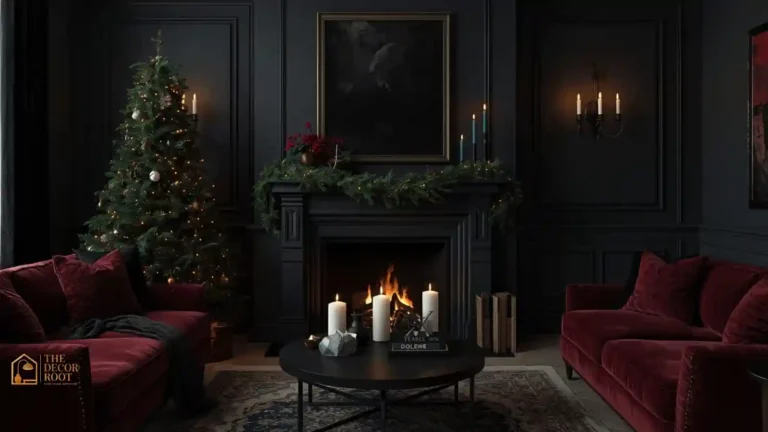
Moody Living Room Ideas: 20 Warm Lighting Transformations
A moody living room isn’t a dark living room that forgot to install enough lights. It’s a room that uses light as a design tool, deliberately, sparingly, and with obsessive attention to warmth and direction. If your living room currently feels like a waiting room (flat overhead light, beige walls, furniture you tolerate rather than love), this list exists specifically for you. These 20 moody living room ideas are built around warm lighting as the primary strategy, because light is the single element that controls everything else: how colors read, how textures feel, how comfortable people feel staying in your space. Get the light right, and everything else follows. A moody living room built on warm lighting is one of the most inviting home decorating ideas available; it creates an atmosphere that makes people slow down, sink into the sofa, and stay far longer than they planned to.
This post contains affiliate links. As an Amazon Associate, I earn from qualifying purchases. If you buy through these links, I may earn a small commission at no extra cost to you.
Why Most Living Rooms Miss the Mood Entirely
The average living room is lit with one overhead fixture that was installed by whoever built the house and never touched again. That single flat light source washes out every color, removes all texture depth, and signals ‘functional space’ rather than ‘place to inhabit.’ Moody rooms multiply light sources and drop the color temperature of each one. It’s not about having less light; it’s about having better light placed deliberately. Warm, moody, and dark cinematic are two expressions of the same instinct, the desire for a living room that feels like an experience rather than a backdrop. These cinematic, dark, moody living room ideas show how taking the same warm-lighting philosophy further into deep color and shadow creates a room with an entirely different level of drama.
The Light Temperature Principle You Need to Know
Color temperature is measured in Kelvin (K). Daylight is 5000- 6500 K, bright, clinical, great for offices and bathrooms. Warm white is 2700K, the closest to candlelight without being actually dim. Amber/candlelight is 2200K and below, the warmest possible artificial light. Moody living rooms live in the 2200K-2700K range exclusively. Every bulb swap you make in this direction costs almost nothing and changes the entire register of the room. Warm, moody lighting is one approach to a great living room atmosphere. Browse all our living room decorating ideas to see how it compares with white, blue, luxury, and dark cinematic approaches to the same space.
1. Replace Every Overhead Bulb with a 2200K Warm Amber Equivalent
This is the non-negotiable first step in any moody living room transformation. 2200K bulbs cast a warm amber glow that makes dark paint colors richer, skin tones warmer, and wood furniture appear to have depth. Smart bulbs (Philips Hue, LIFX) allow you to dial the temperature dynamically, cool when you need clarity, and amber when you want atmosphere. A set of smart bulbs for the entire room pays for itself in the first week of use. 2200K smart bulb sets, smart dimmer switches, and warm-amber floor lamp sets. Nothing in a living room produces a warm, moody atmosphere as reliably as a fireplace. These warm fireplace and living room lighting ideas show how to design around the hearth as the primary light source, supplementing it with candles, table lamps, and dimmable fixtures that match its amber warmth.
2. Layer Three Distinct Light Sources
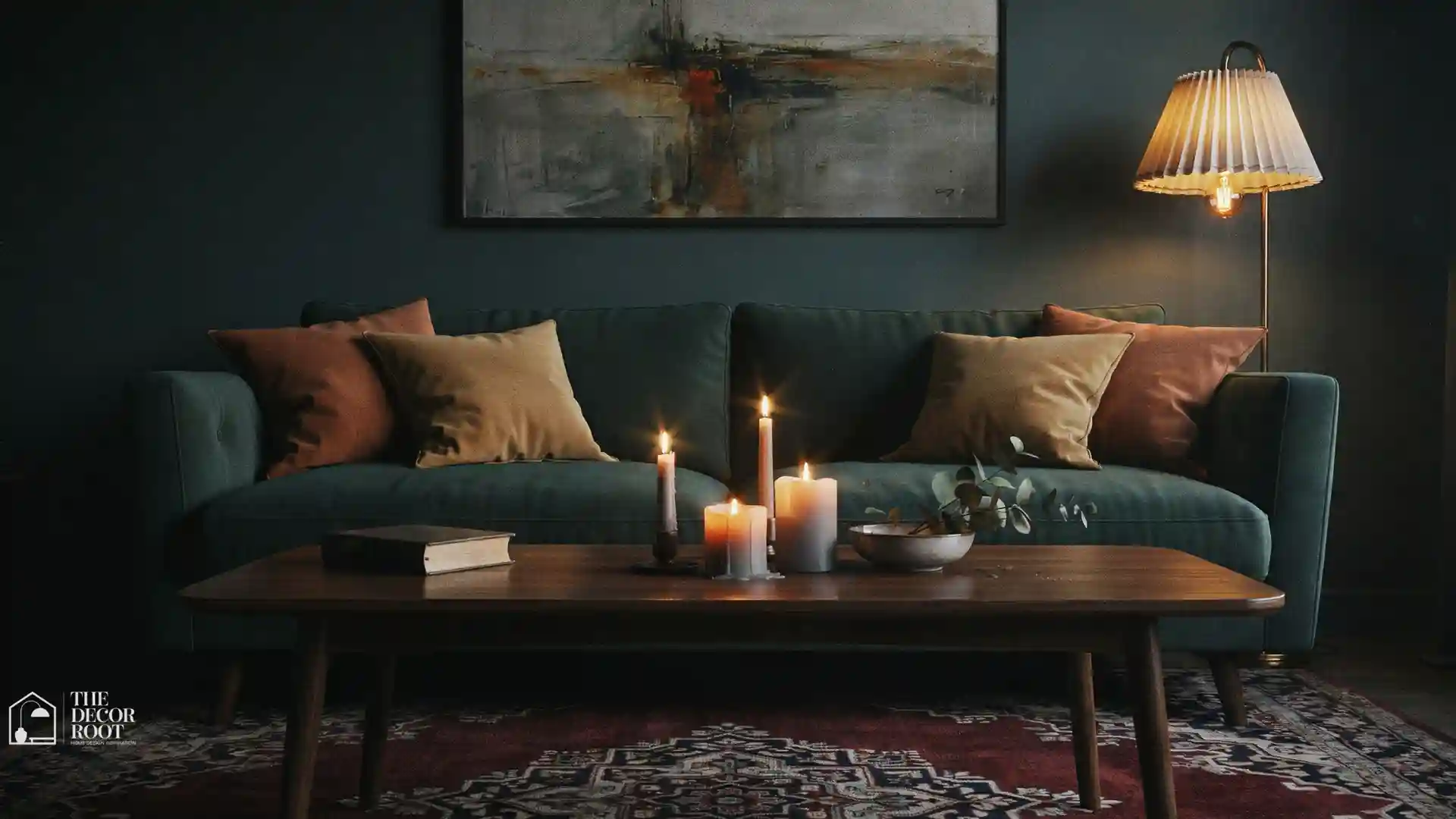
The professional interior design rule: every room needs at least three separate light sources. In a moody living room, those are: one ambient source (a floor lamp, not an overhead fixture), one accent source (table lamp, sconce, or strip light behind a TV unit), and one atmospheric source (candles, a fireplace, or an LED candle set). When all three operate simultaneously at low intensity, the layering effect creates depth that a single fixture, even a beautiful one, cannot replicate.
3. Install Dimmer Switches on Every Circuit
Dimmer switches are the cheapest single upgrade in a moody living room renovation. A fixture that can’t be dimmed forces you to live at full brightness or darkness, no in-between. With a dimmer, you can set the exact intensity that matches the time of day or the mood of the evening. Most standard dimmer switches install in under 15 minutes with a screwdriver. The cost is under $20 per switch.
4. Choose a Dark Accent Wall as Your Backdrop
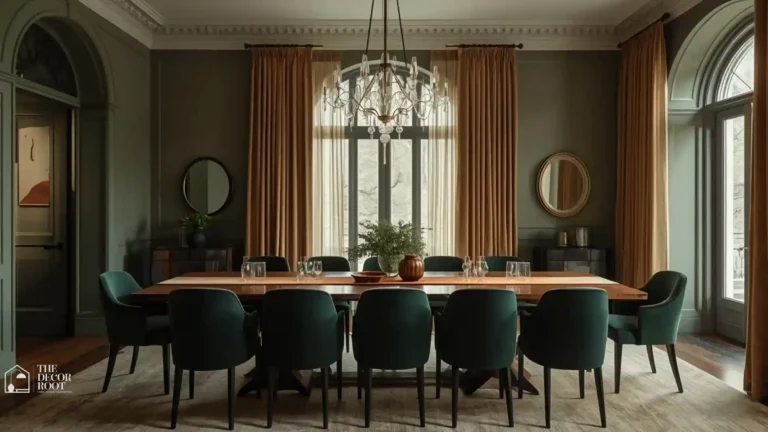
Dark walls, deep charcoal, forest green, navy, and plum absorb light rather than reflecting it, which creates the contained, intimate feeling that defines a moody living room. Paint one wall (the one behind your primary seating or your media unit) in a deep tone and leave the others neutral. The contrast between the deep accent wall and the lighter surrounding walls adds dimensional depth that flat all-white rooms simply cannot achieve. The reason warm-lit, moody rooms feel so immediately relaxing is not just aesthetic preference; these warm color and lighting psychology ideas explain the neuroscience behind why amber light and mid-tone saturated color slow the nervous system and make a living room feel like the most welcoming place in the home.
5. Add a Floor Lamp Behind the Sofa
A floor lamp positioned behind and slightly to the side of the main sofa creates upward and rearward light that illuminates the wall without glaring toward seated occupants. This is called ‘indirect lighting,’ and it’s the technique that makes hotel lobbies and film sets look so dramatically different from residential spaces. The lamp should have a warm bulb and a shade that restricts light to directional angles rather than diffusing it omnidirectionally.
6. Use Candles as a Structural Element
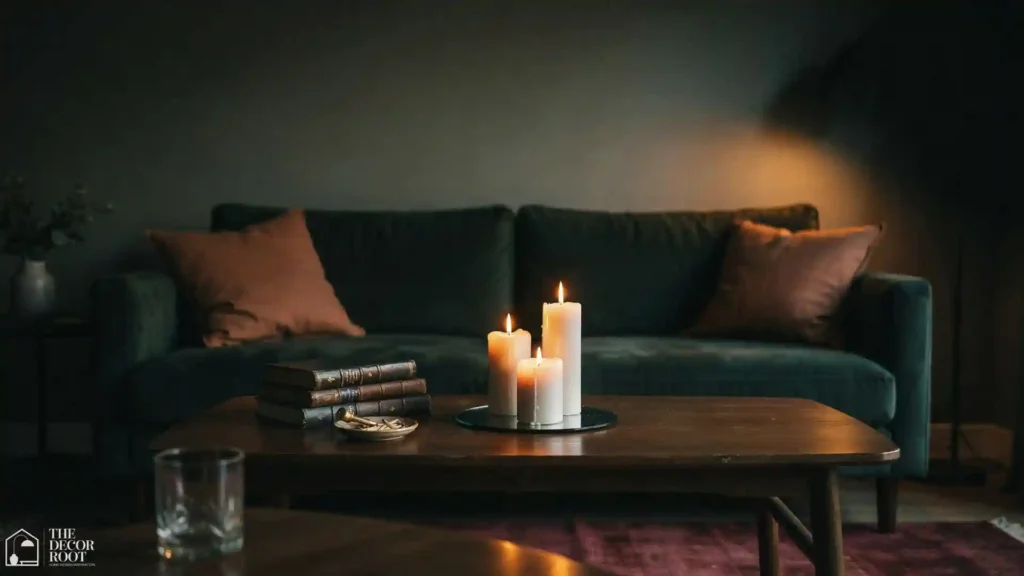
Candles in a moody living room are not decorative afterthoughts; they’re structural light sources. Group them in odd numbers (three or five), at varied heights, on surfaces that reflect the light upward (mirrored tray, dark lacquered surface, marble). A cluster of lit pillar candles on a coffee table, combined with an amber floor lamp behind the sofa, can create enough warm, layered light for an entire evening of use.
7. Install LED Strip Lights Behind the TV
LED bias lighting LED strips mounted on the back of your television unit or entertainment center reduce the harsh contrast between the bright screen and the dark room, making extended screen time physically easier on the eyes. Choose warm-amber strips (2200K-2700K), not the RGB color-shifting kind. Warm bias lighting makes your entire media wall glow as if it’s lit from within.
8. Choose a Deep-Toned Sofa as Your Hero Piece
The sofa is the largest piece of furniture in the living room, and its color sets the atmospheric temperature of the entire space. In moody living rooms, the sofa should be deep: forest green, navy, deep burgundy, charcoal, or black velvet. These colors absorb warm light in a way that reads as richly textured and intentional, rather than merely dark. A dark sofa is also significantly more practical than a light one in regular use.
9. Layer Rugs in Deep Jewel Tones
A large rug in a deep jewel tone midnight blue Persian, burgundy-and-navy geometric, faded olive grounds the moody living room visually and adds the warmth that hard floors can’t. Layer a smaller, more ornate rug on top for visual complexity. Rugs also affect the acoustics of a room: a thick-pile rug in a hard-floored living room absorbs sound and makes the space feel more intimate and enveloped.
10. Add Velvet Throw Pillows in Rust and Ochre
Warm accent colors rust, burnt orange, ochre, and deep gold- work in moody living rooms because they echo warm light sources and prevent the dark palette from reading as cold or oppressive. Velvet throw pillows in these tones on a dark sofa add warmth through both color and texture. Rotate pillow covers seasonally for fresh texture without major expense. Deep-tone velvet throw pillows, jewel-tone area rugs, and dark wood decorative trays.
11. Hang Curtains That Pool at the Floor
Floor-to-ceiling curtains in deep, heavy fabrics velvet, linen, or textured weave in charcoal, forest green, or midnight navy frame the room’s windows as dramatic architectural features rather than practical openings. Let them pool slightly on the floor. The visual weight of heavy floor-pooling curtains adds gravitas to the room’s atmosphere and dramatically improves its sound absorption.
12. Use a Dark Coffee Table as a Light Stage
Your coffee table is one of the best surfaces for layered atmospheric lighting. A dark walnut, black marble, or lacquered ebony coffee table reflects candlelight upward rather than absorbing it into a light surface. Style it with a mirrored or dark lacquer tray to cluster candles, a small stack of books with dark covers, and one sculptural object. The contrast between the flame light and the dark surface is inherently cinematic.
13. Choose Art That Absorbs Light
Art in moody living rooms should work with the lighting strategy, not against it. Heavily varnished oil-painting-style prints, dark abstract canvases in charcoal and gold, and muted landscape photography all absorb and softly reflect warm light in a way that glossy prints or light-colored art doesn’t. A single large-format dark painting on the accent wall functions as a light absorber that deepens the room’s atmosphere.
14. Add a Decorative Fireplace or LED Insert
Nothing contributes more warmth, literal and atmospheric, to a moody living room than a fireplace. For rooms without one, an electric LED fireplace insert or a freestanding electric fireplace with realistic flame effects provides the same visual warmth without the structural requirement. Place it at the focal point of the room and arrange seating toward it. Even knowing it’s artificial, the brain responds to the flame movement with genuine relaxation.
15. Install Sconces at Seated Eye Level
Wall sconces installed at seated eye level (roughly 48-56 inches from the floor) create horizontal bands of warm light that define the room’s lower half without directing light into the eyes. Choose sconces with downward-facing shades in brass, black, or bronze. These are particularly effective flanking a sofa wall or framing a fireplace; they add architectural weight and warm light simultaneously.
16. Create a Reading Corner with a Single Warm Lamp
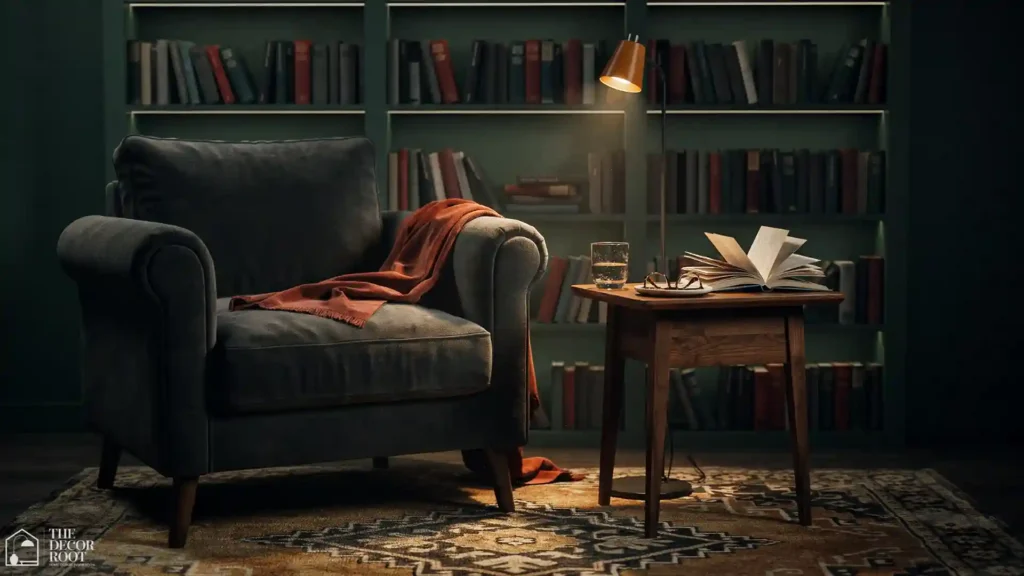
A dedicated moody reading corner armchair, side table, and a single warm-amber lamp create a room-within-a-room effect that makes the living space feel larger and more multi-dimensional. The isolated pool of warm light from the reading lamp is visually anchoring and creates a focal point that draws the eye and suggests occupation even when the room is empty.
17. Use Dark Bookshelves as an Accent Wall Alternative
Dark-painted bookshelves or a wall of dark-stained shelving functions as a de facto accent wall with the added benefit of texture and personality. Paint the interior of the shelving unit in a dark tone and style the shelves with a combination of books (spines facing out in neutral and dark colors), decorative objects, and small plants. Add LED strip lights along the underside of each shelf for a moody glow effect.
18. Choose Textiles with High Texture Variation
Warm light reveals texture while flat light flattens it. In a moody living room with warm layered lighting, choosing high-texture textiles bouclé cushions, linen throws, a velvet sofa, a nubby wool rug means those textures become visible and tactile in a way they never would under fluorescent or bright overhead light. Vary the texture register of every textile in the room: smooth against rough, matte against slightly shiny.
19. Add Tall Indoor Plants for Living Depth
A tall fiddle leaf fig, a large snake plant, or a dramatic bird of paradise in the corner of a moody living room adds living depth and casts extraordinary shadow patterns when a floor lamp is positioned behind it. The shadows move slightly in air currents, making the room feel animated and alive. Dark-leaved plants (burgundy rubber plants, dark pothos) fit the palette even more naturally than green alternatives.
20. Finish with a Layered Scent Strategy
The final element of a fully realized moody living room isn’t visible; it’s the ambient scent. A combination of a slow-burning candle in a dark vessel (sandalwood, amber, or dark fig), a subtle diffuser running in the background, and occasionally wood or leather conditioning products creates a multi-layered olfactory experience that tells the brain ‘this is a deeply comfortable place’ before conscious attention arrives. Scent is the final layer that elevates a well-decorated room to one people never want to leave. Decorative candle sets, LED fireplace inserts, and luxury reed diffuser sets
Quick Action Plan
- Day 1: Replace every bulb in the living room with 2200K warm amber equivalents. Install dimmer switches.
- Night 1: Experience the difference before touching anything else.
- Weekend 1: Identify and paint your accent wall. Source your dark sofa or sofa cover. Add a floor lamp behind the primary seating.
- Weekend 2: Add the rug layer, curtains, and candle cluster. Arrange your coffee table vignette.
- Week 3: Source and hang accent art. Add plants and complete the scent layer. The full transformation takes three weekends.
Frequently Asked Questions
Conclusion
Moody living room ideas succeed or fail at the lighting level before anything else registers. Once the light is warm, layered, and directional, the dark palette becomes rich rather than oppressive, the textures become visible, and the space begins functioning the way you actually want it to, as somewhere you can exhale, stay, and genuinely rest. Twenty decisions in the right direction, and your living room becomes the room everyone wants to be in.
Pin This to Your Living Room Decor Board
Obsessed with moody, atmospheric spaces? Save this post to Pinterest and pin it where you’ll actually come back to it.