20 Deck Design Ideas That Feel Intentional
There’s a version of a deck that looks like furniture was placed on a platform. And there’s a version that feels like an outdoor room someone actually designed. The gap between them isn’t budget, it’s thinking. The deck design ideas that create that ‘I can’t believe this is someone’s backyard’ reaction aren’t expensive by definition; they’re deliberate. Material cohesion, zone definition, overhead structure, scale-appropriate furniture, and layered lighting are the principles that separate accidental decks from designed ones. These 20 ideas give you the framework. An intentional deck design is one of the most valuable home decorating ideas for the exterior. A deck that has been designed rather than just built adds a room to the home that costs a fraction of an indoor extension and is used more frequently than almost any interior space during the warmer months.
This post contains affiliate links. As an Amazon Associate, I earn from qualifying purchases. If you buy through these links, I may earn a small commission at no extra cost to you.
The Three Questions Every Deck Design Needs to Answer
Before choosing any product or aesthetic, answer this: What activities will happen on this deck daily? How many people is it designed for? What is the primary view from the deck? The answers determine furniture scale, zoning, railing choice, and overhead structure. Skipping these questions is why so many decks end up looking assembled rather than designed. An intentional deck design always includes a considered finish. These deck stain and finish ideas show every wood tone and color direction available and explain how the stain interacts with the surrounding fence, house color, and outdoor furniture, so the whole zone reads as one resolved exterior design.
The Gap Between a Good Deck and a Great One
The difference is rarely a single dramatic feature, a hot tub, an outdoor kitchen, or a fire pit. It’s the accumulation of considered details: a consistent material palette, correctly sized furniture, layered lighting, a defined focal point, and negative space that lets the design breathe. Every idea below addresses one or more of these foundational principles. A deck is the foundation of a complete outdoor living zone. Browse all our outdoor decorating ideas for jacuzzi settings, pool surrounds, fencing, and landscaping that build out the space around a well-designed deck.
1. Define Zones on Your Deck With Outdoor Rugs
Zone definition is the design move that separates a deck that looks decorated from one that looks designed. Placing two separate outdoor rugs, one under a dining set, one under a seating group, visually divides the deck into two distinct rooms without any structural work. The rugs anchor furniture, protect the deck surface, and give each zone a defined boundary that tells visitors: this is where you dine, that is where you lounge. Flatweave polypropylene rugs hold up best outdoors in all American climates and are hose-cleanable.
EDITOR’S PICK
Outdoor Flatweave Polypropylene Area Rugs
Crafted from 100% virgin polypropylene with heat-sealed edges, this soft, durable, low-maintenance outdoor rug works perfectly on beaches, campers, and porches.
(paid link)
2. Use Built-In Bench Seating Along the Railing
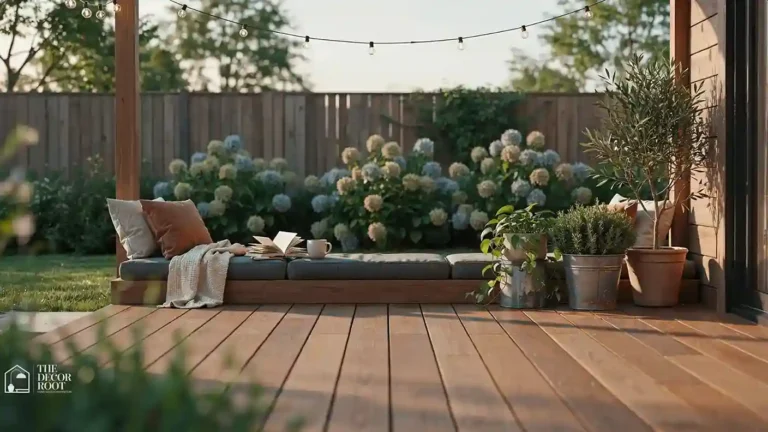
Built-in bench seating integrated into the deck railing is one of the most space-efficient and design-intentional choices you can make at the planning stage of a deck build. The bench eliminates the need for multiple freestanding chairs that crowd the deck surface, provides perimeter seating that keeps the center of the deck open, and adds visual weight to the railing without requiring a separate furniture purchase. Add cushions in Sunbrella fabric for weather resistance and style-forward color.
3. Install Cable Railing for an Unobstructed View
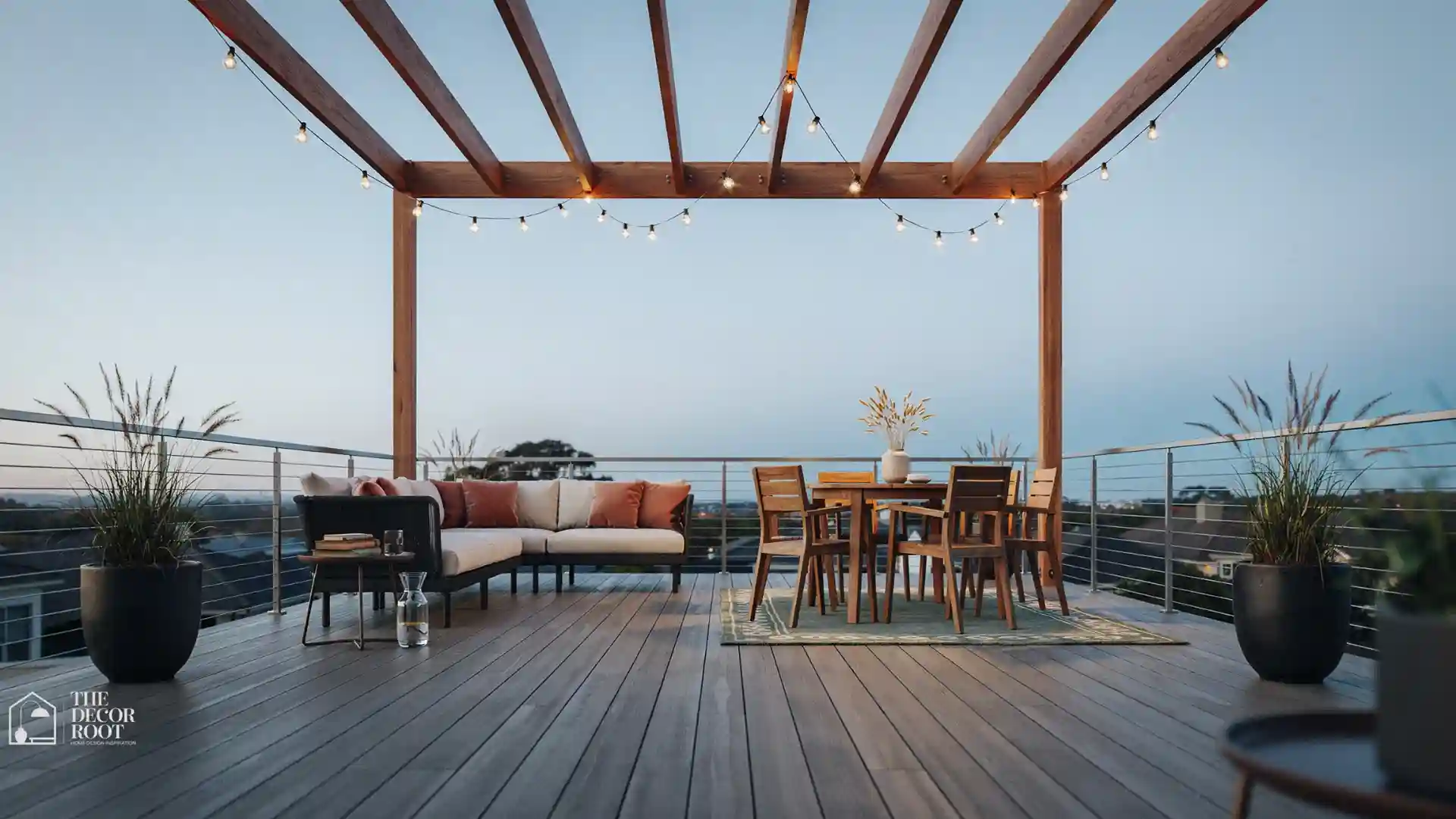
Cable railing, stainless steel cables running horizontally between posts, is the railing choice that consistently photographs best and preserves the most visual connection between the deck and the surrounding landscape. Unlike wood balusters, cable railing doesn’t block sightlines, which makes a modest-sized deck feel dramatically more connected to the yard, the tree line, or the view beyond. It’s more expensive than wood railing up front, but requires significantly less maintenance and ages better in all weather conditions.
4. Add a Pergola to Create an Overhead Structure
A deck without overhead structure feels unfinished, exposed to the sky in a way that makes it feel transitional rather than intentional. A pergola gives the deck a ceiling reference point that defines it as a destination. Add a shade sail, outdoor curtains, or a polycarbonate roof panel to the pergola for functional weather protection. The structural presence of a pergola also gives you anchor points for string lights, hanging plants, and outdoor ceiling fans that are otherwise impossible to install on an open deck.
5. Choose Composite Decking for Low Maintenance and Long Life
Composite decking made from wood fiber and recycled plastic has closed the gap with natural wood aesthetics while maintaining a near-zero maintenance profile. Modern composite products are available in realistic wood-grain finishes, don’t splinter, don’t require annual sealing, and are rated for 25+ years of outdoor exposure. For homeowners who want a deck that looks intentional in year one and still looks that way in year ten without constant attention, composite is the rational choice over pressure-treated pine.
6. Use Planter Boxes to Build a Living Railing
Planter boxes mounted along the deck railing, planted with ornamental grasses, lavender, trailing herbs, or seasonal annuals, replace hardwood or metal barriers with a living, breathing, fragrant perimeter. The visual effect is significantly more inviting than a standard railing and introduces natural color and movement to the deck edge. Cedar planter boxes are the standard material choice because they match natural wood decking and are moisture-resistant. This is a deck design idea that improves every season as the plants mature.
7. Install Recessed Deck Lighting for Safety and Atmosphere
Recessed lighting installed in the deck boards or at stair risers transforms deck usability after dark and signals careful attention to detail in the design. Post-cap lights, stair riser lights, and inboard deck lights are all low-voltage LED systems with minimal maintenance requirements. The combination of overhead string lights and low-level deck lighting creates a layered lighting environment that photographs as warmly as a professionally designed outdoor room. This is the deck design idea most frequently cited as making a deck feel resort-quality.
8. Create a Focal Point With an Outdoor Fireplace or Fire Pit
Every great deck design has a focal point, something the arrangement of furniture and movement of people naturally orients toward. An outdoor fireplace or fire pit performs this function better than almost anything else: it provides warmth, light, visual drama, and social gathering energy simultaneously. A built-in gas fireplace integrated into a low wall or railing extension is the most architecturally intentional option. A freestanding fire pit table gives flexibility without permanent installation. Either choice transforms the deck from a surface into an experience.
9. Design Around a Single Consistent Material Palette
Intentional deck design almost always uses a limited material palette, typically two to three materials maximum. A deck that mixes teak furniture, composite decking, black steel railing, and a concrete feature wall reads as curated and coherent. A deck that combines cedar decking, aluminum furniture, resin wicker, painted wood railing, and a stone feature wall reads as collected over time rather than designed. Choosing your materials as a coordinated set before purchasing anything is the single most impactful planning decision for a deck that feels intentional.
10. Add an Outdoor Kitchen or Bar Station for Entertaining Function
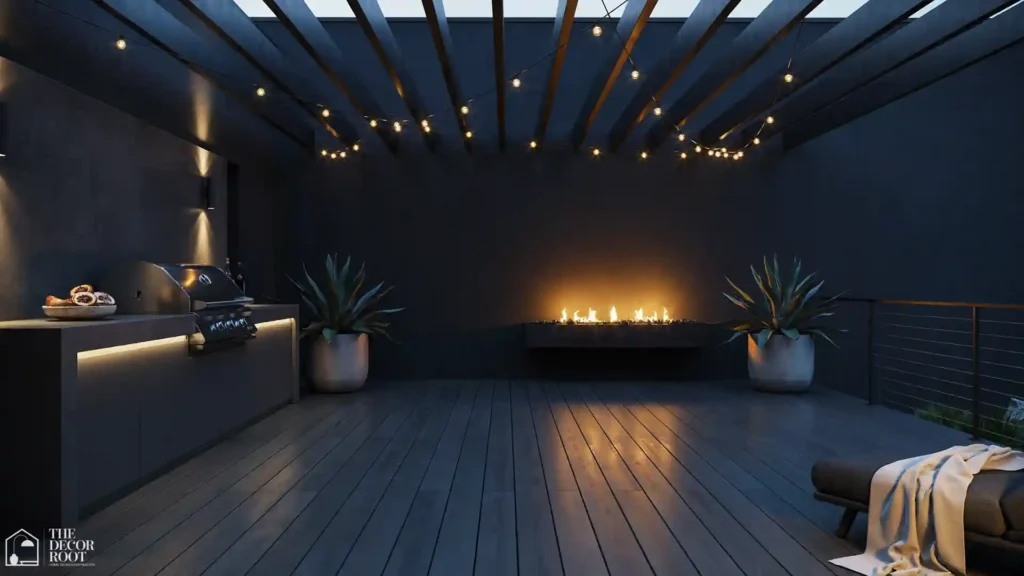
An outdoor kitchen or even a simple built-in bar counter along one wall of the deck transforms it from a seating surface into an entertainment zone. The outdoor kitchen category has seen significant growth in American residential design. It extends the functional life of the deck and is consistently cited as a high-return investment by real estate professionals. Even a modest version of a weatherproof cabinet, a countertop, a small grill station, and a mini fridge elevate the deck’s usability more than any furniture choice. The most intentional decks are the ones designed around a specific activity zone; these outdoor kitchen and deck layout ideas show how incorporating a cooking and dining function into the deck layout produces a space that is genuinely lived in rather than admired from the inside.
EDITOR’S PICK
Outdoor Kitchen Storage Cabinets
Built for all-weather durability, this storage drawer works in kitchens, BBQ islands, bars, and grills, roomy enough for trash bins, propane tanks, and more.
(paid link)
11. Use Tall Privacy Screens to Frame the Space Without Walls
Privacy screens in cedar slat, composite panel, or metal mesh positioned strategically on the deck perimeter create the enclosure of walls without the permanence of walls. They block the neighbor’s sightline, reduce wind, absorb road noise, and provide a backdrop for furniture arrangements. Positioned behind a sofa, a tall privacy screen performs the function of a living room wall, giving the seating area a defined back, which is a spatial comfort factor humans respond to at an instinctive level.
12. Install a Ceiling Fan Under the Pergola for Summer Comfort
A ceiling fan mounted to the pergola beam directly above the seating area extends the comfortable-use window of an outdoor deck dramatically in summer climates. Outdoor-rated ceiling fans (UL-listed for wet locations) circulate air and reduce the perceived temperature by 4-8 degrees Fahrenheit, the difference between comfortable and too hot at 85 degrees. This is one of the most practical yet overlooked deck design ideas for American homeowners in the South and Midwest, where summer heat can sideline an otherwise beautiful deck for months.
13. Use Large-Format Pavers as a Ground-Level Deck Extension
A large-format paver patio extending from the deck edge onto the ground level creates a multi-level outdoor living system that doubles the functional square footage without requiring a larger deck structure. The paver section can function as the dining zone while the deck serves as the lounge zone or vice versa. Large-format 24×24 or 24×48-inch concrete or porcelain pavers in a neutral tone are the most universally compatible with both composite and natural wood deck materials.
14. Style the Outdoor Dining Table Like an Interior Table
One of the clearest signals of an intentional deck design is a dining table that’s styled the way an interior dining table would be, with a centerpiece, placemats or a tablecloth, and lighting directly above it. Too many outdoor dining tables are bare surfaces with unmatched chairs and no overhead light. Treat the deck dining zone with interior design standards, and the entire deck reads as more considered. A lantern centerpiece, outdoor placemats, and an above-table pendant or string light cluster above the table all close the gap between indoor and outdoor design quality.
15. Add a Daybed or Outdoor Chaise for Dedicated Lounging
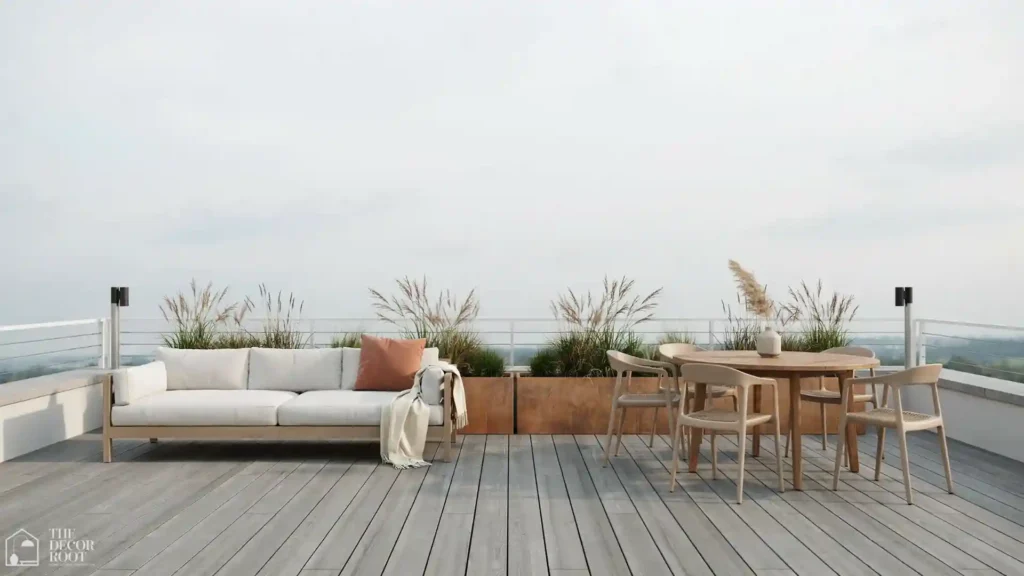
A daybed or chaise lounge on the deck gives it a function that a dining table and standard chairs don’t: true horizontal rest. The ability to lie down outdoors to read, nap, or watch the sky is a quality-of-life upgrade that’s frequently underestimated until it’s available. Position the chaise or daybed in the most light-favorable zone of the deck (morning sun for early risers, shaded for afternoon lounging) and treat it with weather-resistant cushions. This single piece often becomes the most-used piece of furniture on the entire deck.
16. Incorporate Water Features for Ambient Sound
A small water feature, a wall-mounted fountain, a self-contained urn fountain, or a narrow channel water feature along the deck edge adds ambient sound that masks street noise, neighbor noise, and other environmental audio that undercuts the outdoor experience. The sound of moving water is a documented stress reducer and one of the consistent design elements in high-end commercial outdoor spaces. A self-contained fountain requires only an electrical outlet and no plumbing connection, making it accessible to homeowners at almost any deck configuration. A deck becomes a destination when it is designed around a specific focal point. These outdoor deck and jacuzzi design ideas show how building a deck in relation to a jacuzzi creates a level of intentionality that a general-purpose deck rarely achieves on its own.
17. Plant Vertically With a Living Wall or Trellis System
Vertical planting systems, modular living walls, trellis panels with climbing plants, or stacked planter tiers deliver significant greenery impact without using any deck floor space. A trellis planted with a climbing rose, clematis, or star jasmine creates a fragrant, flowering wall over one to two growing seasons. Living walls with modular pocket planters can be planted with herbs, succulents, or trailing flowers and mounted directly to a fence or privacy screen. Vertical planting is how design-forward decks get the garden feel without the garden footprint.
18. Choose Furniture That Scales Correctly to the Deck Size
Furniture scale is the most common mistake in outdoor spaces. An undersized sofa on a large deck looks lost. Oversized furniture on a small deck leaves no circulation space. The correct scale relationship: seating should leave at least 36 inches of clearance on all sides for movement, and the total furniture footprint should occupy no more than 60-65% of the usable deck surface. Measuring the deck and marking furniture outlines with tape before purchasing is the same technique interior designers use, and it prevents the most expensive mistakes.
19. Use Black or Dark-Toned Hardware Throughout for Visual Cohesion
Hardware light fixtures, railing hardware, furniture legs, umbrella poles, and pergola brackets is the detail level at which deck designs either hang together or fall apart. Choosing a single hardware finish (matte black is the most universally compatible with both natural and composite wood tones) and applying it across every metal element in the outdoor space creates a visual coherence that reads as intentional even when noticed only subconsciously. This is the detail that professional photographers highlight when staging outdoor spaces because it photographs well.
20. Leave Deliberate Empty Space for the Design to Breathe
The most counterintuitive deck design idea is also the most important: leave some of it empty. Over-furnished decks where every square foot is claimed by a piece of furniture, a planter, or an accessory feel cramped and cluttered regardless of how nice each element is. Deliberate negative space on a deck gives the eye a place to rest, allows circulation without obstruction, and makes each design element more visible and impactful by contrast. Great deck design is as much about what you don’t put on the deck as what you do.
EDITOR’S PICK
Outdoor Sectional Sofa Sets
Ergonomically crafted rattan sofas with a subtle backrest slope provide superior support and comfort.
(paid link)
Your Deck Design Implementation Roadmap
- Phase 1 (Planning): Measure your deck, answer the three design questions above, and choose your material palette.
- Phase 2 (Structure): Address railing, overhead structure, and lighting infrastructure; these are harder to change later.
- Phase 3 (Furniture): Purchase in scale, starting with the largest anchor pieces first.
- Phase 4 (Details): Add rugs, planters, accessories, and lighting layering.
- Phase 5 (Edit): Remove anything that doesn’t earn its place.
- Step 5 is what most people skip, and it’s what separates the deliberate from the default.
FAQs
Conclusion
The deck design ideas that feel truly intentional aren’t the most elaborate or the most expensive. They’re the ones where every decision was made with a clear understanding of how the space would be used, by whom, and in what conditions. Apply that thinking to your deck, even selectively, starting with one or two ideas from this list, and the improvement will be immediate and lasting.
📌 Ready to redesign your deck? Save this post to your Pinterest outdoor living board and come back to it when you’re planning your next backyard project!