21 Modern Japandi Bedroom Design Ideas
A bedroom should feel like the calmest room in the house, but between mismatched furniture and too much clutter, most end up feeling more chaotic than restful. Japandi bedroom design fixes that by blending Japanese simplicity with Scandinavian softness, creating a space built entirely around rest. These 21 ideas walk you through exactly how to bring that calm into your own bedroom. A modern Japandi bedroom is one of the most genuinely restful home decorating ideas available. The combination of warm wood, muted linen, minimal visual noise, and a philosophy that treats space as a deliberate material rather than a problem creates a sleeping environment that is measurably more calming than a conventionally decorated room
This post contains affiliate links. As an Amazon Associate, I earn from qualifying purchases. If you buy through these links, I may earn a small commission at no extra cost to you.
The Core Principle to Remember
Every piece in a Japandi bedroom should either serve a function or add warmth, never both at once. That means fewer furniture pieces overall, but each one is chosen for natural material, low profile, and a soft, muted color that supports actual sleep instead of visual stimulation.
The Bigger Benefit of This Style
Beyond looking beautiful in photos, a Japandi bedroom design is genuinely built for better rest. Lower furniture reduces visual bulk in the room, muted tones support a calmer nervous system before bed, and the emphasis on natural materials means fewer synthetic textures that can feel less breathable at night. Japandi is the most philosophically considered bedroom aesthetic available. Browse all our Japandi decorating ideas to see how it compares with minimalist, cottagecore, dark elegant, and boutique approaches to the same space.
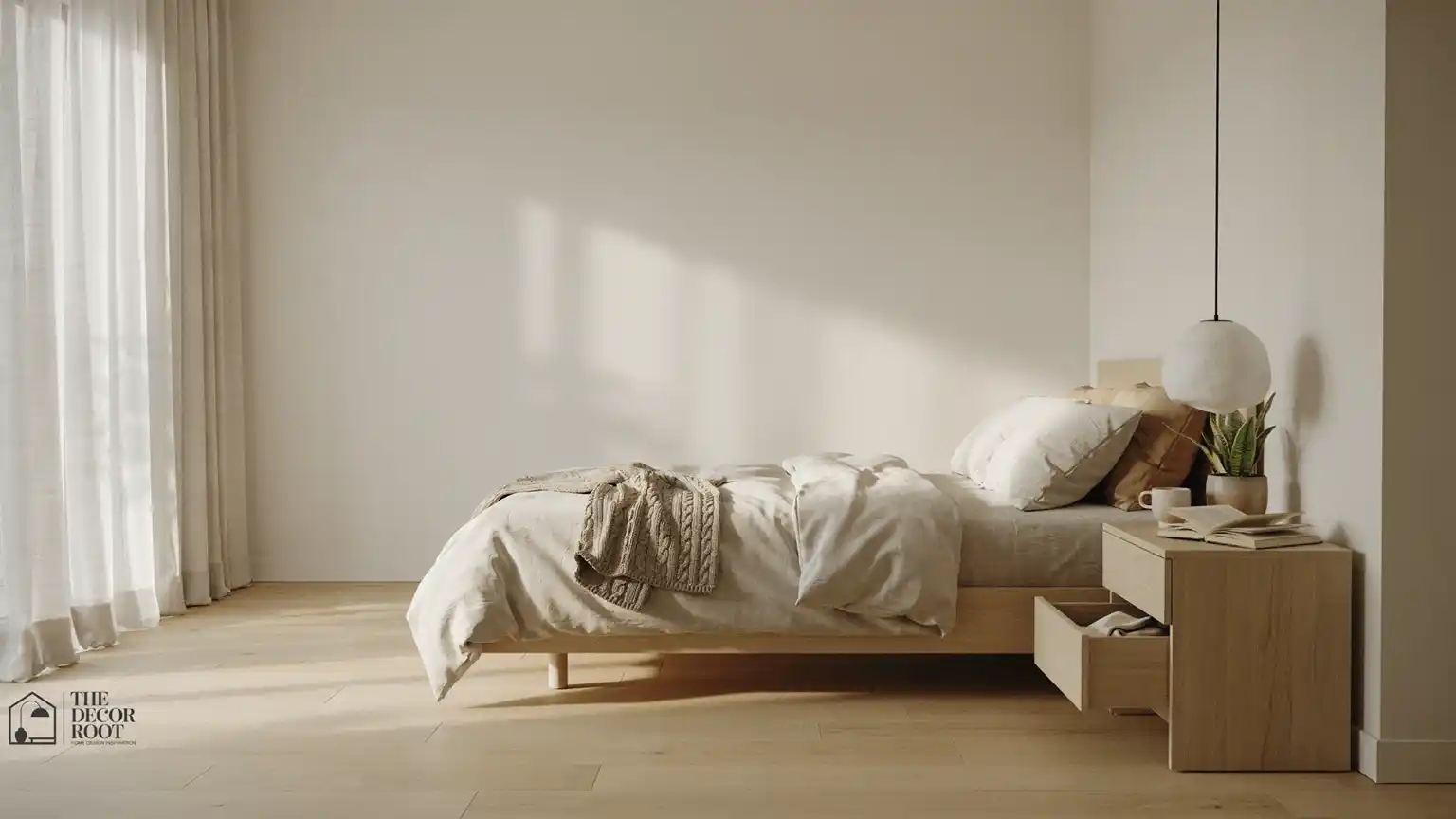
1. Choose a Low Platform Bed
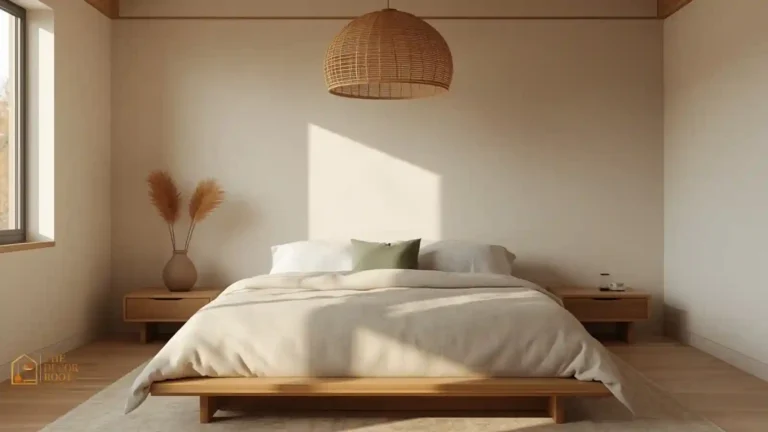
A platform bed sitting close to the floor is the single most defining feature of Japandi bedroom design.
EDITOR’S PICK
Low Wood Platform Bed Frame
This twin platform bed measures 74.5″L x 37.5″W x 4″H, with a low profile that keeps you close to the floor. Designed for a 75″ x 38″ mattress, it requires no box spring; simply place your latex or innerspring mattress directly on the sturdy frame.
(paid link)
2. Layer Neutral Linen Bedding
Oatmeal, sand, or soft gray linen bedding adds texture and breathability while keeping the palette calm.
3. Add a Single Paper Pendant Light
A paper or rice-paper pendant light softens overhead lighting and introduces a clear Japanese design element.
4. Use Light Wood Nightstands
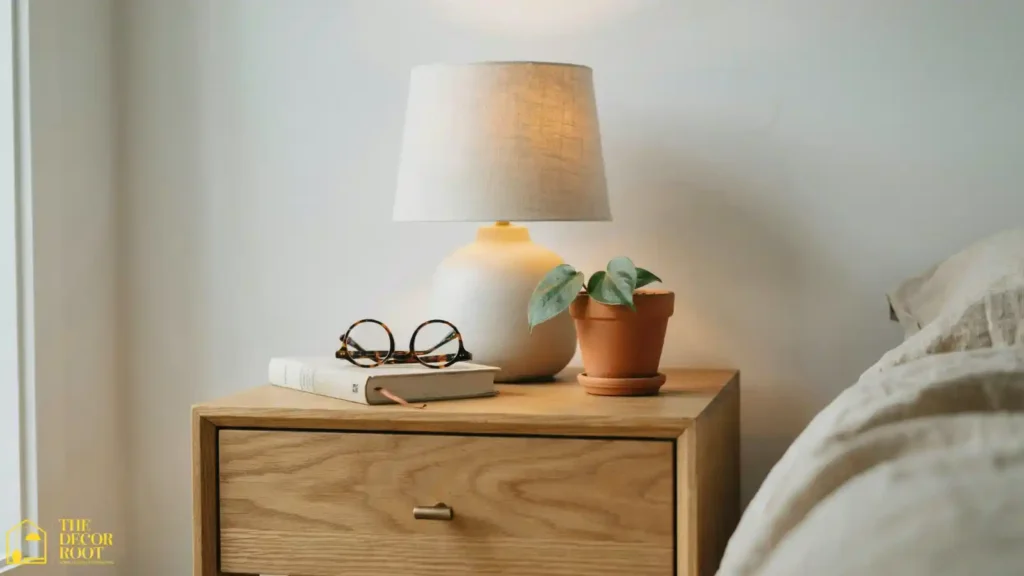
Choose nightstands in light oak or ash rather than dark wood to keep the room feeling airy and open.
5. Keep Nightstand Surfaces Nearly Bare
Limit each nightstand to two or three items, such as a lamp, a small plant, a book, to maintain the room’s sense of calm.
6. Introduce a Textured Throw Blanket
A boucle or chunky-knit throw folded at the foot of the bed adds tactile warmth against the low, clean furniture lines.
7. Choose a Low Dresser or Credenza
A wide, low dresser reinforces the grounded, horizontal lines that define this style throughout the room.
8. Add One Sculptural Plant
A single larger plant, like a snake plant or a small olive tree, brings life into the room without added clutter.
EDITOR’S PICK
Snake Plant in a Ceramic Pot
Smooth matte terracotta cylinder pots in 4.2″, 5.3″, and 6.5″, porous clay for healthy succulents, cacti, and small greenery.
(paid link)
9. Use Woven Window Treatments
Bamboo or woven roller shades filter light softly and add natural texture in place of heavier drapery.
10. Keep Wall Art Minimal
One or two simple framed pieces, ideally in muted tones, are enough. Empty wall space is part of the design here.
11. Layer a Low-Pile Area Rug
A flat-weave rug in a warm neutral tone grounds the bed area without adding visual bulk near the floor.
12. Add a Bench at the Foot of the Bed
A simple wood or upholstered bench provides functional seating while reinforcing the room’s low, horizontal furniture line.
13. Choose Blackout Curtains in Natural Tones
Even functional blackout curtains can stay in linen-look neutral shades to match the room’s overall palette.
14. Use Ceramic or Wood Lamp Bases
Table lamps with ceramic or wood bases and simple linen shades tie in with the room’s material palette better than metal or glass.
15. Add a Floor Cushion Reading Corner
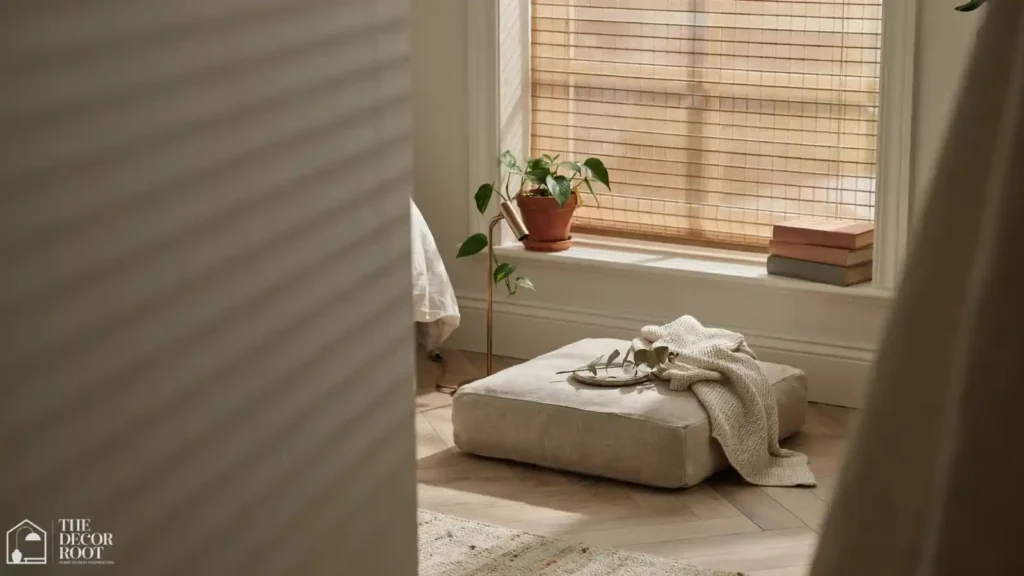
A single low-floor cushion near a window creates a simple reading nook without adding a bulky armchair.
16. Keep the Color Palette to Three Tones
Stick to roughly three colors, cream, warm gray, and walnut, throughout bedding, furniture, and accents for total cohesion.
17. Choose Closed Storage Over Open Shelving
A simple closed wardrobe or dresser keeps clothing and clutter out of view, supporting the room’s calm, uncluttered feel.
18. Add a Low Wood Shelf for Books
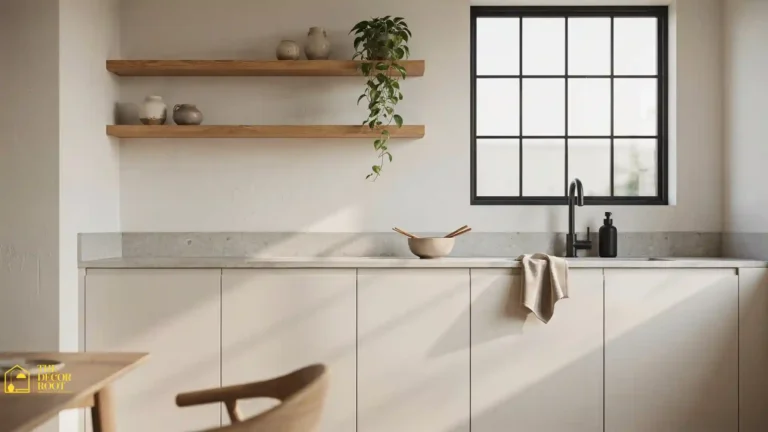
A single floating wood shelf holding a few favorite books keeps reading material accessible without cluttering the nightstand.
EDITOR’S PICK
Floating Wood Wall Shelf
Floating wall shelves that free up floor space and maximize vertical storage are perfect for bedrooms, bathrooms, and kitchens, holding plants, books, crafts, spices, and toiletries.
(paid link)
19. Use Soft, Warm Lighting Only
Avoid cool white bulbs. Warm-toned bulbs throughout the room support both the aesthetic and better sleep quality.
20. Incorporate One Ceramic Accent Piece
A single textured ceramic vase or bowl on the dresser adds the same wabi-sabi imperfection found throughout Japandi living spaces. A Japandi bedroom reaches its full potential as part of a whole-home Japandi commitment. These Japandi living room ideas show how to carry the same warm wood, restrained palette, and intentional negative space from the bedroom into the main living area so every room feels like part of one resolved interior.
21. Edit the Room One Final Time
Once everything is placed, remove one item that feels unnecessary. A truly restful Japandi bedroom design always favors less over more. Japandi and minimalist bedrooms share the same editing philosophy, both treat visual noise as the enemy of rest, and both rely on the quality of individual objects rather than the quantity of decoration. These minimalist bedroom ideas show how the editing principles of minimalism serve as the foundation on which Japandi builds its warmth and material richness.
Quick Action Plan
- This week, start by clearing everything off your nightstands and dresser, then reintroduce only what’s genuinely needed: a lamp, a small plant, one or two personal items.
- Next, swap in neutral linen bedding if you don’t already have it, and add one textured throw blanket.
- Live with this simplified version for a few days before adding anything else back.
Frequently Asked Questions
Conclusion
A well-executed Japandi bedroom design proves that a calm, restful space doesn’t require a full renovation, just a shift toward lower furniture, natural materials, and a more editing-focused mindset. Start with a few key pieces from this list and let the rest of the room follow.
Save this post to Pinterest so you always have Japandi bedroom ideas ready for your next refresh!