25 Bookshelf Styling Ideas Like a Designer
A cluttered, uneven bookshelf can make an entire room feel unfinished, and that’s exactly why bookshelf styling ideas are some of the most-saved content in home decor right now. The good news is you don’t need new furniture or a big budget to fix it. With the right mix of stacking, spacing, and a few well-placed objects, your existing shelves can look like they belong in a design magazine by this weekend. Bookshelf styling is one of the most searched home decorating ideas online because everyone has shelves and almost no one feels confident about what to put on them. A designer approach to the same bookshelf transforms a storage problem into the most characterful surface in the room.
This post contains affiliate links. As an Amazon Associate, I earn from qualifying purchases. If you buy through these links, I may earn a small commission at no extra cost to you.
The Formula Behind Every Great Shelf
Designers rely on a repeatable pattern: vertical stacks paired with horizontal stacks, negative space left intentionally, and objects grouped in threes. Once you understand this rhythm, you can apply it to any shelf size, from a single floating shelf to a full built-in wall unit. Bookshelf styling and centerpiece composition are two expressions of the same vignette skill; these surface and vignette styling ideas show how the principles of grouping, height variation, and negative space that make a bookshelf sing apply equally to a table or kitchen island styled with lemons, ceramics, and organic objects.
Why Shelf Styling Gets Overlooked
Most people fill shelves purely for storage and never revisit the arrangement, which is exactly why shelves tend to look chaotic over time. A styled shelf, on the other hand, becomes a genuine focal point, adds personality to a room, and makes even a small apartment feel curated rather than crowded. A bookshelf is a microcosm of the whole room’s design philosophy. Browse all our interior decorating ideas to see how the same principles of colour, proportion, and negative space that govern a shelf apply at every scale from a reading nook to a living room.
1. Color-Block Your Spines
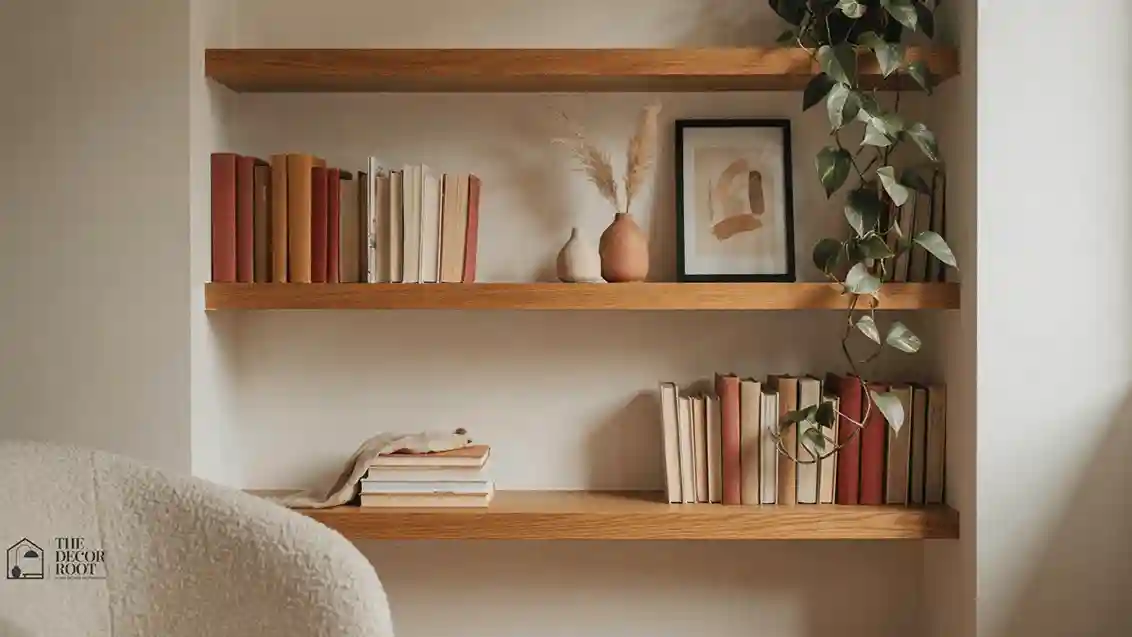
Group books by color rather than by genre or author to create a gradient effect that reads as art from across the room. Bookshelf styling and wall art layering are the two most powerful display opportunities in a living room. These living room styling and display ideas show how to treat both surfaces as a unified composition so the books and the art on the wall feel like they belong to the same curated interior.
EDITOR’S PICK
Set of Ceramic Bookends
6.4‑lb pair of JolieJulie concrete bookends, sturdy, stable, and perfect for keeping heavy books neatly upright.
(paid link)
2. The Vertical and Horizontal Mix
Alternate between vertically stacked books and small horizontal stacks topped with an object to break up visual monotony.
3. Leave Negative Space
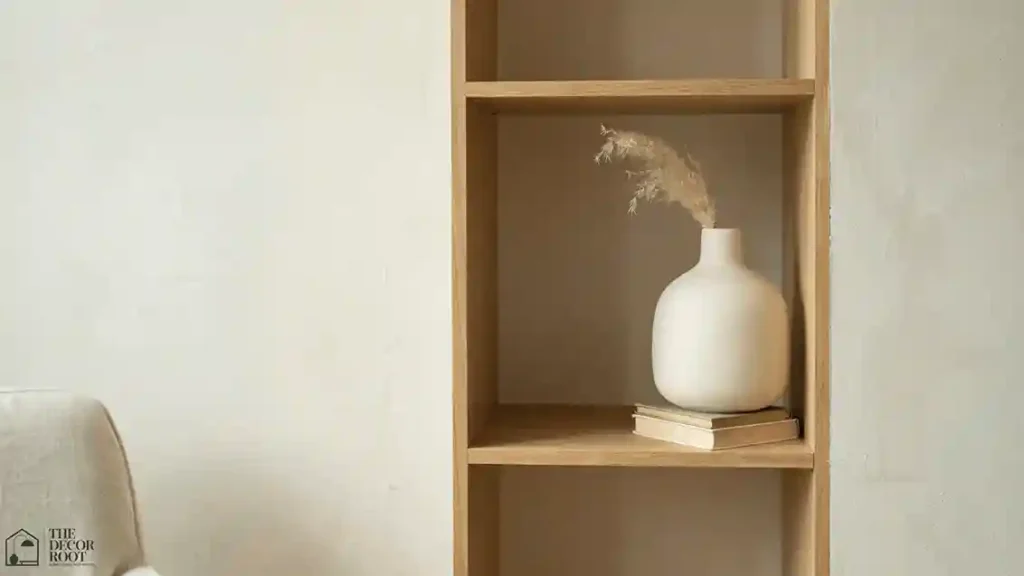
Don’t fill every inch. Leaving roughly 20 percent of shelf space empty makes everything else look more intentional and less cramped.
4. The Rule of Three Grouping
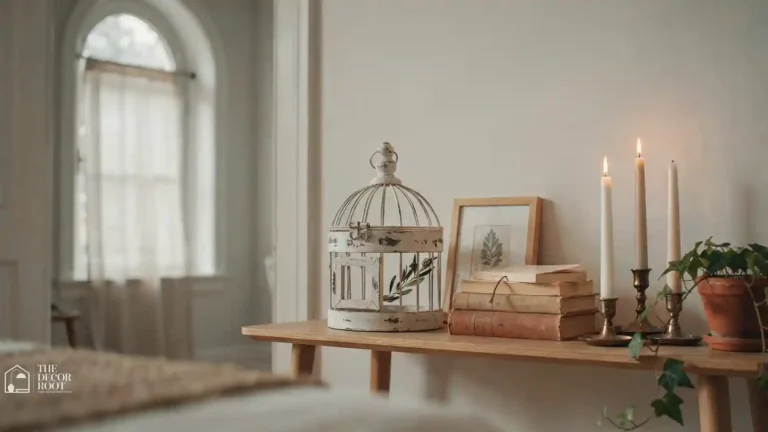
Cluster decorative objects, a vase, a small frame, a candle, in groups of three rather than pairs for a more natural, designer-approved balance.
5. Layer in Framed Art
Lean a small framed print against the back of the shelf instead of hanging it, adding depth without extra wall holes.
6. Use Bookends as Sculpture
Choose bookends in an interesting material like marble, brass, or stone so they double as a design object even when the books shift.
7. The Basket Bottom Shelf
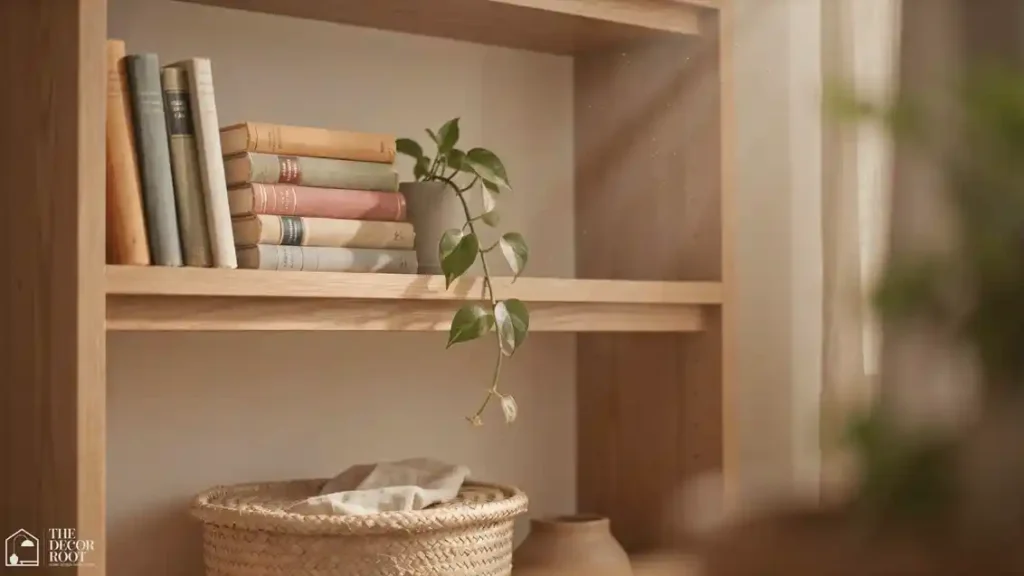
Reserve your lowest shelf for a woven basket that hides remotes, chargers, or clutter while adding texture. A beautifully styled bookshelf and a reading nook are natural partners; the shelf provides the context, and the nook provides the destination. These reading nook and book styling ideas show how to position a chair in relation to a well-styled shelf so the two elements become one composed corner rather than two separate pieces of furniture.
EDITOR’S PICK
Small Woven Storage Basket
Cotton set of 3 rectangular baskets (11.5″x7.5″x4.7″ each) neatly organizes cosmetics, jewelry, diapers, towels, remotes, keys, wallets, cables, toys, snacks, and more.
(paid link)
8. Add One Trailing Plant
A single trailing plant like pothos softens all the hard lines of books and shelving with organic movement.
9. Stack and Top Technique
Stack three to five books flat, then top the stack with a small object like a candle or mini sculpture for instant height variation.
10. The Odd Number Rule
Style in odd numbers, three books, five objects, rather than even numbers, which the eye tends to read as more static and less curated.
11. Mix In Non-Book Objects
Not every shelf slot needs a book. Swap in a small ceramic bowl or wood tray to break the rhythm of spines.
12. Turn Some Books Backward
Facing a few book spines inward toward the wall shows the natural page edges, creating subtle texture variation in an otherwise busy shelf.
13. Use a Consistent Color Story
Even with color-blocked spines, keep your decorative objects within two or three coordinating colors so the whole shelf feels unified.
14. Float Small Art on an Easel
A tiny tabletop easel holding a small print or postcard adds a gallery-like touch to a single shelf cube.
15. The Diagonal Lean Stack
Lean a small stack of books at a slight diagonal against the shelf wall instead of perfectly upright for a relaxed, collected-over-time look.
16. Highlight One Statement Object
Every shelf needs one larger “hero” object, like a sculptural vase, that anchors the eye before it moves to smaller details.
17. Vary Shelf Density on Purpose
Make some shelves fuller and others sparser rather than distributing books evenly, which mimics how a real, lived-in library looks.
18. The Coffee Table Book Fan
Fan opens a large coffee-table book slightly on a shelf to reveal an interior page as a decorative accent.
19. Add a Small Mirror
A small leaning mirror on one shelf reflects light into the room and makes a dark bookshelf feel less heavy.
20. Use Trays to Corral Small Items
Group tiny objects like matchboxes or mini frames onto a small tray so they read as one styled vignette instead of clutter.
EDITOR’S PICK
Small Decorative Wood Tray
This acacia wood tray measures 10″ x 5.5″; please confirm size compatibility before ordering. Crafted from beautiful, natural hardwood, it suits both elegant and casual settings. Finished without glue, PVC, or toxic coatings for a safe, healthy serving surface.
(paid link)
21. Repeat a Material Across Shelves
Use the same material, like brass or rattan, in at least two spots on the shelf to visually tie the whole unit together.
22. The Empty Shelf Statement
Leave one full shelf empty except for a single object. This “breathing room” shelf makes the styled shelves around it pop even more.
23. Layer Books at Different Depths
Push some book stacks toward the back of the shelf and pull others forward to create subtle depth instead of a flat, front-aligned row.
24. Add Seasonal Rotation Pieces
Keep one small spot reserved for a rotating seasonal object, a pumpkin in fall or greenery in winter, so the shelf feels current year-round.
25. Step Back and Edit
After styling, step ten feet away and look at the shelf as a whole. Remove one item if anything feels crowded, since editing down is the final designer move.
Quick Action Plan
- Set aside 30 minutes this week to fully empty one shelf section.
- Sort books by color, then rebuild using the vertical-and-horizontal mix from idea #2 and the rule of three from idea #4.
- Add one plant and one tray before calling it finished, and resist the urge to fill every remaining gap.
FAQs
Conclusion
Great bookshelf styling ideas come down to rhythm, restraint, and repetition, not a big shopping trip. With color-blocked spines, a few grouped objects, and some intentional space, your shelves can go from cluttered storage to one of the most complimented spots in the room.
Pin this guide so you always have bookshelf styling ideas on hand for your next shelf refresh!