20 Fall Coffee Table Styling Ideas Beyond Pumpkins
Fall Coffee Table Styling Ideas. Pumpkins aren’t the problem. The problem is when a pumpkin becomes the entire styling plan, plopped in the center of an otherwise empty table like a placeholder for actual decor. A genuinely well-styled fall coffee table works the same way any styled surface does with height variation, a mix of textures, and a few objects that feel personal rather than seasonal-aisle generic. You can absolutely still use pumpkins if you love them, but they should be one supporting element in a bigger composition, not the whole idea. Fall coffee table styling ideas beyond pumpkins are some of the most searched home decorating ideas of the autumn season, because the coffee table is the living room’s most-photographed surface, the most-viewed surface from every seat in the room, and the one most likely to look seasonally clichéd rather than seasonally considered when styled with the first available autumn props.
This post contains affiliate links. As an Amazon Associate, I earn from qualifying purchases. If you buy through these links, I may earn a small commission at no extra cost to you.
What Ties These Ideas Together
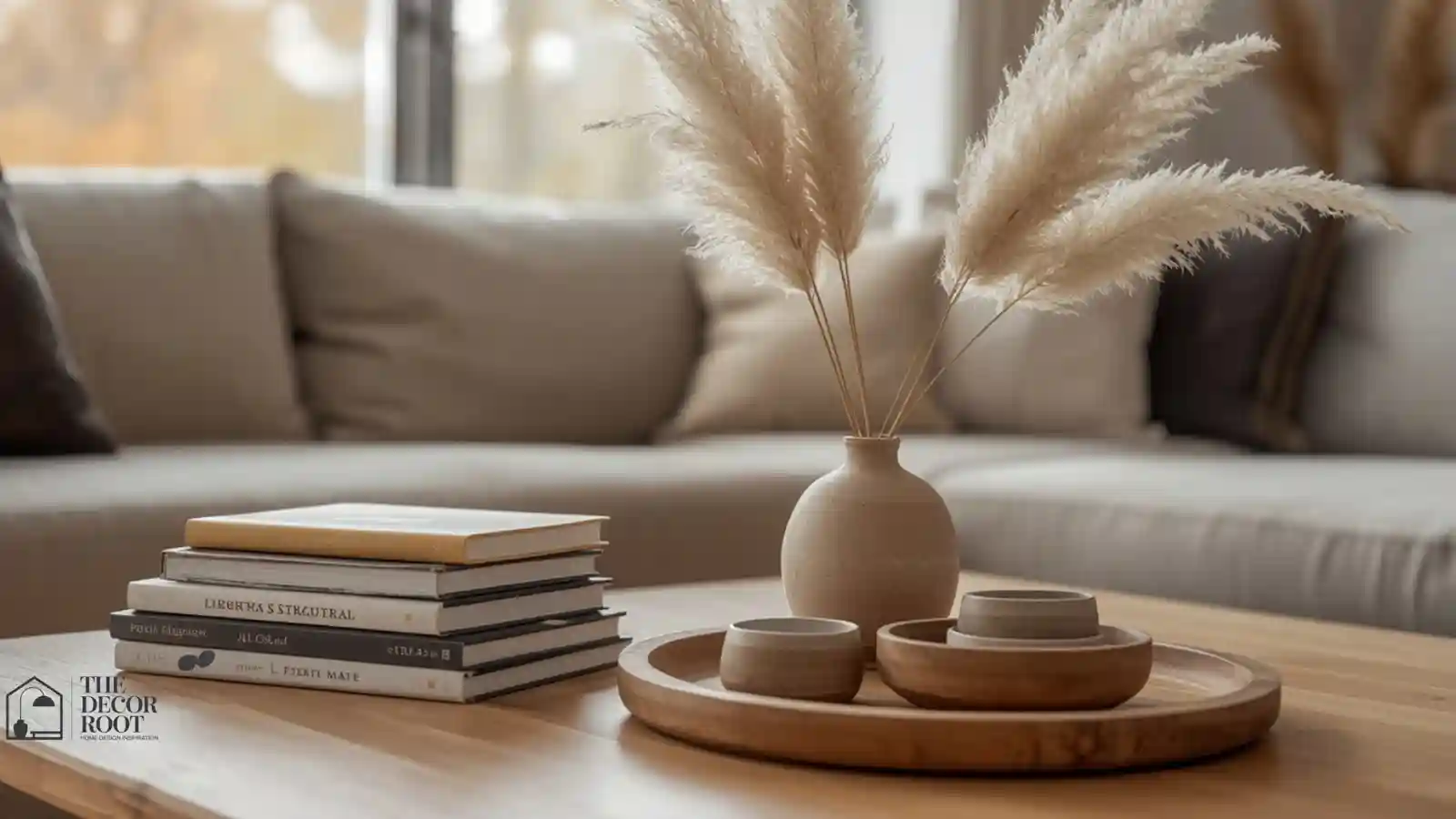
Every well-styled coffee table, fall or otherwise, is built on the same underlying structure: a low horizontal element (a tray or a stack of books), a tall vertical element (a vase or a candle), and a small textural or organic element (something dried, ceramic, or tactile) grouped rather than spread out. Once you build with that height triangle in mind, the actual objects you choose pumpkins or not become much less important than how you’re arranging them. A coffee table styling vignette is only as good as the rug it sits on. These fall coffee table and rug zone ideas show how the wool rug anchors the seating zone, creates the visual boundary within which the coffee table composition reads as deliberate, and how coordinating the rug tone with the objects on the table creates the most resolved autumn living room arrangement available.
Autumn Coffee Table Vignette
A coffee table is the living room’s central styling stage; browse all our living room decorating ideas to see how coffee table composition connects to throw blankets, wool rugs, candle arrangements, Candles are the most effective single addition to a fall coffee table styling beyond seasonal produce, these coffee table candle and styling ideas show how to incorporate tapers, pillar candles, and tea lights into a coffee table composition. Hence, the flickering light becomes part of the arrangement rather than an afterthought placed in the corner of an otherwise static display, and the wider autumn palette for a living room where every surface reads as part of one considered seasonal moment.
1. Anchor the Whole Table With a Wood or Marble Tray
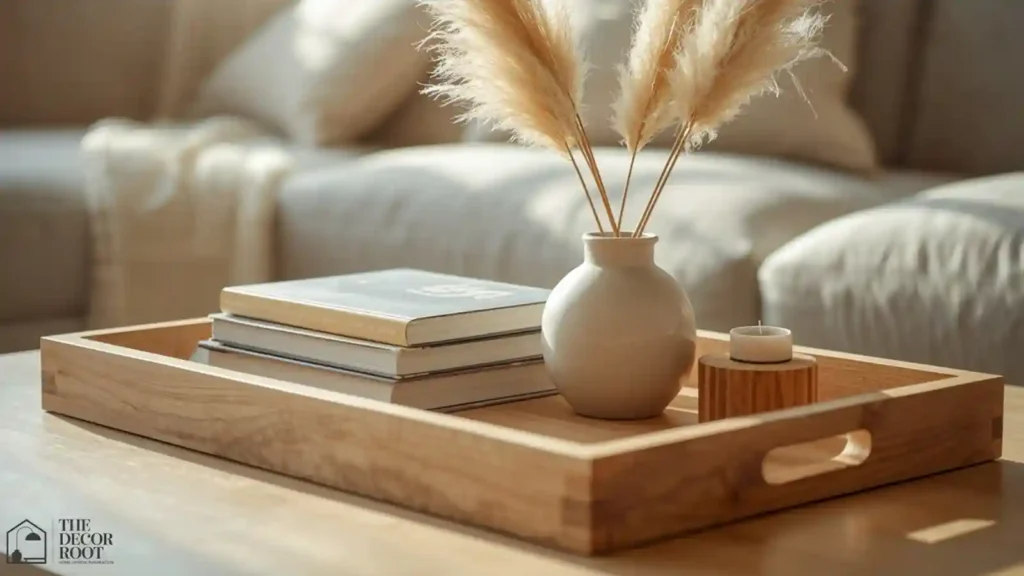
Start with a low, flat tray placed slightly off-center on the table. This becomes the “frame” that everything else on your table sits inside, and it immediately makes a random collection of objects look like an intentional vignette instead of clutter. A tray in warm wood or honed marble works especially well for fall because the material itself already reads as warm and seasonal without needing any orange in the mix. Keep the tray to roughly a third of your table’s surface area so there’s still open space around it; a tray that spans the entire table leaves no room for the height variation the rest of this list is built around.
2. Stack Coffee Table Books by Height, Not Color
A stack of two or three coffee-table books gives you your first vertical element, and the trick to making it look styled rather than just “books on a table” is to stack them from largest to smallest, with the biggest book on the bottom. Choose books in warm, muted cover tones terracotta, cream, deep green over bright or busy covers, since a quieter cover lets whatever you place on top of the stack stand out more. This stack becomes the base for your next styling layer, whether that’s a small pumpkin, a candle, or a small potted plant, so build it before you decide what goes on top.
3. Add Height With a Wood Riser or Cake Stand
A wood pedestal riser or a simple cake stand solves the most common coffee table styling problem: everything sitting at the same height and reading as flat from across the room. A round wood riser tray elevates a small vase, a candle, or a mini pumpkin just a few inches, which is often all it takes to create real visual dimension on an otherwise flat surface. Place it slightly behind your book stack rather than directly beside it, so the two vertical elements don’t compete for the same visual space, and let whatever sits on top slightly overhang the edge for a softer, less rigid look.
EDITOR’S PICK
🛒Wood Riser Tray, Round, Natural Finish
A wood pedestal riser behind your book stack adds just enough height variation to prevent flatness, while letting items slightly overhang creates a softer, more dimensional display.
(paid link)
4. Use One Statement Object Instead of Several Small Ones
It’s tempting to fill a coffee table with lots of small seasonal trinkets, but one larger, more interesting object almost always reads as more styled than five small ones scattered around. A single oversized decorative gourd, a large ceramic vessel, or an interesting piece of driftwood does more visual work than a handful of mini pumpkins because your eye has one clear focal point rather than several competing smaller ones. If you already own a lot of small seasonal pieces, group them tightly together in one small tray or bowl rather than spreading them across the table, which turns “clutter” into “collection.”
5. Bring In Dried or Preserved Botanicals Instead of Fresh Flowers
Dried botanicals pampas grass, wheat stems, preserved eucalyptus give you the organic, seasonal feeling of fresh flowers without wilting within a week, which matters a lot on a table you’re styling for the entire fall season. A single stem or small bundle in a simple ceramic or glass vase adds height and softness without needing to be replaced, and the neutral, slightly faded color of most dried botanicals fits naturally into a fall palette without looking like a Halloween prop. This is also one of the more budget-friendly ways to add a seasonal feel, since one good bundle of dried stems can be trimmed and reused across multiple vase heights.
6. Layer in a Textured Throw Corner for Softness
If your coffee table sits close to the sofa, let one corner of a folded throw blanket spill slightly onto the table’s edge, connecting the sofa styling and the table styling into one cohesive scene rather than two separate decor decisions. This is a small detail most people don’t think to do, but it softens the hard edges of a wood or glass table and ties the whole seating area together visually. Use a textured throw in a neutral or warm tone, folded loosely rather than draped fully across the table, since the goal is a soft accent, not covering up the table itself.
7. Group Ceramic Vases in Odd Numbers
Three ceramic vases in slightly varied heights and matte finishes, grouped closely together rather than spread apart, create an instant styled moment using almost no seasonal decor at all. A set of matte ceramic vases in warm neutral tones works year-round, which makes this one of the more versatile purchases on this whole list; you’re not buying something that only works for eight weeks a year. Odd numbers of grouped objects consistently read as more intentional than even numbers, a principle designers rely on constantly, so resist the instinct to buy a matching pair and look for a trio instead.
EDITOR’S PICK
🛒Matte Ceramic Vase Set, Three-Piece, Neutral Tones
Three matte ceramic vases in warm neutral tones, grouped closely with varied heights, create a year-round styled moment that relies on the intentional power of odd numbers.
(paid link)
8. Use a Runner Instead of a Tray for a Longer Table
If your coffee table is long and narrow rather than square, a slim table runner in linen or waffle-weave fabric can do the same “framing” job a tray does on a smaller table, giving your styled objects a defined lane to sit within. This works especially well for rectangular tables where a single tray would look too small and isolated in the middle of a lot of empty wood or glass. Choose a runner in a warm neutral or muted rust tone, and let the ends hang slightly off each side of the table rather than tucking them under, which softens the table’s hard edges the same way a throw blanket corner does.
9. Add a Small Stack of Linen Napkins or a Folded Throw as a Textural Base
A small stack of folded linen napkins or a mini folded throw, tucked beside your tray or book stack, introduces a soft textural element that breaks up an otherwise all-hard-surface table full of ceramic, wood, and glass. This is a genuinely underused trick: most coffee table styling leans entirely on hard objects, and a small soft element makes the whole vignette feel more tactile and less like a display case. Choose a fabric in a warm neutral tone that echoes your tray or vase color, and keep the stack low and tucked to the side so it supports the arrangement rather than becoming the main focal point.
10. Style With a Small Potted Plant Instead of Cut Flowers
A small potted plant a trailing pothos, a mini fiddle leaf, or even a simple herb pot adds living greenery to a coffee table without the maintenance of fresh cut flowers that wilt within days. This also solves a color-balance problem many fall tables have, since an all-warm-tone table (wood, terracotta, cream) can start to feel a little flat without a touch of green to contrast against it. Choose a pot in a simple ceramic or terracotta finish that matches your other styling pieces, and place it slightly behind your taller vertical elements so it reads as a backdrop layer rather than competing with your main focal object. A coffee table and a dining table follow the same styling logic; both are horizontal surfaces where the composition of height, object grouping, and negative space determines whether the arrangement reads as intentional or accidental. These fall surface styling ideas show how the centerpiece principles that make a dining table beautiful in autumn translate directly into a coffee table display that looks equally designer-level.
11. Add One Well-Chosen Coffee Table Book on Fall or Nature
Beyond just using books for height, choose at least one book with a cover or subject that actually relates to the season a book on autumn landscapes, nature photography, or warm-toned interior design so the styling has a subtle thematic thread even without any literal pumpkins. A curated set of neutral-toned coffee table books makes this easy if you don’t already have the right titles on hand. This detail is subtle enough that most guests won’t consciously register it, but it adds a layer of intentionality to the table that a random stack of whatever books were on the shelf doesn’t achieve.
EDITOR’S PICK
🛒Curated Coffee Table Book Set, Neutral Tones
A curated stack of neutral coffee table books, including at least one seasonally themed title, adds subtle thematic intention that a random book stack cannot achieve.
(paid link)
12. Use a Small Bowl of Cinnamon Sticks or Dried Orange Slices
A small ceramic bowl filled with cinnamon sticks, dried orange slices, or whole nutmeg brings a subtle, natural seasonal scent and texture to the table without relying on an actual candle to do the scenting work. This is a particularly good trick if you already have candles elsewhere in the room and don’t want to add another one to the coffee table specifically. Keep the bowl small and place it as your “textural accent” role rather than a main focal point, tucked near your vase or book stack rather than centered on its own, since its job is to add subtle detail, not dominate the arrangement.
13. Play With Asymmetry Instead of Centering Everything
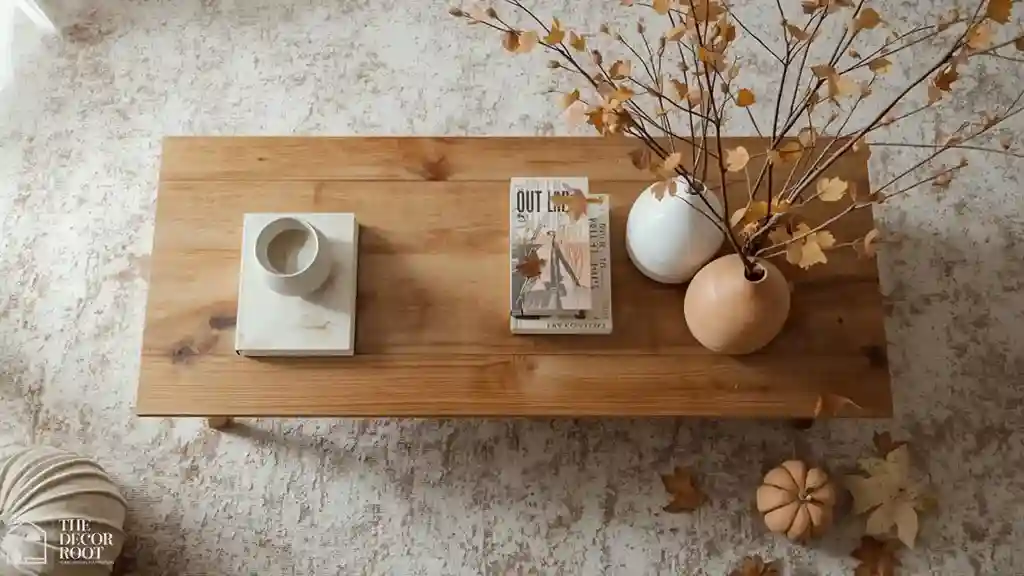
Resist the instinct to center your main object directly in the middle of the table. Asymmetrical arrangements, where your grouped objects sit toward one side or one corner, almost always look more current and less like a formal display. This leaves open, breathable space on the other side of the table, which is genuinely important; a table with zero space starts to feel cluttered no matter how nice each piece is. A good rule of thumb is roughly two-thirds styled, one-third intentionally empty, which gives the eye somewhere to rest and makes the styled portion feel more curated by contrast.
14. Incorporate a Small Wood Bowl of Natural Pinecones or Acorns
A simple wood or ceramic bowl filled with pinecones, acorns, or small dried gourds gathered from outside (or bought inexpensively at a craft store) adds genuine seasonal texture at essentially no cost. This is one of the more budget-conscious ideas on this list, and it also tends to look less “store-bought seasonal” than plastic or overly polished decorative pumpkins, since natural, slightly imperfect pinecones and acorns have real organic texture and color variation. Keep the bowl relatively shallow and let a few pieces sit slightly outside the bowl’s edge for a more natural, gathered look rather than a perfectly poured arrangement.
15. Add Dried Pampas Grass for Height and Softness
A tall stem or two of dried pampas grass in a simple vase brings genuine height and a soft, textural silhouette to the table, and it’s become a design-world staple for exactly that reason: it does a lot of visual work for very little effort. Dried pampas grass stems in a neutral cream or blush tone fit into virtually any existing color palette, unlike more saturated fall florals that can clash with a cooler-toned room. Trim the stems to a height that’s tall enough to be a clear focal point but not so tall that it blocks sightlines across the room when people are seated on the sofa.
EDITOR’S PICK
🛒Dried Pampas Grass Stems, Neutral Tone, Set Of 2–3
Neutral dried pampas stems in a simple vase add height and soft texture to the table, trimmed to stand out without blocking sightlines across the room.
(paid link)
16. Style a Small Stack of Vintage or Thrifted Objects
A small vintage brass candle holder, an old wooden box, or a thrifted ceramic dish adds a layer of personality and history that brand-new seasonal decor simply can’t replicate, and it’s often available for a fraction of what new decor pieces cost. These slightly imperfect, one-of-a-kind pieces are frequently what separates a coffee table that looks like it came from a single store trip from one that looks like it was collected and curated over time. Look for pieces with warm metal tones or aged patina, which naturally complement a fall color palette, and don’t worry about them matching your other pieces exactly; a little variation in finish reads as more authentic.
17. Use a Tray Within a Tray for Layered Depth
For an extra layer of intentional styling, place a smaller tray or dish inside your larger tray, holding just one or two tiny objects: a small candle, a few dried florals, or a tiny bowl. This nested layering trick is a favorite among professional stylists because it adds visual depth without adding table footprint, since the smaller tray still lives within the boundary of the larger one. It works especially well if your main tray otherwise feels a little sparse with just one or two larger objects on it, giving you a way to add detail without overcrowding the overall composition.
18. Keep Metals Consistent Across the Table
If you’re using metal accents a brass candle holder, a matte black vase, a gold-rimmed bowl try to keep them in the same metal family across the whole table rather than mixing brass, silver, and black all in one small vignette. Mixed metals can work in a full room where they’re spread across a larger space, but on a single small coffee table, too much metal variation tends to read as busy rather than intentional. Pick one warm metal (brass or gold) or one cool metal (matte black or brushed nickel) as your accent metal for the season, and stick with it across every metallic piece you place on the table.
19. Add a Stoneware or Ceramic Catch-All Bowl
A simple stoneware bowl serves a genuinely practical purpose: somewhere to toss a remote control or a phone while still contributing to the styled look, since a beautiful bowl reads as decor even when it’s doing double duty as storage. A wide, shallow stoneware bowl in a warm glaze fits naturally into a fall palette and solves the very real problem of coffee tables that look styled in photos but get covered in clutter within a day of actual use. Place it toward the edge of the table, slightly separate from your main vignette, so it’s easy to reach without disrupting the rest of the styling.
EDITOR’S PICK
🛒Stoneware Catch-All Bowl, Wide, Warm Glaze
A warm glazed stoneware bowl placed at the table’s edge offers practical storage for small items while maintaining a styled fall look, without disrupting your main vignette.
(paid link)
20. Step Back and Edit Before You Call It Finished
Once you’ve added everything from this list that appeals to you, step back and remove at least one piece. Professional stylists almost always over-place first and then edit down, because it’s easier to see what’s unnecessary once everything is already in place. If any single object doesn’t clearly serve one of the three roles height, texture, or focal interest it’s usually the piece to remove first. A slightly more restrained table with fewer, better-chosen objects will consistently photograph and look better in person than a fully maximalist table where every available inch is covered in something.
For more ways to build out this same restrained, texture-first approach through the rest of your living room, take a look at 22 Fall Throw Blanket Layering Ideas That Look Designer and 21 Fall Candle Arrangement Ideas for Living Rooms, both built around the same height-and-texture principles used here.
Quick Action Plan
- Start with a tray as your base, add a stacked pair of books beside it for height, and top the stack with one taller vertical element like a small vase with dried pampas grass or a candle. Group one small textural bowl, pinecones, cinnamon sticks, or a catch-all dish next to the books, and leave the remaining third of the table intentionally empty.
- That five-piece combination alone builds the full height-texture-focal-point structure this whole list is based on, and it takes less than fifteen minutes to put together using pieces you likely already have.
Frequently Asked Questions
Conclusion
A coffee table doesn’t need a pumpkin to feel like fall; it needs height, texture, and one clear focal point, arranged with a little intentional space around it. Once you build with that structure in mind, you can restyle the same table for every season using pieces you already own.
💾 Save this to your Fall Coffee Table board so it’s ready when you sit down to restyle.