20 Hammock Corner Ideas for Small Yards
Hammock Corner Ideas Small Yards because every hammock photo you’ve ever pinned probably features two massive trees spaced exactly the right distance apart in a huge, empty backyard, which is exactly the yard most people don’t have. That’s the actual barrier stopping people from adding a hammock corner: not wanting one, but assuming it requires space they simply don’t own. It doesn’t. A freestanding stand, a smart corner, and a few inches of clearance is genuinely all it takes, and this list is built entirely around small-yard math, narrow side yards, tight patio corners, fenced-in postage-stamp lots. A hammock corner in a small yard is one of the most joyful home decorating ideas available for a compact outdoor space; it creates a dedicated rest destination that requires almost no footprint, costs a fraction of any other garden feature, and is used more frequently than almost anything else in the garden once it is in place
This post contains affiliate links. As an Amazon Associate, I earn from qualifying purchases. If you buy through these links, I may earn a small commission at no extra cost to you.
The Real Reason This Works
The reason a hammock corner works even in a tiny yard comes down to one thing most people don’t think about: a hammock’s actual footprint when in use is smaller than its footprint when empty and swaying loose, because your body weight settles it into a compact, contained shape rather than the wide arc it hangs in unused. Combine that with a corner placement using two adjacent boundaries (a fence and a wall, or two fence lines) instead of needing open space on all sides, and you can fit a genuinely comfortable hammock setup into a space you’d assume was too small. This list leans into that math instead of fighting it. A hammock corner needs a sense of enclosure to feel like a genuine retreat rather than an exposed feature; these small outdoor space privacy ideas show how a freestanding screen, a planted border, or a tension-mounted panel creates the privacy a hammock needs to feel genuinely restful in a small yard or apartment balcony setting
Create Your Personal Hammock Corner
A hammock corner is the smallest and most personal outdoor room. Browse all our outdoor decorating ideas for screened porches and outdoor showers. A hammock and an outdoor shower are the two features that deliver the most genuine resort quality to a small yard; these small yard outdoor feature ideas show how to site both elements, so they serve each other spatially, with the shower creating a refreshing transition point and the hammock providing the destination to rest in afterwards. Backyard corners and shade sail ideas that build out the rest of the compact outdoor space around your hammock.
1. Measure your actual usable corner before shopping for anything.
Most small yards have at least one underused corner, often where two fence lines meet, that’s currently empty because nobody’s thought to put anything there. A single-person hammock typically needs about 10 feet of hanging length when stretched at the ideal sag angle, but a compact freestanding stand can bring that down to as little as 9×4 feet total footprint. Measure your specific corner in both directions before you commit to a stand size, since “compact” varies significantly between models. A hammock is one of the most effective anchors for a backyard corner; these backyard corner ideas show how to build the surrounding planting, paving, and structure so the hammock becomes the centrepiece of a fully composed outdoor room rather than a feature that appears to have been hung between two conveniently spaced trees
2. Use two fence posts if your fencing is sturdy enough, but confirm load rating first
Not every fence is built to hold a swinging weight; a hammock in motion can exert dynamic force well beyond the static weight of the person in it, and a decorative or thin-panel fence can crack or lean under that stress over time. If you’re unsure, a stand is the safer bet regardless of yard size, since it isolates the load entirely from your fence structure. This single check prevents a genuinely common backyard mishap.
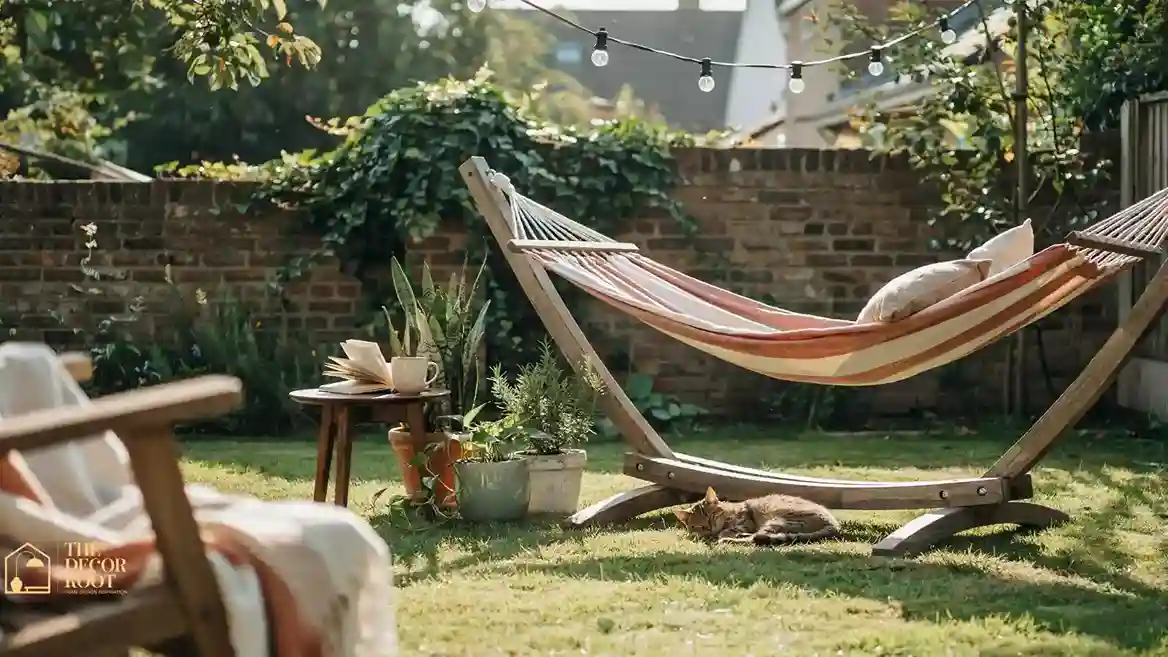
3. A compact freestanding hammock stand
Sized specifically for small yards, it is the single most reliable fix for tight spaces, since it removes any dependency on trees, fences, or specific spacing being available; you just need a flat patch roughly the size of a full-size mattress. Steel stands in the 9-foot range are common and fold down for storage in winter, which matters if your small yard doubles as patio space you need clear in the off-season. This is the starting point for almost every idea on this list.
EDITOR’S PICK
🛒Compact Freestanding Hammock stand
9‑foot foldable steel privacy screen for small yards, needs only a mattress‑sized flat space, no trees or fences, folds for winter storage, and underpins most ideas on this list.
(paid link)
4. Angle the hammock diagonally across the corner instead of straight along one fence line.
A diagonal placement across a corner uses the longest available sightline in a small space, letting you fit a longer, more comfortable hammock than a straight placement against one wall would allow. This is a simple geometry trick that professional small-space designers use constantly and translates directly to a backyard corner. It also naturally creates a cozier, more enclosed feeling than a hammock stretched flat against a single wall.
5. Choose a single-point stand over a traditional two-point stand if space is extremely tight.
A single-point or “swing chair” style hanging setup where the hammock or chair hangs from one central point rather than stretching between two takes up dramatically less floor footprint than a traditional stretched hammock, while still delivering the swaying, relaxing effect people actually want from a hammock corner. This is the best option if your usable corner is closer to 5×5 feet than 9×4. It also tends to work better visually in a genuinely small space since it doesn’t dominate the sightline the way a long stretched hammock does.
6. Use vertical layering with a shelf or ledge instead of side tables.
In a tight corner, a floor-standing side table can eat into your already-limited walking space; a small wall-mounted shelf or ledge at arm’s reach from the hammock gives you a spot for a drink or book without the footprint of separate furniture. This is a classic small-space trick borrowed from studio apartment design that translates surprisingly well outdoors. Choose a weatherproof shelf material since it’ll be exposed to the elements.
7. Add a privacy layer behind the hammock if the corner backs onto a neighbor’s view.
A simple lattice panel, tall potted plants, or a section of the same bamboo screening used for balconies can back a small-yard hammock corner and turn it from “visible relaxation spot” into “actual private retreat,” which matters a lot for how often you’ll actually use it. This works especially well combined with the diagonal placement trick, since the screen naturally becomes the visual backdrop of the whole vignette. Even a modest privacy layer changes how relaxed you feel lying there.
8. A hammock that comes with a matching pillow and pad set
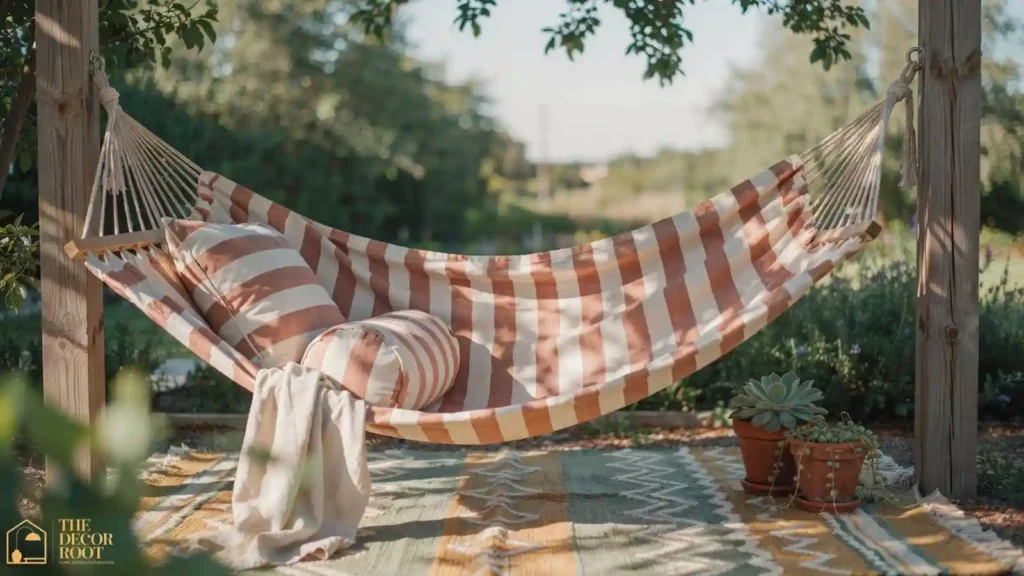
Solves comfort and styling in one purchase, which matters more in a small space where you likely don’t have room for a lot of separate accent pillows scattered around. Look for a set with a removable, washable cover since outdoor fabric collects dust and pollen fast. This single item does more to make a hammock corner feel “finished” than almost anything else on this list.
EDITOR’S PICK
🛒 Hammock That Comes with a Matching Pillow and Pad Set
All three retain: comfort + styling in one purchase, small‑space value, removable/washable cover recommendation, dust/pollen consideration, and the “finishing” benefit for hammock corners.
(paid link)
9. Skip the stand entirely and use a single sturdy pergola post if you have one.
If your small yard already has a pergola, even a partial one, a single reinforced post can sometimes anchor one end of a hammock while the other attaches to a fence or a second smaller post. Check the post’s load rating with a hardware store associate if you’re not sure, since not all decorative posts are built for dynamic weight. This can save you the cost and footprint of a full stand if the structural elements are already in place. It’s worth checking before assuming you need to buy new equipment.
10. Keep the ground beneath the hammock functional, not just decorative.
In a small yard, the ground space under and around a hammock is valuable real estate you’re otherwise wasting if you fill it purely with decor. A low storage bench, a small planter that doubles as a footrest, or a stepping-stone path that continues the yard’s function underneath the swaying zone all keep the space working double-duty. This is the single mindset shift that separates a cramped-feeling hammock corner from one that feels intentional. Every square foot in a small yard needs to justify itself.
11. Choose rope or fabric hammock material based on your climate, not just looks.
Rope hammocks look classic and airy but can be less comfortable without a spreader bar, while fabric hammocks are cozier but hold humidity and can mildew faster in wet climates if left uncovered. In a small yard, the hammock is likely to be the single dominant visual feature, so this material choice affects the whole corner’s look more than it would in a larger space with more competing elements. Match the choice to how much shade versus direct sun and rain your specific corner gets.
12. A weather-resistant outdoor rug
Sized to the hammock’s swing radius visually defines the corner as an intentional “room” within your yard rather than just a hammock plopped onto grass or pavers. This is a classic zone-defining trick from interior design that works just as well outside; a rug tells the eye “this area is different from the rest of the yard” even without walls. Choose a flat-weave, quick-drying material since it’ll be exposed to rain and hammock shade patterns.
EDITOR’S PICK
🛒A Weather-Resistant Outdoor Rug
Rug sized to the hammock’s swing radius grounds the area as an outdoor “room”; a quick‑drying flat‑weave withstands rain and shade.
(paid link)
13. Use the hammock’s own shadow and sway radius as your planning boundary, not its resting shape.
When empty, a hammock can look like it needs more room than it actually uses in motion. Mark out the actual swing radius with a piece of string or hose before finalizing furniture placement around it, since this is usually smaller than people assume from eyeballing the empty, slack shape. This prevents the common mistake of leaving too much “just in case” clearance that eats into an already tight yard. A properly measured swing radius often frees up more usable space than expected.
14. Add shade with a single umbrella rather than a full pergola if budget or space is tight.
A cantilever or offset umbrella positioned to shade the hammock without its base sitting directly in the swing path solves sun exposure without the cost and footprint of building a pergola structure. This is a much more small-yard-appropriate solution than a full overhead structure, which can visually overwhelm a compact space. Look for a UV-rated canopy fabric if the hammock corner faces consistent afternoon sun.
15. Tuck a small speaker or lantern into a nearby planter for ambiance without extra furniture.
Rather than a side table cluttered with electronics, a weatherproof lantern or small Bluetooth speaker nestled into the base of a nearby potted plant keeps the corner’s footprint clean while still adding sensory layers. This is a small styling trick that avoids the visual clutter that side tables often create in already-tight spaces. It also means one less piece of furniture to store when the season changes.
16. Solar-powered string lights
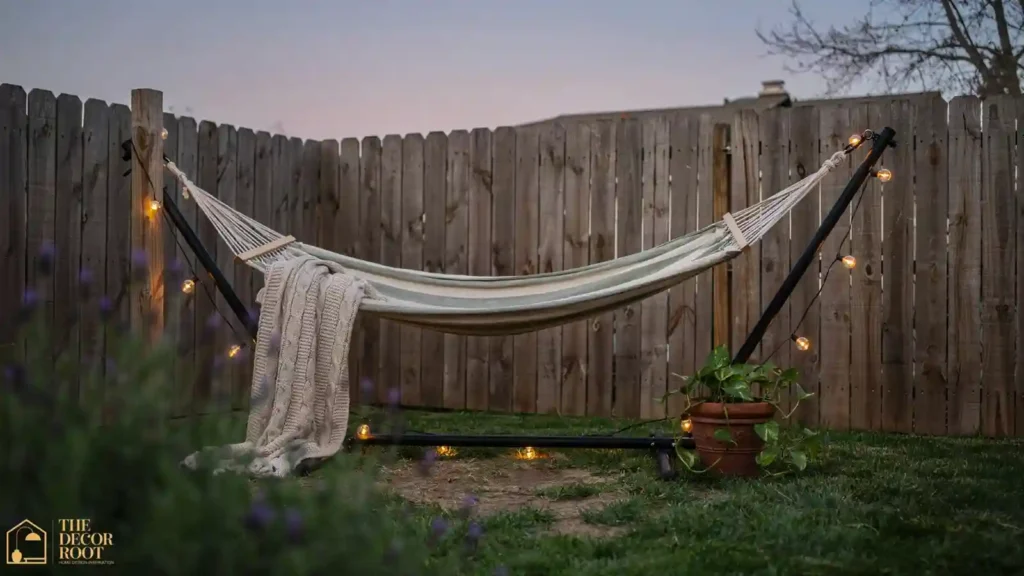
Draped along the fence line or standing frame extend hammock corner use into evening without needing an outdoor outlet, which matters a lot in small yards where the hammock corner is often far from the house’s exterior power source. Solar options also mean zero extra cord clutter in an already tight space, which is a real consideration when every foot of ground matters. Choose warm white over cool white for a more relaxing evening ambiance.
EDITOR’S PICK
🛒Solar-Powered String Lights
Solar string lights along fence/frame extend hammock evenings with no outlet or cord clutter; choose warm white for a relaxing ambiance.
(paid link)
17. Paint or stain the fence behind the hammock a slightly darker tone to create depth.
In a small yard, light-colored fencing can make the space feel flat and boxed in. A slightly darker stain or paint on the fence panels directly behind the hammock corner creates a sense of depth and recession, making the whole area feel larger than its actual dimensions. This is a genuine optical trick used in small-space interior design that translates outdoors. It’s also one of the lowest-cost changes on this entire list relative to its visual impact.
18. Keep plantings around the hammock low and layered rather than tall and blocky.
Tall, dense shrubs directly next to a small hammock corner can make the space feel closed-in rather than cozy. Layering shorter grasses, low-flowering plants, and one taller accent (rather than several) keeps the sightlines open while still adding greenery. This distinction between “cozy” and “cramped” comes down almost entirely to plant height choices in a small space. Save any taller plants for the corners furthest from the hammock itself.
🛒 19. A weatherproof storage bin
Tucked beside the hammock stand holds blankets, cushions, or a folded stand cover without taking up living space inside, critical in a small yard where you likely don’t have a shed or garage close by. Look for a slim, vertical design rather than a wide box, since footprint matters more than volume in this context. This single addition keeps the whole corner from looking cluttered with loose textiles.
EDITOR’S PICK
A Weatherproof Storage Bin
Slim vertical storage beside hammock stand holds blankets and cushions, saves space in small yards, reduces corner clutter.
(paid link)
20. Plan for off-season storage from day one, not as an afterthought.
A folding hammock stand should genuinely fold flat and store against a wall or in a shed for winter, and it’s worth testing this fold-down process when you first set it up rather than discovering it’s awkward the first time you need to store it. In a small yard, a stand that can’t compactly store itself effectively costs you usable space for months of the year it’s not in active use. This planning step is what makes a hammock corner sustainable as a permanent feature rather than something you eventually give up on due to storage hassle.
Quick Action Plan
- Start by measuring your actual corner and marking out the true swing radius with string, then choose between a full-size compact stand or a single-point hanging chair based on that measurement.
- Add a rug to define the zone, a privacy layer if the corner is visible from neighboring yards, and solar lighting to extend use into evening; everything else on this list can be layered in gradually as budget allows.
FAQs
Conclusion
A small yard isn’t a disqualifier for a hammock corner; it’s just a design constraint that pushes you toward smarter placement and more intentional furniture choices than a sprawling yard would ever require. Start with the measurements, pick the setup that actually fits your specific corner, and you’ll have a genuinely relaxing spot that punches well above its square footage.
💾 Save this to your backyard ideas board, so you have it ready for your next weekend project.