24 Boho Nursery Ideas That Feel Calm
Boho Nursery Ideas: If every boho nursery you’ve pinned looks gorgeous but somehow also busy too many textures fighting for attention, too many patterns stacked on top of each other you’re not imagining it. Most “boho nursery” content confuses more with warm. The rooms that actually feel calm when you walk into them at 3 a.m. for a feeding are built on restraint: a handful of natural materials, a tight neutral palette, and texture doing the work that color usually does. A boho nursery that feels calm is one of the most beautifully resolved home decorating ideas for a baby’s room; the natural fibre, warm wood, and muted palette of the boho aesthetic create a nursery that is stimulating enough to be interesting but restrained enough to be genuinely peaceful, which is the precise balance a baby’s room needs.
This post contains affiliate links. As an Amazon Associate, I earn from qualifying purchases. If you buy through these links, I may earn a small commission at no extra cost to you.
The Thinking Behind This
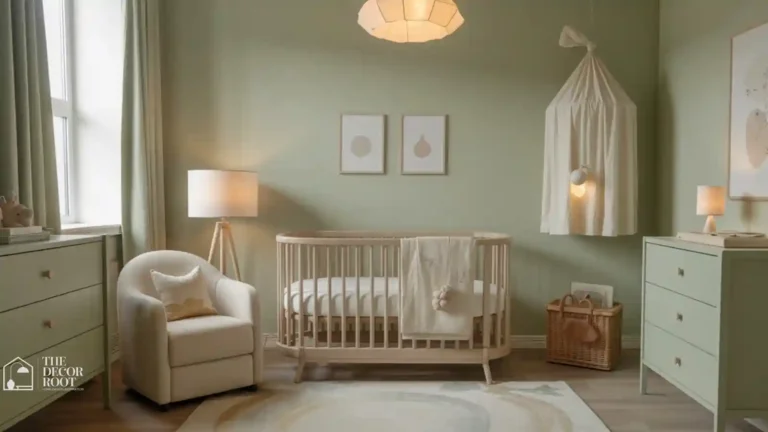
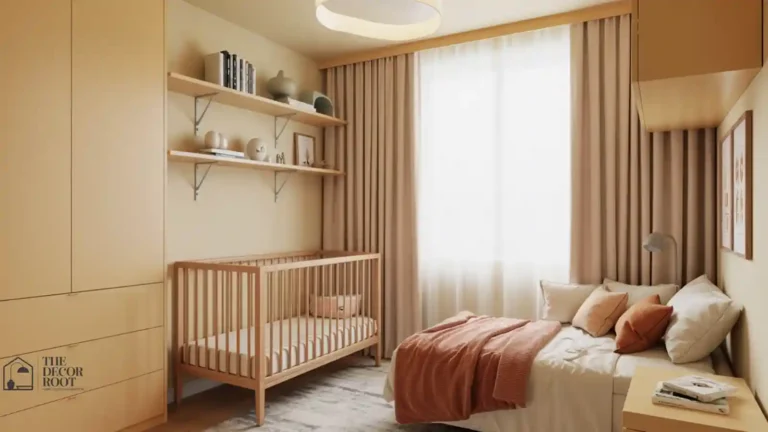
Boho nurseries get their calm from repetition, not variety. When rattan, jute, linen, and unbleached wood show up again and again in slightly different forms, your eye stops working to process the room and starts relaxing into it. The mistake most people make is treating “boho” as a shopping list: a macrame hanging here, a pampas plume there, without a shared material logic tying it together. The boho nursery palette depends on knowing which muted tones are genuinely calming and which are merely fashionable. These calm nursery colour ideas show how earthy terracotta, sage green, and dusty rose perform in a baby’s room at different times of day and in different light conditions, and how to layer them so the room feels warm and organic rather than flat.
Boho Meets French Nursery Style
The boho nursery and the French nursery share more than their neutrals; both are rejections of the conventional primary-colour baby room, both prize natural materials, and both create a room that feels beautiful to the parents as much as stimulating to the baby. These French-inspired nursery design ideas show how the French tradition provides the restraint framework that elevates a boho nursery from eclectic to elegant. “A boho nursery is built on a neutral foundation; these neutral boho nursery ideas show how the palette of warm white, sandy beige, and soft terracotta creates the canvas onto which macramé, rattan, and woven texture add depth and personality without the room ever feeling overwhelming or visually busy for a small baby.
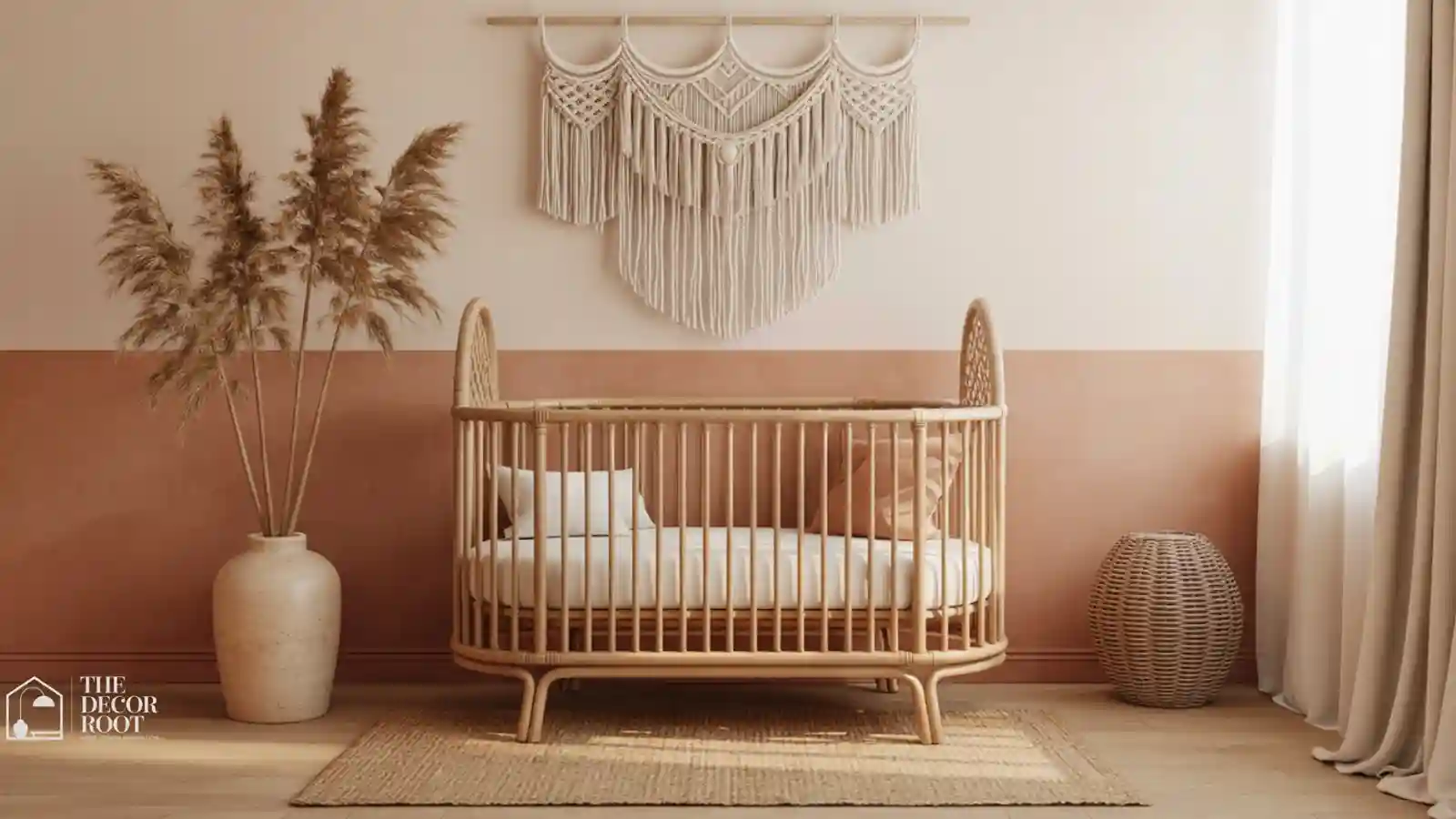
1. Anchor the Room With a Rattan or Wicker Crib
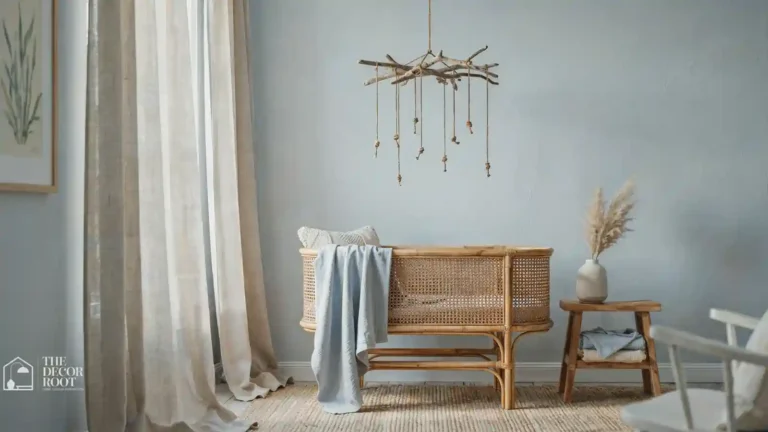
A rattan-front crib does more visual work than almost any other single piece in a boho nursery, because its open weave immediately signals “natural texture” without adding a single extra color to the room. Look for a crib with a solid wood frame and a woven front or headboard panel; this keeps it sturdy and safety-compliant while still delivering that light, airy boho feel. Pair it with a plain cream or oatmeal crib sheet so the weave stays the visual star instead of competing with a pattern. If a full rattan crib is out of budget, a rattan bassinet for the early months achieves the same effect in miniature and can move to a nursing corner later.
2. Layer a Jute or Sisal Rug Under the Crib
A natural fiber rug grounds the whole room and gives bare feet (yours, eventually theirs) something soft and textured to land on. Jute and sisal both read as “boho neutral” without introducing new color, which matters because boho rooms fall apart visually the moment too many tones compete. Size it so it extends at least 18–24 inches beyond the crib on all sides; a too-small rug makes the whole layout feel like an afterthought. If you’re worried about durability under a glider, a jute-and-cotton blend rug softens the texture underfoot while keeping the same visual warmth. Vacuum weekly; natural fiber rugs shed less than you’d expect but do need regular light cleaning.
3. Add a rattan bassinet as a Statement Piece for the First Months
Before baby graduates to the crib, a rattan bassinet gives you the boho texture payoff immediately, and it works beautifully positioned near your bed or in a corner of the nursery for daytime naps. The open weave lets air circulate, which matters more than people realize for warm-climate nurseries, and the natural material photographs (and just looks) warmer than a plastic or metal alternative. Choose one with a certified safety standard and a firm, well-fitted mattress; boho styling should never come at the expense of sleep safety basics. Once baby moves to the crib, the bassinet can be repurposed to hold blankets or stuffed animals, so it’s rarely a piece you outgrow entirely.
EDITOR’S PICK
🛒Rattan Bassinet For Early-Month Sleeping, Doubles As Nursery Decor
A certified rattan bassinet adds boho texture and airflow for warm nurseries, works bedside or in a corner, and later repurposes as storage for blankets or toys.
(paid link)
4. Use a Muted Terracotta Accent Wall
A full terracotta wall can read more “Southwestern” than boho if you’re not careful, but a muted, dusty terracotta closer to clay than orange does exactly what a boho nursery needs: it adds warmth without adding brightness. Paint just one wall, ideally the one behind the crib, so the color acts as a backdrop rather than a feature competing with your textures. Test the shade in the room’s actual light before committing to a gallon, since terracotta tones shift dramatically between north- and south-facing windows. If painting feels permanent, a large woven wall hanging in similar tones gives you 80% of the effect with zero drying time.
5. Hang Sheer Linen Curtains Instead of Blackout-Only Panels
Boho rooms live and die by how light moves through them, and heavy blackout curtains alone can make a nursery feel closed off during the day. Layer a sheer, unbleached linen panel in front of (or behind) your blackout liner so you get functional darkness for naps and soft, diffused light the rest of the time. The linen’s natural slub texture and slightly imperfect weave is itself a boho signature; it reads as lived-in and organic rather than stiff. Mount the rod a few inches above the window frame and let the panels puddle slightly at the floor for a relaxed, unstructured look that fits the aesthetic.
6. Add Woven Wall Baskets as Sculptural Decor
Empty wicker or seagrass baskets mounted on the wall in a cluster give you texture and shape without needing a single frame or print. Group three to five baskets of varying sizes in an asymmetrical cluster above the changing table or on an empty wall; the irregularity is the point, since a too-perfect grid reads more mid-century than boho. This is also one of the most budget-friendly ideas on this list, since basket sets are inexpensive and widely available. If you want function along with form, choose baskets with a slight depth so the bottom few can actually hold burp cloths or small toys.
7. Choose a Low, Wide Dresser in Natural Wood
Skip painted white furniture in a boho nursery; the natural grain of unfinished or lightly stained wood is doing real styling work here. A low, wide dresser (which doubles as your changing table surface) in oak, pine, or rattan-front styling keeps the room’s material palette consistent from floor to eye level. Add rattan or leather pulls instead of standard metal hardware for a small detail that reinforces the whole aesthetic. Because boho styling depends on visual consistency, matching this dresser’s wood tone to your crib frame (even if they’re different brands) will do more for the room’s cohesion than almost any decor item you add on top of it.
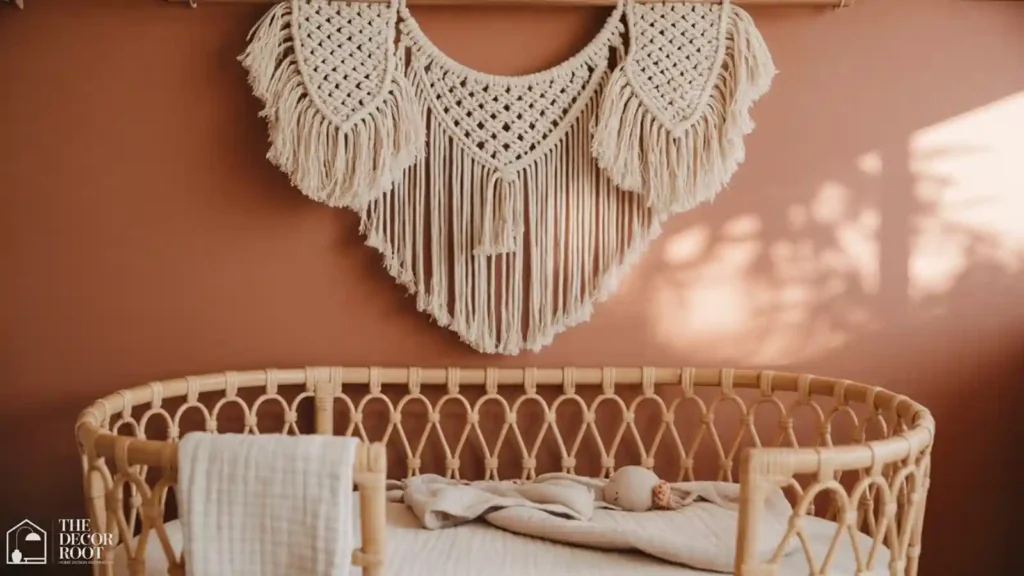
8. Hang a large macrame wall hanging above the Crib
If there’s one single item that reads “boho nursery” faster than anything else, it’s a macrame wall hanging positioned above the crib. Choose one in undyed cotton rope rather than a colored version; the natural ecru tone is what keeps it feeling calm instead of like a craft-fair souvenir. Size matters here: a hanging that’s too small over a crib looks like an afterthought, so aim for one that spans at least two-thirds of the crib’s width. Hang it a few inches above where a headboard would sit so it reads as an intentional backdrop, and make sure it’s mounted securely and well out of any future standing-toddler’s reach.
EDITOR’S PICK
🛒Large Macrame Wall Hanging As The Crib’s Focal Point
An undyed cotton macrame hanging spanning two-thirds of the crib width, mounted securely above headboard height, instantly establishes a calm boho nursery look.
(paid link)
9. Use Woven Pendant Lighting Instead of a Standard Fixture
Swapping a builder-grade flush mount for a woven rattan or seagrass pendant is one of the highest-impact, lowest-effort upgrades on this list. The fixture itself becomes a decor piece rather than something you simply tolerate, and the way it filters light creates soft, dappled shadows on the ceiling that feel warm rather than clinical. Choose a pendant with a drum or dome shape in a tight weave for a diffused glow, or a more open weave if you want a stronger shadow pattern. If rewiring isn’t in the budget, a plug-in pendant kit lets you achieve the same look without an electrician.
10. Add a Round Mirror With a Rattan or Rope Frame
A round mirror softens all the straight lines that furniture naturally introduces into a room, and a rattan or woven-rope frame ties it directly into your material palette. Hang it at a height where it reflects window light into the room; this genuinely brightens a nursery, not just visually but functionally, by bouncing daylight further into the space. It also becomes a functional piece once your child is a toddler checking themselves out before nap time. Keep the frame in the same tonal family as your crib and dresser so it reads as part of the room’s material story, not a random add-on.
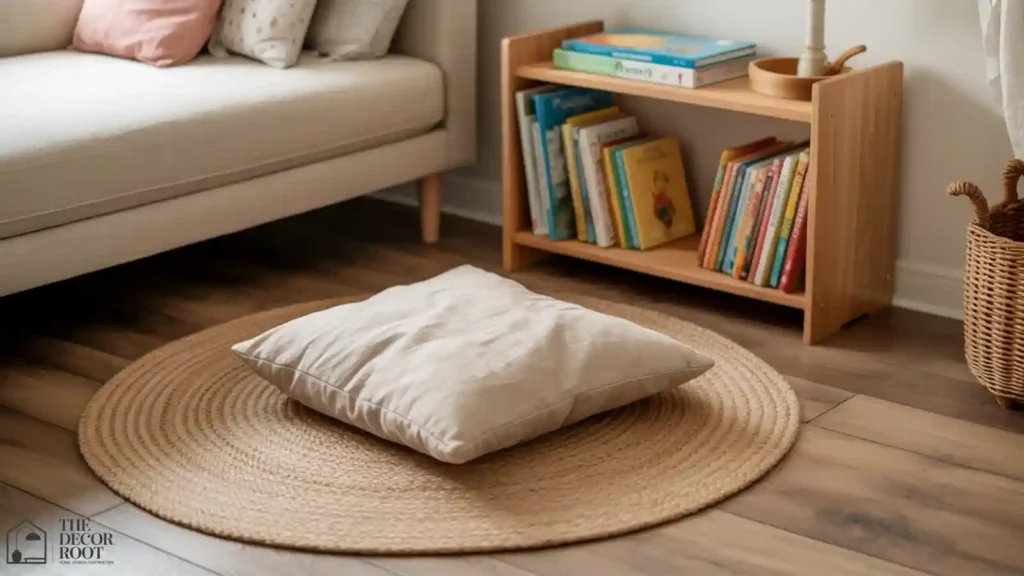
11. Add a natural jute area rug for the Reading Corner
If your nursery has room for a small reading nook, a second, smaller jute or seagrass rug helps define that zone without needing a visual barrier like a rug pattern or a different flooring material. This is a trick interior designers use constantly: layering zones with texture rather than color keeps a small room from feeling chopped up. Pair it with a floor cushion in undyed linen and a low bookshelf, and you’ve created a distinct reading corner using nothing but texture and scale. Look for a flat, low-pile weave so it’s comfortable for both a nursing parent sitting cross-legged and, later, a crawling baby.
EDITOR’S PICK
🛒Jute Area Rug To Define A Separate Reading Or Play Zone
A smaller jute rug with a flat, low-pile weave defines a nursery reading nook using texture, paired with a linen cushion and low bookshelf for comfort at every stage.
(paid link)
12. Display Dried Pampas Grass or Bunny Tail Grass
Fresh florals don’t last, and most artificial flowers read as fake under nursery lighting, but dried grasses solve both problems at once. A tall vase of pampas grass or the smaller, softer bunny tail grass adds height, movement, and texture to an empty corner without any maintenance or safety concerns around pollen or water. Choose a ceramic or ribbed ceramic vase in a matte cream or terracotta finish so the vase itself contributes to the palette rather than just holding the grass. Keep the arrangement out of reach once your baby is mobile, since dried stems can be brittle and shed fine particles over time.
13. Add a woven storage basket set under the Crib
Under-crib storage is one of the most-searched nursery problems, and a set of woven baskets solves it while adding to the boho look instead of detracting from it. Choose baskets low enough to slide fully under your crib’s frame. Measure the clearance before you buy, since this is the single most common return reason for under-bed storage. Use them for off-season clothing, extra bedding, or diaper bulk stock, and consider labeling with a simple leather or jute tag rather than a printed label for consistency with the room’s materials. This is also one of the more budget-conscious storage solutions compared to built-in shelving or a second dresser.
EDITOR’S PICK
🛒Woven Basket Set For Under-Crib Storage That Doubles As Decor
Woven baskets with leather or jute labels offer cost-effective under-crib storage for clothes, bedding, or diapers, but check clearance first for a proper fit.
(paid link)
14. Use a Textured Cream Bouclé Glider
The glider is where you’ll spend the most actual hours in this room, so its comfort matters as much as its looks, but a bouclé or textured bouclé-style fabric happens to deliver both. The nubby, looped texture reads as warm and tactile in photos and in person, and cream or oatmeal tones keep it from becoming a bold statement piece that clashes with everything else. Look for a glider with a wide seat and solid recline mechanism, since you’ll likely be in it for extended stretches during night feeds. A small wood or rattan side table next to it completes the corner without needing anything else.
15. Add a Woven Ottoman as a Footrest and Extra Seating
A round or drum-shaped woven ottoman does triple duty: footrest for the glider, extra seating for visitors, and another texture layer for the room. Choose one in a tightly woven natural fiber (rattan, seagrass, or water hyacinth) rather than an upholstered version, so it stays consistent with your other natural-material pieces. Because it’s low-profile and doesn’t block sightlines, it works even in smaller nurseries where a full second chair wouldn’t fit. Some versions open for hidden storage, which is a genuinely useful bonus if floor space for baskets and bins is limited.
16. Add a rattan pendant light over the Changing Area
If your ceiling fixture doesn’t reach far enough to light the changing table well, a second, smaller rattan pendant positioned above that specific spot solves the practical lighting problem while doubling your boho texture payoff. Choose a smaller-diameter option than your main fixture so it doesn’t compete for visual attention, and make sure it provides enough direct light for safe, accurate diaper changes at night; form should never override function in this specific spot. This is a small addition that consistently gets noticed in photos because it makes an otherwise purely functional zone feel intentionally styled.
EDITOR’S PICK
🛒Second Rattan Pendant Sized For A Changing Table Nook
A smaller rattan pendant over the changing table provides task lighting for safe nighttime changes and adds boho texture, but its size should not compromise function.
(paid link)
17. Use Unbleached Linen Bedding and Swaddles
Skip printed cotton swaddles in favor of unbleached, undyed linen or linen-cotton blends; the slightly rumpled, natural texture of linen is doing real aesthetic work even when it’s just folded on a shelf. Linen is also genuinely breathable and temperature-regulating, which makes it a practical choice for swaddling in warmer months, not just a styling one. Stack a few folded swaddles on an open shelf as visible, functional decor rather than hiding them in a drawer in a boho nursery; the “mess” of soft neutral textiles actually reads as styled rather than cluttered.
18. Add a Cane Webbing Accent Piece
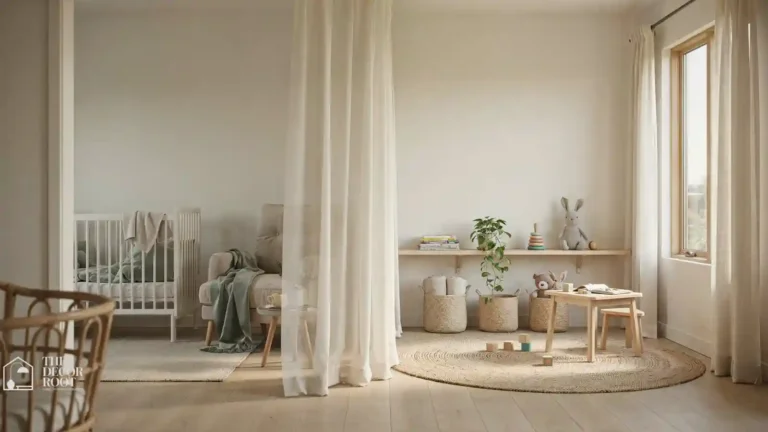
Cane webbing, the fine, honeycomb-patterned material used on furniture fronts, has become a signature boho-meets-modern detail, and a single cane piece (a cabinet front, a room divider panel, or a headboard insert) adds a more refined texture note than rattan alone. It reads slightly more polished than chunky wicker, which is useful if you want the room to feel boho without tipping into “beachy.” A cane room divider is particularly practical in a shared or open-plan nursery, since it defines the space without a solid wall while keeping the light and airy feel intact.
19. Display a Small Collection of Ceramic Vessels
A cluster of two or three small ceramic vases or bowls in matte cream, sand, and dusty clay tones gives you a low-effort styling moment on a shelf or dresser top. Vary the heights and shapes slightly: a bud vase, a low bowl, a rounded pot so the grouping feels curated rather than matched-set generic. These are also genuinely useful once your child is older, holding hair clips, small toys, or loose change from pockets during laundry sorting. Keep the group small; three pieces is the sweet spot before a nursery dresser top starts to feel cluttered.
20. Add a Woven Wall Shelf for Books and Small Plants
A single floating shelf with a woven or rattan-trimmed edge gives you display space for a few board books and a small, non-toxic plant without taking up floor space. Face the books cover-out rather than spine-out; it’s a well-known trick for encouraging early reading interest, and it happens to look better too. Keep any plants safely out of reach and double-check they’re non-toxic before placing them in a room a curious toddler will eventually explore. This is a small, inexpensive addition that photographs well and adds genuine function alongside the styling.
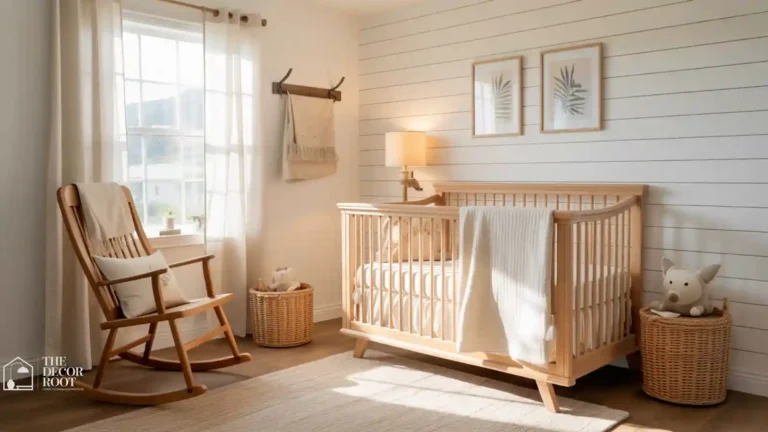
21. Use a Rattan or Wood Peg Rail for Hanging Items
A wall-mounted peg rail in natural wood or rattan gives you a place to hang a sun hat, a small basket, or a going-home outfit without needing a closet. It’s a Montessori-adjacent styling trick that’s become popular in boho nurseries specifically because it keeps items visible and accessible while still looking intentional rather than like a coat rack overflow. Mount it at an adult-reachable height for now; you can always add a second, lower rail once your child is old enough to use it themselves for jackets or bags.
22. Add a Neutral Woven Pouf for Floor Seating
Beyond the ottoman by the glider, a smaller floor pouf near a play area gives you flexible, low seating that works for nursing, floor play, or eventually toddler sitting during story time. Choose one in the same tonal family as your rug and ottoman so it doesn’t introduce a competing texture. Poufs are also genuinely practical because they’re lightweight and easy to move around the room as your needs shift from newborn floor time to toddler play sessions.
23. Add woven closet storage baskets to an Open Closet
If your nursery closet has open shelving, swap plastic bins for the same woven material you’ve used throughout the room. This small consistency detail is what separates a nursery that feels fully designed from one that feels half-finished. Use them for sorted clothing sizes, off-season items, or extra linens, and keep a closet door open (or use a curtain instead of a solid door) so the woven texture contributes to the room even when you’re not actively organizing. This also makes the closet functionally faster to navigate during middle-of-the-night outfit changes.
EDITOR’S PICK
🛒Woven Bins Sized For Closet Shelving, Extend The Basket System Used Elsewhere
Woven baskets in the nursery closet replace plastic bins for a cohesive, fully designed look, and keeping the door open or using a curtain adds texture while speeding up nighttime outfit changes.
(paid link)
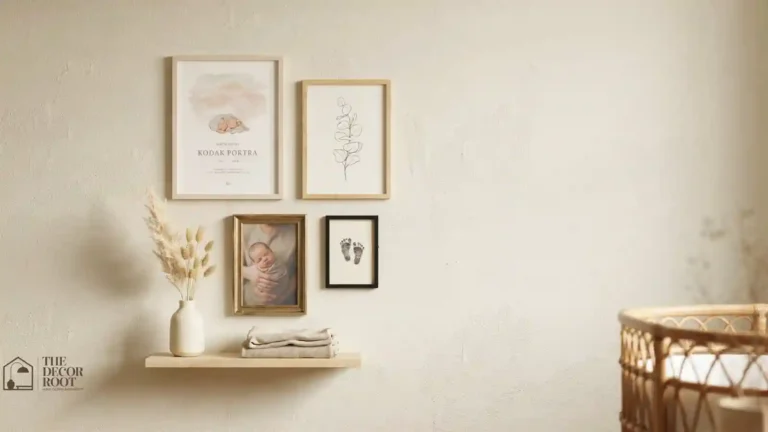
24. Finish With a Layered Gallery Wall in Natural Frames
Close out the room with a small gallery wall using natural wood or rattan-edge frames rather than black or white ones, mixing in one or two woven wall hangings alongside prints for texture variety. Keep the color palette inside the frames restricted to your established tones; botanical line drawings, neutral abstract shapes, or family photos in black and white all work well here. An asymmetrical, slightly imperfect arrangement fits the boho aesthetic better than a rigid grid, and it’s the kind of finishing touch that makes the whole room feel complete rather than still in progress.
Quick Action Plan
- Start with the three pieces that carry the most visual weight, the crib, the rug, and one large wall moment like the macrame hanging or a woven basket cluster, before adding anything else.
- Once those three are in place, layer in lighting (a rattan pendant makes a bigger difference than people expect), then bedding and textiles, and save small decor like ceramic vessels and gallery walls for last.
- This order keeps you from overspending on accessories before the foundational pieces are settled, and it means the room looks intentional at every stage of setup rather than half-finished until the very end.
A boho nursery is the beginning of a boho home; these earthy boho design ideas show how the same natural fibre, warm wood, and muted organic palette that creates a calm nursery extends through a bedroom, living room, and kitchen as the child grows into a home that feels cohesively warm and nature-led.
Frequently Asked Questions
Conclusion
A calm boho nursery isn’t about finding the perfect single statement piece; it’s about repeating a small set of natural materials until the whole room feels like one cohesive idea instead of a collection of separate trends. Start with the crib and rug, build outward with texture, and let the neutral palette do the quiet work it’s meant to do.
💾 Save this to your Nursery Inspiration board on Pinterest so you can come back to it while you shop.