20 Christmas Wreath Ideas to Make Your Front Door Impossible to Scroll Past
If your front door still has last year’s sad, half-flat wreath hanging on it, you already know the problem: it’s not that you don’t have a wreath; it’s that it’s not doing anything. It’s not stopping cars, it’s not getting photographed by trick-or-treaters’ older cousins in December, and it’s definitely not making anyone save your house to a Pinterest board. A wreath that “pops” isn’t about spending more; it’s about understanding scale, contrast, and where the eye lands first. That’s exactly what this list fixes, with 20 specific, buildable Christmas wreath ideas ranging from five-minute ribbon swaps to full statement builds.
This post contains affiliate links. As an Amazon Associate, I earn from qualifying purchases. If you buy through these links, I may earn a small commission at no extra cost to you.
Where to Start Mentally
Before you touch a single pinecone, it helps to think like a designer for thirty seconds. Most underwhelming wreaths fail for one of three reasons: they’re too small for the door, they’re one flat color with no texture layers, or the bow is an afterthought instead of the focal point. A wreath that actually pops usually breaks at least one design rule on purpose: going oversized, going monochrome-but-textured, or going bold with an unexpected color like emerald or blush instead of the expected red-and-green. Keep that framing in mind as you go through this list: you’re not decorating a hoop; you’re designing the first thing every guest sees this December.
1. Go Oversized on a Standard-Size Door
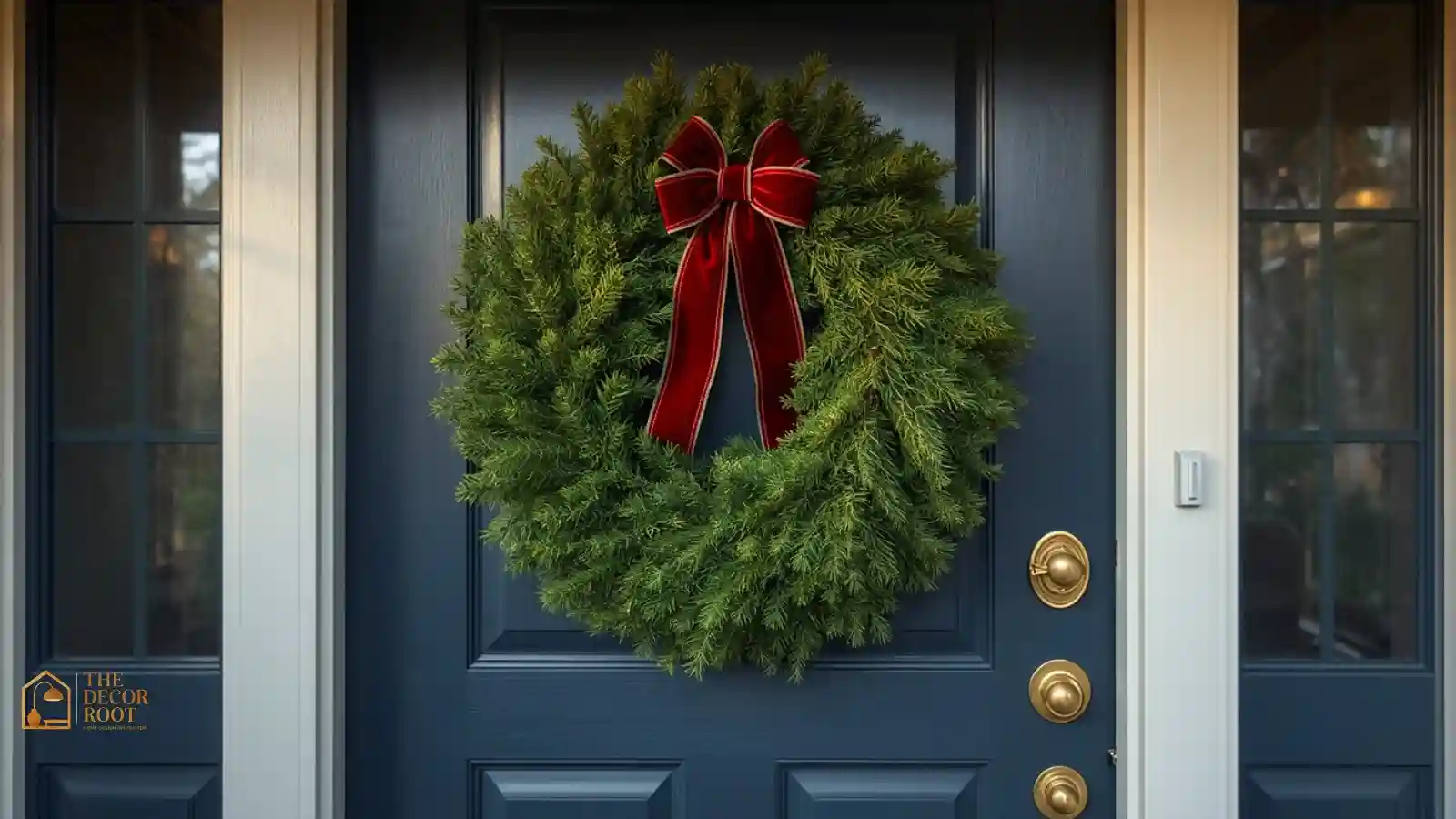
Most store-bought wreaths max out around 24 inches, which reads as small on a standard 36-inch door with any kind of trim or sidelights. Sizing up to 30–36 inches instantly changes the proportion and makes the door feel intentional rather than accessorized. This works because the eye reads scale before it reads detail: a big, confident wreath looks expensive even when it’s made from inexpensive faux greenery, while a small one looks like an afterthought no matter how nice the ribbon is. If your door has any glass panel or sidelight, size up further so the wreath doesn’t get visually swallowed by the surrounding architecture, and hang it slightly higher than center so it doesn’t compete with the doorknob.
2. Layer Two Types of Greenery
A single-species wreath of noble fir can read flat from more than ten feet away, which is the distance most passersby actually see it from. Mixing in a second texture, like cedar sprigs, eucalyptus, or blue spruce tips, creates visual depth without changing the color palette at all. The trick is uneven distribution: don’t alternate perfectly; tuck the secondary greenery in loose clusters of three to five stems so it reads as natural rather than assembled. This is the single easiest upgrade for anyone starting from a plain grapevine or faux base, and it costs almost nothing if you’re clipping real cedar or eucalyptus from a local flower stand instead of buying pre-made stems.
3. Anchor It With One Oversized Bow
A bow that’s proportioned as a gift-wrap bow disappears against a 24-inch wreath. The current designer move is one dramatically oversized bow think 12 to 18 inches across placed slightly off-center at the bottom rather than dead-center at the top. This asymmetry is what separates a “made it myself” wreath from a “bought it at a boutique” one. Wired ribbon holds shape far better than craft ribbon for this, and velvet or velvet-look wired ribbon in particular keeps its loops crisp through wind and rain, which matters if your door faces any weather exposure at all during the season.
4. Try a Monochrome White-on-White Build
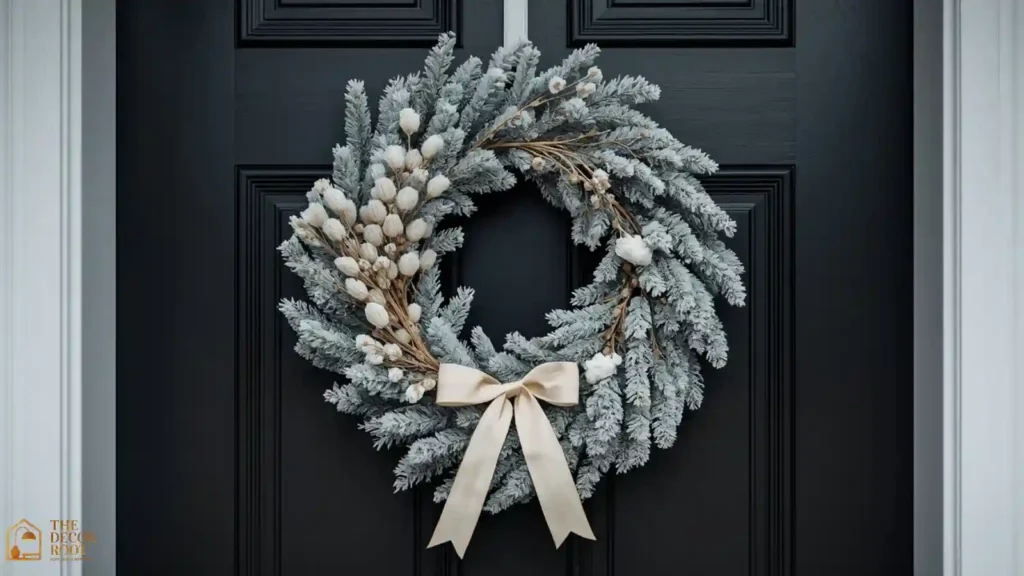
Skip red and green entirely and build a wreath from white pine, white-flocked branches, and cream ribbon. This reads as high-end and modern against nearly any door color, and it photographs exceptionally well in the flat gray light of a Northern winter, which is exactly the kind of light most front-door photos get taken in. The key to keeping it from looking sparse is texture variety within the white palette: combine flocked stems, dried white statice or baby’s breath, and a matte cream bow so there’s tonal interest even without color contrast. This style pairs especially well with black, navy, or deep green front doors.
5. Start With a Full Faux Boxwood Base
If your climate means real greenery browns out before New Year’s, a faux boxwood base gives you a reusable foundation that holds shape for years and takes decorating like a blank canvas. Boxwood’s dense, uniform texture reads as “high-end evergreen hedge” rather than “plastic wreath,” which is why high-end storefronts default to it. Once you have the base, everything else on this list ribbon, ornaments, dried citrus can be swapped seasonally without rebuying the whole wreath, which actually makes it the most budget-efficient option on this list over a two-to-three-year span.
EDITOR’S PICK
🛒Full Faux Boxwood Wreath Base, 24-Inch
A faux boxwood base holds shape for years, reads as a high‑end hedge, and lets you swap decorations seasonally without rebuying the whole wreath.
(paid link)
6. Add Dried Orange Slices for Warmth
Dehydrated orange rounds threaded onto floral wire and tucked into the greenery add a pop of warm color that reads as expensive and intentional rather than generic. They’re inexpensive to make at home in a low oven over several hours, and the slight char at the edges gives them a rustic, farmhouse-adjacent look that photographs beautifully against dark green. Cluster them in groups of three rather than spacing them evenly; even numbers and even spacing are exactly what make DIY wreaths look homemade in the wrong way, while asymmetrical clusters mimic how a florist would actually place them.
7. Go Bold With a Cranberry-and-Eucalyptus Palette
Swap the expected red bow for deep cranberry velvet paired with silver-dollar eucalyptus instead of pine. The muted sage-green of eucalyptus against a rich cranberry reads as more sophisticated than the standard red-and-holly combination, without abandoning the holiday color story entirely. This combination also tends to survive better in milder climates since eucalyptus dries beautifully in place rather than browning and dropping needles the way some traditional greenery does mid-season.
8. Add a Wooden Monogram in the Center
A single laser-cut wooden letter, painted or left raw, mounted in the center of a simple greenery base gives the wreath a personalized focal point that mass-produced wreaths can’t replicate. This works especially well on doors with house numbers or hardware in gold or brass; matching or complementing that metal tone on the monogram ties the whole entryway together. Keep the greenery around it simple and low-profile so the letter stays the star rather than getting lost in competing texture.
9. Hang It With a Statement Ribbon Instead of a Hook
Most wreaths get hung with an invisible wire hanger, which means the greenery just floats against the door. Swapping that for a wide, visible ribbon that runs from the top of the door frame down to the wreath adds height and a second design moment. Plaid, velvet, or tartan ribbon in a coordinating color all work. This is a two-minute change that makes even a basic wreath look considerably more styled, since it draws the eye vertically and frames the whole door composition rather than leaving the wreath looking like it’s just stuck on.
10. Layer Multiple Ribbon Widths and Textures
Instead of one ribbon, use two or three: a wide velvet ribbon for the main bow, a slimmer plaid or metallic ribbon woven through the greenery, and a thin twine or burlap accent tucked underneath. A quality ribbon holds crisp loops far longer outdoors than standard fabric ribbon, which matters since a droopy bow by mid-December undoes the whole effect. Layering widths creates the kind of dimensional richness professional wreath-makers charge a premium for, and it’s genuinely one of the highest-impact, lowest-effort upgrades on this entire list.
EDITOR’S PICK
🛒Velvet Wired Ribbon Roll, Multiple Colors
Layer a wide velvet bow with a slim plaid/metallic ribbon through greenery and a twine accent underneath for a high‑impact, durable wreath that stays crisp all season.
(paid link)
11. Try an All-Pinecone Statement Wreath
Skip greenery entirely and build a wreath base almost entirely from pinecones of varying sizes, hot-glued in overlapping rows onto a wire form. Left natural or lightly frosted with faux snow spray, this style has serious textural presence and holds up beautifully outdoors since pinecones don’t wilt, brown, or need water. It reads as more architectural and less “seasonal clip-art” than a typical evergreen wreath, and it’s a strong option for anyone whose front door already has a lot of green from actual landscaping and wants contrast instead.
12. Add Faux Berry Clusters for Color Pop
Winterberry or faux red berry picks tucked throughout a greenery base add small, repeated pops of saturated color that catch the eye from a distance in a way large single elements sometimes don’t. Because they’re small and numerous, they read as naturally occurring rather than “decorated,” which keeps the wreath from feeling overly styled. Cluster them near the bow and along one visible curve of the wreath rather than distributing them evenly around the whole circle, mimicking how berries actually grow in clusters on a branch.
13. Build an Asymmetrical “Swag-Style” Wreath
Rather than a perfectly round wreath, an asymmetrical design with greenery concentrated on one side and trailing embellishments ribbon tails, dried grasses, a few bare branches cascading down the other creates movement and a more editorial, less cookie-cutter look. This style photographs exceptionally well for Pinterest and Instagram specifically because the asymmetry gives the eye somewhere to travel instead of just registering a static circle. It also tends to work better on narrower doors where a full, round oversized wreath would feel cramped.
14. Add Battery-Powered Warm LED Lights
A wreath that glows after dark gets seen twice as often as one that only reads well in daylight, since most neighborhood foot and car traffic in December happens during evening hours. Threading warm white through the greenery with a timer function so you’re not manually switching it nightly turns a daytime-only decoration into a nighttime curb-appeal feature too. Look for lights rated for outdoor use specifically, since indoor-only strands will fail quickly in cold, damp conditions.
EDITOR’S PICK
🛒Battery-Operated Warm White LED Fairy Lights With Timer
A timer‑controlled, outdoor‑rated lit wreath doubles evening curb appeal without manual switching.
(paid link)
15. Try a Buffalo Plaid Farmhouse Wreath
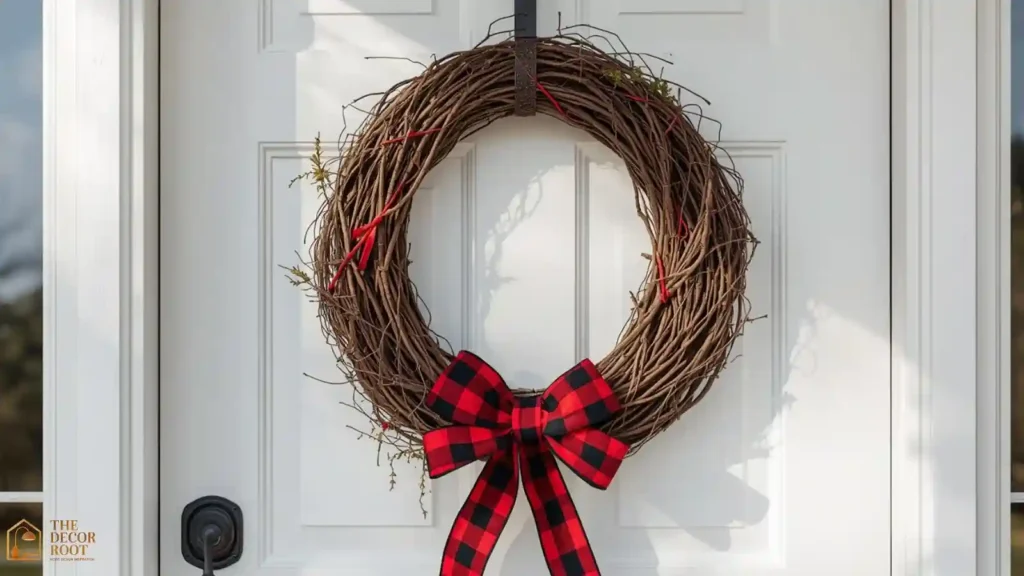
Black-and-red or black-and-white buffalo plaid ribbon woven through a natural-looking greenery or grapevine base has become a modern farmhouse signature for a reason: the graphic pattern reads clearly even from the street, unlike smaller floral prints that blur into a texture blob at a distance. This style pairs particularly well with wood-tone or white front doors and works year after year since buffalo plaid hasn’t cycled out of the farmhouse aesthetic the way some other trends have.
16. Go Grapevine-Only for Rustic Texture
A bare, undecorated (or lightly decorated) grapevine wreath base has an organic, sculptural quality that stands on its own, especially when paired with just a few well-placed elements: a single oversized bow, a handful of dried hydrangea heads, or nothing at all beyond the natural woven texture. This is the lowest-maintenance option on the list since there’s no greenery to brown or drop, and it transitions easily from Christmas into general winter decor if you remove any holiday-specific accents in early January.
17. Add a Faux Fur Bow Instead of Fabric
Swapping a traditional fabric bow for one made from faux fur or a fur-trimmed ribbon adds an unexpected luxe texture that contrasts beautifully against matte evergreen. This works particularly well in cream, white, or camel tones against a dark green wreath, giving a cozy, almost Nordic-lodge feel that stands out from the sea of standard velvet bows on most neighborhood doors.
18. Incorporate Bells for Sound and Shine
A small cluster of jingle bells or larger decorative sleigh bells tied into the ribbon adds a metallic shine that catches sunlight during the day and a subtle sound element when the door opens and closes a small sensory detail that guests genuinely notice and comment on. Antique brass or matte gold bells tend to look more elevated than shiny silver ones, which can read as slightly cheaper depending on the rest of your palette.
19. Use Dried Hydrangea for Soft, Muted Texture
Dried hydrangea heads, whether left in their natural faded blue-green or in a soft blush tone, add a papery, romantic texture that’s completely different from anything else on this list. They pair beautifully with cream ribbon and pale greenery for a soft, almost vintage-European wreath style that stands out from the saturated red-and-green look most neighbors default to, and dried hydrangea holds its shape and color for months without any special care.
20. Finish With a Hand-Tied, Multi-Loop Statement Bow
The single highest-impact finishing move on any wreath is the bow itself, and a hand-tied, multi-loop bow with trailing tails looks dramatically more expensive than a pre-made bow clipped on as an afterthought. A makes this genuinely achievable even for a first-timer, producing even, full loops in a fraction of the time hand-tying takes. This is worth doing last and doing well, since the bow is almost always the first thing the eye lands on before it even registers the greenery underneath.
EDITOR’S PICK
🛒Wired Ribbon Bow-Making Tool
A hand‑tied multi‑loop bow with trailing tails looks far more expensive than a clip‑on, and [tool name] makes it easy for first‑timers.
(paid link)
For more ways to carry this same “make it pop” approach across your whole entryway, check out our guides on Christmas porch planter ideas and budget-friendly Christmas curb appeal.
Quick Action Plan
- If you only have twenty minutes before company arrives, start with the wreath you already own: size-check it against your door (swap for something bigger if it looks small), add one oversized wired-ribbon bow slightly off-center, and tuck in a handful of dried orange slices or berry clusters in groups of three.
- That single combination scale, a real bow, and one textural accent solves the three most common reasons a wreath looks flat, without requiring a full rebuild.
Frequently Asked Questions
Conclusion
A wreath that pops isn’t about a bigger budget; it’s about a handful of deliberate choices: scale, texture, layering, and a bow that actually earns its spot as the focal point. Pick two or three ideas from this list rather than trying all twenty at once, and you’ll already be ahead of most of the doors on your street this December.
💾 Save this to your Christmas Decor Pinterest board so you can find it again when you’re ready to build yours.