21 Small Christmas Tree Ideas for Tight Living Rooms That Still Feel Full of Holiday Spirit
Small Christmas Tree Ideas. A cramped living room doesn’t mean skipping the tree; it means being smarter about which tree, where it goes, and how it’s styled. Most “small space Christmas” content just tells you to “get a smaller tree,” which technically answers the question but skips the actual problem: how do you make a 3-foot or 4-foot tree feel like a real focal point instead of an afterthought crammed into a leftover corner?
These 21 ideas are built specifically for tight living rooms, studio apartments, and small corners where a traditional 7-foot tree simply isn’t realistic. They cover tree types, placement tricks, and styling techniques that make a small tree read as a deliberate design choice rather than a compromise, because when it’s done right, nobody walking into the room is thinking about square footage at all.
This post contains affiliate links. As an Amazon Associate, I earn from qualifying purchases. If you buy through these links, I may earn a small commission at no extra cost to you.
Where to Start Mentally
Before choosing a specific tree, shift your thinking away from “how big can I fit” and toward “how full can this look regardless of size.” A 4-foot tree styled with proportional ornaments, good lighting, and smart placement will look more finished than a too-large tree crammed against a wall with branches bent to fit. The most common mistake in tight spaces isn’t choosing a small tree; it’s choosing ornaments and decor sized for a much bigger tree, which makes a small one look overwhelmed rather than full. Every idea below keeps proportion, not just size, as the guiding principle.
1. Measure Your Actual Available Footprint First
Before shopping, measure the exact floor space you’re willing to give up, including width for the tree skirt and the swing radius needed to walk around it, not just the tree’s diameter at the widest branch. Most people overestimate how much space they have and end up either returning a tree or living with one that blocks a walkway all season.
2. Choose a Slim or Pencil-Style Tree for Narrow Corners
A slim or “pencil” style artificial tree takes up roughly half the floor footprint of a traditional full tree at the same height, making it ideal for narrow corners, hallways, or the gap beside a piece of furniture. Look for one labeled with a base diameter under 30 inches for the tightest spaces.
3. Go Tabletop Instead of Floor-Standing
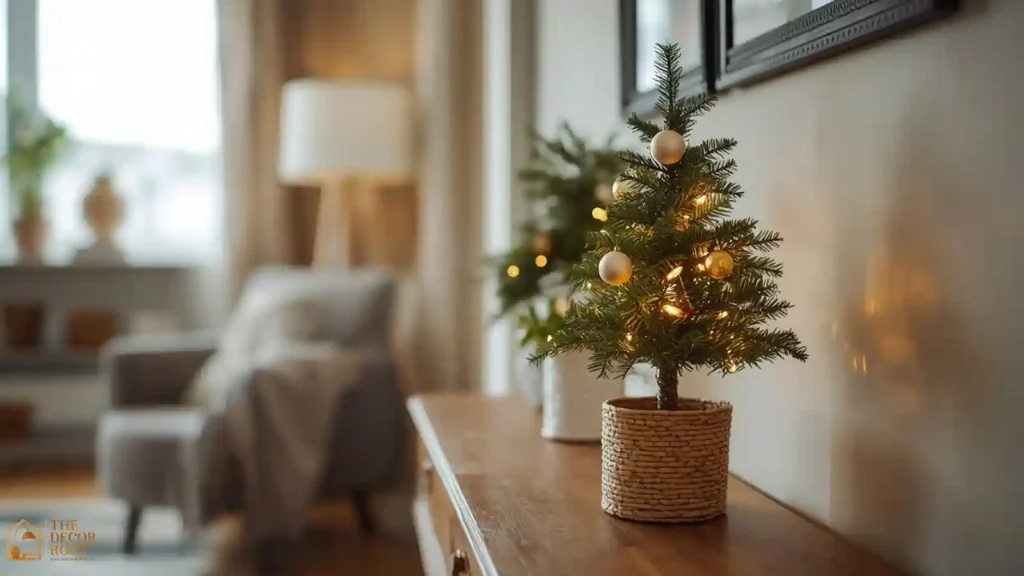
A pre-lit tabletop Christmas tree placed on a console, sideboard, or even a stack of boxes covered in a tree skirt eliminates the floor-space problem while still delivering a real, three-dimensional tree shape. This is one of the most effective small-space solutions on this entire list, especially for studio apartments.
EDITOR’S PICK
🛒Pre-Lit Tabletop Christmas Tree
A pre-lit tabletop tree delivers a full 3D holiday look without floor space, perfect for studios and tight corners.
(paid link)
4. Use a Corner Diagonally Instead of Against a Flat Wall
Placing a tree at a 45-degree angle in a corner, rather than flat against one wall, actually uses the space more efficiently and makes the tree feel like it’s tucked into the room’s architecture rather than blocking it. This trick works especially well in rooms with an awkward, underused corner that isn’t doing anything else useful.
5. Choose Proportionally Smaller Ornaments, Not Fewer Ornaments
Standard 3-inch ornaments look oversized and clunky on a 4-foot tree, so scale down to 1.5–2-inch ornaments to keep the proportions right. The goal isn’t fewer ornaments overall; it’s the same sense of fullness using pieces sized correctly for the smaller branches.
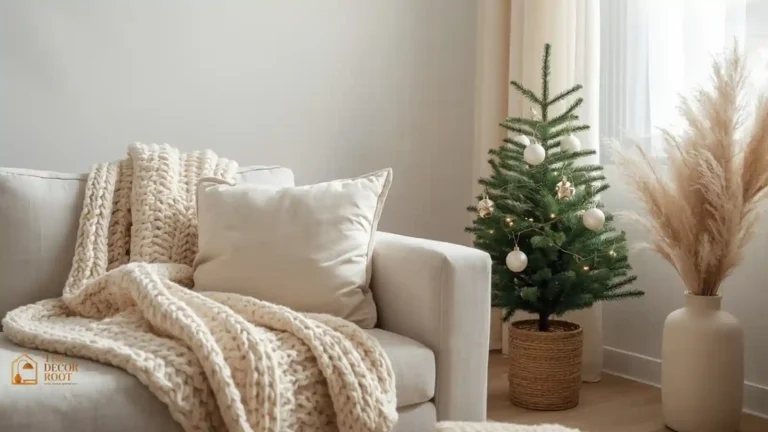
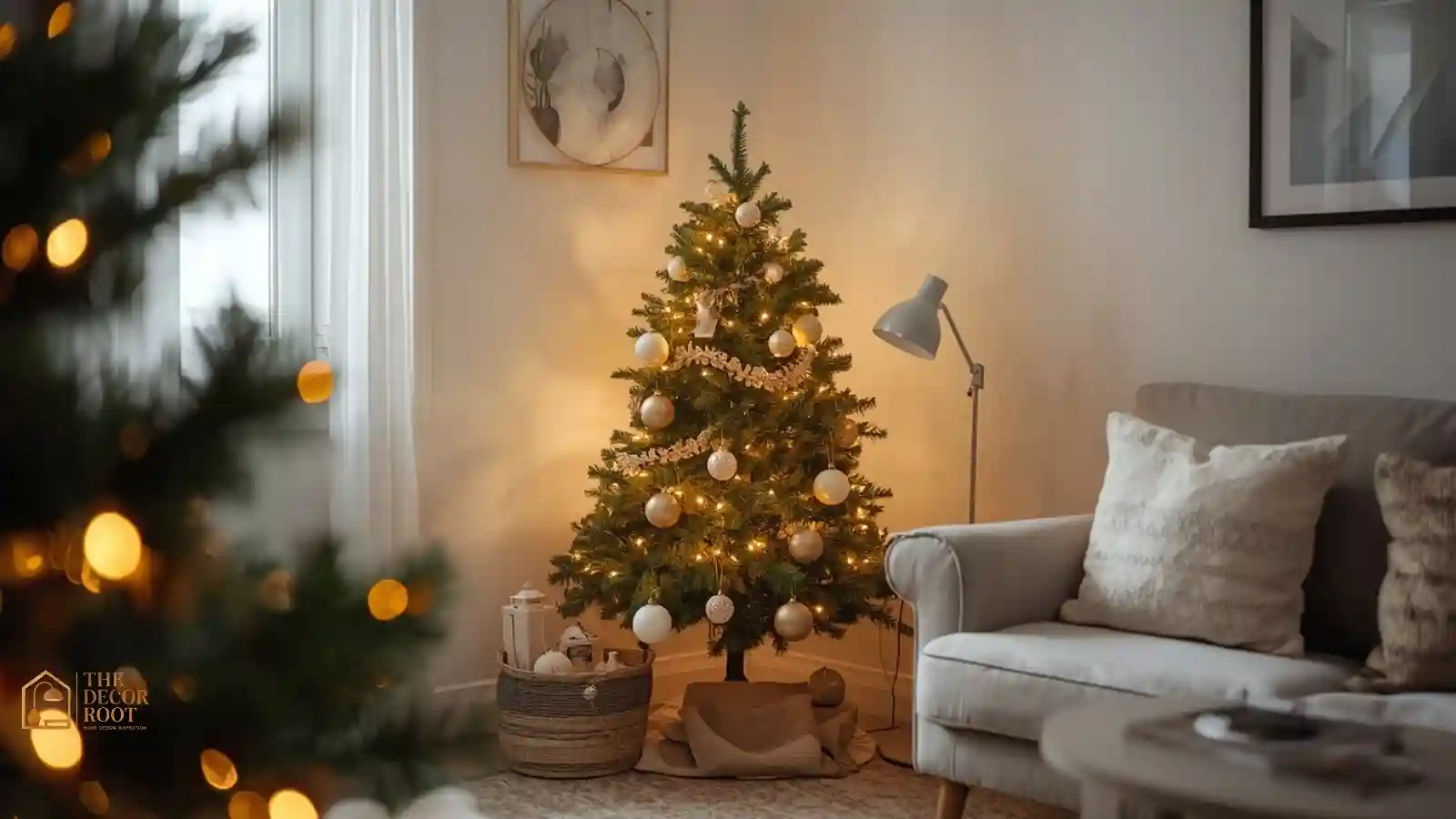
6. Skip the Tree Skirt in Favor of a Small Basket Base
Instead of a traditional tree skirt, which can visually widen the tree’s footprint and make a small space feel more crowded, set the tree inside a woven basket or a decorative metal tub. This keeps the base tidy and compact while still looking finished and covering the tree stand.
7. Try a Flat-Back “Half Tree” Against a Wall
A slim flat-back Christmas tree, designed to sit flush against a wall with branches only on the front-facing side, can save up to a foot of floor depth compared to a traditional round tree. It’s a genuinely clever design for hallway corners or behind a sofa where depth is the real constraint, not height.
EDITOR’S PICK
🛒Slim Flat-Back Half Christmas Tree
A slim flat-back Christmas tree saves up to a foot of floor depth, making it ideal for tight corners and behind sofas where depth is the real constraint.
(paid link)
8. Use Warm White Micro Lights Instead of Larger C7 Bulbs
Smaller micro LED lights create a denser, more sparkling effect on a small tree than larger traditional bulbs, which can look sparse and oversized on shorter branches. Aim for roughly 100 lights per foot of tree height for a small tree to look properly lit rather than dim.
9. Hang the Tree Instead of Standing It, When Space Allows
For truly minimal floor space, a wall-mounted or hanging felt or fabric “tree” silhouette decorated with ornaments and lights can replace a traditional tree entirely in a studio apartment or dorm room. It’s not a literal tree, but it delivers the same visual tradition without using any floor space at all.
10. Anchor the Tree Visually With a Rug Underneath
Placing even a small round or square rug underneath a small tree gives it a defined “zone” in the room, which helps it read as an intentional focal point rather than something squeezed into unused space. This trick works especially well in open-concept apartments where the tree doesn’t have a wall or corner to lean on.
11. Try a Wall-Mounted Felt or Fabric Tree
A wall-mounted felt Christmas tree with removable felt ornaments is a genuinely popular solution for apartments, especially those with young kids or pets where a traditional tree isn’t practical. It also happens to be one of the most budget-friendly options on this entire list.
EDITOR’S PICK
🛒Wall-Mounted Felt Christmas Tree
A wall-mounted felt Christmas tree with removable ornaments is a budget-friendly, space-saving, kid- and pet-safe alternative to a traditional tree.
(paid link)
12. Keep the Color Palette to Two Tones Maximum
A small tree with five or six different ornament colors will look busy rather than festive, so limit the palette to two coordinating tones like gold and cream, or burgundy and silver to keep the tree looking curated even at a smaller scale. This is a rule that matters more on small trees than large ones, since there’s simply less visual space to absorb variety.
13. Choose a Tree With Built-In LED Lights to Save Setup Time and Space
Pre-lit trees eliminate the bulk of extra light strands wrapped loosely around branches, which can visually widen a small tree and take up valuable closet storage space during the off-season. This is a small but meaningful upgrade if storage space is as limited as your living room floor space.
14. Use a Tree Topper Sized for the Tree, Not the Room
A topper that’s proportionally too large for a small tree a common mistake when reusing a topper from a previous, bigger tree throws off the entire visual balance. Choose a topper no taller than about 10% of the total tree height for the most natural proportion.
15. Try a Rotating Corner Tree Stand for Easy Styling and Viewing
A rotating Christmas tree stand lets you spin the tree for decorating and viewing from a fixed corner position, which is especially useful when a tree is wedged into a spot that’s hard to walk fully around. This small mechanical upgrade solves a real, practical problem unique to corner-placed small trees.
EDITOR’S PICK
🛒Rotating Christmas Tree Stand
A rotating tree stand lets you spin a corner‑placed tree for easy decorating and viewing without needing full walk‑around access.
(paid link)
16. Style a Grouped Cluster of Mini Trees Instead of One Larger Tree
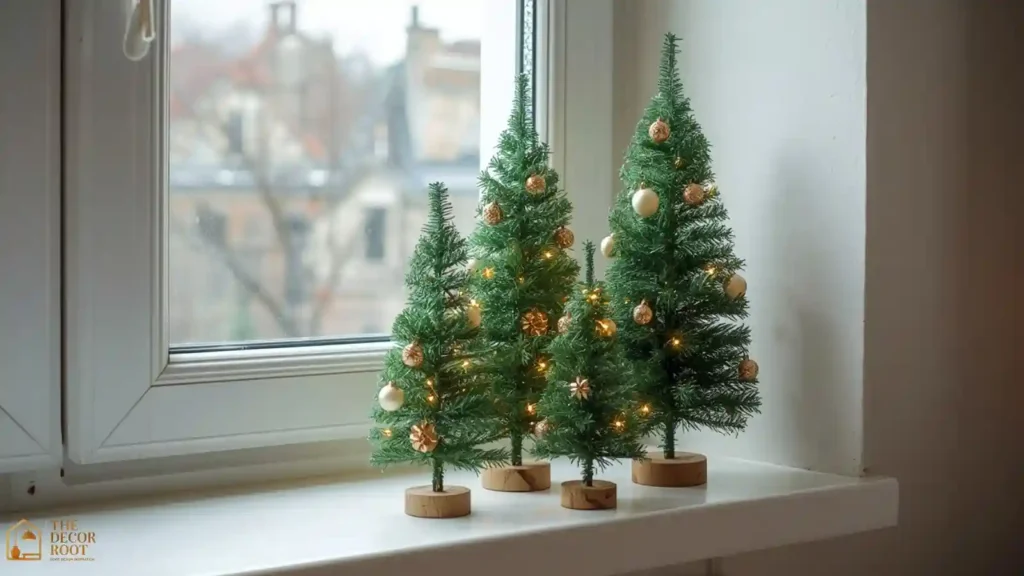
Three small tabletop trees of varying heights, clustered together on a console or windowsill, can create more visual interest than a single small tree standing alone. This works especially well for renters or small-space dwellers who want a design-forward alternative to the traditional single-tree setup.
17. Choose a Narrower Tree Stand Base to Reduce Floor Footprint
If you’re set on a floor-standing tree, check the base stand’s actual footprint before buying, since some stands add several extra inches of width beyond the tree’s own branch spread. A compact metal stand base, rather than a wide plastic tripod base, can reclaim meaningful floor space in a tight room.
18. Place the Tree Where It Doubles as a Reading Nook Focal Point
If your small living room includes a single accent chair or reading nook, position the tree just beside it rather than in a separate, competing corner, so the tree becomes part of one cohesive vignette rather than a second decorating project in the same small room. This consolidates the “styled zones” in a tight space rather than spreading effort too thin.
19. Use a Set of Graduated Mini Trees as an Alternative Focal Point
A set of three mini artificial trees in graduated heights can replace a traditional single tree on a mantel, console, or windowsill entirely, offering a modern, design-forward take that works particularly well in small apartments with limited floor space overall.
EDITOR’S PICK
🛒Mini Artificial Christmas Tree Set
A set of three graduated‑height mini artificial trees offers a space‑saving, modern alternative to a single tree on mantels, consoles, or windowsills.
(paid link)
20. Add Height Illusion With a Slim Vertical Garland Beside the Tree
A single strand of garland running vertically up a nearby window frame or doorway beside the small tree extends the visual height of the holiday display without adding any additional floor footprint. This trick makes the whole decorated area feel taller and more substantial than the tree alone would suggest.
21. Prioritize One Statement Ornament Over Many Small Ones
On a small tree, one larger, high-quality statement ornament a substantial glass ball, a wood star, or an oversized bow placed near the top does more visual work than a dozen small identical ornaments scattered evenly across the branches. This is the same “fewer, bigger gestures” principle that works in small-space decorating generally, applied specifically to the tree itself.
For more small-space-friendly styling, pair this list with our 20 Neutral Christmas Living Room Ideas That Still Feel Festive for palette direction, and 24 Christmas Throw Pillow and Blanket Layering Ideas to finish the rest of the room around your tree.
Quick Action Plan
- Start by measuring your actual available space per Tip 1, then decide between a tabletop tree (Tip 3), a flat-back tree (Tip 7), or a wall-mounted felt tree (Tip 11) based on whether your real constraint is floor space, depth, or both.
- Once you’ve chosen the tree type, scale your ornaments down per Tip 5, limit your color palette to two tones per Tip 12, and finish with one statement ornament per Tip 21 instead of many small ones.
- That sequence- right tree type, right ornament scale, limited palette, one focal ornament solves the “small tree looks sparse” problem far more effectively than simply buying more decorations.
Frequently Asked Questions
Conclusion
The key to a small-space tree is measuring first and choosing proportionally scaled alternatives like slim, tabletop, or wall-hugging designs, over a full-size one. Keep ornaments and topper in scale, use a basket or rug to anchor it, and even a tight corner can feel festive and intentional.
💾 Save this to your Small Space Christmas Decor Pinterest board for when you’re ready to shop.