23 Shared Home Office Ideas for Couples Who Work From Home
Shared Home Office Ideas for Couples: You love your partner. You do not love hearing every single word of their 10 am Zoom call while you’re trying to write an email. Sharing a home office with your partner sounds efficient on paper: one room, one setup, less square footage wasted until you’re both actually in it at 11 am on a Tuesday, one of you on a call and the other trying to concentrate three feet away. A shared home office for two people who work from home is one of the most logistically complex home decorating ideas available; it requires solving two completely separate ergonomic briefs, two different storage needs, and two potentially opposing aesthetic preferences within one room that must feel like a considered, resolved interior.
This post contains affiliate links. As an Amazon Associate, I earn from qualifying purchases. If you buy through these links, I may earn a small commission at no extra cost to you.
What Ties These Ideas Together
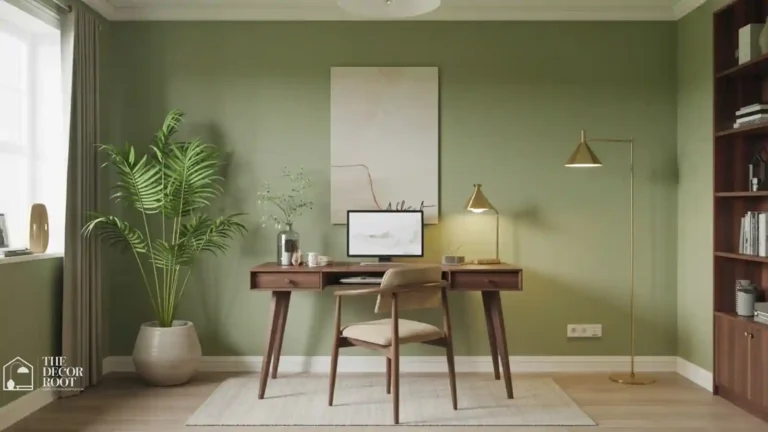
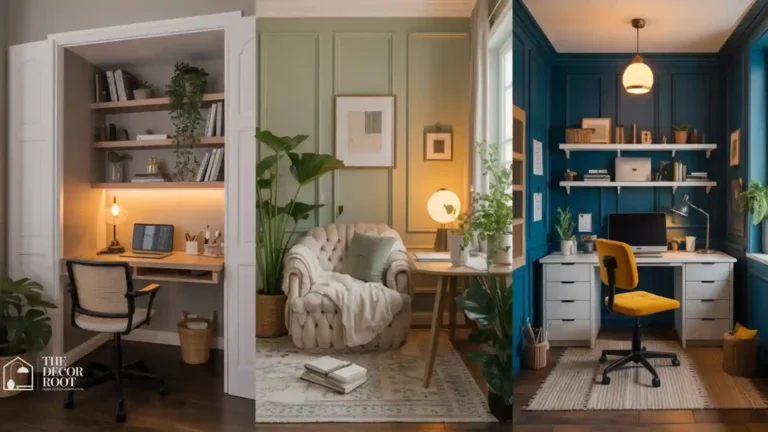
Every idea below solves one of three friction points couples hit working from the same room: sound bleed, visual distraction, and the small logistics of two people sharing one set of outlets, one thermostat, and one door. None of these require knocking down walls or buying a second house. Most are about zoning what’s already there, giving each of you a defined “territory” with its own sightline, its own sound buffer, and its own storage, so the shared room stops feeling like a compromise and starts feeling like two functional offices that happen to share a floor plan. A shared home office that both people genuinely enjoy working in requires the same investment in warmth and comfort that makes a solo office a pleasure; these cozy shared office ideas show how plants, considered lighting, a rug that defines the shared space, and a colour palette that both occupants find calming create a workspace that feels designed for people rather than imposed on them.
Master the Shared Workspace
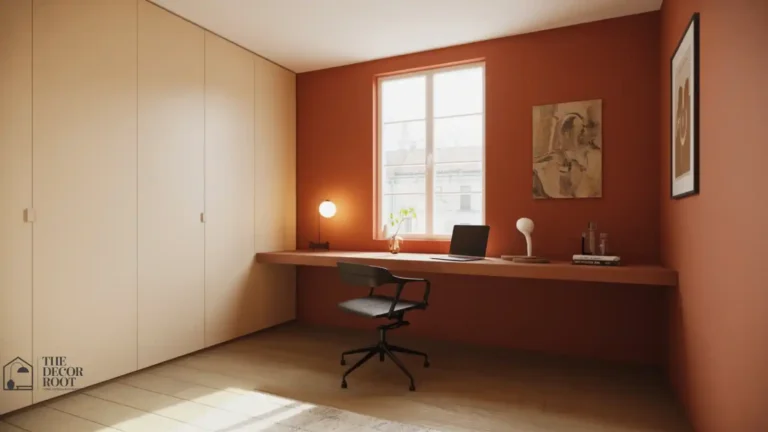
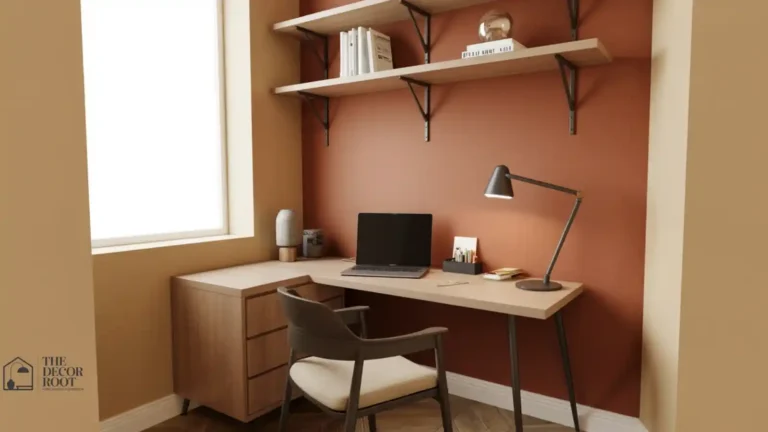
“A shared office is the most demanding version of the home office brief; these home office design ideas show how the fundamentals of layout, lighting, storage, and colour apply to a dual-person workspace and where the design decisions need to accommodate two people rather than one. A shared office almost always means a smaller-than-ideal space divided between two people; these small home office layout ideas show how to position two desks, two sets of storage, and two task lighting setups within a limited footprint so both occupants feel that the space has been designed for them rather than squeezed to fit.
1. Set up desks facing opposite walls, not facing each other.
Facing desks puts you in each other’s direct sightline all day, which means every typo-induced sigh or phone glance becomes a visible distraction for your partner. Positioning desks so you’re both facing outward, toward separate walls, removes that constant peripheral awareness of what the other person is doing and makes it much easier to actually focus on your own screen.
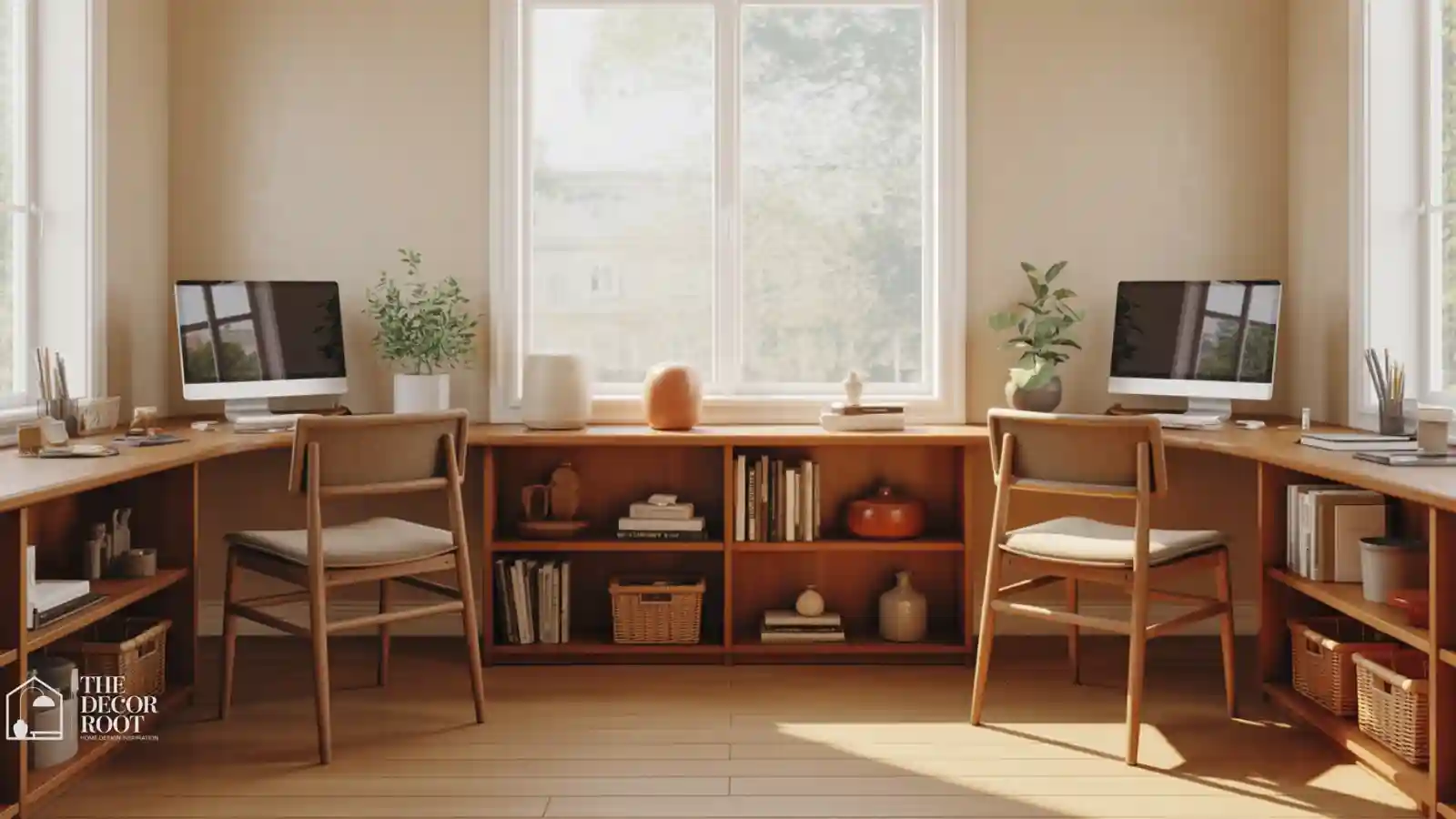
2. Anchor each desk in its own corner of the room.
Corners naturally create a sense of a defined zone even without adding any physical divider, because your peripheral vision is bounded by two walls instead of open room on every side. This is one of the simplest layout fixes available, and it costs nothing beyond moving furniture you likely already own.
3. Color-code or texture-differentiate each desk zone.
Two identical desks in matching finishes can make the room feel like one continuous workspace rather than two distinct ones, which subtly reinforces the sense that you’re sharing rather than each having your own spot. Even a different desk mat color, a different lamp style, or a different chair fabric per zone gives each of you a visual marker of “this is mine.”
4. Invest in a dual-desk workstation with a center divider panel if floor space is tight.
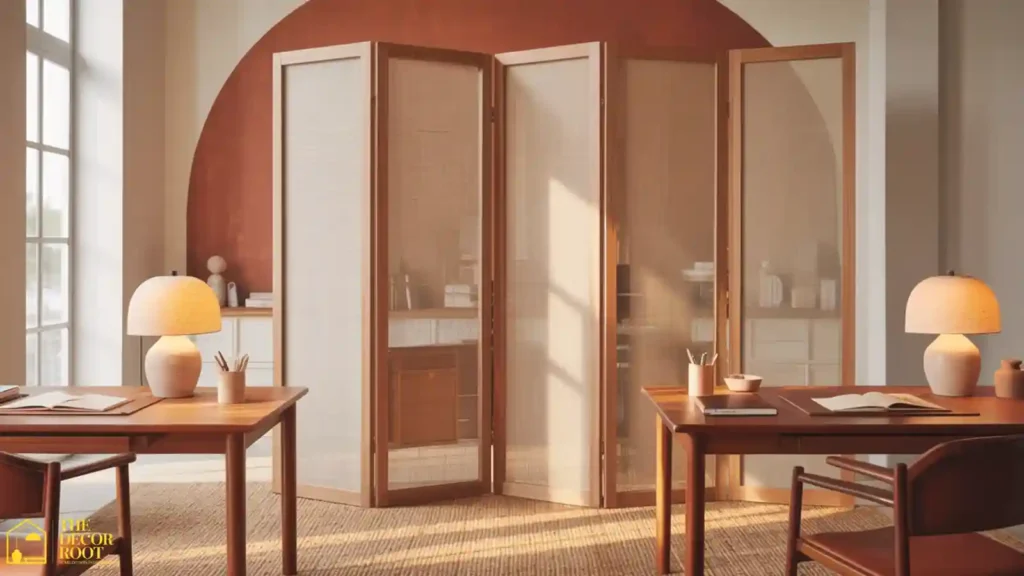
A connected dual-desk unit with a built-in center panel gives you the sound and sightline benefits of separate desks in a footprint that a genuinely separate desk arrangement often can’t match in a smaller room. The divider panel alone does a surprising amount of work cutting down on the “watching each other type” distraction that wears on couples faster than people expect.
EDITOR’S PICK
🛒Dual-Desk Workstation With Center Divider Panel
A connected dual desk with a center panel gives separate desk benefits in a tighter footprint, cutting down the distraction that wears on couples in shared workspaces.
(paid link)
5. Establish a “calls happen here” zone.
Rather than either partner taking calls wherever they happen to be sitting, designate one specific spot in the room, or just outside it, as the call zone. This single habit change eliminates most of the overlapping-audio friction couples deal with, since the non-call partner always knows where the noise is coming from and can plan around it instead of being surprised by it.
6. Use a floor rug to define each zone underfoot.
A rug under each desk area, even a simple flat-weave one from Target or Home Depot’s rug aisle, creates a subtle physical boundary that reinforces “your space” versus “my space” without adding a single piece of furniture. It also helps dampen the acoustics of a shared room, which matters more than people expect once you’re both talking at the same time.
7. Agree on a shared calendar system for calls.
A visible shared calendar, whether it’s a physical whiteboard on the wall or a synced digital one, lets both partners see when the other has calls scheduled so headphones or a closed door can be planned around in advance instead of scrambled for last minute. This is a zero-cost fix that solves a huge share of daily friction.
8. Add a small privacy screen or plant divider between desks.
Even a partial visual barrier, like a tall leafy plant or a folding privacy screen, breaks the direct sightline between two desks without fully separating the room. It’s a middle-ground option for couples who want some connection but not a full line of sight into each other’s screen all day.
9. Get each partner a pair of noise-canceling headphones.
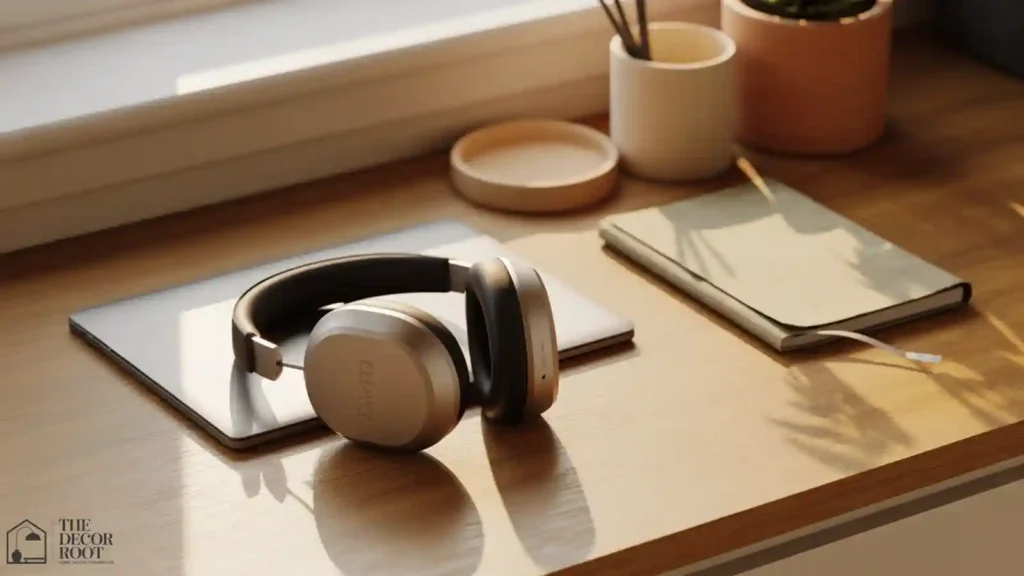
This is the single highest-impact purchase for a shared office, full stop. Noise-canceling headphones let each partner control their own audio environment independently of what the other is doing in the room, which solves the sound-bleed problem more completely than any furniture arrangement can on its own.
EDITOR’S PICK
🛒Noise-Canceling Headphones, Over-Ear, Work-From-Home Style
Noise-canceling headphones are the top purchase for a shared office, letting each partner control their audio independently and solving sound bleed better than any desk layout can.
(paid link)
10. Use warm task lighting per desk instead of one shared overhead fixture.
A single ceiling light forces both of you into the same lighting whether it suits your task or not; individual desk lamps let each partner control their own brightness and color temperature independently, which matters more once you’re both staring at screens for hours at different times of day.
11. Set a “headphones on” visual signal.
A small physical cue, like a colored flag on the desk or headphones visibly on, tells your partner “don’t interrupt me right now” without needing to say it out loud mid-focus. Couples who work from the same room report this simple nonverbal system cuts down on the “sorry, one sec” interruptions dramatically.
12. Stagger your most-focused hours if your schedules allow it.
If one partner’s deep-focus block is 9-11 am and the other’s calls tend to cluster in the afternoon, structuring the day around that natural rhythm reduces overlap friction more than any physical fix could. This isn’t always possible with fixed meeting schedules, but even partial staggering helps.
13. Add under-desk cable management for two separate power zones.
Two people sharing one room usually means double the cords, chargers, and monitor cables, and a tangled mess under a shared desk area becomes its own daily source of frustration. A basic under-desk cable tray or Velcro cable ties per zone keeps each partner’s setup visually and physically separate from the other’s.
14. Use a freestanding folding room divider for full visual separation when needed.
A folding screen that can be opened during casual work hours and closed during calls gives couples flexibility that a fixed wall or half-wall can’t. It’s especially useful in smaller rooms where a permanent structural divider isn’t realistic but full visual privacy is still needed at certain points in the day.
EDITOR’S PICK
🛒Freestanding Folding Room Divider Screen, 3 Or 4 Panel
A folding screen opens for casual work and closes for calls, offering flexible privacy that fixed walls cannot, especially in smaller rooms where permanent dividers aren’t practical.
(paid link)
15. Assign separate storage, even if it’s just one drawer each.
Shared desk supplies sound efficient but usually just mean neither person can find a pen when they need one. Giving each partner their own drawer, tray, or small cart for personal supplies removes a surprisingly common daily annoyance from a shared workspace.
16. Position desks so neither partner’s back faces the door.
In a shared room, someone is constantly walking in and out for coffee, the bathroom, or a snack, and having your back to that traffic path is more disruptive to focus than most people account for when setting up a shared layout. Where possible, angle both desks so the door is in each partner’s peripheral vision rather than directly behind them.
17. Use a white noise machine as a shared sound buffer.
A single small white noise machine placed between the two desk zones can flatten out the peaks and valleys of typing sounds, chair creaks, and low conversation that otherwise become distracting in a quiet shared room. It’s a low-cost addition that works passively without either partner needing to manage it.
18. Add a matching desk pad set to visually unify the shared room while still marking two distinct zones.
Two coordinated desk pads, one per desk, create a cohesive look for the shared room’s aesthetic without sacrificing the “this is my zone” boundary each partner needs. It’s a small styling detail that photographs well and functions well.
EDITOR’S PICK
🛒Matching Large Desk Pad Set, 2-Pack
Matching desk pads tie the shared room together visually while keeping each partner’s workspace distinct, a small detail that works well and photographs beautifully.
(paid link)
19. Set a mutual “do not disturb during deep work” rule, with an exception list.
Blanket no-interruption rules tend to break down within a week because life happens. A rule with a short, agreed exception list (kids, deliveries, genuine emergencies) is more realistic and more likely to actually get followed by both partners long term.
20. Keep one shared “landing zone” for mail, packages, and shared paperwork.
Shared offices often become a dumping ground for household paperwork that belongs to both partners, and without a defined spot for it, that clutter creeps onto both desks equally. A single small tray or basket by the door keeps shared items from migrating onto either person’s individual workspace.
21. Add plants or greenery between the two zones rather than on either desk.
Placing shared greenery in the transitional space between desks, rather than cluttering either individual desk surface, adds warmth to the room without eating into either partner’s limited desk real estate. It also serves as a soft, natural visual break between the two zones.
22. Schedule a weekly five-minute reset of the shared space.
A shared office accumulates two people’s worth of clutter twice as fast as a single-person office, and without a quick recurring reset, a small mess turns into a genuine source of tension. A five-minute Friday tidy-up, done together, keeps the room from becoming a flashpoint.
23. Add a dual-port charging station at a shared central point.
Two people means two sets of devices needing power, and without a shared, clearly designated charging spot, cords end up tangled across both desks. A single dual-port station placed on a shared shelf or the landing-zone tray keeps charging cables contained to one spot instead of spreading across the whole room.
EDITOR’S PICK
🛒Dual-Port Desk Charging Station
A dual‑port charging station on a shared shelf keeps two people’s cables contained in one spot, preventing tangled cords from spreading across both desks.
(paid link)
Quick Action Plan
- Start this week by repositioning both desks to face opposite walls instead of each other (Tip 1), get each of you a pair of noise-canceling headphones (Tip 9), and set up a shared calendar so calls stop overlapping by surprise (Tip 7).
- Those three changes solve the majority of daily friction couples report in a shared office before you spend a dollar on furniture.
A shared office needs a complete design framework before any furniture is purchased; these complete home office design ideas show how to approach the layout, lighting, storage, and style of any home office as a resolved design project rather than a series of individual decisions, which is even more important when two people need to agree on every outcome.
Frequently Asked Questions
Conclusion
A shared home office doesn’t have to mean shared frustration. Once the room is zoned for two separate workdays instead of one merged one, most of the daily tension disappears on its own.
💾 Save this to your Home Office Ideas board so you and your partner can plan the setup together.