
25 Japandi Fall Bedroom Ideas That Stay Minimal 🍃
Japandi Fall Bedroom Ideas: Fall decorating usually means more more layers, more color, more stuff on every surface. That’s the opposite of what a Japandi bedroom is supposed to feel like, and it’s exactly why so many “cozy fall bedroom” guides don’t work if your room is built around calm, negative space, and a handful of intentional materials. You don’t want your minimal bedroom to suddenly look like a plaid throw pillow exploded in it. You want it to feel warmer without looking busier, and that’s a genuinely different design problem than the one most fall bedroom content is solving.
This list is built specifically for that constraint. Every idea below keeps the Japandi principles intact low visual noise, natural materials, a tight and intentional color story while nudging the room toward the warmth of the season using texture, tone, and light instead of volume. If you’ve ever added a fall throw blanket and immediately regretted how “extra” it made your room feel, this is the fix.
This post contains affiliate links. As an Amazon Associate, I earn from qualifying purchases. If you buy through these links, I may earn a small commission at no extra cost to you.
The Thinking Behind This
Japandi works because it treats restraint as the design, not the compromise. Scandinavian minimalism keeps the room functional and uncluttered; Japanese wabi-sabi brings in the appreciation for natural, imperfect materials raw wood grain, linen slub, matte ceramic. Fall, done wrong, fights both of those instincts by throwing color and pattern at a room that was never meant to hold either. Fall, done right, actually plays to Japandi’s strengths, because autumn’s palette oat, clay, walnut, moss, charcoal is already close to the muted, earthy tones this style leans on year-round.
The trick is swapping in warmth through material rather than motif. A wool throw does more seasonal work than a pumpkin-print pillow ever could, and it does it without adding a single extra “thing” for your eye to process. Every idea on this list follows that rule: one new texture or tone in, nothing chaotic added, nothing minimal lost.
1. Swap Your Summer Duvet for an Oat or Clay Linen Cover
The single fastest way to shift a Japandi bedroom into fall is changing the color temperature of the bed itself, since it’s the largest surface in the room. Trade a cool white or gray linen duvet for one in oat, clay, or warm taupe same relaxed linen texture you already love, just shifted a few degrees warmer on the color wheel. This isn’t a seasonal gimmick; it’s a genuinely different feeling to wake up to. Look for stonewashed or “relaxed” linen finishes rather than crisp cotton, since the slightly rumpled texture is core to the Japandi look and photographs better for a soft, lived-in bedroom aesthetic that still reads as intentional rather than sloppy.
2. Lower the Bed Frame, Literally
If you’re working with a taller upholstered frame, fall is a good excuse to reconsider a low platform bed the visual signature of Japandi bedrooms. Low frames widen the sense of floor space and pull the eye toward horizontal lines instead of height, which reads as calmer in photos and in person. Walnut or oak platform frames with exposed wood legs pair especially well with a warmer fall palette, since the wood grain itself becomes a seasonal texture. If a full frame swap isn’t in the budget this season, even removing a boxy bed skirt and letting the frame’s natural lines show does a surprising amount of the same visual work.
3. Layer In a Chunky Wool Throw at the Foot of the Bed
This is the single highest-impact, lowest-effort move on the entire list. A heavyweight wool throw blanket folded once and draped across the foot of a low platform bed adds texture, warmth, and a clear “this room is dressed for fall” signal without adding a single extra color or pattern to process. Stick to oat, charcoal, or walnut brown so it reads as part of the existing palette rather than a seasonal add-on. The fold-and-drape styling matters here bunching it or draping it corner-to-corner immediately reads as “trying too hard,” while one clean horizontal fold keeps it looking deliberate.
EDITOR’S PICK
🛒Chunky Wool Throw Blanket, Neutral Tone
A heavyweight wool throw in oat, charcoal, or walnut makes the highest-impact, lowest-effort fall styling move, simply folded across the bed’s foot.
(paid link)
4. Choose One Statement Natural-Wood Nightstand
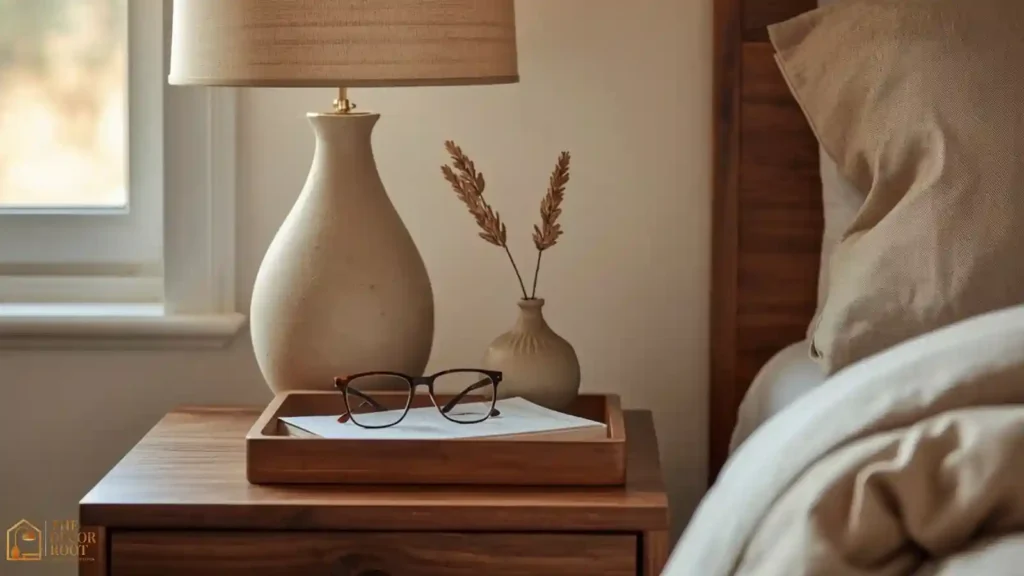
Japandi bedrooms typically skip matching nightstand pairs in favor of one considered piece per side, and fall is a good season to lean into that with a single solid-wood nightstand featuring visible grain walnut, ash, or oak. The grain itself functions as texture and pattern simultaneously, which is exactly the kind of “pattern without pattern” that keeps a minimal room from feeling flat in fall light. If your current nightstands are painted or laminate, even swapping one side for an unfinished or lightly oiled wood piece creates enough asymmetry and warmth to shift the whole room’s temperature.
5. Bring In a Rattan or Paper Pendant Light
Swap a hard-edged modern pendant for one in woven rattan or washi paper, both of which cast a warm, diffused, slightly golden light rather than a cool white glow. This single fixture change affects how every other object in the room reads after 5 p.m., which matters more in fall as daylight hours shrink and artificial light does more of the visual work. Rattan pendants also reinforce the “natural material” half of the Japandi equation without adding visual weight, since the woven structure lets light and shadow pass through it instead of blocking the ceiling line.
6. Trade Heavy Drapes for Linen or Paper Window Shades
Heavy curtains are a classic “cozy fall bedroom” move, but in a Japandi room they usually add too much visual bulk. Linen roman shades or simple paper blinds in a warm neutral do the same light-softening job with a fraction of the visual footprint, keeping window lines clean while still filtering that harsh late-summer light into something softer for fall mornings. If you genuinely need blackout coverage for shorter days, look for a linen-blend blackout shade rather than a heavy drape the fabric weight stays light even though the function is heavier.
7. Style a Single Dried Pampas Stem Instead of a Bouquet
Full dried floral arrangements can quickly tip a minimal room into “fall craft fair” territory. One or two pampas grass stems in a tall, matte ceramic vase gives you the same seasonal, textural softness with a fraction of the visual mass. Place it on the dresser or windowsill rather than the nightstand, where it can compete with lamp light and books. The restraint here is the whole point one stem reads as styled, five reads as decorated, and Japandi rooms almost always look better under-furnished than over-furnished.
8. Switch to Brushed Cotton or Flannel Sheets Underneath
Your duvet cover gets the visual credit, but the sheets underneath are doing the temperature work you’ll actually feel at 2 a.m. A brushed cotton or flannel sheet set in a warm oat or dove gray keeps the palette intact while genuinely upgrading comfort as nights cool down. This is one of the few purely functional swaps on this list, and it’s worth prioritizing early in the season since it affects sleep quality directly, not just how the room photographs.
EDITOR’S PICK
🛒Brushed Cotton Flannel Sheet Set
Brushed cotton or flannel sheets in warm oat or dove gray upgrade sleep comfort directly, not just the look.
(paid link)
9. Add a Low Wood Bench at the Foot of the Bed
A simple wood bench no upholstery needed adds function (somewhere to set clothes or a folded blanket) while reinforcing the low, horizontal lines Japandi bedrooms are built around. Choose a bench in the same wood tone as your bed frame or nightstand so it reads as part of one cohesive wood story rather than a separate piece competing for attention. This is a genuinely useful fall addition too, since it gives you a spot to layer that extra throw blanket without piling it on the bed itself.
10. Bring In a Jute or Wool Area Rug Underfoot
Cold floors are one of the most underrated reasons a bedroom stops feeling cozy once fall hits, and a natural-fiber rug solves it without adding pattern. Jute rugs lean more textural and neutral; a low-pile wool rug in charcoal or oat adds a touch more warmth underfoot. Either works within the Japandi palette as long as you skip anything with a busy woven pattern solid or subtly striated textures are what keep this feeling minimal rather than “boho rug wall.”
11. Keep Wall Art to One Considered Piece
If you have more than one piece of art in the room, fall is a good prompt to edit down to a single statement piece an ink wash landscape, a single line drawing, or a large-format nature photograph in warm tones. One piece, sized generously and hung at the right height, reads as intentional. Three smaller pieces scattered around usually read as unfinished, no matter how nice each one is individually. This is one of the easiest “instant minimal upgrade” moves on the whole list.
12. Add a Ceramic Table Lamp With a Linen Shade
Overhead light alone tends to feel flat and a little cold once the sun sets earlier. A ceramic table lamp with a natural linen shade on the nightstand adds warm, ambient light exactly where you need it for reading, and the matte ceramic base checks the “natural, imperfect material” box that defines the wabi-sabi half of Japandi. Look for a rounded or slightly irregular ceramic base rather than a perfectly uniform mold the small imperfections are part of the aesthetic, not a flaw to avoid.
EDITOR’S PICK
🛒Ceramic Table Lamp, Linen Shade
Ceramic lamp with linen shade warms the nightstand, imperfect shapes welcome.
(paid link)
13. Layer Sheer Linen Under a Solid Blackout Panel
Rather than choosing between soft daytime light and full darkness at night, layer a sheer linen panel under a solid blackout curtain in the same warm neutral. During the day, push the blackout panel aside and let the linen filter light; at night, close both. This two-layer approach is common in higher-end Japandi spaces because it solves a real problem (fall mornings get darker, but you still want soft daytime light) without adding visual clutter, since both layers stay in the same tonal family.
14. Edit the Nightstand Down to Three Objects, Maximum
A cluttered nightstand undoes a lot of the calm a Japandi bedroom is built to create, and it’s especially tempting to over-decorate it for fall with candles, seasonal trinkets, and a stack of books. Pick three objects, no more: a lamp, one object with texture (a ceramic dish or small vase), and one functional item (a book or a small tray for glasses and jewelry). This single edit does more for the room’s “does this feel minimal” test than almost any purchase on this list.
15. Add a Woven Storage Basket for Extra Throws
As you add cozier textiles for fall, you need somewhere to put them when they’re not in use, or the room starts to feel cluttered instead of layered. A woven seagrass or rattan storage basket tucked beside the bed or under the window gives extra blankets a home while adding another natural-material texture to the room. This is a genuinely functional fall purchase it’s the difference between “intentionally layered” and “pile of blankets on a chair.”
EDITOR’S PICK
🛒Woven Seagrass Storage Basket, Large
Woven basket beside the bed keeps blankets tidy, functional, and textural.
(paid link)
16. Add One Muted Sage or Moss Accent Pillow
If your bedding is currently all neutral, one pillow in a muted sage or moss green introduces a genuinely autumnal color without breaking the restrained palette Japandi depends on. Keep it to one pillow, not a cluster of three or four in different shades the goal is a single note of color, not a gradient. Choose a linen or cotton-linen blend cover so the texture matches everything else in the room rather than looking like a mismatched throw pillow from a different style entirely.
17. Swap Hardware to Matte Black or Brushed Brass
Small metal details drawer pulls, lamp bases, curtain rod finials get overlooked, but shiny chrome or polished nickel hardware can read distinctly “cool weather wrong” against a warm fall palette. Swapping to matte black or brushed brass hardware is a low-cost, high-impact change that pulls every metal detail in the room into the same warm-neutral family as your linens and wood tones. This is the kind of detail that people notice without being able to say exactly why the room suddenly feels more cohesive.
18. Add a Wood-Frame Floor Mirror
A full-length mirror in a natural wood frame leaning rather than mounted adds both function and a soft reflective surface that bounces window light deeper into the room during shorter fall days. A wood-frame leaning floor mirror in an arched or simple rectangular shape works especially well in a Japandi bedroom, since the wood frame ties back to your bed and nightstand while the mirror itself adds visual depth without adding clutter. Lean it in a corner rather than centering it for a slightly more relaxed, considered placement.
EDITOR’S PICK
🛒Wood-Frame Leaning Floor Mirror
A wood-frame leaning mirror in a corner adds light and depth, tying into existing wood tones without clutter.
(paid link)
19. Bring In a Small Potted Olive or Fig Tree
A single small tree in a simple ceramic or woven planter adds life and a soft organic shape to the room without introducing pattern or clutter. Olive and fig trees both have a slightly sculptural branch structure that reads as intentional rather than “houseplant collection,” and their muted green tone sits comfortably inside a warm fall palette. Place it in a corner that currently feels empty rather than crowding it next to existing furniture negative space around the plant is part of what makes it look styled.
20. Consider a Tatami-Inspired Low Bed Base
If you’re doing a fuller furniture refresh this season, a tatami-style bed base essentially a raised platform with woven or slatted wood detailing leans further into the Japanese half of Japandi than a standard platform frame. It sits even lower to the ground, widens the sense of floor space, and its woven or slatted texture becomes another natural material in the room’s palette. This is a bigger investment than most items on this list, so it’s worth prioritizing only if you’re already planning a larger furniture change this fall.
21. Add a Ceramic Incense Holder or Diffuser
Scent is an underused tool in seasonal bedroom styling, and a small ceramic incense holder or a simple reed diffuser does the “cozy fall bedroom” job that a scented candle usually gets tasked with, minus the extra visual clutter of a candle jar and lid on the nightstand. Choose a matte, slightly irregular ceramic piece to match the material language of your lamp base and vase, and keep the scent itself warm and woody sandalwood, cedar, or hinoki rather than sweet or fruity, which tends to clash with the room’s restrained palette.
22. Add One Boucle or Wool Accent Chair in the Corner
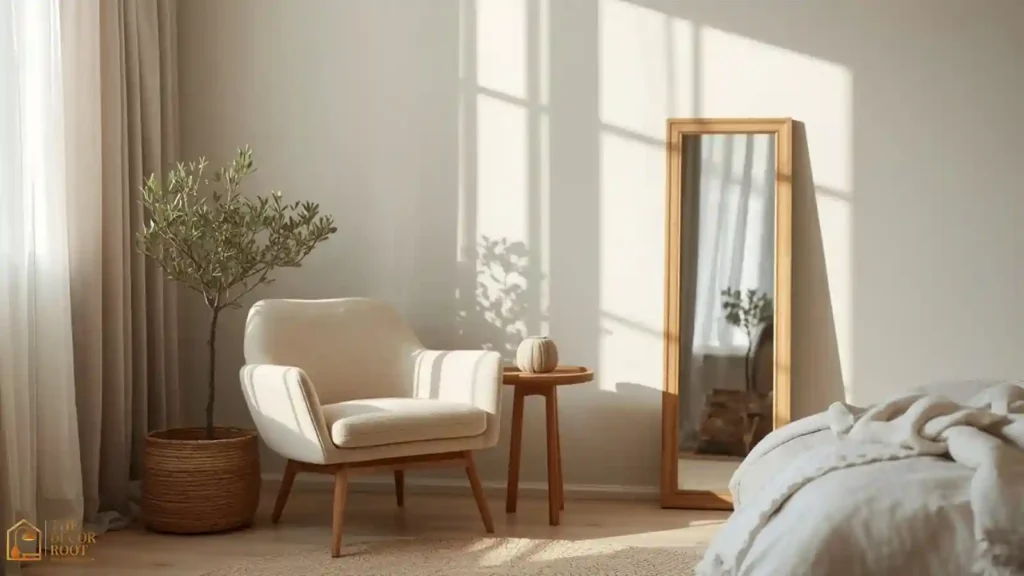
If your room has an empty corner, a single low-profile chair in boucle or wool bouclé-adjacent fabric adds textural warmth and a place to actually sit, which most bedrooms are missing. Keep it in the same neutral-to-warm palette as everything else oat, walnut-toned wood legs, no bold pattern. This is a bigger-ticket item, so treat it as an optional “if the budget allows” addition rather than a must-do; the room will still work completely without it.
23. Layer In Warm-Toned Blackout Curtains
For bedrooms getting real seasonal darkness earlier each evening, a proper blackout curtain in a warm neutral does double duty better sleep and a visual warmth upgrade. Look for linen-textured blackout curtains rather than the shiny, stiff blackout fabric common in budget options, since the linen texture keeps the window treatment consistent with the rest of the room’s material palette instead of looking like a hotel room upgrade.
EDITOR’S PICK
🛒Linen-Textured Blackout Curtains
Linen-textured blackout curtains in warm neutrals improve sleep and visual warmth without the cheap shiny look.
(paid link)
24. Use a Low Dresser With Woven Drawer Pulls
If you’re shopping for storage this season, look for a low, wide dresser over a tall one it reinforces the horizontal lines Japandi rooms are built around and gives you more surface space for the one-vase, one-lamp styling this whole list is built on. Woven rattan or leather drawer pulls, instead of metal knobs, add one more natural-material touchpoint without adding visual noise. This is a genuinely practical fall upgrade, since seasonal transitions are exactly when most people are switching out closet contents anyway.
25. Style a Wood Tray for Nightstand Essentials
Instead of letting a phone charger, glasses, and lip balm sit loose on the nightstand, corral them onto a small wood or ceramic tray. It’s a tiny move, but it’s the kind of detail that separates a “styled for a photo” Japandi bedroom from one that actually holds up to daily use the tray keeps the surface looking intentional even when real life is happening on it. Match the tray’s wood tone to your nightstand or bed frame so it disappears into the existing material story instead of adding a new one.
For more on building out a cohesive palette across the rest of the room, see our guide to Japandi Bedroom Color Palette Ideas and our Minimalist Bedroom Storage Ideas for more ways to keep surfaces clear as the seasons change.
Quick Action Plan
- If you only do three things this weekend, start with the bed: swap in a warm linen duvet cover, add one chunky wool throw folded at the foot, and switch your sheets to brushed cotton or flannel.
- That single zone does more visual and physical-comfort work than any other area of the room.
- From there, edit your nightstand down to three objects and add one warm-light table lamp, then reassess most Japandi bedrooms need far less added than people expect, and the room usually looks more finished with fewer new items than with more.
Frequently Asked Questions
Conclusion
A Japandi bedroom doesn’t need pumpkins, plaid, or a total furniture overhaul to feel ready for fall, it needs warmer texture, a slightly deeper tone on the bed, and the same restraint that made the room feel calm to begin with. Start with the bed, edit your surfaces, and let the season show up in materials instead of clutter.
💾 Save this to your Japandi Bedroom board on Pinterest so you can find it again when it’s time to shop the list.