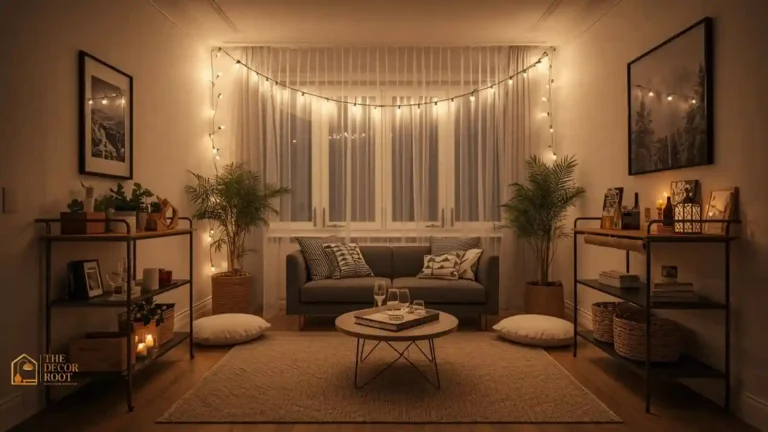

22 Christmas Entryway Ideas That Welcome Guests
christmas entryway ideas start at the door, not at the shop. Most Christmas entryway galleries show a full garland on every surface, a crowded console, and lanterns on the floor, then call it welcoming. An entryway has a harder job than a living room: it has to greet guests in three seconds and still work when boots are wet, bags are heavy, and the door swings wide. This article gives you the order that makes both happen, door first, console second, floor third, light fourth, personal touches fifth, then a take down plan written before anything goes up.
This article promises an entryway that earns its Christmas in order, in the order you should buy it. You get a seven check audit before you spend, a quick decision table by starting point, six problems solved in order, two named palettes, six mistakes to skip, budget tiers in spend order, and 12 researched picks mapped two per problem. Nothing here asks you to buy everything at once, and nothing here asks the entryway to stop being an entryway.
The live post this article replaces had 22 ideas, each one a short paragraph, and the ideas were fine on their own. The problem was never the ideas, it was the order, because 22 ideas with no order leave a reader with a shopping list and no plan. This rewrite keeps the best of those ideas, the wreath, the garland, the console, the lanterns, the stockings, and gives them the order they were missing, so a reader who follows the article from the door to the take down box ends up with an entry that works.
This article is research based curation, not hands on testing. Where a detail could not be verified, it is left out rather than guessed, and you should check size, color, and contents on the live listing before ordering. The numbers quoted from other sites, the wreath size ranges, the lantern heights, the mirror garland length, and the three to five piece rule, are their figures, not tested claims.
How these picks were chosen: each pick was researched from listing and source pages and checked at the publish date. No star rating is claimed for any pick. Check size, color, and contents on the listing before ordering, because listings and variants change. Where a detail cannot be verified, it is left out rather than guessed.
Affiliate disclosure: This article contains affiliate links to products on Amazon. As an Amazon Associate I earn from qualifying purchases. The price you pay stays the same, and the commission helps keep The Decor Root running.

The Christmas Entryway Audit for Christmas Entryway Ideas
Run seven checks in order before you spend on objects.
First, run the door check. Measure the door width, then choose a wreath about a third to half of it, about 22 to 24 inches on a standard 36 inch door, hung with its centre at eye level. A wreath hung too high or sized too narrow makes the door read as an afterthought, and a wreath wider than half the door crowds the frame.
Second, run the walkway check. The path from the door to the next room stays clear, the door opens fully, and nothing sits where a boot lands. If a decoration forces a guest to step around it, the decoration moves, because the walkway is the entryway, and the decor is the guest.
Third, run the console check. One styled surface, three heights, one end clear for keys and bags. A console 10 to 14 inches deep takes a garland, one lantern, and a bowl of ornaments, and a console deeper than that still takes only one styled surface, because a second surface means a second set of objects competing for the same wall.
Fourth, run the wall check. One clear piece above the console, a wreath or a mirror, never both fighting on one wall. A mirror doubles the light and the wreath, and a wreath above a mirror is one piece too many on a wall that already holds the console.
Fifth, run the floor check. One runner, one tray, one bench, never three floor pieces competing. A runner down the centre of the walkway, a boot tray where boots land, and a bench with shoe storage under the seat are the full floor plan, and a fourth floor piece means one piece has to go.
Sixth, run the light check. Warm white only, battery operated, a timer on every lantern, no mains cable across the walkway. Cool white light reads grey on red plaid and reads as a shop, while warm white light at dusk reads as a welcome, which is the light the entry wants.
Seventh, run the take down check. One labelled box holds the whole entry set, wreath and garland in bags, stockings washed and folded, palette written on the outside of the box. If a decoration has no home in the box, it has no home in the entry.
The audit takes ten minutes and saves a whole shopping trip, because it tells you which of the six problems your entry actually has. An entry with a bare door and a clear walkway needs the door section only, while an entry with a crowded console and wet boots needs the console and floor sections first. Run the audit with a tape measure in one hand and a phone camera in the other, photograph the door, the console, and the floor from the doorway, and the photos show you what a guest sees in the first three seconds.
christmas entryway ideas are about three or four festive moments in order, not about buying the most decorations. An entry with three festive moments reads as a Christmas entry, while an entry with decorations on every surface reads as a shop window. The color thread behind the door check, how warm and cool colors change the mood the moment a guest steps inside, lives in color psychology ideas for bedrooms.
Quick Decision Table: By Starting Point
Find your starting point, then move to the next section.
| Starting point | First move |
|---|---|
| Entry that feels plain and bare | Wreath on the door plus one garland on the console first, warm white lights, bowl of ornaments |
| Entry with stairs beside the door | Garland along the stair rail, wreath on the door, nothing on the floor at the foot of the stairs |
| Rental with no nails | Over-door hanger, adhesive hooks, removable hook rail, console and mirror carry the season, nothing drilled |
| Entry with no console table | Row of hooks with one hanging pine swag, narrow floating shelf with a candle and a village house, wreath on the inside of the front door |
| Entry that must hold winter boots | Boot tray by the door, bench with shoe storage under it, woven basket for scarves and gloves, runner that never bunches |
| Entry with a long hallway | Garland overhead or along one wall only, runner down the centre, lanterns at one end, never decor on both walls |
| Entry where one partner loves red and one loves calm | Red on the wreath ribbon and one stocking pair only, cream and forest green everywhere else |
| Entry that must double as a gift drop zone | One basket for parcels, one tray for keys and mail, wreath on the door, nothing else on the console |
The rental row needs the most discipline, because a rental has no paint and no nails to do the zoning. The wreath, the garland, the console, and one mirror are the four markers, and the zoning that holds them together is shown in the main tree register in full, in christmas tree ideas.
Problem 1: The Door That Greets First
The failure is a wreath hung too high or sized too narrow, or a garland that sags across the doorway, so the door reads as an afterthought and guests step around the decor. The door is the first surface a guest sees, and one tired wreath cannot carry it. The fix starts with the wreath, because the wreath is the greeting.
The size rule is the whole section in one line. A wreath about a third to half of the door width, about 22 to 24 inches on a standard 36 inch door, hung with its centre at eye level. One guide quotes about two thirds of the door width, roughly a 24 inch wreath, which suits a wide double door better than a standard door, so use the third to half rule on a standard door and the two thirds rule only on a double door.
The height rule keeps the wreath where guests look. The centre of the wreath sits at eye level, about 60 inches from the floor on an interior wall, so a guest facing the door sees the wreath first and the handle second. A wreath hung near the top of the door reads as an ornament on a tall door, and a wreath hung low reads as a decoration that slipped.
The garland rule frames the doorway instead of crowding it. One garland, framed around the interior doorway or along the stair rail, secured at the top corners and at 18 inch intervals down each side, so it drapes rather than sags. Garland on the door and the stairs and the mirror at once is three garlands doing one job, and two of them have to go.
The weather rule saves the wreath from a hard winter. If the door faces harsh weather or has a storm door, hang the wreath on the inside of the door or on the wall facing the entry, where guests see it the moment they step inside. A wreath crushed between a storm door and a front door is a wreath that lasts one week.
The hanger rule chooses the hardware before the wreath. An over-door hanger suits a front door with no drilling, because it hooks over the top of the door and holds the wreath at eye level with no holes. A removable adhesive hook suits a rental door and an interior wall, because it peels off in January with no mark. A nail suits a door you own and a wreath you hang every year, because the nail stays in the same spot and the wreath hangs in the same place. Choose the hanger by the door you have, not by the wreath you bought.

The wreath below is the door anchor for this system: a 24 inch wreath with red berries and frosted pinecones, for the front door that greets first, where one wreath does the whole greeting job.
The garland below is the doorway layer for this system: a 9 foot pre-lit garland with warm white lights, for the doorway the wreath frames, where the garland drapes rather than sags.
Also solves this: the doorway that needs light on a timer, not a cable across the walkway
TigeJoy 9FT Prelit Christmas Garland with Warm LED Timer Lights, Frosted Pine Garland with Red Berries and Long Cedar Pinecones
9 feet long, 100 warm white LEDs, 8 light modes, timer 6 hours on and 18 hours off, 3 AA batteries not included, PVC and PE branches, as printed. Not for: a reader who wants a garland for a staircase rail, where 9 feet is too short, or a reader who wants plug in lights.
Check Price on Amazon → (paid link)
The door is done when the wreath sits at eye level and the garland frames the doorway without touching the floor. Judge the door from the street first, then from inside, because a door that reads as festive from both sides is the whole point. The outdoor door register behind this section, the wreath, garland, and lantern plan for the front of the house, lives in front porch Christmas ideas.
Problem 2: The Console That Carries the Season
The failure is a console so full the keys have nowhere to go, so the entry reads as a shop window and the everyday use of the table is lost. The console is the one styled surface in the entry, and a crowded console cannot carry the season. The fix starts with the three heights, because three heights give the eye a path to follow.
The three heights system works from the back forward. Something tall at the back, something medium in the middle, something low in front. A tall anchor at one end, a lit ceramic village house, a vase of evergreen branches, or a tall lantern, gives the console its height. A medium piece in the middle, a second village house, a stack of books with an ornament on top, or a candle cluster, gives the console its body. A low piece in front, a bowl of ornaments or pinecones, a key tray, or a bead garland draped across, gives the console its finish.
The tall rule keeps the console from crowding the mirror. A tall anchor no taller than about 14 inches on a console sits under the mirror without touching it, while a tall lantern of 16 to 20 inches belongs on the floor of a deep foyer, not on a console. A console anchor that blocks the mirror is a console anchor in the wrong place.
The mirror rule doubles the entry with one piece. A round mirror above the console doubles the light and the wreath, and a garland of 4 to 5 feet draped across the top edge hangs 4 to 6 inches down each side, so the mirror wears the garland instead of hiding behind it. Hang the wreath on the door or wall across from the console, so it sits centred in the reflection, and the entry gains a second wreath with no extra wall space.
The clear end rule is the rule that keeps the console working. One end of the console stays clear, always, for keys, mail, and bags, because a console with nowhere to put the keys is a console that fails at its everyday job. The clear end is not empty space, it is the space the entry needs to work.
The low front rule finishes the console with the pieces guests touch. A bowl of ornaments or pinecones at the front gives guests something to look at without reaching past the tall anchor, and a key tray at the clear end gives the keys a home that is not the bowl. A bead garland draped across the front edge ties the three heights together, because the garland runs from the tall anchor to the low bowl in one line. The low front is the layer that makes the console feel finished, and a console with no low layer reads as a shelf with objects on it.

The village set below is the console anchor for this system: three lit ceramic houses and three bottle brush trees, for the console that carries the season, where three heights come in one box.
Also solves this: the console that needs three heights in one box, not three separate buys
DN DECONATION 6PCS Christmas Village Houses Decorations Set, Light Up White and Gold Ceramic Houses and Frosted Christmas Trees
3 white ceramic houses with gold trim, 4 x 3.15 x 5.31 inches, 3.5 x 2.76 x 5.12 inches, 4.33 x 3.15 x 5.51 inches, plus 3 green frosted bottle brush trees, 2 at 5.91 inches and 1 at 7.87 inches, LED lit, 2 AAA batteries not included, as printed. Not for: a reader who wants a single large village house as a centrepiece, or a reader who wants plug in lights.
Check Price on Amazon → (paid link)

The mirror below is the console wall anchor for this system: a 24 inch round mirror in a gold frame, for the wall above the console, where one mirror doubles the light and the wreath.
The console is done when the three heights read from the back to the front, the mirror doubles the light, and one end stays clear for keys. Judge the console with a set of keys in your hand, because a console that cannot take the keys is a console that fails its everyday job. The farmhouse console register behind this section, the wood, plaid, and brass that make a console feel warm, lives in farmhouse Christmas decor.
Problem 3: The Floor That Takes the Weather
The failure is a floor with no plan for wet boots, so December melt pools on the wood, shoes pile by the door, and the runner bunches under the door swing. The floor is the part of the entry that works the hardest in December, and a floor with no plan fails in the first week. The fix starts with the bench, because the bench holds what the floor cannot.
The bench rule gives shoes a home. A bench 39 to 47 inches wide with open shelves or cubbies under the seat holds the shoes that would otherwise pile on the floor, and the seat gives guests a place to sit while they change shoes. A bench without shoe storage is a seat with nowhere for the shoes to go, so the shoes end up on the floor anyway.
The runner rule keeps the walkway flat. A 2 by 6 foot runner, flat weave, low pile, sits down the centre of the walkway, so it never bunches under the door or trips anyone. A runner that catches the door every time it opens is a runner in the wrong place, and a runner with a thick pile is a runner that bunches under a low door.
The tray rule catches the weather. A 30 by 15 inch boot tray with a raised edge catches melt and mud, and it sits where boots land, not where guests walk. A tray without a raised edge is a mat, and a mat under wet boots spreads the melt instead of catching it.
The basket rule finishes the floor. One woven basket for scarves, gloves and hats, never three baskets doing one job, because three baskets on the floor are three obstacles in the walkway. One basket by the bench holds the whole household, and the floor stays clear for the next guest.
The gift drop rule gives parcels a home before they pile up. December brings parcels, and an entry with no place for parcels ends up with boxes stacked against the wall and blocking the walkway. One basket by the door, labelled for parcels, holds the boxes until they are opened, and the basket empties every evening so the next delivery has a home. A gift drop zone with a basket is a gift drop zone that works, and a gift drop zone with no basket is a pile of boxes by the door.

The bench below is the floor anchor for this system: a 47 inch bench with two open shelves, for the entry that must hold winter boots, where the shoes go under the seat instead of on the floor.
Also solves this: the floor that needs shoes under a seat, not piled by the door
Tribesigns 47.2 inch 3-Tier Entryway Bench with Shoe Storage
47.2 inches wide, farmhouse wooden foyer bench, 2 open shelves, adjustable foot pads, model LJH-TNG291A, as printed. Not for: a reader whose entry is narrower than 47 inches, or a reader who wants closed shoe storage.
Check Price on Amazon → (paid link)
The runner below is the floor layer for this system: a 2 by 6 foot buffalo plaid runner, for the walkway that must stay flat, where low pile never bunches under the door.
Also solves this: the walkway that needs a runner that washes, not a runner that stains
KOZYFLY Buffalo Plaid Rug 2×6 Ft Runners for Hallways, Washable Checkered Rug Red and White
2 x 6 feet, 24 x 72 inches, woven cotton, machine washable on a delicate cycle, air dry, no bleach, no dryer, low pile, fade resistant, foldable, as printed. Not for: a reader who wants a runner wider than 2 feet, or a reader who wants a non washable wool runner.
Check Price on Amazon → (paid link)
The floor is done when the bench holds the shoes, the runner lies flat under the door, and the tray catches the melt. Judge the floor with wet boots, because a floor that only works in dry weather is a floor that fails in December. The warmth and texture register behind this section, the chunky knits and layered bedding that make a cold room feel warm, lives in cozy fall bedroom ideas.
Problem 4: Light and Sound That Say Welcome
The failure is a dark entry at dusk, or a mains cable snaking across the walkway to a lit garland, so the welcome fails at the exact hour guests arrive. The entry is judged at dusk, when the light is low and guests are arriving, and a dark entry at dusk is a failed welcome. The fix starts with battery light, because battery light needs no cable.
The lantern rule puts light where guests look. A lantern no taller than about 14 inches on a console sits under the mirror without crowding it, while a taller pair of 16 to 20 inches belongs on the floor of a deep foyer. Two lanterns, one on the console and one by the door, give the entry warm light at both ends of the walkway, and one lantern alone leaves the far end dark.
The battery rule is the safety rule. Battery operated lights only in the entry, because no cable may cross a walkway, and a timer that switches the lights on at dusk and off later, so the entry lights itself every evening. A mains cable across a walkway is a trip hazard at dusk, and a strand with no timer is a strand that stays dark when guests arrive.
The flameless rule gives the candlelight with no flame. LED candles inside the lanterns give the flicker on the console and by the door, and real candles stay out of the entry entirely. A real candle beside greenery and coats is a fire risk, and an LED candle with a switch is a candle that goes out when the door closes.
The bells rule gives the entry a sound. A 5 to 6 foot bells garland on the door or along the console rings when the door opens, so the entry greets guests with sound as well as light. The bells are the one decoration that works without being looked at, because a guest hears them before seeing the wreath.
The dusk test finishes the section. Judge the entry at dusk, with the lanterns on and the overhead light off, because that is when guests arrive. An entry that reads as warm at dusk and calm in daylight is the whole point, and an entry that only works under full brightness is a living room piece.
The timer rule sets the light once and forgets it. A timer that switches on at dusk and off later means the entry lights itself every evening, so the welcome is ready before the first guest rings the bell. Set the timer for the hour guests arrive, not for the hour you come home, because the entry works for guests first and for the household second. A lantern with a timer is a lantern that never stays dark when it matters, and a lantern with no timer is a lantern that depends on someone remembering to switch it on.

The lanterns below are the light anchor for this system: two lanterns with LED candles and plaid bows, for the entry that must glow at dusk, where warm light says welcome before the door opens.
The bells garland below is the sound layer for this system: a 5.9 foot garland of rusted jingle bells, tin stars, and burgundy berries, for the door that should announce every guest.
Also solves this: the door that needs a sound, not just a sight
Winlyn 5.9 Ft Rustic Jingle Bells Garland with Metal Stars and Burgundy Berries
About 5.9 feet long, 7.9 inch adjustable width, distressed brown rusted jingle bells, tin stars, burgundy berries, wire branches with brown floral tape, as printed. Not for: a reader who wants a silent garland, or a reader who wants a garland longer than 6 feet for a staircase rail.
Check Price on Amazon → (paid link)
The light is done when the lanterns glow at dusk, the bells ring when the door opens, and no cable crosses the walkway. Judge the entry at dusk with the overhead light off, because that is the hour the welcome is judged. The dark register and warm light plan behind this section, the deep tones and warm glow that make a room feel calm after dark, lives in dark elegant bedroom ideas.
Problem 5: The Personal Touches That Make It Yours
The failure is an entry that looks like a shop display, with no sign of the people who live there, so guests feel they are entering a showroom. An entry with no personal touch is an entry with no story, and a shop display has no story to tell. The fix starts with the stockings, because stockings are the one decoration that names the people who live there.
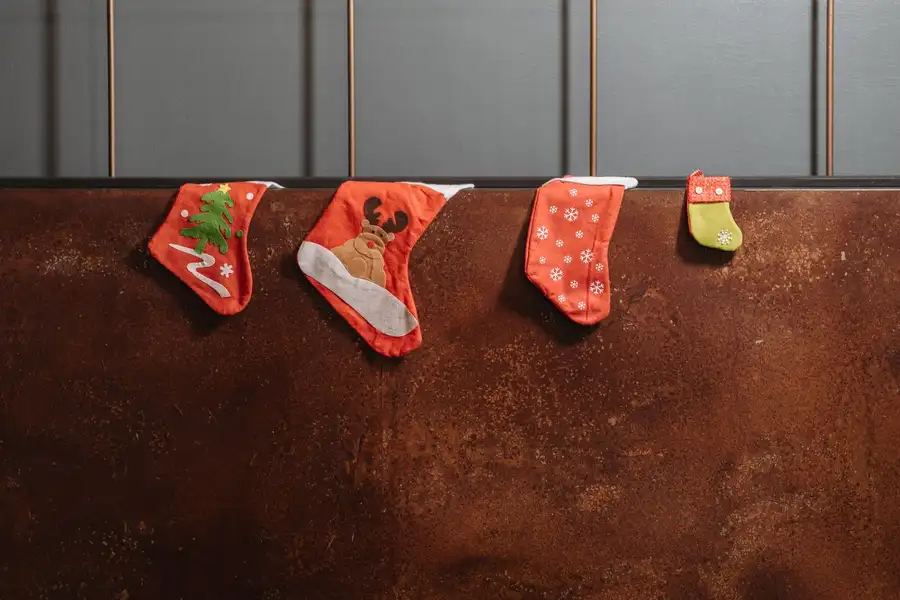
The stocking rule makes the row read as a family. One stocking per person, same knit, same length, hung at the same height, 18 inches long, so the row reads as a family, not a jumble. Four stockings in four colours, burgundy, ivory, green, and khaki, let each person have a colour of their own, and the row still reads as one set because the knit and the length match.
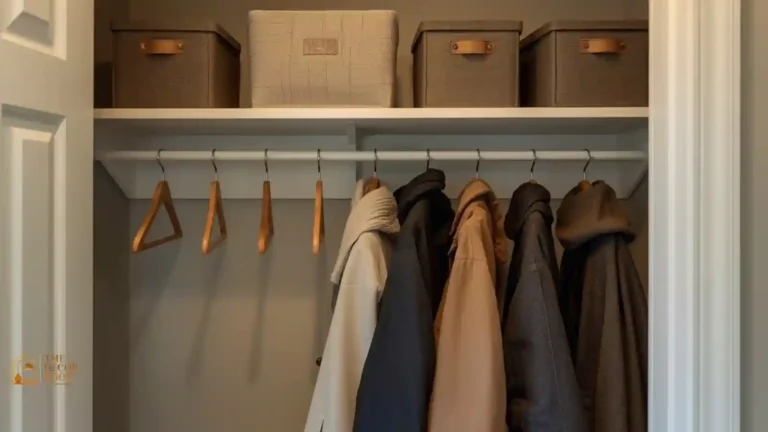
The hook rule gives coats a home. A five hook rail with flip down pegs, each holding up to 5 pounds, mounted where coats land, holds coats, bags, and scarves in December and in January too. A hook rail that only works in December is a hook rail that gets taken down in January, and a hook rail that works all year is a hook rail that earns its wall.
The colour rule repeats one accent three times. A ribbon on the wreath, an ornament on the tray, a stocking in the row, so the accent colour appears in three places and the entry reads as planned. One accent colour in one place is a coincidence, and one accent colour in three places is a palette.
The scent rule works where the eye cannot reach. A note of fresh fir, clove, or orange at the door, because the entry is the first place a guest breathes in the house, and scent does as much as anything visible. A discreet scent at the door is a welcome that arrives before the wreath is seen.
The name rule finishes the row. Name tags on the stockings, or one stocking in a different colour for the youngest, so the row tells a story about the people who live there. A row of stockings with no names is a row of decorations, and a row with names is a row of people.
The height rule keeps the row level. Stockings hung at the same height, with the tops level and the toes pointing the same way, read as one set, while stockings hung at different heights read as a jumble. Hang the row on the hook rail or on a mantel shelf at a height children can reach, because a stocking a child cannot reach is a stocking that stays empty on Christmas morning. Measure the row once, mark the hook positions with tape, and the row hangs level every year.
The hook rail below is the personal layer for this system: five flip down hooks in natural pine, for the wall where coats land, where the rail works in January too.
Also solves this: the wall that needs coats held, not a pile on the bench
Umbra Picket 5 Hooks, Wall-Mounted Rail, Beveled Pine Wood Dowels, Natural Finish
15 x 6.5 x 1.75 inches, 5 flip down hooks, each hook holds up to 5 pounds, total 25 pounds, model 1011471-390, as printed. Not for: a reader who wants a rail that holds more than 5 pounds per hook, or a reader who wants a rail wider than 15 inches.
Check Price on Amazon → (paid link)
The stockings below are the personal anchor for this system: four cable knit stockings in four colours, for the row that names the family, where one stocking per person reads as a family, not a jumble.
The personal touches are done when the stockings hang in a row at the same height, the hooks hold the coats, and the accent colour appears three times. Judge the entry with the family in it, because an entry that reads as a shop display when the family is home is an entry with no story. The personal, room by room Christmas register behind this section, the bedroom that carries Christmas in layers and still lets you sleep, lives in christmas bedroom decor ideas.
Problem 6: The January Take-Down, Planned in December
The failure is an entry decorated with no plan for January, so the take down takes a whole weekend, the garland tangles, and the wreath ends up crushed under a box of books. A decoration with no home in January is a decoration that gets damaged in January, and a damaged wreath is a wreath bought twice. The fix starts before anything goes up, because the take down is planned on the day the decorations go up.
The one box rule gives the whole entry set a home. The wreath, the garland, the stockings, the bells, and the lantern candles fit in one labelled box, so next December the entry can be decorated in a single afternoon. A box that holds the whole entry set is a box that saves a whole weekend next year, and a box that holds half the set is a box that leaves the other half in a cupboard.
The wreath rule keeps the wreath flat. Wreath and garland go in bags, stored flat on a top shelf, never crushed under heavier boxes, because a wreath crushed under a box of books comes out flat on one side and stays flat. A wreath bag is the cheapest insurance in the whole article, and a wreath with no bag is a wreath bought twice.
The stocking rule keeps the row together. Stockings washed and folded, name tags kept with the stocking they belong to, so the row that hung together in December hangs together next December. A stocking with no name tag is a stocking that gets argued over, and a stocking washed and folded is a stocking ready to hang.
The tray rule keeps the floor working. The boot tray wiped and stored, because it works all winter and only the festive layer comes down, so the tray stays by the door while the wreath and garland go into the box. A tray that stays is a tray that keeps working, and a tray that goes into the box is a tray that leaves the floor with no plan for melt.
The date rule gives the take down a decision point. Twelfth Night, January 6th, is the decision point, and the best time is the moment the decorations start to feel like clutter instead of joy. A take down with a date is a take down that happens, and a take down with no date is a take down that stays half done into February.
The palette note finishes the box. Write the palette on the outside of the box, so next year starts with the same two colors plus one metal, not a new set of clashing buys. A box with the palette on the outside is a box that saves a shopping trip, and a box with no label is a box that gets opened and closed three times before the right garland is found.
The next December rule turns the box into a plan. When the box is labelled and stored, write the date on the label and a one line note about what worked, wreath at eye level, garland on the doorway, lanterns on a timer, so next December starts with the plan instead of a blank wall. A box with a note is a box that decorates the entry in a single afternoon, and a box with no note is a box that starts the audit from scratch every year.
The baskets below are the order layer for this system: three lidded seagrass baskets, for the scarves, gloves, and hats in December, and for the festive layer itself in January.
Also solves this: the entry that needs one basket for scarves, not three baskets doing one job
Hipiwe Set of 3 Natural Seagrass Storage Baskets with Lid
Set of 3 in three sizes, woven seagrass, lids included, as printed. Not for: a reader who needs exact basket dimensions before ordering, or a reader who wants baskets without lids.
Check Price on Amazon → (paid link)
The boot trays below are the order layer for the floor: three waterproof trays, for the household that must hold winter boots, where the tray catches the melt instead of spreading it.
Also solves this: the floor that needs melt caught, not spread across the wood
Navaris Boot Trays for Entryway, Set of 3, 30 x 15 in Large Waterproof Shoe Tray, Gray
3 trays, each 30 x 15 x 1.2 inches, waterproof, model 54155.22_m002037, as printed. Not for: a reader who wants a single tray, or a reader who wants a tray deeper than 1.2 inches.
Check Price on Amazon → (paid link)
The take down is done when one labelled box holds the whole entry set, the wreath and garland sit flat in bags, and the palette is written on the outside of the box. Judge the take down in December, because a take down planned in December takes one afternoon in January, and a take down planned in January takes a whole weekend. The restraint register behind this section, the art of stopping at enough, lives in minimalist bedroom ideas.
Steal This Look: Two Christmas Entryway Palettes, Named
Palette one, Classic Red and Green with Gold, is the traditional Christmas of childhood. A red door wreath with gold baubles, a red and green garland around the doorway, a buffalo plaid runner, gold lanterns, red knit stockings, brass bells. The red does the festive work, the green does the evergreen work, and the gold does the metal work, so every piece has one job.
Palette two, Forest Green and Cream with Brass, is the calm entry that happens to be festive. A forest green wreath with a cream ribbon, a eucalyptus garland, a cream runner, a brass mirror frame, cream knit stockings, white ceramic village houses with warm lights. The green does the festive work, the cream does the calm work, and the brass does the metal work, so the entry reads as quiet and still reads as Christmas.
Choose by the givens, not by the photos. Entries with dark wood furniture suit Forest Green and Cream with Brass, because the green warms the wood without a second dark layer. Entries with cream walls and light wood suit Classic Red and Green with Gold, because the red has a bright base to sit on. Readers who want the traditional Christmas of childhood suit the classic palette, and readers who want a calm entry that happens to be festive suit the forest green palette.
The 70/20/10 split applies to both palettes. Seventy percent neutral base, twenty percent main festive color, ten percent metal accent. A palette that breaks the split is a palette with one color too many, and a palette that keeps the split is a palette that reads as planned. The split is the whole palette section in one line, and it is the line to check before buying a third color.
The metal rule chooses gold or brass by the light in the entry. Gold suits entries with warm light, because the gold picks up the warm white of the lanterns and reads as candlelight. Brass suits entries with cool daylight, because the brass warms the daylight without turning yellow. Never mix gold and brass in one entry, because two metals fight each other the same way two accent colors fight each other, and one metal in ten percent of the entry is enough.

6 Christmas Entryway Mistakes
- A wreath too big for the door, or hung too high, so the door reads as an afterthought.
- A console so full the keys have nowhere to go, so the entry stops working as an entry.
- A runner that bunches under the door, so the door catches it every time it opens.
- Decor that blocks the door swing, so guests step around the decorations to get inside.
- A mains cable across the walkway, so the welcome becomes a trip hazard at dusk.
- No take down plan, so January brings tangled garland, a crushed wreath, and an entry that stays half decorated into February.
Each mistake has the same fix, run the audit before you buy. A wreath measured before it is bought fits the door, a console with one clear end takes the keys, a low pile runner lies flat, a walkway kept clear lets the door swing, a battery lantern needs no cable, and a labelled box makes January a single afternoon.
Each mistake also has the same cost, a decoration bought twice or a room that stops working. A wreath too big for the door is a wreath returned or stored, a console too full is a console that pushes the keys onto the floor, a runner that bunches is a runner that gets folded and put away, a blocked door swing is a door that gets used less, a cable across the walkway is a cable that gets tripped over, and no take down plan is a take down that never happens. The audit costs ten minutes, and every mistake on this list costs more than ten minutes to fix.
Budget Plans
Door only plan: wreath on the door, garland around the doorway, nothing else, about 20 minutes, and the entry reads as a Christmas entry before lunch. A budget that stops after the door still leaves a Christmas entry, because the door is the greeting, and the greeting is the whole first impression.
Door plus console plan: the door pair, plus a ceramic village set on the console and a round mirror above it, plus a lantern, and the entry reads as finished to anyone who walks in. A budget that stops after the console still leaves a finished entry, because the door and the console are the two surfaces guests see first.
Full entry plan: the door plus console plan, plus a bench, a runner, a boot tray, lanterns, bells, stockings on hooks, and storage baskets, in one palette with the walkway clear. A budget that reaches the full plan leaves an entry that works in December weather, not just in photos, because the floor, the light, and the order are all in place.
The door only plan is the plan to start with when the budget is tight, because twenty minutes and two pieces change the whole entry. Hang the wreath at eye level, frame the doorway with the garland, switch on the timer at dusk, and the entry reads as a Christmas entry before lunch. A guest who arrives after the door only plan sees a wreath, a garland, and a clear walkway, which is everything a greeting needs, and the console, the floor, and the stockings can wait for next year.

Buy in the order listed, so a paused budget leaves a finished looking entry at every step. Door first and stockings last, so the greeting is set before the personal touches go up. A budget that stops after the door leaves a Christmas entry, and a budget that stops after the stockings leaves a room with stockings and no door to match them.
FAQs
1. How do I decorate my entryway for Christmas without overdoing it?
Ans: Pick three or four festive moments and stop there. Hang a wreath on the door, style one console in three heights, add warm light from battery lanterns, and keep the walkway clear. Use two colors plus one metal, and keep 70 percent of the entry neutral. An entry with three festive moments reads as a Christmas entry, while an entry with decorations on every surface reads as a shop window.
2. What size wreath fits my front door?
Ans: A wreath about a third to half of the door width, about 22 to 24 inches on a standard 36 inch door, hung with its centre at eye level. One guide quotes about two thirds of the door width, roughly a 24 inch wreath, which suits a wide double door better than a standard door. On an interior wall, hang a 24 to 30 inch wreath at about 60 inches from the floor.
3. How do I decorate an entryway with no console table?
Ans: Use the wall and the door instead. Hang a wreath on the inside of the front door, fix a row of hooks with one hanging pine swag, and set a narrow floating shelf with a candle and a ceramic village house. None of those takes floor space, and the entry still reads as finished when guests step inside.
4. How do I keep the entryway safe and the walkway clear at Christmas?
Ans: Keep the path from the door to the next room clear, keep the door swing free, and keep every cord out of the walkway by using battery operated lights only. Put wet boots on a tray with a raised edge, keep shoes under a bench, and never let garland or a runner narrow the doorway. Check the path at dusk, when guests arrive and the light is low.
5. How do I decorate an entryway for Christmas on a budget?
Ans: Start with the door only plan, a wreath on the door and a garland around the doorway, which changes the whole entry in about 20 minutes. Add a ceramic village set and a round mirror on the console next, then a bench, a runner and a boot tray. Buy in that order, so a paused budget leaves a finished looking entry at every step.
Bottom Line
Door first, console second, floor third, light fourth, personal touches fifth, take down planned before anything goes up. Run the audit, set the palette, hang the wreath, style the console in three heights, set the bench and the tray, light the lanterns on a timer, hang the stockings in a row, then label the box. That order is the whole article in one line, and it is also the order to shop in. Start with the door, because the door is the greeting, and the greeting is the first thing a guest sees.
A Christmas entryway works when it stays an entryway. The door greets, the console carries the season, the floor takes the weather, the light knows when to glow, the stockings name the family, and January has a box with a label on it. Start with the door, add one layer at a time, and stop when the entry feels warm at dusk and clear at the door swing.
Save these Christmas entryway ideas to your Pinterest board, so your door, console, and walkway plan is ready when December arrives!
Photos via Pexels: Valeria Boltneva (hero, featured), TEBESSÜM PROVALARI (door), Natasha Fernandez (console), Arina Krasnikova (mirror), Element5 Digital (floor), Igor Meghega (lanterns), Pavel Danilyuk (stockings), Beyza Efe (palettes), Luis Becerra Fotógrafo (budget).