25 Home Office Plant Ideas That Boost Focus
Home Office Plant Ideas: If your afternoons dissolve into scrolling instead of working, the problem might not be your willpower; it might be your desk. Sterile, plant-free workspaces have a way of flattening your energy by 2 p.m., and most people blame themselves instead of their surroundings. The fix is smaller and cheaper than a new chair or a productivity app: greenery. Certain plants genuinely change the air quality, humidity, and visual rhythm of a room, and that combination is what nudges your brain back into focus mode. This list isn’t a generic “plants are nice” roundup. Home office plants that genuinely boost focus are one of the most evidence-backed home decorating ideas available; research consistently shows that the presence of living plants in a workspace reduces stress hormones, lowers blood pressure, and improves both the speed and accuracy of attention-demanding tasks by a measurable margin.
This post contains affiliate links. As an Amazon Associate, I earn from qualifying purchases. If you buy through these links, I may earn a small commission at no extra cost to you.
The Real Reason This Works
It’s not folklore that plants help concentration; it comes down to three overlapping effects. First, many common houseplants measurably increase humidity and slightly improve air quality in a closed room, which reduces the dry-eye, dry-throat fatigue that makes you want to get up and wander off. Second, the human eye rests on organic shapes and shifts in green more easily than on flat walls or screens, which is part of why a two-minute glance at a plant can reset visual fatigue faster than a phone scroll. Third, and this is the part most lists skip: plants create a subtle sense of ownership over a space. Plants are the element that most reliably transforms a functional home office into a cozy one; these cozy plant-filled home office ideas show how positioning a trailing plant at eye level, a statement fiddle-leaf in the corner, and a small succulent on the desk creates a workspace that feels warm, alive, and genuinely pleasant to spend long working sessions in.
Biophilic Design Boosts Productivity
Plants are one layer within a complete home office design; these home office design ideas show how biophilic elements work alongside lighting, colour, storage, and ergonomic furniture to create a workspace that supports both productivity and wellbeing. Plants are one of the highest-impact and lowest-cost additions to a home office; these budget home office makeover ideas show how a few well-chosen plants combined with affordable desk accessories, a coat of paint, and better cable management can transform a makeshift workspace into a genuinely considered office without a significant budget.
1. The No-Fail Desk Corner: Pothos in a Trailing Pot
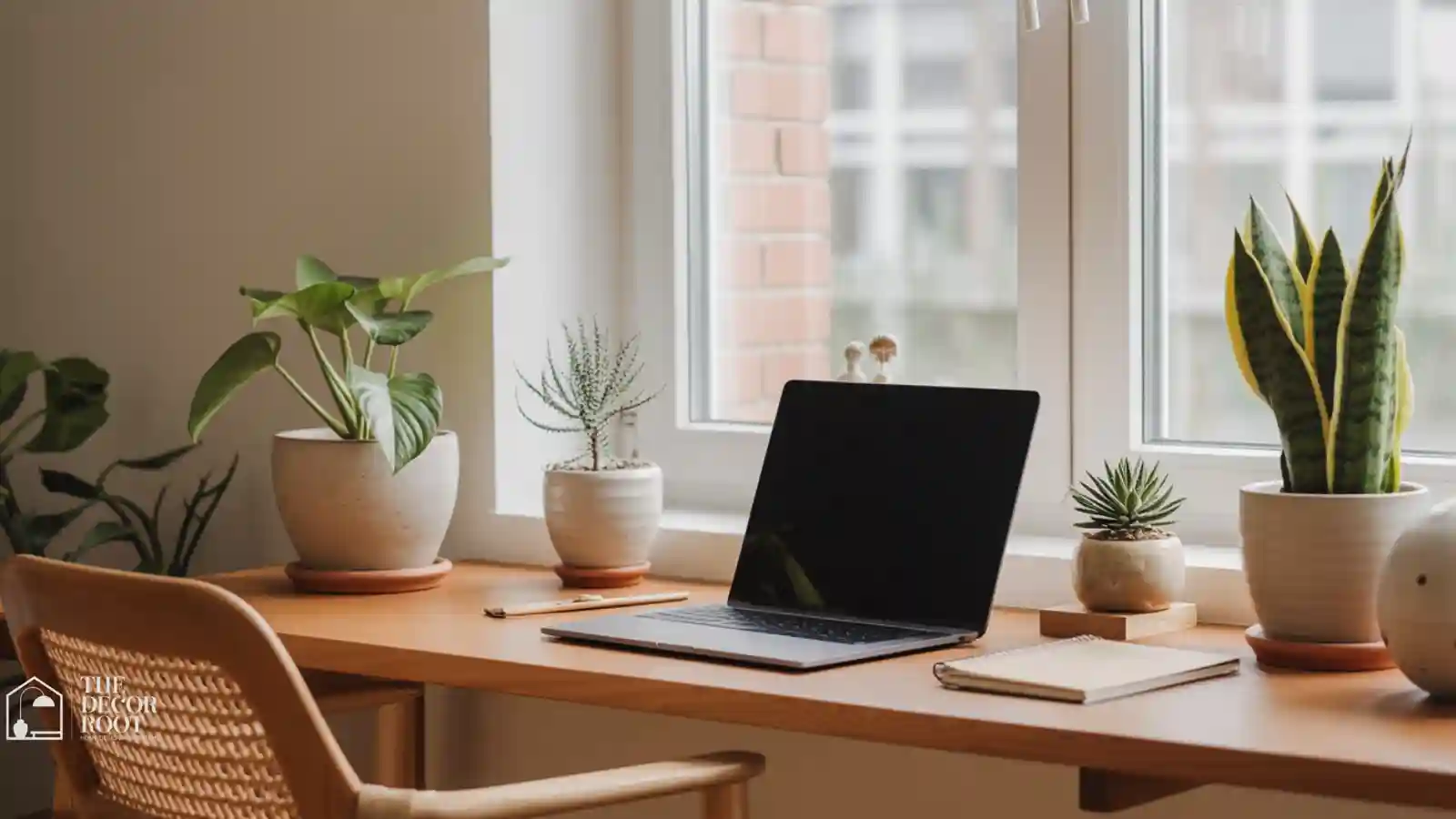
Pothos is the plant to start with if you’ve killed everything else you’ve owned, and it earns its spot at the top of this list for exactly that reason. It tolerates low light, irregular watering, and the kind of forgetfulness that comes with a deadline-heavy week, while still producing the trailing vines that soften a hard desk edge. Set it in a small pot on the corner of your desk, or slightly behind your monitor, so the leaves drape down into your peripheral vision without blocking your screen. That peripheral movement vines shifting slightly as air moves through the room gives your eyes a passive break every time you glance sideways, which matters more for sustained focus than people expect. Water it only when the top two inches of soil feel dry, roughly every seven to ten days depending on your home’s humidity. Because pothos handles fluorescent and low-window light equally well, it works in windowless home offices, basement setups, and closet-turned-office conversions alike.
2. The Focus Anchor: Snake Plant Behind the Monitor
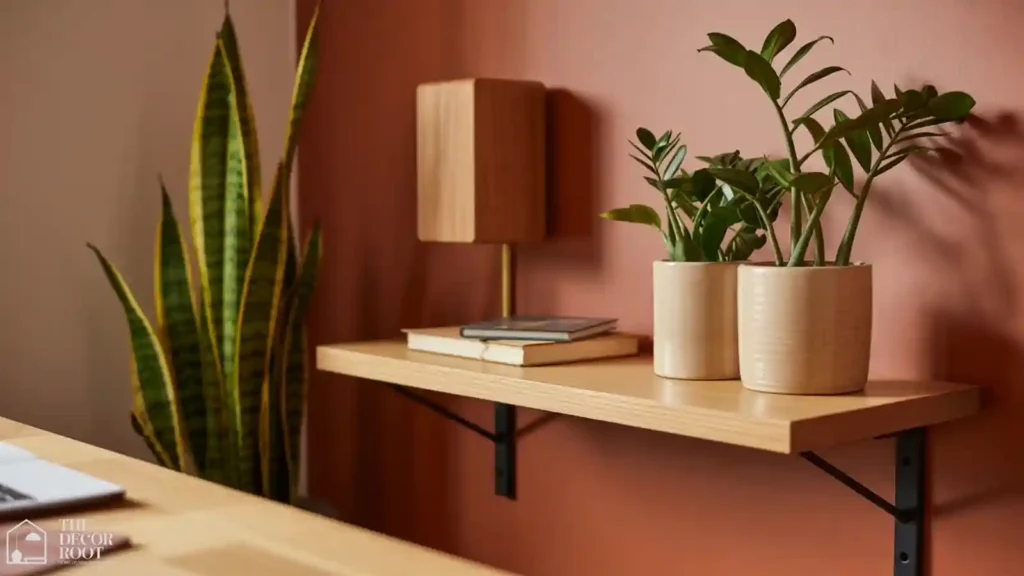
A snake plant’s stiff, upright leaves do something most trailing plants can’t: they give your desk a visual “anchor” that doesn’t move or distract while you’re deep in a task. Place one in a floor planter directly behind your monitor stand, tall enough that its top leaves frame the top of your screen without crowding it. This positioning matters because it keeps the plant in your line of sight during natural breaks when you lean back, stretch, or glance up without competing with your work when you’re actively typing. Snake plants are also one of the few common houseplants that release oxygen overnight rather than only during the day, so a home office that doubles as a guest room or gets closed up at night still gets some air benefit. They tolerate weeks of neglect, need water only every two to three weeks, and handle both dim corners and bright afternoon sun without complaint, which makes them one of the lowest-maintenance high-impact choices on this entire list.
3. The Air-Quality Workhorse: ZZ Plant on a Low Shelf
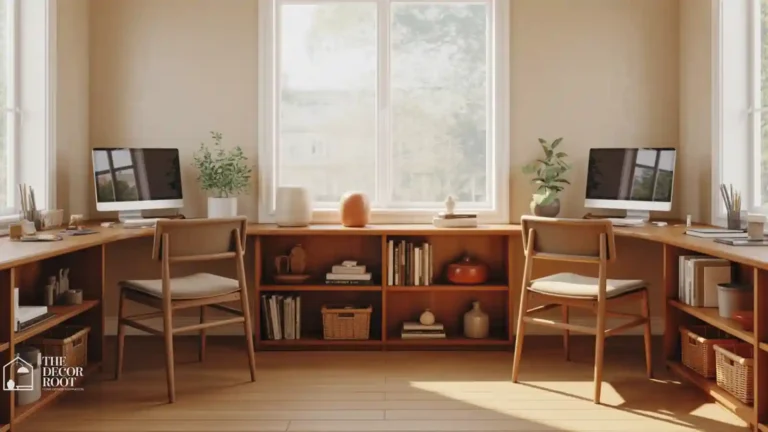
If your home office doubles as a storage room with a desk crammed in, a ZZ plant on a low shelf or filing cabinet is the move. Its glossy, dark green leaves reflect light in a way that makes a dim corner look intentional rather than neglected, and it’s genuinely one of the most drought-tolerant plants sold at any major garden center. Place it at eye level when you’re seated, roughly 18 to 24 inches to the side of your monitor, so it fills the “dead zone” of peripheral wall space that most offices leave empty. That dead zone matters more than people think; an empty wall corner next to your screen gives your eyes nothing to rest on except more screen glare, while a ZZ plant gives them somewhere soft to land. Water it once every two to three weeks, less in winter, and rotate the pot a quarter turn monthly so growth stays even instead of leaning toward the window.
4. The Set-and-Forget Fix: Self-Watering Planter for Any Desk Plant
If your actual problem isn’t which plant to buy but remembering to water any of them, solve the root issue with a self-watering planter insert instead of another plant. These reservoirs hold two to three weeks of water and wick moisture up as the soil dries, which removes the single biggest reason home office plants die: inconsistent attention during busy weeks. Use one for whichever plant sits closest to your keyboard, since that’s the plant you’re least likely to notice needs water when you’re mid-project. This single swap turns any plant on this list into a near-zero-maintenance addition, and it’s especially useful for people who travel for work or have unpredictable schedules where a plant might get skipped for ten days at a stretch.
EDITOR’S PICK
🛒Self-Watering Planter Insert For Low-Maintenance Desk Plants
A self-watering planter with a two- to three-week reservoir removes the guesswork from plant care, making any office plant nearly maintenance-free and ideal for busy or unpredictable schedules.
(paid link)
5. The Corner Softener: Areca Palm in a Floor Pot
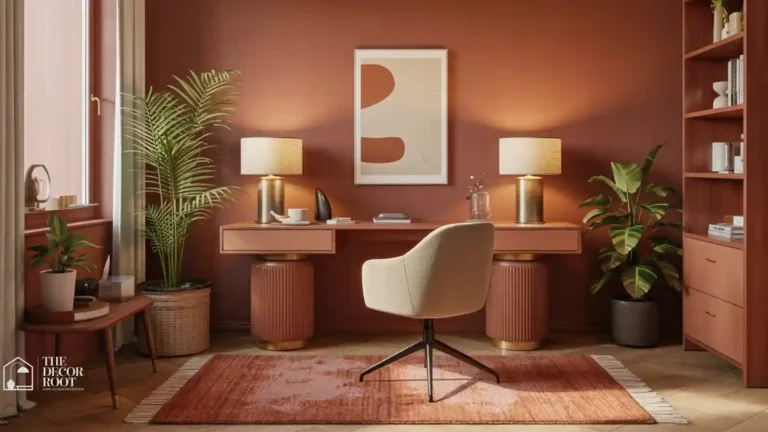
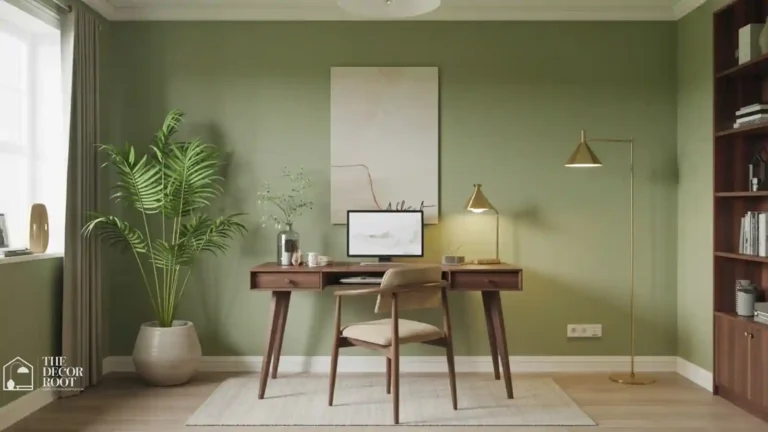
An areca palm’s feathery, arching fronds do more to soften a boxy home office than almost any other single plant, which makes it the right choice if your space feels sterile or corporate even though it’s in your house. Place it in a floor pot in the corner diagonally across from your desk, where its height (typically 4 to 6 feet indoors) fills vertical space that would otherwise stay empty and cold-looking. Areca palms prefer bright, indirect light, so a spot near a window that doesn’t get direct afternoon sun works best; direct sun can scorch the frond tips. Water when the top inch of soil is dry, usually once a week, and mist occasionally if your office runs dry from heating or air conditioning. The visual effect of a tall, textured plant in your peripheral vision during video calls also does quiet work for how put-together your background looks without any styling effort.
6. The Small-Desk Solution: Succulent Trio in Matching Pots
When your entire workspace is a 30-inch desk squeezed into a bedroom corner, you don’t have room for a floor plant; you need small, deliberate greenery that doesn’t eat into your working surface. A trio of succulents in matching two-inch pots, lined up along the back edge of the desk, gives you the visual benefit of plants without sacrificing elbow room. Succulents also tolerate the dry air and inconsistent light that small, enclosed home offices often have, and they need water only every two to three weeks. Choose varieties with different textures an echeveria, a jade plant, and a haworthia, for example so the grouping reads as curated rather than random. This is one of the few plant ideas on this list that works even in a home office with zero natural light, as long as you swap in an inexpensive grow light for a few hours a day.
7. The Air Purifier: Peace Lily Near the Printer or Electronics
Home offices tend to cluster electronics printer, router, monitor, charging cables in one area, and that’s exactly where a peace lily earns its keep. It’s one of the more effective common houseplants at filtering indoor air, and placing it near your equipment cluster puts it to work where it matters most. Peace lilies also communicate their watering needs unusually clearly: the leaves droop visibly when they’re thirsty and perk back up within hours of watering, which takes the guesswork out of care for people who don’t want to think about a watering schedule. They prefer medium, indirect light and will produce white blooms periodically when happy. Keep them out of direct sun, which browns the leaf edges, and out of drafty spots near AC vents, which stresses them more than almost any other placement mistake.
8. The Eye-Level Reset: Spider Plant on a Hanging Shelf
Mounting a small hanging shelf at eye level, just to the side of your monitor, and filling it with a spider plant gives you a built-in visual break that doesn’t require getting up. Spider plants produce long, arching leaves and eventually small “pups” that dangle even further down, creating movement that catches your eye during natural pauses in your work without becoming a distraction while you’re actively typing. They’re also nearly impossible to kill; they tolerate low light, irregular watering, and temperature swings better than most trailing plants, which makes them a smart pick for a first-time office plant owner. Water once a week, letting the soil dry slightly between waterings, and expect new pups to form every few months, which you can snip off and root in water to expand your plant collection for free.
9. The No-Window Fix: Grow Light Paired with a Shade-Loving Plant
A genuinely windowless home office a converted closet, a basement corner, an interior room doesn’t rule plants out; it just changes the tool you need. Pair a shade-tolerant plant like a pothos or ZZ plant with a small clip-on grow light insert mounted to a shelf or desk edge, set on a timer for 8 to 10 hours a day. This combination solves the single biggest obstacle to a plant-filled windowless office: light, not care. Modern LED grow lights run cool enough to sit close to a desk without discomfort and use minimal electricity, and many now come in a warm-white spectrum that doesn’t cast the harsh purple glow older grow lights were known for, so it won’t clash with your video call lighting.
EDITOR’S PICK
🛒Clip-On LED Grow Light For Windowless Home Offices
Clip-on grow lights with a timer paired with shade-tolerant plants like pothos or ZZ plants bring greenery to windowless offices without heat, high energy use, or harsh purple glare.
(paid link)
10. The Statement Piece: Fiddle Leaf Fig in a Bright Corner
If your home office gets strong, bright indirect light and you want one plant that instantly makes the room look designed rather than decorated after the fact, a fiddle leaf fig is the classic choice with a caveat this list won’t skip as most others do: it’s genuinely fussy. It dislikes being moved, drops leaves when its light or watering changes suddenly, and needs consistent bright light to thrive. If you can give it a stable spot near a bright window and commit to a steady watering rhythm (roughly once a week, letting the top few inches dry out), the payoff is a dramatic, glossy-leafed focal point that anchors the whole room. If your space or schedule can’t offer that consistency, skip ahead to the rubber plant idea below instead, which delivers a similar look with far less drama.
11. The Low-Drama Alternative: Rubber Plant for the Same Bold Look
A rubber plant gives you the same large, glossy-leaf visual impact as a fiddle leaf fig without the finicky reputation, which makes it the better pick for most real home offices where consistency isn’t guaranteed. Place it in a corner with medium to bright indirect light, and expect it to tolerate the occasional missed watering or temperature swing far better than its fussier cousin. Its deep green (or burgundy, in some varieties) leaves add serious color contrast against a cream or white wall, which photographs well for video calls without any extra styling. Water when the top two inches of soil are dry, usually every one to two weeks, and wipe the leaves occasionally with a damp cloth; dust buildup on large leaves blocks light absorption and dulls the visual effect you’re going for.
12. The Herb Desk Garden: Mint and Basil in a Window Box
A small window box of mint and basil sitting on your windowsill does something no ornamental plant can: it engages your sense of smell, which is an underused tool for staying alert during long work sessions. Brushing your fingers across the leaves periodically releases a scent that studies on aromatherapy and cognition associate with alertness, and it gives you a legitimate two-minute break pinching leaves for tea or a snack that doesn’t involve your phone. Herbs need more consistent light than most plants on this list, ideally four to six hours of direct sun, so this idea works best for offices with a south- or west-facing window. Water when the top inch of soil feels dry, which is often every two to three days in a sunny spot, more frequently than most other entries here.
13. The Calming Layer: Lavender on a Sunny Sill
Lavender’s reputation for reducing stress isn’t just marketing; its scent is one of the more researched calming agents in casual aromatherapy use, and a small potted plant on a sunny windowsill puts that effect within arm’s reach during a stressful workday. It needs more direct sun than most houseplants on this list, so reserve this idea for a genuinely bright window rather than a shaded desk. Lavender also prefers to dry out fully between waterings and resents sitting in damp soil, so err on the side of underwatering rather than overwatering roughly once every one to two weeks depending on your home’s humidity. The pale purple blooms and silvery foliage add a soft color note that works particularly well against the terracotta and cream tones common in warm, cottage-style home offices.
14. The Care-Made-Easy Fix: Moisture Meter for Uncertain Watering
If you’ve killed plants in the past because you genuinely couldn’t tell if the soil was still wet, a soil moisture meter insert removes the guesswork entirely. Stick the probe a few inches into the pot, and it gives an instant read on whether the plant needs water now, in a few days, or not at all, which is especially useful for varieties like ferns and peace lilies that punish both over- and under-watering. This is a small, inexpensive tool, but it solves the actual reason most office plants die: not neglect, but uncertainty about when to act. Keep it clipped to your desk drawer so it’s genuinely within reach rather than stored somewhere you’ll forget about.
EDITOR’S PICK
🛒Soil Moisture Meter For Accurate Watering Timing
A soil moisture meter takes the guesswork out of watering sensitive plants, giving instant readings on moisture levels so you know exactly when to act and can keep it within reach at your desk.
(paid link)
15. The Humidity Booster: Boston Fern for Dry Office Air
Heating and air conditioning dry out home offices more than most other rooms in the house, since they’re often smaller and more enclosed, and that dry air contributes to the eye strain and mild headaches that derail an afternoon. A Boston fern, known for its natural humidity-loving habit, does more to counteract that dryness than almost any other common houseplant, releasing moisture into the air as it transpires. “Home office plant styling follows the same principles as plant styling in any room; these indoor plant placement and styling ideas show how to choose species by light requirement, position them for maximum visual impact, and group them so the plants read as a composed display rather than a collection of individual pots that happen to be in the same room.
16. The Textural Contrast: Chinese Evergreen for Color Variety
Most of this list leans on solid green foliage, but a Chinese evergreen breaks that pattern with variegated leaves in silver, cream, or soft pink depending on the variety, which adds visual interest to a desk that might otherwise feel monotonous. It tolerates low to medium light better than almost any patterned-leaf plant available, making it one of the few colorful options that actually survives in a dim home office. Place it where you’ll see the patterned leaves during natural glances away from your screen; a shelf at eye level works better than a spot behind your monitor, where the detail would be lost. Water every one to two weeks, letting the soil dry slightly between waterings, and keep it away from cold drafts, which it dislikes more than most tolerant plants on this list.
17. The Desk-Edge Detail: Jade Plant for a Tidy, Compact Shape
A jade plant’s thick, structured leaves and slow, compact growth make it one of the tidiest options for a desk that needs to stay functional, not overgrown. Unlike trailing or leafy plants that eventually need pruning to stay in bounds, a jade plant holds its shape for months with minimal intervention, which matters if you don’t want a maintenance task competing with your actual work. It thrives in bright indirect light and needs water only every two to three weeks, making it nearly as low-maintenance as a succulent while offering a slightly more substantial, tree-like silhouette. Its rounded leaves also photograph well in a small terracotta pot, adding a warm color note without demanding a large footprint on a crowded desk.
18. The Zero-Light Workaround: Air Plants in a Glass Terrarium
If your home office genuinely has no usable light an interior room, a closet conversion, a basement without windows most plants on this list won’t survive without supplemental lighting, but air plants come closest to an exception. They don’t require soil and can survive on ambient light plus a weekly soak in water, though even they do best with some bright, indirect light or a grow light a few hours a day. Group two or three in a small glass terrarium or hanging glass orb on your desk for a modern, low-footprint plant idea that takes up almost no space. This is less about air-quality benefits, which are minimal with air plants, and more about giving your desk a living visual element when almost nothing else will survive the conditions.
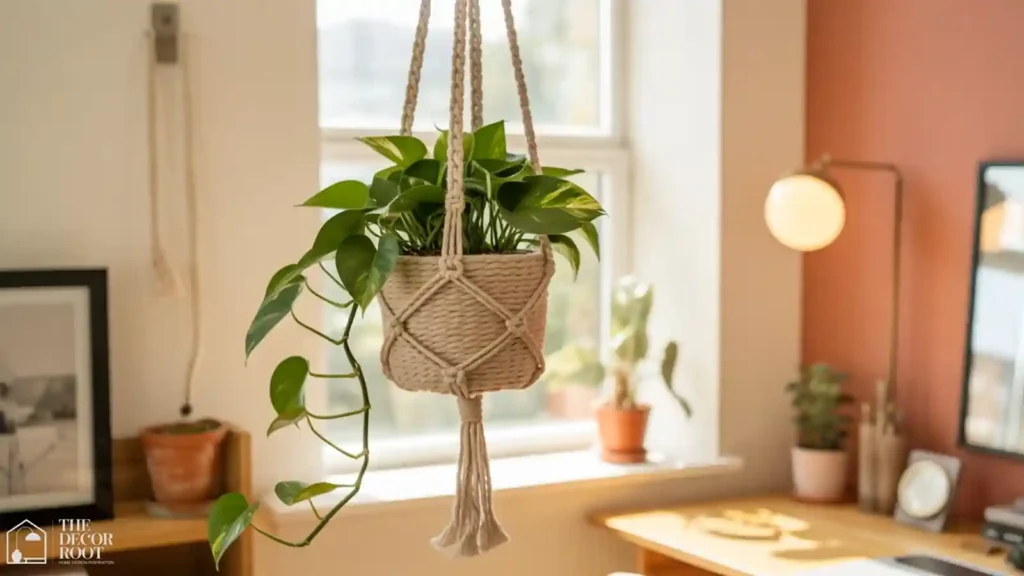
19. The Styled Hang: Macrame Hanger for a Trailing Plant
Freeing up desk space while still getting the visual softness of a trailing plant means going vertical, and a macrame plant hanger insert hung near a window or in a corner does exactly that. Use it for a pothos, string of pearls, or philodendron, and position it so the trailing vines fall within your peripheral vision without swinging into your workspace when the door opens, or the AC kicks on. This idea is particularly useful in small home offices where every inch of desk and floor space is already spoken for; the hanger uses only ceiling or wall-mount space that would otherwise go unused. Choose a hanger in a neutral cream or jute tone to keep the look cohesive with a warm, terracotta-and-gold color palette rather than introducing a competing texture.
EDITOR’S PICK
🛒Macrame Plant Hanger For Vertical, Space-Saving Greenery
A macrame hanger in cream or jute keeps trailing plants like pothos visible but out of the way, using only vertical space while complementing a warm terracotta and gold office palette.
(paid link)
20. The Bold Focal Point: Monstera Deliciosa Near a Bright Window
A monstera’s large, split leaves make it one of the most photogenic plants on this list, and placing one near a bright window but out of direct midday sun gives your home office an instant, magazine-worthy focal point. It grows relatively quickly given good light, so budget for eventually staking or repotting it as it matures, which is a commitment some of the smaller entries on this list don’t require. Water when the top two inches of soil are dry, typically every one to two weeks, and rotate the pot occasionally so the leaves grow evenly toward the light rather than leaning permanently in one direction. Its dramatic silhouette works particularly well as a video call background plant, filling space behind you without needing to sit directly on your desk.
21. The Color Pop: Croton for Warm-Toned Offices
If your home office leans into a warm terracotta, gold, and cream palette, a croton’s red, orange, and yellow-streaked leaves tie directly into that color story in a way most all-green plants can’t. It needs more direct light than many entries on this list, ideally several hours of bright sun to hold its vivid coloring, since low light causes the leaves to fade back toward plain green over time. Place it near your brightest window and water when the top inch of soil is dry, usually weekly. Because the leaf color varies so much by variety, from streaked orange to near-solid red, it’s worth choosing one in person at a garden center rather than ordering online, so you can match it intentionally to your existing decor.
22. The Patterned Statement: Calathea for a Design-Forward Desk
A calathea’s intricately patterned leaves, often striped or feathered in deep green, purple, or silver, make it one of the more visually striking low-light plants available, which is a rare combination most plants on this list can’t offer. It prefers medium indirect light and, notably, higher humidity than average, so it pairs well with a small desktop humidifier if your office runs dry. Water consistently, keeping the soil lightly moist rather than letting it dry out completely between waterings, and use filtered or distilled water if possible, since calatheas are sensitive to the chemicals in tap water and will show it in browning leaf edges. The payoff for this slightly higher maintenance is a plant that looks genuinely unique next to the more common pothos-and-snake-plant pairings most offices default to.
23. The Trailing String Detail: String of Pearls on a High Shelf
For a home office with a high shelf or bookcase, a string of pearls adds a completely different texture from every other plant on this list: round, bead-like leaves that cascade down in long strands rather than the broad leaves most trailing plants offer. It needs bright light and infrequent watering, closer to succulent care than to a typical trailing plant, so let the soil dry out almost completely between waterings, roughly every two to three weeks. Its unusual silhouette makes it a strong choice for adding visual variety to a shelf that already holds a few broader-leafed plants, since repeating the same leaf shape across a room starts to look flat rather than intentional.
24. The Cohesive Finish: Matching Ceramic Pot Set Across the Room
Once you’ve settled on which plants from this list fit your space, the fastest way to make the whole collection look intentional rather than accumulated is a matching ceramic pot set in a single color family, like cream, terracotta, or matte white. Repotting your plants into a coordinated set, even if the plants themselves vary wildly in size and leaf shape, visually unifies a home office the way a matching set of picture frames unifies a gallery wall. Choose pots with drainage holes and saucers to avoid root rot, and size up only slightly from the plant’s nursery pot, since oversized pots hold excess moisture that most houseplants don’t need.
EDITOR’S PICK
🛒Matching Ceramic Pot Set For A Cohesive Plant Display
A coordinated ceramic pot set in cream, terracotta, or white unifies varied plants visually, and choosing pots with drainage while sizing up only slightly prevents root rot.
(paid link)
25. The Rotating System: A Seasonal Plant Swap for Year-Round Freshness
The final idea isn’t a single plant; it’s a habit. Instead of buying every plant on this list at once, treat your desk as a small rotating display: swap a flowering plant like a mini orchid in during spring, lean into hardy foliage like snake plants and ZZ plants through the low-light winter months, and bring herbs forward in summer when sunlight is strongest. This keeps your workspace visually fresh without requiring you to maintain a huge, static collection, and it lets you match plant care needs to the actual light and temperature conditions each season brings. It also gives you a small, recurring ritual of walking through what’s thriving and what needs to move that naturally pulls your attention away from screens for a few minutes each week.
Quick Action Plan
- Don’t try to buy all 25 of these at once. Start with one no-fail plant from the top of this list a pothos or snake plant- and place it directly in your line of sight, not off to the side where you’ll forget it exists.
- Give it two weeks in that spot before adding a second plant, so you actually learn its watering rhythm instead of guessing across five plants at once.
- Once your first plant is thriving, layer in one plant for air quality (a peace lily or ZZ plant), one for texture or color (a croton or calathea), and one small trailing piece (a pothos in a macrame hanger) to round out the desk without overwhelming it.
- If your space has no natural light, solve that constraint first with a clip-on grow light before choosing any plant at all; the right plant in the wrong light will fail regardless of how well you care for it.
Frequently Asked Questions
Conclusion
A focused workspace doesn’t happen because of one big renovation; it happens because of small, deliberate choices like the ones on this list. Pick two or three plants that solve your actual problem, whether that’s low light, dry air, or a desk that just feels lifeless, and build from there.
💾 Save this post to your Home Office Ideas board on Pinterest so you can come back to it as you build out your plant collection.