
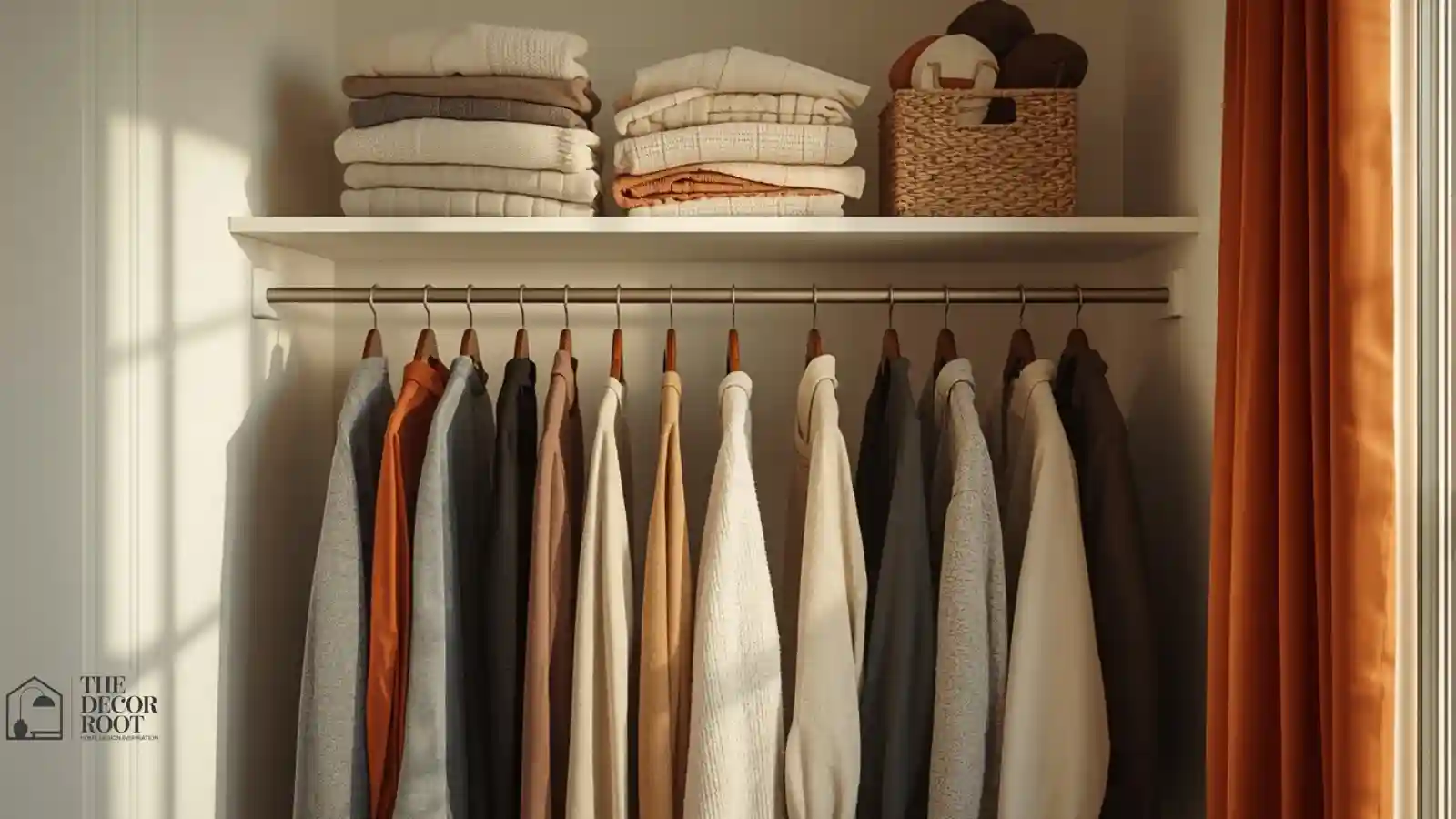
21 Small Bedroom Closet Ideas Before Sweater Season
Small Bedroom Closet Ideas. The first cold snap of the year has a way of exposing exactly how disorganized your closet has gotten since spring. Suddenly you need room for bulky knits, scarves, and boots, and your closet, already tight from a summer’s worth of clothes you never fully rotated out, has nowhere to put them. This is the moment small-space closets either earn their keep or become the thing you’re fighting with every morning until March.
The good news is that most small closet problems aren’t actually space problems; they’re system problems. You don’t need a walk-in to fit a season’s worth of sweaters; you need the right combination of vertical storage, smart folding, and a couple of tools that do double duty. These 21 ideas are built specifically for the sweater-season crunch, not generic “organize your closet” advice; they assume you’re working with limited square footage and a hard deadline before the temperature drops.
This post contains affiliate links. As an Amazon Associate, I earn from qualifying purchases. If you buy through these links, I may earn a small commission at no extra cost to you.
What Ties These Ideas Together
Every idea on this list solves the same underlying problem differently: small closets waste vertical space far more than they waste floor space. A single rod at eye level leaves everything from the floor to the ceiling underused, while bulky sweaters, which don’t hang well anyway, end up stuffed onto shelves in a way that swallows space and still looks messy. The fixes below aren’t about buying more storage; they’re about redistributing what you already have across the vertical real estate your closet has always had- you just haven’t been using it. Once you start thinking in zones instead of one flat rod, sweater season stops feeling like a squeeze.
1. Install a Double-Hang Rod System
If your closet only has one rod running the full width, you’re leaving roughly half the vertical space unused. A double-hang rod system splits the space into an upper and lower rod, which works especially well for shirts, folded pants on hangers, and shorter jackets that don’t need full-length clearance. Reserve the newly freed floor-level space for a shoe rack or a stack of bins instead of letting it become a dumping ground. This single change can functionally add 30 to 40 percent more hanging capacity without touching a single wall, which matters enormously when sweater season is about to add bulk to everything already in there.
2. Use Slim Velvet Hangers to Reclaim Space
Wire and thick plastic hangers eat up far more rod space than they need to, and they’re notorious for letting sweaters slide right off the shoulders. Switching to slim velvet-flocked hangers can free up two to four extra inches of rod space per foot, which adds up fast in a small closet. The velvet texture also grips knitwear better than smooth plastic, so your sweaters keep their shape instead of stretching out at the shoulders from sliding down all winter. Buy them in a single uniform color rather than mixed sets; it’s a small detail, but a matched hanger set makes even a packed closet look considerably more organized at a glance.
3. Add Vacuum Storage Bags for Bulky Off-Season Items
Before sweater season fully arrives, use vacuum storage bags to compress the bulky items you’re not wearing yet heavy coats you’ll grab in December, or summer bedding you’re storing until spring. A single bag can shrink a stack of blankets down to a quarter of its original size, freeing up an entire shelf for the sweaters you’ll actually need in the coming weeks. Store the compressed bags on a high shelf or under the bed rather than in your primary closet zone, since they’re not something you’ll need daily access to. This is the fastest single fix for a closet that feels physically too full before you’ve even added the new season’s clothes.
4. Mount a Closet Door Organizer
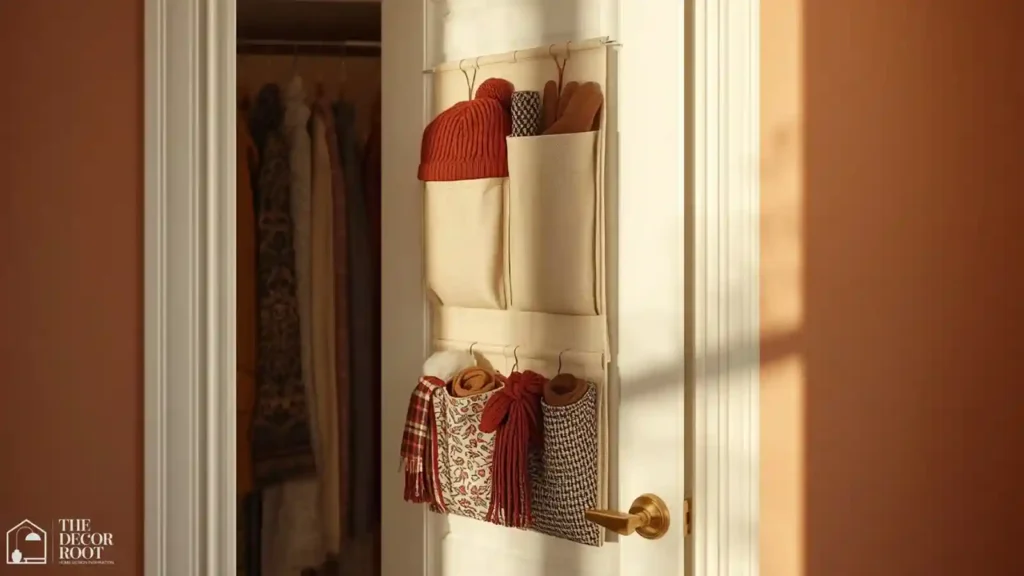
The back of your closet door is likely the most underused surface in the entire room. A hanging closet door organizer with multiple fabric pockets gives you a dedicated spot for scarves, gloves, and small accessories that otherwise end up tangled in a drawer. Mount it on adjustable over-the-door hooks rather than screwing directly into the door, so you don’t lose your security deposit if you’re renting. This single addition can absorb an entire drawer’s worth of small winter accessories, which frees that drawer up for the bulkier sweaters that don’t fold down small enough for a shelf.
EDITOR’S PICK
🛒Hanging Closet Door Organizer With Fabric Pockets
An over-the-door fabric organizer with pockets stores scarves and gloves, freeing a drawer for bulkier sweaters, with no drilling required for renters.
(paid link)
5. Sort by the “One In, One Out” Sweater Rule
Before sweater season adds new bulk to your closet, do a fast pass through your existing knitwear with a simple rule: for every new sweater coming in this season, one existing piece you haven’t worn in over a year goes into a donation bag. This isn’t a deep declutter project; it’s a five-minute habit that keeps your closet from creeping past its actual capacity every single fall. Small closets don’t fail because people own too many clothes in general; they fail because nothing ever leaves, so the space quietly shrinks by a few inches every season without anyone noticing until it’s genuinely too tight to close the door.
6. Add Stackable Bins for Folded Knits
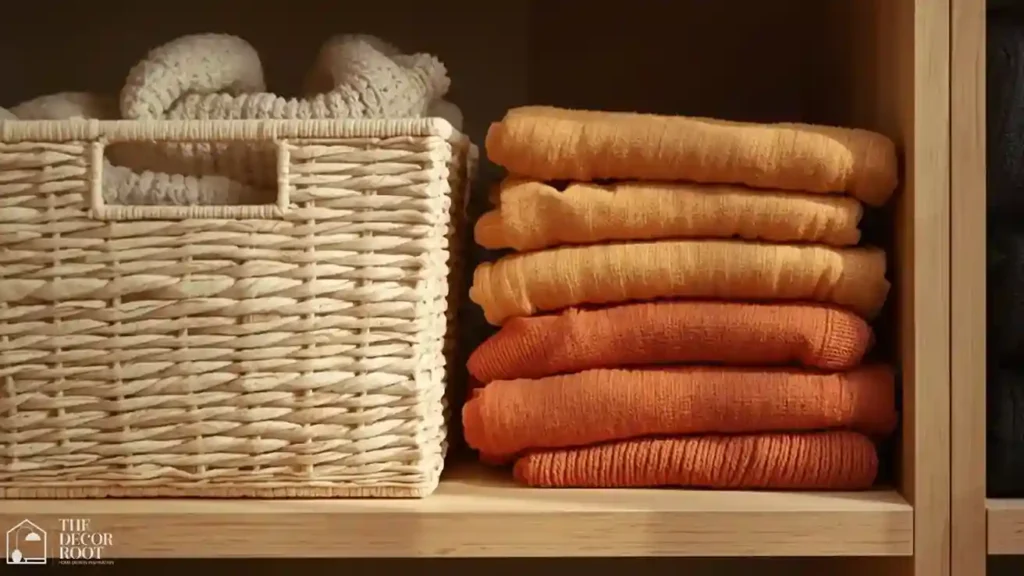
Chunky knit sweaters rarely hang well; they stretch at the shoulders and take up disproportionate rod space for how little you actually wear them week to week. Instead, fold them and store them in stackable fabric or canvas bins on a shelf, sorted by weight or color so you can find what you need without unstacking the whole tower. Choose bins with a front-facing label window rather than plain boxes, since digging through unlabeled stacks defeats the purpose of folding them in the first place. This single swap can free up eight to ten hanger slots depending on how many chunky pieces you own.
7. Use Under-Shelf Baskets for Vertical Gaps
Most closet shelves have several inches of dead air between the shelf itself and whatever’s hanging below it. Wire under-shelf baskets clip directly onto an existing shelf and add a second storage layer in that gap without any installation. Use them for smaller sweater-season items like beanies, gloves, or folded scarves that would otherwise get lost in a bigger bin. This is one of the few closet upgrades on this list that requires zero tools and can be done in under two minutes per basket, which makes it an easy first project if the rest of this list feels like more than you want to tackle in one weekend.
8. Install Adjustable Wire Shelving
If your closet still has the single fixed shelf-and-rod combo that comes standard in most older homes, an adjustable wire shelving system is the upgrade that unlocks everything else on this list. Because the shelves can be repositioned to match what you’re storing, you can create a shorter gap for folded sweaters and a taller one for hanging dresses or coats, rather than being stuck with one-size-fits-all spacing. Wire shelving also allows for better airflow than solid wood or laminate, which matters for wool and knitwear that can hold onto moisture and develop a musty smell if stored in an enclosed, poorly ventilated space over the winter.
9. Add a Cedar Block Set to Deter Moths
Sweater season and moth damage tend to arrive together, since wool and cashmere are exactly what moths are drawn to. A set of natural cedar blocks tucked into your sweater bins and hanging on your rod is a simple, chemical-free way to protect your knitwear before you actually notice damage. Cedar works by scent, not by trapping or killing anything, so it’s safe to place directly against folded fabric. Sand the surface lightly every month or two to refresh the scent, since cedar loses its potency over time and needs occasional reactivation rather than full replacement.
EDITOR’S PICK
🛒Natural Cedar Block Set For Moth-Proofing Wool And Knitwear
Natural cedar blocks in bins and on rods offer chemical-free moth protection for wool and cashmere, safe against fabric and easily reactivated with light sanding.
(paid link)
10. Fold Sweaters Instead of Hanging Them
This bears repeating on its own because it’s the single habit change with the biggest impact on a small closet: hanging heavy knits stretches them out of shape over a season and eats far more space than folding does. Use the “file-fold” method: fold sweaters into rectangles that stand upright in a bin, the same way you’d file a folder so you can see every option at a glance instead of digging through a flat stack. This method alone can turn a jumbled shelf of ten sweaters into an organized, browsable row that takes up noticeably less space than the same ten sweaters hung on a rod.
11. Use a Closet Rod Extender for Corner Space
If your closet has an awkward corner where the rod stops short of the wall, a closet rod extender bridges that dead zone and adds several more inches of usable hanging space. This is a five-dollar fix that most small closets never take advantage of simply because the gap is small enough to overlook. Use the extended section for your lightest items blouses or short jackets- since corner spots can sometimes be harder to access than the main run of the rod, and you don’t want your bulkiest sweater or coat buried in the spot that’s most annoying to reach.
12. Add a Slim Rolling Cart for Overflow
When a small closet genuinely runs out of room, a narrow rolling cart tucked just outside the closet door or in an unused corner of the bedroom can absorb the overflow without looking like a storage emergency. Use it for items in current rotation, like the three or four sweaters you’re actually wearing this week, so it functions more like a staging area than a dumping ground. Choose a cart with a woven or fabric-lined basket rather than open wire, since it hides the contents better and keeps the bedroom looking styled rather than like an organization project in progress.
13. Label Bins by Season, Not Category
A bin labeled “sweaters” sounds organized until you realize it contains both the lightweight cardigans you’re wearing right now and the heavy cable-knits you won’t need until January. Label bins by when you’ll need the contents instead “Early Fall,” “Deep Winter” so you’re not unpacking your entire sweater collection every time the temperature shifts. This system also makes the seasonal swap itself faster, since you can pull an entire labeled bin at once rather than sorting through mixed contents. It’s a small change in labeling logic that saves a genuinely surprising amount of time across a full season.
14. Install Hooks on the Inside Door
Beyond the pocket organizer from tip four, a simple row of adhesive or over-door hooks gives you a spot for tomorrow’s outfit, a robe, or a bag you use daily items that don’t belong folded away but also shouldn’t be draped over a chair. This keeps small, frequently grabbed items out of your main hanging space entirely, which indirectly frees up rod room for the sweaters that actually need it. Stick to three or four hooks maximum; more than that starts to clutter the door visually and makes it harder to find the one thing you’re actually looking for.
EDITOR’S PICK
🛒Over-Door Hooks For Daily Outfits And Accessories
A few over-the-door hooks keep daily items accessible and out of your main closet space, freeing rod room while avoiding visual clutter.
(paid link)
15. Use a Shoe Organizer for Scarves and Gloves
A hanging shoe organizer with individual fabric pockets is one of the most underrated tools for sweater season, and not because of shoes at all; it’s the ideal size for rolled scarves, paired gloves, and beanies that otherwise get lost in a drawer. Hang it on the same rod as your clothes or on a spare section of wall inside the closet, and use each pocket for one accessory set so you’re not digging through a jumble every cold morning. This is a repurposed use for a tool most people already associate with a completely different part of the closet.
16. Add a Full-Length Mirror to the Closet Door
This isn’t purely aesthetic a mirror mounted on the inside or outside of a closet door means you’re not walking across the bedroom to check how a bulky sweater layer actually looks before you commit to it. In a small closet, every trip back and forth to a mirror elsewhere in the room adds friction to your morning, especially once you’re layering more pieces for the cold. Choose a mirror with a thin frame in a finish that matches your other hardware, and mount it with adhesive strips if you’re renting and can’t drill into the door itself.
17. Use Drawer Dividers for Small Accessories
If your closet includes built-in drawers, dividers keep folded items like gloves, belts, and thin scarves from sliding into one tangled pile every time the drawer opens and closes. Adjustable dividers let you resize the sections as your sweater-season accessory collection grows through the winter, rather than committing to fixed compartments that stop fitting what you actually own. This is a small, inexpensive fix, but it’s the difference between opening a drawer and immediately seeing what you have versus opening it to a jumbled mess you have to dig through every single morning before work.
18. Store Off-Season Clothes in Underbed Bins
Once the vacuum bags from tip three have compressed your true off-season items, underbed storage bins give them a home that’s out of the closet entirely but still easily accessible when the season shifts again. Choose low-profile bins with wheels so you can pull them out without crouching or straining, and label the short end that faces out from under the bed so you can identify contents without pulling the whole bin free. This move alone can clear an entire closet shelf for active sweater-season storage, which is often the single biggest capacity unlock available in a genuinely small closet.
19. Add LED Strip Lighting for Visibility
A dim closet makes it harder to tell your navy sweater from your black one at 7 a.m., and poor visibility is a bigger contributor to closet clutter than most people realize. You can’t put things back neatly if you can’t clearly see where they go. A battery-powered LED strip light installed under a shelf or along the top of the closet solves this without an electrician, since most versions run on batteries or a simple USB rechargeable pack. Choose a warm white tone rather than a cool blue-white, since warm lighting makes it easier to judge how colors will actually look once you’re wearing them outside the closet.
EDITOR’S PICK
🛒Battery-Powered LED Strip Light For Closet Visibility
A warm white, battery-powered LED strip light improves closet visibility, making color distinction and organization easier without an electrician.
(paid link)
20. Create a Donation Bin Habit Before Sweater Season
Keep a small bin or bag inside the closet itself, not in a hallway closet you’ll forget about, and drop in anything you try on and immediately know you won’t wear this season. This habit works because it captures the decision in the moment it’s easiest to make; once a sweater is back on a hanger, it’s much harder to talk yourself into giving it up later. Set a reminder to drop off the bin at a donation center once it’s full, ideally before the season ends rather than after, so the space stays reclaimed through the months you need it most.
21. Build a Weekly Outfit Zone
Dedicate a small section of your closet, or the rolling cart from tip twelve, specifically to the outfits you’re planning to wear in the coming week. This keeps your most-used sweaters and layers out of the general rotation entirely, which means less digging through the full closet on rushed mornings and less wear-and-tear on the rest of your organized system from constant searching. Reset this zone every Sunday, pulling fresh pieces based on the week’s weather forecast, so it never turns into a permanent pile that quietly undoes all the organizing work from the rest of this list.
For more ways to get your bedroom ready for the season, check out our 22 Fall Bedroom Scent and Candle Styling Ideas and 25 Reading Corner Ideas for Fall Bedrooms for the styling side of this same seasonal refresh.
Quick Action Plan
- Start this weekend with the double-hang rod from tip one and the vacuum storage bags from tip three, since together they create the bulk of your new capacity before you’ve spent a dollar on anything decorative.
- Once that structural work is done, tackle the “one in, one out” sort from tip five, so you’re not organizing clothes you’re about to donate anyway.
- Finish with the cedar blocks from tip nine and the closet door organizer from tip four, which protect and contain the sweaters you’re keeping.
- Everything else on this list can be layered in gradually as you notice specific pain points through the season.
FAQs
Conclusion
A small closet can absolutely handle sweater season; it just needs a system that uses the vertical space you already have instead of fighting the square footage you don’t. Start with the structural changes, layer in the protective and organizational pieces, and keep the donation habit running through the season so the space stays workable instead of creeping back to overstuffed by January.
💾 Save this post to your Closet Organization board on Pinterest so you can reference it while you tackle your own sweater-season setup.