23 Fall Porch Planter Ideas That Survive First Frost
You already know the feeling. You spend an entire Saturday styling gorgeous porch planters, post the photos, and by the second week of October half of it is mush. That’s not bad luck; it’s the wrong plants in the wrong containers. Real fall porch planters aren’t built around what looks good on day one; they’re built around what still looks good after the first hard frost knocks out everything that wasn’t meant to handle it.
Fall porch planter ideas that survive first frost are one of the most practically valuable home decorating ideas for an autumn doorstep, because a planter that looks beautiful in September and collapses by October is a seasonal disappointment, while a container planted with the right frost-hardy species maintains its character and colour through the first cold snap and beyond.
This post contains affiliate links. As an Amazon Associate, I earn from qualifying purchases. If you buy through these links, I may earn a small commission at no extra cost to you.
The Thinking Behind This
Most “fall planter” content is really just summer planter content with a pumpkin shoved in front of it. The plants used begonias, petunias, and sweet potato vine are gorgeous through September and dead by the time anyone actually wants fall curb appeal, which is late October through Thanksgiving. The plants below are chosen for a 40°F–20°F range, not a 65°F range. Mums and ornamental kale don’t just tolerate frost; they’re triggered to intensify in color by it. Kale in particular gets more vivid purple and white as nights get colder. Pansies are rated to survive down into the low 20s and will often rebound after a freeze once the sun hits them. Sedum and heuchera are perennial in most zones, meaning the “fall planter” you build in October can come back again next year with almost no extra work. Building around these plants means your porch actually looks its best in November, which is when most of your neighbors’ planters are already in the compost bin.
Accent Porch with Fall Planters
Fall porch planters are one layer within a complete autumn exterior design. Browse all our outdoor decorating ideas for curb appeal, pumpkin displays, hay bale decor, and fall wreath ideas that build the complete autumn arrival experience your planters belong within. A fall porch planter and a pumpkin display are natural doorstep companions. These front door autumn display ideas show how to position planters and pumpkins in relation to each other so the living planted elements and the harvest display objects create one composed arrival moment rather than two separate seasonal decorating exercises placed side by side.
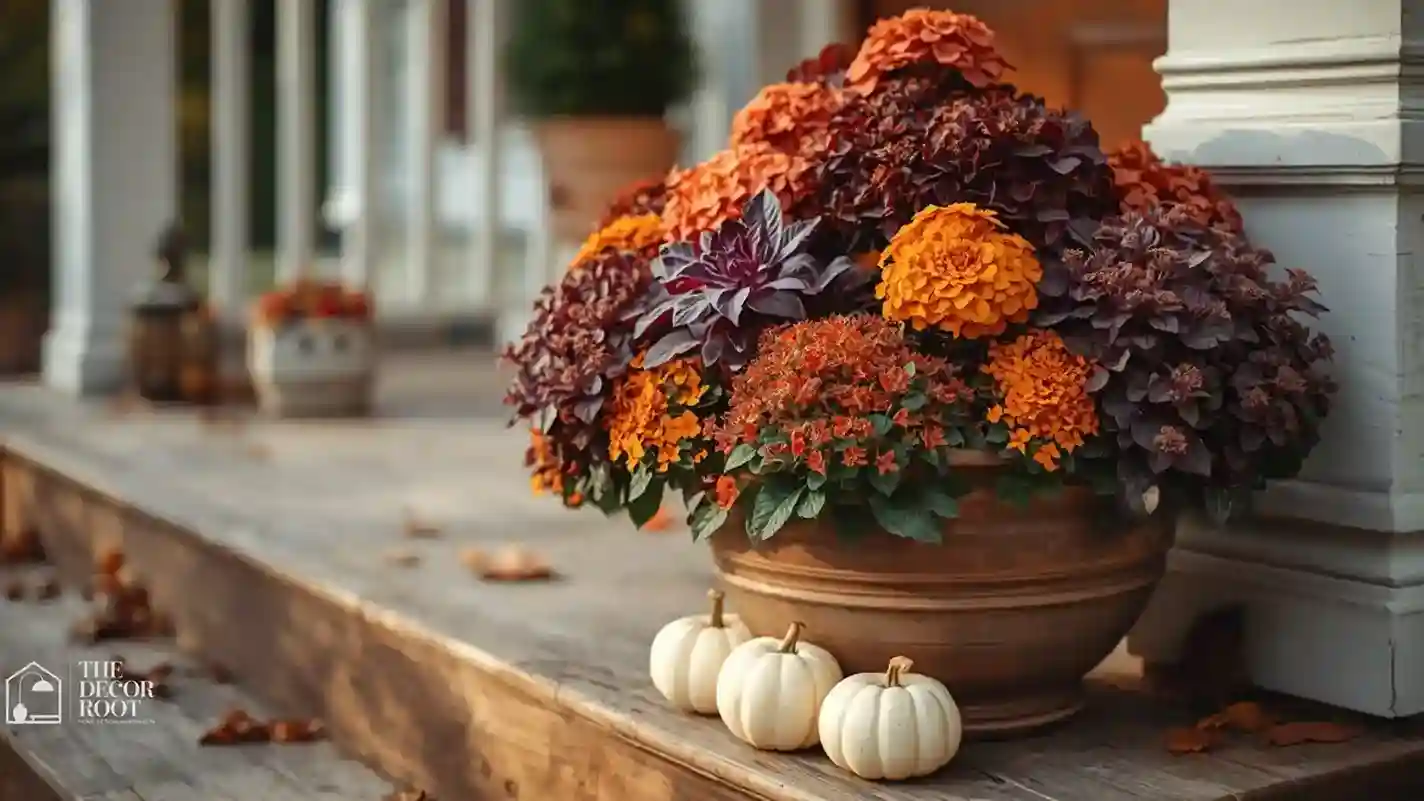
1. Layered Mum & Ornamental Kale Trio
Start with a large round or oval planter at least 16 inches wide, and build in three tiers: a tall burgundy mum in the back or center, a ring of purple ornamental kale around the middle, and a low border of white alyssum or trailing ivy at the edge. Mums bring the bulk of the color, but it’s the kale that keeps the arrangement looking intentional once the mum blooms fade in late November; its rosette shape holds up in wind and actually deepens in color as temperatures drop. Water deeply once a week unless you get rain, and avoid letting the planter sit in a saucer of standing water, which is the number one killer of fall mums in cooler climates. This combo works especially well flanking a front door on a covered porch, where it gets protection from heavy frost but still reads as full autumn color from the street. A covered porch is the ideal home for fall planters; the overhead protection extends the life of both the container and the plants within it by shielding them from the worst of the autumn weather. These covered porch and planter ideas show how to position frost-hardy containers within a covered patio setting so they remain beautiful through the full autumn season.
2. Copper Cauldron with Sedum Rosettes
Skip the traditional terra cotta and go with a copper or copper-finish cauldron planter, which holds heat slightly longer than ceramic and gives the whole look a warmer metallic glow against fall foliage. Fill it with a mix of hardy sedum varieties. Autumn Joy is the classic choice, but mixing in a few smaller rosette sedums adds texture without overwhelming the container. Sedum is genuinely frost-tolerant to the point of shrugging off a light freeze entirely, and its thick, succulent-like leaves store enough moisture that it rarely needs more than biweekly watering once fall rain picks up. This is one of the lowest-maintenance options on this entire list, which makes it a smart pick for a porch you don’t visit daily, like a side entrance or a vacation property.
3. Galvanized Bucket Pansy Cluster
Group three or four galvanized metal buckets in graduated sizes and fill each one with a single bold color of pansies. Deep purple, burnt orange, and cream work especially well together for a fall palette that doesn’t lean into cliché orange-and-black. Pansies are one of the few true fall-to-spring bloomers, meaning this cluster can realistically stay planted from late September through the following April in most Tier 1 climates, surviving multiple hard freezes along the way. Cluster the buckets asymmetrically rather than in a straight line, with the tallest bucket set slightly behind and to the side, so the arrangement reads as a considered vignette instead of a row of matching containers lined up like soldiers.
4. Corn Stalk Anchor with Mini Pumpkins
For a taller focal-point planter, anchor two or three real or faux corn stalk bundles upright in the back of a wide, heavy-bottomed planter to keep it from tipping in wind. Fill the front half with soil and tuck in a mix of miniature white and orange pumpkins, then finish the gaps with a low mum border in a complementary rust tone. Because the corn stalks and pumpkins are decorative rather than living, this arrangement is essentially frost-proof by design; the only living element is the mum border, which survives cold on its own. This is the highest-impact option for a large entryway that needs height and drama without relying on a single expensive specimen plant.
EDITOR’S PICK
🛒Faux Corn Stalk Bundle For Porch Décor
A wide, heavy planter with tall corn stalks, mini pumpkins, and a rust mum border creates a frost-proof, high-impact entryway display without relying on a single expensive plant.
(paid link)
5. Cascading Ivy & Aster Spiller
Use a tall pedestal planter or urn and let variegated English ivy trail heavily over the front and sides, then plant a cluster of purple or pink asters at the top for a color pop against the green. Asters bloom later than mums in many climates, which makes this a strong choice if you’re planting in early-to-mid October and want fresh color that lasts well into November rather than fading right when the season starts. Ivy is essentially unkillable by frost in most Tier 1 zones and will keep growing and trailing even as the asters slow down, so the planter never looks bare even after the flowers finish their bloom cycle.
6. Concrete Urn with Heuchera & Dusty Miller
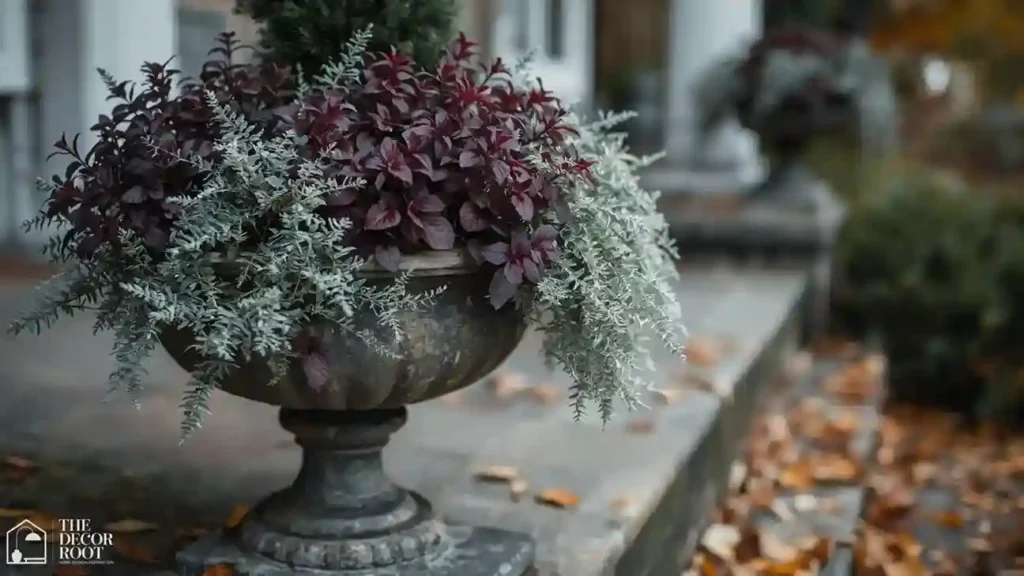
A weathered concrete urn brings a French-countryside feel that pairs beautifully with heuchera’s deep burgundy or amber foliage, which holds color for months regardless of temperature since it’s grown for leaf color, not blooms. Add dusty miller around the base for a silvery-gray contrast that reads as elegant rather than “seasonal clearance.” Heuchera is a true perennial in most zones, so this planter isn’t just a one-season fall display; it can be moved to a garden bed in spring and replanted with fresh fall material again next year, making it one of the more cost-effective ideas on this list over time.
7. Wicker Basket with Ornamental Cabbage
Line a large wicker or rattan basket with a plastic liner (critical, since baskets aren’t waterproof) and fill it with a tight cluster of ornamental cabbage in rose and cream tones. Ornamental cabbage has a looser, more open head than kale and photographs beautifully in natural light, making it a strong pick if the planter is going to be featured in your own porch photos or shared to Pinterest. The plant is rated for temperatures into the low 20s, and the cooler it gets, the more saturated the pink and cream centers become, so don’t panic if the first frost seems to intensify rather than damage the display.
8. Rustic Wood Crate Herb & Kale Mix
Repurpose a wooden crate (or buy an unfinished one from Home Depot or Michaels and stain it) as a low, wide planter for a mixed herb-and-kale display. Rosemary and sage both tolerate light frost and add fragrance and texture, while a center cluster of ornamental kale carries the color. This is a great option for a porch that also functions as an outdoor entertaining space, since guests can genuinely pinch fresh rosemary while they’re standing there. Drill or add drainage holes to the crate bottom before planting, since wood crates rarely come pre-drilled and standing water will rot both the wood and the roots quickly.
9. Tall Ceramic Vase with Wheat & Bittersweet Vine
For height without a living plant to maintain, fill a tall ceramic floor vase with dried wheat stalks and trailing bittersweet vine, both of which are naturally frost-immune since they’re already dried decorative material. This is an ideal choice for a shaded porch where sun-hungry flowering plants like mums or pansies would struggle anyway, since dried botanicals don’t need light to hold their look. Weight the base of the vase with a layer of sand or gravel before adding the stems, both for stability in wind and to keep the arrangement from tipping when a gust comes through during a fall storm. A frost cloth cover can also stretch the life of a mixed planter like this if you’re combining dried elements with a few living mums at the base; cover overnight on the coldest nights and pull it back during the day.
EDITOR’S PICK
🛒Weather-Resistant Concrete-Style Urn Planter
A tall vase with dried wheat and bittersweet vine offers weatherproof porch height for shaded spots, with a sand-weighted base for wind stability, and a frost cloth can protect any living mums added at the base on cold nights.
(paid link)
10. Wagon Wheel Planter with Mums and Gourds
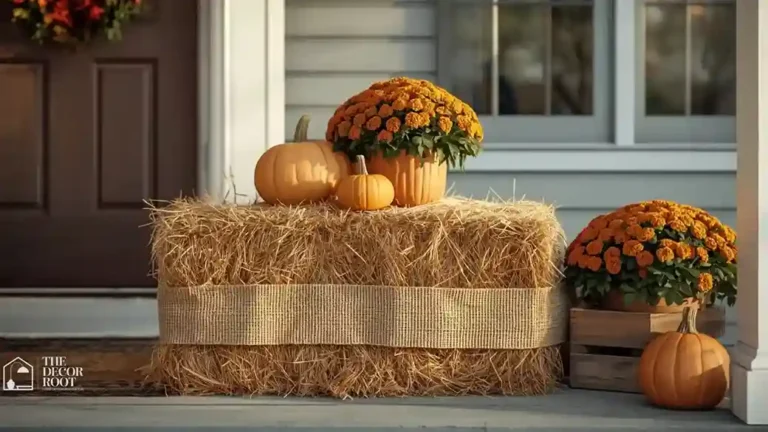
Lay a decorative wagon wheel flat as a base, then group two or three round planters filled with mums directly on top, filling the gaps between them with small ornamental gourds in mixed shapes and colors. The wagon wheel raises the whole display slightly off the porch floor, which improves drainage and runoff and keeps the planters from sitting in puddled rainwater during fall storms a small detail that meaningfully extends how long the mums stay healthy. This is a strong pick for a farmhouse or rustic-style home where a straightforward row of planters would look too tidy for the aesthetic.
11. Hanging Basket with Trailing Sedum
If your porch has a hook or beam, a hanging basket of trailing sedum varieties like ‘Angelina’ or burro’s tail brings movement and color at eye level without taking up floor space. Sedum’s thick, water-storing leaves make it one of the most forgiving plants on this entire list for anyone who tends to forget to water, and its cold tolerance means it will often outlast every other plant in the arrangement, going dormant rather than dying outright in a hard freeze. Pair the gold or green sedum tones with a rust-colored ceramic or macramé hanger for a fall palette that doesn’t rely on orange mums to read as seasonal.
12. Wine Barrel Half with Layered Grasses.
A half wine barrel planter brings serious visual weight to a wide porch or entryway, and layering ornamental grasses like fountain grass or feather reed grass inside gives movement that most static flower arrangements can’t match. Grasses are essentially frost-proof; most varieties simply go dormant and turn a warm tan or bronze color through winter rather than dying, so the planter transitions gracefully from fall into a winter look without needing to be replanted. Tuck a few small mums or pansies around the base of the grass clumps for a color layer while the grasses establish their fall bronze tones. A fall porch planter is the seasonal evolution of the same front porch flower pot display that began in spring. These front porch container planting ideas show how the same principles of height variation, colour repetition, and trailing growth that make a summer pot arrangement beautiful apply to an autumn planter built around ornamental grasses, kale, and frost-hardy perennials.
13. Rusted Tin Planter with Pansies & Ivy
An intentionally rusted or distressed tin planter gives an industrial-farmhouse edge that plays well against the softness of pansies and trailing ivy. Plant a dense cluster of mixed pansy colors in the center and let ivy spill over the rusted edges to soften the hard lines of the metal. Because pansies bloom in cool weather and can survive being briefly frozen solid overnight before thawing and blooming the next day again, this combination is one of the most reliably long-lasting on the list, often holding its look from late September clear through the first snow in many Tier 1 regions.
14. Black Metal Urn with Purple Kale
A tall black metal urn gives serious contrast against deep purple ornamental kale, and the vertical shape of the container plays nicely with kale’s rosette growth habit as it matures. This is a strong option for a modern-farmhouse or moody-fall aesthetic that skips the traditional orange-and-yellow palette entirely in favor of jewel tones. Kale’s leaves actually get more vivid and ruffled as nights get colder, so unlike most plants where frost is a threat to manage around, here it’s functioning almost like a built-in seasonal upgrade to the display.
15. Stone Trough with Sedum & Succulent Mix
A long, low stone or faux-stone trough works beautifully along a porch railing or windowsill, planted with a mixed collection of hardy sedum and hens-and-chicks succulents in varying rosette sizes. This planter style is built for minimal upkeep; most of the plants inside are drought-tolerant and cold-hardy, meaning you can genuinely plant it once in early fall and largely ignore it through the season aside from occasional light watering. The low, horizontal shape also makes it a smart choice if your porch has a railing that would otherwise obstruct taller planters from being seen from the street. A concrete-style urn planter gives this same layered look serious visual weight if you want to scale the trough concept up into a taller centerpiece instead.
EDITOR’S PICK
🛒Weather-Resistant Concrete-Style Urn Planter
A low stone trough with sedum and hens and chicks offers minimal upkeep and clear street visibility from behind railings, with a concrete urn providing a taller alternative.
(paid link)
16. Vertical Ladder Planter with Mixed Mums
Lean a rustic wooden ladder against your porch wall or railing and set small potted mums on each rung in a gradient of colors: deep red at the bottom, orange in the middle, and pale yellow at the top. This idea solves a real problem for narrow porches where floor space for wide planters is limited, since the display builds vertically instead of horizontally. Keep each pot small enough to lift for watering, and check that the ladder is stable and weighted at the base, since wind can catch a tall vertical display more easily than a squat, wide one.
17. Terra Cotta Trio with Aster Gradient Group
Three classic terra cotta pots in graduated sizes, each planted with a single aster variety in a gradient from deep purple to soft lavender. Terra cotta is porous and can crack in a hard freeze if it stays wet, so either bring these pots in on the coldest nights or opt for a frost-resistant terra cotta blend sold at most garden centers, which is worth the slightly higher price if this is a planter you plan to reuse every year. Asters are pollinator favorites too, so this grouping tends to attract late-season bees on warm fall afternoons, which is a nice detail if you enjoy watching your porch stay a little bit alive even as the season winds down.
18. Antique Milk Can with Ornamental Grass
An antique or reproduction milk can makes a striking single-container centerpiece when filled with a tall clump of ornamental grass and a few tucked-in mini pumpkins at the base. The tall, narrow shape of a milk can is a natural fit for grasses that want height, and the metal container itself won’t crack or degrade in freezing temperatures the way a ceramic pot might. This is a strong choice for a side porch or entry that needs one statement piece rather than a full grouping, and it photographs especially well next to a wooden bench or rocking chair.
19. Window Box with Cabbage & Pansy Border
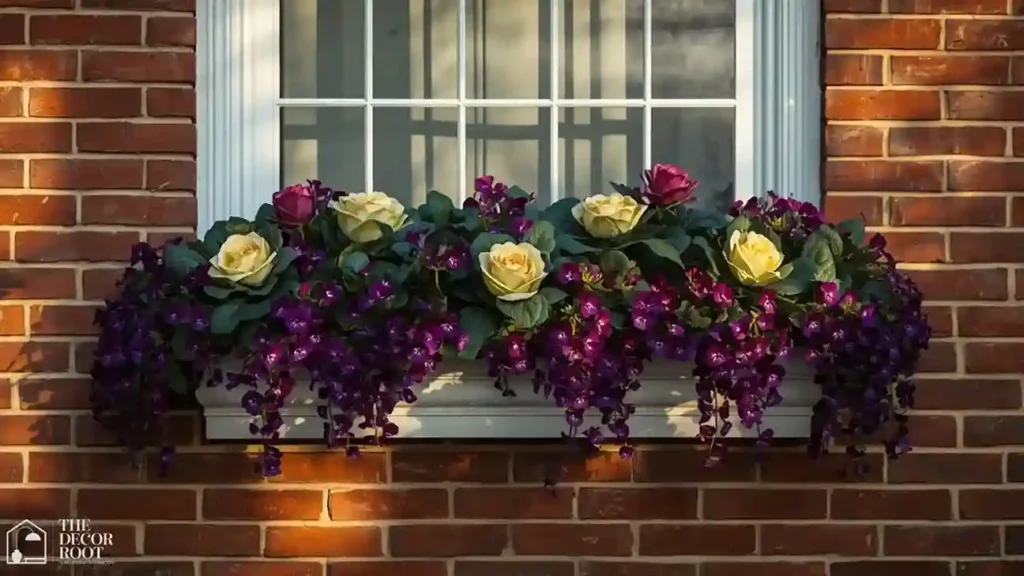
Mount a wide window box beneath a front-facing window and fill it with a repeating pattern of ornamental cabbage centers bordered by trailing pansies in a contrasting color. Window boxes take a beating from wind since they’re mounted higher and more exposed than ground-level planters, so use a lightweight potting mix and check that the mounting brackets are rated for the wet weight of the soil once fall rains soak in. This is one of the most visible fall planter styles from the street, since it sits at eye level with anyone walking or driving past, making it worth the extra install effort for the curb-appeal payoff.
20. Chalkware Pumpkin Planter with Live Kale Center.
Use a hollowed decorative pumpkin planter, either real, dried, or a weatherproof faux version as a novelty container for a single dense cluster of ornamental kale in the center. This idea leans hardest into the “pumpkin season” aesthetic while still using a genuinely frost-hardy plant, avoiding the trap of live pumpkins that soften and collapse after a few weeks outdoors. It’s a great option for a mailbox post, a small entry table, or anywhere you want a single charming accent rather than a large-scale planter grouping. A self-watering ceramic window box is worth considering if you’re placing several of these smaller accent planters along a railing and don’t want to water each one individually.
EDITOR’S PICK
🛒Self-Watering Ceramic Window Box Planter
A hollow pumpkin planter with ornamental kale offers a frost-hardy, long-lasting seasonal accent for small spots, and a self-watering window box simplifies care for multiple railing planters.
(paid link)
21. Rattan Cone Planter with Frost-Hardy Sedum.
A cone-shaped rattan or woven planter adds a textural, natural-fiber look that contrasts nicely against the smooth, fleshy leaves of sedum varieties. Because the cone shape is narrower at the base, drainage matters even more here; add a layer of gravel at the bottom before soil to keep roots from sitting in water during heavy fall rain. Sedum’s tolerance for both drought and cold makes it one of the most forgiving plant choices for a woven container that will naturally break down faster if it’s kept constantly wet.
22. Painted Wooden Crate with Dwarf Mums
Paint a plain wooden crate in a matte black, cream, or sage green to modernize the classic farmhouse-crate look, then fill it with two or three dwarf mum varieties in coordinating jewel tones rather than the standard orange. Dwarf mums stay compact and full without needing to be pinched back, and their tighter growth habit means they hold up better in wind than taller mum varieties, which can flop or split open after a hard rain. This is an easy weekend project if you already have an unfinished crate sitting in a garage or picked up cheap at Lowe’s.
23. Layered Basket Trio Scaled by Height.
Close out your porch display with three woven baskets in ascending heights, each planted with a different frost-hardy option from this list: sedum in the shortest, mums in the middle, and a tall grass or kale specimen in the tallest, arranged in a loose triangle rather than a straight line. This “trio” approach is a designer trick that reads as intentional and layered rather than matchy, and it lets you combine several ideas from this list into one cohesive porch vignette instead of choosing just one. Finish the whole grouping with a dose of slow-release plant food for mums, which noticeably extends bloom time into the colder weeks ahead.
EDITOR’S PICK
🛒Slow-Release Plant Food Formulated For Fall Mums
Three ascending woven baskets with sedum, mums, and tall grass in a loose triangle create a layered porch vignette, with slow-release food extending mum blooms into cooler weeks.
(paid link)
Quick Action Plan
- If you only have one afternoon to work with, start by picking two containers you already own and building idea #1 (mum and kale trio) and idea #6 (concrete urn with heuchera); together they give you a full-color, full-frost-hardy display using plants available at nearly every Home Depot, Lowe’s, or local garden center right now.
- Water both deeply after planting, hold off on fertilizer for the first week while roots establish, then add a slow-release fall plant food once the first true cold snap is in the forecast.
- From there, expand outward with a hanging basket or window box as budget and porch space allow.
Frequently Asked Questions
Conclusion
A porch planter that survives the first frost isn’t about luck or a warm winter; it comes down to choosing plants built for the cold in the first place. Any of these 23 combinations will carry your porch well past the point where a typical summer-leftover planter gives up, and most of them get you real color clear through Thanksgiving.
💾 Save this to your Fall Porch Ideas board on Pinterest so you have it ready when the first cold snap hits.