20 Small Nursery Ideas for Tight Spaces
Small Nursery Ideas: A tiny spare room, a shared bedroom, or a converted closet doesn’t disqualify you from having a nursery that actually functions well; it just changes which decisions matter most. The mistake most small nursery guides make is showing rooms that are technically small but still have generous closet space, a full window wall, and 100 square feet to work with. This list is built for genuinely tight spaces: rooms where every piece of furniture has to earn its footprint, and where vertical space matters as much as floor space. A small nursery in a tight space is one of the most constraint-driven home decorating ideas in residential design; the challenge of fitting a cot, a changing station, a nursing chair, and adequate storage into a room that is sometimes no larger than a generous wardrobe produces some of the most inventive and beautifully resolved nursery designs available.
This post contains affiliate links. As an Amazon Associate, I earn from qualifying purchases. If you buy through these links, I may earn a small commission at no extra cost to you.
What Makes the Difference
The single biggest factor separating a small nursery that works from one that feels cramped isn’t square footage; it’s what you choose to leave out. Most standard nursery checklists assume a full-size crib, a separate changing table, a glider, and a dresser, all fitting comfortably in their own zones. In a genuinely tight space, that list has to shrink, and the ideas below are built around combining functions rather than cramming in every standard piece. A dresser that doubles as a changing station. A small nursery is entirely dependent on its storage; these small nursery storage ideas show how wall-mounted shelving, under-cot drawers, and multifunctional furniture pieces make a tight nursery as organized and functional as a room twice the size, without consuming the floor space that a small room cannot afford to give up.
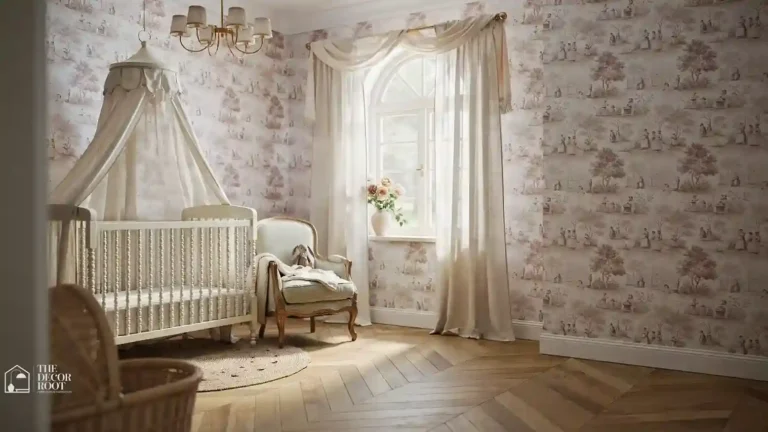
Compact Nursery with French Flair
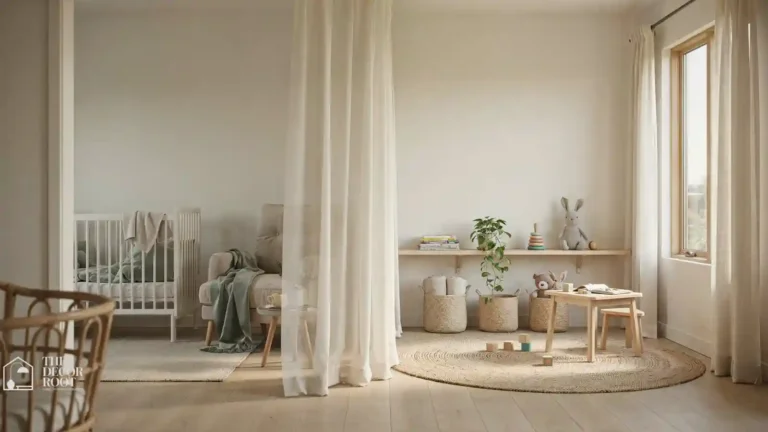
The French approach to nursery design is particularly well-suited to small rooms; the emphasis on quality over quantity, a restrained palette, and multifunctional furniture means that a French-inspired nursery never feels cluttered even in the tightest footprint. These Nursery Design & Baby Room Decor ideas show how to apply that economy of means to a small nursery. A small nursery benefits from the farmhouse approach to furniture, pieces that are sturdy, multifunctional, and designed to last through childhood rather than be replaced at the toddler stage. These farmhouse nursery ideas show which pieces deliver the most function per square foot and how the farmhouse material language of warm wood and white paint makes even the smallest nursery feel warm and considered.
1. Choose a Mini Crib Over a Standard Full-Size Crib
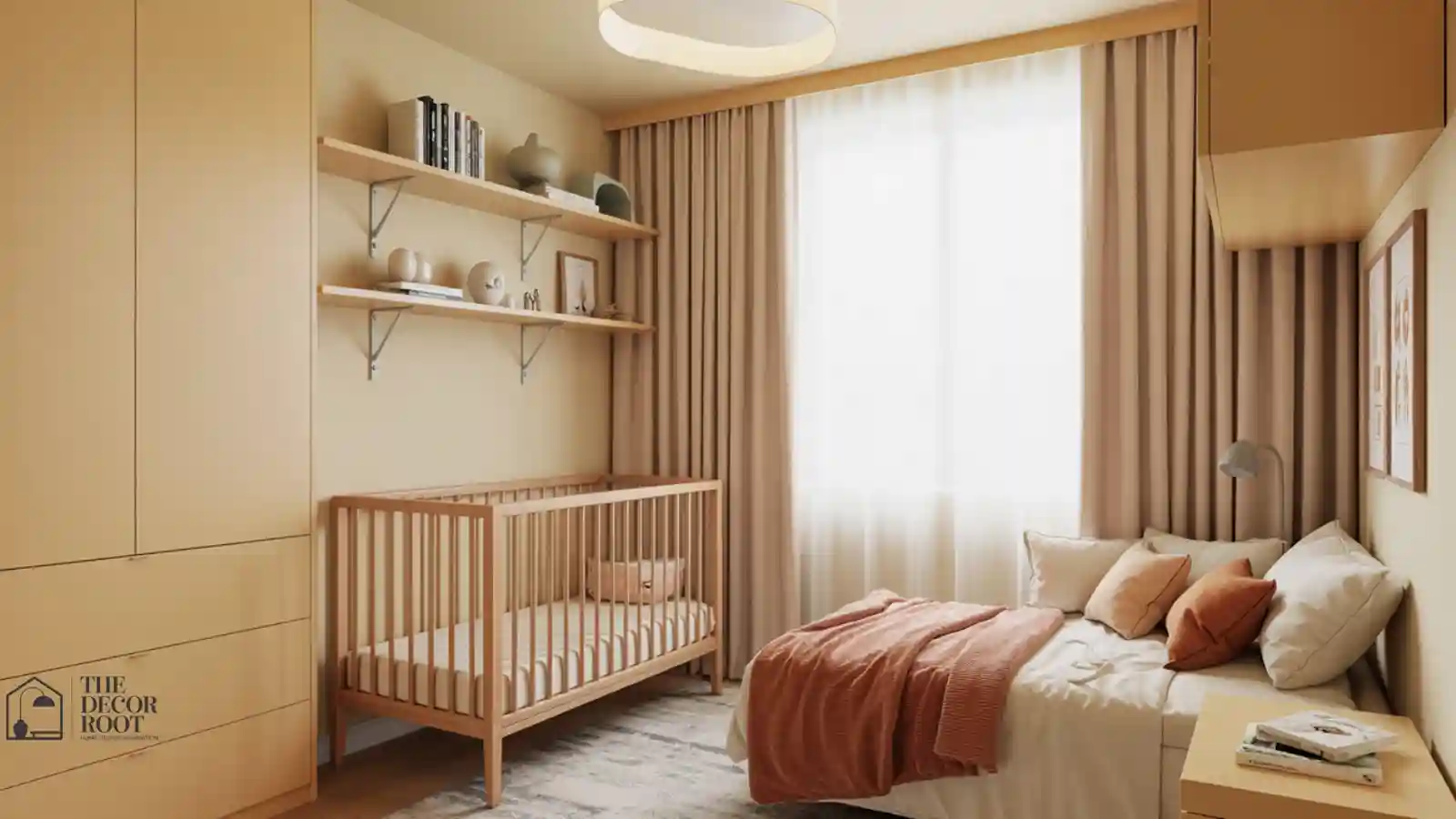
A mini crib is roughly two-thirds the footprint of a standard crib and is one of the single biggest space-saving decisions you can make in a tight nursery, since the crib is almost always the largest piece of furniture in the room. Most mini cribs still meet the same safety standards as full-size versions and accommodate babies comfortably through their first year or longer, at which point many families transition to a toddler bed anyway. This single swap can free up two to three square feet of floor space, which in a genuinely small room is often the difference between fitting a second piece of furniture or not.
2. Combine the Dresser and Changing Station Into One Piece
Rather than a separate changing table taking up its own wall, use a dresser topped with a changing pad as a single combined piece. This isn’t a compromise; it’s arguably the more functional choice even in larger rooms, since it consolidates two functions into one footprint and gives you built-in drawer storage directly beneath where you’re changing diapers. Choose a dresser with a flat, sturdy top surface and add safety straps for the changing pad, and you’ve eliminated an entire separate piece of furniture from your space budget.
3. Mount Shelving Instead of Adding a Bookcase
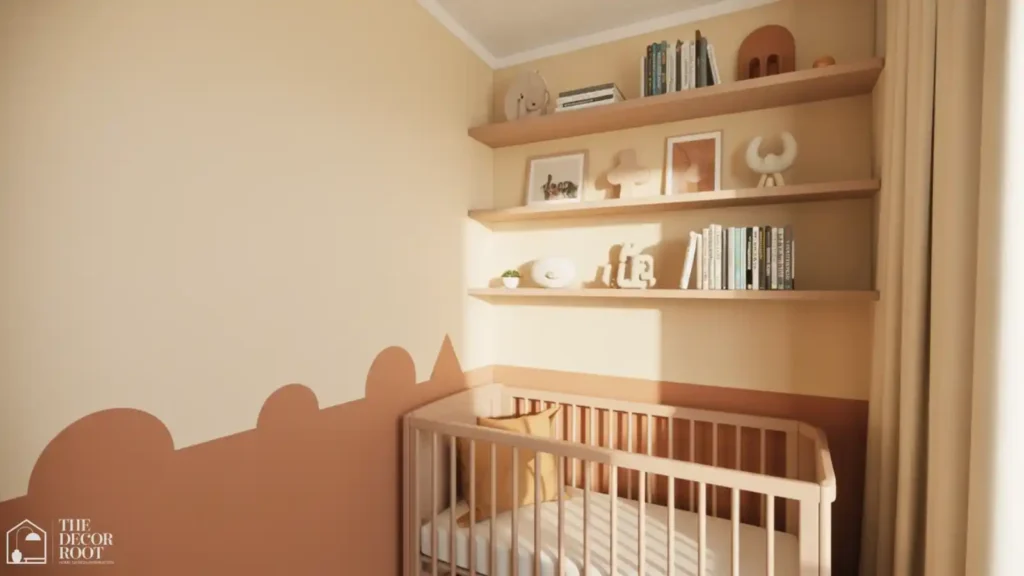
A floor-standing bookcase can eat up two to three square feet of a small room’s already limited footprint, while wall-mounted floating shelves holding the same books and small decor items take up zero floor space. Install two or three shelves at varying heights above the dresser or beside the crib, and you get the same visual and functional benefit of a bookcase without sacrificing any usable floor area. This is one of the highest-value swaps on this entire list relative to how simple it is to execute.
4. Choose a Mini Crib with Built-In Storage Underneath
If you’re already opting for a mini crib per Item 1, look specifically for a mini crib with an under-storage insert, which adds drawer or basket storage in the space that would otherwise sit empty beneath the crib frame. This is one of the more efficient space-saving purchases available for a tight nursery, since it turns dead space under a piece of furniture you already need into functional storage without requiring any additional floor footprint elsewhere in the room.
EDITOR’S PICK
🛒Mini Crib With Built-In Under-Storage Drawer
A mini crib with under storage turns dead space beneath the frame into functional storage, adding space-saving efficiency without increasing the room’s footprint.
(paid link)
5. Use Vertical Wall Space for Art Instead of Floor Space for Decor
In a tight room, resist the urge to add floor-based decorative objects a floor plant, a floor lamp, an ottoman that eat into your already limited walking and working space. Instead, push all non-functional decor onto the walls: a small gallery of prints, a mounted mirror, a wall-hung textile. This keeps every inch of floor space usable for the actual functions of the room, like standing to rock a crying baby or maneuvering a stroller in and out.
6. Choose a Glider That Folds or Has a Slim Profile
A traditional glider with wide arms and a deep base can consume a disproportionate amount of floor space in a small nursery, so look specifically for a slim-profile glider or a compact accent chair marketed for small spaces. Some modern options fold flat or have a narrower base without sacrificing the rocking motion that helps during nighttime feedings. If floor space is truly at a premium, consider whether a glider fits at all, or whether that function could happen in an adjacent room, with the nursery itself reserved purely for sleeping and diaper changes.
7. Use the Back of the Door for Additional Storage
The back of the nursery door is one of the most underused spaces in a small room, and an over-door organizer with pockets for diapers, wipes, and small supplies adds meaningful storage without consuming any floor or wall space that would otherwise be needed for furniture. This is especially useful for supplies you need frequently and want within arm’s reach without opening a drawer, like extra diapers or a change of clothes for quick access during a diaper blowout.
8. Choose a Crib That Converts Directly to a Toddler Bed
In a small space, buying furniture twice once for infancy and again for toddlerhood wastes both money and the limited time you have to source and set up new pieces. A crib that converts directly into a toddler bed within the same frame footprint means you won’t need to find room for an entirely new piece of furniture in a year or two, which matters more in a tight room than it does in a larger one where swapping furniture is a simpler logistical task.
9. Add an Over-the-Door Organizer for Diapering Supplies
Beyond general storage covered in Item 7, a dedicated over-the-door hanging organizer insert with clear pockets specifically for diapering supplies keeps everything visible and reachable without a single inch of shelf or drawer space. This is particularly useful in a room too small for a full-size dresser, where you need diapering supplies stored somewhere that isn’t competing with clothing storage for the same limited drawer space.
EDITOR’S PICK
🛒Over-The-Door Hanging Organizer With Clear Pockets
A clear pocket over-the-door organizer keeps diapering supplies visible and reachable without using any shelf or drawer space, ideal for small nurseries.
(paid link)
10. Choose Furniture on Legs Rather Than Flush to the Floor
Furniture raised on slim legs, rather than sitting flush against the floor, visually opens up a small room by letting you see floor space underneath it, even if that space isn’t strictly usable for storage. This is a design trick borrowed from small apartment living: a room with furniture on legs photographs and feels noticeably more spacious than the identical room with the same furniture sitting flush to the ground, simply because the eye reads the visible floor as additional room.
11. Use a Corner Layout Instead of a Wall-by-Wall Layout
Rather than placing the crib against one wall and the dresser against another, angling the crib into a corner can sometimes free up more usable walking space than a strict wall-by-wall arrangement, particularly in an oddly shaped or narrow room. This isn’t the right layout for every space, but it’s worth physically testing with painter’s tape on the floor before committing to furniture placement, since the “obvious” wall-based layout isn’t always the most space-efficient option in an irregular room.
12. Choose a Rug That Defines the Space Without Adding Bulk
A low-pile rug sized specifically to the nursery zone rather than a plush, thick rug meant for a larger living space defines the room’s function without eating into the room’s already limited visual and physical breathing room. In a genuinely tight nursery, a rug that’s too thick can also make navigating with a stroller or carrying a baby while sleepy noticeably harder, so prioritize a low-profile option even if it means sacrificing some plushness.
13. Use a Mirror to Visually Double the Room’s Perceived Size
A large mirror, mounted opposite the window or a light source, is one of the oldest small-space tricks for a reason: it genuinely makes a room feel larger by reflecting light and visually doubling the perceived depth of the space. In a nursery specifically, position it where it reflects the window rather than directly facing the crib, both for the visual benefit and to avoid placing a reflective surface directly in a sleeping baby’s line of sight.
14. Skip the Standalone Changing Table Entirely
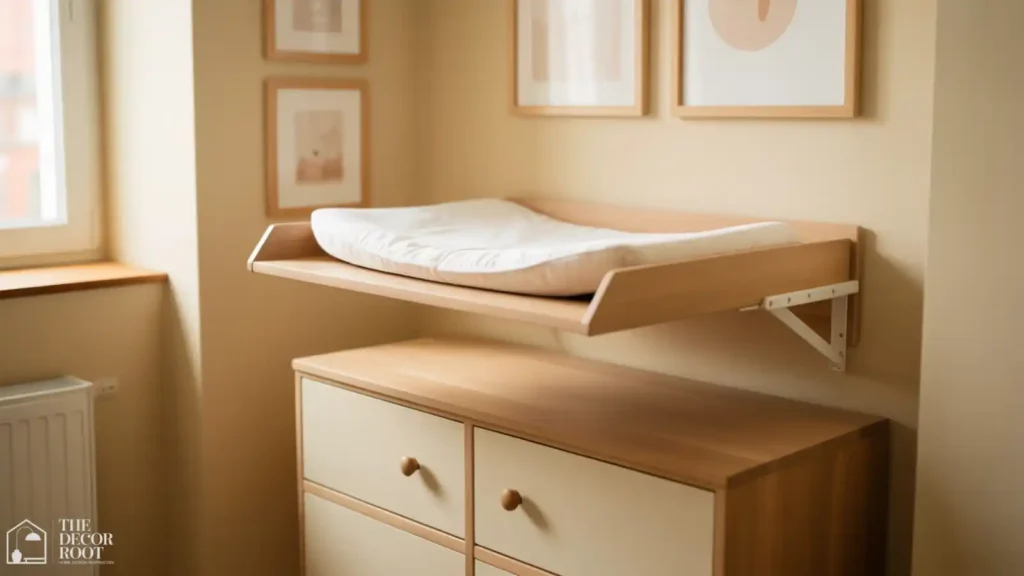
If Item 2’s combined dresser-and-changing-station still feels like too much furniture for your space, consider a wall-mounted fold-down changing pad insert that folds flat against the wall when not in use. This is one of the most aggressive space-saving choices on this list, but it genuinely eliminates an entire furniture footprint in exchange for a few inches of wall space, which can be the difference in a room too small to fit both a dresser and a separate changing surface.
EDITOR’S PICK
🛒Wall-Mounted Fold-Down Changing Pad
A wall-mounted fold-down changing pad saves an entire furniture footprint in small nurseries by folding flat against the wall when not in use.
(paid link)
15. Choose Blackout Curtains That Extend to the Ceiling
Mounting curtain rods closer to the ceiling rather than directly above a standard-height window frame draws the eye upward and makes a small room feel taller than it is, a classic small-space design trick that applies just as well to a nursery as any other room. This works particularly well paired with floor-length curtains, which further exaggerate the room’s vertical space, though be mindful of keeping curtain cords and hardware safely out of reach of a crib.
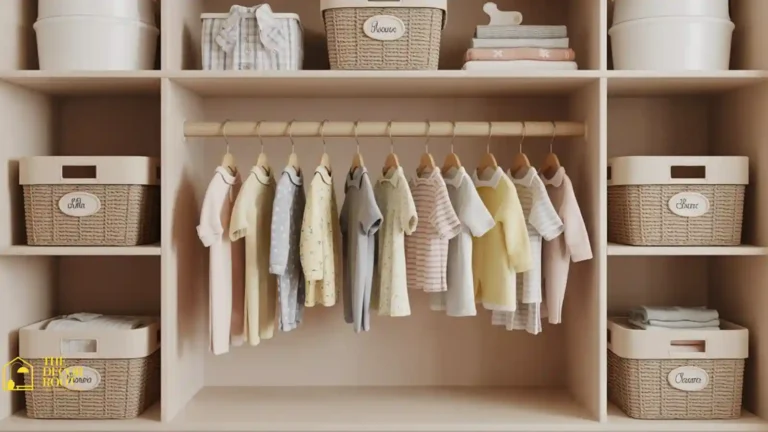
16. Use Stackable, Labeled Bins Instead of a Full Closet System
If your nursery closet is shallow or narrow, skip an elaborate built-in closet system in favor of simple stackable, labeled bins that maximize vertical storage within whatever closet space you do have. This is both a cheaper and more flexible solution than a custom system, and it adapts easily as your storage needs shift from newborn-sized clothing to bulkier toddler gear over the following year or two.
17. Choose a Nightlight That Doubles as a Wall Decoration
Rather than a purely functional plug-in nightlight, choose one designed to double as wall decor: a small moon or star shape, a soft geometric shade so it contributes to the room’s visual design during the day rather than sitting invisible until you need it at night. This is a small detail, but in a tight room where every object needs to justify its presence, a nightlight that also functions as decor is more space-efficient than a purely functional one plus a separate decorative object doing the same visual job.
18. Add Stackable Storage Bins for Toys and Extra Linens
As your baby grows, toys and extra linens accumulate quickly, and stackable fabric storage bin sets let you build vertical storage in a corner or closet without requiring a dedicated shelving unit. Choose bins in a consistent neutral tone so the stack reads as an intentional design element rather than obvious overflow storage, and label them loosely by category to keep the system functional as contents shift over time.
EDITOR’S PICK
🛒Stackable Fabric Storage Bin Set
Neutral stackable fabric bins build vertical storage in corners or closets and stay functional with loose labels as nursery contents change.
(paid link)
19. Use a Slim Console Table Instead of a Full Dresser
If even a compact dresser feels too large for your space, a slim console table with two or three shallow drawers can hold a smaller wardrobe of newborn clothing while taking up significantly less floor depth. This works especially well for families who plan to do laundry frequently in the early months anyway, since newborn wardrobes are small enough that a full-size dresser’s capacity often goes unused during the first several months.
20. Keep the Color Palette Light to Maximize Perceived Space
The final and possibly most important idea on this list isn’t a furniture choice at all; it’s committing to a light, warm neutral color palette throughout the room rather than introducing multiple bold colors or dark tones that visually shrink a small space. Cream walls, light wood furniture, and pale textiles all reflect available light rather than absorbing it, which makes a genuinely small room read as bright and open rather than cramped, regardless of its actual square footage.
Quick Action Plan
- Start by measuring your actual room and testing furniture placement with painter’s tape on the floor before buying anything, since a small room leaves very little margin for error once furniture arrives.
- Prioritize the space-saving furniture choices first: a mini crib, a combined dresser-changer, and wall-mounted shelving, since those decisions are harder to reverse than smaller storage or decor additions.
- Once your core furniture footprint is locked in, layer in vertical storage solutions like over-the-door organizers and stackable bins to handle the supply and clothing storage that a full-size dresser or closet system would normally cover.
- Save purely decorative choices, like the nightlight and wall art, for the very end, once you can see exactly how much visual space is left in the finished layout.
A small nursery and a small home office face the same design challenge: maximum function in minimum floor space. These small room design ideas for tight spaces show how the same principles of vertical storage, wall-mounted solutions, and multifunctional furniture that make a corner office work translate directly into a nursery where the cot, the changing station, and the chair all need to coexist comfortably.
Frequently Asked Questions
Conclusion
A small nursery isn’t a smaller version of a compromise; it’s its own kind of design problem, and one that a few smart, space-conscious choices solve well. Pick the furniture swaps that matter most for your exact room, and let the rest of this list fill in as your space and budget allow
💾 Save this post to your Nursery Ideas board on Pinterest so it’s ready when you start planning your layout.