Linen Curtain Ideas for a Breezy Bedroom: Soft Light, Real Privacy, and Air That Moves
Linen curtain ideas for a breezy bedroom fail when they are bought for the window instead of the rod, the light, and the night. A panel can look soft in a listing photo and still hang flat, block the glass when open, or leave the room exposed after dark. The window, not the fabric alone, decides whether linen feels breezy or bare, and that decision is made before any panel is ordered.
This article gives one window audit that combines light direction, privacy exposure, and sleep need, then turns the result into a day and night system that actually works. You will get measuring math, a renter path that needs no drill, and washing rules tied to the buying choice.
The order of work matters, and it stays the same for every window in this article. Audit first, rod second, panels third, night layer fourth, and care last. If a purchase does not fit the step you are on, it waits.
How this article was researched. This article is research based curation, not hands on testing. Picks are researched from listing and source pages and checked at the publish date. No star rating is claimed for any pick. Before ordering, check size, color, and contents on the listing, because listings and variants change. Where a detail cannot be verified, it is left out rather than guessed.
Affiliate Disclosure: This article contains affiliate links to products on Amazon. As an Amazon Associate I earn from qualifying purchases. The price you pay stays the same, and the commission helps keep The Decor Root running.
The Breezy Window Audit for Linen Curtain Ideas for a Breezy Bedroom
Run these five checks before buying anything, because each check points to a different problem later in this article.
Light direction. East gives bright mornings and needs glare control, not darkness, so the morning light stays welcome while the harsh edge softens. West bakes in the afternoon and needs a lining decision first, before any panel color is chosen. North gives soft light all day and can take the sheerest linen, because the light never arrives hard enough to fight.
Privacy exposure. Stand outside in daylight and again after dark with the room lights on, or judge honestly from street and neighbor distance. A garden facing window needs daytime filtering only, because nobody stands close enough to read the room. A street facing window needs a night layer, because linen that reads private by day turns into a silhouette screen at night.
Sleep need. A guest room or a light sleeper needs a real dark layer, not a thicker linen, because thickness alone never closes the gap between filtered light and darkness. A room that sleeps fine with glow can stay in linen alone, and forcing a dark layer onto that room only adds weight and cost. Decide this honestly now, because it changes the whole layer plan.
Window and wall measurements. Measure the rod position, not the window: rod length with the planned extension, drop from the rod to the chosen hem, in three places. Floors and rods are rarely level, so one center measurement can leave a hem floating on one side and puddling on the other. Write the numbers down before shopping, and choose panel length and width from those numbers alone.
Renter and care limits. Note whether drilling is allowed or not, whether a ladder is safe for the rod height or not, and whether the household will wash cold and air dry or not. A no drill room takes the renter path in Problem 6, with no exception made for a heavier panel. A household that will not cold wash should buy pre washed linen or a blend with easier care, because the wash routine is part of the purchase.
Quick Decision Table
Use this table as a starting point only, then read the problem section that matches your window, because a starting point is not a finished plan.
| Starting point | First move | Skip for now |
|---|---|---|
| Garden window, soft light, no sleep darkness need | Semi sheer linen panels, hung high and wide | Liners, blackout layers, heavy weights |
| Street facing window, neighbors close | Sheer linen by day plus a night liner or shade | Linen alone, which fails after dark |
| East window, bright mornings | Light filtering linen with a glare plan, panels that stack fully off the glass | Dark heavy drapes that kill the morning light |
| West window, hot afternoons | Lined linen, or linen over a heat and light liner, closed from the morning | Unlined pale linen in full afternoon sun |
| Light sleeper or guest room | Real dark layer measured to the window, linen as the soft face over it | A thicker linen sold as darkness |
| Small bedroom or small window | One wide panel, rod extended wide, cafe length where a sill sits below | Two narrow panels that never clear the glass |
| Rental, no drilling | Tension rod or clip rings, cafe length, removable liner | Drilled rods, heavy lined panels on a tension rod |
Problem 1: Bright by Day, Exposed at Night

Linen filters light instead of blocking it, and that trade off is the point by day and the failure at night. By day, filtered light softens the room and lets air move. At night the same openness works in reverse, because the room becomes the bright side and the window becomes the screen.
Three privacy levers change how much linen hides by day. Weave density matters first: a tighter weave leaves fewer gaps for the eye to travel through. Fabric weight matters next: a heavier weight falls closer to the body and reads more solid in daylight. Color matters too: darker colors absorb more light and give slightly better daytime privacy, while pale colors diffuse light more evenly and keep the room bright.
The reversal must be stated plainly. When room lights are on and outside is dark, even moderately opaque unlined linen turns into a screen, and shapes and movement show as silhouettes. A panel that looked private at noon can show a person crossing the room at night, and no weave choice alone removes that effect.
The fix is a day and night system, not a thicker single panel. Sheer or semi sheer linen stays closed by day for filtered light and daytime privacy, and a night layer closes after dark for real cover. That night layer can take several forms: a clip in blackout liner, a separate privacy liner, a roller shade behind the panels, or a heavier night panel on a double rod.
Apply the street test before you decide the night layer is optional. If a neighbor can see the window from the pavement, the night layer is not optional, and the window needs a closing layer every evening.
For sleep, the fork is simple: glow sleepers stay in linen alone, while dark sleepers add the real dark layer, and no linen panel may be described as blackout unless a verified blackout lining is part of it. white linen bedroom ideas shows pale linen meeting a white palette without turning the room flat. guest bedroom ideas treats real darkness for a first night as hospitality.
Also solves this: the exposed at night window
ECLIPSE Solid Minimalist Blackout Thermal Liner for Window Curtains with Drapery Hooks (2 Panel Set), 27″ x 80″, White
2 liner panels, each 27 inches wide by 80 inches long, with drapery hooks included, in blackout opacity and thermal liner form for use behind a face curtain. The rod pocket fits a rod up to 1.5 inches in diameter, rod not included, and each liner panel fits face panels up to 54 inches wide, because the liner is narrower than the face curtain to allow gathering. Not for: use as a full width face curtain on its own. Each panel is 27 inches wide, so it is a liner behind linen, not a pair of wide drapes.
Check Price on Amazon → (paid link)
Problem 2: The Rod Sits Too Low and Too Narrow
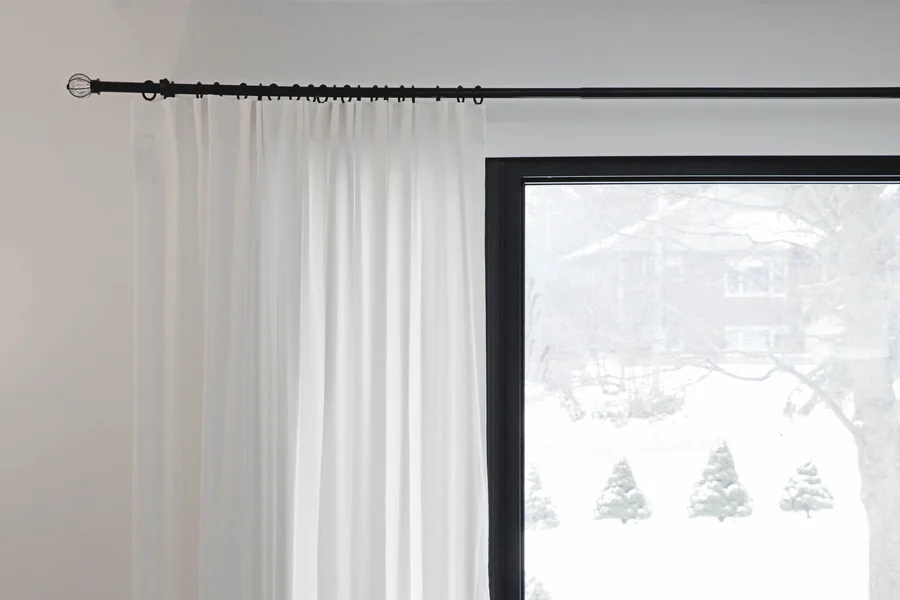
Rod height changes the whole window before any fabric is chosen. Hang the rod 4 to 6 inches above the frame, or closer to the ceiling when the gap is small, and never mount it on the frame itself. A rod on the frame squashes the window and lowers the ceiling line, while a rod hung high lets the window read taller than its frame.
Rod width matters just as much, because open panels must stack on the wall, not on the glass. Extend the rod 6 to 12 inches past the frame on each side, so the glass stays clear when the panels are open and the room keeps its daylight. A narrow extension leaves panels over the glass edges, shrinking the window and dimming the room.
Fullness turns a flat sheet into gathered linen. Aim for total panel width of 1.5x to 2x the rod width, up to 2.5x for sheers, and judge fullness by the rod, not by the window. A panel that barely covers the rod width has nothing left to gather with, while the same fabric at 2x fullness folds into soft, even waves that move when the air moves.
Work through the math on your own window before ordering. A 48 inch window with a rod extended 8 inches each side gives a 64 inch rod, so panels totaling 96 to 128 inches at 1.5x to 2x fullness, which is two panels of 48 to 64 inches each. A 36 inch narrow window with a rod extended 12 inches each side gives a 60 inch rod, so panels totaling 90 to 120 inches, which is why one wide panel often beats two narrow ones on a small window.
Drop length is measured from the rod, not the window, in three places: left, center, and right. Choose one of three hem finishes and measure to it: skim the floor for a clean everyday finish, float half an inch above the floor for easy cleaning, or add a small puddle with 1 to 3 extra inches for a softer look. Allow extra length or wash before hemming custom panels, because heat shrinks linen and a hem cut tight before washing can end up short.
Header style changes the drop measurement, because the fabric starts at a different point on each header. A rod pocket panel starts below the rod, a back tab panel lifts slightly differently, a grommet panel hangs from rings at the top, and clip rings add their own drop from the ring to the clip. Measure from the point where your chosen header holds the fabric, or the hem will land in the wrong place.
Also solves this: the rod that sits too low and too narrow
Wood Curtain Rods for Windows 72 to 144 Inches(6-12ft),1 inch Adjustable Window Curtain Rods with Imitation Wood Grain Finials,Heavy Duty Decorative Drapery Rod for Bedroom,Kitchen and patio
Adjustable 72 to 144 inches, for a rod extended past the frame on each side, with a 1 inch rod diameter, imitation wood grain finials, iron material, and wall mounting. Confirm the 72 to 144 inch variant on the live listing, and no weight capacity is claimed for this rod. Not for: a window that needs two layers at once. That job is slot 04, the double rod, not this single rod.
Check Price on Amazon → (paid link)
Problem 3: The Panels Hang Flat

Flat panels are usually a fullness problem, not a fabric problem. A panel that barely covers the rod width hangs like a sheet, because there is no spare width to fold into. The same fabric at 2x fullness gathers into soft folds that catch light and air, and the window reads dressed even before any styling is added.
Fabric weight, in plain language, sets the mood of that drape. Sheer and gauze linen give maximum light and movement. Semi sheer gives the bedroom balance of filtered light and daytime privacy, and suits most bedroom windows. Medium weight gives more substance and better drape in larger rooms.
Heavier is not always better, and weight must match the room. Too heavy a linen in a small room reads as a wall, not a breeze, because the fabric stops moving and starts blocking. A small room needs lightness to breathe, while a large room can carry the extra substance without losing its air.
Drape honestly, because linen will not pretend to be another fabric. Linen has a visible weave and a soft slub, it falls with a gentle uneven fall, and it wrinkles. That relaxed fall is the look, and a reader who wants crisp sharp pleats should be told linen will disappoint. A reader who likes a washed finish will be pleased daily.
Color is a light decision before it is a style decision. Pale tones diffuse light and keep the room bright, while deeper tones absorb light and give slightly more daytime privacy. A color that fights the bedding tone will cost more to fix than the panels themselves. earthy boho bedroom ideas shows texture repeated twice, keeping the window from fighting the bedding.
Also solves this: the flat panel that needs a sheer underlayer
BGment Linen Semi Sheer Curtains 84 Inches Long 2 Panels Set for Living Room: Ivory Light Filtering Drapes with Rod Pocket Textured Lightweight Window Treatments for Bedroom, 52 X 84 Inch
2 panels, each 52 inches wide by 84 inches long, Ivory colourway as printed in the title, in rod pocket hanging, sheer curtain form, and light filtering finish. Linen blend: 20 percent linen and 80 percent polyester, as printed in the source, in a textured lightweight window treatment form, as printed in the title, for daytime filtering under a heavier linen panel. This panel hangs by rod pocket, never back tab. Confirm the Ivory variant on the live listing, because the title prints Ivory while a product information colour field printed Linen. Not for: night privacy on its own, and never for blackout. This is a linen blend, never pure linen, and it filters light rather than blocking it.
Check Price on Amazon → (paid link)
Also solves this: the header that makes panel swaps hard
AMZSEVEN 40 Pack Curtain Rings with Clips, Drapery Clips with Rings, Drapes Rings 1.26 in Interior Diameter, Fits up to 1 Inch Curtain Rod, Silver
40 metal clip rings in silver, with a 1.26 inch interior diameter, 1.5 inch exterior diameter, and 0.12 inch ring thickness. They fit rods up to 1 inch in diameter, which matches slots 03 and 04, and they let a panel slide on and off without rethreading. Not for: rods over 1 inch in diameter, or for panels that need a sewn in header look. These are clip on rings, so the clip shows at the top of the panel.
Check Price on Amazon → (paid link)
Problem 4: The Sun Fades and Weakens the Fabric
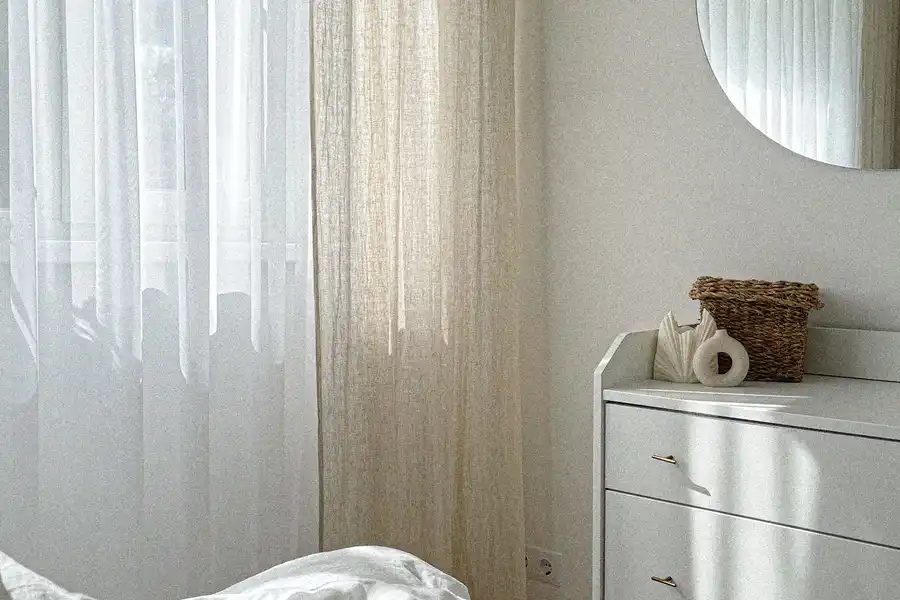
Sun is the slow failure nobody sees at purchase. Unlined linen in a very sunny spot loses color over time, and strong direct sun fades and weakens the fabric, so a lining protects both fabric and color.
Decide lining by window direction, not by habit. North and soft light windows can stay unlined. East windows take a light liner, which softens the bright morning without closing the room down. West and south windows in strong sun need a real liner, because that is where direct sun works on the fabric longest and hardest.
Lining types are choices with honest costs, and each cost should be accepted before ordering. A light filtering liner keeps the breeze but still lets strong light through. A privacy liner for street windows adds cover but reduces movement and softness. A blackout liner for sleep darkness adds the most weight on the rod and the least light.
Color fading must be judged honestly too. Pale linen shows fading less dramatically than saturated color in the same sun. A saturated panel in a west window is the highest fading risk in this article, and it is the window where an unlined purchase is hardest to defend.
For hot rooms, use the close from the morning rule. On a sun facing window, close the linen from the morning before the sun hits the glass, because curtains closed at bedtime do almost nothing about heat already inside. cozy farmhouse bedroom ideas shows layered warmth handled as a system. cooling bedroom ideas carries the same daytime heat logic through the whole room.
Problem 5: The Curtains Shrink, Wrinkle, and Smell Stale
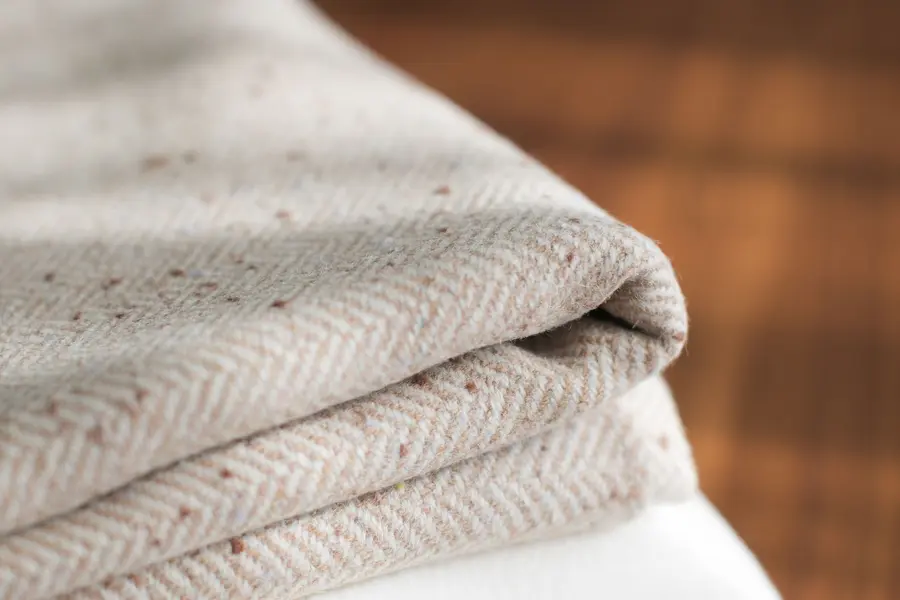
Care is a buying decision, not an afterthought. Wash on a cold, delicate, low spin cycle with mild detergent, no bleach, no fabric softener. Air dry, or tumble on a no heat setting, because heat is the shrinkage risk in washing and drying, and a hot cycle can undo careful measuring in one wash.
Remove panels while slightly damp, hang at once, and iron or steam while damp for a smoother finish. Damp fabric lets gravity and a steamer do work that dry fabric resists, and hanging at once stops creases from setting where the panel folded.
Choose a wrinkle grade and stop chasing a finish linen was never meant to hold. Relaxed means shake out, smooth by hand, and hang, which suits most linen panels. Neat means a steamer pass while slightly damp, which suits the leading edge and the hem, the two places the eye lands. Crisp means iron only the leading edge and hem, never the whole panel. What never to do is iron every panel every wash, because that turns a low care fabric into a chore.
Tie care to purchase before ordering, not after the first wash. Pre washed linen is less prone to shrinkage but still benefits from gentle care, while unwashed linen needs the length allowance from Problem 2. Lined, embroidered, or embellished panels may need dry cleaning, so the care label on the listing governs.
Keep a simple routine and the panels will stay fresh without constant washing. Vacuum with an upholstery tool every week or two, wash every 3 to 6 months, and hang damp to let gravity pull wrinkles out. That rhythm clears dust and protects the fabric from overwashing.
Also solves this: the wrinkled panel that needs a quick pass
NIASSO Portable Travel Steamer, 1200W Handheld Fabric Steamer for Clothes, 4 Modes with LCD Display, Powerful Wrinkle Remover for Home & Travel, 150ml Water Tank, 10S Fast Heat-Up, 180° Swivel Handle
Handheld, portable steamer form, 1200 watts, 120 volts, with a 150 millilitre water tank, 10 second heat up as printed in the source, 4 modes with LCD display, and a 180 degree swivel handle. No continuous steam time is claimed for this steamer. Not for: a full crisp iron finish across a whole panel. This is a steamer pass for the leading edge and hem, per the article wrinkle grades, not a replacement for ironing where a crisp finish is wanted.
Check Price on Amazon → (paid link)
Problem 6: The Rental Window Cannot Take a Drill

Renters get a full path here, not a footnote, because a window treatment that needs a drill is no treatment at all in a no drill home. Tension rods carry lightweight linen and sheers, with the honest limit that a heavy lined panel is too much for a tension rod. Choose the panel to suit the rod.
Clip rings slide over a tension rod or an existing rod and make panel swaps easy without rethreading. That matters in a rental, where needs change faster than a lease allows redecoration. A panel change becomes a ten minute swap, not a hardware project, and the original rod stays exactly where the landlord left it.
Adhesive hooks rated for the weight can carry light panels, but check the wall surface before ordering, because a hook that holds on smooth paint may fail on textured plaster or damp tile. Cafe length suits windows over a radiator, a desk, or a low unit, which keeps privacy where it matters and light above. Removable liners and static cling film act as night and heat helpers that leave with the renter.
The rule for renters is simple and strict: the window treatment must remove cleanly and must be carried by the fabric, not by hardware, so every renter fix here works without a drill, a screw, or a landlord conversation. A small rental window reads larger with the rod extended wide and one wide panel, not with two narrow panels that sit on the glass. cottagecore bedroom ideas shows a collected, unfussy window look. minimalist bedroom ideas with personality shows a quiet room changed by fabric alone, with the palette in bedding and curtains, not paint.
Also solves this: the rental window that cannot take a drill
STARLATTA Adjustable Shower Curtain Rod 31-104 Inch, Never Rust Stainless Steel Black Tension Rod, 1″ Heavy Duty No-Drill for Bathroom, Kitchen & Closet
Adjustable 31 to 104 inches, tension mounted, no drilling, in stainless steel, 1 inch diameter, black colourway, with a maximum weight recommendation of 25 pounds as printed in the source, anti slip pads, and twist to extend and secure, as printed in the source. Not for: a heavy lined panel pair. The article renter rule applies: tension rods carry lightweight linen and sheers, and 25 pounds is the printed limit, so a heavy lined pair needs a drilled rod instead.
Check Price on Amazon → (paid link)
Also solves this: the renter night layer that must leave with the renter
White Full Blackout Window Curtain Liner Panels Rod Pocket Bedroom Drape with 10 Hooks Microfiber Thermal Coating Energy Efficient Window Treatment Sets 2 Panels (W48 x L60 x2 inches, White)
2 liner panels, 48 inches wide by 60 inches long in this variant, white colourway, in rod pocket form, with 10 hooks included for attaching to main curtains, in full blackout material at 240 grams per square metre with thermal treatment, as printed in the source, in removable form, so it can come down and leave with the renter. Confirm the 60 inch variant on the live listing, and note the source caution that hooks have sharp ends. Not for: a full length 84 inch panel pair without checking length first. This variant is 60 inches long, so the reader must match liner length to their own panel length, and choose a longer variant if their panels are longer.
Check Price on Amazon → (paid link)
Steal This Look: Two Linen Palettes, Named

Palette one is oat and warm white: oat linen hero, warm white supports, natural wood rod, and one warm brass or rattan accent. The panels carry the oat, the bedding carries the warm white, the rod carries the wood, and the tieback carries the accent. Nothing else needs to compete, because each piece has one job and the room reads calm from the doorway.
Palette two is sage and soft grey: sage linen hero, soft grey and cream supports, aged wood or matte black rod, and one botanical or textured accent. The panels carry the sage, the bedding carries the cream, the rod carries the dark note, and the throw carries the texture. The sage stays soft rather than cold, because the cream and the wood keep it from turning flat.
Choose the palette that matches what the room already has, not the one that photographs best. Warm wood suits the oat palette, while cool grey walls and a pale frame suit the sage palette. A palette that fights the givens costs twice as much to fix later.
Also solves this: the sage palette that needs one textured support
blunique Waffle Knit Throw Blanket, Luxury Cozy Chunky Knit Throw Blanket for Couch, 50 x 60 Inch Thick Ultra-Soft Feather Yarn Knitted Blanket for Sofa, Bed, Home Decor: Sage
Throw size 50 inches by 60 inches, sage colourway, in waffle knit, chunky knit texture, for the sage palette support on the bed, in knitted throw form, for sofa or bed use as printed in the title. No fibre content is claimed for this throw. Not for: a full bed cover. This is a 50 by 60 inch throw, so it carries one palette tone on the bed, it does not replace bedding.
Check Price on Amazon → (paid link)
6 Linen Curtain Mistakes
Avoid these six, and most linen windows fix themselves.
- Buying panels to fit the window instead of the rod, so the panels never clear the glass and the window reads smaller.
- Mounting the rod on the frame or just above it, which squashes the window and lowers the ceiling line.
- Trusting linen alone for night privacy on a street facing window, then discovering the silhouette effect after dark.
- Choosing the sheerest linen for a west window in full sun, then watching color and fabric fade.
- Washing hot or tumble drying on heat, then blaming the fabric for shrinkage the care routine caused.
- Matching curtain, bedding, and lampshade sets exactly, which reads as a display with nowhere to hide, instead of letting the linen carry one tone and the bedding carry another.
Budget Plans
The low effort starter plan needs one pair of panels in the right length, hung high and wide on the existing rod, plus a steamer pass. That trio changes the light, the height, and the finish of the window in one afternoon, and it doubles as a guest room refresh.
The mid plan adds the night layer and the rod upgrade to the starter trio. A double rod or a liner plus a wood or rattan rod finish the window system: day filtering, night privacy, and hardware that matches the room. This is the right plan when the panels already work and the window still fails after dark.
The full room plan adds the second window treatment, the tiebacks, and the palette pieces to the mid plan. Dress every window in the room in the same linen family, add tiebacks for daytime stackback, and carry one palette tone into the bedding or throw. Buy in the order listed, so a paused budget leaves a finished looking window at every step.
FAQs
1. Do linen curtains block light completely?
Ans: No. Linen filters and softens light rather than blocking it, which is why it feels breezier than blackout fabric. For full darkness, pair a linen panel with a blackout liner or shade, because no unlined linen panel gives real darkness.
2. Can people see through linen curtains at night?
Ans: Yes, when the room lights are on and outside is dark, even moderately opaque unlined linen turns into a screen, and shapes and movement show as silhouettes. A night layer, such as a liner, a shade, or a heavier night panel, is the fix for a street facing window.
3. How high and wide should I hang linen curtains?
Ans: Hang the rod 4 to 6 inches above the window frame, or closer to the ceiling when the gap is small, and extend it 6 to 12 inches past the frame on each side, so open panels stack on the wall instead of on the glass. Measure drop from the rod, not the window.
4. How do I wash linen curtains without shrinking them?
Ans: Wash cold on a delicate, low spin cycle with mild detergent, no bleach and no fabric softener, then air dry or tumble on a no heat setting. Remove while slightly damp, hang at once, and iron or steam while damp. Heat is the shrinkage risk, so never wash or dry linen hot.
5. Are linen curtains good for a rental bedroom?
Ans: Yes, and they suit rentals well, because the look comes from the fabric, not from hardware. Use a tension rod for lightweight panels, clip rings for easy swaps, cafe length over a radiator or low unit, and a removable liner for night privacy, all without drilling.
Bottom Line
Measure the rod first, layer for night second, and let the linen move; that order is the whole article in one line, and it is also the order to shop in. If a purchase does not fit the step you are on, it waits, because buying out of order is how a good panel ends up hanging wrong.
One rule to remember: a breezy bedroom is a window that filters light by day, holds privacy at night, and moves in a breeze, not a window that is bare, flat, or exposed. Keep the rod high and wide, the night layer real, and the care cold and gentle, and the room will feel breezy every day, not just in a photo.
Save this linen curtain audit before your next window buy: measure the rod first, layer for night second, and let the linen move, so your breezy bedroom never turns into a bare or exposed one.
Photos via Pexels: julie aagaard, Natalia Walusiak, Tatyana Doloman, Designecologist, Skylar Kang, Aljona Ovtšinnikova, qiana zhang, jc Qi, Charlotte May.