24 Balcony Privacy Screen Ideas for Apartments That Won’t Void Your Lease
Balcony Privacy Screen ideas: you can see your neighbor’s balcony; they can see yours, and every time you step out for coffee, you’re aware of it. That’s the actual problem, and it’s why most balconies in apartment buildings sit unused despite being the only outdoor space renters have. The fix isn’t a fence, because you can’t install one, and it isn’t giving up on the space entirely, which is what most people default to. It’s a privacy screen that clips, ties, or weights into place without a single screw going into the railing, wall, or floor. A balcony privacy screen that will not void your lease is one of the most practically valuable home decorating ideas for apartment dwellers; the right freestanding or tension-mounted screen transforms an exposed balcony from a space you use reluctantly into one that feels like a genuine private outdoor room.
This post contains affiliate links. As an Amazon Associate, I earn from qualifying purchases. If you buy through these links, I may earn a small commission at no extra cost to you.
What Ties These Ideas Together
Every idea on this list solves the same underlying tension: apartments almost universally restrict permanent balcony modifications, but privacy is still a real, valid need, not a luxury upgrade. What ties these together is that each one uses tension, weight, clips, or adhesive instead of screws or drilled anchors, meaning you can take the entire setup with you when you move without patching a single hole. That constraint actually produces better design thinking than an unrestricted budget would; every idea here had to be genuinely resourceful to work within lease rules, which is why this list skips the generic “build a privacy fence” advice you’ll find on sites that assume you own your outdoor space. A privacy screen and a hammock are the two most impactful additions to a small apartment balcony; the screen creates enclosure, and the hammock creates a reason to be there. These small outdoor space ideas for apartments show how to fit both into a compact balcony without making the space feel cluttered.
Create Your Private Balcony Oasis
A balcony privacy screen is the apartment equivalent of a garden fence or screened porch; browse all our outdoor decorating ideas for shade sails. A balcony privacy screen handles the lateral view lines, a shade sail handles the overhead sun, and together they solve every outdoor comfort problem a balcony faces. These balcony shade and privacy ideas show how to combine both elements on a rented balcony without any permanent fixing that could breach a lease agreement. Hammock corners and outdoor entertaining ideas complete the private outdoor space your screen creates.
1. Measure your railing type before buying anything.
Apartment balconies typically have either horizontal metal bars, solid concrete walls, or vertical slat railings, and the privacy solution that works for one won’t necessarily work for another. A clip-on screen needs horizontal bars to grip, while a solid wall calls for freestanding or adhesive options instead. Spend five minutes actually measuring the gap and material of your railing before you buy a single item on this list, because returns on outdoor decor are a hassle most people would rather avoid. This is the step nearly everyone skips and the reason so many “rental-friendly” screens end up not fitting.
2. Check your lease for balcony-specific language, not just general alteration clauses.
Some leases specifically prohibit hanging items over railings for safety or aesthetic uniformity reasons (common in HOA-managed buildings), even if the item itself doesn’t damage anything. A five-minute read of your lease’s balcony section saves you a potential fine or a “please remove this” notice taped to your door. If your lease is vague, a quick email to your property manager confirming clip-on screens are fine creates a paper trail that protects you either way.
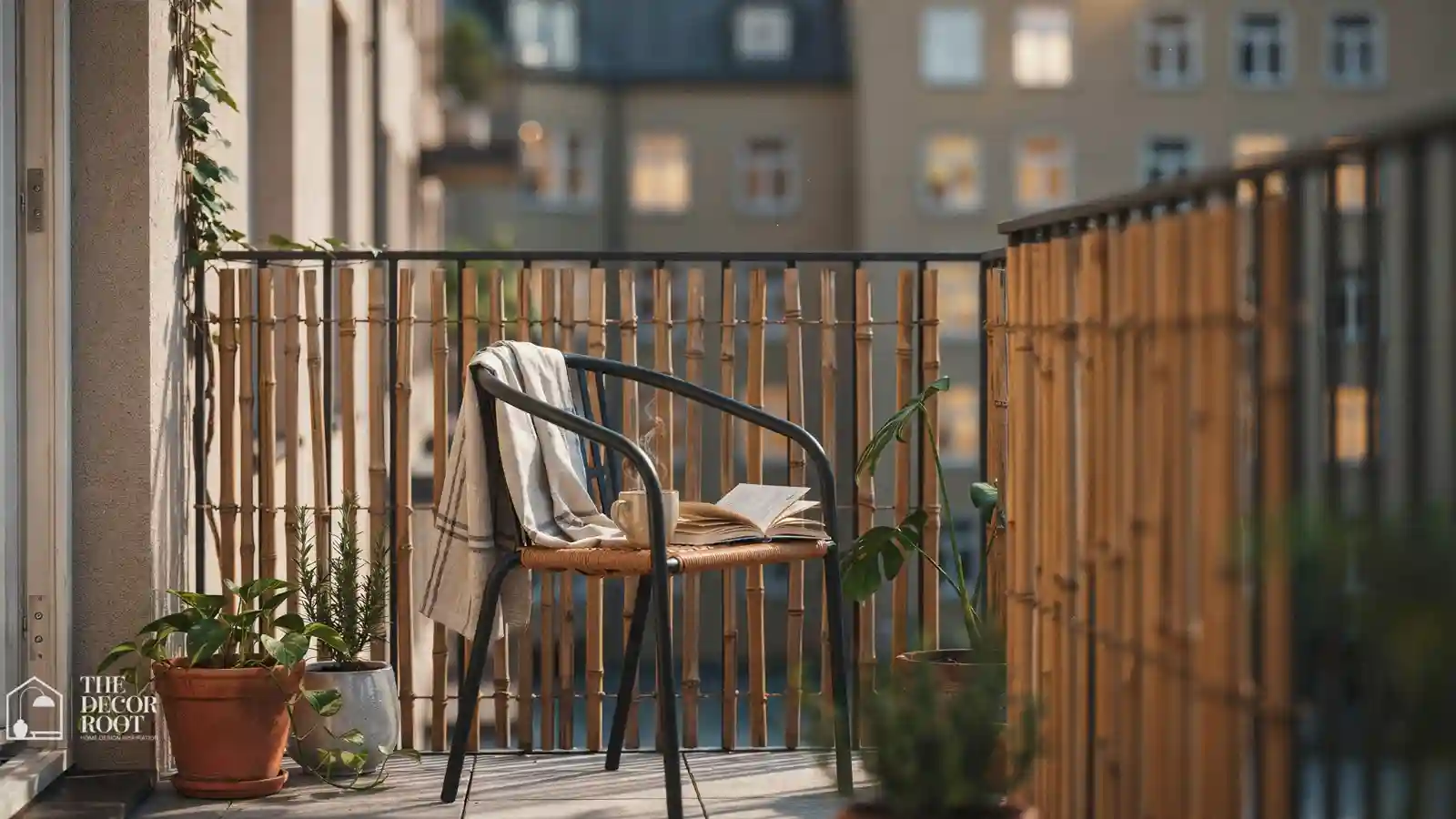
3. A natural bamboo privacy fence roll
That ties onto railings with zip ties or twine is the single most popular apartment balcony privacy fix because it looks intentional rather than makeshift, blocks sightlines almost completely, and costs a fraction of a custom screen. Most rolls come in standard heights that match typical balcony railings, and unused portions can be trimmed with basic garden shears. It also weathers reasonably well outdoors for a full season before needing replacement.
EDITOR’S PICK
🛒Natural Bamboo Privacy Fence Roll
Zip‑tie or twine‑attached balcony screen, intentional look, near‑total privacy, and a fraction of the cost of custom screens.
(paid link)
4. Layer sheer outdoor fabric over a solid screen for softness.
A fully opaque bamboo or reed screen can feel a little stark on its own; draping a lightweight, weather-resistant sheer fabric loosely over the top adds visual softness and movement without compromising the privacy underneath. This works especially well if your balcony gets an afternoon breeze, since the fabric will billow slightly and add life to an otherwise static wall of screening. Pick outdoor-rated polyester rather than cotton, which will mildew fast in humid climates.
5. Use tension rods instead of curtain rings that require drilled brackets.
A spring-loaded tension rod fits between two walls or posts without any hardware, giving you a functional curtain track for privacy fabric anywhere on the balcony, not just along the railing. This is especially useful for balconies with a solid side wall shared with a neighbor, where a hung curtain can block a direct sightline that a railing screen alone wouldn’t cover. Double-check the rod’s weight rating before hanging anything heavier than lightweight outdoor fabric.
6. Go vertical with hanging planters to add living privacy.
A row of trailing plants string of pearls, pothos, or ivy in hanging planters clipped along the top rail creates a soft, textured privacy layer that grows more effective over a season as the plants fill in. This doubles as decor that most landlords have zero objection to, since plants read as maintenance, not modification. Choose planters with drainage trays specifically to avoid dripping onto the balcony below you, which is both considerate and often a lease requirement.
7. Add a freestanding folding screen for instant, movable privacy.
A three-panel outdoor folding screen, the kind typically used indoors for dressing areas, works surprisingly well on a balcony because it requires zero attachment to anything; you just position it where you need the block. This is ideal for balconies where the privacy issue is a specific sightline from one angle (like a neighboring building’s window) rather than the whole space. Look for a weather-treated wood or metal frame since untreated wood will warp fast outdoors.
8. A spring tension curtain rod.
A rated for outdoor use gives you a no-drill way to hang privacy curtains between two solid walls or posts, which is the most common configuration on covered apartment balconies. Combined with a lightweight curtain panel, this creates a soft, closable privacy wall you can pull back during the day and close in the evening. It’s also one of the few options on this list that adjusts easily if you rearrange your balcony layout later.
EDITOR’S PICK
🛒 Spring Tension Curtain Rod.
No‑drill outdoor curtain rod mounts between walls/posts, common on covered balconies, for a soft, open‑close privacy wall that adjusts to layout changes.
(paid link)
9. Weight down freestanding screens with sandbags, not decorative pots alone.
A folding or freestanding screen can tip in wind gusts common at height on upper-floor balconies, and a decorative pot alone often isn’t heavy enough; small sandbags or water-fillable weighted bases hidden behind the screen’s base panels keep it stable without looking like a construction site. This is a safety issue as much as a styling one; a screen that blows over onto a neighbor’s balcony or into the street below is a real liability. Check the weight rating on any freestanding screen before buying if you’re on a high floor with regular wind.
10. Use outdoor-rated adhesive hooks instead of nails for hanging anything on a solid wall.
Command-brand or similar heavy-duty outdoor hooks hold surprisingly well on brick, concrete, or painted balcony walls and remove cleanly without paint damage a genuine lease-safe alternative to drilling when you need to hang a curtain, screen, or planter from a solid vertical surface. Test the hook’s weight rating generously below what you actually need, since outdoor humidity reduces adhesive hold over time compared to the rated indoor capacity. Replace hooks every season if your climate is particularly humid or your balcony gets direct rain exposure.
11. Choose a screen material that matches your building’s exterior tone.
Some buildings do have general aesthetic guidelines even without specific balcony rules, and a natural wood, bamboo, or neutral fabric screen is far less likely to draw attention or complaints than a bright color that stands out against a uniform building facade. This is less about rules and more about not becoming the balcony everyone in the building notices. Neutral tones also tend to photograph better and pair more easily with whatever furniture you already own. A privacy screen creates the enclosure; what goes inside it defines the personality of the space. These apartment outdoor and balcony decor ideas show how the boho instinct for layered textiles, plants, and collected objects transforms a screened balcony into an extension of an interior that already has strong aesthetic identity
12. Weighted outdoor privacy curtains on grommets
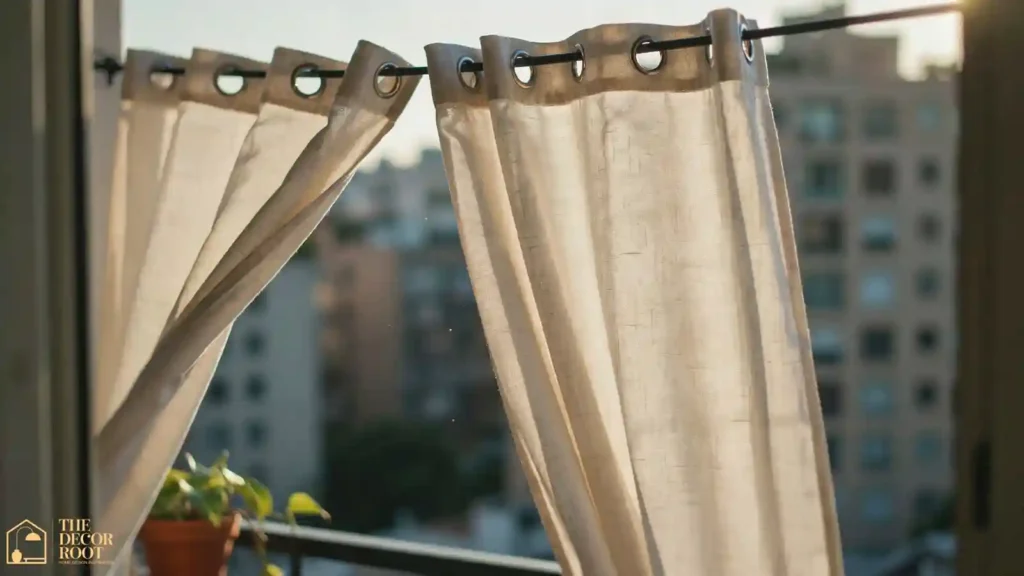
Hung from a tension rod give you a soft, adjustable screen you can open fully on quiet mornings and close completely when a neighbor’s balcony gets busy a flexibility fixed screens don’t offer. Look specifically for curtains with a weighted hem, which keeps them from flapping wildly in wind and slapping against the railing. This is one of the most versatile items on the list because it functions as both privacy and general balcony decor.
EDITOR’S PICK
🛒Outdoor Privacy Curtains on Grommets
Tension‑rod curtains with weighted hems, open fully or close completely for flexible balcony privacy that fixed screens can’t match, without wind flapping.
(paid link)
13. Stack furniture strategically to create a natural blind spot.
Before adding any screen at all, look at whether repositioning your existing furniture a taller plant stand, a bookshelf-style planter, or even a folded outdoor daybed already blocks the specific sightline that bothers you. This costs nothing and sometimes solves 80% of the problem before you spend a dollar on screening materials. It’s the most overlooked step because it requires actually sitting in your usual spot and checking what’s visible, rather than assuming you need full perimeter coverage.
14. Use frosted static-cling window film if your balcony has a glass panel wall.
Many newer apartment buildings use glass balcony railings instead of metal or concrete, and static-cling privacy film applies without adhesive, removes without residue, and is completely reversible when you move. It comes in patterns from fully frosted to subtle textured designs, so you can choose something that still lets light through while blocking direct visibility. This is specifically for glass-railing buildings and is one of the few true “invisible modification” options on this list.
15. Add a retractable outdoor shade for the side that gets the most direct neighbor view.
A small retractable side awning or shade, mounted with clamp brackets rather than screws, extends and retracts as needed; useful if your privacy need is situational rather than constant, like only wanting a block during certain hours. Clamp-mounted versions attach to the railing itself and leave zero permanent marks. This is a slightly bigger investment than most items on this list but solves both sun and privacy in one piece of equipment.
16. Layer scale from tall to short so the screen doesn’t look like a flat wall.
A single uniform-height screen can look stark and obviously “installed”; mixing in a tall planter, a mid-height lattice section, and low-growing plants along the base creates depth and a more natural, garden-like privacy barrier. This layering trick is standard in professional landscape design and translates well to small balcony spaces. It also means if one element needs to come down for cleaning or storage, you’re not left with zero privacy in the meantime.
17. Artificial ivy privacy panels
Those zip-tie-on railings give you the lush, green privacy look of a living wall without any watering, trimming, or die-back risk from balcony sun exposure. This is the go-to option for renters who travel often or don’t trust themselves to keep real plants alive but still want a natural aesthetic. Modern versions are UV-treated to resist the fading that cheaper artificial greenery suffers within a single summer.
EDITOR’S PICK
🛒Artificial IVY Privacy Panels
Zip‑on artificial greenery rail panels offer no‑maintenance living‑wall privacy UV‑treated to resist fading, ideal for renters and travelers who can’t keep real plants alive.
(paid link)
18. Check wind ratings before committing to any screen if you’re above the third floor.
Higher floors experience significantly stronger sustained wind than ground-level balconies, and a screen that’s fine at street level can become a genuine hazard eight floors up, flapping loudly, straining its ties, or, in worst cases, detaching entirely. Mesh or slatted screens that let some wind pass through are almost always safer at height than fully solid panels, even though they block slightly less visual sightline. This is a real safety consideration, not just a styling preference, and worth prioritizing over full opacity if you’re on a high floor.
19. Combine a low-height screen with a raised seating area for a psychological privacy trick.
Sometimes the goal isn’t blocking 100% of the sightline; it’s about not feeling watched while you’re relaxing. A screen at seated eye-level combined with slightly elevated or low seating (like floor cushions or a low bistro set) can create a sense of enclosure even without full-height coverage. This is a useful workaround if your balcony is too narrow for a full-height freestanding screen.
20. Rotate seasonal accessories around a consistent screen base.
Keep your main privacy screen bamboo, lattice, or curtain as a fixed, unchanging base, then rotate lighter accessories like cushion colors, string lights, or a seasonal wreath around it. This keeps the big investment piece working year-round while letting the space feel refreshed without buying a new screen every few months. It’s the same principle professional stagers use: fixed structure, rotating accents.
21. A freestanding lattice privacy screen
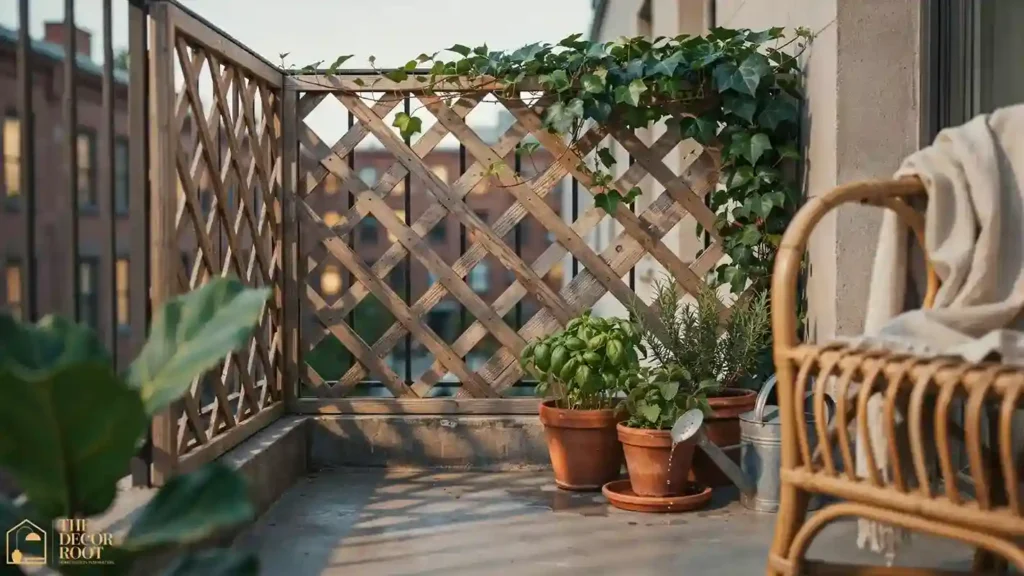
With a weighted base is ideal for balconies where you can’t attach anything to the railing at all, whether due to strict lease rules or an unusual railing shape that clip-on options don’t fit. The open lattice pattern also lets you weave in faux or real vining plants for added coverage over time, giving you a screen that improves rather than degrades the longer you have it. Look for a folding design if balcony storage space is tight during winter months.
EDITOR’S PICK
🛒 Freestanding Lattice Privacy screen
Weighted‑base freestanding privacy screen with open lattice for vining plants; no railing attachment needed; folding option saves winter storage space.
(paid link)
22. Test your setup during peak-use hours before finalizing placement.
Sit on your balcony at the time of day you’d actually use it most, evening after work, or weekend mornings, and check what’s genuinely visible from neighboring units at that specific light angle, since visibility changes dramatically between bright midday sun and dusk. A screen that seems like overkill at noon might be exactly right at 7 pm when lights are on inside both units. This small test prevents both under- and over-buying on screening material.
23. Document your balcony’s “before” state with photos before installing anything.
Since none of these ideas involve permanent alteration, a quick photo record protects you if a move-out inspection ever questions balcony condition; you can show the railing, walls, and floor were untouched by anything beyond clips, ties, and freestanding weight. This is a five-minute step that removes any ambiguity at lease-end. Keep the photos in the same folder as your move-in inspection documentation for easy reference.
24. Plan for takedown as carefully as you planned setup.
Since the entire point of a rental-friendly screen is that it comes with you, spend a few minutes thinking through how each piece disassembles and stores before your next move zip ties cut in seconds, tension rods collapse, but a large lattice screen might need to be broken down into panels to fit through a doorway or into a moving truck. Planning this upfront means moving day isn’t the first time you’re figuring out how your privacy setup comes apart.
Quick Action Plan
- Start by measuring your railing type and reading your lease’s balcony clause, then choose one primary screen (bamboo roll, lattice, or curtain depending on your railing and wind exposure) as your base layer.
- Add plants or ivy panels for texture, weigh anything freestanding for safety, and photograph the “before” state before you install a single item.
- You can build the rest of the vignette, lighting, seating, and accessories over the following weeks without rushing.
Frequently Asked Questions
Conclusion
A balcony that actually feels private is one of the highest-impact, lowest-cost upgrades available to renters; you don’t need permission you won’t get or hardware you’re not allowed to use, just the right combination of screening, plants, and smart placement.
💾 Save this to your apartment balcony board so it’s ready when you’re ready to reclaim your outdoor space.