Outdoor Christmas Decorations: Beautiful From the Street, Safe on the Circuit
Most outdoor displays fail electrically before they fail aesthetically. The roofline looks fine at noon, then the breaker trips at 7 pm, half the yard goes dark, and the rest of December becomes a nightly reset ritual. Or the display works but looks like a junk yard: five colours, three timers fighting each other, one inflatable leaning in the wind. Both failures come from decorating before planning. These outdoor Christmas decorations build in the order that prevents both: layers first, power second, decor third.
That order is also why this article leads with numbers instead of pictures. A display is an electrical system that happens to look pretty, and the prettiest roofline in the street is worthless if it trips the circuit it runs on. Plan the layers, tally the watts, put everything on one schedule, and then choose the decor.
How we choose: We don’t buy every product we list. We compare manufacturer specs and patterns in verified owner reviews, and we only recommend a product when its stated size, weight rating or count fits the job in that section. Where a listing is unclear, we say so instead of guessing.
Affiliate Disclosure: This article contains affiliate links to products on Amazon. As an Amazon Associate I earn from qualifying purchases. The price you pay stays the same, and the commission helps keep The Decor Root running.
The Layer Model: Architecture, Trees and Shrubs, Ground and Entry
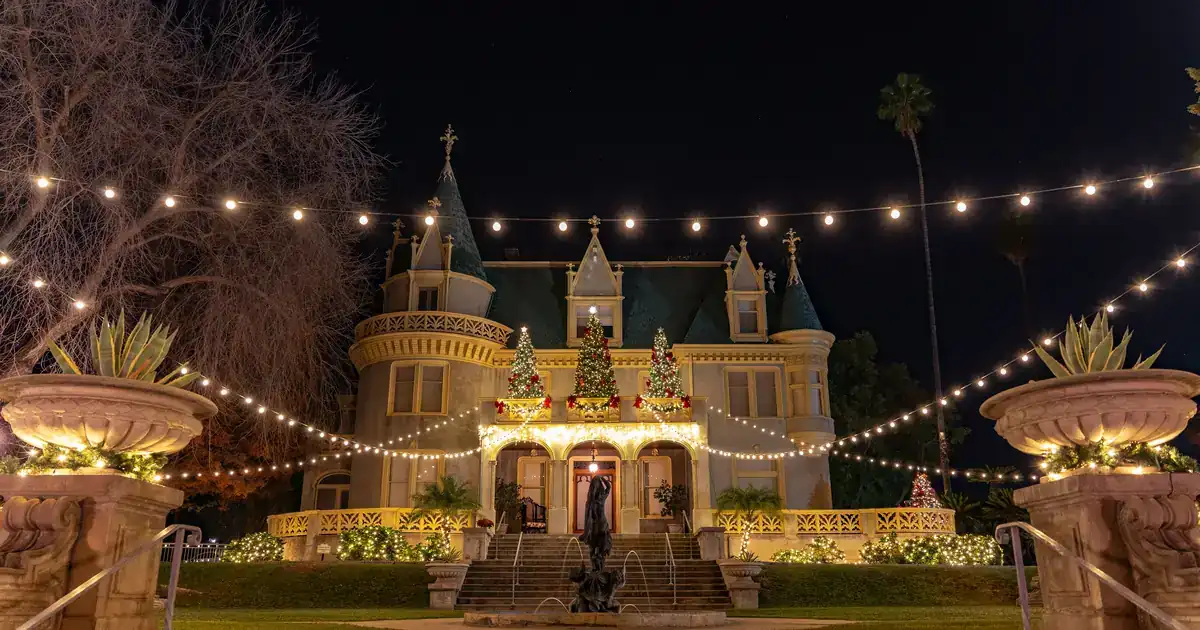
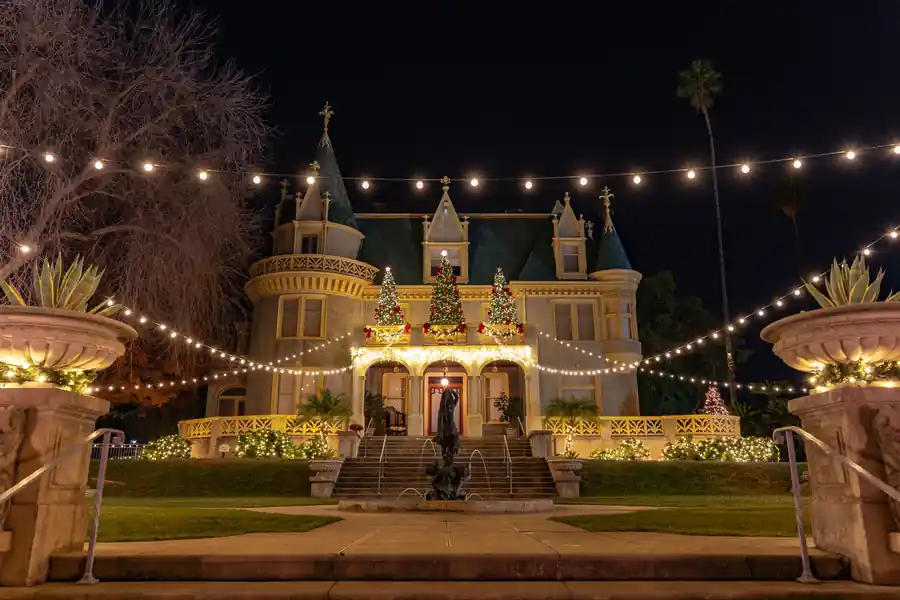
Every strong display follows the same layer order, whether the house is a cottage or a two storey brick front. Architecture first: the roofline, the gutters, the porch outline. That is the frame, and it is what the street sees first. Trees and shrubs second: wrapped trunks and netted shrubs, the vertical interest that stops the display looking flat. Ground and entry third: pathway stakes, the porch, the focal figure. Ground is last because it is the detail layer.
The discipline that holds the layers together is one colour temperature: warm white, 2700K, everywhere. One temperature makes different brands read as a single display, while mixed temperatures make the yard look like two houses arguing. If a product can show other colours, set it to warm white once and leave it there. That rule matters most for the pathway layer, where the picked set can show many colours.
Walk your own yard in this order before you buy anything: roofline length, trees worth wrapping, shrubs worth netting, and the path the eye follows to the door. That walk gives you the shopping list, and everything here maps to one of those layers.
This system connects to the rest of the house: front porch Christmas ideas for the door-first version, Christmas mantel styling ideas for the same warm white discipline indoors, farmhouse Christmas decor ideas for a farmhouse yard, Christmas entryway ideas for the path to the door, and small Christmas tree ideas for small trees.
Quick Decision Table: Balcony, Small Yard, Full Display, Lights-Only Minimalist
Find your row first. Every row follows the same order: layers, power, decor.
| Your space | Roofline | Trees and shrubs | Ground and entry | Skip |
|---|---|---|---|---|
| Apartment balcony | Railing string, clips not tape | One potted tree or shrub, net or wrap | One focal figure or one globe set | Gutter clips, yard stakes |
| Small yard | One C9 set on the front roofline | One wrapped trunk, one netted shrub | Pathway stakes, one focal figure | A second figure, colour scenes |
| Full display | Two or more C9 sets, icicles on the eaves | Wrapped trunks, netted shrubs, hanging ornaments | Pathway stakes, staggered globes, one hero figure | More than one hero figure |
| Lights-only minimalist | One C9 set, nothing else on the roof | One netted shrub | Pathway stakes only | Figures, globes, ornaments |
The balcony row deserves emphasis, because most guides skip it. A balcony display is a small yard display with the ground layer removed: railing strings, one wrapped pot, one focal piece, done. The circuit math, the one colour rule and the timer system still apply. Small does not mean sloppy.
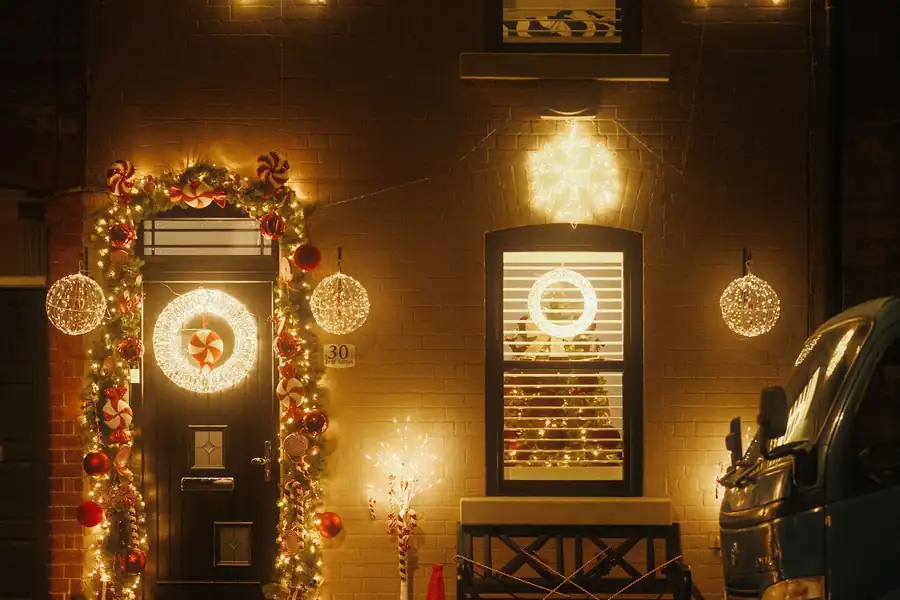
Problem 1: The Breaker Keeps Tripping (Circuit Math With a Worked Example)
Here is the number that decides everything. A standard 15 amp outdoor circuit gives 1,800 watts at most, and the safe continuous load is 80 percent of that, which is 1,440 watts. That is your whole display budget. Every string, net and blower draws from it, and when the total passes it, the breaker trips until something comes off the circuit.
Now the worked example, using only the watt figures the picked products actually state. One C9 roofline set runs about 80 watts (100 bulbs at 0.8 watts each). Two sets on a long roofline run 160 watts, the pathway stake set runs 24 watts, and two trunk wrap nets run 9.6 watts together (4.8 watts each). Total: 193.6 watts, about 13 percent of the 1,440 watt safe load. Even ten C9 sets would total 800 watts, still under the safe load, and the C9 connect limit of 1,000 feet or 960 watts on one plug binds long before the breaker does. That is the point of LED: the math works with room to spare.
Two habits make the math real. First, plug the whole display through a watt meter and read the actual watts instead of trusting the box. The meter catches the one string you forgot to count. Second, respect the plug rules no watt total can fix. Outdoor lights plug into GFCI protected outlets, which cut power fast if current leaks, for example through water. Test the GFCI monthly with its test and reset buttons, and keep every ground level plug out of standing water and inside a cord cover, even when the lights themselves carry a weather rating. A weather rated string with a drowned plug is still a hazard.
Cord gauge is the other half of the power story. A long yard run on a thin 16 gauge cord sags in voltage and heats up under load, while a 12 gauge cord carries a full display load across that run without the sag. Distance decides gauge: short porch runs forgive thin cords, long yard runs do not. One honest note on the C9 watt figure: the listing table shows 84 watts while the manufacturer figure is 0.8 watts per bulb, which is 80 watts for 100 bulbs. This article uses 80 watts and flags the 84 watt figure for confirmation at publish, because a 4 watt rounding difference should never be presented as exact.
For the safety rules behind this section, the Electrical Safety Foundation International’s holiday safety guidance covers the same ground: outdoor rated lights only outdoors, GFCI protected outlets for everything outside, and inspect every string before use. Read it before you start: Electrical Safety Foundation International holiday safety.
Also solves this: a long yard run that must not sag or heat up
Southwire Outdoor Extension Cord, 12 Gauge, 50 ft, SJTW
12 gauge, 50 ft, 15A and 1875W, SJTW jacket, lighted end. Every ground level connection on this cord sits inside a HONDERSON cord cover, which fits 12 gauge cord where the first cover candidate did not. Not for: short porch runs, where a lighter cord is fine and this one is overkill.
Check Price on Amazon → (paid link)
Also solves this: guessing the total load
MECHEER Upgraded Watt Meter, Plug-In, 8 Modes
Plug-in meter with 8 display modes and overload protection. Plug the display through it and read the real watts before the breaker reads them for you. Not for: GFCI outlet testing, it is a watt meter, not a GFCI tester, unless publish day confirmation finds that function.
Check Price on Amazon → (paid link)
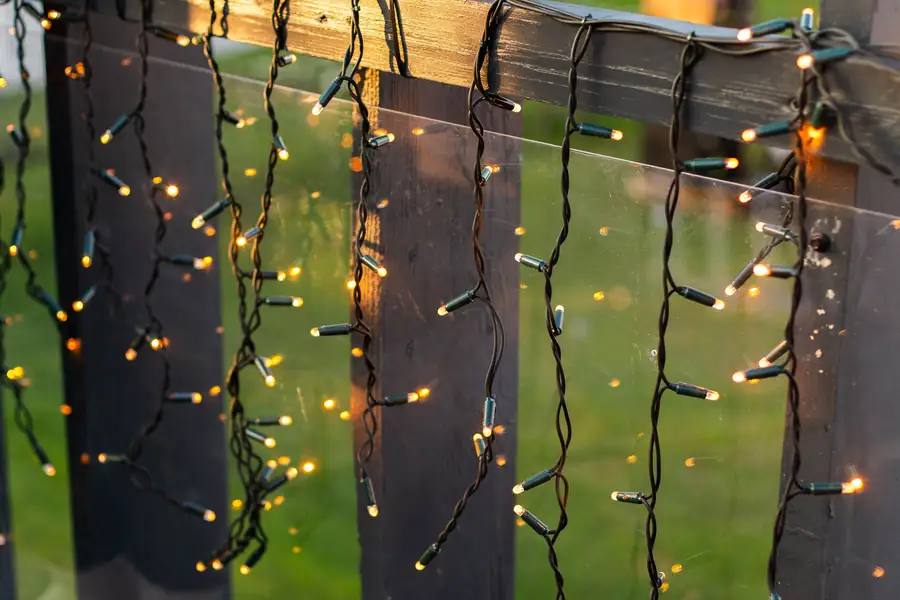
Problem 2: The Roofline Looks Wavy and Amateur
A wavy roofline is almost never a lights problem. It is a fixing problem. Staples crush wire and pull loose, tape gives up in the first rain, and strings hung by their own weight sag between attachment points. Clips fix the line, and the clip type must match the surface, because a clip that grips a shingle will not grip a gutter, and neither will grip brick.
For shingles and gutters, one all-purpose clip kit covers the whole roofline: it mounts to both surfaces, fits mini through C9 plus rope and icicle lights, needs no tools, and comes apart in two pieces at takedown so you are not prying frozen plastic off the gutter in January. Spacing makes the line read straight: one clip per bulb, or at most one every two bulbs on a short run, with no span left to sag. For brick, do not force the shingle clip. Brick needs a brick clip or an outdoor rated adhesive hook made for masonry.
Ladder safety belongs here, not in a footnote, because roofline work is where decorating injuries happen. Use a fiberglass or wood ladder, never metal, around lights and power. Keep yourself, the ladder and the lights at least 10 ft from power lines. Work with a spotter, never lean past the side rails, and never hang lights in wind or rain. If the roofline needs a second storey reach without a safe ladder setup, hire the work out instead of improvising.
The shrub layer is the opposite failure: hand wrapped strings leave gaps and bare patches, while a net covers a shrub face evenly in one throw. One 6 ft by 4 ft net with 120 LEDs covers a standard shrub face, and the even glow is the whole point. Keep its plug out of standing water and inside a cord cover, because the net is weather rated and the plug is not. The same warning applies to every net and globe here: rating the lights is not rating the plug.
Also solves this: eaves that read as a straight line instead of icicles
Blingstar Icicle Lights, 49.2 ft, 440 LED, Warm White
88 drops in four lengths, 12, 16, 24 and 28 in, which is what makes icicles read as icicles instead of a straight line. Up to 3 strings connectable, 8 modes with memory, IP44. Not for: runs longer than three connected strings, which is the stated connect limit.
Check Price on Amazon → (paid link)
Also solves this: a shrub with gaps and bare patches
DEPMEM LED Net Lights, 120 LED, 6 ft by 4 ft, Warm White
120 LEDs on a 6 ft by 4 ft net, UL certified, IP44, green wire. One net covers a shrub face evenly where strings leave gaps. Not for: a plug left in standing water, the plug is not waterproof, so it lives inside a cord cover.
Check Price on Amazon → (paid link)
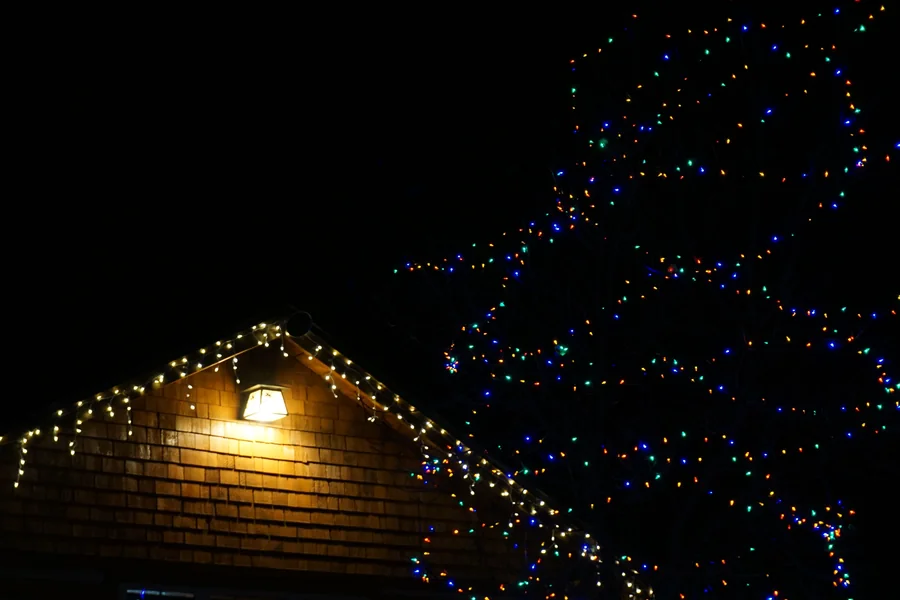
Problem 3: Timer Chaos (Five Plugs, Five Schedules)
Five plugs with five schedules is how a display ends up half lit at midnight and fully lit at noon. One string runs on its own timer, one on a mechanical dial, one forgotten in the on position, and the porch glows all night while the yard sits dark. The fix is one master schedule: every layer plugs into one timer system, and that system decides when the whole display is on and off.
The master switch here is a yard stake plug with six outlets and a 15 amp, 1875 watt rating, so it can switch the whole display, not one string. It uses a photocell for dusk-to-dawn plus app schedules, so the honest description is photocell plus app, not true astronomic calculation. Astronomic would mean the timer computes sunset from your location and date; photocell means it senses darkness and switches on it. Both follow the season, but they are different mechanisms, and this article says which one the picked product uses. Set the schedule to dusk to bedtime, not dusk to dawn: a display that burns all night wastes power and annoys neighbours for no gain.
Two layers ride on that master schedule. The tree layer uses a purpose-built trunk wrap net, not loose spiral wrapping, because a net gives even coverage where a spiral leaves gaps. Size it by trunk circumference: the picked net fits trunks up to 37 in fully stretched, so measure first and add a second net for anything bigger.
The entry layer uses a low-voltage stake set with an app. Its adapter plugs into a timer-controlled outlet, so the master schedule switches it, and the app is used once to set warm white. It is not the same system as the front porch article’s plug-in C9 set, and no compatibility is claimed. Different system, different brand, chosen on its own merits.
One disclosure, plainly stated. Wintergreen appears twice in this article, for the C9 roofline strings and for this trunk wrap net. Those are two different product types, and no verified alternative trunk wrap brand was found in staging, so the brand stays with this disclosure rather than being swapped for an unverified one.
Also solves this: a trunk wrapped by hand, with gaps
Wintergreen StretchNet Pro Trunk Wrap, 50 LED, Expanding Net
50 warm white LEDs on a stretchable net, 20 in by 45 in at rest expanding to 37 in by 45 in, 4.8W per set, up to 45 sets connectable on one plug, loop clasps to fix the net around the trunk. A net, not loose spiral wrapping. Not for: trunks above 37 in circumference on a single net, measure first and add a second net for anything bigger.
Check Price on Amazon → (paid link)
Also solves this: a dark path to a lit porch
Govee Outdoor Ground Lights, 15 Pack, 36 ft, Warm White Mode
15 stake lights, 36 ft, IP67, 24W, app and voice control. The adapter plugs into a timer-controlled outlet, so the master schedule switches the set, and the app is used once to set warm white. Not for: colour scenes, this display runs one colour temperature, and the set must be left on warm white; also not the same system as the front porch article’s plug-in C9 set, and no compatibility is claimed.
Check Price on Amazon → (paid link)
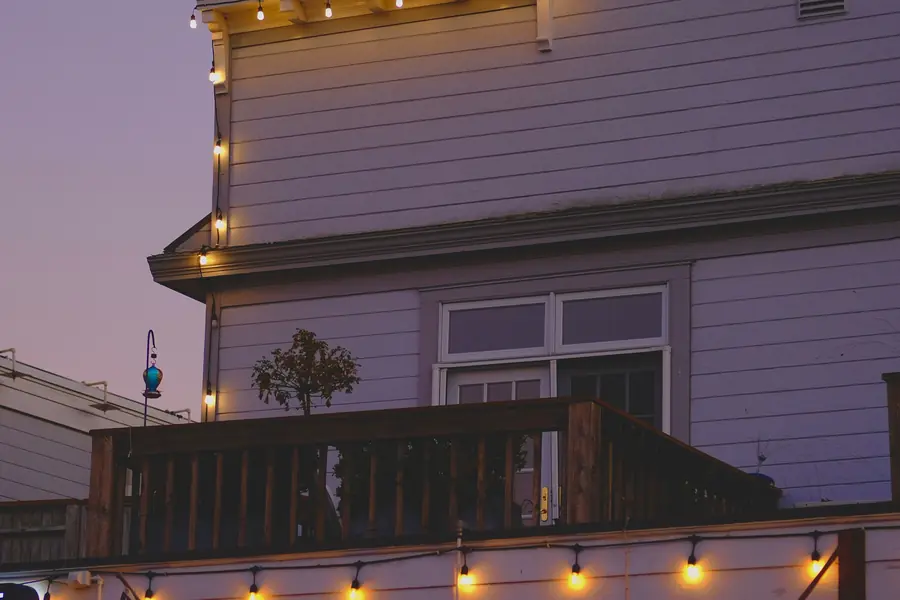
Problem 4: One Focal Point or a Junk Yard
The difference between a display and a junk yard is the number of focal points. One hero figure anchors the yard and gives the eye somewhere to land. Two or three figures compete, and five turn the lawn into a storage lot. The rule is one hero figure, chosen for size and anchoring, with everything else subordinate to it.
Anchoring is where inflatables fail, and the failure is predictable: a figure staked on a calm day lifts in the first real gust, because the stakes went into soft ground and nothing else held it. The picked figure wins this slot on its tether kit, which is the anchoring system this section teaches: stakes plus sandbags plus tethers plus securing loops, all included. Drive the stakes, fill the sandbags, run the tethers, and check them after the first storm.
Carry the listing’s own warning in full: it advises against outdoor use during heavy wind or rain, so the rule is bring it in during storms, not hope it survives them. That is the same honesty the front porch article applied to its lanterns, with more force here, because a five foot inflatable catches far more wind than a lantern.
The rest of the focal layer is restraint in product form. Oversized ornaments on bare trees work because they are few and large: one size, hung at staggered heights, never a mixed bag competing with the hero figure. The picked size is 7.1 in, genuinely oversized against a normal 3 in ornament, named explicitly because the listing sells four sizes and only one is the pick. Lawn globes work the same way: four globes at staggered distances give the lawn depth without a second focal point. Their plugs, like the net plugs, are not waterproof, so they live inside cord covers.
Neighbour and HOA sanity is the last part of the restraint rule, and it is practical, not polite. Keep the display inside your own lot lines, keep pathways and sidewalks clear, keep the lights on a bedtime schedule, and keep sound off. A display that respects the street stays up all season. One that blocks a sidewalk or blares at midnight gets a complaint, and a complaint ends the display faster than any storm.
Also solves this: a bare tree with nothing to hang a story on
GnFlus Christmas Ornaments Balls, 7.1 in, Shatterproof
Thick polyethylene, shatterproof, detachable hook cord, suited to outdoor hanging. The pick is the 7.1 in size, named explicitly because the listing sells four sizes and only this one is oversized enough for a bare tree. Not for: a tree that already carries the hero figure’s visual weight, ornaments stay subordinate to the one hero.
Check Price on Amazon → (paid link)
Also solves this: a lawn that goes black past the porch
SenLuKit LED Globe Lights, 7.9 in, 4 Pack
LED globes, 7.9 in, 4 pack, IP65, 8 modes, 6 hours on and 18 hours off timer. Four globes at staggered distances give the lawn depth without a second focal point. Not for: a plug left in standing water, the plug is not waterproof, so it lives inside a cord cover.
Check Price on Amazon → (paid link)
January Takedown That Doesn’t Destroy Next Year
Takedown is where next December is decided. Yank clips off frozen gutters and they snap. Coil cords in a tangle and they kink. Throw strings in a bin unlabeled and next year starts with an hour of untangling. The method is dull and it works: take the clips off in daylight, coil each string separately, label every bin by layer, and test every string before storage, not after it comes out. A dead string found in January is a replacement order with time to spare. One found next December is a dark roofline on installation day.
Storage itself is simple: cord reels for the long runs, labelled bins for the rest, everything dry and indoors. The storage products cross-link to the Christmas tree ideas article, which covers the storage end of the season in full, so this article carries no storage CTA box. The point is the habit, not another purchase: labelled, tested, dry.
7 Outdoor Mistakes
- Hanging lights with staples, which crush wire, instead of clips matched to the surface.
- Skipping the watt tally and learning the total load from the breaker.
- Running five timers instead of one master schedule.
- Mixing colour temperatures, so warm white fights cool white.
- Leaving plugs in standing water, because the plugs are not rated.
- Adding a second hero figure, which turns a display into a junk yard.
- Storing strings untested and unlabeled, so next December starts with a dead roofline.

Budget Plans: $75 Lights-Only, $250 Layered Display, $600 Full Display
The tiers below are labels, not price quotes, using the picked products only. No individual product prices appear in this article.
The $75 lights-only tier is one C9 roofline set, one clips kit and one cord: a complete display for a small front, a straight roofline, safely fixed, on a circuit with room to spare.
The $250 layered display adds the shrub net, the trunk wrap net, the pathway stakes and the master timer plug to the lights-only base: all three layers on one schedule, with the watt meter step included. This is the tier most readers should build, the full layer model without the focal figure.
The $600 full display adds the icicle strings, the hero inflatable with its tether kit, the oversized ornaments and the lawn globes to the layered base. That is the whole article, every layer plus the focal point, still on one schedule and still inside the circuit budget from Problem 1. If the budget does not stretch, drop the focal layer first and keep the layers. A lit yard without a figure beats a figure in a dark yard.
FAQs: Outdoor Christmas Decorations, Answered
1. How many lights do I need for my roofline?
Ans: Measure the roofline in feet, then divide by the set length and round up to whole sets. The picked C9 set is 100 ft long, so a 60 ft roofline needs one set and a 150 ft roofline needs two. Then check bulb spacing: at 12 in spacing there is one bulb per foot, so a 60 ft roofline shows 60 bulbs. Buy by length first and spacing second, and never cut a set to fit.
2. Do LED Christmas lights really cost much less to run than incandescent ones?
Ans: Yes, and the article’s own math shows why. One 100 bulb LED C9 set runs about 80 watts. Run it 6 hours a night and it uses 0.48 kilowatt hours per night, about 7 cents a night at 15 cents per kilowatt hour, or about 2 dollars for a 30 night season per set. An incandescent display of the same size draws several times that wattage for the same bulb count, which is why incandescent displays trip circuits that LED displays never trouble. To price your own display, take the set wattage, multiply by hours per night, divide by 1,000 for kilowatt hours, then multiply by your rate.
3. Can my lights stay up in rain and snow?
Ans: Yes, if every part of the display is honestly rated for it, and the rating to check is the IP code. IP44, which the icicle strings and the shrub net carry, means splash proof from any direction, fine for rain but not for standing water or submersion. IP65, which the lawn globes carry, means dust tight and protected against water jets, so it handles storms. IP67, which the pathway stakes carry, means dust tight and protected against brief immersion. The trap is the plug: on several picked products the lights are rated and the plug is not waterproof, so keep every plug out of standing water and inside a cord cover.
4. When should I hire a professional to install outdoor lights?
Ans: Hire the work out when the roofline needs a second storey reach without a safe ladder setup, when the display needs a new outdoor circuit or a GFCI outlet installed, or when any part of the work comes within 10 ft of power lines. October is the time to book, because installers fill up before December and a rushed November booking costs more and gets a worse slot. A professional install is also right for any display that keeps tripping the breaker after the watt tally, since that points to a circuit problem, not a lights problem.
5. How do I keep outdoor plugs dry?
Ans: Three habits, in order. First, plug every outdoor connection into a GFCI protected outlet and test it monthly. Second, put every ground level connection inside a cord cover, and keep the cover itself out of puddles and off bare soil where water pools. Third, give cords a drip loop: let the cord dip below the outlet before rising to it, so rain runs off the low point instead of into the connection. A rated string with a drowned plug is still a hazard.
The Bottom Line on Outdoor Christmas Decorations
A good outdoor display is a system, not a shopping list. Layers in order, watts tallied against 1,440, one schedule for the whole yard, one colour temperature, one hero figure, and a January takedown that protects next year. Get those six right and the display looks good from the street, stays lit all season, and goes back up next December. Get any one wrong and the season becomes breaker resets, timer chaos or a junk yard, no matter how much was spent.
Start with the kerb walk: measure the roofline, count the trees and shrubs, trace the path to the door. Then tally the watts, buy to the layers, and put everything on one schedule. The street will notice, and so will your breaker.
Save these outdoor Christmas decorations to your Pinterest board, so next December’s display is planned before the first ladder comes out of the garage.
Photos via Pexels.