24 Herb Garden Windowsill Ideas for Small Kitchens
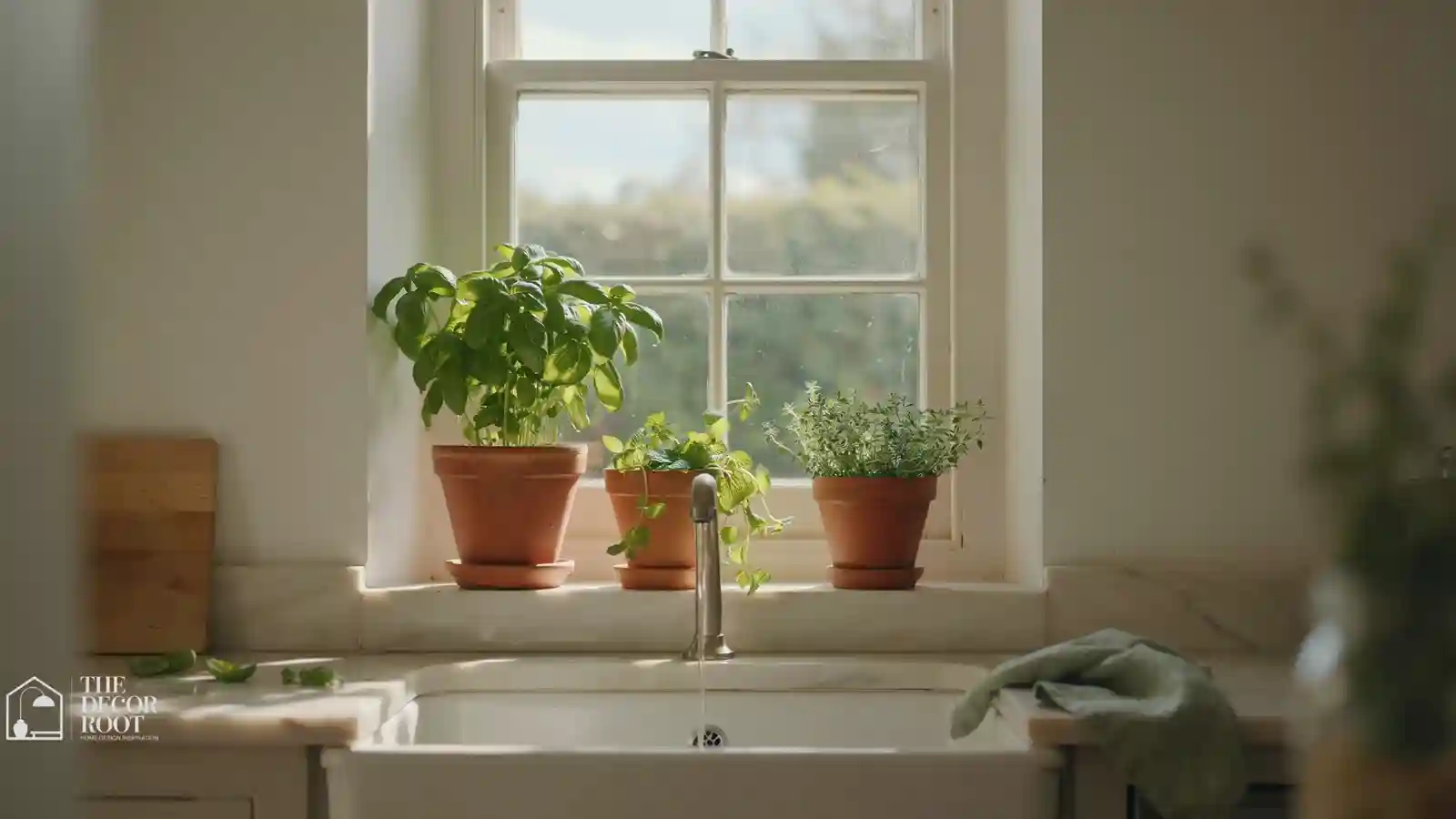
Herb Garden Windowsill Ideas, A small kitchen doesn’t have room for a dedicated herb station, but it almost always has a windowsill, and that’s genuinely all you need. The real challenge with a windowsill herb garden isn’t finding pots that fit; it’s figuring out how to actually maximize a narrow strip of ledge without it becoming a cluttered mess of mismatched containers that block your light and your view. A herb garden windowsill is one of the most practical and beautiful home decorating ideas for a small kitchen; a row of terracotta pots on a south-facing sill adds living colour, fragrance, and a fresh ingredient within arm’s reach that transforms both how the kitchen looks and how it is used.
This post contains affiliate links. As an Amazon Associate, I earn from qualifying purchases. If you buy through these links, I may earn a small commission at no extra cost to you.
The Real Reason This Works
A windowsill herb garden succeeds or fails based almost entirely on light and drainage, not on how many pots you can physically cram onto the ledge. Most small-kitchen sills face one direction only, so every idea here accounts for working within a single light exposure rather than assuming you have the flexible, rotate-as-needed setup of a larger garden window. The tiered, hanging, and clip-mounted solutions throughout this list exist specifically because a flat, single-row sill runs out of usable space fast, and going vertical is almost always the actual fix, not buying smaller pots. A herb windowsill belongs most naturally in a kitchen that celebrates fresh, living colour,these fresh and colorful summer kitchen ideas show how a citrus and watermelon palette creates the ideal chromatic backdrop for a herb garden, where green against warm yellow, coral, and white reads as genuinely vibrant rather than merely decorative
Style Your Herb Windowsill
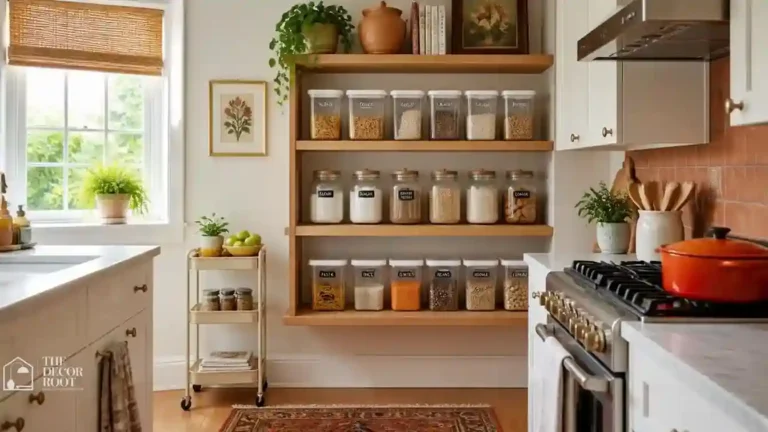
A herb windowsill is one styling layer within a complete kitchen design; browse all our kitchen decorating ideas to see how it works alongside open shelving. A herb garden windowsill and open kitchen shelving belong to the same design philosophy; both treat the functional objects of a kitchen as worthy of display rather than concealment. These open shelving kitchen ideas show how to style shelves alongside a herb windowsill so the living plants and the ceramic and glass on the shelves create a complete and considered kitchen composition. Warm colour palettes and summer kitchen styling for a kitchen that feels genuinely alive.
1. Measure your sill depth before buying a single pot.
Most kitchen sills run between 4 and 6 inches deep, and a huge share of herb garden frustration comes from buying attractive pots that simply don’t fit, then leaving them balanced precariously on the edge. Measure first, and shop for pots at least half an inch narrower than your actual sill depth.
2. Group herbs by water needs, not just by size.
Rosemary and thyme prefer to dry out between waterings, while basil and mint want consistent moisture, so grouping herbs with matching needs together, rather than by pot color or height, prevents you from overwatering half your garden every time you water the other half.
3. Use a tiered windowsill planter to double your growing space.
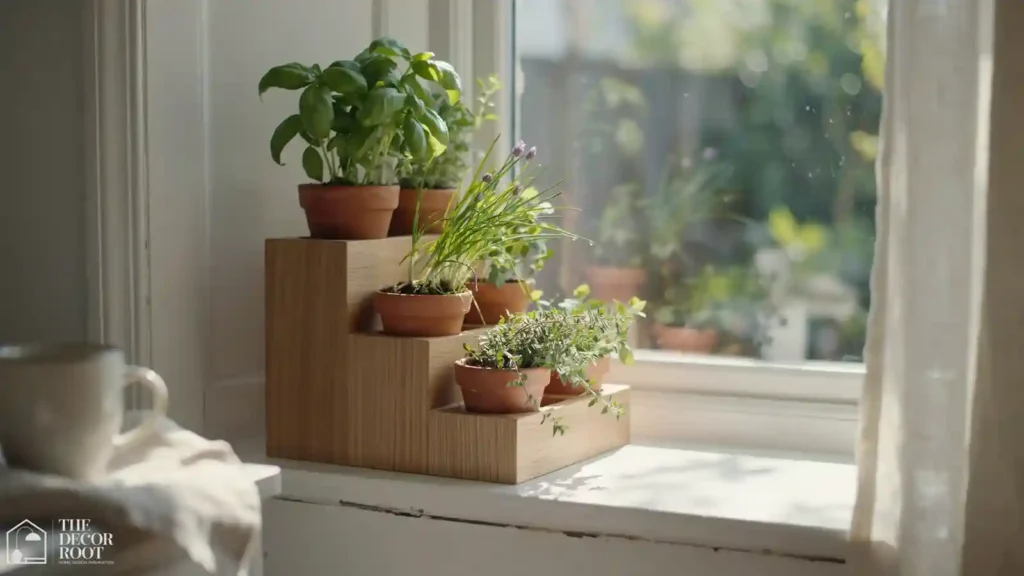
A tiered windowsill planter with two or three stepped levels lets you fit twice as many pots in the same linear footage of sill, since you’re building upward instead of only outward across a single flat row. A herb windowsill is the kitchen expression of the same biophilic instinct that drives indoor plant styling throughout the rest of the home, these kitchen plant and herb display ideas show how the same principles of light requirement, pot material, and visual grouping that apply to a living room plant arrangement create a herb display that looks as designed as it is functional.
EDITOR’S PICK
🛒Three-Tier Stair-Step Windowsill Planter Stand
Stepped 2‑3 tier windowsill planter doubles pot capacity in the same sill length by building vertical instead of horizontal.
(paid link)
4. Choose terracotta over plastic for herbs that hate wet roots.
Terracotta’s porous walls let excess moisture evaporate through the pot itself, which matters most for Mediterranean herbs like rosemary, thyme, and oregano that rot quickly in consistently damp soil, a common issue with sealed plastic containers.
5. Add a drip tray under every single pot, no exceptions.
Windowsills sit directly above cabinets or countertops in most small kitchens, so a missed watering can mean real water damage below; a simple saucer or shared drip tray under the whole row protects the surface underneath without adding visual bulk.
6. Use mason jars as a low-cost, high-light container option.
Wide-mouth mason jars with drainage holes drilled in the base cost a fraction of purpose-built herb pots and let in more visible light around the root zone, which some gardeners find helps them monitor moisture levels at a glance.
7. Position taller herbs like rosemary at the ends of the row.
Rosemary and lemongrass can grow tall and bushy, so placing them at either end of your windowsill row, rather than the center, keeps them from blocking light to shorter herbs like thyme or chives planted between them.
8. Add self-watering pots for the herbs you tend to forget.
Self-watering herb pots with a built-in reservoir are especially useful for mint and basil, which wilt fast if missed even by a day or two, and they cut down on daily watering to roughly once a week depending on your kitchen’s humidity.
EDITOR’S PICK
🛒 Self-Watering Ceramic Herb Pots with Reservoir Base, Set of 3
Self‑watering pots with reservoirs keep mint and basil from wilting, watering drops to about once a week, depending on kitchen humidity.
(paid link)
9. Use uniform pot colors to make a small space look intentional.
A row of mismatched pots reads as clutter on a small sill in a way it wouldn’t on a large garden bed; sticking to one or two coordinated colors makes even six or seven different herbs look like a single cohesive display.
10. Label each pot with a small chalkboard or wood tag.
Beyond the practical benefit of knowing which seedling is which before the leaves are distinct, labels give the windowsill a styled, purposeful look rather than a random collection of green sprigs.
11. Rotate pots a quarter turn every few days for even growth.
Herbs on a single-direction windowsill tend to lean hard toward the glass; a quick quarter turn every three or four days keeps growth upright and even instead of lopsided toward the light source.
12. Use a narrow gutter planter for a continuous soil run instead of individual pots.
A single length of PVC gutter, capped at both ends and filled with soil, creates one continuous planting bed along the sill rather than several separate pots, which uses the available depth more efficiently and looks cleaner in very narrow kitchens.
13. Add a small clip-on grow light for north-facing windows.
If your kitchen window doesn’t get strong direct light, a grow light clip lamp mounted to the window frame or an adjacent cabinet supplements natural light without needing counter space of its own.
EDITOR’S PICK
🛒Clip-Mount LED Grow Light For Indoor Herbs
Clip‑on grow light mounts to window frame or cabinet, no counter space, boosting light for low‑sun kitchen windows.
(paid link)
14. Choose compact herb varieties bred for containers.
Dwarf basil, bush thyme, and compact chive varieties are specifically bred to stay smaller and bushier than their standard counterparts, which matters directly for how long a windowsill herb garden stays manageable before it outgrows the space.
15. Use a woven basket liner to soften the look of plastic nursery pots.
If you’re not ready to repot everything into matching containers, slipping the plastic pots your herbs came in inside a woven basket or fabric liner hides the utilitarian look without the work of a full repotting.
16. Add a small hook-mounted trellis for trailing herbs.
Herbs like creeping thyme or trailing rosemary benefit from a tiny trellis or hook mounted just above the sill, letting growth spill downward along the cabinet front rather than sprawling sideways and crowding neighboring pots.
17. Keep a pair of scissors or a small herb snip within arm’s reach.
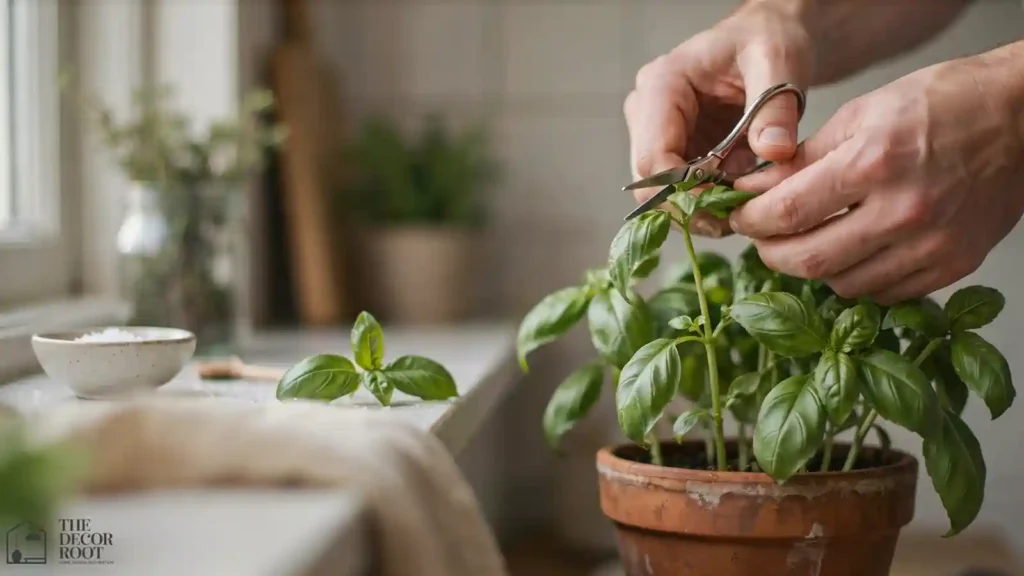
Storing dedicated herb-cutting scissors in a small cup right on the sill, rather than in a drawer across the kitchen, removes the friction that keeps people from actually using their fresh herbs day to day.
18. Use a magnetic hanging system for pots on a metal window frame.
If your kitchen window has a metal frame, hanging planter hooks with strong magnets let you suspend small pots directly on the frame itself, adding a layer of growing space above the sill without any drilling.
EDITOR’S PICK
🛒Magnetic Hanging Hooks Rated For Small Planters
Magnetic hooks on a metal window frame let you hang small pots above the sill for extra plant space without drilling.
(paid link)
19. Add a small humidity tray with pebbles beneath thirstier herbs.
A shallow tray filled with pebbles and a thin layer of water, placed under basil or mint pots specifically, raises local humidity around the leaves without waterlogging the soil itself, which helps in dry winter kitchens with forced-air heat running constantly.
20. Repurpose a spice rack as a mini herb shelf beside the window.
An old wall-mounted spice rack next to the window extends your growing space just beyond the sill itself, giving you a second tier for pots that didn’t fit in the primary row.
21. Use clear glass containers to double as a light diffuser.
Clear glass jars or vases used as outer decorative sleeves around plastic nursery pots scatter incoming light around the container itself, which some growers find brightens the whole windowsill display even on overcast days.
22. Add a small chalkboard care card for each herb’s needs.
Beyond a name label, a tiny card noting each herb’s watering frequency and light needs prevents the common mistake of treating every plant on the sill identically when their actual care needs vary significantly.
23. Keep a dedicated herb scissors and small cutting board nearby.
A herb scissors set with multiple blades minces herbs directly over the pot or a small board, making it fast enough to actually snip fresh herbs mid-recipe instead of reaching for the dried jar out of convenience.
EDITOR’S PICK
🛒Multi-Blade Herb Scissors Set With Cleaning Comb
Multi-blade herb scissors mince fresh herbs over a pot or board quickly, making fresh snipping mid-recipe easier than grabbing dried jars.
(paid link)
24. Finish the row with one taller statement plant at the end.
A single larger pot, like a small bay laurel or lemon verbena, anchoring one end of the windowsill row gives the whole display a sense of scale and prevents the row from reading as uniformly flat.
Quick Action Plan
- Measure your sill first, choose three to four herbs you actually cook with regularly rather than every herb available, and group them by water needs before you buy a single pot.
- Add a tiered stand or hanging hooks only after that base row is established, and you can see exactly how much additional vertical space you actually have left to work with.
Frequently Asked Questions
Conclusion
There’s no reason a small kitchen has to skip fresh herbs entirely. Start with the herbs you’ll actually use, respect your sill’s real depth and light, and build up from there rather than out.
💾 Save this to your Kitchen Herb Garden board so it’s ready the next time you’re restocking your windowsill.