20 Home Office Storage Ideas That Stay Organized
20 Home Office Storage Ideas That Stay Organized. Most home office storage advice solves the problem for exactly one week. You buy the bins, you sort the papers, and by the following Friday the desk looks the same as it did before you started. The real issue usually isn’t a lack of storage; it’s storage that doesn’t match how you actually work, which means everything gets shoved in “for now” and never sorted again. Home office storage that stays organized is one of the most consequential home decorating ideas for a workspace; the difference between a desk that supports clear thinking and one that undermines it is almost entirely a question of how well the surrounding storage has been designed to keep every object in its place.
This post contains affiliate links. As an Amazon Associate, I earn from qualifying purchases. If you buy through these links, I may earn a small commission at no extra cost to you.
What Ties These Ideas Together
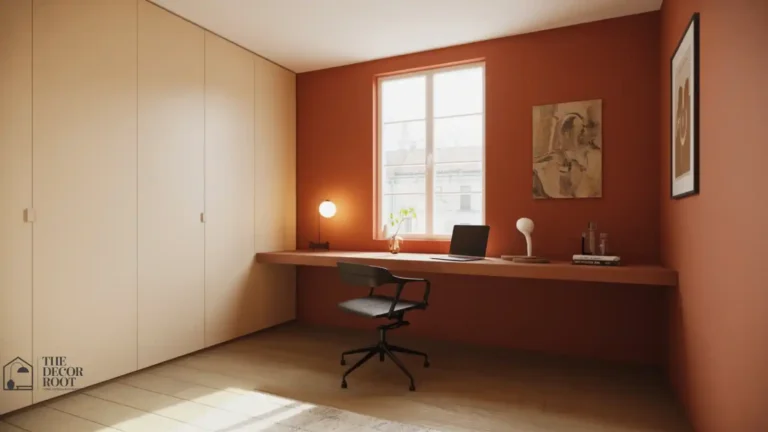
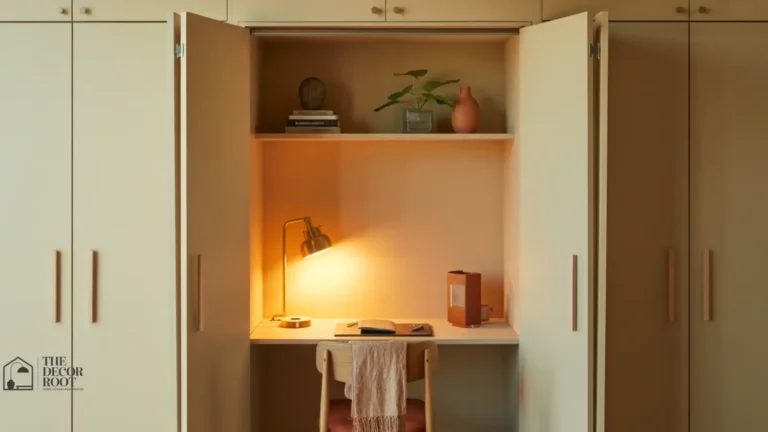
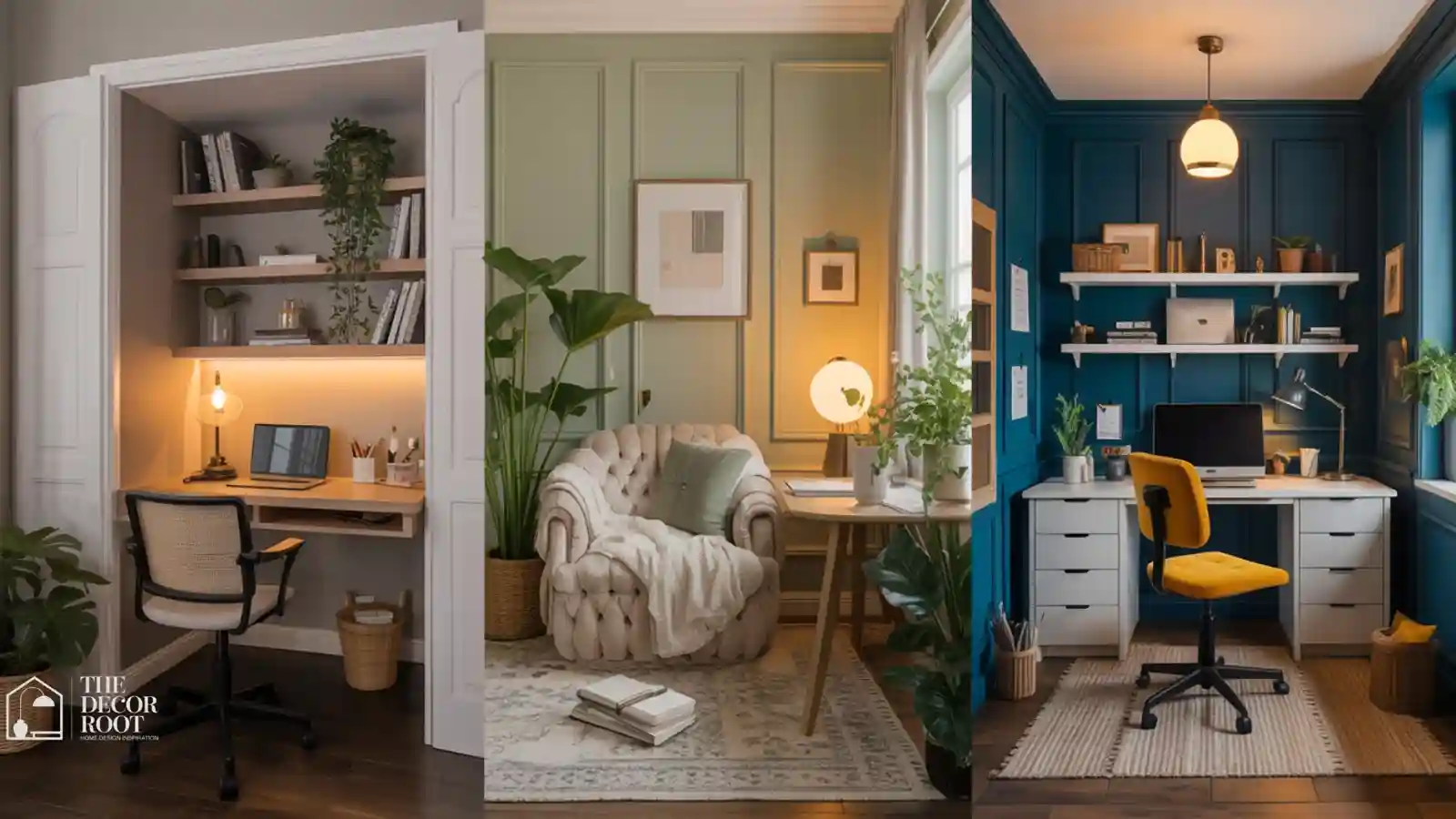
Every idea on this list follows the same underlying rule: storage only works long-term if putting something away takes less effort than leaving it out. That sounds simple, but it’s the exact thing most storage products get wrong: a drawer you have to fully open and dig through, or a bin without a label, adds just enough friction that things start piling on top instead of going inside. The systems below are chosen because they’re fast to use in the moment, which is the only real test of whether an organization system survives contact with an actual busy week. A second thread running through this list is separating “active” storage things you touch daily from “archive” storage, things you need to keep but rarely reach for. Mixing the two is the single most common reason home office storage fails within a month. The most storage-efficient home office is a converted closet; these home office closet storage ideas show how the existing shelving, hanging rail, and floor space of a closet can be reorganised into a complete office storage system that makes a small workspace more organized than a dedicated room with open shelves.
Storage as Office Design Element
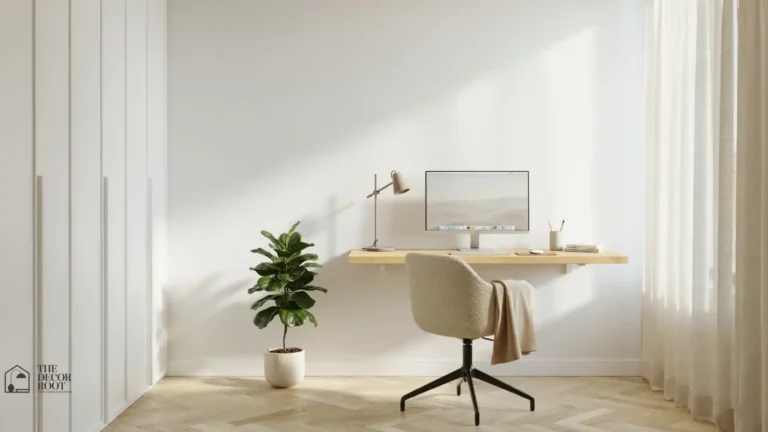
Storage is one element within a complete home office design; these home office design ideas show how storage integrates with lighting, colour, layout, and personal style to create a workspace that functions at a high level rather than simply looking organized. The best home office storage strategy is the one that makes a minimalist office possible; these minimalist home office ideas show how concealing every cable, file, and peripheral behind closed or hidden storage creates the clear desk and clear mind that the most productive offices are built on.
1. Floating Wall Shelves
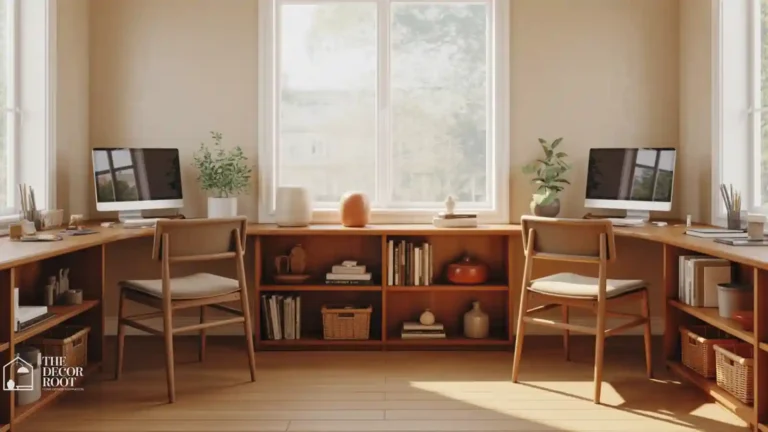
Wall-mounted floating shelves free up desk surface entirely, which matters more than most people expect, since a cluttered desktop is the single biggest driver of that “messy office” feeling even when everything technically has a home. Install shelves at two different heights, one within easy reach for daily items, one higher for reference material you touch less often, rather than a single row that forces everything into one zone. Rated weight capacity matters here: a shelf holding books needs a sturdier mount than one holding decor. Anchor into studs wherever possible, since drywall anchors alone struggle with the combined weight of books, files, and desk supplies over time. Home office shelving is the point where storage and styling intersect; these office shelving and display ideas show how the same designer principles of height variation, material grouping, and deliberate negative space that make a living room bookshelf look curated apply equally to the shelves above a home office desk, so the workspace looks considered rather than merely functional.
2. Pegboard Command Wall
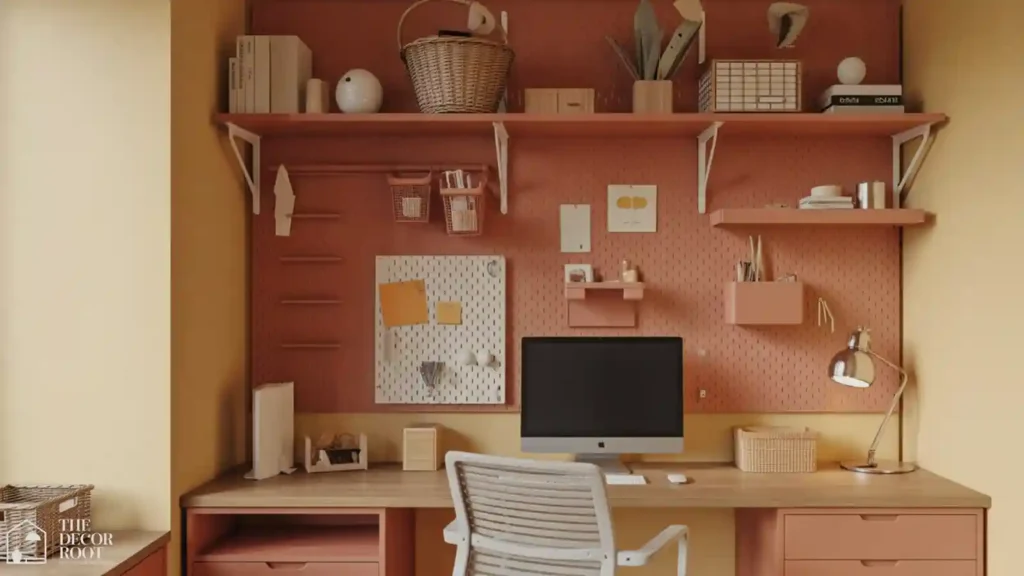
A pegboard mounted behind or beside the desk turns vertical wall space into flexible storage that can be rearranged as your needs change, unlike fixed shelving. Hooks, small baskets, and shallow shelves all attach to the same board, which means you can shift from “mostly cable storage” to “mostly craft supplies” without remounting anything. Paint the pegboard to match your wall color if you want it to disappear visually, or leave it a contrast color if you want the storage itself to read as part of the room’s design rather than something to hide.
3. Rolling Filing Cabinet
A cabinet on locking casters solves the classic problem of filing cabinets being either too far from the desk or blocking the one open floor spot in a small office. Roll it under the desk during work hours and out of the way when you need floor space for something else. Look for a cabinet with at least one lockable drawer if you’re storing anything sensitive, and measure your desk’s under-clearance carefully, since not every rolling cabinet fits under every desk style once casters are added to the height.
4. Cable Management Box
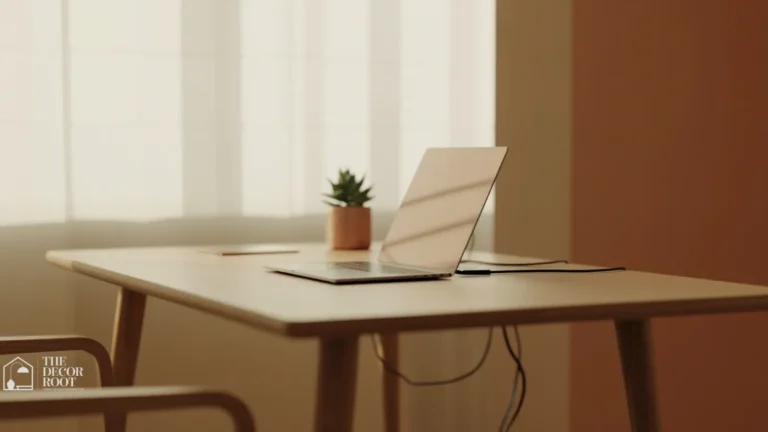
Loose cables and power strips are one of the fastest ways an otherwise organized desk starts looking chaotic, and an under-desk cable management box solves it by containing the entire tangle in one enclosed unit instead of leaving cords looped across the floor.
EDITOR’S PICK
🛒Under-Desk Cable Management Box For Power Strips And Cords
An under-desk cable management box keeps power strips and loose cords contained in one unit, preventing the chaotic look of cables looped across the floor.
(paid link)
Mount the box to the underside of the desk with the included adhesive strips or screws rather than leaving it loose, since a floor-standing box gets kicked and shifted within days. Route cables through the box’s cutouts in the order they connect, so troubleshooting later doesn’t mean unpacking the entire system.
5. Drawer Dividers and Organizers
A desk drawer without dividers turns into a junk drawer within about two weeks, no matter how it starts. Adjustable tray-style dividers let you customize compartment sizes as your supplies change, which matters more than fixed-slot organizers that assume you’ll always own the same pens and sticky notes you had on day one. Measure your drawer’s interior dimensions before buying, since a divider tray even a half-inch too large won’t sit flat and will shift every time the drawer opens.
6. Vertical File Sorter
A desktop vertical file sorter keeps active paperwork upright and visible instead of stacked flat, which matters because flat stacks are where papers go to be forgotten. Label each slot by urgency or category “this week,” “to file,” “waiting on reply” rather than by vague headers like “misc,” which becomes a catch-all within days. Choose a sorter with at least four slots even if you think you need fewer, since active paperwork tends to expand to fill whatever space it’s given.
7. Closed-Door Credenza
For anyone who works on video calls regularly, a closed-cabinet credenza behind or beside the desk hides printer paper, extra supplies, and archived files behind doors instead of leaving them on open shelving where they show up on camera. This also suits shared-room offices well, since a credenza reads as regular furniture rather than obvious office storage when the doors are closed. Choose one with at least one shelf that adjusts, since fixed shelving rarely matches exactly what you need to store.
8. Labeled Fabric Bins
Fabric bins on open shelving hide visual clutter while staying easy to access, which makes them a better fit than clear plastic bins for anyone who wants the storage itself to disappear into the room’s decor. Label every bin, since unlabeled bins are where organization systems quietly die; you’ll dig through three bins looking for one item exactly once before you stop using the system altogether. Choose bins sized to your shelf depth exactly, since bins that are even an inch too deep leave awkward gaps that invite loose clutter to fill them.
9. Magazine File Boxes
Upright magazine file boxes, originally meant for magazines, work just as well for standing folders, notebooks, and reference binders. A set of magazine file boxes on a shelf keeps documents categorized and visible from the spine, which beats stacking flat folders where only the top one is ever visible.
EDITOR’S PICK
🛒Set Of Upright Magazine File Boxes For Shelf Storage
Magazine file boxes on a shelf keep folders and binders categorized and spine visible, far more practical than stacking flat folders where only the top one is ever seen.
(paid link)
Label the spine of each box clearly, and keep the busiest categories at eye level, moving reference material you rarely touch to the higher or lower shelves where reach matters less.
10. Desktop Organizer Tray
A single organizer tray for pens, sticky notes, and small daily-use items keeps the most-touched supplies contained without requiring a drawer to be opened dozens of times a day. Choose one with defined compartments rather than one open bin, since an undivided tray becomes a shallow junk pile just like an undivided drawer does. Keep this tray to genuinely daily items only; anything used less than once a week belongs in a drawer instead, not on the visible desk surface.
11. Wall-Mounted Mail Sorter
Mail and incoming paperwork are one of the fastest sources of desk clutter in any home office, and a wall-mounted sorter positioned near the door, not at the desk itself, intercepts mail before it ever reaches the workspace. Multiple vertical slots let you sort by household member or by action needed (“pay,” “file,” “respond”), and mounting it away from the desk means opening mail doesn’t automatically mean adding to your workspace clutter.
12. Rolling Storage Cart
A multi-tier rolling cart works as flexible, movable storage for anything that doesn’t have a fixed home yet printer supplies, craft materials, reference books, mid-project. Choose one with at least three tiers and locking wheels, and treat it as a “staging” storage zone rather than permanent storage, since carts work best when their contents rotate based on what you’re actively working on that week.
13. Under-Desk Storage Drawer
A slide-out drawer that mounts beneath the desktop itself adds storage without taking up any additional floor or shelf space, which makes it one of the most space-efficient options on this list. These work particularly well for anyone in a corner or small-footprint office who’s already maximized their shelving. Check the drawer’s clearance against your knees and chair before installing, since a drawer mounted too low interferes with normal seated posture.
14. Ladder Bookshelf
A ladder-style bookshelf leaning against the wall takes up minimal floor footprint compared to a traditional bookshelf, which makes it a strong fit for small or shared-room offices where a bulky freestanding unit would overwhelm the space.
EDITOR’S PICK
🛒Ladder-Style Leaning Bookshelf For Small-Footprint Storage
A ladder-style bookshelf offers slim storage with a minimal floor footprint, making it a strong fit for small offices where bulky units would overwhelm the space.
(paid link)
Use the bottom shelves for heavier items like binders and reference books, and reserve the top shelves, which are harder to reach safely, for lighter decor or items you access only occasionally.
15. Storage Ottoman
An ottoman with a hollow storage interior doubles as extra seating for a second person and hidden storage for supplies you want out of sight entirely cables, chargers, seasonal files. This works well in shared-room offices where the office needs to visually blend into a living room or bedroom rather than announce itself as a workspace. Choose one with a sturdy lid that supports sitting weight, not just a decorative topper.
16. Corner Shelf Unit
A dedicated corner shelving unit uses a footprint most furniture ignores, and stacking three or four shelves vertically in a true corner adds significant storage without eating into usable floor space elsewhere in the room. This pairs particularly well with any of the corner desk setups from our small-space office guide, giving you a matched storage-and-desk system built around the same wasted square footage.
17. Hanging File Pockets
Fabric or canvas hanging pockets mounted to the wall hold folders, mail, or loose papers vertically, which keeps them visible and accessible without taking desk or shelf space at all. These work especially well near the desk for genuinely active paperwork, while anything archived should move to a drawer or filing cabinet instead, keeping the wall pockets from becoming overloaded and sagging.
18. Charging Station Drawer
A dedicated drawer or small bin fitted with a power strip and cable clips keeps every charging cord and device in one enclosed spot instead of scattered across the desk. This solves one of the most common daily clutter sources in a modern home office, since most people juggle a laptop charger, phone charger, and at least one other device charger at any given time.
19. Modular Cube Storage
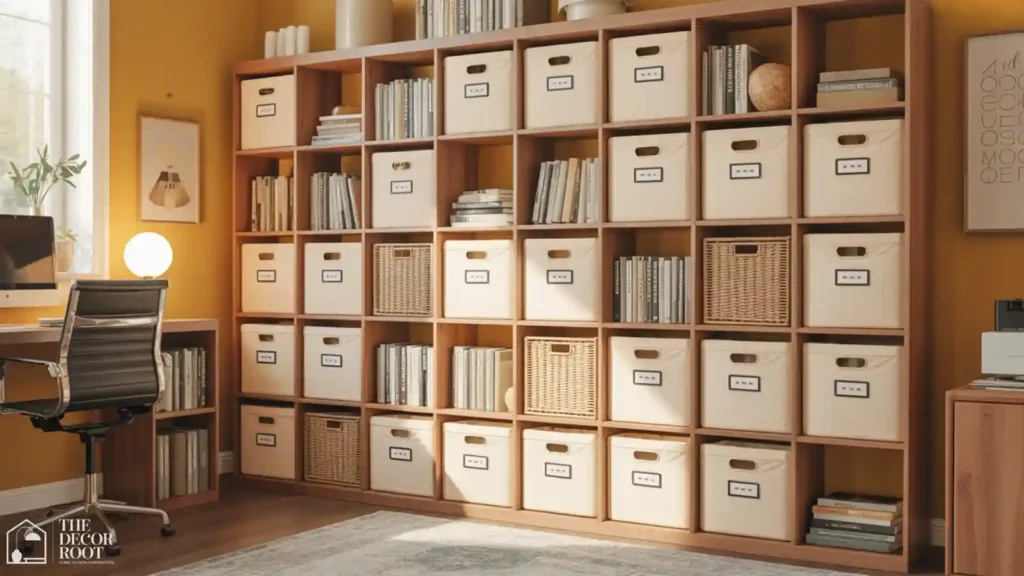
A stackable modular cube storage system lets you build a storage wall sized exactly to your space and expand it later if your needs grow, which fixed shelving units can’t do.
EDITOR’S PICK
🛒Modular Stackable Cube Storage System For Flexible Organization
A stackable modular cube system lets you size your storage wall exactly to your space and expand it over time, which fixed shelving cannot offer.
(paid link)
Mix open cubes with fabric-bin-lined cubes so you get both visible and hidden storage in the same unit, and start with fewer cubes than you think you need; it’s far easier to add a row later than to have oversized empty storage from day one.
20. Wall Grid Organizer
A metal wire grid panel mounted to the wall holds hooks, small baskets, and clip-on accessories in a fully customizable layout that’s easy to reconfigure as your storage needs shift. This works especially well combined with a pegboard or floating shelves for a complete wall storage system, and it’s one of the few storage solutions on this list that costs very little to start and grows with you over time.
Quick Action Plan
- Start by separating your current desk clutter into two piles, items you touch daily and items you touch rarely, since that single sort determines whether something belongs in open, easy-reach storage or in a closed drawer or archive box.
- Tackle cables and mail first, since both are constant, renewable sources of clutter that undo an otherwise organized desk within days if left unaddressed.
- Add vertical storage (shelves, pegboard, wall grid) before buying more floor-standing furniture, since most home offices run out of floor space long before they run out of wall space. Reassess the system after two weeks of real use, not two days, since that’s roughly how long it takes to see which habits actually stuck.
Frequently Asked Questions
Conclusion
Storage that stays organized isn’t about buying more bins; it’s about matching the system to how you actually use the space, day after day, not just how it looks the afternoon you set it up.
💾 Save this to your Home Office Pinterest board so you can build your system out step by step.