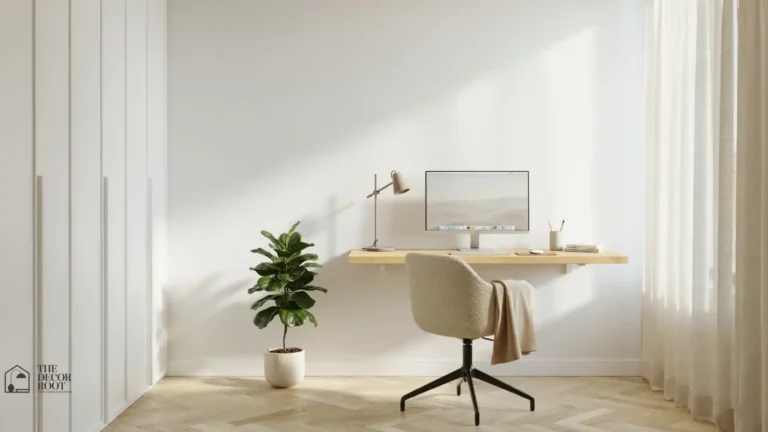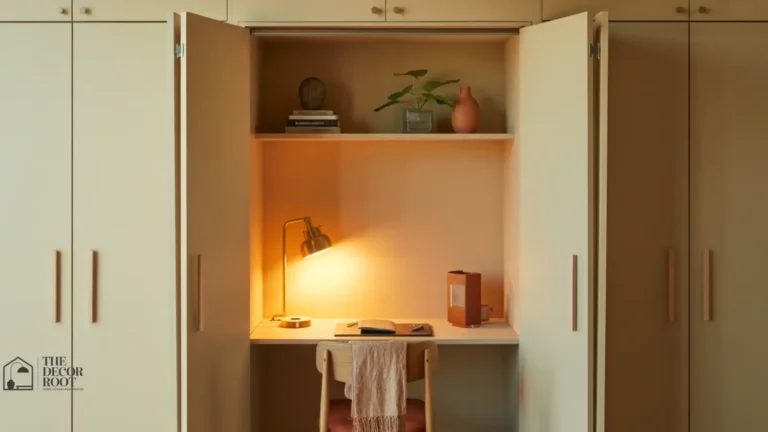
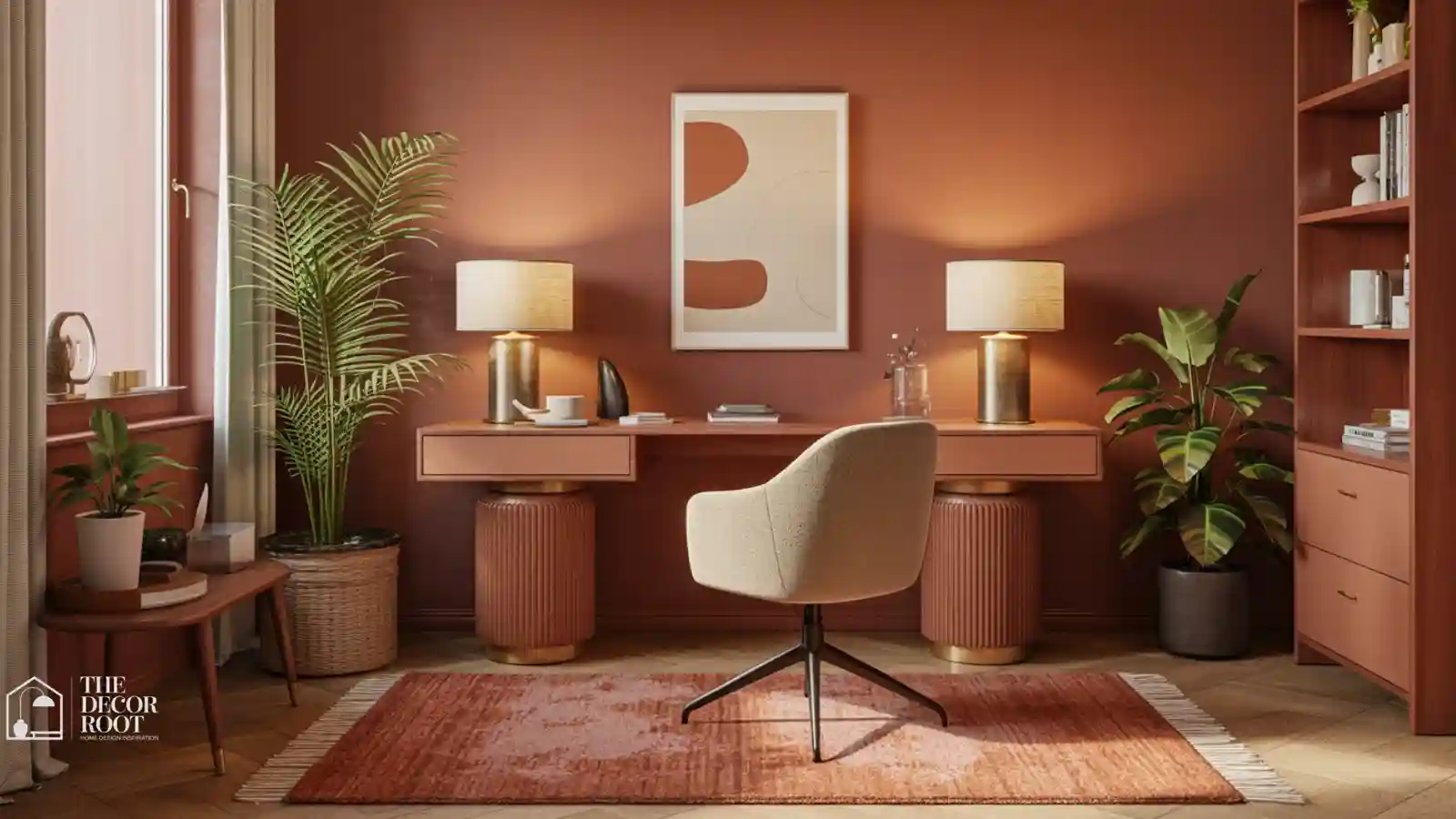
25 Cozy Home Office Ideas for Focus and Comfort
Cozy Home Office Ideas for Focus and Comfort because there’s a persistent myth that focus requires a stark, minimal, almost clinical workspace: white walls, hard surfaces, nothing to “distract” you. In practice, the opposite is often true: a cold, uncomfortable room makes it harder to settle in, not easier, because part of your attention stays locked on the physical discomfort rather than the work in front of you. The most productive home offices tend to feel more like a favorite reading corner than a corporate cubicle, with warmth and comfort working alongside focus rather than against it. “A cozy home office built for focus and comfort is one of the most personally rewarding home decorating ideas available; a workspace that feels genuinely pleasant to be in produces better work than one that is merely efficient, and the small investments in warmth, texture, and considered lighting pay back in hours of sustained concentration.
This post contains affiliate links. As an Amazon Associate, I earn from qualifying purchases. If you buy through these links, I may earn a small commission at no extra cost to you.
The Real Reason This Works
Comfort and focus aren’t competing goals; they’re the same goal approached from two directions. A body that’s too cold, too glared-at, or too physically tense from bad seating burns mental energy on discomfort management before a single task gets done, which is why sterile, purely “productive-looking” offices often underperform warmer ones in actual daily use. Warm lighting, soft textures, and natural materials all lower the low-grade physical stress of sitting at a desk for hours, freeing up more of your attention for the work itself rather than for shifting in an uncomfortable chair or squinting under a too-bright overhead light. A cozy office becomes even more important when two people share the space; the sense of warmth and comfort that makes a solo office a pleasure to work in has to work twice as hard when the desk, the storage, and the atmosphere need to support two people with different working styles. These shared home office ideas show how to achieve that quality within a dual-purpose workspace.
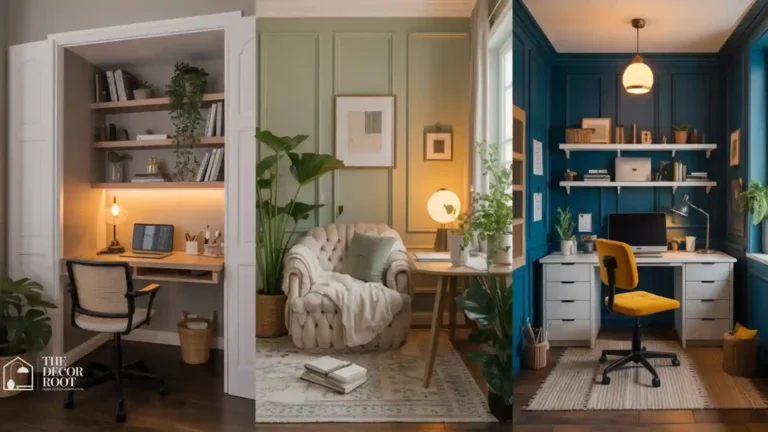
Craft a Cozy Office
A cozy office is one direction within a complete home office design; these home office design ideas show how the warmth and comfort of a cozy workspace sits alongside minimalist, colourful, and shared office approaches to the same brief. A cozy home office and well-considered lighting are inseparable; these home office lighting ideas show how layered task lighting, ambient warmth from a desk lamp, and the right balance of natural and artificial light create the visual comfort that makes long working sessions feel genuinely sustainable.
1. Warm Layered Lighting
A single overhead light creates flat, clinical lighting that reads as sterile no matter how nicely the rest of the room is decorated. Layer at least three sources overhead, a desk lamp, and a floor or table lamp, each on a warm bulb temperature around 2700K to 3000K, which mimics the golden-hour tone that makes rooms feel instantly warmer. Dimmable options let you shift the mood from bright focus mode during the day to a softer glow for evening work sessions, and this single change tends to make a more visual difference to a room’s coziness than almost any other item on this list.
2. Plush Area Rug
A rug under the desk area does double duty: it softens the room acoustically, cutting down on the hard-surface echo that makes offices feel sterile, and it adds a layer of visual warmth that hardwood or laminate flooring alone can’t provide. Choose a rug large enough that your desk and chair both sit on it with room to spare, since a too-small rug reads as an afterthought rather than an intentional layer. A low pile works best under a rolling chair, since high-pile rugs make wheeled chairs harder to move.
3. Upholstered Task Chair
Swapping a hard mesh office chair for an upholstered fabric or bouclé option changes the entire feel of a desk setup, provided it still offers real ergonomic support. Look for adjustable height and lumbar support in a fabric-covered frame rather than sacrificing function for looks entirely; the goal is a chair that feels like furniture, not equipment, while still supporting long work sessions without back strain.
4. Cozy Throw Blanket
A blanket draped over the back of your desk chair or a nearby reading chair adds warmth in both the literal and visual sense, and it signals that the room is meant for settling into rather than just passing through. Choose a texture that contrasts with your chair fabric a chunky knit against a smooth upholstered chair, for instance- since matching textures too closely can flatten the visual interest a throw is meant to add.
5. Reading Nook Corner
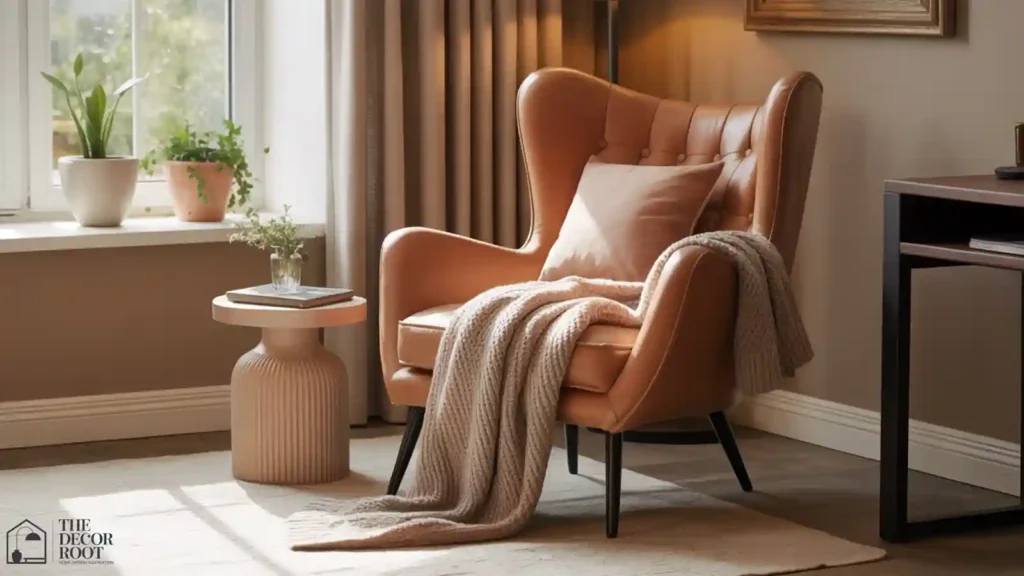
A small reading chair positioned away from the desk gives you a second zone in the room for thinking, phone calls, or breaks between focused work blocks, and having that second spot matters more than it sounds. An upholstered accent chair sized for a small nook, paired with a side table for a coffee cup, gives the room a place to physically step away from the desk without leaving it entirely.
EDITOR’S PICK
🛒Upholstered Accent Chair For A Small Reading Or Break Nook
An upholstered accent chair with a side table placed away from the desk creates a second zone for breaks and calls, allowing you to step away from work without leaving the room.
(paid link)
Position the chair to catch natural light if possible, since a reading nook without good light gets used far less than one with a window nearby.
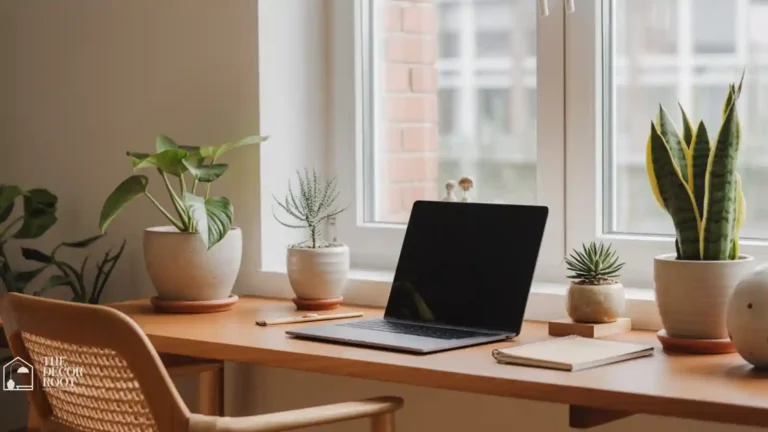
6. Statement Houseplants
Plants do more for a room’s warmth than almost any other single addition, softening hard edges and adding a living, changing element to what’s otherwise a static room. Choose low-maintenance varieties like pothos, snake plants, or ZZ plants if natural light is limited, since a struggling plant undercuts the cozy effect rather than adding to it. One larger statement plant tends to have more visual impact than several small ones scattered around. The cozy home office is one of the clearest residential expressions of where future home design is heading, toward spaces that prioritise warmth, human comfort, and wellbeing over the cold efficiency that conventional office design has historically prized. These warm and human-centred workspace ideas show how the future home philosophy applies specifically to the home office as the room most likely to benefit from that shift.
7. Warm Neutral Palette
A palette built around warm whites, taupes, and soft browns rather than stark cool grays makes a room feel inherently more inviting, even before any furniture or decor gets added. This isn’t about a full repaint necessarily; swapping cool-toned decor and textiles for warm-toned versions can shift a room’s entire feel without touching the walls at all, which matters for anyone renting or not ready for a paint project.
8. Soft Textile Layering
Curtains, a rug, throw pillows, and a blanket working together create a layered, textured feel that a room with only hard surfaces desk, chair, floor simply can’t achieve on its own. Aim for at least three different textile textures in the room (a woven curtain, a knit throw, a smooth cushion, for example) rather than matching everything to the same fabric, since variety in texture reads as more intentional than a single uniform material used everywhere.
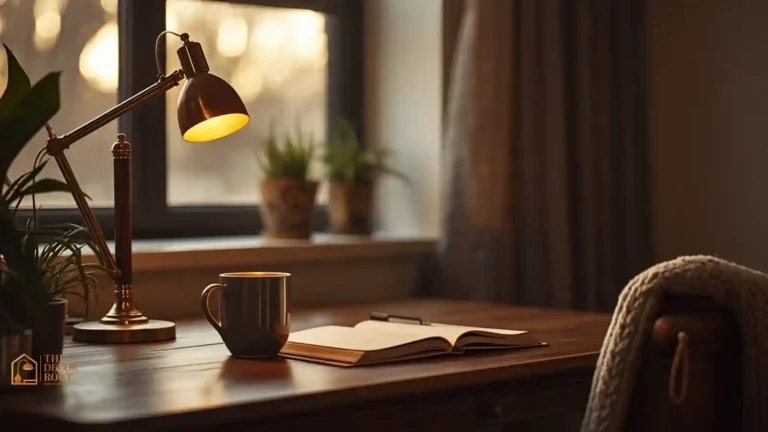
9. Amber Ambient Lamp
A dedicated amber or warm-glass ambient lamp, separate from your task lighting, adds a secondary warm glow that softens the room once the workday winds down. Position it somewhere other than the desk itself; a bookshelf or side table works well so it reads as mood lighting rather than another work light competing with your task lamp.
10. Essential Oil Diffuser
Scent is an underused tool in home office design, and a ceramic essential oil diffuser running a warm scent like cedar, sandalwood, or vanilla adds a sensory layer of coziness that visual changes alone can’t replicate.
EDITOR’S PICK
🛒Ceramic Essential Oil Diffuser For A Warm Ambient Scent
A ceramic essential oil diffuser with warm scents like cedar or vanilla adds a sensory coziness to a home office that visual elements alone cannot match.
(paid link)
Keep the scent subtle rather than overpowering, since a strong scent running for hours during focused work can become a distraction rather than a comfort.
11. Cushioned Footrest
A footrest might sound like a minor addition, but proper foot support changes overall sitting comfort more than most people expect, especially during long work sessions. Choose an adjustable-height option if your desk and chair combination doesn’t already put your feet flat on the floor, since dangling feet contribute to the kind of low-grade physical tension that quietly erodes focus over a workday.
12. Natural Wood Accents
Wood tones, whether in the desk itself, a shelf, or smaller accent pieces, bring warmth that most manufactured materials can’t match, and they pair naturally with the warm lighting and neutral palette covered earlier in this list. Mixing a couple of different wood tones (rather than matching every piece exactly) tends to look more collected and less like a matched furniture set bought in one trip.
13. Blackout or Linen Curtains
Curtains do double duty in a cozy office: linen or cotton curtains add softness and texture to the windows, while a blackout layer behind them controls glare on screens during peak sun hours. Choose a warm-toned fabric cream, soft terracotta, warm taupe over stark white or gray, since curtain color has an outsized effect on how warm or cold a room reads overall.
14. Styled Bookshelf Display
A bookshelf arranged with a mix of books, small plants, and a few personal objects reads as far cozier than one loaded uniformly with matching bins or purely functional storage. Group items in threes for visual balance, and leave some negative space rather than filling every shelf edge to edge, since an overstuffed shelf can tip from “cozy” into “cluttered” quickly.
15. Personal Photo Gallery Wall
A small cluster of personal photos, prints, or mementos near the desk makes the room feel like yours specifically, rather than a generic setup that could belong to anyone. A gallery frame set with matching or complementary frames keeps a mixed collection of photos looking pulled-together rather than scattered.
EDITOR’S PICK
🛒Matching Gallery Wall Frame Set For Personal Photos And Prints
A gallery frame set with matching frames turns a mix of personal photos into a cohesive display, making the desk area feel distinctly yours rather than generically arranged.
(paid link)
Arrange the layout on the floor first before mounting anything to the wall, since spacing and balance are far easier to adjust before the nail holes go in.
16. Cushioned Window Seat
If your office has a window seat or ledge wide enough to sit on, a fitted cushion turns it into a genuine second spot in the room for reading, thinking, or a phone call away from the desk. This works especially well paired with the reading nook idea above, giving the room two distinct comfort zones instead of just the desk itself.
17. Ergonomic Seat Cushion
For anyone not ready to replace their entire desk chair, a supportive seat cushion is a lower-cost way to add both comfort and better posture support to an existing chair. Memory foam or gel-hybrid options hold their shape better over a full workday than basic foam, and a cushion with a non-slip base stays in place through normal chair movement rather than sliding out from under you.
18. White Noise Machine
Sound matters as much as sight when it comes to a room feeling calm and focused, and a small white noise machine can mask household noise, other rooms, street sounds, and a busy kitchen nearby that otherwise chips away at concentration throughout the day. Choose one with multiple sound options rather than a single tone, since preference varies significantly from person to person and even day to day.
19. Blanket Ladder
A leaning wooden blanket ladder holds throws, scarves, or extra layers in a way that’s both functional and visually warm, adding another wood-and-textile touchpoint to the room without taking up real floor footprint. This pairs naturally with the cozy throw blanket idea earlier on this list, giving you a dedicated, intentional spot for that blanket instead of leaving it draped wherever it lands.
20. Curated Wall Art
A few pieces of art chosen deliberately, rather than whatever came with a frame from a big-box store, do more for a room’s warmth than a larger quantity of generic prints. A framed wall art print in a warm tone that complements your palette anchors the room visually near the desk.
EDITOR’S PICK
🛒Framed Wall Art Print In Warm, Complementary Tones
A warm-toned framed art print near the desk anchors the room more effectively than a larger number of generic prints.
(paid link)
Hang art at eye level from a seated position if it’s near the desk, rather than standard eye-level height, since you’ll be viewing it seated for most of the day.
21. Multi-Source Lighting Layers
Beyond the earlier point on warm bulbs, the actual number and placement of light sources matters. Aim for light coming from at least two different directions in the room, not just from directly above or directly in front, since single-direction lighting creates harsh shadows that read as cold no matter the bulb’s color temperature.
22. Small Loveseat Reading Corner
For offices with slightly more square footage, a small loveseat instead of a single accent chair creates room for a second person, whether that’s a partner working alongside you or simply more physical space to stretch out during a break. This works particularly well in shared-room or guest-room offices where the space needs to feel welcoming to more than one use case.
23. Textured Throw Pillows
A couple of throw pillows on a reading chair or window seat add another layer of texture and color without requiring any furniture changes at all, making this one of the lowest-cost, lowest-effort additions on the entire list. Mix textures: a knit alongside a smooth cotton or linen cover rather than matching pillow covers exactly, for the same layered effect covered earlier with curtains and rugs.
24. Natural Light Desk Placement
Positioning the desk to receive natural light from the side, rather than directly behind or directly in front of the monitor, does more for the room’s overall warmth and comfort than almost any purchase on this list, and it costs nothing beyond rearranging furniture you already own. Side lighting also reduces screen glare, which quietly compounds physical strain over a full workday if left uncorrected.
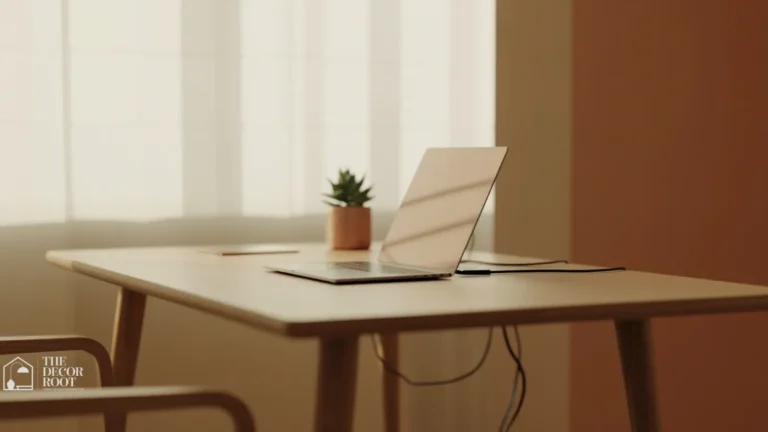
25. Warm Wood Desk Surface
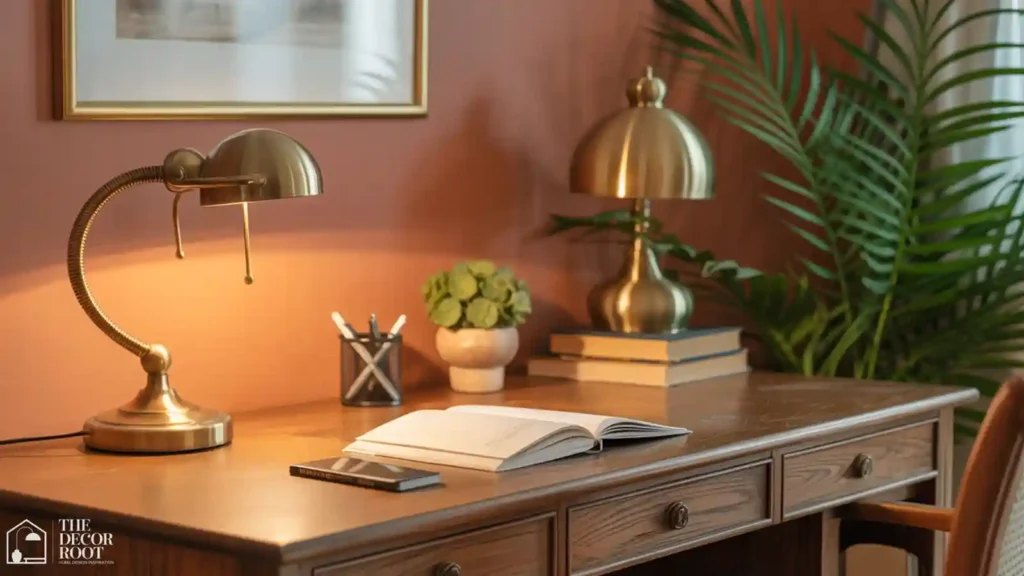
The desk itself sets the tone for the entire room, and a solid wood desk in a warm tone does more visual work than a cool-toned laminate or glass surface, tying together the wood accents, natural light, and warm palette covered throughout this list.
EDITOR’S PICK
🛒Solid Wood Desk In A Warm Finish
A warm-toned solid wood desk anchors the room’s style and ties together wood accents, natural light, and a cohesive warm palette better than cool-toned or glass surfaces.
(paid link)
Choose a finish that complements your existing flooring or shelving rather than matching it exactly, since slight variation in wood tone tends to look more intentional than an identical match across every piece in the room.
Quick Action Plan
- Start with lighting, since it’s the single change that affects how the entire room feels before you touch a single piece of furniture. Swap to warm bulbs and add at least one secondary light source this week.
- From there, add one textile layer (a rug, curtains, or a throw) and one personal touch (art, photos, or plants), since those two categories do the most to make a desk setup feel like a room rather than a workstation.
- Save bigger furniture purchases, like a new chair or desk, for last, once you know how the smaller changes have shifted how the space feels to actually sit in day-to-day.
FAQs
Conclusion
A home office doesn’t have to choose between feeling good to sit in and being a place where real work gets done; the two reinforce each other far more often than they compete.
💾 Save this to your Home Office Pinterest board and start layering these changes in one at a time.