22 Minimalist Home Office Ideas That Reduce Clutter
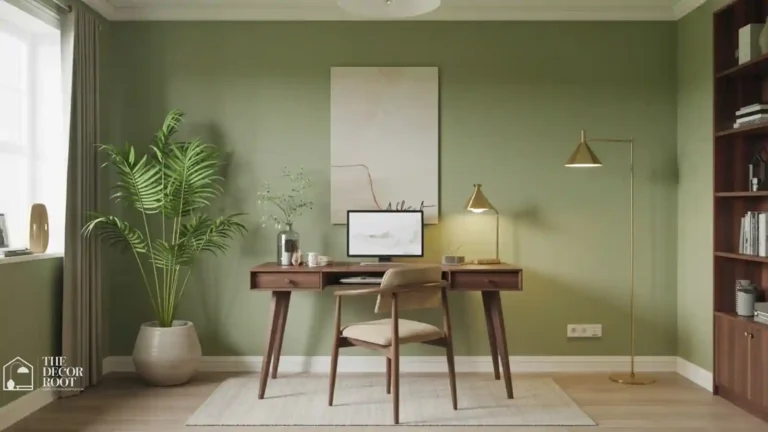
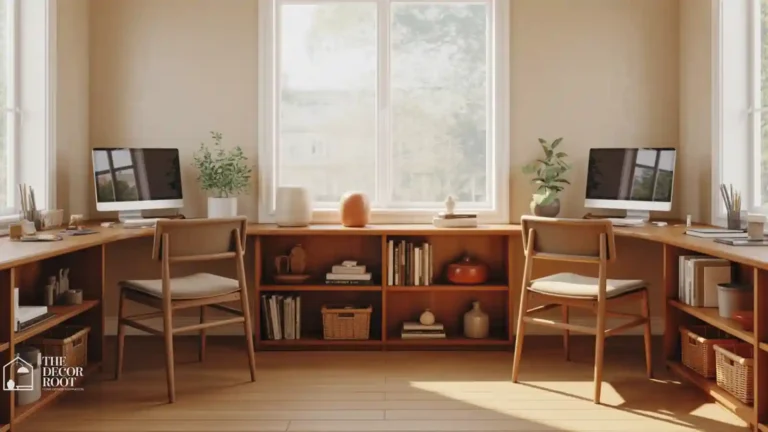
Minimalist Home Office Ideas: A lot of “minimalist office” content just means hiding clutter better: bigger baskets, more drawers, a nicer-looking bin to shove the mess into. That’s not minimalism; that’s clutter with better packaging, and it doesn’t actually change how your desk feels to sit at every morning. Real clutter reduction means fewer things competing for your desk’s surface area and your attention in the first place, not the same amount of stuff stored more attractively. A minimalist home office that genuinely reduces clutter is one of the most productively valuable home decorating ideas available; the research on cognitive load and visual environment is unambiguous: a clear desk and a resolved, uncluttered room produce measurably better concentration than any amount of motivational decor in a cluttered space.
This post contains affiliate links. As an Amazon Associate, I earn from qualifying purchases. If you buy through these links, I may earn a small commission at no extra cost to you.
The Thinking Behind This
Visual clutter isn’t just an aesthetic annoyance; every object sitting in your peripheral vision while you work is something your brain has to process and dismiss, over and over, all day. A desk with fifteen visible objects makes your brain do fifteen tiny “not relevant right now” judgments before you’ve even started the task in front of you. Cutting that number down isn’t about discipline or willpower; it’s about designing the desk so most things have a closed, out-of-sight home, and only the two or three items you touch constantly stay visible. The minimalist home office and the minimalist bedroom share the same design philosophy: that an edited, uncluttered environment measurably improves the quality of what you do in it. These minimalist interior design ideas show how the same principles of surface editing, hidden storage, and a resolved material palette that make a bedroom genuinely restful make a home office genuinely productive.
Minimalist Office Design Principles
Minimalism is one complete approach within the broader home office design discipline; these home office design ideas show how minimalist principles of editing, concealed storage, and a resolved colour palette sit alongside cozy, colourful, and shared office approaches to the same workspace brief. A minimalist home office is only possible with excellent storage; these home office storage and organisation ideas show how the discipline of minimalism in a workspace is achieved almost entirely through storage decisions: where cables go, how files are hidden, and what objects are allowed on the desk surface determine whether the office looks minimalist or merely sparse.
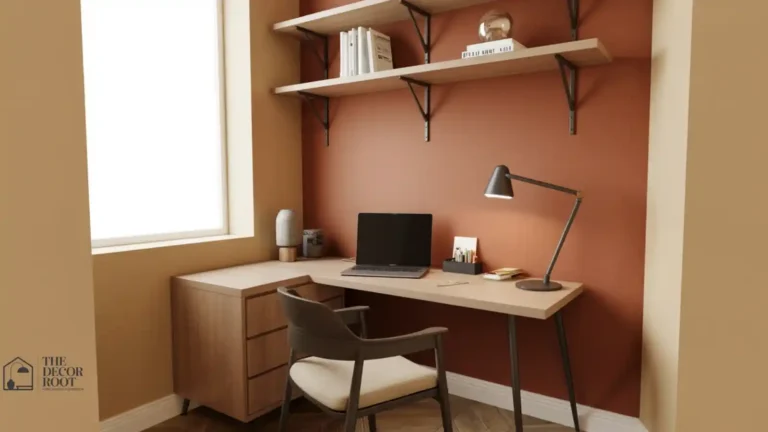
1. Start by removing everything from the desk, then add back only daily-use items.
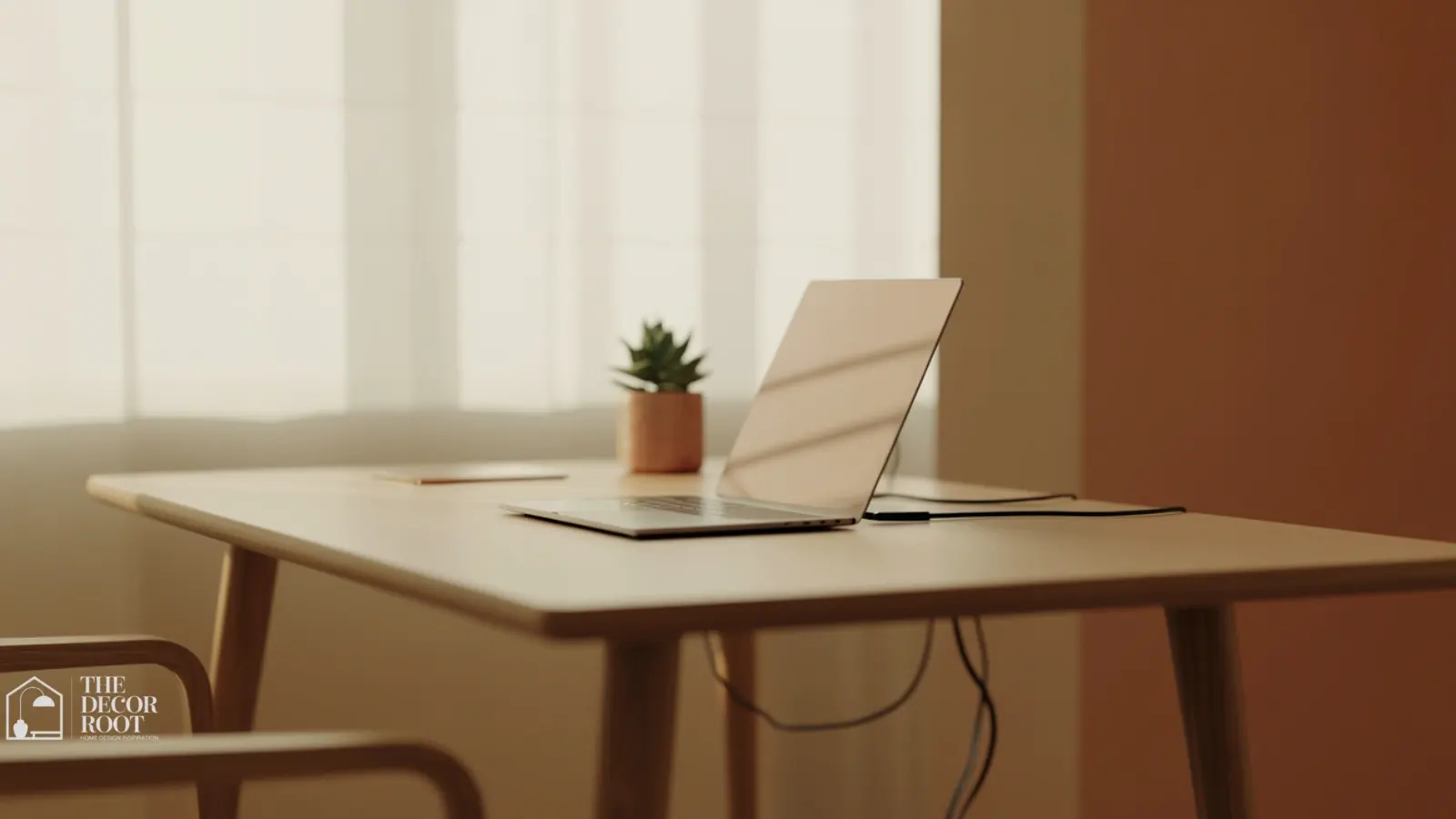
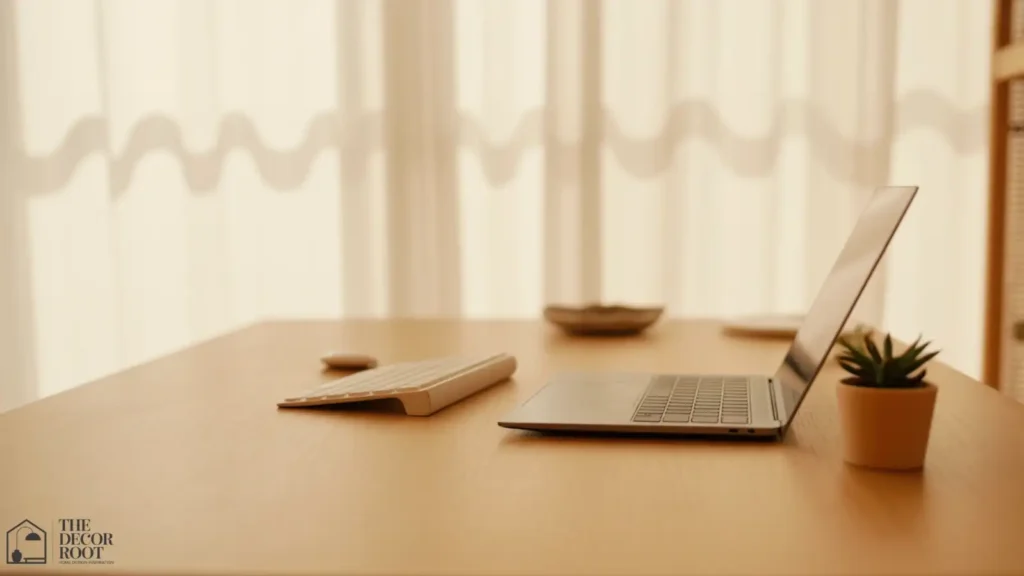
This is the single most effective exercise on this list, and it costs nothing. Clear the entire surface, then reintroduce only what you touch every single day usually just a laptop or monitor, a keyboard, and maybe one pen. Everything else gets a drawer, shelf, or storage spot that isn’t the desk surface itself.
2. Route all cables behind or under the desk, not across it.
Visible cables are one of the biggest contributors to a desk feeling cluttered even when the actual objects on it are minimal, since tangled cords read as visual chaos regardless of what else is going on. Running cables through a simple under-desk channel or clip system removes that chaos without removing a single device.
3. Limit yourself to one pen cup, not a collection of loose office supplies.
Loose pens, sticky notes, and paperclips scattered across a desk surface are small individually but add up to real visual noise collectively. Consolidating into a single small container and being honest about how many pens you actually need at once cuts that noise down fast.
4. Add a cable management box to hide power strips and adapter bricks completely.
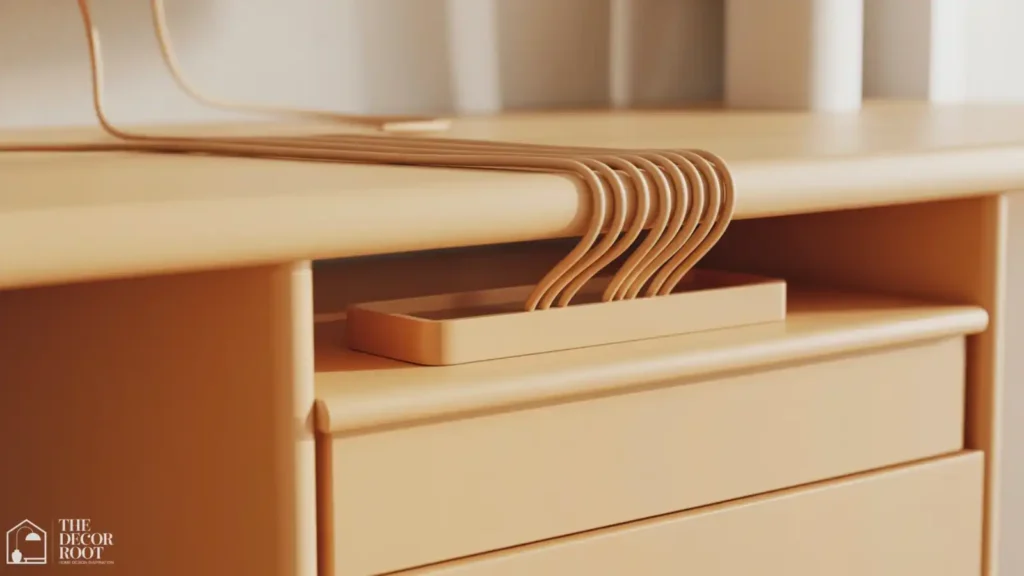
Power strips and bulky chargers are some of the ugliest, most cluttered-looking items on a typical desk, and a simple ventilated box hides them entirely while still letting them function safely. This is one of the greatest visual-impact changes on the whole list relative to how little effort it takes to implement.
EDITOR’S PICK
🛒Ventilated Cable Management Box For Power Strips
A ventilated box hides ugly power strips and chargers, delivering a major visual upgrade for very little effort.
(paid link)
5. Switch to a wireless keyboard and mouse.
Two fewer cables running across your desk surface is a small change that compounds with every other minimalist adjustment you make, since cable clutter is cumulative; each cord you remove makes the next one more noticeable if it’s still there. A wireless setup also makes it easier to shift your desk layout without rewiring everything each time.
6. Use a single monitor arm instead of a monitor stand or riser box.
A monitor arm clamps to the desk edge and lifts the entire monitor off the surface, reclaiming the desk space a stand or stacked-books riser would otherwise occupy. It also lets you push the monitor further back or angle it, which visually opens up the whole desk in a way a static stand can’t.
7. Choose a desk with zero or minimal visible hardware.
Desks with exposed brackets, visible screws, or busy grain patterns add visual texture that works against a calm, minimal look even when nothing is sitting on the surface. A simple slab-style desk in a solid, muted tone reads as cleaner by default, regardless of what you put on it.
8. Digitize your paper filing system wherever legally and practically possible.
Physical paper is one of the biggest ongoing clutter sources in any office, minimalist or not, because it accumulates continuously unless actively managed. A basic scanner app on your phone, paired with a cloud folder structure, eliminates most of the paper stack that would otherwise need a tray, a folder, or a filing cabinet taking up space.
9. Add a wireless charging pad instead of a visible charging cable and brick.
A slim wireless charging pad eliminates one of the most common sources of visible cable clutter: the phone charger cord snaking across the desk, and most models are thin enough to sit flush without adding real footprint. It’s a small swap with a disproportionately large visual payoff.
EDITOR’S PICK
🛒Slim Wireless Charging Pad For Desk
A slim wireless charging pad sits flush on the desk, eliminating visible cable clutter for a big visual reward with almost no surface space taken.
(paid link)
10. Store your laptop, when not in use, somewhere other than the desk.
A closed laptop sitting on an otherwise empty desk still reads as an object occupying space, even if it’s not actively cluttering the surface with cables or mess. A dedicated stand, drawer, or nearby shelf for end-of-day laptop storage keeps the desk genuinely clear rather than just tidy-looking.
11. Limit desk decor to one item, chosen deliberately.
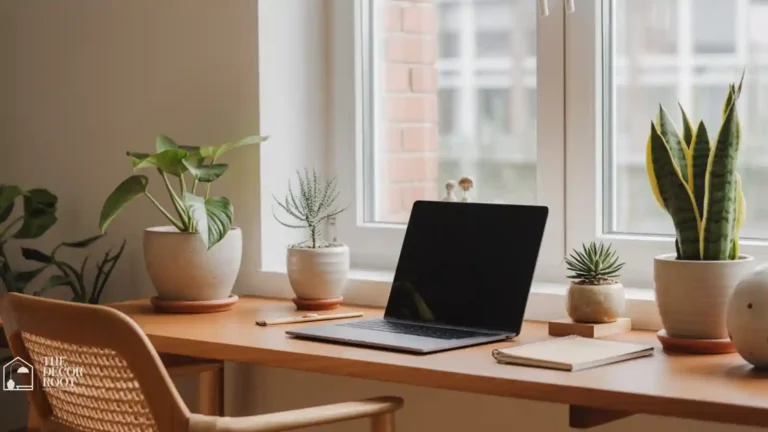
A minimalist desk isn’t a bare desk; one small plant, one small frame, or one small object you actually like looking at is fine, and even beneficial for mood. The mistake most “minimalist” setups make is having three or four small decor pieces instead of committing to just one, which quietly reintroduces the visual clutter the whole approach is meant to eliminate.
12. Use closed storage instead of open shelving for anything that isn’t visually intentional.
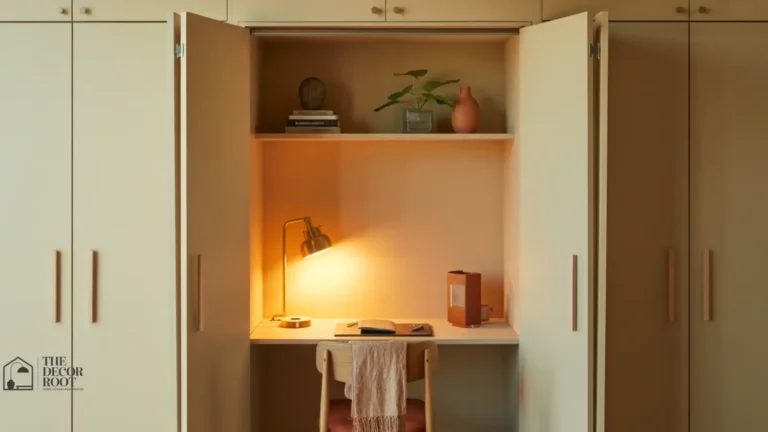
Open shelving looks great in photos and terrible in daily use once it fills with the actual random stuff an office accumulates. Closed cabinets or drawers hide that inevitable accumulation, keeping the visible parts of the room limited to what you’ve deliberately chosen to display.
13. Keep your desktop background and open apps minimal too; clutter isn’t just physical.
A cluttered digital desktop or a taskbar full of open tabs creates the same kind of low-level visual noise as a messy physical desk, and it’s sitting directly in your line of sight for hours. A clean digital desktop and a habit of closing unused tabs extend the minimalist principle to the screen itself, not just the furniture around it.
14. Add a drawer organizer tray set so items are removed from the desk but not lost inside a chaotic drawer.
A drawer that’s just a dumping ground defeats the purpose of clearing the desk, since you end up digging through it constantly, which creates its own kind of low-grade daily frustration. A simple tray insert keeps drawer contents as organized as the desk surface above it.
EDITOR’S PICK
🛒Drawer Organizer Tray Set, Adjustable Compartments
A tray insert organizes drawer contents, preventing the frustration of digging through a catch-all drawer that undermines a tidy desktop.
(paid link)
15. Choose one neutral color family for everything visible on the desk.
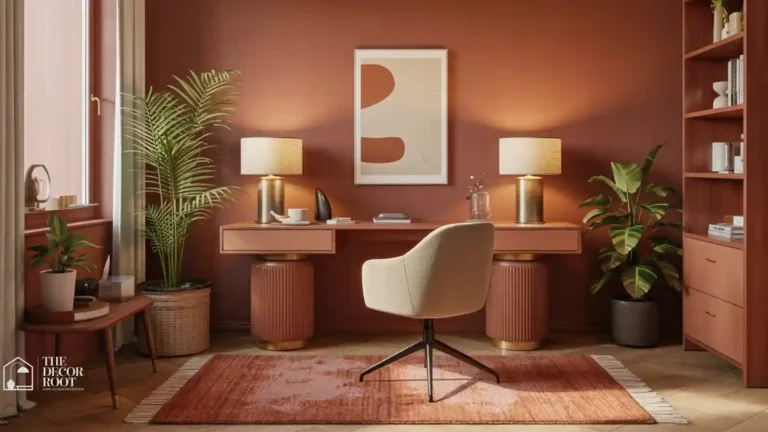
Mismatched colors across your keyboard, mouse, lamp, and accessories create visual busyness even when the item count is genuinely low. Sticking to one neutral tone family, like the cream-and-terracotta palette used throughout this site, makes even a moderately populated desk read as calm and cohesive. Colour in a minimalist home office is not an absence of colour; it is a single, carefully chosen tone applied with confidence. These minimalist office colour ideas show how one well-considered wall colour, used consistently across the room without competing accent colours, creates a workspace that feels simultaneously calming, resolved, and deeply personal.
16. Set a “one in, one out” rule for anything new that lands on the desk.
Clutter creeps back in gradually, not all at once, which is why most decluttered desks slowly refill over a few months without anyone noticing it happening. A simple rule nothing new stays on the desk permanently unless something else leaves keeps the surface from slowly reverting to its pre-minimalist state.
17. Move your printer off the desk entirely, onto a separate small stand or shelf.
Printers are large, visually busy, and used far less often than most other desk items, making them a poor use of prime desk real estate. Relocating it to a nearby shelf or small rolling cart frees up meaningful surface area for something you actually use daily.
18. Use a single tray for incoming mail or documents, checked and cleared weekly.
Without a defined landing spot, incoming paperwork spreads across whatever surface is nearest, usually the desk. One shallow tray, cleared on a set weekly schedule rather than left to accumulate indefinitely, keeps that inflow from becoming permanent clutter.
19. Add a slim vertical file organizer instead of a flat file tray.
A vertical organizer takes up a fraction of the desk footprint that a flat horizontal tray requires for the same document capacity, since it uses height rather than surface area. It’s a small swap that meaningfully reclaims desk space if you handle any regular paperwork at all.
EDITOR’S PICK
🛒Slim Vertical File Organizer, Desktop
A vertical document organizer saves desk space by using height instead of surface area, a small swap that frees up room if you work with paper regularly.
(paid link)
20. Keep your chair simple and visually light, avoiding bulky high-back styles if space allows.
A large, heavy-looking office chair can visually dominate a small room even when the desk itself is perfectly minimal, since it’s the largest object in most home offices by volume. A slimmer, lower-profile chair keeps the whole room’s visual weight lighter, not just the desk surface.
21. Do a weekly five-minute reset instead of relying on one big declutter session.
A single deep declutter feels productive but doesn’t hold if there’s no maintenance habit behind it; clutter always creeps back without a recurring check-in. A short, consistent weekly reset is far more sustainable long-term than an occasional deep clean that resets to zero and then slowly rebuilds.
22. Add a minimalist LED desk lamp with a slim base to replace a bulky traditional lamp.
Traditional lamps with wide bases and large shades take up disproportionate desk space relative to the light they provide. A slim, minimalist LED lamp gives the same or better task lighting in a fraction of the footprint, freeing up real surface area for actual work.
EDITOR’S PICK
🛒Minimalist Slim-Base LED Desk Lamp
A slim LED lamp offers the same task lighting as bulky traditional lamps but takes up far less desk space, freeing the surface for actual work.
(paid link)
Quick Action Plan
- Start with the full desk clear-out (Tip 1) this weekend; since it’s the single most revealing exercise on this list, you’ll immediately see what you actually use daily versus what’s just been sitting there.
- Follow it up with a cable management box (Tip 4) and a wireless charging pad (Tip 9) to remove the two most common sources of visible clutter for good.
Frequently Asked Questions
Conclusion
A genuinely minimalist office isn’t about owning less; it’s about making sure everything within eyeshot of your desk has an actual job. Clear the surface first, then solve for cables, storage, and light, and the calm follows on its own.
💾 Save this to your Home Office Ideas board so the decluttering actually happens this time.