23 Neutral Nursery Ideas That Work for Any Gender
Neutral Nursery Ideas: Somewhere between the anatomy scan and the due date, a lot of parents hit the same wall: they don’t know the baby’s sex, they’ve decided not to find out, or they simply don’t want to build a whole room around pink or blue. None of those are compromises. A genuinely well-designed neutral nursery isn’t a fallback option done right; it often ages better than a themed room, because it doesn’t need to be redecorated the moment your toddler develops opinions about dinosaurs or unicorns. A neutral nursery that works for any gender is one of the most considered home decorating ideas for a new baby’s room; a palette of warm whites, sandy beiges, sage greens, and soft terracottas creates a room that is beautiful from day one, grows with the child through every developmental stage, and never requires a complete repaint because a gender reveal changed your plans.
This post contains affiliate links. As an Amazon Associate, I earn from qualifying purchases. If you buy through these links, I may earn a small commission at no extra cost to you.
What Ties These Ideas Together
The common thread across every idea on this list is warmth over sterility. A lot of “gender-neutral” nursery inspiration defaults to stark white and gray, which photographs cleanly but often feels cold in person, especially for the parent who’s spending 3 a.m. feedings in that room. The ideas below lean instead toward warm neutrals: cream, oatmeal, soft sage, warm terracotta, natural wood paired with texture: woven baskets, ribbed knit blankets, natural fiber rugs. Choosing a neutral palette is still a colour decision; these nursery colour ideas show which specific neutral tones perform best in a baby’s room, how warm versus cool undertones affect the quality of light in a small space, and which paint colours remain beautiful as the child grows rather than looking like a baby room that has simply not been repainted.
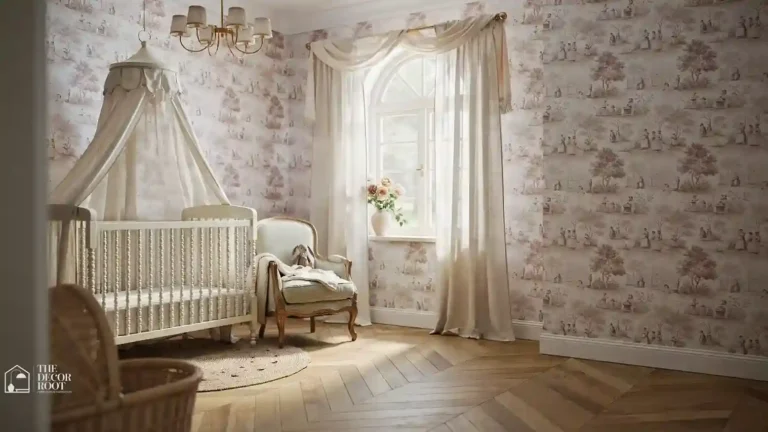
Embrace Neutral French Nursery
A neutral nursery and a French-inspired nursery share the same instinct toward restraint, warmth, and a palette that prioritises the baby’s comfort over parental trend-following. These nursery design and baby room decor ideas show how the French tradition of muted, sophisticated nursery design has shaped the neutral nursery aesthetic that is now the most searched nursery direction worldwide. “A neutral nursery and a boho nursery are design cousins; both reject the primary colour palette of conventional baby rooms in favour of warmer, more organic tones and natural materials. These boho nursery ideas show how the neutral palette gains layers of texture and warmth through rattan accents, macramé wall hangings, and woven baskets that add personality without introducing colour.
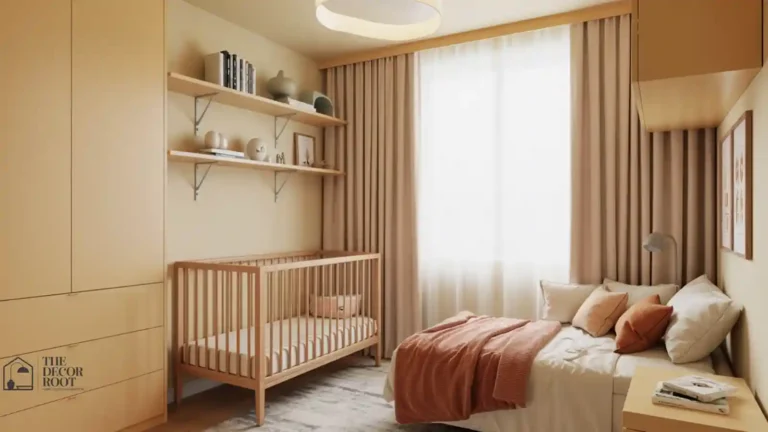
1. Anchor the Room in a Warm Cream Wall Color
Skip stark white, which photographs well but often reads as sterile and cold under real household lighting, especially during nighttime feedings when a warm tone matters more than it does in daylight photos. A soft, warm cream or oatmeal wall color gives the room a cozy base that works under both bright daylight and dim night-light conditions. This single choice does more to set the tone of the entire nursery than almost any other item on this list, since every other color and texture you add will read differently against a warm base than a stark white one.
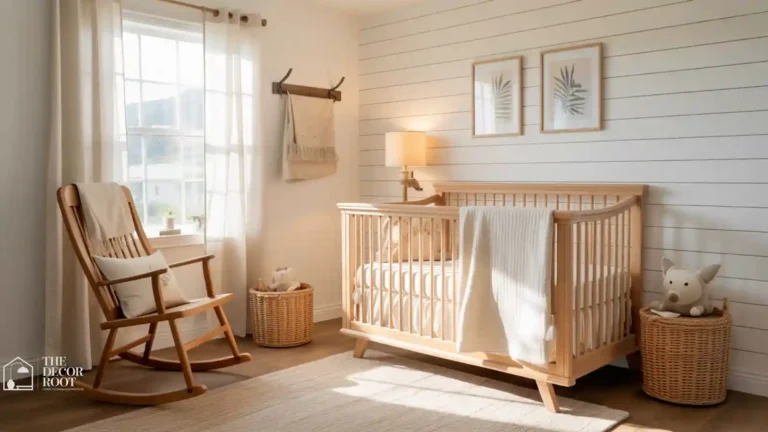
2. Choose Natural Wood Over Painted White Furniture
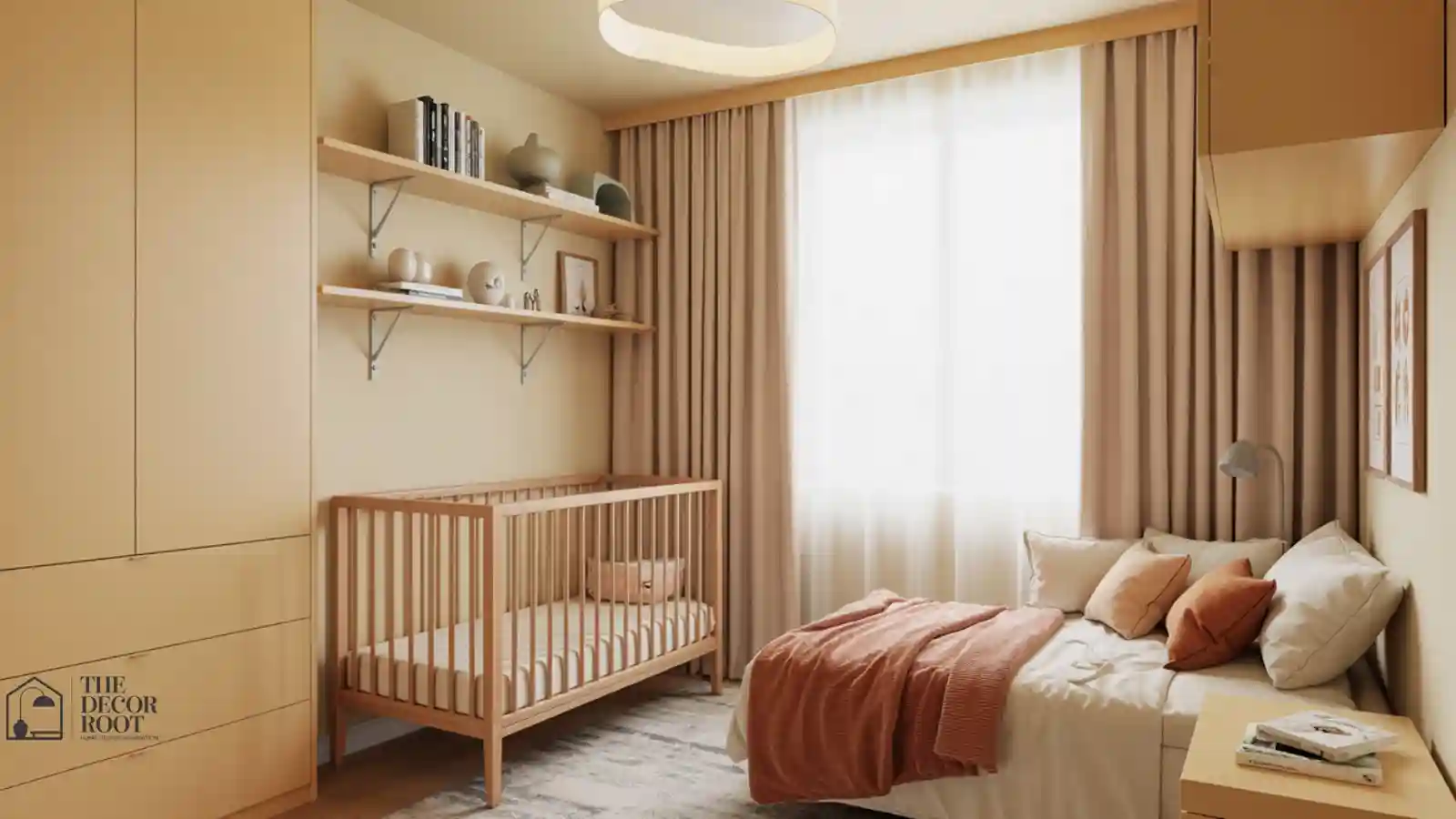
A natural wood crib, dresser, or glider brings warmth and texture into the room without introducing color that needs to match a specific theme, which is part of why it holds up so well over time. Natural wood tones also transition seamlessly as the nursery becomes a toddler room, since you won’t need to repaint or replace furniture to shift the room’s feel. Look for a lighter, warmer wood tone, such as ash, birch, or light oak, rather than a heavy, dark stain, which can make a smaller nursery feel more closed-in.
3. Layer in Sage or Muted Olive as a Secondary Color
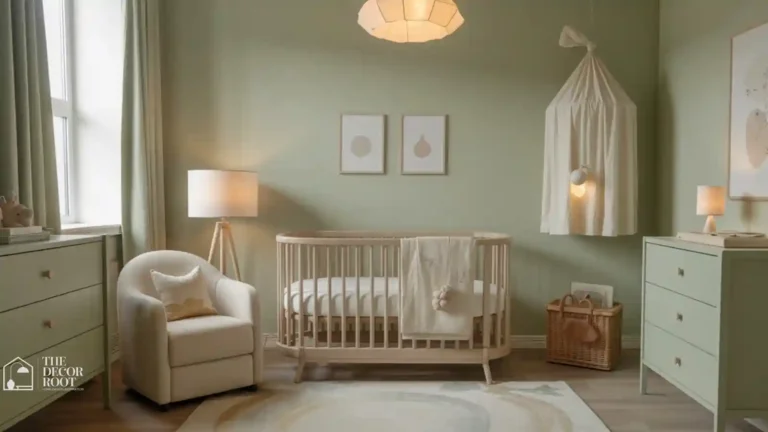
If a fully neutral palette feels too flat, sage or a muted olive green is one of the few colors that reads as genuinely gender-neutral rather than leaning subtly masculine or feminine, and it pairs naturally with warm creams and wood tones. Use it in smaller doses a single accent wall, a set of curtains, or a rug rather than as the dominant color, so it reads as a considered accent instead of a full theme. This color also has the practical advantage of hiding minor scuffs and marks better than a pure white would, which matters once your baby becomes a mobile toddler.
4. Install Blackout Curtains in a Neutral Fabric
Sleep is the actual priority in a nursery, and blackout curtain panels in a warm oatmeal or soft sage fabric handle that function without introducing a themed pattern that limits how long the room stays flexible. Choose a solid color or subtle textured weave rather than a printed pattern, since patterns tend to date a room’s look faster than solid, textural choices. Blackout lining also helps regulate the room’s temperature slightly by blocking additional heat or cold from the window, which is a genuinely practical bonus beyond the sleep benefit.
EDITOR’S PICK
🛒Blackout Curtain Panels In A Neutral, Textured Fabric
Oatmeal or sage blackout curtains with solid or textured fabric prioritize sleep, avoid dated patterns, and help regulate room temperature.
(paid link)
5. Add a Natural Fiber Rug Underfoot
A jute, sisal, or wool rug in a natural, undyed tone grounds the room and adds warmth underfoot for the countless hours you’ll spend standing, rocking, or sitting on the floor during infancy. Natural fiber rugs also tend to hide the inevitable spit-up and spills better than a bright white or pastel option, and they hold up well as your child grows into crawling and eventually walking on that same floor. Choose a low-pile option for easier cleaning, and consider a rug pad underneath both for comfort and to prevent slipping on hard flooring.
6. Use Woven Textures Instead of Printed Patterns
Rather than relying on a printed pattern stars, clouds, animals to add visual interest to a neutral room, lean on texture instead: a woven pouf, a chunky knit throw, a rattan mirror frame. Texture reads as sophisticated and timeless in a way that printed patterns, which tend to feel babyish and eventually dated, don’t. This is one of the easiest swaps to make if you’re building the nursery gradually, since textured pieces like throws and poufs are inexpensive and easy to add one at a time as your budget allows.
7. Choose a Convertible Crib in a Neutral Finish
A crib that converts into a toddler bed and eventually a daybed or headboard extends the usable life of your single largest nursery purchase well beyond infancy, and choosing one in a neutral wood or matte white finish means it won’t clash with whatever room design your child eventually wants as they grow older. This is a genuinely practical idea rather than a purely aesthetic one; it saves you from an entirely new furniture purchase in two or three years, which matters both for budget and for sustainability if that’s a priority for your family.
8. Add a Round Mirror to Reflect Natural Light
A single round mirror, ideally in a natural rattan, wood, or brushed brass frame, does double duty in a nursery: it bounces available natural light around a room that often has limited windows or heavy blackout curtains, and it adds a soft, organic shape that breaks up the straight lines of furniture and walls. Position it where it reflects your window rather than a wall, and avoid placing it directly across from the crib, since a mirror facing a sleeping baby can sometimes be more stimulating than calming.
9. Choose Crib Bedding in Solid, Muted Tones
Skip the matching printed crib set in favor of a neutral solid-tone crib sheet set insert in oatmeal, sage, or soft clay. Solid tones photograph better, mix and match more easily as you add other textiles to the room, and don’t lock you into a specific themed aesthetic the way a printed set with characters or a strict color story does. Multiple fitted sheets in coordinating solid tones also give you flexibility to rotate the look slightly over time without buying an entirely new set.
EDITOR’S PICK
🛒Neutral Solid-Tone Crib Sheet Set, Multi-Pack
Oatmeal, sage, or clay solid crib sheets mix easily, photograph well, and let you rotate looks without buying a new themed set.
(paid link)
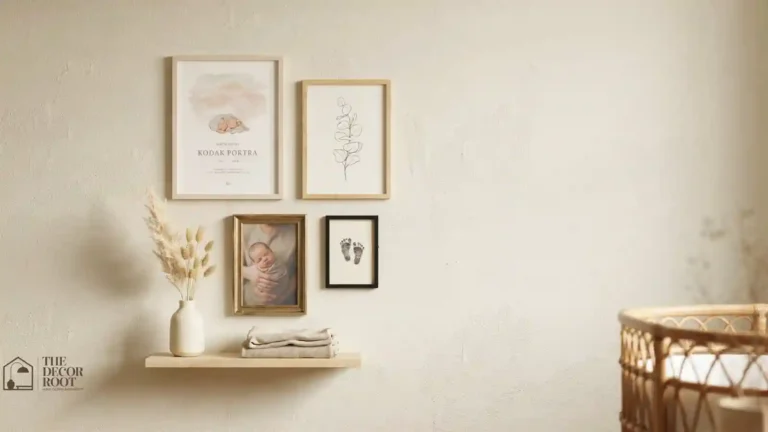
10. Add a Gallery Wall of Neutral Botanical Prints
A small gallery wall of two or three botanical or abstract line-art prints in muted, warm tones adds personality and visual interest without relying on a themed nursery motif that your child will eventually outgrow. Choose frames in a single consistent finish natural wood or matte black and keep the prints themselves simple: single-line botanical sketches or soft abstract shapes read as sophisticated rather than babyish, and they’ll still look appropriate when the room eventually transitions to a toddler or young child’s space.
11. Use a Woven Pouf as Extra Seating
A small woven pouf tucked beside the glider or in a corner adds a place to prop your feet during long feeding sessions, or extra seating for a partner or visitor, without taking up the floor space a full second chair would require. Choose one in a natural fiber tone that matches your rug or curtains, and it doubles as a soft, safe object once your child is mobile and starts exploring the room on their own.
12. Add a Wood or Rattan Ceiling Light Fixture
Swapping a builder-grade overhead light for a wood bead or woven rattan pendant fixture is a relatively small change that has an outsized effect on how finished the room feels, since ceiling fixtures are one of the few elements every angle of the room includes in its sightline. Choose a fixture with a dimmer-compatible bulb so you can shift the light from bright and functional during daytime changes to soft and dim during nighttime feedings, without needing a separate lamp for both functions.
13. Layer a Knit Throw Blanket Over the Glider
A chunky knit throw draped over the arm of your glider or rocking chair adds texture and warmth to what’s often the visual centerpiece of a nursery, since it’s where you’ll spend the most concentrated time. Choose a neutral tone that contrasts slightly with the chair’s upholstery a cream throw over a darker chair, or a warm oatmeal throw over a lighter one so the layering actually reads as intentional rather than blending into a single flat color block.
14. Store Essentials in Woven Baskets Instead of Plastic Bins
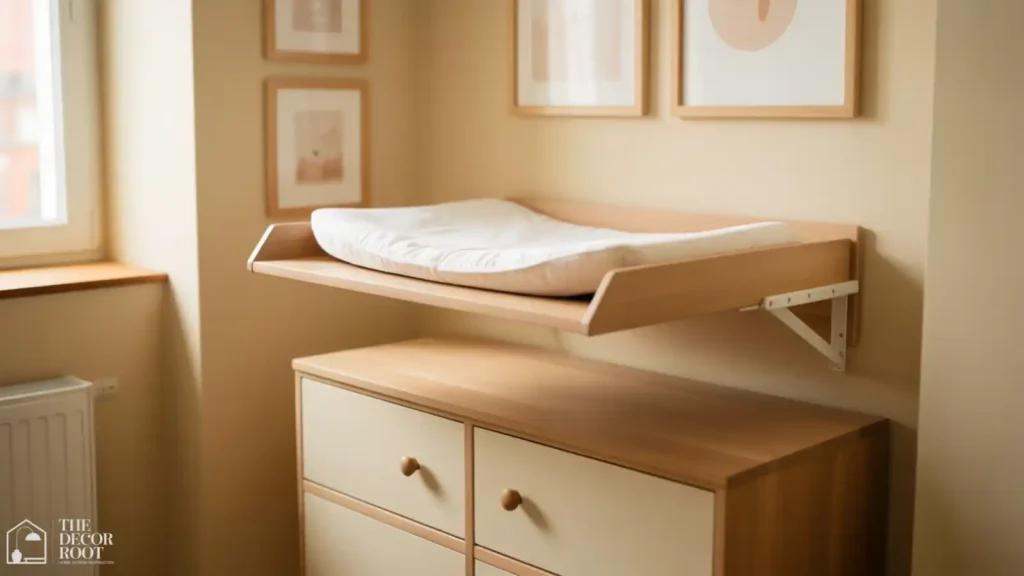
Diapers, extra linens, and toys accumulate fast in a nursery, and woven storage basket sets insert hide that clutter while adding texture rather than the visual noise of stacked plastic bins. Use a set of two or three different sizes on an open shelf or beside the dresser, and label them loosely by category; this stays functional even as your child grows and the room’s storage needs shift from diapers to books and toys.
EDITOR’S PICK
🛒Woven Storage Basket Set, Multiple Sizes
Woven baskets in mixed sizes hide nursery clutter with texture, and simple category labels keep them functional as storage needs evolve from diapers to toys and books.
(paid link)
15. Add a Small Bookshelf for Early Reading
Even in infancy, a small, low bookshelf filled with board books adds warmth and signals the room’s purpose beyond just sleep. Choose an open, ladder-style shelf in natural wood rather than a closed cabinet, so the book covers themselves add color and visual interest to the room instead of being hidden away. This is also a genuinely practical long-term investment, since the same shelf works for picture books and eventually early chapter books well into toddlerhood and beyond.
16. Choose a Neutral, Textured Wallpaper for One Wall
If a solid accent color feels too plain but a themed print feels too limiting, a subtly textured neutral wallpaper a grasscloth look, a soft linen weave pattern, or a muted abstract shape adds depth to a single wall without committing to anything that will feel dated once your child develops their own preferences. Apply it only to the wall behind the crib or dresser to keep the cost and installation effort manageable while still getting the visual impact of a fully wallpapered room.
17. Add Warm Metallic Accents in Small Doses
A few small touches of warm brass or gold a drawer pull, a picture frame, a small decorative object add a subtle richness to a neutral nursery without overwhelming the calm palette the rest of the room is built around. Keep these accents small and scattered rather than concentrated in one spot, since a little warm metallic goes a long way in a room otherwise built on soft, matte textures like wood, wool, and cotton.
18. Use a Room Divider or Curtain for Shared Spaces
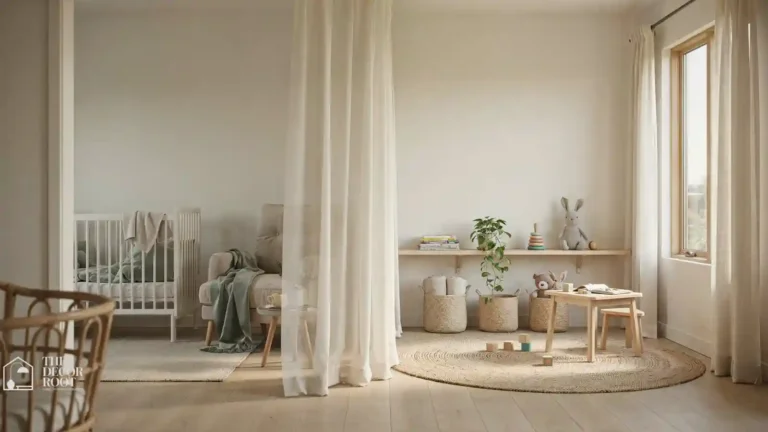
If your nursery shares a room with a home office, guest space, or an older sibling’s area, a soft woven or linen room divider creates a visual boundary without the cost or permanence of a wall. Choose a neutral tone that matches the rest of your palette, and it folds away easily when you need the full room for another purpose, which is a genuinely practical solution for smaller homes where a dedicated nursery isn’t an option.
19. Install a Dimmable Lamp for Nighttime Changes
A dedicated dimmable nursery lamp insert beside the changing table or crib lets you handle nighttime feedings and diaper changes without flipping on a bright overhead light that can fully wake a drowsy baby. Choose a warm-toned bulb on the lowest setting for true middle-of-the-night use, and a brighter setting for daytime diaper changes when you need to actually see clearly. This is one of the more functionally important items on this list, even though it’s easy to overlook while focused on bigger design decisions.
EDITOR’S PICK
🛒Dimmable Nursery Lamp With Warm-Toned Bulb
A dimmable nursery lamp with warm and bright settings keeps nighttime changes calm without waking the baby, making it a highly functional but often overlooked addition.
(paid link)
20. Add a Soft Area of Floor Padding for Tummy Time
A neutral-toned padded play mat or folded quilt in the same warm palette as the rest of the room gives you a soft, safe spot for tummy time and early floor play without introducing the bright primary colors most standard play mats default to. Look specifically for options marketed as “neutral” or “boho” play mats, which have become more widely available as demand for non-themed nursery decor has grown, and they blend into the room’s design rather than standing out as an obviously kid-specific object.
21. Choose Curtains with a Subtle Texture Instead of a Print
Beyond the blackout function covered in Item 4, if you’re layering a second, lighter curtain for daytime use, choose one with a subtle woven texture a linen-look weave or a soft waffle knit rather than a printed pattern. This keeps the window treatment consistent with the room’s broader texture-over-pattern approach, and it means the curtains won’t need replacing as your child’s tastes develop, unlike a themed print that reads as clearly babyish within a year or two.
22. Add a Single Oversized Plant for Warmth and Air Quality
A large, hardy plant like a fiddle leaf fig or rubber plant in the corner of the nursery adds life and softness to the room’s straight lines and, depending on the variety, contributes modestly to indoor air quality. Choose a variety known for being low-maintenance and non-toxic, and keep it out of reach once your child becomes mobile. This single plant does a lot of the same warming, humanizing work in a nursery that it does in a home office; it keeps the room from feeling like a display rather than a lived-in space.
23. Add Removable Wall Decals for Flexible Personality
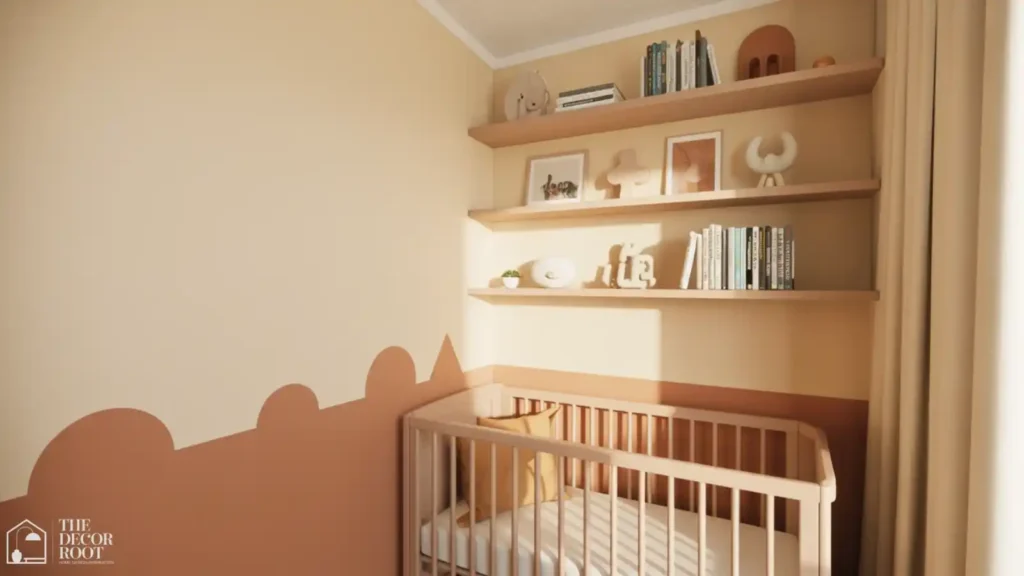
For a final layer of personality that won’t lock the room into a fixed theme, removable wall decal sets insert in a simple botanical, mountain, or abstract shape design add visual interest without paint or permanent commitment. Because they’re removable, you can swap them out entirely as your child grows and develops their own preferences, without needing to repaint or reconfigure the rest of the neutral base you’ve built with the other 22 ideas on this list.
EDITOR’S PICK
🛒Removable Wall Decal Set, Neutral Botanical Design
Removable wall decals in simple shapes add personality without paint, and they can be swapped as your child’s preferences change, preserving the neutral room base you have created.
(paid link)
Quick Action Plan
- Start with the wall color and the crib, since those two choices set the tone for every other decision on this list and are the most expensive or time-consuming to change later.
- Once those are settled, layer in one textile category at a time: rug, then curtains, then bedding, rather than buying everything simultaneously, so you can see how the warm neutral palette is coming together in real light before committing to smaller accent pieces.
- Save the personality-driven finishing touches, like the gallery wall and wall decals, for last, since those are the easiest and cheapest to adjust if your taste shifts slightly once the bigger pieces are in place.
A neutral nursery is a minimalist nursery; these calm and minimal nursery ideas draw on the same principles of visual restraint, natural materials, and a resolved tonal palette that make a minimalist bedroom genuinely restful, showing how those same decisions create a baby’s room that promotes sleep and calm rather than stimulation.
Frequently Asked Questions
Conclusion
A neutral nursery isn’t a placeholder until you know more, it’s a genuinely complete design choice that tends to age better than most themed rooms do. Pick a handful of these 23 ideas that fit your space and budget, and build the rest in slowly as your baby and your taste come into focus.
💾 Save this post to your Nursery Ideas board on Pinterest so you can reference it through every stage of planning.