22 Nursery Storage Ideas That Actually Work
Nursery Storage Ideas: Nobody tells you before the baby shower that the real challenge isn’t decorating the nursery; it’s finding somewhere to put everything that shows up in the first six weeks. Onesies in five sizes, burp cloths that seem to multiply overnight, diapers in three different box sizes, and gear that outgrows itself every season. Generic “nursery organization” content shows you a pretty shelf with three folded stacks and calls it done. Nursery storage that actually works is one of the most consequential home decorating ideas in a new baby’s room; the difference between a nursery that functions smoothly at 3 am and one that feels chaotic under pressure is almost entirely a function of how well the storage has been designed to make every object instantly findable in the dark.
This post contains affiliate links. As an Amazon Associate, I earn from qualifying purchases. If you buy through these links, I may earn a small commission at no extra cost to you.
Where to Start Mentally
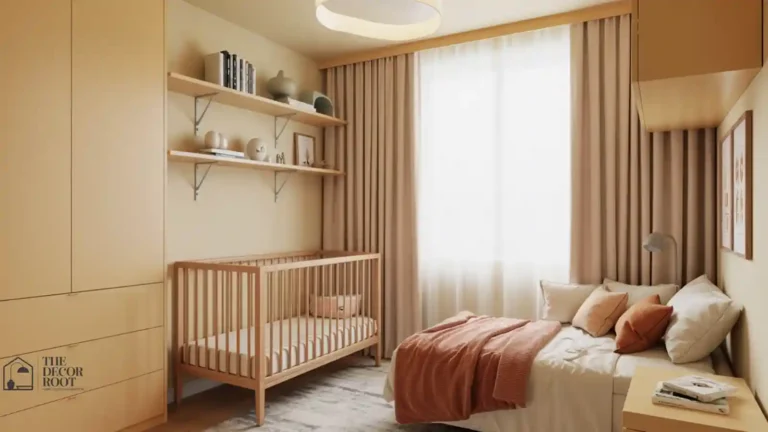
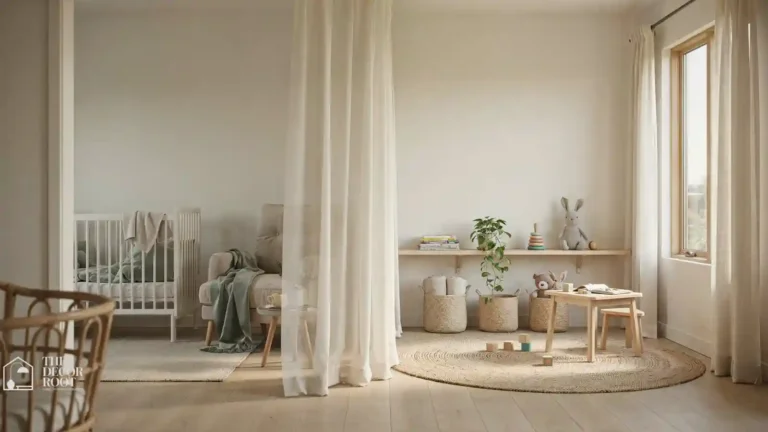
Before you buy a single bin, it helps to sort storage problems into three categories: things you need daily (diapers, wipes, a few outfits), things you need weekly (extra bedding, seasonal clothes), and things you need rarely (keepsakes, next-size-up gear). Most storage failures happen because everything gets treated as equally urgent, which means the daily items end up buried under things you only need once a month. In a small nursery, storage is not an afterthought; it is the primary design decision. These nursery storage ideas for small rooms show how to design the storage first and fit the furniture around it, using every vertical inch of wall space and every underbed and under-cot centimetre so the floor remains clear and the room never feels overwhelmed.
French-Inspired Serene Storage
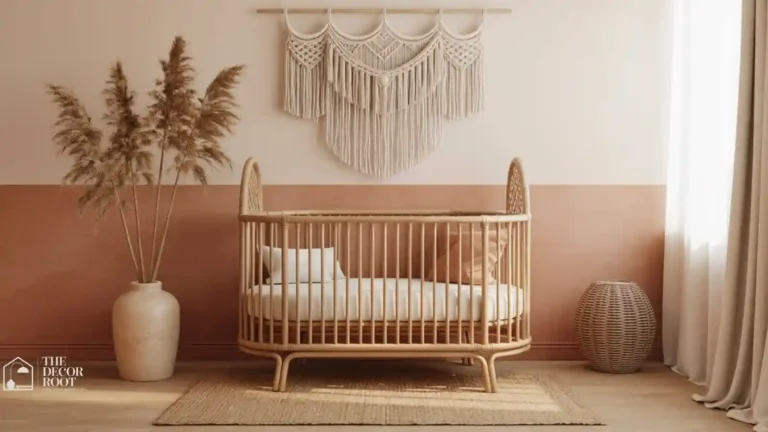
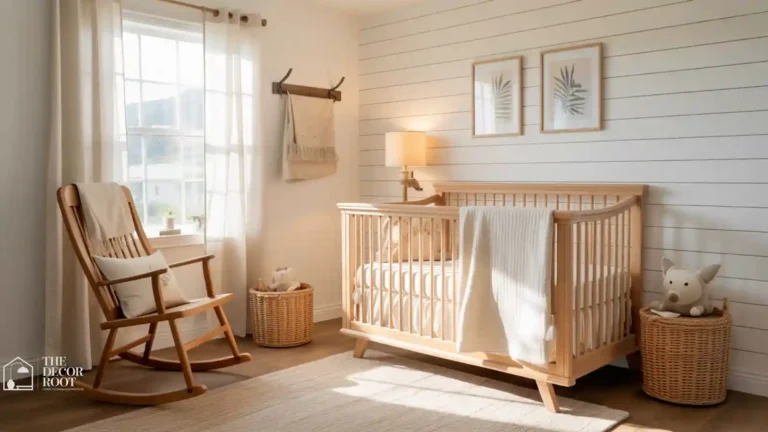
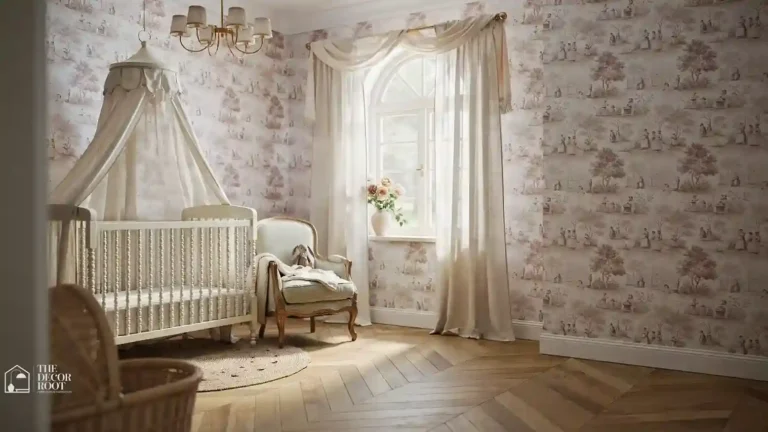
The French approach to nursery storage prizes concealment, quality, and longevity; these French-inspired nursery design ideas show how armoires, closed baskets, and built-in shelving create a nursery that looks serene rather than functional, with everything the baby needs within reach but nothing on display that doesn’t also serve an aesthetic purpose. Farmhouse nursery storage is some of the most photogenic functional storage available; these farmhouse nursery storage ideas show how open wooden shelving, wicker baskets, fabric bins, and a painted wooden dresser create a storage system that looks beautiful on display and functions smoothly under the daily demands of nappy changing, feeding, and dressing.
1. Install a Closet Shelf Divider System
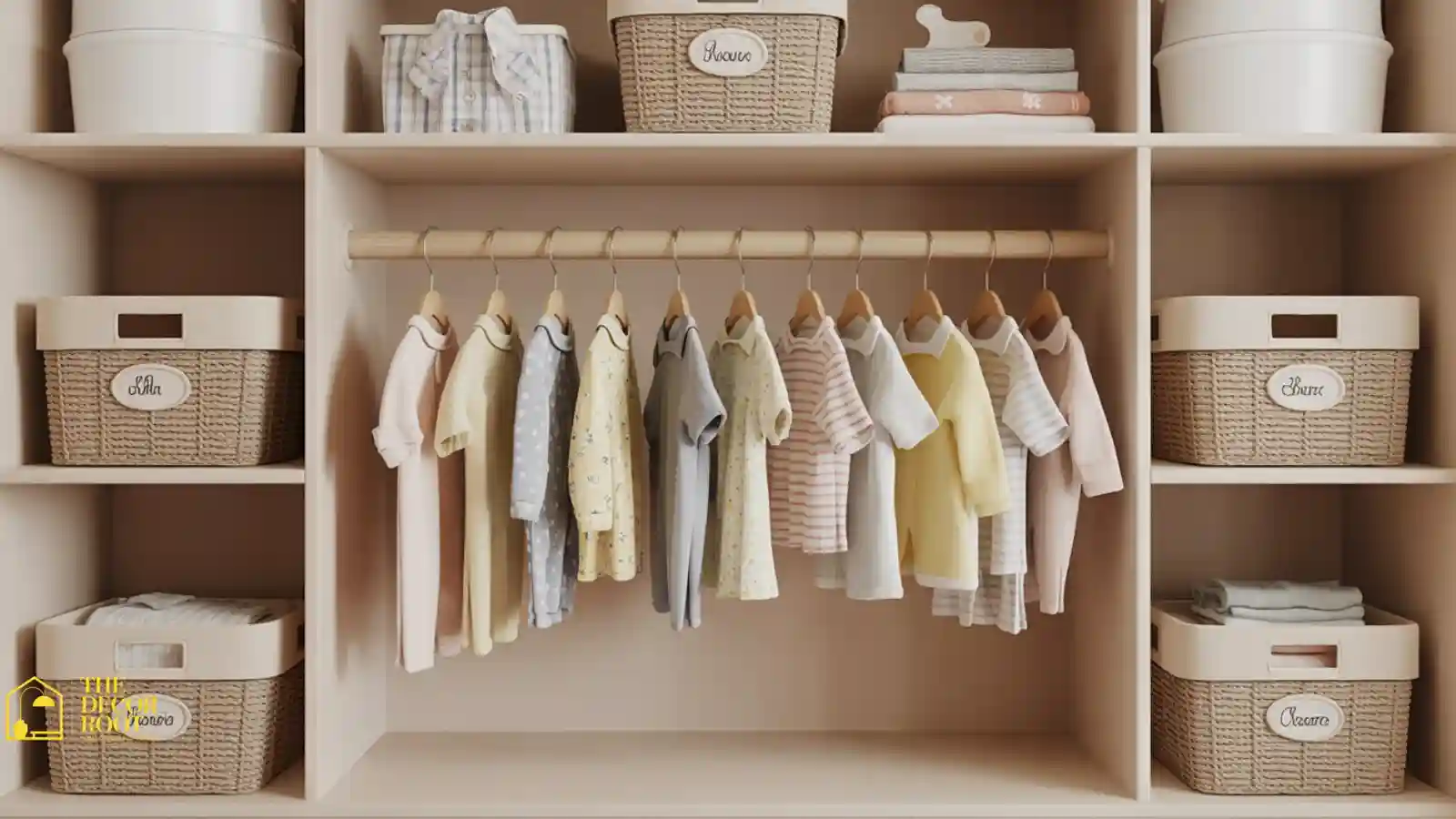
A basic wire or wood closet already has one rod and one shelf, which is rarely enough for a nursery. Adding a shelf divider system lets you stack two or three tiers of shelving above and below the existing hanging rod, instantly multiplying your usable storage without any construction. Use the lower shelves for frequently accessed items like folded onesies and swaddles, and the higher shelves for off-season or next-size clothing you won’t need for months. Most systems install with basic tools in under an hour, making this one of the highest storage-per-dollar upgrades available for a standard nursery closet.
2. Add a Double Hanging Rod for Small Clothes
Baby clothes are short enough that a single full-height hanging rod wastes most of the vertical space below it. Installing a second rod about halfway down doubles your hanging capacity in the same closet footprint, which matters enormously in a small nursery where floor space for extra furniture simply doesn’t exist. This setup works especially well for onesies, rompers, and small jackets, while longer items like coats or dresses can stay on a single rod section. It’s a one-time hardware project that pays off every single laundry day for the next two to three years.
3. Add a closet shelf divider system for Clear Category Zones
Open shelving without dividers turns into a single messy pile within weeks, no matter how organized the first folding session was. Adjustable shelf dividers create visual and physical boundaries between categories: pajamas here, onesies there, bibs in the next section so everyone in the house (including tired 2 a.m. you) can find and return items to the right spot. Look for dividers that clip or slot in without drilling, since these adjust easily as your storage needs change from newborn to toddler sizing. This small addition is often what separates a closet that stays organized from one that needs a full re-sort every month.
EDITOR’S PICK
🛒Adjustable Shelf Dividers For Sorting Closet Categories Clearly
Adjustable, drill-free shelf dividers keep open nursery shelving organized by creating clear clothing categories, adapting as the child grows, and preventing the need for monthly resets.
(paid link)
4. Use Under-Crib Space for Bulk Storage
The space beneath a standard crib is one of the most overlooked storage zones in the entire nursery, largely because most parents don’t think to measure it before buying storage bins. Low-profile bins or drawers that slide under the crib frame can hold extra bedding, off-season clothing, or diaper bulk stock without taking up a single inch of visible floor space. Measure the exact clearance under your specific crib model before purchasing, since this varies significantly between brands and styles. This zone is particularly valuable in smaller nurseries where every square foot of visible floor needs to stay open for a glider, dresser, or play area.
5. Add a Wall-Mounted Shelf Above the Changing Table
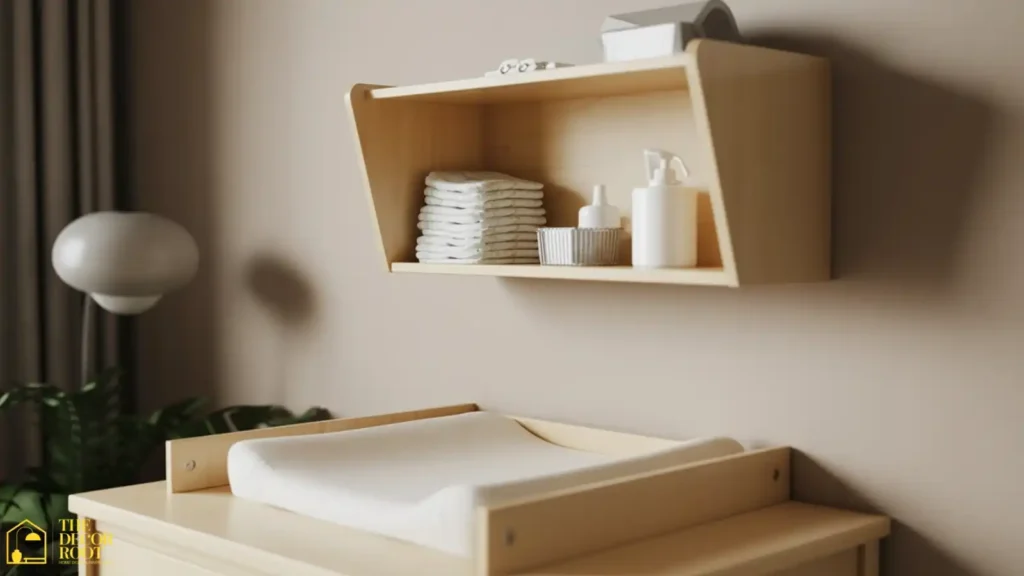
Vertical space above the changing table often sits completely empty, which is a missed opportunity in rooms where floor and closet space are already stretched thin. A single floating shelf mounted within easy arm’s reach can hold your daily rotation of diapers, wipes, and diaper cream, cutting down on the number of steps between “baby needs a change” and “change is happening.” Keep this shelf specifically for daily-use items rather than decor, since its whole value is proximity and speed during changes, especially the middle-of-the-night ones where you want minimal searching.
6. Use Fabric Bins Labeled by Clothing Size
Baby clothes move through sizes faster than almost anyone expects, and without a labeling system, last month’s outgrown 0–3 month clothes end up mixed in with current-size items. Fabric bins labeled clearly by size (0–3M, 3–6M, 6–9M, and so on) let you store upcoming sizes in an accessible spot while keeping current items separate and easy to grab. This system also makes it dramatically easier to do a quick size-check and clear-out every few weeks, since everything outgrown is already sorted into its own container rather than scattered across drawers.
7. Add a Rolling Cart for Diaper-Changing Supplies
A small rolling cart with two or three tiers gives you mobile storage that can live next to the changing table during the newborn stage and then relocate to a closet or corner once daily changing slows down. Use the tiers to separate diapers, wipes, and cream, and a small stash of backup outfits for blowouts; every parent needs this last category more often than expected. Because it’s on wheels, it’s also genuinely useful for moving supplies between rooms if you’re doing changes somewhere other than the nursery during the day.
8. Add under-crib storage bins sized for Your Crib’s Clearance
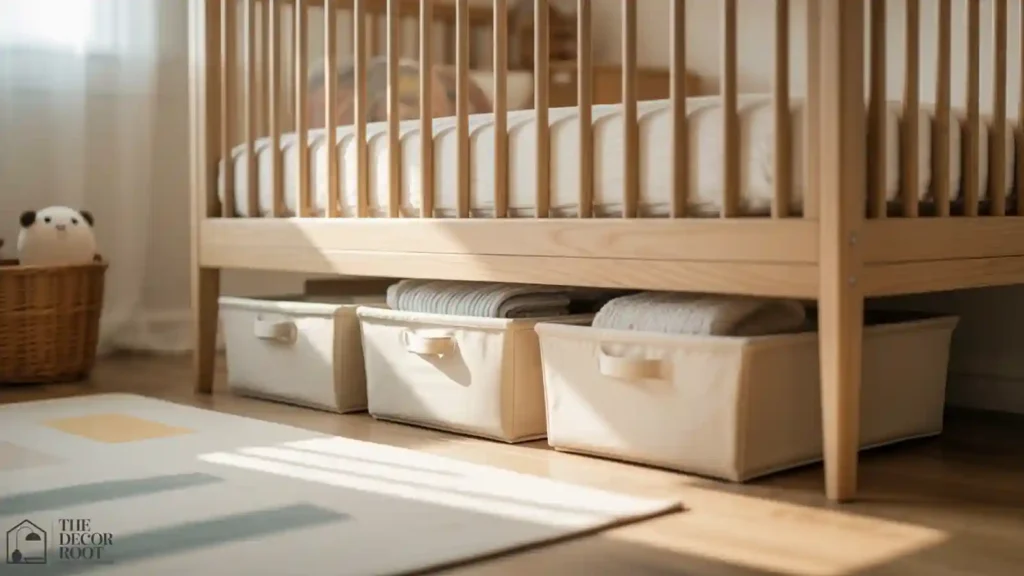
Once you’ve measured your crib’s under-frame clearance, a matched set of low-profile bins turns that dead space into real, usable bulk storage. These work particularly well for extra crib sheets, off-season blankets, or a diaper bulk-buy stash that would otherwise need its own shelf. Choose bins with a lid to keep dust down, since under-crib storage tends to go unopened for weeks at a time between uses. Clear bins make contents visible at a glance, while opaque fabric bins keep the under-crib area looking tidier if it’s visible from the doorway.
EDITOR’S PICK
🛒Low-Profile Bins Specifically For Under-Crib Bulk Storage
Under-crib low-profile bins with lids offer practical bulk storage for sheets, blankets, or diapers, with clear options for visibility or opaque for a tidier look.
(paid link)
9. Use Drawer Dividers Inside the Dresser
A dresser drawer full of socks, hats, and mittens without dividers becomes a tangled mess within days, since these items are small enough to slide and shift with every drawer opening. Adjustable drawer dividers create small, fixed compartments so each category stays in its own space no matter how many times the drawer opens and closes. This is a small, inexpensive fix, but it consistently ranks among the most-repeated tips from parents specifically because it solves a daily frustration rather than a rare one. Bamboo or fabric dividers both work well and are easy to reconfigure as your storage needs shift.
10. Add a Hanging Closet Organizer With Shelf Cubbies
A hanging fabric organizer with six or eight shelf cubbies fits inside almost any closet without permanent installation, making it one of the more rental-friendly storage solutions on this list. Use it for folded items that don’t need drawer storage burp cloths, small blankets, or a rotation of weekly outfits laid out in advance. Because it hangs from the existing closet rod, it adds an entirely new storage plane without requiring any additional floor or wall space, which is especially useful in nurseries converted from small guest rooms or home offices. Nursery storage and home office storage solve the same fundamental problem: how to keep a room that is used intensively and chaotically looking calm and organised. These organised storage design ideas show how the same principles of concealment, categorisation, and instant accessibility that make a home office function at 3 pm make a nursery function at 3 am.
11. Use a Bookshelf With Bins Instead of Just Books
A low bookshelf doesn’t have to be reserved for board books; swapping a few shelves for fabric bins turns it into flexible storage for toys, extra linens, or diaper bulk stock while keeping the remaining shelves available for a growing book collection. This hybrid setup is particularly useful in nurseries without a dedicated closet, since it consolidates several storage needs into one furniture footprint. Choose bins that fit the shelf depth exactly, since bins that are too shallow leave awkward gaps and bins that are too deep will block the shelf above from full use.
12. Add Over-the-Door Storage for Small Accessories
The back of the nursery door is almost always empty, and an over-the-door organizer with clear pockets turns it into storage for small, easy-to-lose items like pacifiers, small toys, hair accessories, or teething items. This zone works especially well for things you want visible and grabbable without opening a drawer, and because it mounts without tools, it’s one of the easiest additions on this entire list to install and remove later. Clear pocket versions also make it simple to do a quick visual inventory check before heading out the door.
13. Add a hanging fabric closet organizer for Rental-Friendly Storage
For anyone renting or hesitant to drill into closet walls, a hanging fabric organizer with multiple shelf tiers delivers real storage capacity using nothing but the existing closet rod. It’s particularly well suited to smaller items, folded onesies, burp cloths, and swaddle blankets that don’t need full shelf depth to store neatly. Because it comes down as easily as it goes up, this is also a smart option if you anticipate moving before your child outgrows the nursery, since the entire storage system travels with you rather than staying installed in the closet.
EDITOR’S PICK
🛒No-Install Hanging Organizer For Renters Or Shared Nursery Spaces
A no-drill hanging fabric organizer with tiered shelves stores small baby items and travels easily, making it ideal for renters or families planning to move.
(paid link)
14. Use Stackable Bins for Off-Season Clothing
Every baby ends up with clothes in sizes they haven’t grown into yet, whether from gifts, hand-me-downs, or well-intentioned bulk buys, and stackable bins keep this future inventory organized without cluttering current storage space. Label each bin by size range and store them on a high closet shelf or in a garage or attic if space is tight, then simply pull down the next size as your child grows into it. This system prevents the common problem of forgetting what sizes you already have on hand, which otherwise leads to duplicate purchases.
15. Add a Corner Shelf Unit for Awkward Spaces
Nursery layouts often leave an oddly shaped corner that’s too small for furniture but too large to ignore, and a corner-fitted shelf unit is purpose-built to use that exact dead space. These units typically hold diapers, wipes, books, or small toy bins, and because they’re designed specifically for corners, they don’t eat into the usable floor space the way a standard rectangular shelf would if wedged into the same spot. This is a particularly good solution for smaller nurseries where every piece of furniture needs to earn its footprint.
16. Use a Hamper With a Divided Interior
A standard hamper handles dirty laundry fine, but a divided hamper separating lights, darks, and delicates, or separating baby items from adult items if the hamper is shared, saves real time on laundry day, which with a baby in the house happens far more often than it used to. Choose one with a lid to keep the room looking tidy and a liner that’s removable and washable, since baby laundry inevitably includes the occasional diaper blowout that needs contained cleanup rather than a full hamper wash.
17. Add Wall-Mounted Wire Baskets for Small Toys
Wire baskets mounted directly to the wall keep small toys accessible and visible without occupying any floor or shelf space, which is particularly useful once your child moves from newborn to the toy-accumulating stage. Mount them at a height appropriate for the current stage higher for now, lower once your toddler starts helping with cleanup and group two or three at slightly different heights for a more dynamic, less rigid look than a single uniform row.
18. Add stackable clear drawer bins for a Closet Shelf System
Clear stackable drawer bins give you drawer-style organization anywhere you have shelf or floor space, without needing an actual dresser. They’re particularly useful for smaller items that get lost in deep closet shelving: socks, hats, small accessories, since the clear front lets you find what you need without pulling out and checking each bin individually. Stack them in a closet corner or on a shelf, and because each drawer pulls independently, you’re not disturbing the whole stack every time you need one specific item.
EDITOR’S PICK
🛒Clear Stackable Drawers For Closet Shelf Or Floor Storage
Clear stackable drawer bins organize small items without a dresser, with independent drawers and transparent fronts for quick access without disturbing the stack.
(paid link)
19. Use a Storage Ottoman for Extra Blankets
A storage ottoman does double duty as seating and hidden storage, which is especially valuable in a nursery where every piece of furniture needs to justify its footprint. Use the interior for extra blankets, swaddles, or seasonal bedding that doesn’t need daily access, and use the top as a footrest for the glider or extra perch for visiting family. Choose one with a sturdy, flat top if you also want it to double as a small side table option when needed.
20. Add a Pegboard Wall for Flexible Storage
A pegboard installed on one nursery wall gives you infinitely reconfigurable storage hooks for bags, small shelves for books, baskets for toys that can shift as your child’s needs change from newborn to toddler without any new holes in the wall. This is one of the more design-forward storage solutions on this list, since a painted pegboard in a coordinating color doubles as a decor feature rather than reading as purely functional. It’s also one of the more budget-friendly built-in-style storage options available.
21. Use Labeled Bins in a Consistent System Throughout the Room
Whatever bin or basket system you land on, using the same style and labeling method across the entire room closet, shelves, under-crib, and dresser top makes the whole space easier for any caregiver to navigate, not just the person who set it up. Consistent labeling (whether that’s written tags, icons for pre-readers later, or color-coding) cuts down on the mental load of remembering which system applies where, which matters enormously during sleep-deprived weeks when quick, intuitive storage is the difference between a tidy room and chaos.
22. Add a wall-mounted shelf with storage bins as a Finishing Storage Layer
As a final layer once the major systems are in place, a wall-mounted shelf paired with matching bins gives you one more flexible storage zone for whatever hasn’t found a home yet: extra diapers during a growth spurt, seasonal decor, or overflow from a particularly generous baby shower. Because it mounts at whatever height works for your specific room, it’s a good way to use any remaining wall space efficiently without committing to a large furniture piece. This is often the storage addition that finally makes a nursery feel fully settled rather than still being organized.
EDITOR’S PICK
🛒Combination Wall Shelf And Bin System For A Finishing Storage Layer
A wall-mounted shelf with matching bins offers flexible overflow storage at custom height, making efficient use of wall space and often completing the nursery’s organization.
(paid link)
Quick Action Plan
- Start with the closet; a shelf divider system and a double hanging rod solve the majority of early storage problems and take less than a weekend to install.
- From there, tackle the changing table zone with a wall shelf and rolling cart for daily-use items, then move to under-crib storage for bulk and off-season items.
- Save the finishing touches, like a pegboard or corner shelf, for once you’ve lived in the room for a few weeks and know exactly where the remaining gaps actually are, rather than guessing upfront.
Frequently Asked Questions
Conclusion
Nursery storage that actually works isn’t about buying every organizer on this list; it’s about matching each system to how you’ll actually use the room, starting with the daily-use zones and building outward from there. Get the closet and changing table area solved first, and the rest of the room tends to fall into place much faster than you’d expect.
💾 Save this to your Nursery Organization board on Pinterest so it’s easy to find when you’re setting up the room.