23 Budget Nursery Decor Ideas That Look Designer
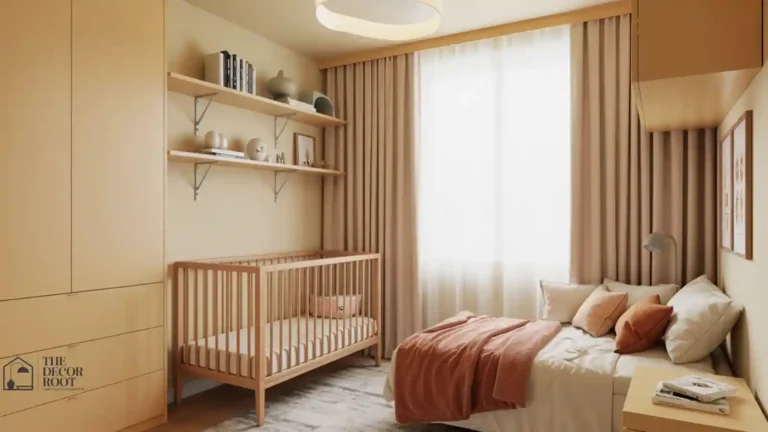
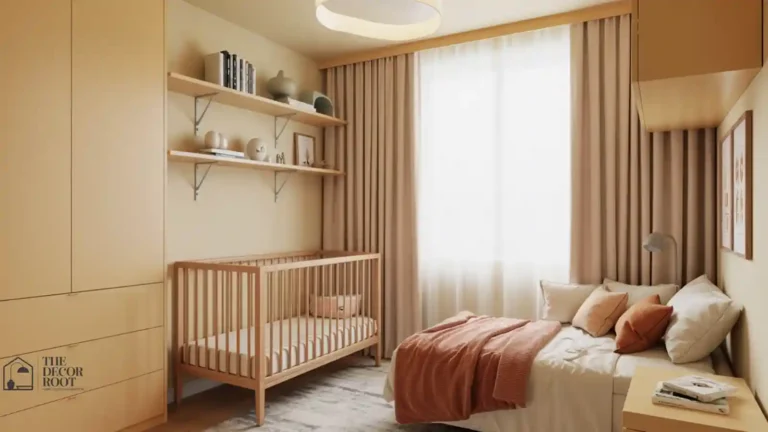
Budget Nursery Decor Ideas: Nobody warns you that a nursery can quietly eat a $6,000 budget before you’ve even bought a mobile. Between the crib, the glider, the changing station, and the “just one more” throw pillow, the costs stack fast, and most of it doesn’t actually make the room look pulled together. It just makes it look full. If you’ve been scrolling nursery inspiration feeling like the gap between your bank account and that dreamy, editorial-looking room is unbridgeable, it isn’t. The rooms that read as “designer” rarely got there through expensive furniture. Budget nursery decor that looks designer is one of the most searched home decorating ideas for new parents, because the combination of significant financial pressure and a genuine desire to create something beautiful for a new baby produces some of the most creative and resourceful decorating decisions in residential design.
This post contains affiliate links. As an Amazon Associate, I earn from qualifying purchases. If you buy through these links, I may earn a small commission at no extra cost to you.
🍃 The Thinking Behind This
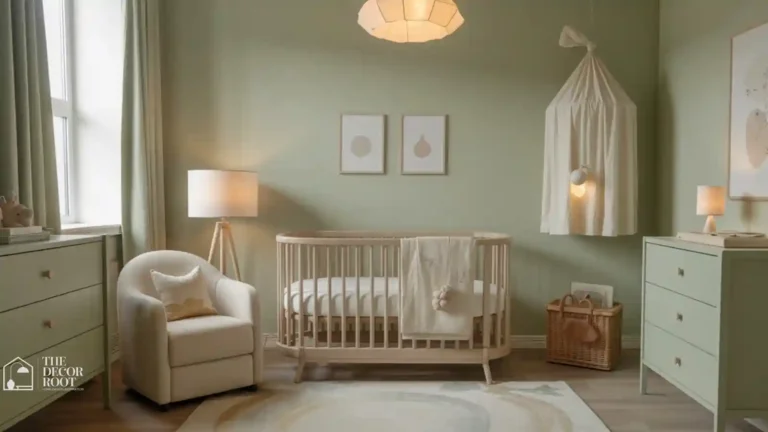
Designer-looking rooms share a formula, and it has almost nothing to do with price. It’s layering texture on texture, one anchor color with two supporting neutrals, and at least one unexpected element that breaks the matchy-matchy pattern most budget nurseries fall into. A $2,000 crib styled flat, with no texture, no layering, and no visual movement, will always photograph cheaper than a $150 secondhand crib dressed with a scalloped skirt, a textured throw, and a well-placed pendant light. Once you understand that the “expensive” look is really a texture-and-restraint look, the budget version becomes obvious: buy less, but buy or DIY the pieces that add depth. A budget nursery is often a shared nursery; these shared nursery and playroom ideas show how combining a baby’s sleeping space with a toddler or child’s play area requires the same kind of creative, resourceful approach to furniture and storage that a budget constraint demands, and how the two challenges together often produce smarter, more flexible room solutions than either brief alone.
French Nursery for Less
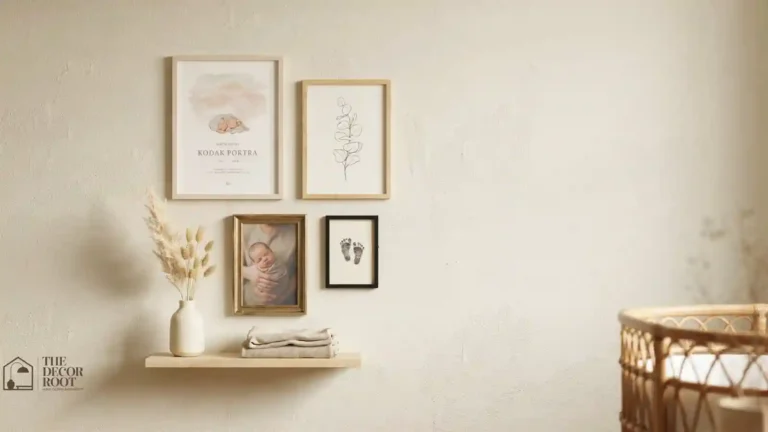
The French nursery aesthetic is particularly well-suited to a budget approach because it prizes quality of material and restraint of decoration over quantity of objects; these French-inspired nursery design ideas show how a few well-chosen pieces in the right palette create a room that looks more expensive than a nursery filled with matching sets from a big-box baby store. Wall art is the highest-return budget investment in a nursery; these budget nursery wall art ideas show how printed artwork from digital downloads, framed fabric swatches, a DIY mobile, or a simple gallery of black and white photography creates a wall that looks like a professional nursery stylist assembled it at a fraction of what framed nursery art from a boutique retailer would cost.
1. DIY Scalloped Crib Skirt
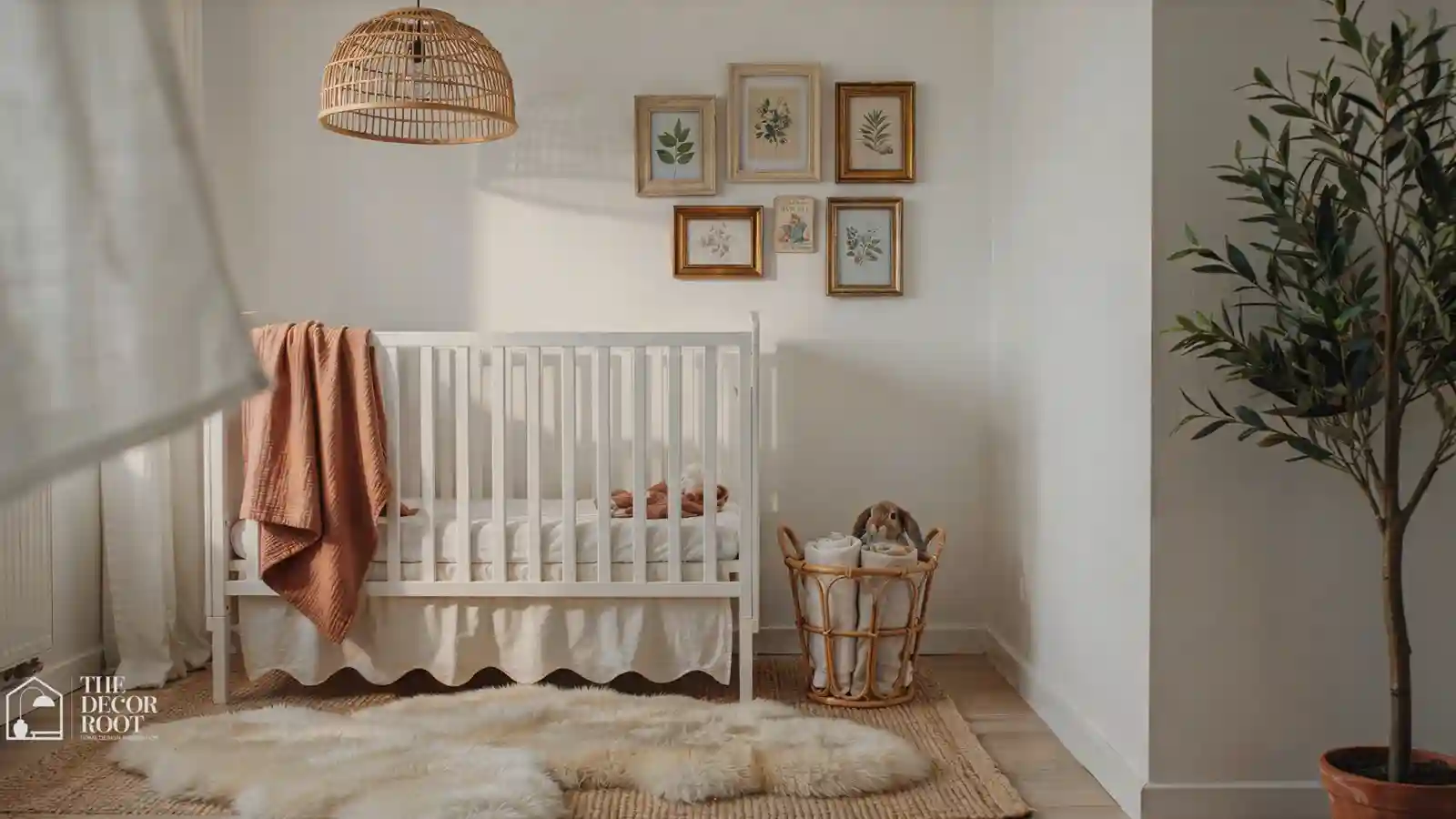
A plain crib skirt reads flat no matter how nice the crib is, but a scalloped hem instantly signals custom, boutique-level styling the kind you’d expect from a $300 crib set. You don’t need to sew from scratch; buy an inexpensive plain crib skirt from Target or Walmart and hand-stitch or hot-glue a scalloped trim along the bottom edge in a contrasting cream or gold. The scallop shape catches light differently than a straight hem, which is exactly the kind of small visual detail that separates a styled room from a furnished one. Budget for about $15–25 total, and set aside an hour on a weekend evening. If sewing feels intimidating, iron-on hem tape holds scalloped fabric trim just as well for a no-sew version that still looks intentional in photos.
2. Thrifted Frame Gallery Wall
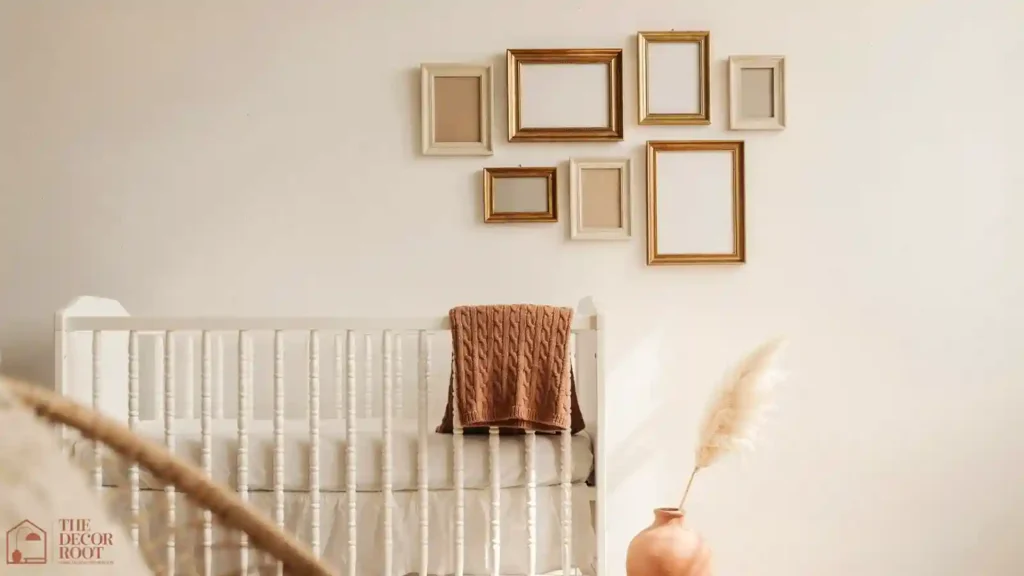
Skip the matching frame set from a big-box store; it reads as a set, not a curated collection. Instead, hit two or three thrift stores and pull frames in a range of sizes but a consistent finish family (all gold, all cream, or all natural wood). Spray paint mismatched frames in one unifying color for under $10 of spray paint, then arrange them in an asymmetric grid with varied print sizes. This single move is the fastest way to make a wall look like it belongs in a shelter magazine, because gallery walls with intentional size variation photograph as “collected over time” rather than “purchased in one order,” which is the exact quality that makes a room feel designer-built instead of big-box-furnished.
3. Peel-and-Stick Wallpaper Accent Wall
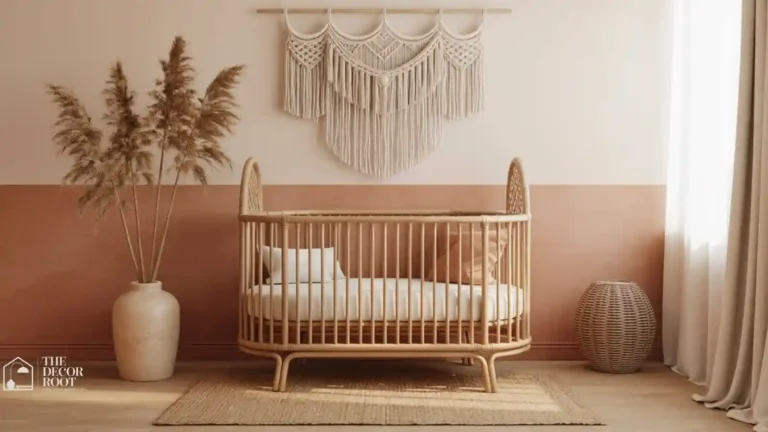
A single accent wall in a soft botanical, scalloped, or textured print does more for perceived room value than almost any furniture purchase, and peel-and-stick versions from Target, Amazon, or Lowe’s run $30–50 per roll with zero contractor cost. Choose a print with texture or dimension rather than flat color; subtle grasscloth-look or soft scallop patterns photograph with more depth under nursery lighting. Apply it behind the crib only, rather than wrapping the whole room, which keeps the cost down to one or two rolls while still creating the focal point that expensive nurseries are built around. This is one of the highest-return moves on this entire list relative to what it costs.
4. Dollar-Store Basket Storage Wall
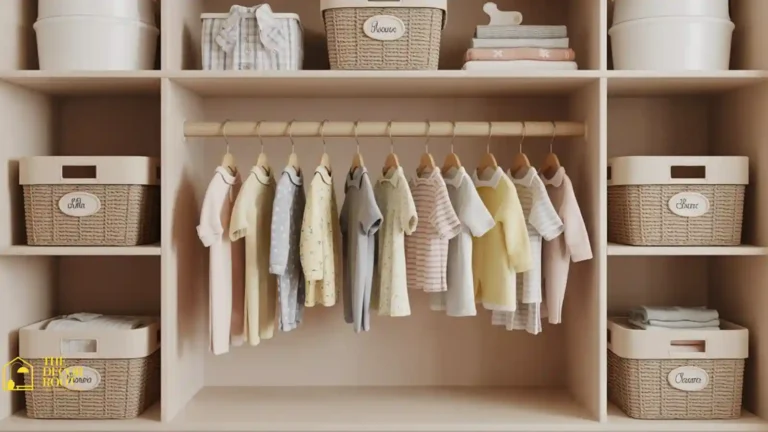
Open shelving lined with matching woven baskets looks like a custom built-in, even when the shelving itself is a $40 floating shelf kit. Grab a set of natural woven storage baskets in a consistent size and material, mount two or three floating shelves at varied heights, and use the baskets to hide the visual clutter of diapers, wipes, and small toys. The trick that makes this look designer rather than dorm-room is uniformity: every basket is the same material and shade paired with restraint, meaning no more than three to four baskets per shelf so the wall doesn’t read as storage overflow.
EDITOR’S PICK
🛒Natural Woven Storage Baskets, Set Of 3–4, Neutral Tone
Consistent woven baskets on floating shelves at varied heights create a custom built-in look for around 40 dollars, with three to four baskets per shelf maintaining a designer feel.
(paid link)
5. Painted Vintage Dresser as Changing Table
A secondhand dresser from Facebook Marketplace, usually $40–80, becomes a genuinely expensive-looking changing station with a can of chalk paint and new hardware. Choose a dresser with real wood detailing, fluted edges, curved drawer fronts, or brass accents worth keeping and paint it in a soft cream, sage, or terracotta that ties to your nursery palette. Swap the hardware for brushed gold or matte black knobs, which run about $3–5 each and instantly modernize the piece. This move alone regularly gets mistaken for a $600 designer dresser in nursery photos, because the paint and hardware do the visual work that price normally signals.
6. Rattan Pendant Light Swap
Builder-grade flush-mount lighting is the single fastest way to make a nursery look unfinished, and it’s one of the cheapest fixes on this list. A rattan or woven pendant light, available for $35–60 at Target, Walmart, or Amazon, adds warmth, texture, and a soft shadow pattern that plain fixtures can’t produce. If your lease doesn’t allow permanent fixture swaps, plug-in pendant versions exist that hang from a cord and mount to the ceiling with a small hook, giving renters the same visual upgrade without an electrician. This is consistently one of the highest-impact, lowest-effort changes a budget nursery can make.
7. Oversized Floor Mirror Corner
An oversized leaning floor mirror does two jobs at once: it bounces natural light around a room that often has only one small window, and it adds the kind of scale and presence that designer spaces use to feel intentional rather than sparse. Budget arched or rectangular floor mirrors run $60–100 at Target, Walmart, or Wayfair, a fraction of a framed custom mirror, and instantly make a corner feel styled instead of empty. Lean it against the wall at a slight angle rather than mounting it flush, which reads as more curated and gives the room a soft, editorial asymmetry.
8. DIY Canopy Over Crib
A soft canopy draped above the crib is one of the most requested “expensive nursery” looks on Pinterest, and it’s genuinely a $20–30 project. Use an inexpensive embroidery hoop canopy kit with a lightweight voile or muslin fabric panel, mount it to the ceiling with a single hook, and let the fabric drape asymmetrically rather than perfectly centered. The slight imperfection in the drape is what makes it look styled rather than store-bought. Avoid heavy fabric, which pulls the hoop down and flattens the effect; lightweight, semi-sheer fabric catches light and movement in a way that reads as soft luxury.
EDITOR’S PICK
🛒 Embroidery Hoop Canopy Kit With Lightweight Voile Fabric
A 20- to 30-dollar embroidery hoop canopy with lightweight voile, mounted off center, creates a soft luxury nursery look that catches light and movement better than heavy fabric.
(paid link)
9. Faux Fur Rug Layer
Layering a small faux fur or sheepskin rug over a larger jute or flatweave rug is a texture trick borrowed directly from high-end interior design, and it costs about $25–40 for the top layer if you already own a base rug. The contrast between the rough jute texture and the soft faux fur creates visual depth that a single flat rug can’t achieve, and it gives the nursing chair or play area a cozy focal point. Position it slightly off-center rather than perfectly squared to the rug beneath it, which again signals “styled by hand” rather than “ordered as a set.”
10. Command Hook Curtain Upgrade
Most rental-friendly nurseries skip curtains entirely because of drilling restrictions, which is exactly why bare windows are the most common tell of an unfinished budget nursery. Command hook curtain rods, available for under $15, hold lightweight curtain panels without a single hole in the wall. Hang the rod a few inches above the actual window frame and slightly wider than the window itself; this classic designer trick makes both the window and the ceiling height look larger than they are, which is one of the most reliable ways to make a small nursery photograph like a bigger, more expensive room.
11. Repurposed Bookshelf Ladder
A leaning ladder shelf, either thrifted or bought new for $30–50, gives a nursery corner a soft, styled display spot for books, small plants, and framed prints without the bulk of a traditional bookshelf. Style it asymmetrically: books stacked at one level, a small woven basket at another, a single framed print leaning against the top rung rather than filling every shelf evenly. Uneven, breathing-room styling is a hallmark of designer shelving; overstuffed, evenly distributed shelves read as storage rather than decor, even when the items on them are nice.
12. Macrame Wall Hanging DIY
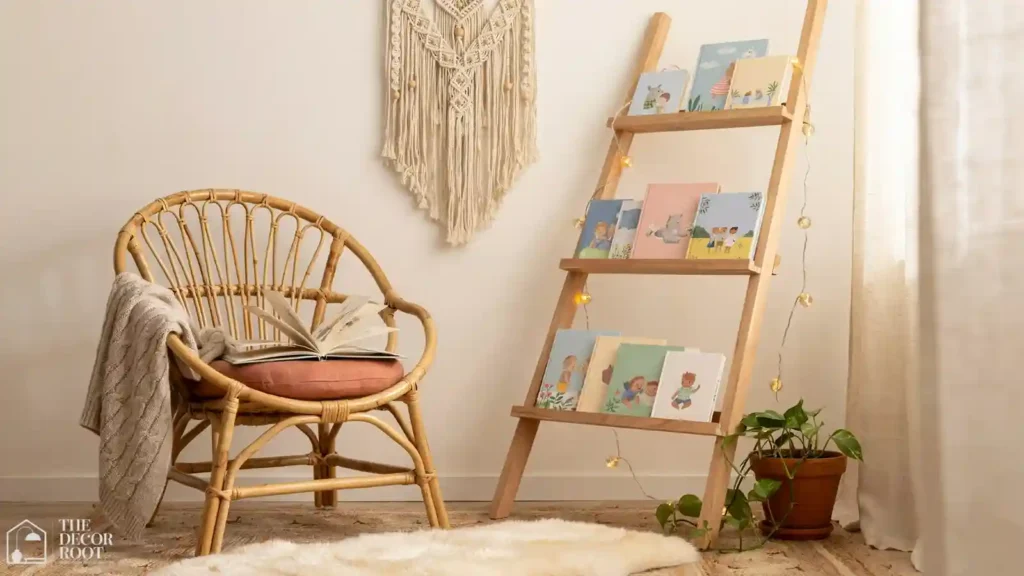
A handmade or budget macrame wall hanging adds organic texture above a glider or changing station for around $20–25. A basic macrame wall hanging kit with pre-cut cord makes this approachable even for a first-timer, and the slightly irregular knotwork of a handmade piece is part of its charm rather than a flaw. Choose cream or natural rope tones over dyed versions, since neutral macrame layers more easily with the gallery wall and textile choices elsewhere in the room, keeping the palette cohesive instead of competing for attention.
EDITOR’S PICK
🛒Macrame Wall Hanging Kit, Cream/Natural Cord
A 20 to 25 dollar macrame kit with pre-cut cord adds organic, beginner-friendly texture above a glider, and neutral tones keep the palette cohesive with other nursery textiles.
(paid link)
13. Thrifted Rocking Chair Reupholster
A secondhand glider or rocking chair, often listed for $20–50 on Marketplace, becomes a genuinely custom-looking piece with a $30 slipcover or a simple reupholster in boucle or linen fabric. If sewing isn’t an option, a fitted stretch slipcover in a neutral bouclé texture gets 80% of the visual upgrade for a fraction of the effort. The texture swap is what matters most here: smooth, dated upholstery fabric reads instantly as secondhand, while boucle or textured linen reads as intentional, current, and considerably more expensive than the chair actually cost.
14. Wall Decal Name Sign
A large-scale name decal or painted wood name sign gives a nursery its personal, finished focal point without the $150–300 price tag of a custom calligraphy sign from an Etsy boutique. Removable wall decals in script or serif lettering run $15–25 and apply directly to a painted or wallpapered wall above the crib. For a slightly more dimensional look, mount individual wood letters instead of a flat decal; the shadow cast by raised letters photographs with more depth and reads as more custom-made than a flat printed version.
15. Floating Shelf Book Display
Two or three simple floating shelves, styled with picture-out board books rather than spine-out storage, turn a blank wall into a designer-favorite reading nook display for under $40. This specific styling trick books facing forward so their covers show is used constantly in high-end nursery photography because it adds color and visual interest without clutter. Rotate the displayed books seasonally or as your child’s interests shift, which keeps the display feeling curated and current instead of static.
16. Curtain Room Divider
In a nursery that doubles as a guest room or shared space, a floor-to-ceiling curtain panel on a tension rod creates a soft, designer-favored room division for under $50 total. A sturdy adjustable tension curtain rod requires no drilling, making it ideal for renters, and a lightweight linen-look panel softens the sightline into the crib area without the visual bulk of a folding screen. This trick shows up constantly in small-space nursery design because it adds privacy and texture in one move rather than requiring separate furniture purchases.
EDITOR’S PICK
🛒 Adjustable Tension Curtain Rod, Ceiling-Height
A no-drill tension rod with a linen-look curtain panel creates soft room division in a shared nursery for under 50 dollars, adding privacy and texture without bulky furniture.
(paid link)
17. Budget Blackout Curtain Layering
Layering a sheer curtain panel over a blackout panel rather than choosing one or the other gives a nursery window both function and the soft, layered look of custom drapery, for roughly the cost of two curtain sets from Target or Walmart ($40–60 total). Hang the blackout panel on the inner rod closest to the window and the sheer panel on an outer rod slightly in front, letting both puddle gently at the floor. This layered depth is a direct steal from high-end window treatment design and reads as significantly more expensive than a single flat panel.
18. Wicker Hamper Toy Storage
A single oversized wicker hamper, styled in a corner rather than tucked in a closet, does the job of a toy bin while looking like an intentional decor piece something a plastic bin can never achieve. Budget woven hampers run $25–40 and hide toy clutter behind a natural texture that complements rattan lighting, jute rugs, and other organic materials already in the room. Keep the lid open slightly with a folded blanket draped over the edge for a lived-in, styled-not-staged look that photographs better than a fully closed, sterile hamper. The most budget-effective nursery investment is always storage; these budget nursery storage ideas show which affordable shelving systems, wicker baskets, and fabric bins create an organized and beautiful nursery without the cost of custom joinery or branded nursery furniture ranges.
19. Removable Border Wallpaper Trim
Instead of a full wallpaper wall, a scalloped or striped wallpaper border applied at chair-rail height gives a nursery a custom millwork look for under $25. This is a favorite budget trick among nursery decorators because it mimics the visual weight of board-and-batten or picture-frame molding, both of which cost hundreds in materials and labor using nothing but a peel-and-stick border strip. Apply it roughly 32–36 inches from the floor for the most realistic chair-rail proportion, and keep the wall above it a single solid color to let the trim read as architectural rather than decorative.
20. Upcycled Crate Bookshelf
Wooden crates, sourced from a craft store or repurposed from shipping, become a modular, designer-favorite bookshelf system for under $30 when stacked and secured together. A set of stackable wooden storage crates gives you the flexibility to rearrange the configuration as your child grows, unlike a fixed bookshelf. Paint the crates in your nursery’s accent color or leave them natural wood for a more organic, Scandinavian-leaning look that both read as considerably more expensive and intentional than a mass-produced plastic storage cube system.
EDITOR’S PICK
🛒Stackable Wooden Storage Crates, Set Of 3–4
Stackable wooden crates, either painted or left natural, create a flexible, designer-look bookshelf for under 30 dollars, far more intentional than plastic storage cubes.
(paid link)
21. String Light Ceiling Canopy
Warm white string lights, draped in a loose canopy pattern across the ceiling above a play area, create the soft, ambient glow that high-end nurseries are known for, all for under $20. This works especially well in nurseries with limited natural light or generic overhead fixtures, since the warm light temperature does more to shift the room’s overall mood than almost any other single change on this list. Use battery-operated or plug-in string lights rather than anything requiring an electrician, and secure them with small clear adhesive hooks along the ceiling perimeter for a clean, professional-looking installation.
22. Painted Closet Door Refresh
A flat, builder-grade closet door is one of the most overlooked “cheap tells” in a nursery, and repainting it in a soft accent color or adding beadboard-look peel-and-stick panels transforms it for under $30. If the door has raised panels already, simply painting them in a contrasting trim color creates dimension. If it’s a flat slab door, apply thin adhesive trim strips in a grid pattern before painting to mimic the look of custom millwork, a designer detail that most budget nurseries skip entirely because it seems more complicated than it actually is.
23. Layered Textile Throw Blanket
The final, fastest fix on this list: drape two coordinating throw blankets one chunky knit, one lighter waffle-weave over the glider or crib rail in slightly asymmetric folds. This single styling move, borrowed directly from professional home stagers, adds instant coziness and color layering for the cost of two throw blankets, usually $15–25 each. Avoid folding them into a perfectly neat square; a loosely draped, slightly rumpled fold reads as lived-in and styled, while a stiff, symmetrical fold reads as staged and untouched.
🍃 Quick Action Plan
- If you’re staring down a nearly empty nursery and a tight budget, start with the three changes that affect the most square footage for the least money: the rattan pendant swap (idea 6), the peel-and-stick accent wall (idea 3), and the layered rug (idea 9).
- Those three alone shift the entire feel of the room in a single weekend for under $150 combined.
- From there, work outward the gallery wall and canopy add the personal, custom-feeling details, and the textile layering at the very end is what pulls everything together for photos.
- Resist the urge to buy everything on this list at once; a nursery styled in phases, with intention at each step, will always look more designer than one furnished all in a single Target run.
🍃 Frequently Asked Questions
Conclusion
The gap between a nursery that looks thrown together and one that looks professionally designed usually isn’t a bigger budget it’s texture, restraint, and a handful of intentional details layered in the right order. Start with one or two ideas from this list this weekend, and let the room build from there.
💾 Save this post to your Pinterest nursery board so you can find it again when you’re ready to start styling.