22 Coastal Nursery Ideas for a Calm Space
Coastal Nursery Ideas Search “coastal nursery,” and most of what comes back is anchors, navy-and-white stripes, and a rope-wrapped mirror a look that’s more “beach gift shop” than genuinely calming. That’s the disconnect a lot of parents run into: they’re drawn to coastal style for the actual feeling it promises light, air, quiet, softness but the search results deliver theme decor instead of that feeling. Real coastal calm doesn’t come from nautical props. It comes from a specific formula: soft, desaturated color, natural texture like rattan and linen, and light that’s allowed to move freely through the room instead of being blocked by heavy drapery or dark furniture. A coastal nursery for a calm space is one of the most developmentally considered home decorating ideas for a baby’s room; the soft blues, sandy whites, and natural textures of a coastal palette provide exactly the low-stimulation, visually soothing environment that supports infant sleep and nervous system regulation.
This post contains affiliate links. As an Amazon Associate, I earn from qualifying purchases. If you buy through these links, I may earn a small commission at no extra cost to you.
🍃 Where to Start Mentally
Before buying anything, it helps to separate “coastal theme” from “coastal calm,” because they pull in opposite directions. Coastal theme reaches for literal ocean imagery shells, anchors, sailboats layered on top of whatever base palette the room already has. Coastal calm works the other way: it starts with the feeling coastal spaces actually produce (soft light, airy texture, quiet color) and lets that feeling shape every choice, with maybe one or two literal coastal references used sparingly, if at all. A coastal palette is one of the best choices for a shared nursery and playroom because its soft blues, whites, and sandy neutrals feel calm enough for a sleeping baby and interesting enough for an active toddler. These calm nursery and playroom ideas show how to use the coastal aesthetic to create a visual environment that serves both occupants without a jarring aesthetic compromise.
Coastal French Nursery Harmony
A coastal nursery and a French nursery share the same design instinct; both create a room that feels calm, beautiful, and completely unlike the primary-colour baby rooms of a previous generation. These French-inspired nursery design ideas show how the French palette of muted tones and natural materials connects to the coastal tradition of soft blue, white, and sandy neutral. Coastal wall art is the element that most immediately signals the nursery’s aesthetic direction; these coastal nursery wall art ideas show how watercolour prints, botanical coastal illustrations, and framed nature photography create the seaside visual environment that makes a baby’s room feel genuinely calm rather than thematically decorated.
1. Pale Blue-Gray Wall Color
Skip bright nautical navy and go instead for a pale, desaturated blue-gray, the color of overcast sky over water rather than a flag or a life vest. This muted, almost neutral blue reads as genuinely calming rather than themed, and it pairs easily with the natural wood and rattan tones central to coastal style. Popular options in this exact tone range are widely available from Sherwin-Williams, Behr, and Benjamin Moore paint lines, usually falling into their “coastal” or “spa” color collections.
2. Whitewashed Wood Furniture
Choose crib and dresser finishes in whitewashed or limed wood rather than dark espresso or bright white lacquer; the slightly visible wood grain under a light wash is one of the defining textures of genuine coastal style. This finish also hides the inevitable scuffs and marks of nursery life better than a glossy painted finish, which matters practically as well as aesthetically over the years the furniture will be in use.
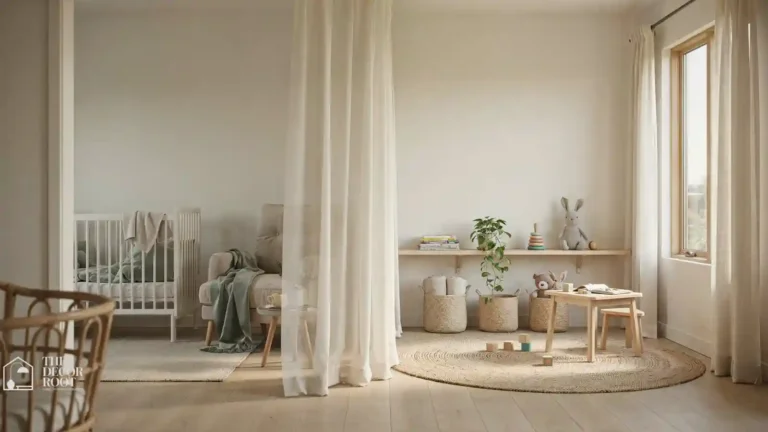
3. Sheer Linen Curtain Panels
Lightweight, natural linen curtains in a soft off-white let daylight filter through rather than blocking it out, which is central to the airy quality coastal rooms are known for. Reserve heavier blackout panels for layering behind the linen rather than replacing it entirely; this keeps the room bright and breezy during the day while still giving you nap-time light control when you need it.
4. Woven Seagrass Area Rug
A natural woven seagrass or jute rug grounds a coastal nursery with genuine texture instead of a printed nautical pattern, and it holds up well under a glider chair and daily foot traffic. A soft-textured woven seagrass area rug in a natural tone anchors the room’s palette while adding the tactile, sun-bleached quality that’s central to real coastal interiors, as opposed to the smooth synthetic rugs that dominate most themed nursery sets.
EDITOR’S PICK
🛒Woven Seagrass Area Rug, Natural Tone
A natural seagrass or jute rug anchors a coastal nursery with durable texture and sun-bleached warmth, avoiding printed patterns and synthetic materials.
(paid link)
5. Driftwood-Toned Accent Pieces
Small accent pieces, such as a picture frame, a mirror edge, or a decorative bowl in a genuine driftwood or bleached wood finish, add coastal texture in a way that feels collected rather than purchased as a themed set. Look specifically for pieces with visible grain and slight color variation across the wood, since a uniform, flat wood tone reads as manufactured rather than the naturally weathered look coastal style depends on.
6. Capiz Shell Light Fixture
A capiz shell chandelier or pendant light made from thin, translucent shell discs filters light into a soft, shimmering pattern that’s genuinely unique to coastal interior design, without leaning into the anchor-and-rope cliché. This fixture works as the room’s one clearly “coastal” statement piece, precisely because everything else in the room stays subtle enough to let this piece stand out as intentional rather than themed.
7. Sandy Cream and Sage Color Pairing
Pair the pale blue wall color with sandy cream and soft sage green accents rather than sticking to a strict blue-and-white palette; this three-color approach reads as a genuine coastal landscape (sky, sand, dune grass) rather than a flag-inspired color scheme. This slightly expanded palette also gives you more flexibility in sourcing furniture and textiles, since you’re not restricted to finding everything in exact matching shades of blue.
8. Rattan Chair with Linen Cushion
A rattan or wicker glider, styled with a plain linen or cotton cushion rather than a printed fabric, brings genuine natural texture to the nursery’s main seating piece. Rattan furniture has become widely available at more accessible price points over the last several years, making this one of the more achievable coastal furniture swaps compared to a fully custom rattan crib or bassinet.
9. Layered Natural Textiles
Layer a chunky natural-fiber throw blanket over the glider or crib rail, using undyed cotton, linen, or wool in cream and oatmeal tones rather than bright colors or printed patterns. A set of natural linen curtain panels paired with matching textile tones throughout the room reinforces the tactile, sun-washed quality coastal style relies on far more than color alone.
EDITOR’S PICK
🛒 Natural Linen Curtain Panel Set
An undyed chunky throw in cream or oatmeal on the glider or crib, paired with natural linen curtains, reinforces the tactile, sun-washed coastal texture more than color alone.
(paid link)
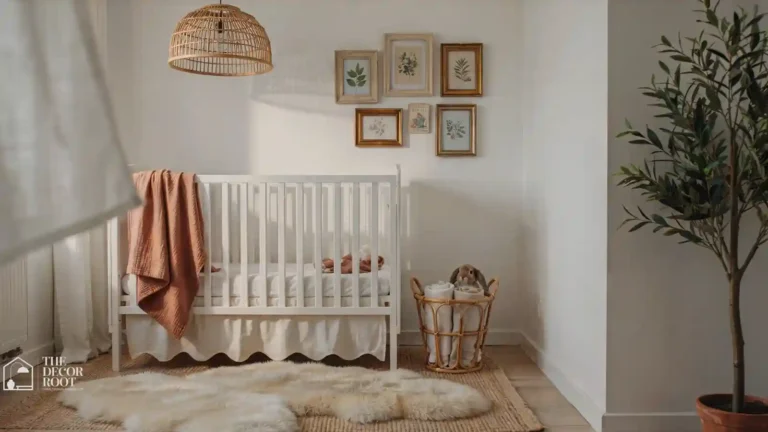
10. Woven Pendant or Basket Ceiling Light
A woven rattan or seagrass pendant light fixture, similar to the budget lighting swap that works in any nursery style, does specific double duty in a coastal room: it adds the natural texture the aesthetic depends on while casting the same soft, dappled shadow pattern that makes coastal spaces feel sun-warmed even without direct sunlight.
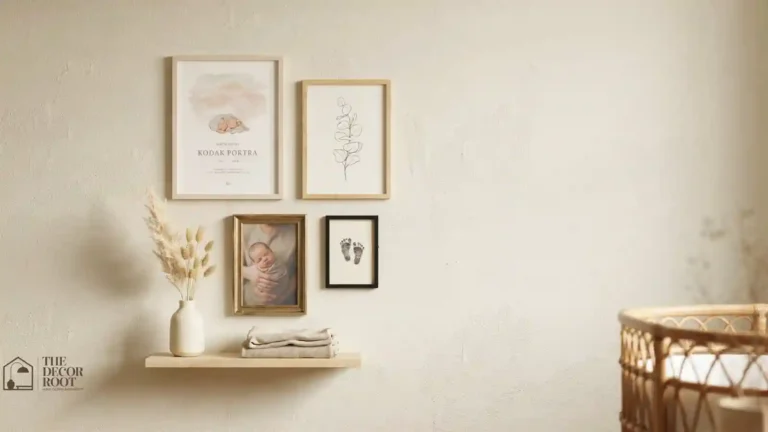
11. Muted Botanical Wall Art
Choose soft, muted botanical prints sea grass, dune plants, or simple leaf line art in sage and cream tones over literal ocean or beach photography for nursery wall art. This keeps the room’s coastal feeling abstract and calming rather than literal and busy, and it pairs more easily with the personal wall art ideas covered in the nursery wall art guide than a themed beach photo print would.
12. Sun-Bleached Fabric Textures
Look specifically for textiles described as “sun-bleached,” “washed,” or “stonewashed” when shopping for crib sheets, curtains, and throws this specific texture, with its slightly irregular, faded quality, is one of the most authentic-feeling coastal textile choices and reads as considerably more expensive than crisp, uniformly colored fabric.
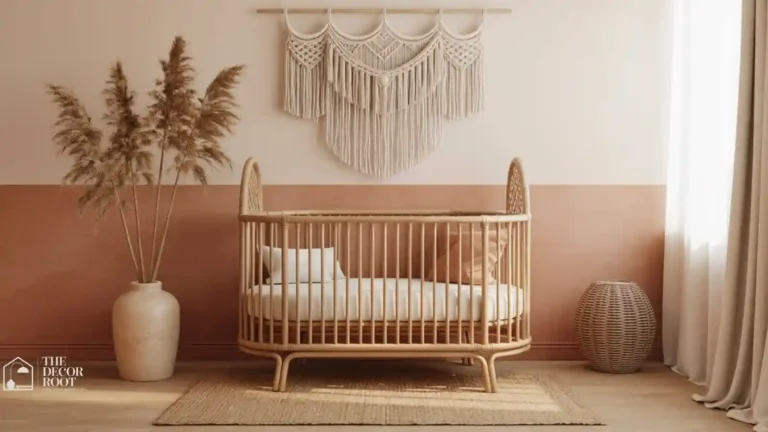
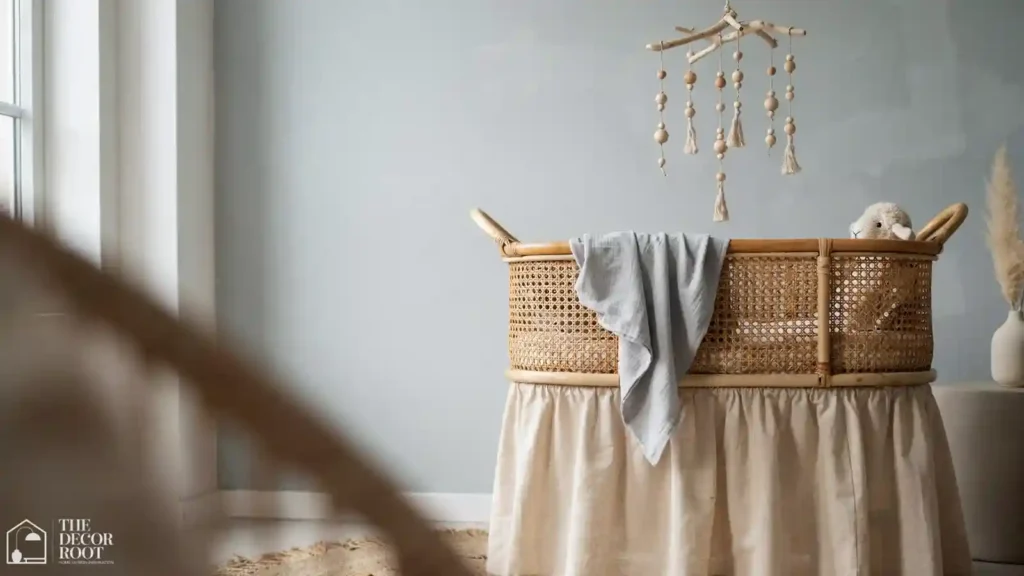
13. Rattan Bassinet or Crib
A bassinet with a woven rattan base brings coastal texture directly into the room’s most central piece of furniture, rather than relegating coastal style to accents alone. A well-reviewed rattan bassinet with a natural wood stand works as both a genuinely functional sleep space and the room’s clearest coastal design statement, especially when paired with a plain linen bassinet skirt rather than a printed one.
EDITOR’S PICK
🛒Rattan Bassinet With Natural Wood Stand
A rattan bassinet with a natural wood stand and plain linen skirt anchors the nursery as both a functional sleep space and a clear coastal design statement.
(paid link)
14. Soft Horizon-Line Wall Treatment
Instead of a busy wallpaper print, consider a simple two-tone wall treatment: a soft blue-gray upper wall meeting a sandy cream lower wall at a horizontal line roughly one-third up from the floor, evoking the horizon where sky meets sand without a single literal beach image. This is a favorite among coastal interior designers specifically because it achieves the mood entirely through color and proportion rather than pattern or print.
15. Woven Basket Wall Display
A cluster of flat woven baskets, mounted directly on the wall in a loose grid or scattered arrangement, brings texture-forward coastal decor to a wall without needing any framed art at all. This is also one of the more budget-friendly coastal wall treatments, since basic woven wall baskets run $8–15 each at most home stores and thrift shops.
16. Natural Wood Ceiling Fan or Light Combo
If the nursery has a ceiling fan, swap standard plastic blades for natural wood or rattan-wrapped blade covers, which are widely available as an affordable upgrade kit. This small swap keeps a functional, necessary fixture from visually undercutting the rest of the room’s carefully chosen natural textures a detail easy to overlook but genuinely noticeable once addressed.
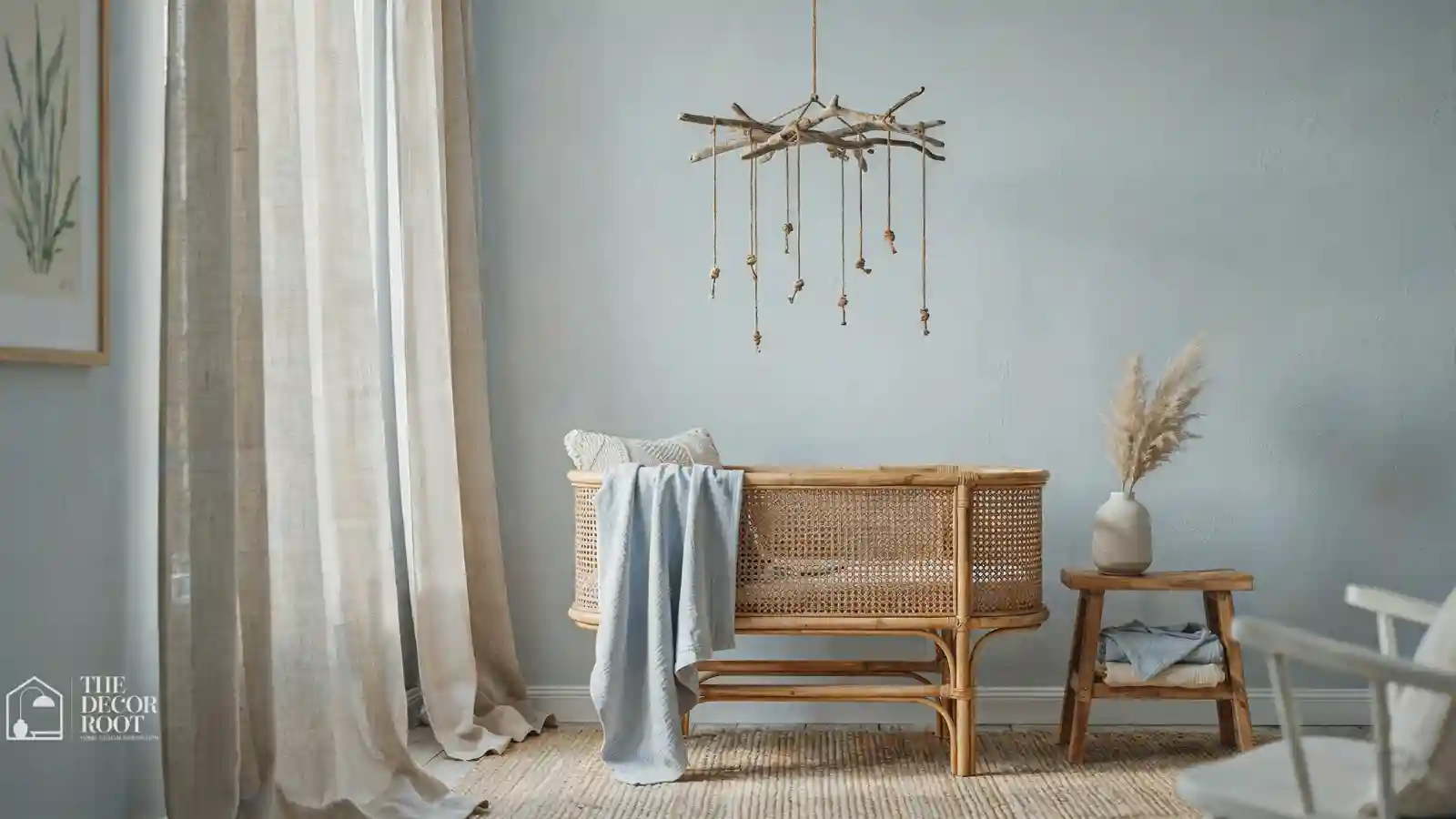
17. Driftwood or Wood Bead Mobile
Skip the plastic or bright primary-color mobile in favor of a driftwood, wood bead, or natural fiber mobile hung above the crib or bassinet. A handmade-style driftwood and wood bead mobile adds gentle movement and texture directly above where your baby spends the most time looking up, making it one of the highest-visibility coastal details in the entire room.
EDITOR’S PICK
🛒Driftwood And Wood Bead Nursery Mobile
A natural driftwood or wood bead mobile suspended above the crib offers gentle movement and texture, making it a highly visible coastal accent.
(paid link)
18. Textured Woven Storage Baskets
Swap plastic storage bins for woven seagrass or rattan baskets throughout the room for diapers, toys, or linens, keeping every visible storage surface aligned with the room’s natural material palette instead of breaking the coastal feeling with mismatched plastic.
19. Soft White Trim Against Muted Walls
Paint window and door trim in a soft, slightly warm white rather than a stark, cool white, which keeps the contrast against the muted blue-gray or sage walls gentle rather than sharp. This detail matters more than it seems: a too-bright white trim against a soft coastal wall color can make the whole room feel colder and more clinical than the relaxed, sun-warmed mood coastal style is meant to evoke.
20. Simple Rope or Jute Curtain Tiebacks
Replace standard fabric or metal curtain tiebacks with a simple jute rope tieback, a small, subtle nod to coastal texture that avoids the literal nautical rope-and-anchor cliché while still bringing in genuine natural material. This is a five-dollar detail that most visitors won’t consciously register, but it contributes to the overall textural cohesion that makes a coastal room feel intentional throughout, down to the smallest hardware choice.
21. A Single Capiz or Shell Accent, Used Sparingly
If you want one literal nod to the coast, choose a single small capiz shell dish, a cluster of pale sand-dollar shapes in a glass jar, or one small piece of driftwood displayed on a shelf and stop there. A small capiz shell decorative accent works precisely because it’s the only literal coastal reference in the entire room, letting it read as a meaningful, curated detail instead of one item in a themed collection.
EDITOR’S PICK
🛒Small Capiz Shell Decorative Accent Piece
A single capiz shell, sand dollar jar, or driftwood piece works as a curated coastal detail precisely because it is the only literal reference in the room.
(paid link)
22. Natural Light Maximization
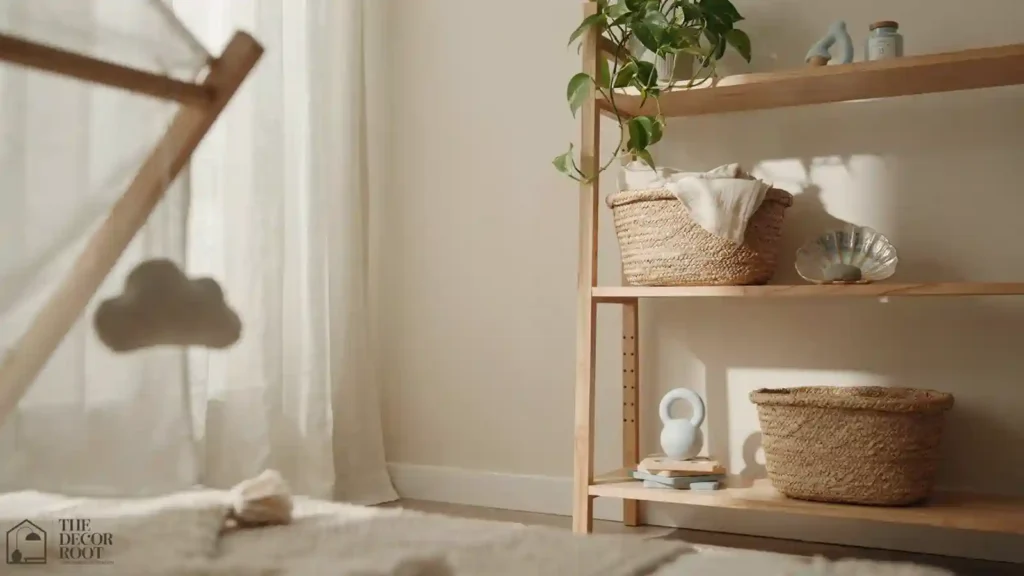
The final and arguably most important idea on this list isn’t a purchase at all: prioritize keeping windows as unobstructed as possible, using sheer linen over heavy drapery, positioning furniture away from window sightlines, and adding a floor mirror to bounce natural light around the room. Genuine coastal spaces are defined as much by light quality as by any object in them, and no amount of rattan or seagrass texture will read as coastal calm in a room that’s dim and heavily curtained.
🍃 Quick Action Plan
- Begin with the wall color and window treatment, since those two elements set the light quality and base palette that everything else in the room will be styled against.
- From there, prioritize the one or two furniture pieces with the most visual weight: the crib or bassinet and the glider, in natural rattan or whitewashed wood finishes.
- Save the smaller textural details, the woven baskets, the mobile, the single shell accent, for last, since those are the easiest and cheapest to add once the room’s foundational calm is already established.
- Resist adding more than one literal coastal reference; the restraint is what keeps the room feeling like an actual calm space rather than a themed one.
A coastal nursery belongs to a home with the same relaxed, sea-influenced aesthetic throughout; these coastal interior design ideas show how the soft blue, sandy neutral, and natural rattan palette of a coastal grandmother living room connects to the nursery as part of a whole-home coastal story that feels cohesive from the front door to the baby’s room.
🍃 Frequently Asked Questions
Conclusion
Coastal calm isn’t a theme you decorate toward; it’s a quality of light and texture you build the room around. Start with the wall color and the window, let natural materials carry the rest, and keep any literal ocean references to a single, well-chosen accent.
💾 Save this post to your Pinterest nursery board to come back to when you’re ready to start building your coastal palette.