25 Spice Storage Ideas for Fall Baking Season
Spice Storage Ideas for Fall Baking. Fall baking has a very specific failure point, and it isn’t the recipe; it’s the five minutes you spend digging through a shoebox of half-labeled spice jars looking for cardamom while your butter softens past the point of no return. Cinnamon, nutmeg, allspice, ginger, cloves fall baking asks more of your spice cabinet than any other season, and most spice storage setups just weren’t built to keep up. If your cabinet is a jumble of mismatched containers with faded labels facing the wrong way, you’re not lacking baking skill; you’re lacking a system.
Spice storage ideas for fall baking season are some of the most practically satisfying home decorating ideas available for a kitchen, because a well-organised and beautifully displayed spice collection solves a daily friction point while simultaneously adding one of the most characterful and aromatic styling details a kitchen can have.
This post contains affiliate links. As an Amazon Associate, I earn from qualifying purchases. If you buy through these links, I may earn a small commission at no extra cost to you.
What Ties These Ideas Together
Good spice storage isn’t about matching jars for the sake of aesthetics, though that helps; it’s about reducing the number of decisions and searches between you and the ingredient you need. A system where every spice has one fixed spot, labeled clearly, and visible at a glance cuts your prep time dramatically and prevents the classic problem of buying a third jar of cinnamon because you couldn’t find the two you already own. The ideas below range from zero-cost reorganization to small purchases, so you can build a system that matches your actual kitchen, not just a Pinterest photo.
Holiday-Ready Spice Storage
Spice storage is one functional layer within a complete kitchen design; browse all our kitchen decorating ideas to see how it works alongside counter styling, A displayed spice collection is one of the most effective fall counter styling elements, these kitchen counter and spice display ideas show how glass jars, ceramic vessels, and a labelled rack of autumn baking spices create a counter moment that is simultaneously functional and beautifully seasonalopen shelving, warm lighting, and small storage solutions, Spice storage is one component of a complete small kitchen storage strategy, these small kitchen storage ideas show how the same vertical wall space, magnetic mounting systems, and drawer organisation principles that create a great spice collection apply across every category of kitchen equipment to make a compact kitchen function at its full capacity during the most demanding cooking season of the year. For a kitchen that functions at its best during the heavy-cooking autumn and holiday season.
1. Decant Everything Into Matching Glass Jars
The single biggest visual and functional upgrade you can make is decanting spices out of their original mismatched packaging into uniform glass jars. Matching jars let your eye scan a shelf instantly instead of reading label after label in different fonts and sizes. Choose square jars over round ones if space is tight; they nest together with zero wasted gaps between them. This is also the step that makes every other idea on this list work better, since a labeled, uniform jar is easier to sort, stack, and store no matter which system you choose.
2. Use a Tiered Shelf Insert Inside a Cabinet
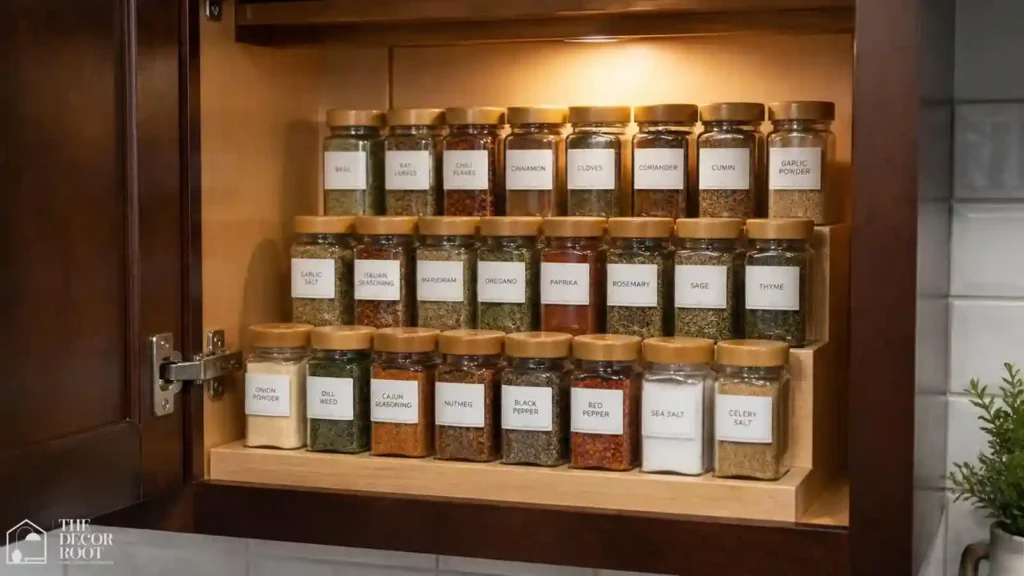
A simple tiered riser shelf inside a cabinet lets you see three rows of spice jars at once instead of just the front row, which is the single biggest cause of “hidden” spices you forget you own. This works especially well for a dedicated baking spice shelf, where cinnamon, nutmeg, and allspice all need to be visible and grabbable at the same time during a recipe. Choose a tier with a slight lip on each shelf so jars don’t slide forward every time you open the cabinet door.
3. Alphabetize Just Your Baking Spices
You don’t need to alphabetize your entire spice collection, but isolating your eight to ten baking spices cinnamon, nutmeg, ginger, cloves, allspice, cardamom, vanilla, pumpkin pie spice into their own alphabetized mini-section means you can find any one of them in under three seconds while a recipe is timing out. This is a zero-cost fix that takes about ten minutes and solves the exact problem fall baking creates: needing five different spices in quick succession without stopping to search.
4. Store Baking Spices Separately From Savory Spices
Most spice clutter comes from mixing your everyday savory spices (garlic powder, paprika, cumin) in with your baking spices, forcing you to sort through both every time you cook either way. Give baking spices their own drawer, shelf, or bin entirely separate from savory ones. Come November, this split means your entire baking section stays undisturbed by daily dinner cooking, and you’ll actually notice when you’re running low on nutmeg before Thanksgiving pie day arrives.
EDITOR’S PICK
🛒Tiered Cabinet Shelf Insert For Spice Jars
Separating baking spices from savory ones keeps the baking section undisturbed and makes low stock easier to spot before holiday baking begins.
(paid link)
5. Label Jar Lids, Not Just the Front
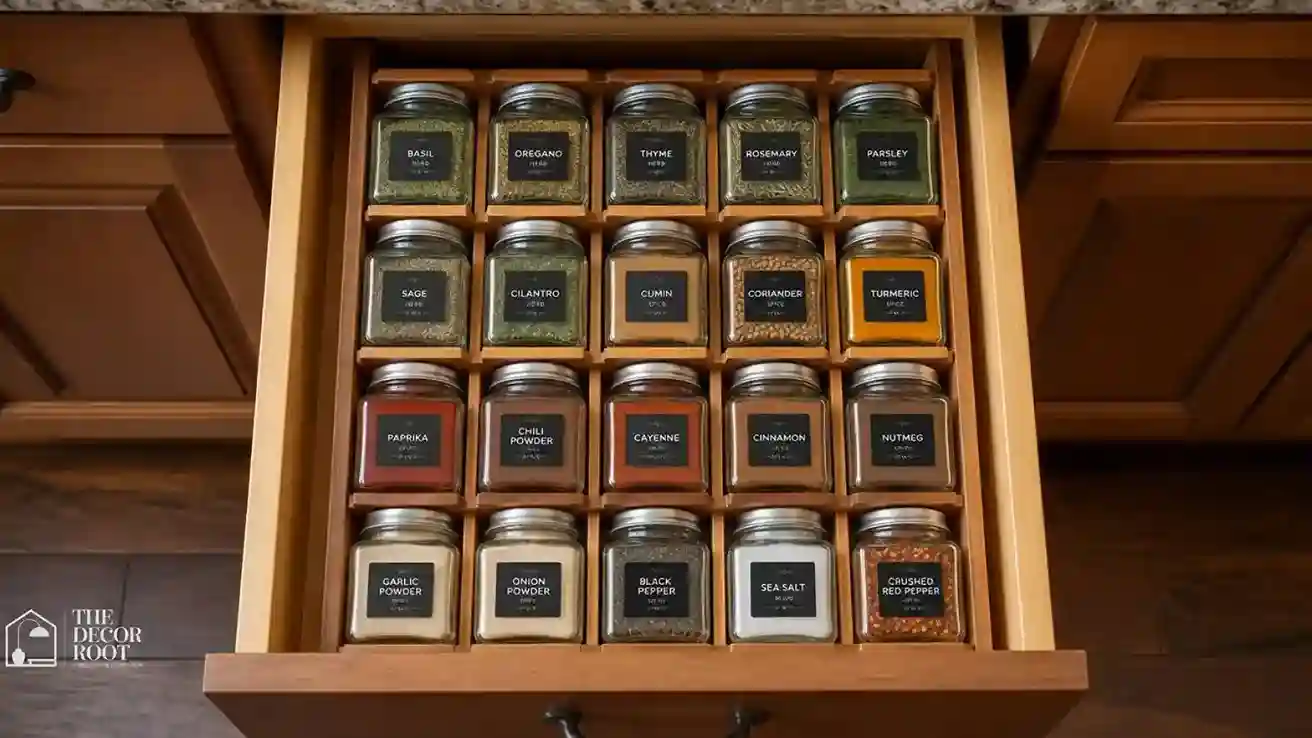
If your spice jars sit in a drawer rather than on a shelf, front labels are useless; you’re staring at lids from above. Add a second label to the top of each lid so a drawer full of jars reads instantly from a bird’s-eye view. This single fix turns a drawer system, which is often more space-efficient than shelving, into a genuinely fast system rather than one that requires lifting out three jars to find the right one.
6. Use a Lazy Susan for Deep Cabinet Corners
Deep corner cabinets are where spices go to disappear, since anything toward the back becomes functionally invisible. A round lazy Susan turntable solves this by letting you spin the entire collection into view rather than reaching blind. Group your fall baking spices onto one half of the turntable so a single spin during a baking session brings everything you need to the front at once.
7. Repurpose a Drawer Divider Tray for Small Jars
A shallow drawer divider tray, the kind often sold for silverware, works surprisingly well for small spice jars laid on their sides with labels facing up. This is a nearly free solution if you already have an extra tray around, and it prevents the classic drawer problem of jars rolling and colliding every time the drawer opens and closes. It’s an especially good option for renters who don’t want to install permanent cabinet inserts.
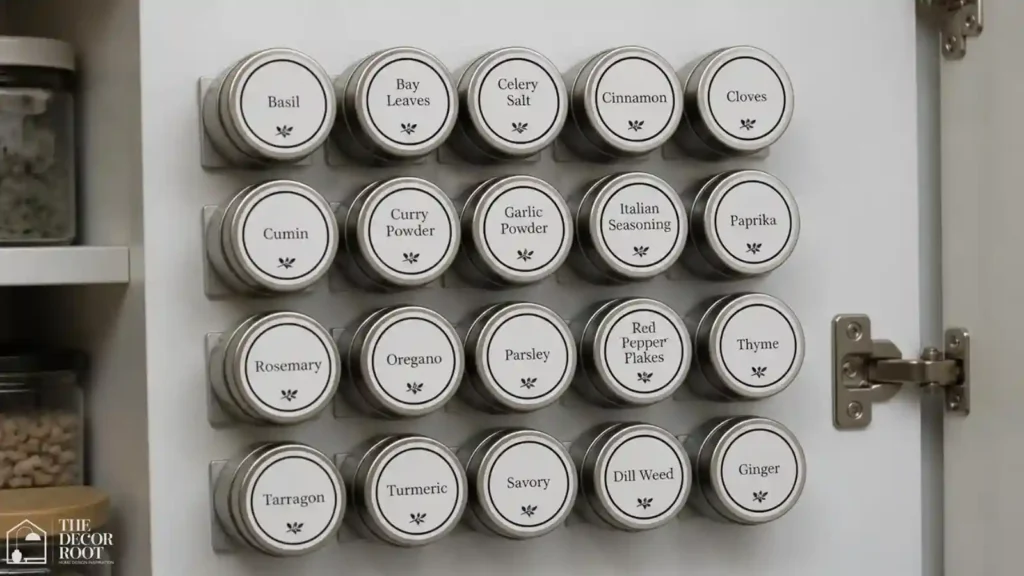
8. Hang a Magnetic Strip Inside a Cabinet Door
A magnetic knife strip mounted on the inside of a cabinet door, paired with small magnetic spice tins, turns unused door space into functional storage. This is one of the most space-efficient ideas on the list because it uses square footage that would otherwise sit empty. It works especially well in small kitchens where every inch of shelf and drawer space is already spoken for.
9. Create a Rotating “Currently Baking” Basket
Pull whichever five or six spices your fall baking rotation actually uses most cinnamon, nutmeg, cloves, ginger, allspice, vanilla into one small caddy or basket that lives at the front of your baking shelf. This isn’t a permanent home; it’s a working set that saves you from opening and closing three different storage zones every time you bake. Refill it from your main stock as needed and swap the spices seasonally.
10. Use Airtight Tins Instead of Jars for Bulk Spices
If you buy cinnamon or nutmeg in bulk for heavy fall baking, a set of airtight metal tins keeps the spice fresher for longer than a standard jar with a loose lid, since bulk spices are exposed to air more each time you scoop from a large container. Metal tins also stack more efficiently than glass in a cabinet, freeing up shelf space for your everyday-use jars. Label the tin lid clearly since most metal tins aren’t clear like glass.
EDITOR’S PICK
🛒Magnetic Spice Tin Set For Cabinet Doors
Airtight metal tins preserve bulk spice freshness longer, stack more efficiently than glass, and need clear lid labels since metal is not transparent.
(paid link)
11. Sort by Frequency, Not Alphabetically, for Everyday Spices
While alphabetizing works well for your isolated baking section, your everyday savory spices are actually easier to manage sorted by how often you use them, with the most-reached-for jars in the most accessible front-row spot. This hybrid approach alphabetical for baking, frequency-based for savory matches how you actually cook rather than forcing one rigid system onto two very different use cases.
12. Store Extracts Together in a Small Caddy
Vanilla, almond, and peppermint extract bottles are often oddly shaped and don’t fit neatly into a standard spice jar system, so give them their own small caddy or shallow bin near your baking spices instead of scattering them across different shelves. Keeping extracts together also makes it obvious at a glance when you’re running low on vanilla before a big baking weekend. Spice storage belongs to the same open display philosophy as kitchen open shelving. These kitchen open shelf and storage display ideas show how the same principles of visual grouping, label consistency, and negative space that make a summer kitchen shelf look designed apply to a fall baking spice display that looks equally considered.
13. Use Stackable Bins for Baking Mixes and Blends
Pumpkin pie spice blends, apple pie spice, and any pre-mixed seasoning blends you use for fall baking do best in small stackable bins rather than loose in a drawer, since blends tend to come in larger or oddly-shaped packaging than single spices. Stackable bins let you double or triple your vertical storage in a cabinet that would otherwise only fit one layer of loose containers.
14. Add a Chalkboard or Dry-Erase Label for Refills
For your most-used fall baking spices, a small chalkboard-style label lets you jot a quick note like “low” directly on the jar the moment you notice it, rather than trying to remember later at the grocery store. This tiny habit prevents the extremely common fall baking problem of discovering you’re out of cinnamon mid-recipe with no backup on hand.
15. Use a Drawer Insert With Angled Slots
A dedicated spice drawer insert with angled slots holds jars at a slight tilt so labels are readable from above without lifting a single jar out, combining the visibility of a shelf system with the space efficiency of a drawer. This is one of the higher-effort, higher-payoff ideas on this list if you’re doing a fuller spice storage overhaul rather than a quick fix.
EDITOR’S PICK
🛒Angled-Slot Spice Drawer Insert
A tilted spice drawer insert offers shelf-like visibility without removing jars, a high-effort, high-payoff choice for a complete storage overhaul.
(paid link)
16. Keep a Backup Stock Bin Separate From Daily-Use Jars
Rather than cramming bulk backup spices into your everyday jars’ shelf, keep unopened backups in a separate labeled bin in a pantry or lower cabinet. This keeps your primary spice zone lean and fast to scan, while ensuring you’re never actually out of an ingredient just temporarily out of the front-line jar, with a backup one bin away.
17. Group Spices by Recipe Type on a Single Shelf
Instead of organizing purely alphabetically, consider grouping your most common fall recipe spice sets into a “pumpkin bread” cluster, an “apple pie” cluster, and a “gingerbread” cluster so grabbing everything for a specific bake is a single reach rather than five separate searches across the cabinet. This works especially well if you bake the same handful of fall recipes repeatedly each year.
18. Use Uniform Scoop Spoons Stored With the Jars
Store a couple of small uniform scoop spoons directly inside your jar storage area, dedicated only to spices, so you’re never grabbing a wet measuring spoon straight from the drawer and introducing moisture into a jar. This small habit meaningfully extends the shelf life of your fall baking spices, which lose potency fast once moisture gets in.
19. Add a Small Funnel to Your Decanting Kit
Keep a small kitchen funnel stored alongside your empty backup jars so refilling and decanting new spice purchases takes thirty seconds instead of becoming a messy counter event you keep putting off. This tiny tool is what actually makes the “always decant into matching jars” habit from idea #1 sustainable long-term instead of a one-time project that slowly falls apart.
20. Use Removable Printed Labels, Not Handwriting
Printed, removable vinyl labels look more polished than handwriting and, critically, survive repeated washing and refilling far better than marker on tape. A full label set gives you a consistent font and size across every jar, which is a big part of why “matching jar” spice cabinets photograph and function so much better than mismatched setups.
EDITOR’S PICK
🛒Removable Printed Spice Jar Labels
Removable vinyl labels offer a polished, durable look with consistent fonts across all jars, helping uniform spice cabinets photograph and function better than mismatched alternatives.
(paid link)
21. Reserve a Shelf Just for Fall-Only Spices
Star anise, whole cloves, and certain pie spice blends only see real use a few months a year. Rather than letting them clutter your everyday shelf year-round, give them a small labeled “seasonal” bin that you pull forward starting in September and tuck back in January. This keeps your primary daily-use shelf lean the other eight months while making fall baking prep feel like everything is freshly ready to go.
22. Use Clear Bins for Vertical Pantry Stacking
If your spice overflow lives in a pantry rather than a cabinet, clear stackable bins let you see contents without pulling every bin down, and they stack far more safely than loose boxes. Reserve the most accessible pantry shelf height for your fall baking overflow bin specifically during peak baking months.
23. Add a Small Note Card With Your Go-To Blend Ratios
Tuck a small index card with your personal pumpkin spice or apple pie spice ratio directly into your baking spice bin, so you’re never re-Googling your own preferred mix every October. This is a tiny, personal touch that makes your storage system feel genuinely built around how you bake, not just a generic organizing template.
24. Rotate Older Stock to the Front Each Fall
Once a year, ideally right as fall baking season kicks off, pull everything forward and rotate genuinely old stock (spices lose real potency after about a year) to the front so you use it first or toss it. This simple habit, paired with the chalkboard label idea from #14, keeps your entire system self-correcting instead of slowly accumulating stale jars in the back.
25. Finish With a Turntable for Your Extract and Oil Bottles
Just like the lazy Susan idea for spice jars, a smaller turntable dedicated specifically to extract bottles, food coloring, and baking oils keeps these oddly-shaped bottles from tipping and rolling in a flat drawer or shelf. This is a small finishing touch that completes a full baking-spice system, ensuring every category of ingredient powders, blends, and liquids has its own dedicated, accessible home.
EDITOR’S PICK
🛒Small Turntable For Extract And Oil Bottles
A small turntable for extracts and oils prevents tipping and completes a full baking spice system, giving every ingredient category its own accessible home.
(paid link)
Pair This With Your Counter Styling
Once your spice cabinet is sorted, your counters are the next place fall baking clutter tends to pile up. See our fall kitchen counter styling ideas for how to keep flour, cutting boards, and gourds from taking over, or check out apple and pumpkin kitchen decor for seasonal touches that won’t get in your baking’s way.
Quick Action Plan
- Don’t try to overhaul your entire spice cabinet in one afternoon. Start with idea #3: isolating and alphabetizing just your eight to ten core baking spices, since that single change delivers the biggest time savings for the least effort.
- Once that section is solid, layer in a labeling system (#5 or #20) over the following week, then tackle bulk storage and backups last, since those matter far less on a day-to-day basis than having your most-used spices instantly findable.
Frequently Asked Questions
Conclusion
Store bulk quantities in airtight tins separate from your daily-use jars, keeping only a working amount in your front-line jar. This preserves freshness in the bulk stock while keeping your everyday shelf uncluttered.
Loving this system? 💾 Save this post to your Kitchen Organization board on Pinterest so it’s easy to find before your next fall baking session.