24 Warm Bathroom Color Ideas for Cooler Months
Warm Bathroom Color Ideas for Cooler Months. Bathrooms are disproportionately likely to feel cold once the weather turns, and it’s rarely about the actual temperature. Tile, porcelain, and mirrors are inherently hard, reflective surfaces, and most bathrooms default to a cool white or gray-toned palette that reads as clinical rather than cozy the moment daylight gets shorter and grayer outside. If your bathroom felt fine in July and suddenly feels sterile in October, the color palette not the room itself- is very likely the reason.
Warm bathroom color ideas for cooler months are one of the most considered home decorating ideas for the autumn and winter season. The bathroom is the room where cold-month color choices have the most physiological impact, because it is the space where people are most physically exposed and most dependent on the surrounding environment to feel warm, safe, and cared for.
This post contains affiliate links. As an Amazon Associate, I earn from qualifying purchases. If you buy through these links, I may earn a small commission at no extra cost to you.
Where to Start Mentally
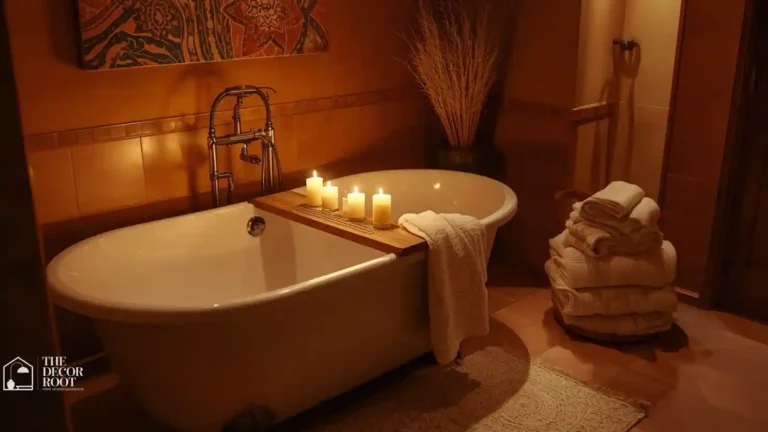
Before picking a single color, it helps to understand why some “warm” colors still read cold in a bathroom specifically. Bathroom lighting is usually cooler and more direct than living room lighting, and the reflective surfaces tile, mirror, chrome bounce that cool light around the room more than fabric or wood would in another space. That means undertone matters more here than almost anywhere else in the house: a beige with a gray undertone will still read cold under bathroom lighting, while a beige with a yellow or pink undertone will read warm even in a north-facing, artificially lit bathroom. The warm terracotta, deep sage, and amber palette that makes a bathroom feel genuinely cosy in autumn is the same palette that makes a wool rug in the adjacent living room feel like part of the same seasonal story. These warm autumn color ideas across rooms show how to connect the bathroom color choice to the living room palette so the whole home reads as one cohesive autumn interior.
Infuse Bathroom with Seasonal Warmth
“Warm color in a bathroom is a seasonal strategy as much as a design choice; browse all our bathroom decorating ideas to see how autumn and winter color connects to texture, lighting, scent, and the wider home palette for a bathroom that feels genuinely warm rather than merely decorated for the colder months. A warm bathroom color scheme and a fall scent and towel refresh are the two seasonal investments that produce the most complete autumn bathroom transformation. These autumn bathroom refresh ideas show how to sequence the decisions so the color choice creates the right backdrop for the textural and olfactory layers that follow.
1. Test Paint Undertone Under Your Actual Bathroom Lighting
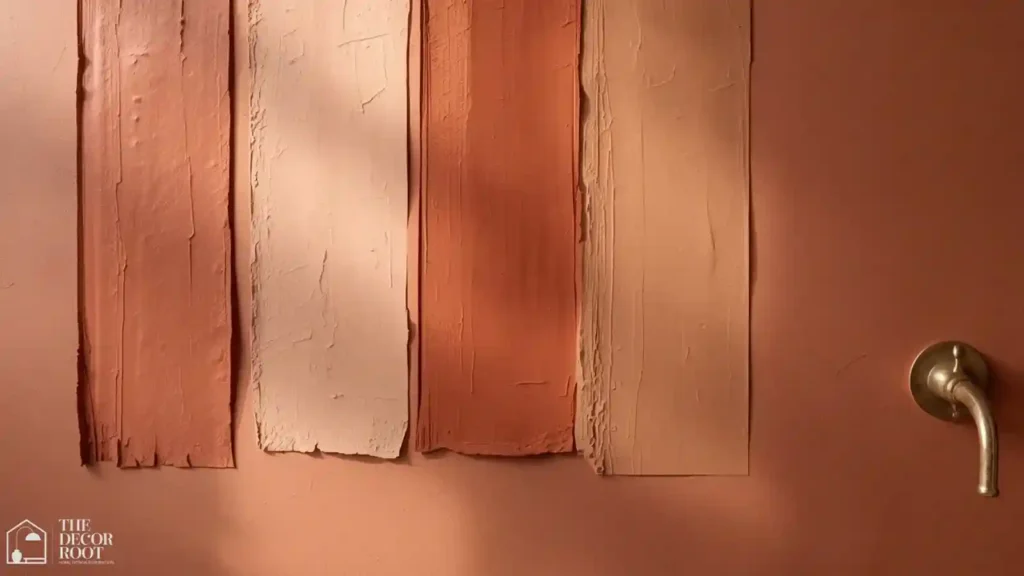
Never choose a bathroom paint color from a swatch viewed in daylight or under a different room’s lighting. Buy a small sample pot, paint a section directly on the wall, and view it specifically under your bathroom’s existing lighting both with the vanity lights on and with natural light, if any exists. A color that looks warm under living room light can look flat gray under a cool-white bathroom vanity bulb, and this single-step verification prevents the most common bathroom color mistake.
2. Choose Terracotta Over True Orange
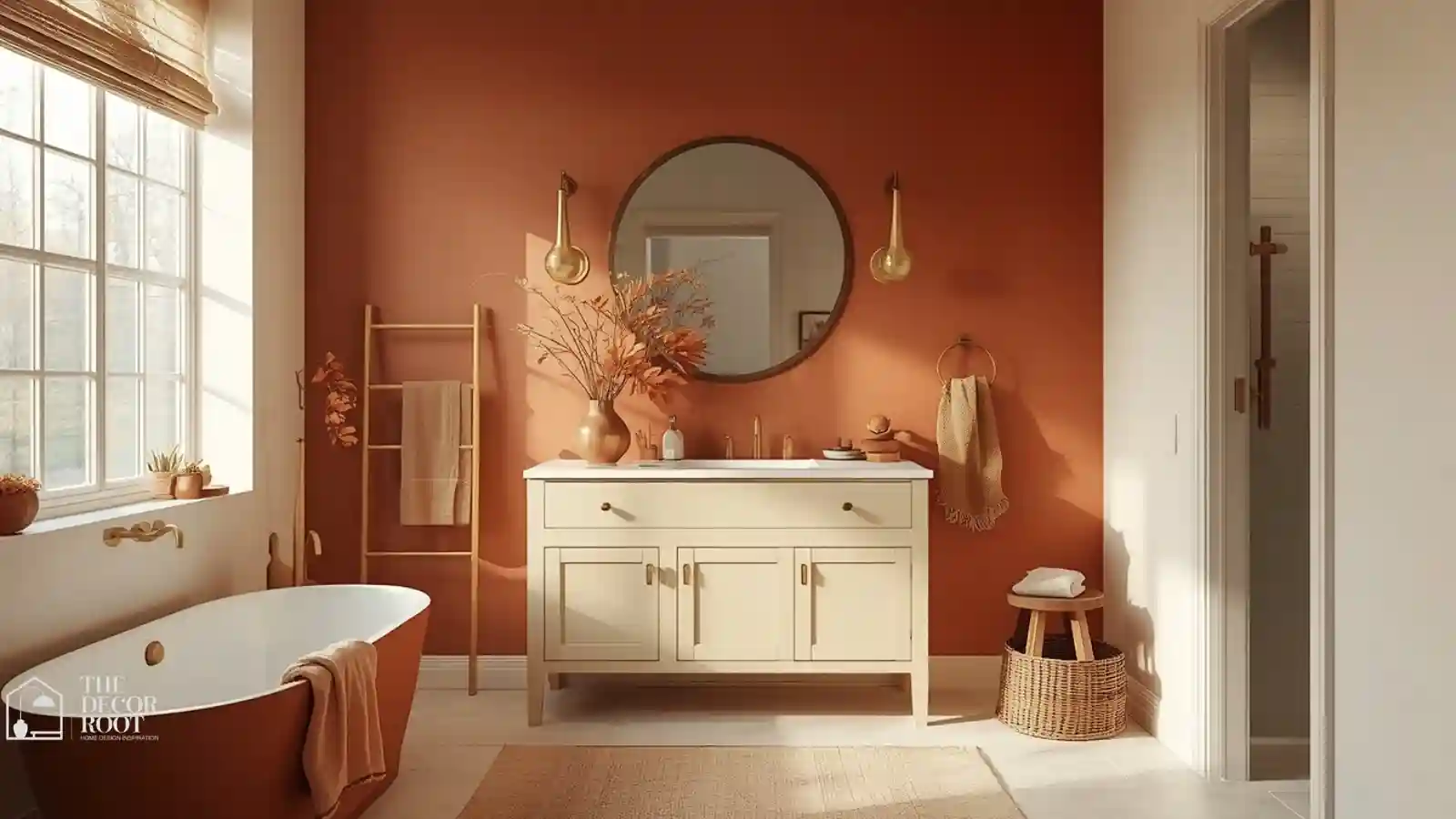
True orange reads as bold and trendy in a way that can date a bathroom quickly, while terracotta, a muted, earthier orange-red, reads as warm and grounded without the same “statement wall” commitment. Terracotta also pairs more naturally with the neutral fixtures (white porcelain, chrome or brass hardware) that most bathrooms already have, making it a lower-risk way to introduce warm color than a saturated true orange would be.
3. Use Warm White Instead of Cool White or Gray-White
If a full color change feels too big a commitment, simply switching from a cool, blue-toned white or greige to a warm white with a slight cream or yellow undertone changes the entire feel of a bathroom without introducing any bold color at all. This is the lowest-risk option on this list and works in every bathroom regardless of existing tile or fixture color, since warm white is close enough to most existing whites that it won’t clash with anything already installed.
4. Sample Multiple Warm Tones Before Committing
Warm doesn’t mean one specific color; clay, warm taupe, muted gold, soft rust, and deep cream are all warm options that read very differently depending on your room’s size and light exposure. Buy 3-4 small sample pots in different warm tones and compare them side by side on the same wall before choosing, since undertone differences that look subtle on a paint chip can look dramatically different once applied at full wall scale.
EDITOR’S PICK
🛒Peel-And-Stick Or Small Sample Paint Pots, Multiple Warm Tones
A set of peel-and-stick paint sample pots lets you test several warm tones on the actual wall without committing to a full can.
(paid link)
5. Paint Just One Accent Wall If Full Repaint Isn’t Practical
In a bathroom with existing tile you’re not replacing, painting a single accent wall often the wall behind the vanity mirror or the shortest wall in the room introduces warm color without the cost or commitment of repainting a fully tiled shower surround or floor-to-ceiling tiled walls. This also limits the color risk; if you don’t love it, repainting one wall is a far smaller project than an entire bathroom.
6. Warm Up a White Bathroom With Wood Tones Instead of Paint
If your bathroom is fully tiled in white or a cool neutral and repainting isn’t an option, common in rentals, introducing warm wood tones through a vanity stool, a small shelf, or a frame does much of the same visual warming work that paint would, without touching a single wall. Wood’s natural warm undertone contrasts with cool white tile in a way that reads intentional rather than mismatched.
7. Choose Brass or Warm Bronze Over Chrome Hardware
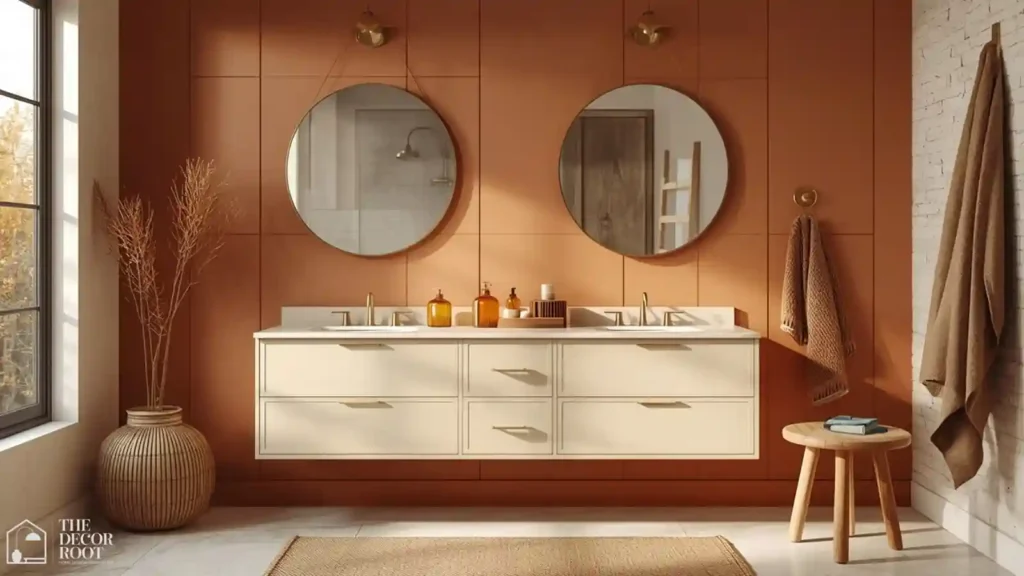
Hardware finish has an outsized effect on how warm or cold a bathroom feels, since it’s often the most reflective, attention-grabbing element in the room after the mirror. Swapping chrome or polished nickel fixtures faucet, towel bar, cabinet pulls for brushed brass or warm bronze shifts the entire room’s temperature perception even if the wall color and tile stay the same. This is a moderate-effort project, but doesn’t require any tile work or plumbing changes beyond fixture swaps.
8. Use Deep Green as a Warm-Adjacent Neutral
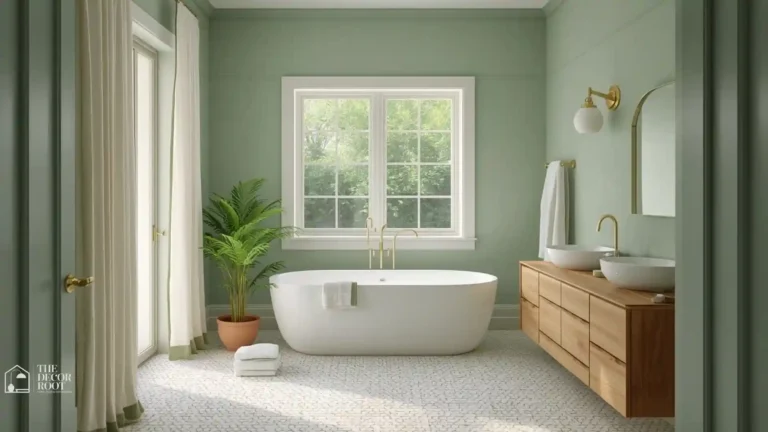
Deep, muted greens olive, forest, sage-leaning-warm rather than sage-leaning-blue read as warm-adjacent even though green isn’t traditionally considered a “warm” color on the color wheel. The key is choosing a green with a yellow rather than blue undertone, which pairs beautifully with brass hardware and warm wood tones for a rich, cozy effect that still feels sophisticated rather than seasonal-only.
9. Bring In Warmth Through a Patterned Shower Curtain
In bathrooms where the fixed surfaces (tile, vanity) skew cool and can’t easily change, a shower curtain in a warm color or pattern is one of the largest fabric surfaces in the room and does significant visual-temperature work on its own. Choose a curtain with a warm rust, terracotta, or ochre pattern rather than a cool blue or gray one, and this single, easily swappable textile can shift the entire room’s perceived warmth.
EDITOR’S PICK
🛒Warm-Toned Patterned Shower Curtain (Rust, Terracotta, Or Ochre)
A warm-toned patterned shower curtain is one of the largest color surfaces you can change without touching tile or paint.
(paid link)
10. Pair Warm Wall Color With Existing Cool Tile Deliberately
Not every bathroom has the luxury of a full palette redo, and cool-toned tile gray, blue-gray, cool white is extremely common. Rather than fighting the tile, choose a warm wall color that creates intentional contrast rather than an attempted match; a warm terracotta or clay wall next to cool gray tile reads as a deliberate, sophisticated pairing rather than a mismatch, as long as the two tones are both muted rather than both highly saturated. The choice of warm over cool bathroom color in autumn is not just aesthetic; these warm color psychology ideas explain the neuroscience behind why terracotta, deep sage, and amber tones lower the perceived cold of a bathroom environment, slow the nervous system, and make a bathroom feel genuinely restorative during the months when warmth is the most physiologically important quality a room can offer.
11. Use a Warm Amber or Gold Mirror Frame
If your bathroom mirror is currently frameless or has a cool silver frame, adding or swapping to a warm brass or gold-toned frame changes the visual anchor of the room, since the mirror is typically positioned at eye level and catches attention immediately upon entering. Framed mirror kits designed to adhere directly over an existing frameless mirror are widely available and don’t require removing or replacing the mirror itself.
12. Add Warmth With a Wood or Rattan Light Fixture
Vanity lighting is often the most dated, purely functional element in a bathroom, and swapping a cool metal or plain glass fixture for one with a wood or rattan element introduces warmth right at eye level, exactly where people spend the most time looking during their routine. This also affects how flattering the lighting feels, since fixtures with warm materials tend to be paired with warmer bulb temperatures more often than purely metal fixtures.
13. Choose a Warm-Toned Grout for New Tile Projects
If you are doing any new tile work, grout color is an easy detail to overlook, but a warm beige or taupe grout paired with a cream or off-white tile reads noticeably warmer than the same tile paired with a stark white or gray grout. This is a nearly free upgrade if you’re already budgeting for a tile project, since grout color doesn’t typically affect material cost, only the installer’s product selection.
14. Swap to Warm White LED Bulbs Before Anything Else
Before any paint, tile, or hardware change, checking your bulb temperature is the fastest, cheapest fix available. Cool white or daylight bulbs (5000K+) cast a blue-tinted light that undercuts any warm color choices elsewhere in the room. Swapping to warm white bulbs (2700K-3000K) instantly shifts how every other color in the bathroom reads, and this $10-15 fix should happen before spending money on any other item on this list.
EDITOR’S PICK
🛒Warm White (2700K-3000K) LED Bulbs, Vanity-Compatible
Warm white LED bulbs are the cheapest, fastest fix on this entire list and should be step one before any paint or decor changes.
(paid link)
15. Use Warm Metallics in Small Doses for Sparkle Without Cold
Metallic accents a small tray, a soap dispenser, drawer pulls in warm gold or brushed brass add reflective interest without the cold glare that chrome or silver metallics introduce. Because bathrooms already have significant reflective surface area from mirrors and glass shower doors, choosing warm rather than cool metallics for the smaller accent pieces prevents the room from having competing “temperatures” of shine.
16. Try a Warm Terracotta or Clay Ceiling for Drama
Painting the ceiling rather than or in addition to the walls in a warm terracotta or clay tone is a less common but strikingly effective way to add color to a bathroom, especially a smaller powder room where a full wall commitment might feel overwhelming. A colored ceiling draws the eye upward and adds a cocooning, warm effect that a same-color-as-walls white ceiling doesn’t provide.
17. Layer Warmth Through Multiple Wood Tones
Rather than treating “add wood” as a single fix, layering two or three different wood tones a lighter oak vanity, a darker walnut frame, a mid-tone rattan basket adds richness and warmth the way layering multiple warm colors would, without requiring any of those elements to match exactly. This mirrors how a well-designed living room mixes wood tones rather than matching every piece of furniture to the same finish.
18. Choose a Warm-Toned Bath Rug to Anchor the Floor Palette
The floor is one of the largest surfaces in a bathroom and often gets the least color attention beyond the tile itself. A warm-toned bath rug or mat in rust, clay, or warm taupe grounds the whole room’s palette from below, working in tandem with wall color and textiles above it. This is especially effective in bathrooms with cool-toned tile floors that can’t easily be replaced.
19. Use Peel-and-Stick Tile for a Renter-Friendly Warm Accent
For renters or anyone hesitant to commit to a full tile renovation, peel-and-stick tile in a warm terracotta or clay tone applied to a small accent area, a backsplash behind the vanity, or a single accent strip introduces real material warmth without a permanent commitment or contractor cost. Quality peel-and-stick options now closely mimic the texture and finish of real ceramic or cement tile.
EDITOR’S PICK
🛒Peel-And-Stick Terracotta Or Clay Accent Tile
Peel-and-stick terracotta accent tile is a renter-friendly way to add warm color at the tile level without a renovation.
(paid link)
20. Add Warmth Through Artwork Rather Than Structural Change
A small piece of framed art in warm tones an abstract print in rust and cream, a botanical print with warm greens adds color without touching a single fixed surface in the room. Choose a frame in a warm wood or brass finish to reinforce the palette rather than a stark black frame, which can read cooler and more modern than the rest of a warm-toned bathroom refresh.
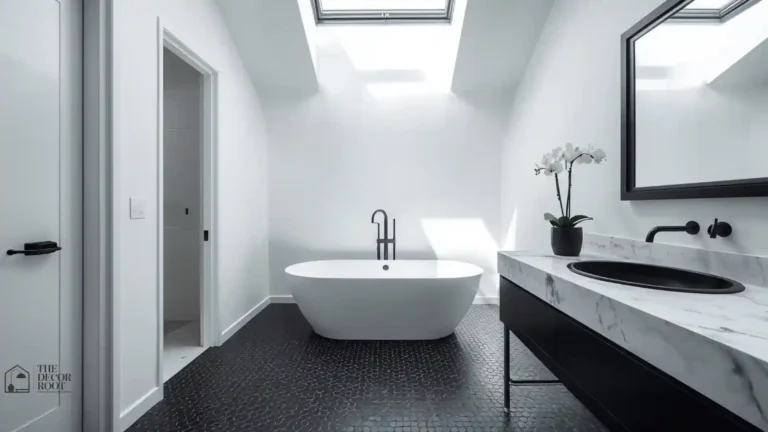
21. Warm Up a Marble or Cool-Stone Vanity With Surrounding Color
Marble and cool-toned stone vanities are common and expensive to replace, but their inherent coolness can be balanced by surrounding the vanity with warm-toned elements: a warm wood stool tucked beneath it, brass fixtures, a terracotta soap dish. Rather than fighting the stone itself, use the surrounding smaller elements to shift the overall temperature perception of that section of the room.
22. Choose Warm-Toned Towels as a Color-Testing Tool
Before committing to a paint or tile change, hanging a set of towels in the warm tone you’re considering (rust, terracotta, warm gold) lets you live with that color in the room for a few weeks at almost no cost or commitment. If the towel color still feels right after regular daily use and different lighting conditions, that’s a strong signal the same tone would work well as a larger, more permanent color commitment like paint or tile.
23. Add Amber or Smoked Glass Accessories
Clear glass accessories soap dispensers, tumbler cups, small trays can read as cold or neutral, while the same items in amber or smoked glass introduce warm color even in small functional objects. Because these pieces are used daily and sit at counter height where they’re seen up close, the cumulative effect of several small amber glass pieces adds up to a noticeably warmer counter vignette.
A set of amber glass bathroom accessories swaps out cold clear glass for warm color at counter height.
EDITOR’S PICK
🛒 Amber Or Smoked Glass Bathroom Accessory Set
A set of amber glass bathroom accessories swaps out cold clear glass for warm color at counter height.
(paid link)
24. Test the Whole Palette Together Before Finalizing Anything
Once you’ve chosen candidates across paint, textiles, and accessories, lay or hold them together in the actual bathroom under the actual lighting before finalizing any purchase. Individual warm elements can occasionally clash once combined; two different “warm” undertones sitting next to each other can look mismatched rather than layered. This final check prevents the common mistake of assembling a palette piece by piece without ever confirming it reads as cohesive once fully assembled in the room.
Related reading: Pair this palette work with a full textile refresh in our fall bathroom scent and towel refresh ideas, and see our color psychology guide for more on why undertone affects mood.
Quick Action Plan
- Start with the cheapest, fastest fix: swap to warm white LED bulbs before spending money on anything else, since lighting temperature affects how every other color in the room reads.
- From there, test paint or accent color samples directly on your bathroom wall under your actual lighting, and layer in warmth through hardware, textiles, and small glass or wood accessories if a full repaint or retile isn’t practical right now.
- Confirm the full palette together in the room before finalizing any single large purchase.
Frequently Asked Questions
Conclusion
A bathroom doesn’t need a full remodel to stop feeling cold once the weather turns; undertone, lighting temperature, and a handful of warm textile and accessory swaps do most of that work on their own.
💾 Save this to your Warm Bathroom Ideas board on Pinterest before your next refresh.