
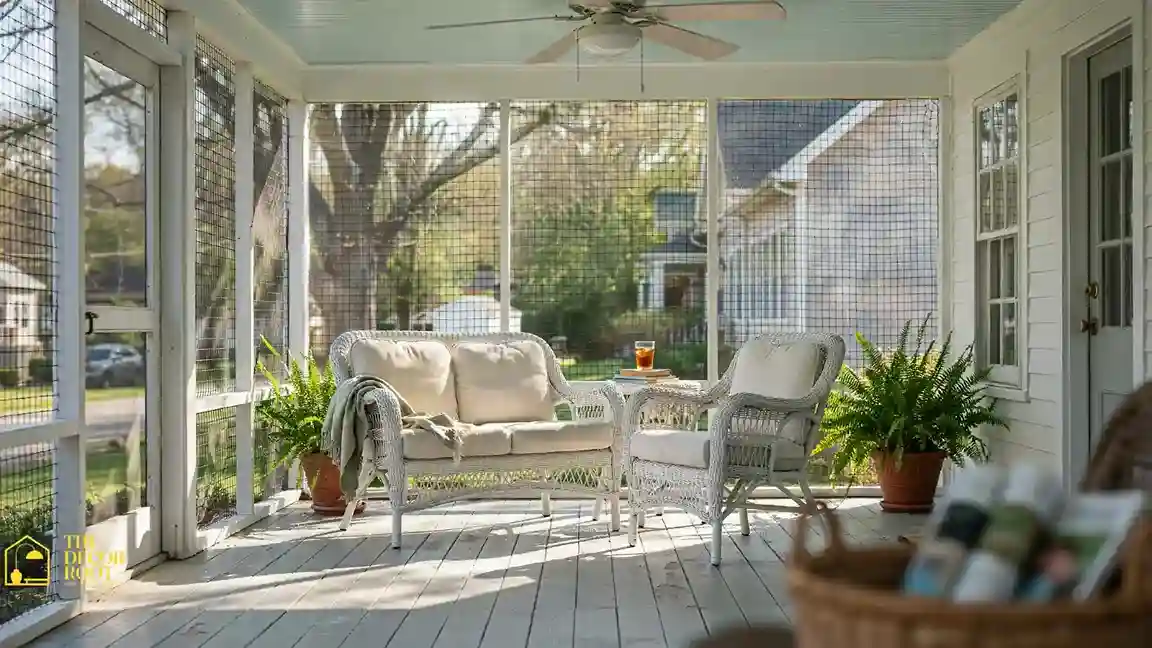
22 Screened Porch Ideas That Actually Keep Bugs Out
Screened Porch Ideas: Every screened porch idea on Pinterest looks flawless right up until the first genuinely humid evening, when mosquitoes somehow find the one gap you didn’t know existed and turn a relaxing porch sit into a slapping match. Standard porch screening keeps most bugs out, but “most” isn’t the same thing as “all,” and the actual difference between the two usually comes down to mesh size, sealed corners, and a handful of maintenance habits nobody bothers mentioning in the styled photos. A screened porch is one of the most liveable home decorating ideas available for a property with outdoor space; it creates a room that is genuinely usable in all weather, bug-free from dusk onwards, and flexible enough to function as a dining room, living room, or sleeping porch depending on the season and the mood.
This post contains affiliate links. As an Amazon Associate, I earn from qualifying purchases. If you buy through these links, I may earn a small commission at no extra cost to you.
What Ties These Ideas Together
A bug-free porch isn’t really about the screen material itself; it’s about treating the entire porch as a sealed system with several small, distinct entry points rather than a single big barrier. A door left propped for a moment, a gap where the frame meets the floor, a corner where the mesh has separated slightly from tension every one of these, no matter how minor it looks, is functionally a door for insects. Once you start thinking in terms of seams, seals, and airflow rather than just “we have screening,” the whole space gets noticeably more livable through the buggiest stretch of the year. A screened porch and an outdoor shower are the two structural additions that most completely change how a backyard is used day-to-day. These backyard outdoor feature ideas show how an outdoor shower placed near a screened porch creates a seamless flow from pool or garden straight into a shaded, comfortable outdoor living space without tracking water through the house
22 Screened Porch Ideas
A screened porch is a complete outdoor room; browse all our DIY and Budget decorating ideas for shade sails. A screened porch and a shade sail solve the same outdoor comfort problem: how to stay outside comfortably when the sun is fierce, or the bugs are biting, through different structural approaches. These covered patio and shade ideas show how a shade sail delivers the overhead protection and temperature control of a screened porch in a more flexible, less permanent format. hammock corners, al fresco dining, and deck privacy ideas that build out the rest of the outdoor space around your screened porch.
1. Choose a mesh count of 20×20 or finer, not standard 18×14
Standard porch screen mesh is built primarily to stop houseflies and other larger insects, but gnats and no-see-ums slip right through a typical 18×14 weave without much resistance. A 20×20 mesh count, sold at most hardware stores specifically labeled as “no-see-um screen,” blocks significantly smaller insects without noticeably reducing airflow or visibility. It’s worth the slight material upcharge if biting gnats are a common seasonal issue in your region, since no amount of sealing elsewhere compensates for mesh that’s simply too coarse to begin with.
2. Seal the bottom track with a door sweep, not just the frame
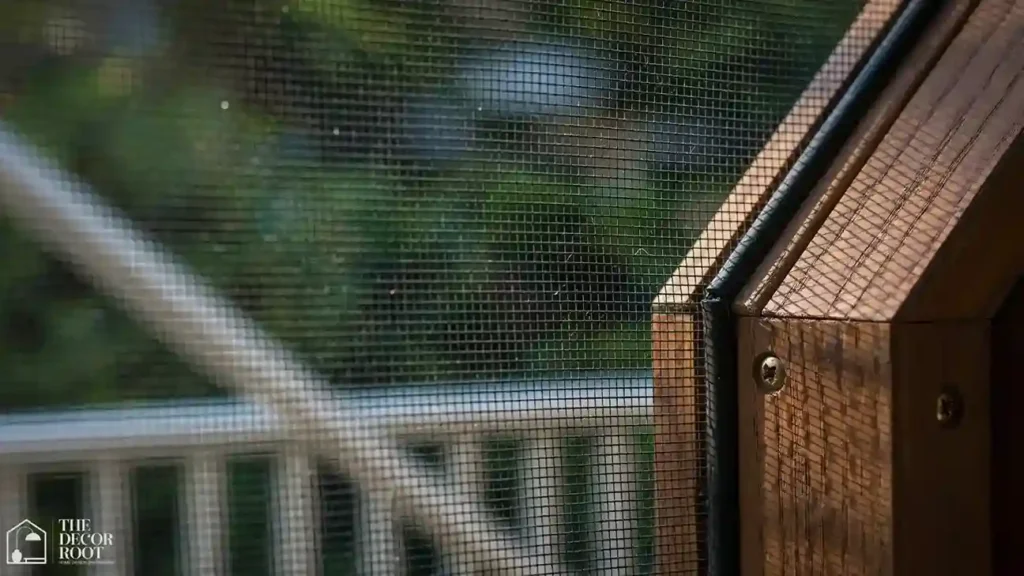
Most bug entry on a screened porch actually happens at the base, where the screen door frame meets the floor, and small gaps let insects crawl or fly in low, beneath eye level where you’d naturally check. A rubber door sweep, the same style commonly used on exterior entry doors, closes that specific gap completely for under $15 in materials and about ten minutes of install time.
EDITOR’S PICK
🛒 Rubber Door Sweep
Under‑$15 rubber door sweep seals the screen door base gap where bugs enter, installing in ~10 minutes, same as exterior entry doors.
(paid link)
3. Check and re-tension screens every spring before bug season starts
Screens naturally loosen and sag over the course of a full winter of temperature swings, and a sagging screen develops small gaps right at the corners where the frame meets the mesh exactly the spots easiest to overlook during a casual glance. A quick spring inspection, pressing firmly along each seam and re-stapling or re-splining any loose sections, takes under an hour total.
4. Install a self-closing hinge on the screen door
The single biggest bug entry point on most screened porches, by a wide margin, is a door left propped open “just for a second” that turns into five minutes or longer. A spring-loaded self-closing hinge, available for roughly $10 to $20, closes the door automatically every single time it’s used, removing the human-error factor entirely.
5. Add a magnetic screen curtain as a backup barrier at high-traffic doors
For doors that get used constantly throughout the day, one leading straight into a kitchen, for example, a magnetic screen curtain that snaps shut behind you the moment you release it adds a genuine second layer of defense even if the primary screen door somehow gets left ajar for a moment. They’re inexpensive and install with nothing more than a basic staple gun.
6. Run a ceiling fan continuously during peak bug hours
Mosquitoes are genuinely weak fliers and struggle noticeably against consistent airflow, so an outdoor-rated ceiling fan running on a medium setting during dawn and dusk, their most active feeding windows, does more real work to keep them off you than most sprays manage on their own. It also makes the porch considerably more physically comfortable to actually sit in through humid summer evenings.
EDITOR’S PICK
🛒 Outdoor-rated ceiling fan
Outdoor fan on medium at dawn/dusk deters mosquitoes better than sprays, and makes humid porch evenings far more comfortable.
(paid link)
7. Use yellow or amber bug lights instead of standard white bulbs
Standard white and blue-toned LED bulbs actively attract flying insects toward your porch from a genuine distance. Amber or yellow “bug light” bulbs, widely sold at Target and Home Depot for a comparable price to standard bulbs, are considerably less visible to most insects’ eyes and meaningfully reduce the number of bugs getting drawn toward your screens in the first place.
8. Inspect corner seams monthly, where mesh separates from frame first
Corners absorb the most physical stress from screen tension and temperature expansion over time, making them consistently the first spot on any screened porch to develop small gaps. A monthly visual check, especially right after storms or extended heat waves, catches tears early while they’re still small enough to patch in five minutes.
9. Choose a solid kick panel for the lower two feet of screening
Replacing the bottom two feet of mesh with a solid panel made from wood, vinyl, or composite material removes the exact section most vulnerable to pet scratches, lawnmower debris, and general ground-level tears, while still keeping the upper portion of screen intact for airflow and visibility.
10. Position furniture away from direct screen contact
Furniture pressed directly against the mesh gradually stretches and eventually tears the screening over time, creating slow, developing gaps you likely won’t notice until bugs are already reliably getting through them. Leaving even a few inches of genuine clearance between seating and the screen wall protects the mesh’s structural integrity considerably longer.
11. Add a citronella or eucalyptus planter near the entry door
Potted citronella, lemongrass, or eucalyptus positioned right at the screen door adds a genuinely natural, mild deterrent right at the single most common entry point on the whole porch, and it doubles as an attractive styling element in terracotta planters that suits a farmhouse or coastal porch aesthetic.
EDITOR’S PICK
🛒 Terracotta Planters
Potted citronella, lemongrass, or eucalyptus positioned right at the screen door adds a genuinely natural, mild deterrent right at the single most common entry point.
(paid link)
12. Choose pet-resistant screening if you have dogs or cats
Standard fiberglass mesh tears easily under a pet’s claws, creating exactly the kind of gap this entire list is dedicated to preventing. A pet-resistant polyester screen, roughly seven times stronger than standard fiberglass mesh, costs noticeably more upfront per linear foot but avoids the repeated patch-and-replace cycle pet owners tend to fall into.
13. Add weatherstripping around the screen door frame, not just the door itself
Gaps between the actual door frame and the porch’s main structural framing are a genuinely overlooked bug entry point that most homeowners never think to check. Foam or rubber weatherstripping along this specific seam, similar in style to what’s commonly used on interior doors, closes it completely for under $10 in materials.
14. Use a porch ceiling color that doesn’t attract insects at dusk
Light-colored or traditional “haint blue” porch ceilings, a long-standing Southern design tradition, are believed to read as sky-like and meaningfully less attractive to bugs than dark-painted ceilings, while also making the entire porch feel more open and airy as a design bonus.
15. Set up a standing fan for corner seating that’s out of the ceiling fan’s reach
Larger porches frequently have at least one seating grouping in a corner the ceiling fan simply doesn’t reach effectively due to its fixed central position. A single oscillating standing fan positioned in that zone keeps airflow genuinely consistent throughout the entire space.
16. Choose furniture with tight weaves or solid cushions over exposed frames
Wicker or rattan furniture with tight, closed weaves gives insects meaningfully fewer places to land and hide compared to open-frame furniture with exposed gaps between slats. Solid outdoor cushions in performance fabric add real comfort while keeping the entire seating area cleaner and considerably less inviting to bugs overall.
EDITOR’S PICK
🛒 Solid Outdoor Cushions in Performance Fabric
Solid outdoor cushions in performance fabric add real comfort while keeping the entire seating area cleaner and considerably less inviting to bugs overall.
(paid link)
17. Install a bug zapper or trap outside the porch, never inside
A bug zapper placed inside a screened porch actually attracts more insects toward the space overall before they’re caught, which increases the practical pressure on your screens and door seals rather than reducing it. Position any zapper or trap 15 to 20 feet away, clearly outside the porch’s perimeter.
18. Add a small side table specifically for citronella candles at each seating cluster
Rather than relying on a single central candle for the whole porch, place a small candle or diffuser at each seating grouping so coverage stays even across the entire space, which matters especially on larger porches.
19. Repair small tears immediately with a screen patch kit, not tape
A screen repair patch kit with matching mesh, sold for under $10 at most hardware stores, creates a nearly invisible, genuinely durable repair, while tape yellows, peels, and fails within just a few weeks when exposed to summer heat and humidity.
EDITOR’S PICK
🛒 Screen Repair Patch Kit
A screen repair patch kit with matching mesh, sold for under $10 at most hardware stores, creates a nearly invisible, genuinely durable repair.
(paid link)
20. Use a rug that defines the seating zone and traps less debris than bare floor
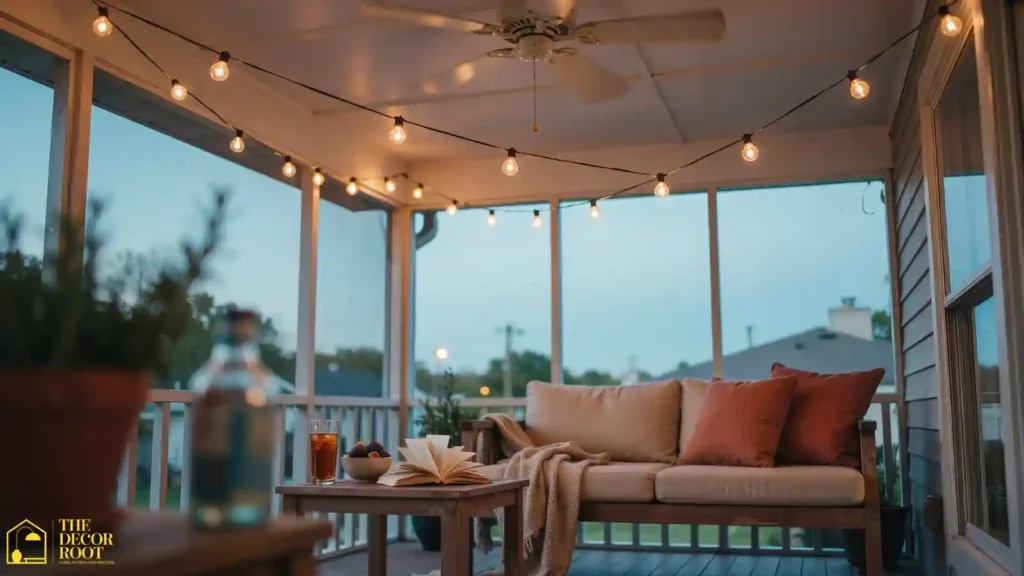
An indoor-outdoor rug in a tight, dense weave helps visually define your porch layout while trapping less organic debris than a bare wood or composite floor would on its own, which in turn gives fewer insects a genuine reason to linger near your seating.
21. Add retractable screens for sections that need occasional full-open airflow
For porches that double as an open-air covered patio during cooler months, retractable screen panels let you fully open the space when bugs genuinely aren’t a seasonal concern and screen it completely during peak season, effectively giving the porch two distinct functions.
EDITOR’S PICK
🛒 Retractable Screen Panels
Retractable porch screens let you open the space in bug‑free seasons and close it during peak months, giving your covered patio two seasonal functions in one.
(paid link)
22. Schedule a full screen replacement every 8-10 years, even without visible damage
Fiberglass screening degrades gradually from UV exposure over time even when it still looks fully intact to the naked eye, developing microscopic gaps that let progressively smaller insects through as the material ages. Planning a full re-screen roughly once a decade keeps the barrier performing at full strength.
Quick Action Plan
- Start by checking your current mesh count and upgrading to 20×20 if gnats have been an issue in past seasons.
- Install a door sweep and a self-closing hinge on the screen door this weekend, since those two fixes alone close the two biggest entry points on most porches.
- Walk every seam and corner for gaps and patch anything you find immediately rather than letting it wait; add a ceiling fan or standing fan if you don’t already run one, switch porch bulbs to amber or yellow bug lights; and set a recurring calendar reminder to inspect and re-tension screens each spring before bug season ramps up.
A screened porch is the most complete version of an outdoor room; these outdoor room design ideas show how a deck creates the foundation platform that a screened porch structure sits on, and how the two elements together produce the most usable and weather-resilient outdoor living zone available.
FAQs
Conclusion
A truly bug-free screened porch comes down to a handful of unglamorous details: mesh count, sealed seams, and a door that closes itself, layered under whatever furniture and styling you actually see in the photos. Get those fundamentals right, and the porch becomes a space you use every evening instead of one you keep meaning to. None of these fixes require a contractor or a big budget — most take an afternoon and under $50 in materials, which makes this one of the highest-return upgrades you can make to an existing porch.
💾 Love these screened porch ideas? Save this post to your Porch & Patio Ideas board on Pinterest!