23 Back to School Homework Station Ideas
Back to School Homework Station Ideas: Homework time shouldn’t mean clearing off the kitchen table, hunting for a pencil that works, and negotiating who gets the good chair. If that’s your afternoon right now, the problem isn’t your kid’s focus; it’s that there’s no actual system in place. These 23 homework station ideas are built for real homes, not Pinterest-perfect playrooms: small-space setups, shared-sibling systems, and organization tricks that hold up past the first week of school. A back-to-school homework station is one of the most practically transformative home decorating ideas for a family home at the start of autumn; a dedicated, well-organised workspace for a child eliminates the daily argument about where to do homework, removes the cognitive friction of getting started, and improves both the quality of the work and the peace of the household while it happens.
This post contains affiliate links. As an Amazon Associate, I earn from qualifying purchases. If you buy through these links, I may earn a small commission at no extra cost to you.
🎒Where to Start Mentally
Before picking a specific setup, it helps to name what a homework station actually needs to do: hold supplies so they’re not scattered across the house, give a kid a defined spot that signals “this is where I focus,” and stay easy enough to reset that it doesn’t become one more mess to manage. Every idea below solves at least one of those three problems. Don’t try to build the most elaborate station on this list first; start with whichever idea matches the space you already have, and add organization systems as you learn what your specific kid actually uses versus what just looks nice. A homework station and a back-to-school entryway are the two functional design challenges that arrive simultaneously in September. These back-to-school home organisation ideas show how solving the morning chaos of the entry and the after-school chaos of the homework zone together creates a home that supports the school year from the moment children leave in the morning to the moment they sit down to work in the evening.
Zone Your Homework Station
A homework station is a functional design challenge within a complete interior; browse all our spaces decorating ideas to see how the principles of lighting, storage, and zone definition that make a home office work apply equally to a homework station designed for a child or teenager. A homework station in a bedroom works best when the whole room supports both studying and resting. These fall bedroom and study space ideas show how a cozy bedroom designed for cooler nights can accommodate a dedicated homework zone without the study energy preventing the room from feeling like a genuine retreat at the end of the school day.
1. Claim a Corner of the Kitchen Counter
If you don’t have a spare room, a defined end-of-counter zone with a small caddy for pencils, a designated stack of paper, and a spot for a laptop turns an ordinary kitchen corner into a functional station. This works particularly well for younger kids who benefit from being near a parent while working, and it requires zero renovation or furniture purchase to set up.
2. Convert a Closet into a Mini Study Nook
A reach-in closet with the doors removed, a small desk slid inside, and a light installed becomes a surprisingly effective enclosed workspace, especially for kids who focus better with fewer visual distractions around them. This is one of the highest-impact small-space conversions because it uses square footage that’s otherwise sitting empty most of the day.
3. Use a Rolling Cart as a Mobile Station
For homes without a dedicated space at all, a rolling cart stocked with supplies can be wheeled to wherever the kid is working that day kitchen table, living room, bedroom and tucked into a closet when not in use. This is the most flexible option on this list and works well for families who don’t want a permanent homework zone taking up visible space.
4. Add a Rolling Storage Cart with Labeled Bins
A rolling storage cart with labeled bins for pencils, paper, and folders solves the “where did all the supplies go” problem that derails most homework routines by week two, giving every item a specific home that’s easy for a kid to actually maintain independently.
EDITOR’S PICK
🛒Rolling Storage Cart
A rolling cart with labeled bins gives each supply a set spot, cutting down on lost items and making it easy for kids to stay organized on their own.
(paid link)
5. Set Up a Wall-Mounted Fold-Down Desk
In genuinely tight spaces, a fold-down wall desk provides a real work surface without permanently occupying floor space, folding flat against the wall when homework is done. This is especially useful in shared bedrooms where floor space is already at a premium.
6. Create a Command Center Nearby for Schedules
A wall-mounted calendar, whiteboard, or corkboard installed near (not necessarily at) the homework station helps kids track assignments and due dates without digging through a backpack, and it gives parents a quick visual check without having to ask every night.
7. Use a Bookshelf as a Room Divider and Storage
In an open-plan space, a bookshelf placed perpendicular to a wall creates a defined homework zone while also providing storage for books and supplies on the reverse side, solving two space problems with one piece of furniture.
8. Set Up a Shared Sibling Station with Individual Bins
For multiple kids sharing one table or desk, individual labeled bins or baskets, one per child, prevent supply disputes and make cleanup faster, since each kid knows exactly which bin their materials go back into at the end of the session.
The Setup That Actually Sticks
9. Add Adjustable Task Lighting
An adjustable desk lamp that can be angled toward the actual work surface reduces eye strain during longer homework sessions, especially important as daylight hours shrink through the fall and kids end up doing more work after dark.
EDITOR’S PICK
🛒Adjustable Desk Lamp
An adjustable desk lamp angled onto the work surface reduces eye strain, especially as fall daylight shrinks and more homework happens after dark.
(paid link)
10. Install a Cork or Felt Board for Ongoing Projects
A board above the desk gives kids a spot to pin reminders, ongoing project pieces, or work they’re proud of, which keeps loose papers off the actual work surface and gives the station a sense of ownership.
11. Use a Tension Rod and Curtain to Hide Clutter
In a closet or under-desk setup, a simple tension rod with a curtain lets you hide supply clutter behind a clean visual line in seconds, which matters when the homework station is visible from a shared living space.
12. Add a Small Rug to Define the Zone
Even in an open room, a small rug placed under the desk and chair visually defines the homework zone as its own space, which helps younger kids especially understand “this is where I sit to work” versus the rest of the room.
13. Set Up Under-the-Stairs Storage as a Nook
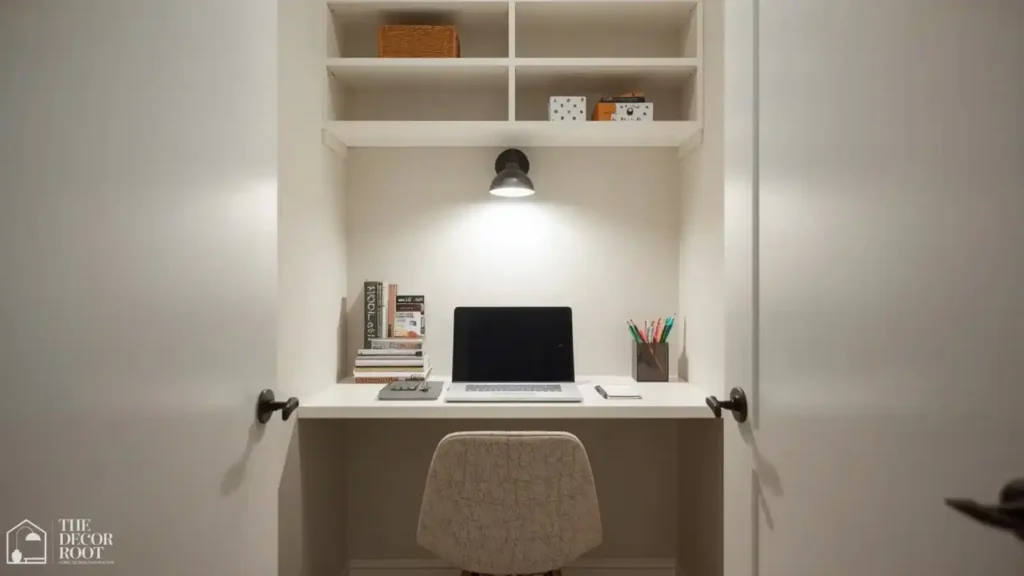
If your home has under-stair space, converting it into a compact homework nook with a small desk and shelf makes use of an area that’s almost always otherwise wasted, and the enclosed feel tends to help focus for kids who are easily distracted in open rooms.
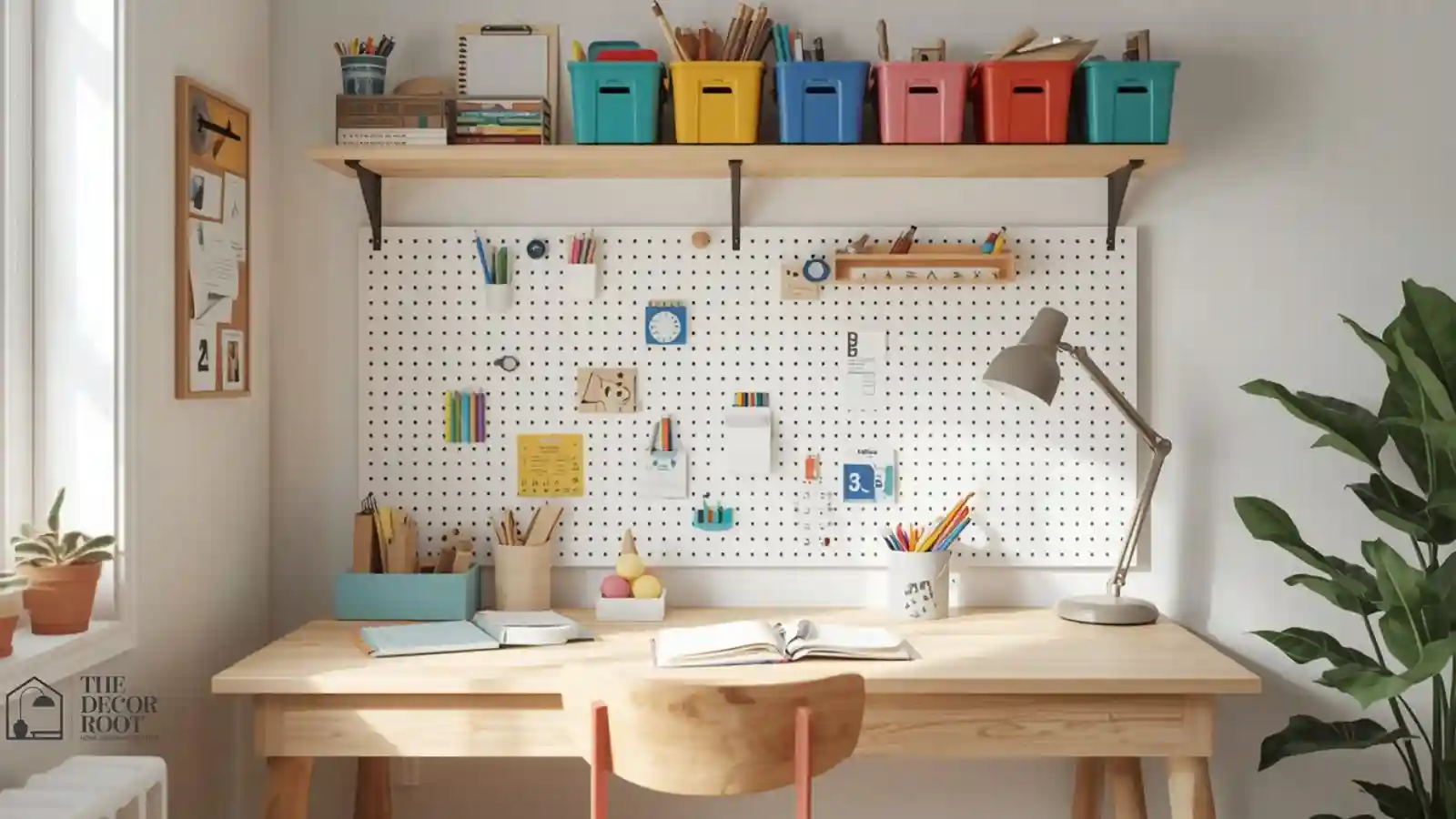
14. Install a Wall-Mounted Pegboard for Supplies
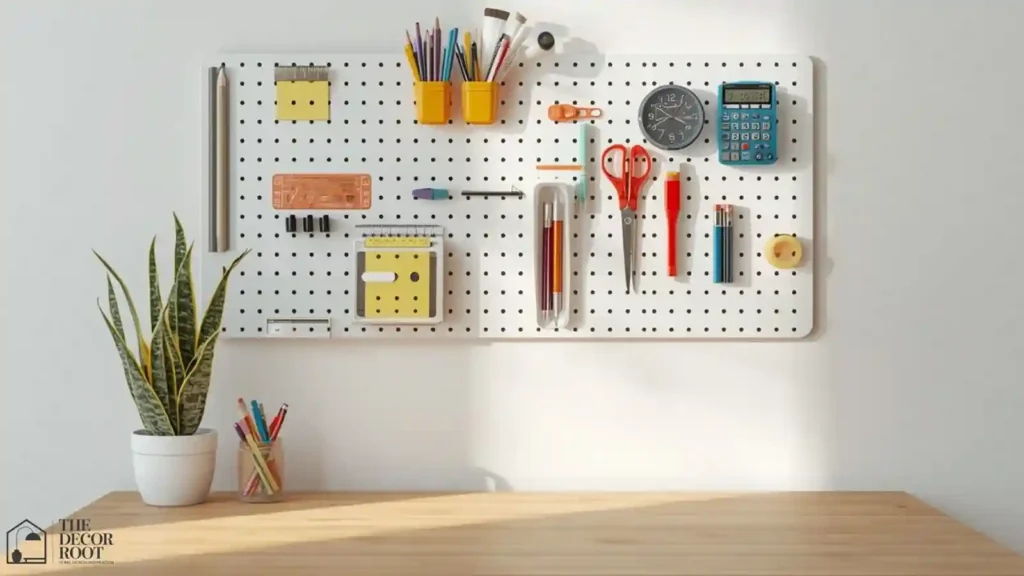
A wall-mounted pegboard organizer keeps scissors, tape, and frequently used tools visible and off the desk surface entirely, which both frees up workspace and makes it obvious when something is missing or needs replacing.
EDITOR’S PICK
🛒Wall-Mounted Pegboard Organizer
A wall-mounted pegboard keeps tools visible and off the desk, freeing workspace and making missing items instantly noticeable.
(paid link)
15. Use a Tray Table as a Flexible Desk
For kids who prefer to work on the couch or floor, a sturdy tray table provides a stable surface without requiring a dedicated desk setup at all, and it folds away completely when not in use a good option for families who move frequently or rent.
16. Add a Standing Whiteboard Easel for Younger Kids
For elementary-age kids, a small standing whiteboard easel makes homework feel more like play and gives them a spot to work through math problems or spelling words that isn’t tied to sitting still at a desk the entire time.
17. Set Up a Backpack Station Near the Door
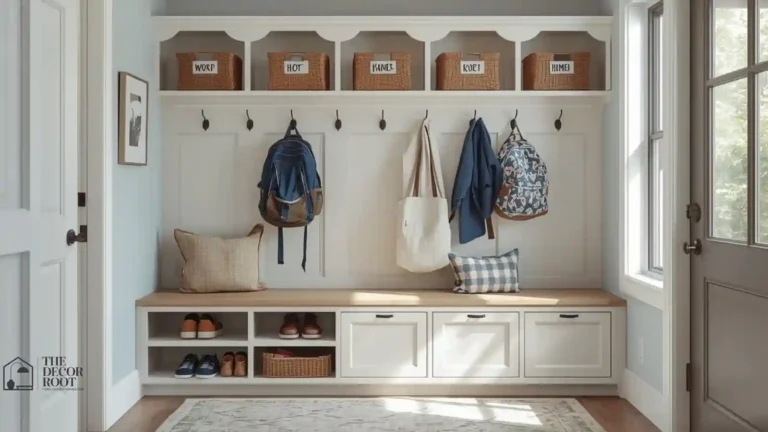
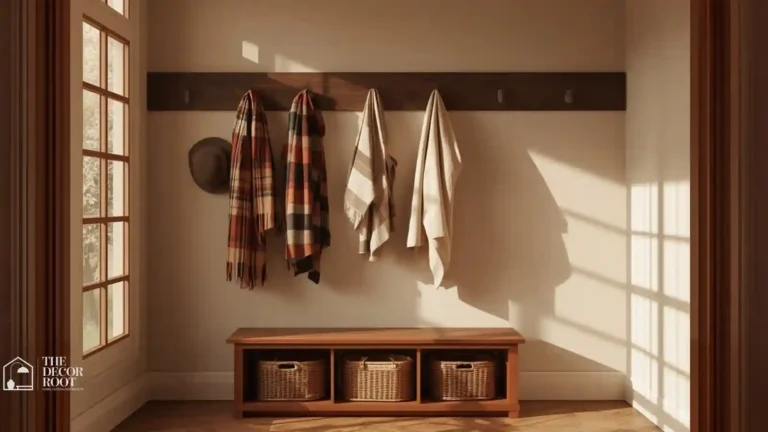
Not the desk itself, but a hook and bin system near the entry where backpacks and shoes land immediately after school prevents the daily hunt for where a backpack ended up, streamlining the transition into homework time.
18. Use Stackable Bins Under the Desk for Extra Storage
Stackable bins tucked under a desk or table make use of vertical space that’s usually empty, holding extra supplies, art materials, or seasonal school items without needing additional furniture.
Making It Last Past September
19. Add Stackable Desktop Organizer Bins
Stackable desktop organizer bins on the desk itself keep daily-use items pencils, sticky notes, index cards sorted and within reach, which reduces the number of times a kid gets up mid-homework to search for something, a major focus-killer for younger students especially.
EDITOR’S PICK
🛒Stackable Desktop Organizer Bins
Stackable desktop bins keep supplies reachable and reduce distracting mid-homework searches, a key focus killer for younger kids.
(paid link)
20. Use a Vertical File Sorter for Papers
A vertical file sorter on the desk or a nearby shelf keeps worksheets, permission slips, and graded work separated by category instead of piling into one stack, making it easier for both kids and parents to find what they need quickly.
21. Add a Timer or Visual Schedule for Focus Sessions
A simple visual timer helps kids, especially younger ones, understand how much work time is left, breaking homework into manageable chunks rather than one open-ended block that feels endless to a nine-year-old.
22. Set Up a Charging Station Away From the Desk
Placing device chargers in a separate spot, not directly at the homework desk, reduces the temptation to check a phone or tablet mid-assignment, an easy structural fix that doesn’t require any actual rule enforcement.
23. Finish with a Motivational Wall Element
Closing the setup with something personal a favorite quote, a photo, artwork the kid made gives the station a sense of ownership that makes a kid more likely to actually want to sit down there, which matters more for long-term use than any organizational system on this list.
Quick Action Plan
- Start with location and lighting before buying any organizational products, pick the spot (counter corner, closet, rolling cart) that fits your actual home, add a lamp if the area isn’t well-lit, and only then layer in bins, pegboards, and sorters based on what your kid actually accumulates during the first week or two of school.
- Building the full system before you know the real clutter points usually means buying organizers that don’t match how your kid actually works.
A children’s homework station and a small home office face the same design challenge: creating a focused, functional workspace within a constrained footprint. These small dedicated workspace ideas show how the same principles of vertical storage, task lighting, and visual separation that make a corner home office genuinely productive apply to a homework station carved from a corner of a bedroom or living room.
Frequently Asked Questions
Conclusion
The best homework station isn’t the most elaborate one; it’s the one that matches your actual space and gets used consistently past the first few weeks of school. Start small, watch what your kid actually needs, and build the organization system around real habits instead of a Pinterest board.
💾 Save this to your Back to School board on Pinterest for later.