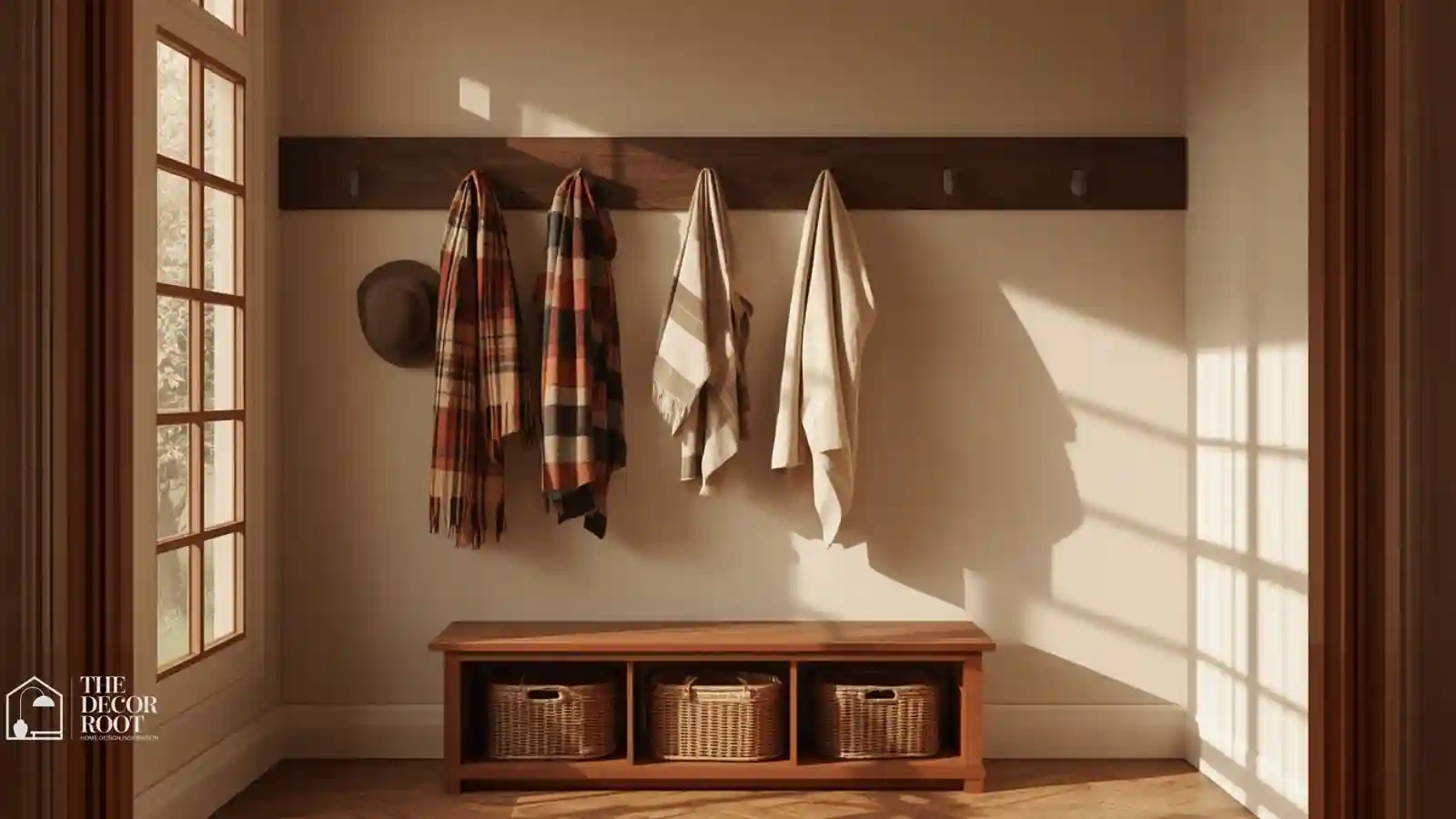
20 Coat and Scarf Storage Ideas for Fall Entryways
Fall Entryway Coat and Scarf Storage Ideas. Somewhere between the first cold snap and the third week of October, every entryway in America turns into the same crime scene: a chair buried under coats, scarves looped over doorknobs, and a single glove that’s been on the floor since Labor Day. It’s not that you don’t own storage; it’s that whatever you’re using wasn’t built for the specific chaos fall brings. Layers multiply fast this time of year. A light jacket in September becomes a jacket, a scarf, and a beanie by November, and most entryways simply weren’t designed to hold three times the gear they held in July.
Coat and scarf storage ideas for fall entryways are one of the most immediately useful home decorating ideas of the season. The moment the temperature drops, the number of outerwear items multiplying by the front door reveals exactly how well-designed, or how unresolved, the entryway storage system really is.
This post contains affiliate links. As an Amazon Associate, I earn from qualifying purchases. If you buy through these links, I may earn a small commission at no extra cost to you.
The Thinking Behind This
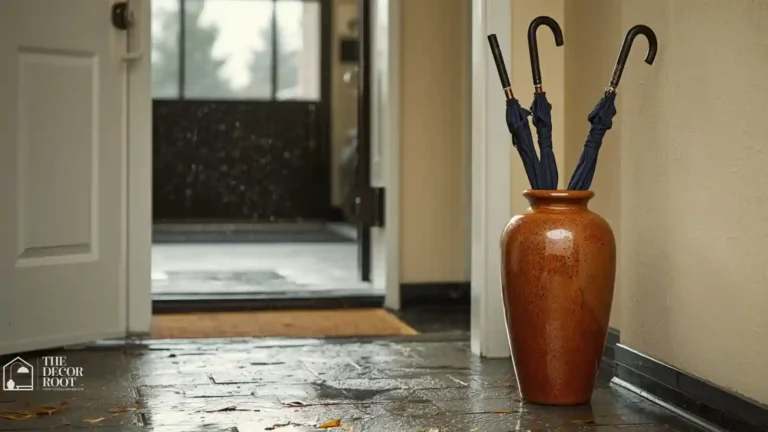
Most coat storage fails for one of two reasons: it’s not at the right height for the people using it, or it separates coats from the smaller stuff scarves, hats, gloves that actually causes the most clutter. A coat hook alone doesn’t stop a scarf from ending up on the floor. The fix isn’t more storage; it’s layered storage: one zone for outerwear, one for accessories, and ideally one for anything that needs to dry before it gets put away. Coat hooks and an umbrella stand are the arrival-point pairing that handles everything autumn brings through the door. These fall entryway organisation ideas show how positioning both elements in the right relationship to the door and to each other creates an arrival sequence where every outerwear item has a specific landing point.
Streamline Entryway Outerwear Storage
Coat and scarf storage is the functional core of an autumn entryway. Browse all our space-decorating ideas to see how outerwear storage connects to entryway benches, A coat hook system and an entryway bench are the two most fundamental entryway storage components these entryway coat storage and bench ideas show how to design both as a unified system where the bench provides the seat for boot removal, the storage beneath holds seasonal accessories, and the hooks above handle everything from the lightest autumn jacket to the heaviest winter coat. Umbrella stands, small entryway solutions, and the wider autumn home organisation system.
1. Install a Row of Mixed-Height Wall Hooks
A single row of hooks at one height only works if everyone in your house is the same height, which they never are. Instead, stagger hooks in two rows: a lower row around 40 inches for kids and a higher row around 60 inches for adults so nobody’s slinging a coat over furniture because the “good” hooks are taken. Solid brass or matte black hooks read as more finished than plastic ones and hold up to heavier fall coats without sagging. Space them 6 to 8 inches apart so bulky jackets don’t crowd each other, and mount into studs or use heavy-duty anchors, since a wet wool coat is deceptively heavy. This is the single cheapest upgrade on this list and often solves 80% of the pileup on its own.
2. Add a Slim Wall-Mounted Coat Rack With a Shelf
If your entryway has almost no floor space, a wall-mounted rack with a narrow shelf on top gives you two storage zones in one footprint. Hooks below hold coats and bags; the shelf above is exactly where scarves, folded gloves, or a small basket of hats belong, instead of getting stuffed into a coat sleeve. Look for a shelf depth of at least 8 inches so it can actually hold something useful, not just decorative. This style works especially well in apartment entryways or narrow hallway “entries” that don’t have a dedicated mudroom, since it reads as furniture rather than storage and doesn’t eat visual space the way a freestanding rack does.
3. Use a Ladder-Style Blanket Rack for Scarves Only
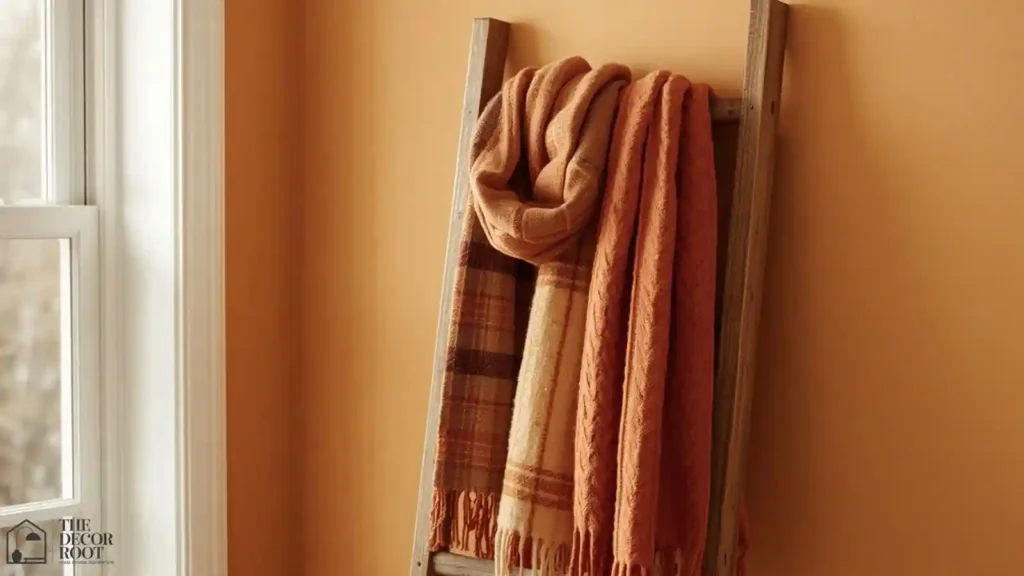
A wooden ladder rack, usually sold for blankets, is one of the most underused scarf storage ideas for fall. Draping scarves over the rungs keeps them visible, wrinkle-free, and easy to grab without digging through a drawer. Because each rung holds two or three scarves without them tangling, a five-rung ladder can realistically store 10 to 15 scarves, which covers most households through the whole season. Lean it against an underused wall corner near the door rather than in the main walking path. This idea does double duty as decor: a ladder rack full of plaid and cable-knit scarves is genuinely one of the coziest-looking fall entryway details you can add for under $40.
4. Mount a Freestanding Coat Tree With a Wide Base
When wall mounting isn’t an option rentals, shared entryways, or walls you can’t drill into a freestanding coat tree with a stable, wide base solves the problem without a single screw. Look for a base at least 20 inches in diameter; anything smaller tips over the moment a heavy wool coat gets hung on one side. The best versions have a mix of hook lengths and heights so coats, bags, and scarves don’t fight for the same peg. Because it’s freestanding, you can also reposition it seasonally: pull it closer to the door in fall and winter, then tuck it into a closet or bedroom corner once coat season winds down in spring.
EDITOR’S PICK
🛒Freestanding Wide-Base Coat Tree Rack
A freestanding coat tree with a wide base and varied hooks offers no-drill, repositionable storage for coats and accessories.
(paid link)
5. Build a Mini Mudroom Zone With Stacked Cubbies
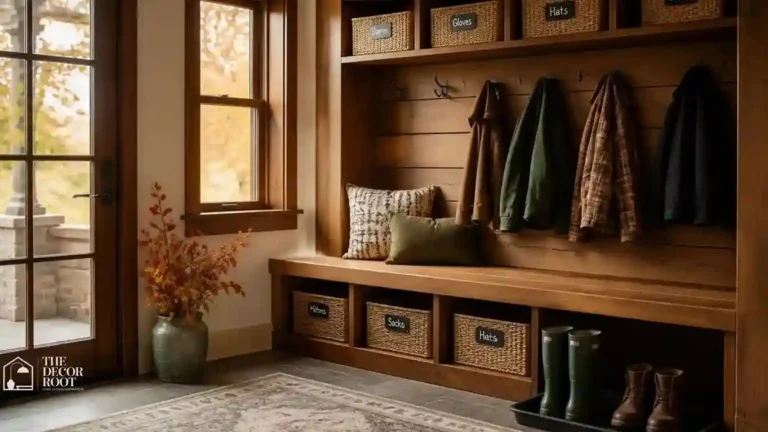
If you have even 24 inches of wall space, stacked open cubbies one per family member turn a chaotic pile into an assigned system. Label each cubby, or color-code them, so kids actually put gear back where it belongs instead of dropping it on the nearest surface. Fall is the ideal season to start this habit, since it’s when gear multiplies fastest (coat, scarf, hat, gloves, backpack, all at once). Cubbies work better than open hooks alone for smaller items because scarves and hats have somewhere to sit flat instead of getting knocked to the floor. IKEA-style cubby units or simple cube shelving both work; the label system matters more than the specific furniture.
6. Use an Entry Bench With Built-In Coat Hooks Above It
A bench topped with a row of hooks solves two fall problems in one footprint: somewhere to sit while pulling on boots, and somewhere for coats to hang directly above where they’re put on. This layout also naturally catches scarves and bags that get set down on the bench seat while someone’s getting ready, instead of those items ending up on the floor. If you’re short on width, a 36-inch bench with three hooks above it is enough for a small household. Choose a bench with a slatted or open seat if you also want boot storage underneath; solid seats look cleaner but sacrifice that extra zone.
7. Hang an Over-the-Door Organizer for Accessories
For rentals or entryways where you truly cannot mount anything to the wall, an over-the-door organizer with multiple pockets is a genuinely underrated fix for scarves, gloves, and hats specifically. It hangs on the back of a coat closet door or even the front door itself, using zero wall space. Fabric pocket organizers work well for gloves and hats; a hook-style over-door bar works better for scarves you want draped rather than folded. This is one of the few ideas on this list that requires no tools and no commitment, which makes it a smart first step if you’re not sure yet what your long-term entryway system should look like.
8. Add a Pegboard Wall for Fully Custom Storage
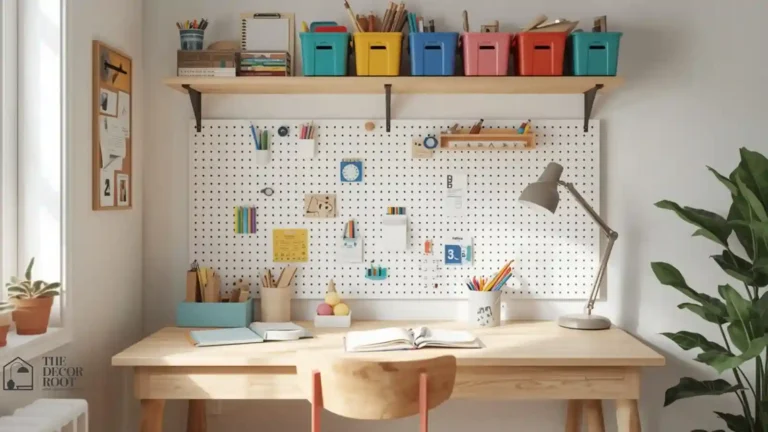
A pegboard panel painted to match your entryway wall gives you the most flexible coat and scarf storage on this list, because you can rearrange hooks, small baskets, and shelf brackets as your household’s needs change. In fall specifically, this flexibility matters you might need more hook space in October and more shelf space by December once bulkier gear comes out. A 2×4-foot pegboard section is enough for most entryways and can be painted terracotta, cream, or a dark walnut stain to match a warm fall palette instead of looking like garage storage. Pair large hooks for coats with small hooks or baskets for scarves so nothing has to share a peg.
9. Use a Wall-Mounted Scarf and Hat Organizer With Hanging Loops
Purpose-built wall-mounted scarf and hat organizers with fabric hanging loops solve the specific problem of scarves sliding off standard hooks. Each loop holds one scarf without bunching, so you can see your full rotation at a glance instead of pulling three scarves out to find the one you want. These organizers usually mount with a single screw or adhesive strip, making them one of the easiest additions for renters. Hang it at a lower height than your coat hooks, around knee-to-hip level so it reads as its own zone rather than competing visually with the coats above it.
EDITOR’S PICK
🛒Wall-Mounted Fabric Scarf And Hat Organizer
A wall-mounted scarf organizer with fabric loops keeps scarves visible and tangle-free, mounts with one screw or adhesive, and hangs best at knee-to-hip height.
(paid link)
10. Install a Drop-Zone Shelf With Hooks Underneath
A single floating shelf with hooks mounted underneath is one of the most space-efficient combos for narrow entryways. The shelf catches keys, mail, and sunglasses; the hooks below take coats and bags, keeping everything at one visual “station” by the door instead of scattered across multiple surfaces. For scarf storage specifically, add a small woven basket on the shelf itself; it’s shallow enough not to block the hooks but deep enough to corral three or four folded scarves. A 36-inch shelf with four hooks underneath covers most two- to three-person households comfortably.
11. Use Stackable Wicker Baskets for Off-Season Rotation
Not every coat and scarf is in daily rotation by mid-fall; you likely have lightweight jackets that are on their way out and heavier ones on their way in. Stackable wicker or seagrass baskets, tucked on a closet shelf or under an entry bench, give you a place to rotate gear seasonally instead of overcrowding your hooks with items you’re not currently using. Label baskets by category (scarves, gloves, lightweight layers) rather than by person, since rotation happens by item type, not by who owns it. This keeps your main hook and hanging zones reserved only for what’s actually being worn that week.
12. Add a Narrow Console Table With Drawer Storage
A slim console table (10 to 14 inches deep) fits against nearly any entryway wall and gives you closed drawer storage for scarves and gloves- specifically, items that look cluttered when left open but don’t need a full closet. Use the tabletop for a catch-all tray and the drawers for folded accessories, sorted by type rather than tossed in loose. This idea works particularly well if your entryway doubles as a hallway, since a console table reads as furniture rather than utility storage, keeping the space feeling put-together even when it’s doing a lot of organizational work.
13. Use a Wall-Mounted Coat Rack With a Mirror Attached
Combining a coat rack with a mirror means your entryway storage does double duty without needing extra wall space for a separate mirror. Look for a rack with 4 to 6 hooks below a framed mirror; the mirror also visually breaks up a row of coats, keeping the wall from feeling like storage-only. This style works particularly well in smaller entryways or apartments where every wall element needs to justify its footprint. As a bonus, having a mirror by the door means people can do a last scarf-and-hat check before heading out, which cuts down on the “grab it, look terrible, come back inside” loop.
14. Store Bulk Scarves and Hats in Labeled Fabric Bins
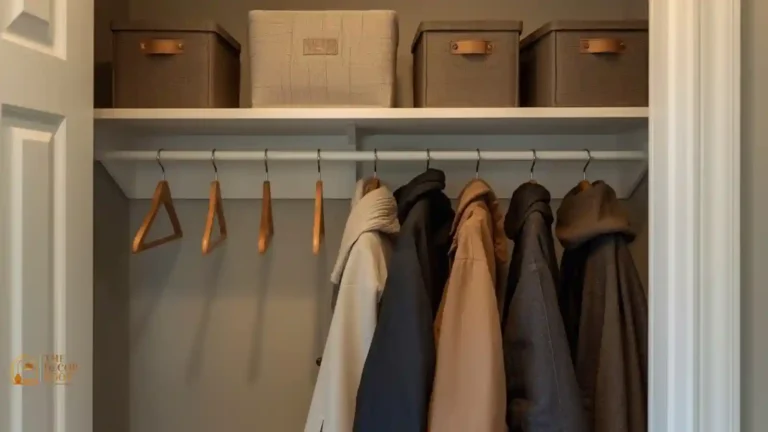
For households with more scarves and hats than hooks can reasonably hold, labeled fabric storage bins on a closet shelf or bench cubby keep the overflow contained without it becoming a drawer you’re afraid to open. Fabric bins are better than plastic here because they compress slightly, fitting more into the same shelf space, and they read as softer and warmer than plastic totes if they’re visible in an open cubby system. Label by person or by type depending on your household size; a family of five does better sorted by person, while a couple usually does better sorted by item.
EDITOR’S PICK
🛒Labeled Fabric Storage Bins For Entryway
Labeled fabric bins store scarves and hats more efficiently than plastic, compressing to fit more, and can be sorted by person or type for better organization.
(paid link)
15. Use a Slim Rolling Cart for Flexible Storage
A narrow rolling cart with two or three tiers gives you mobile storage that can shift positions as your entryway needs change through the season. Top tier for scarves and gloves, bottom for boots or bags, and the whole thing can roll out of the way when guests are over or roll back into place when it’s just your household. This is a particularly good fix for entryways that also function as a mudroom, home office corner, or laundry pass-through, since fixed furniture in a multi-use space often gets in the way more than it helps.
16. Add Individual Cubbies With Baskets for Each Family Member
Take the stacked-cubby idea a step further by pairing one basket per cubby, per person coat hook above and a basket below for that person’s scarf, hat, and gloves specifically. This is one of the most durable systems for households with kids, since it removes the need for kids to sort by category (which rarely happens) and replaces it with a single “your stuff goes in your basket” rule. Choose baskets with handles so kids can actually carry them to the car if needed, rather than digging items out one at a time while everyone’s trying to leave the house.
17. Use a Vintage Hall Tree for Storage With Character
A hall tree, part bench, part coat rack, often with a small mirror or storage box seat, is a genuinely great option if you want fall entryway storage that also functions as a design statement. Antique and vintage versions show up regularly at flea markets and secondhand shops for less than a comparable new piece, and the patina actually suits a fall color palette better than something brand new. Check that hooks are sturdy and re-secure any wobbly joints before loading it with heavy coats; older pieces sometimes need a quick hardware refresh to handle daily use.
18. Install Tiered Hooks for Layered Hanging
Tiered or cascading hook hardware where two or three hooks stack vertically on a single mount lets you hang a coat, scarf, and bag on the same wall footprint without them tangling into one pile. This is especially useful in tight entryways where you don’t have room for separate coat and scarf zones. Choose tiered hooks with slightly angled arms rather than straight-stacked ones, since angled arms keep each item from sliding down onto the one below it. A row of four tiered hooks can realistically manage the full outerwear kit for two people.
19. Use an Entryway Storage Bench With Interior Compartments
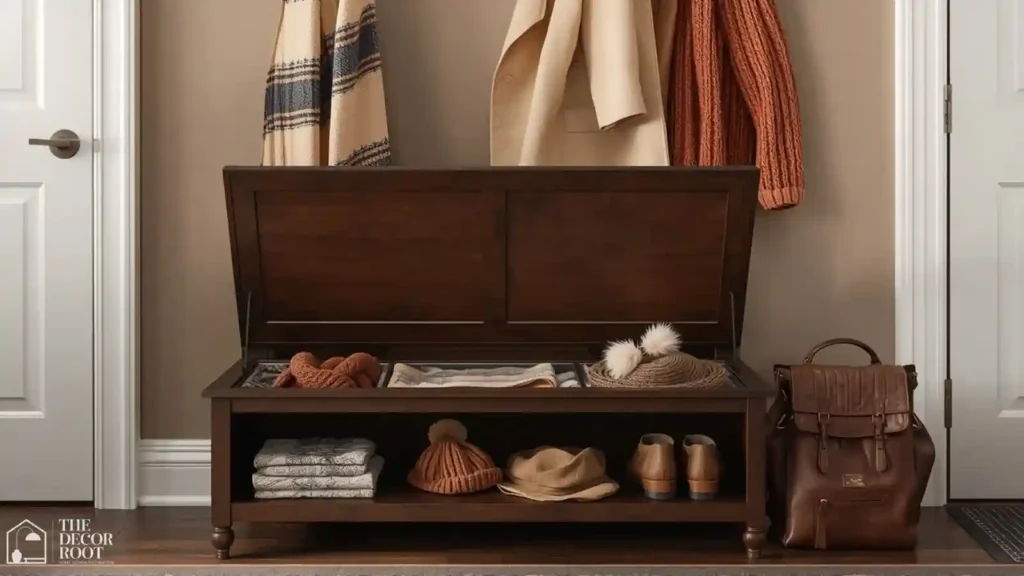
Rather than an open-seat bench, look for one with a hinged lid or interior compartments, which gives you enclosed storage specifically for bulkier fall accessories like knit hats and heavier gloves that don’t hang neatly on hooks. A storage bench with interior compartments also keeps the entryway looking calmer, since not everything has to be visible to be organized. Pair it with hooks above for daily-use coats and reserve the bench interior for backup gloves, hand warmers, or off-rotation scarves that don’t need to be grabbed every single day.
EDITOR’S PICK
🛒Entryway Storage Bench With Hinged Lid
A storage bench with interior compartments hides bulky fall accessories like hats and gloves, keeping entryways calm while wall hooks hold daily coats.
(paid link)
20. Add a Drying Zone With a Slatted Wall Rack
Fall gear gets wet from rain, morning dew, and melting frost more often than most people plan for. A slatted wood or metal wall rack near (but not directly in) your main hook zone gives damp coats and scarves somewhere to actually dry before they go into closed storage, which prevents the mildew smell that comes from hanging wet wool in a crowded closet. This doesn’t need to be large; even an 18-inch slatted rack tucked beside your main entry zone is enough to handle one or two wet items at a time. Think of it as a holding zone, not permanent storage; items move from here to their real spot once dry.
Related Reading: Once your coat and scarf zone is sorted, pair it with a bench that adds hidden storage underneath. See our guide to 24 Fall Entryway Bench Ideas With Hidden Storage for layouts that combine seating, shoe storage, and coat hooks in one footprint.
Quick Action Plan
- If you’re starting from zero, don’t try to build all twenty of these at once.
- Start with a row of mixed-height wall hooks (Idea 1) since it’s the cheapest and fastest fix, add a dedicated scarf solution next either the ladder rack (Idea 3) or the hanging loop organizer (Idea 9) since scarves are almost always the item causing the most floor clutter, and finish with one enclosed storage piece, like a bench with compartments (Idea 19) or labeled bins (Idea 14), for anything that’s currently overflowing.
- That three-step combination covers about 90% of what causes fall entryway pileup, and you can layer in the rest.
- A console table, a drying rack, a pegboard, as budget and wall space allow.
The farmhouse entryway is the most coat-storage-ready design framework available. These entryway coat storage and design ideas show how the farmhouse tradition of a shiplap wall, a row of iron hooks, a bench, and a basket creates the most functional and photogenic coat storage system for an autumn entryway, regardless of whether the rest of the home follows a farmhouse aesthetic.
Frequently Asked Questions
Conclusion
An entryway that actually works isn’t about owning more storage; it’s about giving coats, scarves, and everything in between a specific, obvious place to go the moment someone walks through the door. Pick two or three ideas from this list that match your actual space and household size, get those in place before the weather really turns, and the daily pileup mostly solves itself. This post contains affiliate links. If you purchase through them, I may earn a small commission at no extra cost to you.
💾 Save this to your Fall Entryway Ideas board on Pinterest so you can come back to it when you’re ready to tackle your own space.