22 Transitional Summer to Fall Living Room Ideas
Transitional Summer to Fall Living Room: Ripping out every summer accent the moment September hits and replacing it wall-to-wall with plaid and pumpkins is a lot of work for a season that’s still, realistically, seventy degrees outside for another few weeks. What actually works better and costs less is a transitional approach: keep the bones of your summer living room and layer in warmth gradually. Transitional summer-to-fall living room ideas are some of the most searched home decorating ideas of the season because the changeover moment is the hardest to get right, too early and the room feels seasonally misjudged; too late and you miss the three or four weeks when an autumn living room feels genuinely current rather than lagging behind the season.
This post contains affiliate links. As an Amazon Associate, I earn from qualifying purchases. If you buy through these links, I may earn a small commission at no extra cost to you.
What Ties These Ideas Together
The common thread across every idea on this list is layering, not replacing. A transitional living room keeps its lighter summer foundation linen slipcovers, light rugs, airy curtains and adds warmth through texture, scent, and a narrower, more saturated color palette rather than tearing the whole room down to studs and starting over with an entirely new fall aesthetic. This approach also solves a real, practical problem: most people don’t want to store an entire second set of living room decor in a closet for nine months of the year just to swap it out for October and November. When you think in terms of layering three or four warm elements onto an existing neutral base, you get a room that feels seasonally appropriate without requiring a full seasonal wardrobe of throw pillows. A living room autumn transition is most cohesive when the bedroom shifts at the same time. These whole-home fall transition ideas show how coordinating the palette and textile changes across living room and bedroom creates a home that feels genuinely transformed for autumn rather than seasonally inconsistent between rooms.
Seasonal Living Room Transition
A seasonal living room transition is built on a strong permanent foundation. Browse all our living room decorating ideas to see how a year-round palette, The living room transition from summer to fall is fundamentally a palette exercise, these fall living room color palette ideas show exactly which summer neutrals to keep, which cool accents to replace with warmer ones, and how to introduce the amber, rust, and deep sage of autumn in a way that feels like an evolution of the existing room rather than a complete seasonal overhaul. Furniture and styling decisions create the base layer that seasonal changes in textile, color accent, and botanical display refresh without disruption.
1. Swap Linen Throw Pillow Covers for Boucle or Corduroy
If your summer pillow covers are linen or cotton in light neutrals, keeping the same pillow inserts but swapping just the covers to boucle, corduroy, or brushed cotton in warmer tones instantly changes the tactile feel of the room without touching furniture or paint. This is one of the lowest-effort, lowest-cost changes on this entire list, since covers alone run a fraction of the cost of new pillows. Choose two or three tones rust, olive, and a warm cream rather than a single uniform color, which keeps the look layered instead of matchy. This swap alone can shift a room’s entire seasonal feel in under ten minutes.
2. Add a Chunky Knit Throw Draped Asymmetrically
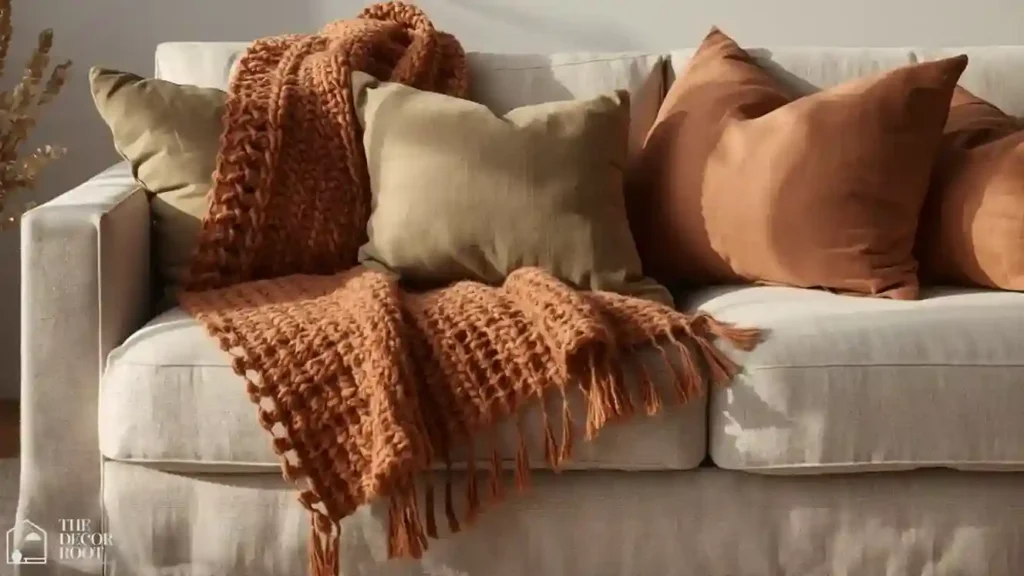
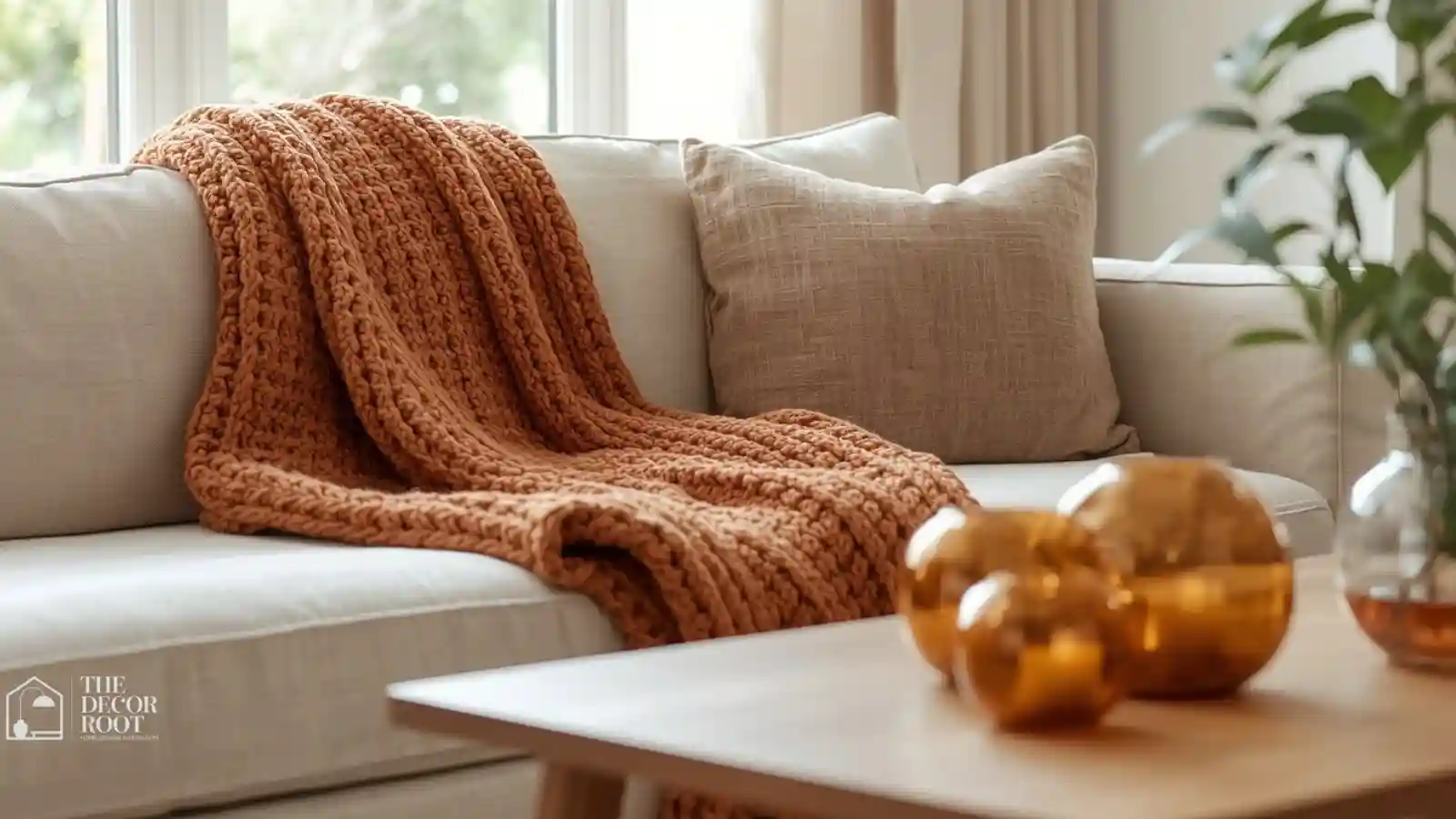
A substantial, cable-knit or waffle-weave throw in oatmeal, rust, or deep green adds both visual and literal warmth to a sofa that’s been dressed all summer lightly. Drape it asymmetrically over one arm rather than folding it neatly, which reads as more lived-in and intentional than a stiff, catalog-perfect fold. This single item does a lot of seasonal signaling on its own, since chunky knit texture reads as “cozy season” almost instantly to anyone walking into the room. It’s also genuinely useful once evening temperatures start dropping, unlike purely decorative fall items.
3. Layer a Vintage-Style Wool Rug Over Your Summer Jute
Rather than removing your lighter jute or sisal summer rug entirely, layer a smaller wool or vintage-pattern rug on top of it, offset so both textures show. This technique, borrowed from more maximalist interior design, adds pattern and warmth without the expense or labor of swapping the entire rug. It also means you don’t need to store a large rug somewhere for nine months, since the base jute rug stays down year-round. Choose a wool layering rug in a muted rust, terracotta, or deep blue pattern to avoid clashing with a neutral jute base.
4. Add a Chunky Knit Throw Blanket to the Reading Chair
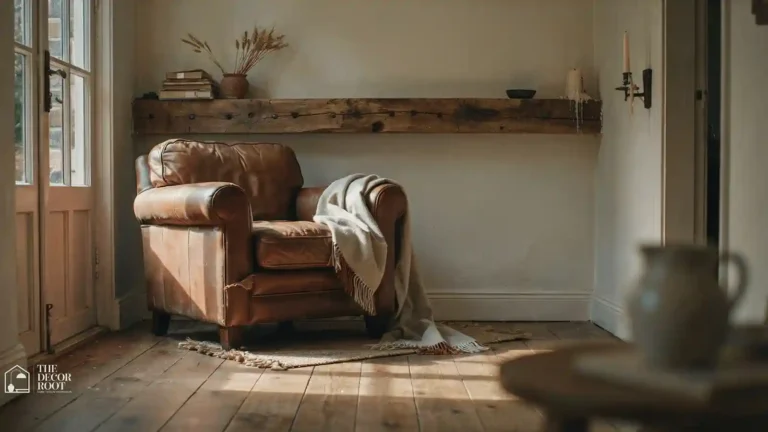
A chunky knit throw blanket draped over a reading chair or ottoman creates a secondary cozy zone in the room beyond just the sofa, which matters if your living room has more than one seating area. Choose a color that echoes but doesn’t exactly match your sofa throw for cohesion without looking like a matched set from a catalog. This is a particularly strong idea for a chair positioned near a window, where natural light will catch the knit texture and make it a visual anchor point in the room even before anyone sits down.
EDITOR’S PICK
🛒Chunky Knit Throw Blanket, Oatmeal Or Rust
A chunky throw in a coordinating color on a window side chair creates a second cozy zone and a textured visual anchor beyond the sofa.
(paid link)
5. Introduce Amber and Smoked Glass Accents
Trade out any clear or pastel glass vases and candle holders for amber, smoked, or amber-tinted glass pieces, which immediately warm up the room’s color temperature in small, easy-to-source details. This works especially well on a coffee table or console where glass catches and refracts light throughout the day. Amber glass has the advantage of working equally well through fall and into winter candle season, so it’s not a purely seasonal purchase that becomes useless in December. Cluster two or three pieces of varying heights rather than a single item for more visual interest.
6. Swap Fresh Summer Florals for Dried Grasses or Branches
If you’ve kept fresh flowers in your living room through summer, transitioning to dried pampas grass, dried eucalyptus, or bare branches in the same vase signals the season shift without buying a single new container. Dried arrangements also solve the practical problem of not having to replace wilted flowers every week, making this a genuinely lower-maintenance swap, not just an aesthetic one. Choose a single large stem arrangement rather than a full, dense bouquet for a more modern, editorial look rather than a traditional floral display.
7. Add a Textured Wool or Mohair Throw Pillow
Beyond a full pillow cover swap, adding just one or two genuinely textured throw pillows mohair, wool bouclé, or a chunky crochet cover into an existing arrangement of lighter pillows creates warmth through contrast rather than uniformity. This is a subtler transitional move than swapping every pillow, which works well if you’re not ready to commit to a fully “fall” living room yet. Position the textured pillow at the front of the arrangement, closest to where people sit, so the tactile difference is immediately noticeable.
8. Add Amber Glass Candle Holders in a Cluster
Amber glass candle holders set in a cluster of varying heights on a coffee table or mantel bring warm, flickering light into the room as evenings start getting darker earlier. Choose holders in slightly different amber tones rather than a matched set for a more collected-over-time look. This is a genuinely functional addition, not purely decorative, since the extended darker evenings of fall mean more candle-lit hours than during long summer daylight. Cluster three to five holders together rather than spacing them evenly around the room for more visual impact.
EDITOR’S PICK
🛒Amber Glass Candle Holder Set, Varying Heights
A cluster of varied-height amber holders on a mantel or table adds warm light and collected character, best grouped in threes to fives for impact.
(paid link)
9. Introduce a Single Statement Wood or Rattan Piece
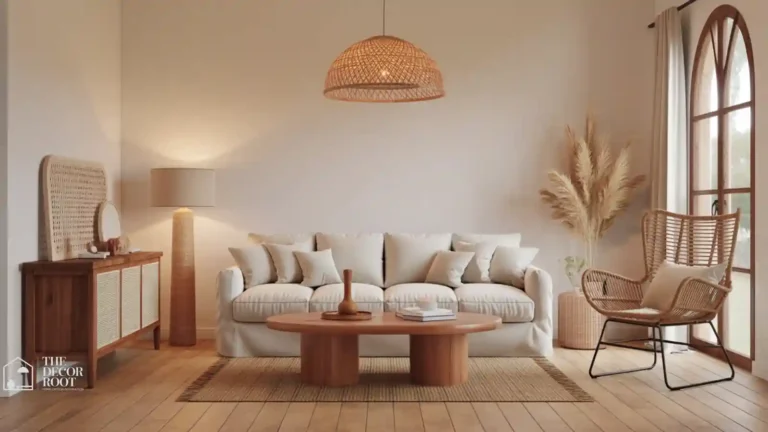
Adding one substantial wood or rattan furniture piece a side table, a bench, a large tray brings natural warmth into a room that may have leaned more toward light metals and glass for summer. This doesn’t require replacing existing furniture, just adding one grounding element with visible wood grain or woven texture. Position it somewhere it’ll get natural light, since wood tones read richer and warmer in direct sunlight than in shadow. This single-piece approach is more budget-conscious than a full furniture refresh while still shifting the room’s material palette noticeably.
10. Layer in a Plaid or Buffalo Check Accent, Used Sparingly
Rather than covering the room in plaid, use it in exactly one place: a single throw pillow, a table runner, or a small ottoman as an accent rather than a dominant pattern. Plaid is one of the most immediately recognizable “fall” signals, so a little goes a long way; overuse can tip a sophisticated room into looking like a seasonal pop-up shop. Choose a smaller-scale plaid or check pattern for a living room rather than a large, bold tartan, which reads as more refined in a shared living space.
11. Swap Sheer Summer Curtains for a Heavier Linen or Velvet Panel
If your summer curtains are sheer or lightweight, swapping to a heavier linen or velvet panel in a warm neutral changes both the room’s visual weight and its actual insulation as temperatures start to drop. This is a bigger investment than most items on this list, but it has real functional payoff beyond aesthetics, since heavier curtains genuinely help retain warmth in a room as fall evenings cool down. Choose a color close to your wall color for a more sophisticated, tone-on-tone look rather than a high-contrast statement panel.
12. Add a Stack of Coffee Table Books With Warm-Toned Covers
A small, curated stack of two or three coffee table books with warm, autumnal-toned covers or spines adds color and texture to a table without requiring any new decor category at all. This is one of the more overlooked transitional moves, since most people think of books as purely functional rather than a decor tool. Choose books you’d actually want to reference or flip through, not purely decorative props, so the stack has genuine daily use as well as visual appeal.
13. Add a Stoneware or Ceramic Vase in a Matte Warm Glaze
A stoneware vase set in a matte rust, terracotta, or warm brown glaze brings organic, handmade texture into the room, replacing any glossy summer ceramics or glass. Matte, textured stoneware reads as noticeably warmer and more grounded than the glossy, light-catching ceramics that tend to dominate summer styling. Use it either empty as a sculptural object or filled with a single dried branch for a more editorial, less “arranged” look. This is a piece that genuinely carries through winter as well, making it a strong investment rather than a single-season purchase.
EDITOR’S PICK
🛒Stoneware Vase Set, Matte Rust And Terracotta Glazes
Matte rust or terracotta stoneware vases offer warm, grounded texture that outlasts summer styling and works equally well into winter, with or without dried branches.
(paid link)
14. Introduce Warm Metallics Instead of Cool Ones
If your summer decor leaned toward brushed nickel, chrome, or silver accents, swapping small pieces picture frames, a lamp base, drawer pulls if easily changed to brass, bronze, or aged gold shifts the room’s undertone noticeably. This is a subtle but effective transitional signal, since metallic tone affects how every other color in the room reads. You don’t need to replace every metal element, just the most visible one or two pieces, like a lamp on a side table people see immediately when entering the room.
15. Add Layered Table Lamps With Warmer Bulb Temperature
Beyond swapping the lamp itself, simply changing to a warmer color-temperature bulb (around 2700K rather than a cooler daylight bulb) changes the entire ambient feel of the room as evenings get darker earlier. This is one of the cheapest changes on this entire list, often costing less than five dollars per bulb, yet it has an outsized effect on how “cozy” a room feels once the sun sets around six instead of eight. Pair this with adding a second lamp if your room currently relies on a single overhead light source, since layered warm lighting is one of the fastest ways to make a room feel like fall.
16. Swap a Light Rug Runner for a Deeper-Toned Pattern
If you have a smaller rug runner in an entryway-adjacent part of your living room, swapping it to a deeper rust, navy, or forest green pattern is an easier, less expensive move than replacing a full-size area rug. This works particularly well as a transitional test if you’re not sure you’re ready to commit to a full warm-toned area rug; a smaller runner lets you sample the effect on a smaller budget and smaller footprint.
17. Add Linen Throw Pillow Covers in Deeper Autumn Tones
Linen throw pillow covers in the same fabric weight and texture as your summer pillows, but in deeper rust, olive, or clay tones, keep the room’s overall material language consistent while shifting the color story. This is a smarter long-term move than switching to an entirely different fabric type, since linen in a deeper tone will transition just as easily back toward lighter colors again come spring. Keep one or two lighter neutral pillows in the mix rather than going fully saturated, which prevents the arrangement from feeling like a complete seasonal overhaul.
EDITOR’S PICK
🛒Linen Throw Pillow Covers, Rust And Olive Tones
Rust, olive, or clay linen pillow covers keep fabric consistency while shifting color, and mixing in light neutrals prevents the arrangement from feeling like a full seasonal change.
(paid link)
18. Introduce a Wood-Wick or Amber-Scented Candle
Scent is an underused transitional tool; swapping a lighter summer scent like citrus or fresh linen for something warmer like amber, sandalwood, or cedarwood changes the sensory feel of the room even before anyone notices a single visual change. A wood-wick candle also adds a subtle crackling sound, which reinforces the cozy, fall-evening atmosphere in a way visual decor alone can’t. This is a low-commitment, fully reversible change, making it a smart first step if you’re easing into fall decorating gradually.
19. Add a Basket for Extra Throws and Blankets
A woven basket positioned near the sofa, stocked with two or three extra throw blankets, serves double duty as both functional storage and a styling element that signals “settle in, it’s getting colder.” This solves the very real practical problem of where extra blankets live once you start accumulating more of them for fall and winter. Choose a basket in a natural woven material like seagrass or rattan to keep the texture consistent with other warm, organic elements you’ve layered into the room.
20. Swap a Light Throw Rug at the Sofa’s Base for a Sheepskin or Faux Fur
Adding a small faux sheepskin or fur accent rug at the base of a reading chair or in front of the sofa introduces a soft, tactile texture that’s distinctly cold-weather without requiring you to replace your entire rug situation. This works particularly well layered on top of a jute or sisal rug for textural contrast. It’s a smaller, more affordable commitment than a full rug swap while still delivering a strong visual cue that the room has shifted seasons.
21. Add a Woven Rattan or Seagrass Tray to Your Coffee Table
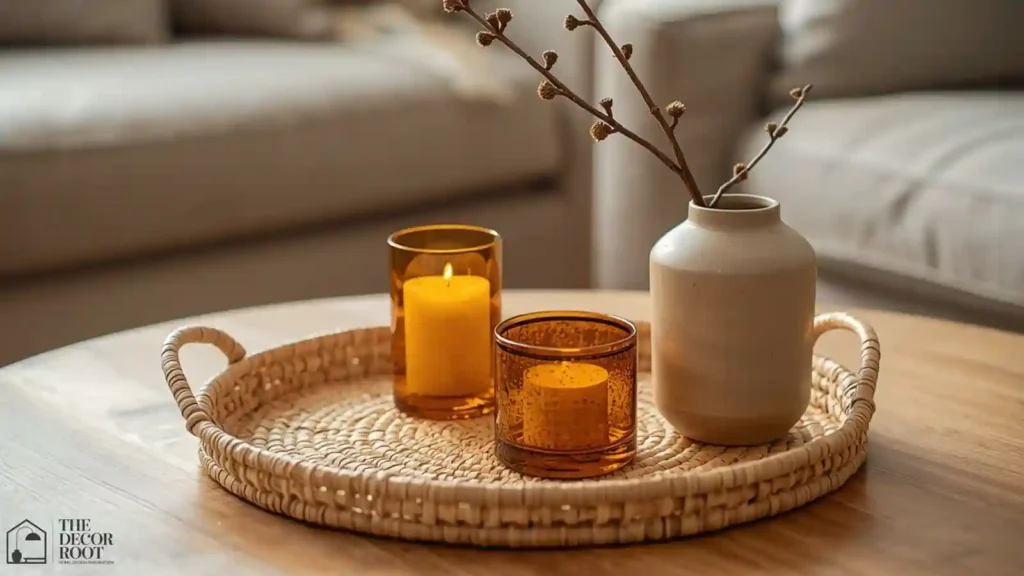
A rattan coffee table tray gives you a defined, contained surface to style your amber candles, stoneware vase, or coffee table books together rather than scattering them loosely across the table. A tray instantly makes a coffee table arrangement look more intentional and considered, which matters more than people expect when photographing or simply enjoying the room day to day. This is also a practical addition, since it keeps small decor items from sliding around every time someone sets a coffee mug down.
EDITOR’S PICK
🛒Woven Rattan Coffee Table Tray, Natural Finish
A rattan tray contains and styles coffee table decor for a polished look, while also preventing items from sliding with daily use.
(paid link).
22. Add a Single Piece of Framed Botanical or Landscape Art in Warm Tones
If your summer gallery wall or single statement art piece leans toward bright, cool-toned prints, swapping in one piece with a warmer palette an autumn landscape or a botanical print in rust and gold tones is a subtle but effective way to extend the seasonal shift to your walls, not just your textiles. You don’t need to replace an entire gallery wall, just the single most visible piece, which keeps this both an affordable and a low-effort change relative to the visual impact it has.
Quick Action Plan
- If you can only make three changes this weekend, start with the bulb swap in item 15, the throw blanket in item 4, and the candle scent swap in item 18; all three cost under fifty dollars combined and change how the room feels almost immediately, no furniture rearranging required.
- Once those are in place, layer in the coffee table styling from items 8, 13, and 21 together as a single cohesive vignette rather than adding them separately over several weeks.
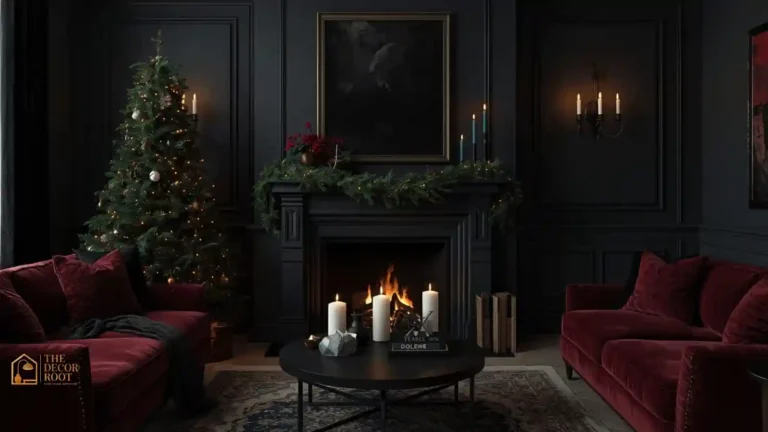
The most successful fall living room transition moves toward warmth and atmosphere. These warm atmospheric living room ideas show how the layered lighting, rich textiles, and amber palette of a moody living room aesthetic is essentially the permanent version of what a fall transition achieves seasonally, and how borrowing those principles creates a room that feels deeply autumnal rather than merely accessorized for the season.
Frequently Asked Questions
Conclusion
The best transitional living room doesn’t look like it was ripped apart and redecorated overnight; it looks like it gradually warmed up along with the weather outside. Start with lighting and texture, the two lowest-cost, highest-impact categories on this list, and build from there at whatever pace matches your actual budget and bandwidth.
💾 Save this post to your Fall Living Room board on Pinterest so you can work through it one layer at a time.