25 Fall Mantel Styling Ideas That Aren’t Christmas Yet
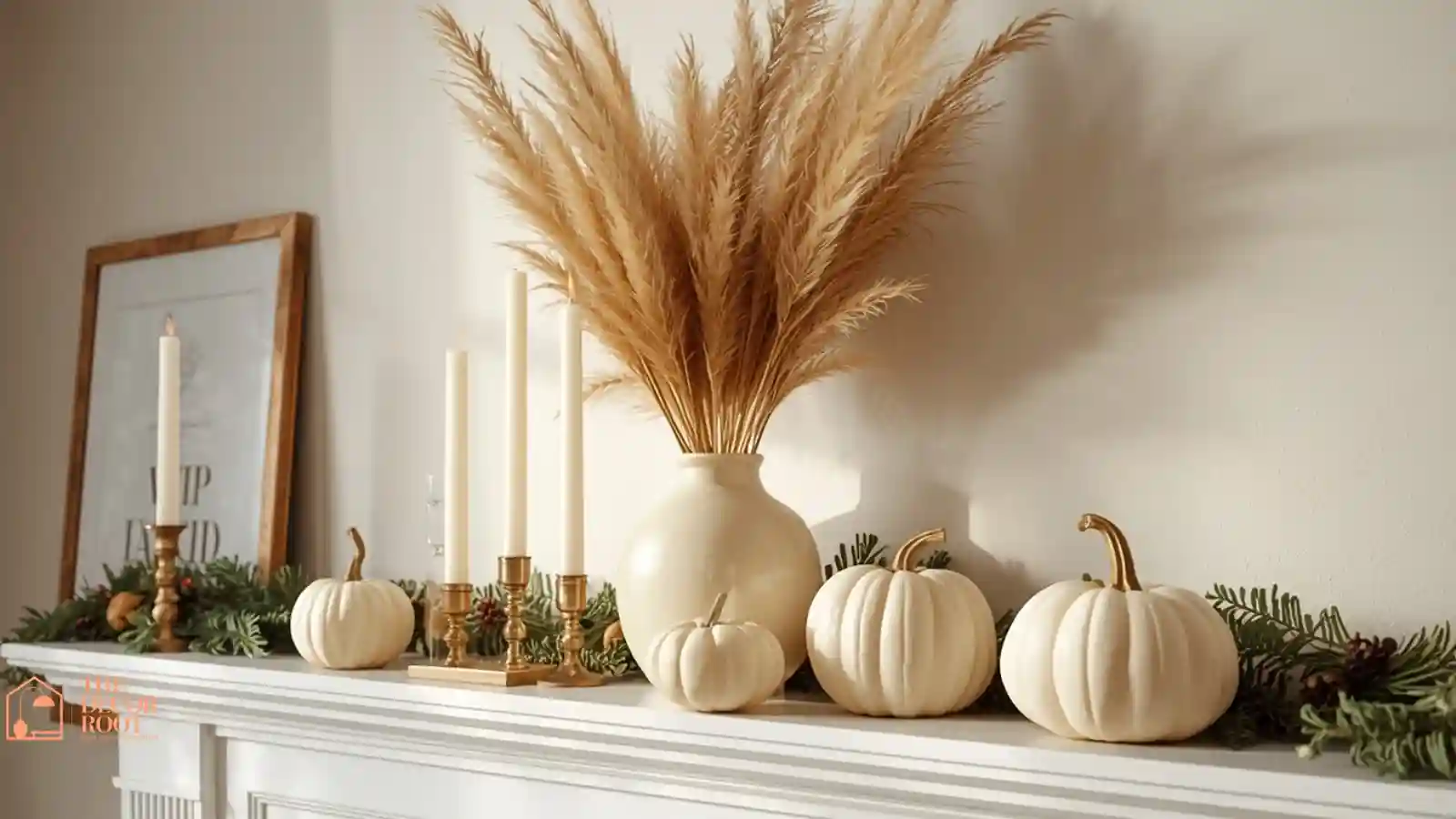
Fall Mantel Styling Ideas: Somewhere around early November, a lot of mantels make an awkward jump from bare and forgotten since Halloween to suddenly buried in garland and stockings the day after Thanksgiving. That leaves roughly six to eight weeks where your fireplace is either empty or half-heartedly holding a pumpkin nobody’s committed to. This list exists for that stretch specifically: styling that reads as genuinely autumnal, has enough visual weight to anchor a living room, and doesn’t borrow a single element from Christmas decor. Fall mantel styling ideas that are not Christmas yet are one of the most searched home decorating ideas of the season, the mantel is the room’s primary focal point, and the window between the first cool day and the first Christmas decoration is the moment when autumn styling is most needed, most photographed, and most likely to be done in a way that feels genuinely seasonal rather than rushed toward December.
This post contains affiliate links. As an Amazon Associate, I earn from qualifying purchases. If you buy through these links, I may earn a small commission at no extra cost to you.
The Real Reason This Works
A mantel is one of the few places in a home where you’re styling a horizontal surface at eye level, which means scale, height variation, and negative space matter more here than almost anywhere else in your decorating. Most fall mantels fail for one of two reasons: everything’s the same height, creating a flat, monotonous line, or everything’s crammed edge to edge with no breathing room for the eye to rest. The mantels that photograph well and hold up to daily scrutiny for two months use the rule of odd-numbered groupings, varied height, and at least one piece with real visual weight anchoring one end. Once you build around that structure, you can swap in twenty-five different combinations of materials and colors, and the mantel will still read as intentional rather than cluttered. A fall mantel begins with a palette decision. These fall mantel color and palette ideas show how to choose the three or four tones that will anchor the display, from the candlestick color to the vessel material to the botanical hue, so the mantel reads as a resolved composition rather than a collection of seasonal objects that happen to be on the same surface.
Focus Your Fall Mantel Display
A fall mantel is one of the most important seasonal styling exercises in the home. Browse all our seasonal decorating ideas to see how the mantel connects to the wider living room palette, the color scheme, and the botanical elements that make an autumn room feel completely resolved. A fall mantel and a fall wreath are the two botanical styling focal points that define an autumn home. These fall botanical styling ideas show how to build both from the same palette of dried wheat, eucalyptus, orange berries, and cotton stems so the doorstep wreath and the interior mantel read as a composed, considered pair.
1. Anchor One End With an Oversized Leaning Mirror or Art Piece
Leaning a large framed mirror or art piece against the wall behind your mantel, rather than centering a smaller piece, gives the whole arrangement a strong visual anchor and makes everything else in front of it read as a curated foreground layer rather than a flat row of objects. Choose a piece with a warm-toned frame, wood or aged brass, to tie into a fall palette without introducing anything overtly seasonal. This single choice does more to elevate a mantel’s overall look than almost any other item on this list, since it sets the scale for everything placed in front of it.
2. Layer Three Taper Candlesticks in Graduated Heights
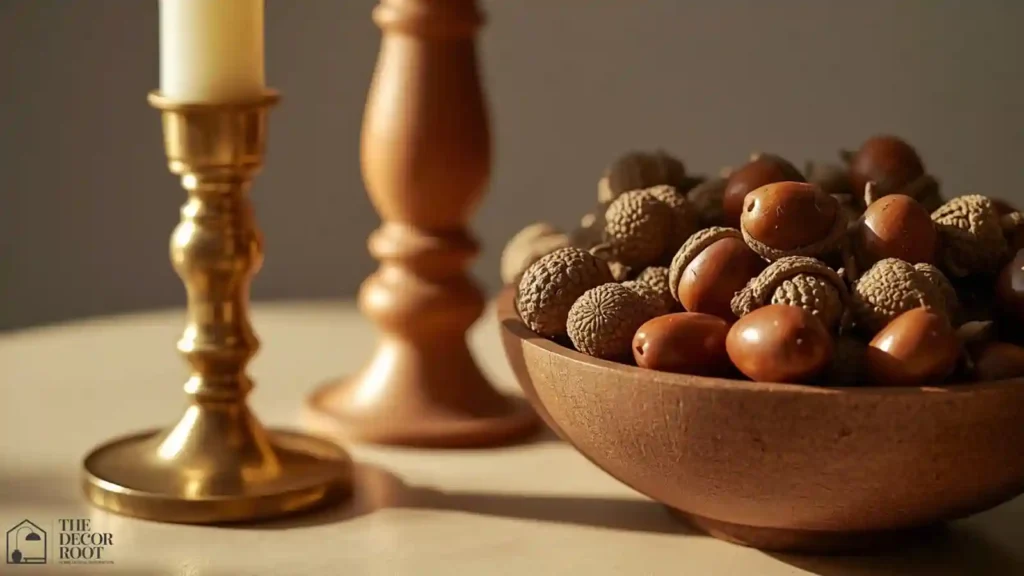
A simple trio of taper candlesticks in slightly different heights, grouped toward one side of the mantel rather than centered, creates immediate visual rhythm through height variation alone. Use brass, wood, or ceramic candlestick holders rather than glass for a warmer material palette that reads more “fall” than “everyday.” This is one of the most classic mantel styling techniques for a reason: it’s simple to execute, inexpensive, and works regardless of what else you add around it.
3. Add a Low, Wide Ceramic Bowl Filled With Dried Pods or Acorns
A shallow, wide ceramic or wood bowl filled with dried seed pods, acorns, or small dried gourds adds a grounding, low-profile element that balances taller pieces like candlesticks or a leaning mirror. This works especially well positioned near the center or toward the opposite end from your tallest item, creating a visual weight balance across the mantel’s full length. Keep the bowl’s contents monochromatic or close in tone rather than mixing many colors, which keeps it reading as sophisticated rather than like a craft-supply bin.
4. Drape a Textured Table Runner or Scarf Along the Mantel’s Length
A narrow linen, wool, or textured runner draped along the mantel surface, allowing the ends to hang slightly over the edges, adds a soft textile layer beneath your other objects and softens the hard line of the mantel shelf itself. This is a technique often used on dining tables that translates surprisingly well to mantels, giving the whole arrangement a more finished, less “objects placed on bare wood” feel. Choose a warm neutral or deep rust tone that won’t compete visually with whatever else you’re layering on top.
5. Group Taper Candles in Mismatched Vintage-Style Holders
A taper candle set in warm ivory or amber tones, placed in a mix of mismatched brass, wood, and ceramic holders rather than a matched set, creates a collected-over-time look that feels far more considered than a uniform trio. Vary the holder heights noticeably, not just the candle heights, for a more dynamic silhouette when viewed from across the room. This mismatched approach is a strong option if you already have a few candlestick holders scattered around your house rather than needing to buy a full matched set.
EDITOR’S PICK
🛒Taper Candle Set, Warm Ivory Tones
Mixed brass, wood, and ceramic holders with ivory or amber tapers create a collected look, with varied holder heights adding visual interest across the room.
(paid link)
6. Add a Single Tall Dried Branch Arrangement in a Floor-Adjacent Vase
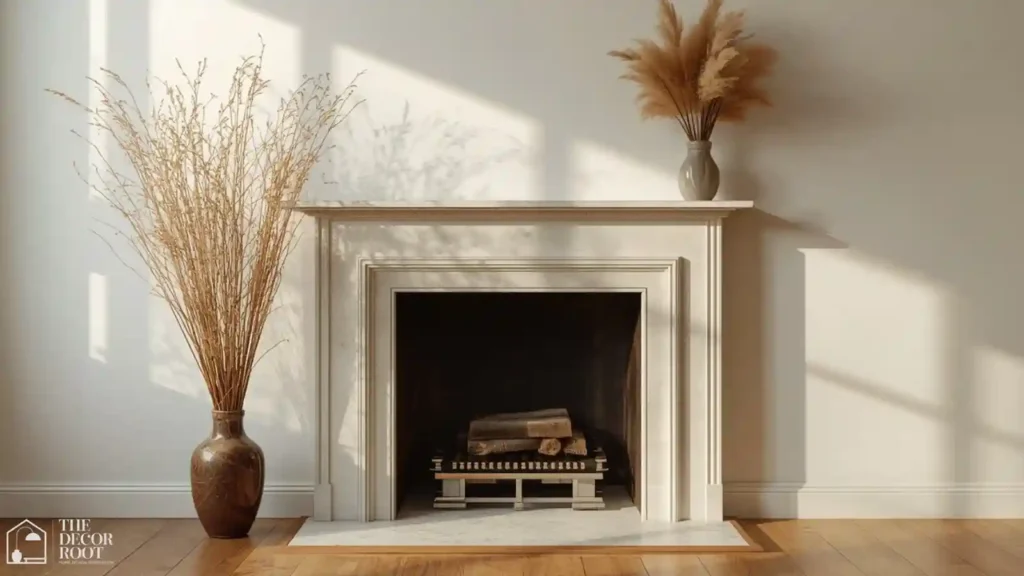
Rather than everything living directly on the mantel shelf, place one tall vase with a dramatic dried branch arrangement on the floor or hearth just beside the fireplace opening, letting it extend up past the mantel line. This adds real height and drama without crowding the mantel surface itself, and it’s a technique borrowed directly from higher-end interior styling that most home decor content skips. Choose branches with visible structure, like curly willow or manzanita, rather than leafy stems, since the bare branch silhouette reads as more architectural against a plain wall. Fall mantel styling is only as good as the mantel it sits on. These fireplace mantel design and styling ideas show how the proportions, material, and architectural detail of the mantel itself determine how much decorative content the display can carry before it looks overloaded, and how a well-designed fireplace surround makes autumn styling look effortless rather than effortful.
7. Style With a Small Collection of Textured Ceramic Vessels
Three or four small ceramic vessels in varying matte glazes cream, rust, warm brown clustered together rather than spread evenly across the mantel, create a focal grouping that reads as a single design moment rather than several unrelated objects. Vary the heights and widths within the cluster for visual interest, and consider leaving one or two empty rather than filling every vessel with florals or greenery, which keeps the arrangement feeling curated rather than overstuffed.
8. Add a Woven Basket or Textural Object as a Sculptural Element
A small woven basket, either empty or holding a single dried stem, adds organic texture and a handmade quality to a mantel that might otherwise lean too heavily on smooth ceramic and glass. This works particularly well positioned slightly toward the back of the arrangement, allowing taller items to layer in front of it, adding visual depth rather than a single flat row of objects.
9. Layer in a Stack of Books Topped With a Small Object
A stack of two or three books in warm-toned covers, topped with a small decorative object like a smooth stone, small ceramic dish, or single dried stem, is a classic styling trick that adds both height variation and a sense of a lived-in, personal space rather than a purely staged display. Choose books with spines or covers in tones that complement rather than clash with your overall palette, turning them face-down if the spine colors don’t cooperate.
10. Add a Loose Arrangement of Dried Pampas Grass in a Tall Vessel
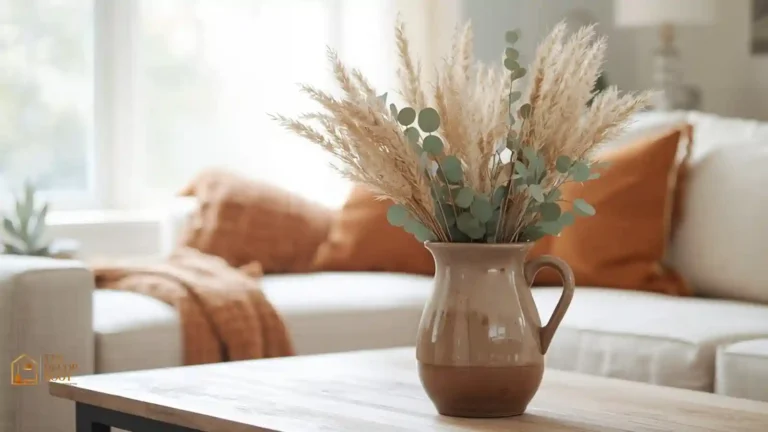
Dried pampas grass stems in a tall ceramic or glass vessel, placed toward one end of the mantel, bring soft movement and texture that contrasts nicely against the harder lines of candlesticks or framed art. Fan the stems asymmetrically rather than bunching them straight up for a more natural, less arranged look. Pampas grass has become such a popular styling material precisely because it photographs beautifully in almost any lighting condition, making it a strong choice if this mantel doubles as a backdrop for seasonal photos.
EDITOR’S PICK
🛒Dried Pampas Grass Stems, Natural Tone
Asymmetrically fanned dried pampas at one end of the mantel adds soft texture and movement, and looks great in photos against harder candle and art lines.
(paid link)
11. Add a Small Collection of Framed Family Photos in Warm-Toned Frames
Interspersing one or two small framed photos among your more purely decorative objects grounds the mantel in something personal rather than making it feel like a styled showroom shelf. Choose frames in wood or brass tones rather than cool metals or bright white to keep the material palette consistent with the rest of your fall styling. This is an easy way to make a mantel feel like it belongs to your specific home rather than looking interchangeable with any other fall mantel on Pinterest.
12. Style a Garland of Preserved Eucalyptus Along the Mantel Edge
A light, draping garland of preserved eucalyptus laid loosely along the front edge of the mantel, rather than tightly wrapped, adds a soft green layer beneath your standing objects without requiring the fuller, more structured garlands typically associated with Christmas styling. Let it drape unevenly with a few longer trailing pieces hanging down the sides of the fireplace opening for a more organic, less symmetrical look.
13. Add a Single Oversized Dried Hydrangea Bloom in a Bud Vase
One large, full dried hydrangea bloom in a simple bud vase brings soft color and texture without the visual weight of a full floral arrangement. Choose a hydrangea in a muted dusty rose, sage, or antique cream tone rather than a bright color for a more transitional, less overtly “fall” palette that could believably stay up from September through November without feeling dated.
14. Add Height Variation With a Small Ladder-Style Object or Vintage Frame Leaning Against the Back
A small decorative ladder, an empty vintage frame, or even a leaning chalkboard sign propped against the back wall of the mantel adds another layer of height and visual interest behind your main grouping of objects. This technique is particularly useful if your mantel is deep enough to support genuine front-to-back layering, giving the whole arrangement more dimension when viewed straight on rather than everything sitting in a single flat plane.
15. Add a Wood Bead Garland Draped Along the Mantel
Wood bead garland in a natural or lightly stained finish, draped loosely rather than taut, adds a subtle textural detail that reads as warm and organic without leaning into any specific holiday imagery. This has become a popular styling staple precisely because it’s neutral enough to genuinely stay up through fall and into a more neutral winter styling scheme without needing to be swapped out for Christmas.
EDITOR’S PICK
🛒Wood Bead Garland, Natural Finish
Loosely draped natural wood bead garland adds warm, neutral texture that transitions seamlessly from fall into winter without needing a Christmas-specific swap.
(paid link)
16. Style a Cluster of Small Dried Gourds in Muted, Non-Orange Tones
Small dried or faux gourds in muted sage, warm cream, or dusty blue tones, rather than the classic bright orange, give a nod to harvest imagery without the visual cliché of an orange pumpkin display. Cluster three to five together in a shallow bowl or directly on the mantel surface rather than lining them up evenly, mimicking how they’d actually sit if freshly harvested.
17. Add a Single Piece of Textural Wall Art Behind the Mantel Grouping
Rather than a mirror, a piece of textural fiber art, a woven wall hanging, or a subtle abstract piece in warm tones can serve the same anchoring function while adding a different material to the overall mix. This works well if you already have a mirror elsewhere in the room and want the mantel’s wall element to introduce a genuinely different texture rather than repeating glass and metal.
18. Layer In a Small Brass or Copper Tray to Contain a Grouping
Placing two or three smaller objects a candle, a small vase, a stack of books on top of a small brass or copper tray unifies them as a single visual grouping rather than several scattered items. This technique works especially well if your mantel is on the shorter or narrower side, since it helps organize a cluster of small objects into what reads as one considered vignette instead of clutter.
19. Add a Trailing Vine or Ivy Element for Softness
A single strand of faux or preserved trailing vine, draped so it spills slightly over the mantel edge, softens the otherwise hard horizontal line of the shelf and adds a bit of organic movement to an arrangement that might otherwise feel too structured and upright. Keep it to one strand rather than multiple, which prevents the mantel from reading as overgrown or overly done.
20. Add a Small Grouping of Neutral-Toned Ceramic Pumpkins
Ceramic pumpkin set, neutral tones in cream, warm gray, or soft terracotta glazes gives a nod to the season’s most recognizable symbol without the bright orange plastic look that reads as more Halloween than sophisticated fall styling. Vary the sizes within the grouping and cluster them toward one side rather than spacing them evenly, treating them as a single sculptural moment rather than a scattered collection.
EDITOR’S PICK
🛒Ceramic Pumpkin Set, Neutral Tones
Neutral ceramic pumpkins in cream, gray, or terracotta, clustered in varied sizes to one side, offer a sophisticated fall accent without the bright orange plastic look.
(paid link)
21. Add a Textured Woven Wall Basket Trio Above the Mantel
Instead of a single flat piece of wall art, a trio of woven wall baskets arranged in a loose cluster above the mantel brings dimensional texture to the wall space itself, which most mantel styling ignores in favor of focusing purely on the shelf surface. This works particularly well in a more rustic or bohemian-leaning living room, and it’s a technique that can stay up genuinely year-round with just the shelf styling below it changing seasonally.
22. Style a Row of Small Bud Vases With Single Stems
Rather than one or two larger arrangements, a row of three to five small bud vases, each holding a single dried stem or small bloom, creates rhythm through repetition while still keeping the overall silhouette low and unobtrusive. This works well on a mantel that’s already carrying a lot of visual weight from a large piece of art or mirror above it, since the repeated small vases add detail without competing for attention.
23. Add a Single Piece of Amber or Smoked Glass for a Light-Catching Moment
One amber or smoked glass vessel, positioned where it’ll catch afternoon or evening light, adds a warm glow and a bit of shine that balances out the more matte materials wood, ceramic, dried botanicals that tend to dominate fall mantel styling. This single reflective element keeps an otherwise texture-heavy mantel from reading as visually flat.
24. Layer In a Small Stack of Neutral-Toned Linen Napkins or Fabric
A small, neatly folded stack of linen fabric in a warm neutral tone, tucked beside a candlestick or vase grouping, adds an unexpected soft textile element to a mantel that’s otherwise built from hard materials. This is a less common styling choice that adds genuine textural variety, borrowed from tablescape styling more than traditional mantel decor.
25. Anchor the Opposite End With a Framed Botanical or Landscape Print Set
A framed botanical print set leaned in a small overlapping cluster at the opposite end from your main grouping balances the mantel’s overall visual weight and gives the eye a second point of interest without competing directly with your primary anchor piece. Choose prints in warm, muted tones rust, olive, warm brown rather than bright florals for a cohesive fall palette that ties the entire mantel together from end to end.
EDITOR’S PICK
🛒Framed Botanical Print Set
Overlapping botanical prints in warm rust, olive, or brown at the opposite end of the mantel balance visual weight and create a cohesive fall palette from end to end.
(paid link)
Quick Action Plan
- Start by picking your anchor piece, either the leaning mirror from item 1 or the tall branch arrangement from item 6, since everything else on this list is built to support that one focal point.
- From there, add exactly one height-variation element (the taper candles in item 5), one texture element (the pampas grass in item 10 or the wood bead garland in item 15), and one grounding low element (the ceramic bowl in item 3), and stop.
- Four to five layered elements is almost always enough; the biggest mistake people make with mantel styling is continuing to add items until the surface feels crowded instead of curated.
Frequently Asked Questions
Conclusion
A great fall mantel earns its two full months on display by leaning on structure, height variation, grouped clusters, and one strong anchor piece, rather than trying to cram in every seasonal object at once. Build it in layers, starting with your anchor, and resist the urge to keep adding once it already feels balanced.
💾 Save this post to your Fall Mantel Ideas board on Pinterest so you have it ready when you’re styling this season.