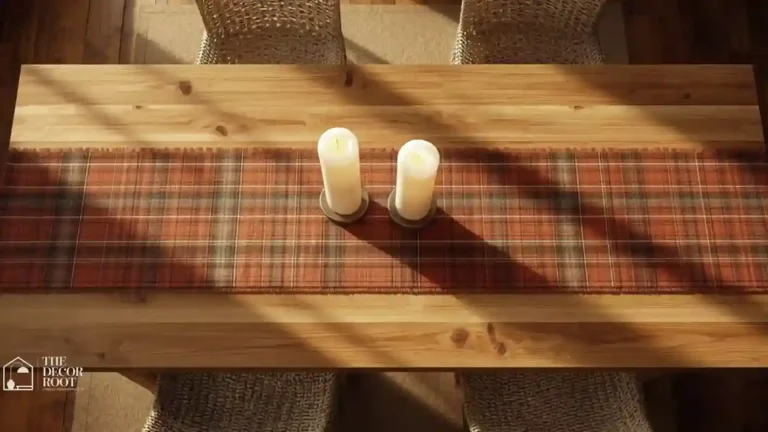
24 Warm Kitchen Lighting Ideas for Shorter Days
Warm Kitchen Lighting Ideas. By 5:30 in October, your kitchen has already gone flat and blue-gray, even with the overheads blasting. That’s not a decorating problem; it’s a lighting-temperature problem. Most kitchens are built around one harsh, cool-toned ceiling fixture that’s fine for chopping vegetables at noon and miserable for anything after sunset. As the days shrink, that single light source has to do the job of morning task lighting, dinner-prep lighting, and evening ambiance all at once, and it can’t. Warm kitchen lighting ideas for shorter days are one of the most practically impactful home decorating ideas of autumn. As the available daylight contracts through October and November, the artificial light in a kitchen becomes the primary source of its atmosphere, and the difference between cool white task lighting and warm amber ambient light is the difference between a kitchen that feels clinical and one that feels genuinely inviting.
This post contains affiliate links. As an Amazon Associate, I earn from qualifying purchases. If you buy through these links, I may earn a small commission at no extra cost to you.
The Real Reason This Works
Color temperature is the whole game here. Light bulbs are rated in Kelvin, and most builder-grade kitchen fixtures ship at 4000K–5000K, a cool, almost clinical white that reads as “office” more than “home,” especially once it’s dark outside and there’s no daylight to balance it. Warm kitchen lighting sits at 2700K–3000K, the same range as candlelight and firelight, and it’s the reason a restaurant dining room feels relaxing while its stainless-steel kitchen (lit at 5000K on purpose, for food safety and precision) feels like a workspace. Warm kitchen lighting and layered bedroom bedding are the two most immediately felt expressions of the same autumn interior shift; these warm autumn interior ideas show how adjusting the light temperature in the kitchen and the textile weight in the bedroom simultaneously produces the most cohesive and genuinely seasonal transformation of a home as the days shorten.
Warm Up Kitchen Lighting
Lighting is the kitchen element that changes most dramatically between summer and autumn. Browse all our kitchen decorating ideas to see how warm lighting connects to counter styling. Counter styling and counter lighting are inseparable; these kitchen counter lighting and styling ideas show how the colour temperature and positioning of under-cabinet lighting determines whether a fall counter arrangement reads as warm and seasonal or cool and perfunctory, and why most counter styling failures are actually lighting failures. Open shelving, seasonal produce display, and the overall fall palette create a kitchen that feels complete at every time of day through the darker months.
1. Swap Your Bulbs to 2700K Before Anything Else
Before buying a single new fixture, change every bulb in the kitchen to a warm 2700K LED. This is the cheapest, fastest fix on this entire list, and it changes the mood of the room more than almost anything else you can do. Cool white bulbs (4000K+) are the single biggest reason kitchens feel sterile after dark, and most people never think to check the Kelvin rating on the box. Look for “soft white” or “warm white” labeling and confirm that 2700K is the sweet spot for cozy without going dim-and-yellow. Do this in your overhead fixture, your under-cabinet lights, and any pendants. It costs almost nothing if you already own the fixtures, and it’s the first thing to fix before you spend money on anything more elaborate.
2. Add a Low-Hanging Pendant Over the Island
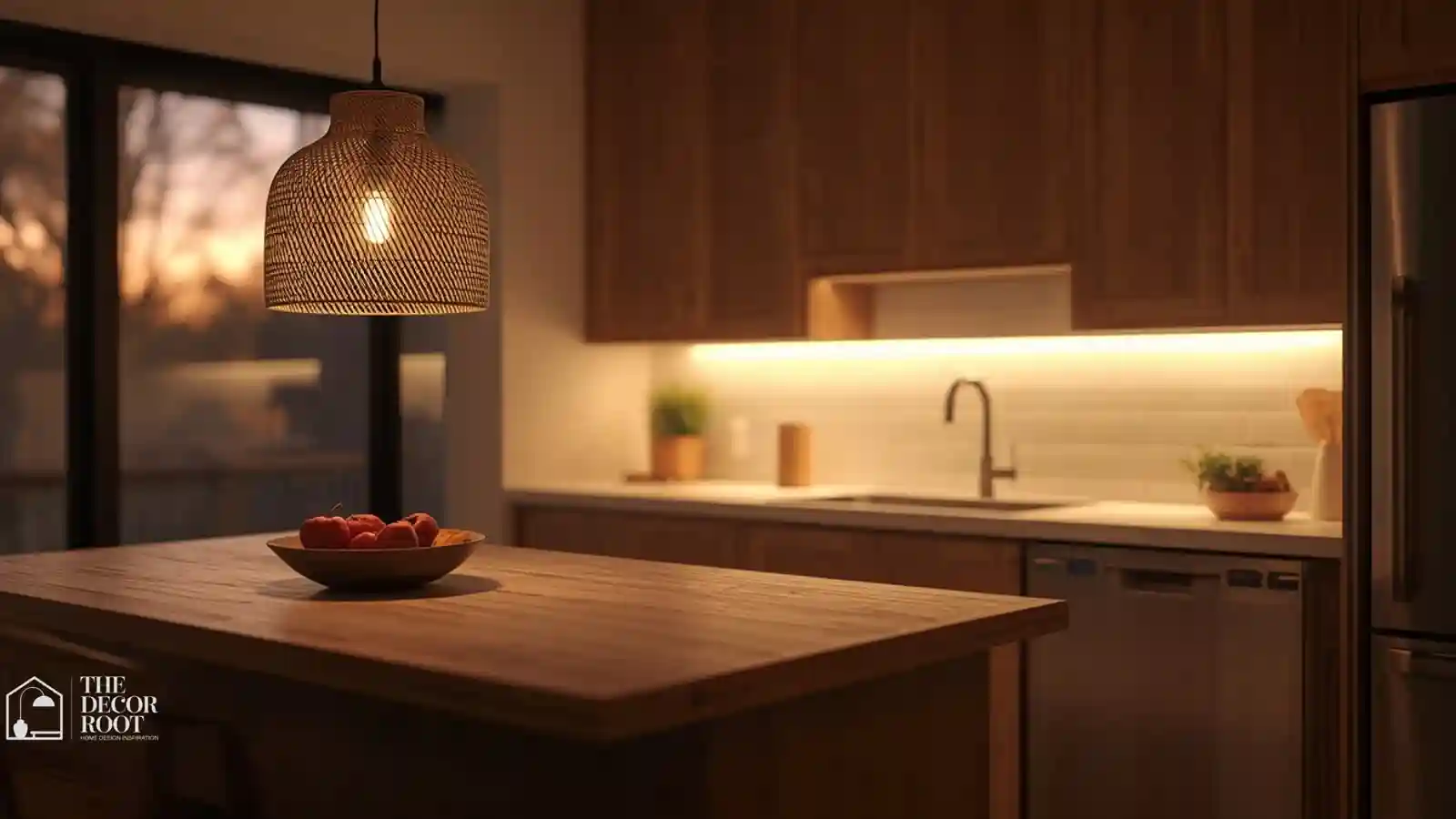
If your island only gets light from a ceiling fixture eight feet up, it’s getting flooded, not lit. Hang a pendant (or a pair, or a row of three) at 30–36 inches above the counter so the light source itself becomes part of the room’s visual layer, not just a source pointed down from far away. A woven rattan, linen drum, or amber glass shade filters the light into something soft and golden rather than a hard cone. This is the single highest-impact fixture change you can make in a kitchen, and it’s the one most home-decor accounts photograph first for a reason: it does more visual work than almost any other single object in the room.
3. Layer in Warm Under-Cabinet Lighting
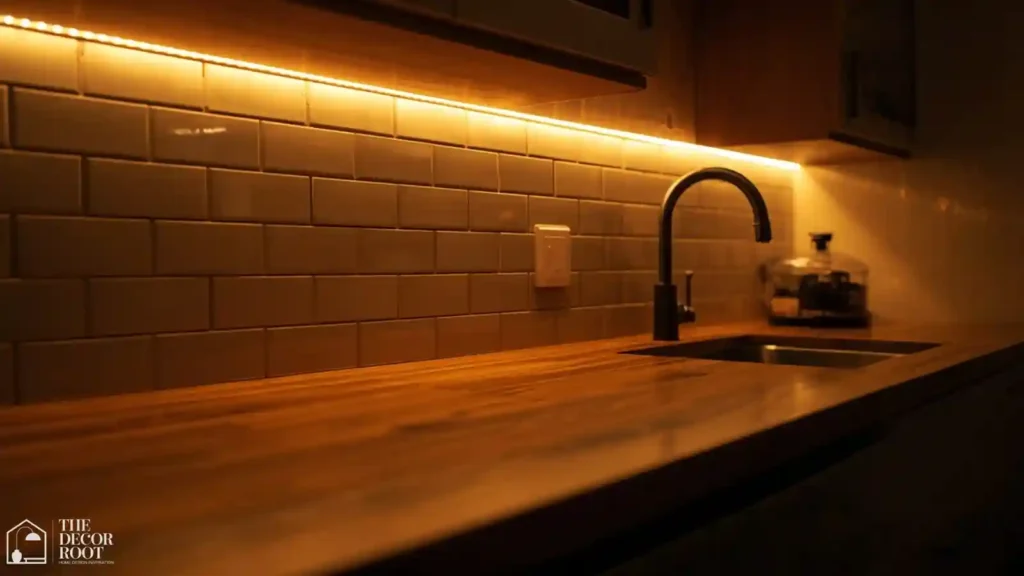
Under-cabinet lighting isn’t just for chopping onions without shadows; it’s an ambient layer that makes the counters glow instead of going dark the second the overhead light clicks off. Choose warm white (2700K–3000K) LED strips or puck lights mounted at the front edge of the upper cabinets, angled down onto the backsplash and counter. Run them on their own switch or a smart plug so you can leave them on alone in the evening for a low, moody kitchen without flipping on every overhead can light. This is especially good for late-night snack runs or early dark mornings when you don’t want the full glare of the main lights.
4. Try a Plug-In Puck Light Kit If You’re Renting
Renters and anyone who doesn’t want to touch electrical wiring can still get the under-cabinet glow with a plug-in LED puck light kit that sticks on with adhesive strips and runs off a standard outlet. Most kits include a small remote or touch dimmer so you can control brightness and warmth without an electrician. Tuck the cord along the underside of the cabinet with adhesive clips so it disappears from view, and route it down behind an appliance to the nearest outlet. It’s a fifteen-minute install that gives you the same golden-glow effect as a hardwired version, fully reversible when you move out.
EDITOR’S PICK
🛒Plug-In LED Puck Light Kit (Warm White, Remote-Controlled, No Wiring)
A plug-in adhesive puck light kit with dimmer and hidden cord routing installs in fifteen minutes, delivers hardwired quality glow, and reverses completely for renters.
(paid link)
5. Add a Table Lamp on the Counter
This sounds unconventional until you try it: a small lamp on an open stretch of counter or a buffet-style console at the end of a galley kitchen adds a genuinely home-like, non-institutional light source that no recessed can light can replicate. Pick a lamp with a fabric or paper shade (never a bare bulb) so the light diffuses instead of glaring, and use it as your “just me, early morning coffee” light instead of flipping on the overheads. It’s an unexpected trick that most kitchens never use, and it instantly makes the space read as considered rather than purely functional.
6. Install a Dimmer Switch on Your Main Fixture
A dimmer is the cheapest lighting upgrade that changes how a kitchen feels at every hour of the day, and most kitchens still don’t have one. Full brightness for meal prep, dimmed to 30% for a relaxed dinner, dimmed further for late-night water glasses one switch handles all three moods instead of forcing your kitchen to be “on” or “off.” Modern LED-compatible dimmers cost under $20, and most are a straightforward swap for anyone comfortable with basic electrical work; if not, it’s a quick job for an electrician. Pair it with the 2700K bulbs from Idea 1 for the full effect: a bright white kitchen dimmed down still reads cold, but a warm kitchen dimmed down reads like candlelight.
7. Use Open Shelving as a Spot for Warm Accent Lighting
If you have open shelving, tuck a small battery-powered LED strip or puck light along the underside of each shelf to backlight the mugs, plants, or cookbooks displayed there. This creates a soft glow at eye level that’s completely different from overhead lighting; it draws attention to the styled objects on the shelf rather than lighting the whole room evenly. Battery-powered options mean no visible cords and no electrical work, and most run 6–8 hours on a timer, which is plenty for evening hours. It’s a small detail, but it’s the kind of layered lighting that makes a kitchen photograph like a much more expensive renovation.
8. Add String Lights Along a Window or Shelf Edge
Warm white string lights aren’t just for outdoor patios; a single strand tucked along a window frame, the top of open shelving, or draped loosely above a kitchen sink adds a soft, twinkly warmth that’s especially good for smaller kitchens where a pendant isn’t practical. Choose LED string lights specifically labeled warm white (not the cooler, bluer “fairy light” style) and use a small clip-on timer so they turn on automatically as it gets dark. This is a five-minute, no-tool project that makes a real visual difference in a kitchen that otherwise relies entirely on one overhead fixture.
9. Upgrade to a Statement Rattan or Woven Pendant
A woven rattan pendant light does two jobs at once: it filters harsh bulb light into a dappled, warm glow through the natural material, and it adds texture and shape to a kitchen that might otherwise be all flat cabinet fronts and countertops. Hang it at standard pendant height (30–36 inches above the island) and pair it with a 2700K bulb so the woven shade isn’t fighting a cool-white light inside it. This is one of the most-saved kitchen lighting styles on Pinterest for exactly this reason: it reads as warm, textural, and collected rather than builder-grade.
EDITOR’S PICK
🛒Woven Rattan Pendant Light For Kitchen Island
A woven rattan pendant with a 2700K bulb hung 30 to 36 inches above the island filters harsh light into warm texture, adding a collected, Pinterest-favored look to flat kitchens.
(paid link)
10. Add a Sconce Beside the Range or Sink
A wall sconce isn’t standard kitchen equipment, but it should be mounted beside a range hood or above a sink; it adds a warm, low light source exactly where you’re standing most often during evening cooking, without relying on the overhead alone. Choose a swing-arm or fixed sconce in brass or matte black with a fabric or frosted glass shade, and if hardwiring isn’t an option, a plug-in sconce with a cord cover gets the same look without an electrician. This is a detail most kitchens skip entirely, and it’s part of why some kitchens photograph as “designed” and others photograph as “builder default.”
11. Try Battery-Operated Wireless Wall Sconces
If you love the sconce look from Idea 10 but can’t drill into tile or don’t want visible cords, battery-operated wireless sconces mount with adhesive strips or a single small screw and run on replaceable or rechargeable batteries for months at a time. Most modern versions include a built-in warm-white LED and a touch or remote dimmer, so you get the ambiance of a hardwired fixture with none of the installation. These are especially useful for rental kitchens or as a temporary fix while you save for a full renovation, fully removable and damage-free when you move.
12. Add a Warm Glow with LED Candles on Open Shelves or the Table
Real candles are a fire risk you don’t want to leave burning while cooking, but flameless LED candles with a warm, flickering glow give the same cozy effect safely, whether grouped on an open shelf, down the center of a farmhouse table, or lined along a windowsill. Choose ones with a genuine flicker effect and a warm (not stark white) LED color, and put them on a timer so they turn on automatically at dusk without you remembering. It’s a small, low-cost layer, but it’s one of the fastest ways to make a kitchen feel like fall is actually happening.
13. Install a Toe-Kick Light Strip Under the Cabinets
Toe-kick lighting, a thin LED strip installed in the recessed base beneath your lower cabinets, is a lesser-known trick that adds a soft glow along the floor, similar to hotel hallway lighting, and it’s genuinely useful for late-night kitchen trips when you don’t want to flip on the main lights. It’s a relatively simple DIY install with an adhesive LED strip and a small driver, or a job for an electrician if you want it hardwired to a switch. Beyond function, it adds a subtle architectural detail that makes the kitchen feel finished in a way most kitchens simply aren’t.
14. Choose Dimmable Filament Bulbs for an Edison-Style Glow
For pendants or fixtures with an exposed bulb, swap standard LEDs for dimmable warm filament-style LED bulbs that mimic old-fashioned Edison bulbs but use a fraction of the energy. The visible filament adds warmth even when the bulb is off, and dimmed down in the evening, it throws exactly the amber, flickering-adjacent light that makes a kitchen feel like a cabin rather than a showroom. This works especially well in pendants with clear or lightly frosted glass shades where the bulb itself is part of the visual design, not hidden behind an opaque shade.
EDITOR’S PICK
🛒Dimmable Warm Filament-Style LED Bulbs
Dimmable warm filament LEDs offer an Edison look and energy efficiency, with visible filament adding warmth even when off and an amber glow that makes clear glass pendants feel cozy, not showroom-like.
(paid link)
15. Add a Warm Light Inside a Glass-Front Cabinet
If you have (or are adding) glass-front upper cabinets, a small warm LED puck or strip light inside the cabinet turns your dishware into a lit display case rather than just storage. This is a detail borrowed from high-end kitchen design that’s genuinely easy to DIY with a battery-powered or plug-in puck light stuck to the cabinet’s interior ceiling. Turn it on in the evening alongside your other warm sources for a layered, boutique-restaurant feel, and turn it off during the day so it’s not competing with natural light. It’s a small, contained project with an outsized visual return.
16. Use a Smart Bulb System to Control Warmth by Time of Day
Smart bulbs that adjust color temperature automatically cooler and brighter in the morning, warmer and dimmer as evening approaches take the guesswork out of layered lighting entirely. Set a schedule once (most apps let you program a gradual shift starting around 4 pm in fall and winter), and your kitchen will start warming up before you even notice the sky darkening outside. This is a slightly bigger investment than a basic bulb swap, but for anyone who forgets to manually dim lights every evening, it solves the whole “shorter days” problem automatically and consistently, every single day, without you doing anything.
17. Add a Warm Reading or Recipe Nook Light
If your kitchen has a built-in banquette, a small desk area, or a spot where you sit with a laptop or cookbook, add a dedicated small lamp or clip light there rather than relying on the overhead kitchen lighting to cover it. A warm, focused light source at that specific spot means you’re not lighting the entire kitchen just to read a recipe or answer an email at the counter. This is a classic “layering” move: task light exactly where a task happens, separate from the ambient light that fills the rest of the room, and it means you can turn off the main lights while still having what you need right there.
18. Try a Warm-Toned Chandelier Over a Kitchen Table
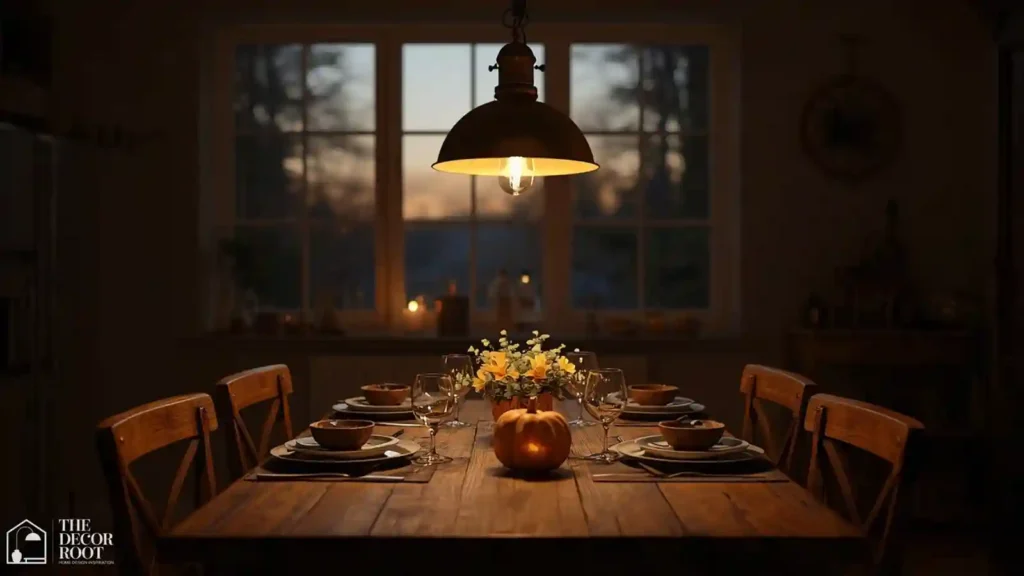
If your kitchen includes an eat-in table, a small chandelier, even a modest one, does for the table what a pendant does for the island: it creates a defined, warm pool of light exactly where you’re sitting for dinner, rather than the flat wash of an overhead fixture positioned for the room generally. Choose a warm-metal finish (brass, aged gold, black with warm bulbs) and hang it low enough that the bottom sits roughly 30–34 inches above the tabletop. This single fixture change is often what separates a kitchen table that feels like an afterthought from one that feels like the actual heart of the house in the evening.
19. Add a Warm LED Light Strip Along Open Cabinet Tops
If your upper cabinets don’t reach the ceiling, that gap is usually wasted, dusty, and dark, or it’s exactly where you should run a warm white LED light strip to uplight the ceiling and add a soft glow above the cabinet line. This bounces warm light off the ceiling and back down into the room without a single new fixture, and it’s one of the easiest DIY lighting projects on this list. Most strips are adhesive-backed and plug directly into a nearby outlet. It’s an especially good option for kitchens where more overhead recessed lighting isn’t practical or where the ceiling is too low for a pendant.
EDITOR’S PICK
🛒Warm White LED Strip Lights For Above-Cabinet Uplighting
An adhesive warm white LED strip in the gap above upper cabinets uplights the ceiling and adds a soft glow, plugs in easily, and is ideal for kitchens with limited or low ceiling lighting.
(paid link)
20. Add Warmth Through Reflective, Warm-Toned Surfaces
Lighting and finishes work together more than people realize. A brushed brass faucet, warm wood cutting boards left out on the counter, or a copper pot rack all catch and reflect warm light in a way that cool stainless steel or bright white surfaces simply don’t. If you’re already investing in warmer bulbs and fixtures, take stock of what’s reflecting that light into the room. Small swaps (a warm-metal faucet, wood or rattan accessories left visible rather than tucked away) amplify the effect of every other lighting change on this list without adding a single new fixture.
21. Install Motion-Sensor Warm Lighting for Pantries and Cabinets
A small motion-sensor LED puck light inside a pantry, a dark cabinet, or under the sink adds a warm, automatic glow exactly when you need it and switches off on its own, which means you’re not fumbling for a switch in a dark closet on an early, dark morning. These battery-powered pucks cost very little and install with adhesive backing in under a minute. It’s not a glamorous idea, but it’s one of the most genuinely useful additions on this list for the actual shorter, darker mornings and evenings this article is about not just the ambiance, but the daily function of a kitchen in low light.
22. Add a Warm Floor Lamp in an Awkward Kitchen Corner
Larger kitchens often have a dead corner beside a pantry door, near a plant, in an eat-in nook that never gets addressed because it’s not near an outlet for a table lamp or doesn’t have ceiling access for a fixture. A slim floor lamp with a warm-toned shade fills that gap, adds a genuine ambient light source at a different height than everything else in the room, and turns a wasted corner into an intentional, cozy spot. Choose one with a fabric drum shade for the softest, warmest diffusion, and keep the bulb at 2700K to match the rest of your layered lighting plan.
23. Layer In a Small Fairy-Light Jar or Vase Display
For a low-cost, low-commitment warm light layer, tuck battery-powered warm LED fairy lights into a glass jar, vase, or hurricane on a windowsill or open shelf. It’s an easy seasonal styling trick that adds a soft, ambient glow without any installation, and it can move around the kitchen (or the house) as needed. This is a good option for renters, for anyone testing whether they like more ambient lighting before committing to a bigger fixture change, or simply as a finishing touch layered on top of the bigger lighting upgrades elsewhere on this list.
24. Add a Brass Swing-Arm Sconce Beside a Window or Banquette
Finish your layered lighting plan with a brass swing-arm wall sconce mounted beside a window seat, banquette, or reading corner. The adjustable arm means you can angle the light exactly where you need it, down onto a book, or up and diffused for ambiance- and the warm brass finish adds the same reflective warmth described in Idea 20. This is a genuinely versatile fixture that works as both a functional task light and a decorative, layered ambient source, making it a strong final piece to round out a kitchen that now has light at every height and every hour.
EDITOR’S PICK
🛒A Brass Swing-Arm Wall Sconce
A brass swing-arm sconce beside a window seat or banquette offers adjustable task or ambient light with a warm reflective finish, completing a kitchen layered lighting plan at every height and hour.
(paid link)
Quick Action Plan
- Start tonight with the free-and-cheap layer: swap your bulbs to 2700K (Idea 1) and add a dimmer if you don’t already have one (Idea 6).
- This week, add one plug-in layer puck light under the cabinets (Idea 4) or a battery sconce (Idea 11) so you have at least two light sources at different heights.
- Over the next month, invest in one statement piece, whether that’s the rattan pendant (Idea 9) or a table chandelier (Idea 18), and finish with a smart or motion-sensor layer (Ideas 16 and 21) so the warmth adjusts itself as the days keep getting shorter without you thinking about it.
Warm kitchen lighting is one of the most powerful applications of color psychology in the home. These warm light and color psychology ideas explain the neuroscience behind why amber light sources measurably lower cortisol, extend the time people spend in a room, and make food look more appetising, and why switching from cool to warm lighting in autumn is the single highest-return environmental psychology intervention available.
Frequently Asked Questions
Conclusion
Warm kitchen lighting isn’t about buying every fixture on this list; it’s about making sure your kitchen has light at more than one height, in more than one temperature, so it can shift from “get dinner made” in the afternoon to “linger here” once it’s dark outside. Even three or four of these ideas, layered together, will change how the room feels for the rest of fall and winter.
💾 Save this to your Pinterest kitchen lighting board so you can find it again when the sun starts setting at 5 pm.