20 Layered Bedding Ideas for Cold Fall Nights
Layered Bedding Ideas. There’s a specific moment every fall when you pull back your summer sheets at 10 pm and realize they’re doing absolutely nothing against the cold air coming through the window. A single flat sheet and a light quilt worked fine in July. In late October, it means waking up at 3 am reaching for a blanket that isn’t there, or giving up and cranking the thermostat to compensate for bedding that isn’t built for the season. Layered bedding ideas for cold fall nights are some of the most sensory home decorating ideas of the year; the shift from a single summer duvet to a properly layered autumn bed, with a quilt, a throw, a heavier blanket, and a shawl at the foot, transforms sleeping from a functional activity into a genuinely luxurious seasonal experience.
This post contains affiliate links. As an Amazon Associate, I earn from qualifying purchases. If you buy through these links, I may earn a small commission at no extra cost to you.
What Ties These Ideas Together
Every idea on this list follows the same principle: warmth comes from trapped air, not just fabric weight. A single thick blanket traps one layer of air between it and your body. Three thinner layers a flannel sheet, a lightweight blanket, and a duvet trap three separate layers of air, and that’s what actually makes you warmer, not the total ounces of fabric piled on top of you. It’s also what makes a layered bed easier to live with than one giant comforter: you can kick off the top throw when the room gets stuffy at 2 am without fully exposing yourself to the cold, because there’s still a flannel sheet and a blanket layer underneath doing their job. Layered bedding and warm kitchen lighting are the two seasonal changes that produce the strongest whole-home transformation in autumn. These warm autumn home atmosphere ideas show how adjusting the textile weight in the bedroom and the light temperature in the kitchen simultaneously creates a home that genuinely feels like it has been designed for the cooler, shorter days of the season.
Layer Up for Autumn Nights
Layered autumn bedding is the bedroom’s most immediate seasonal transformation. Browse all our bedroom decorating ideas to see how textile layering connects to fall bedroom color. Layering and texture go hand in hand in an autumn bedroom; these textured autumn bedding ideas show how combining smooth linen, nubby wool, soft flannel, and chunky knit in the same bed creates a tactile composition that is as visually interesting as it is physically warm. Curtain choice and the overall cosy aesthetic make a bedroom feel specifically designed for the colder months.
1. Start With Flannel or Brushed Cotton Sheets
Your base sheet layer does more thermal work than people give it credit for. Standard percale or sateen sheets are cool to the touch by design, which is exactly wrong for a cold bedroom. Flannel or brushed cotton sheets have a raised nap that traps a thin layer of warm air right against your skin, and that’s your first and most important layer before anything else on this list. Look for a flannel weight measured in ounces per square yard rather than thread count. 5 oz. is a good, breathable starting point for fall, with heavier weights reserved for genuinely cold climates.
2. Add a Lightweight Blanket Between Sheet and Duvet
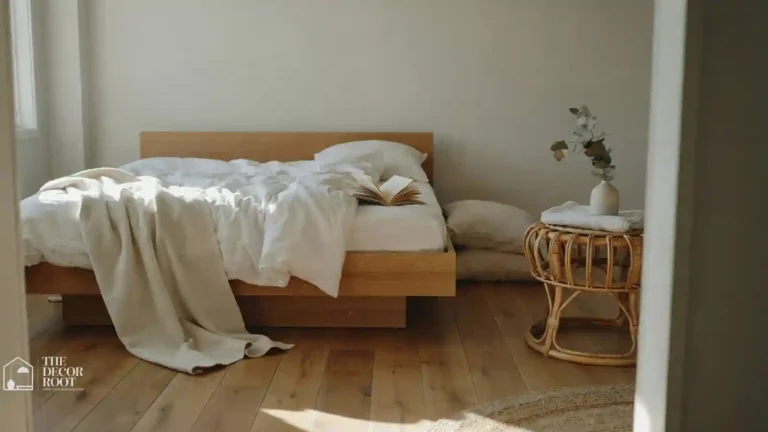
The layer directly under your duvet or comforter matters more than most people realize. A lightweight cotton or waffle-weave blanket placed between your top sheet and your duvet adds an extra trapped-air layer without adding real bulk, which is exactly the kind of incremental warmth layered bedding is built around. This is also the easiest layer to remove entirely on a warmer night without disturbing the rest of your bedding setup, since it just slides out from between the two layers on either side of it.
3. Choose a Duvet Insert With the Right Fill Weight for Fall
Not every duvet insert is created equal, and fall calls for something in between your lightest summer option and your heaviest winter one. Look for a fill weight labeled “all-season” or “lightweight winter,” generally in the 300–500 GSM range for down-alternative fills rather than a true winter-weight insert that will have you overheating by December when you add your other layers on top. This is the layer that does the bulk of the actual insulating work, so it’s worth getting the weight right rather than defaulting to whatever came with your duvet cover set.
4. Swap in an Actual Flannel Sheet Set for the Full Effect
If you’re not ready to fully overhaul your bedding, the single highest-impact swap is a full flannel sheet set fitted, flat, and pillowcases rather than just a flannel top layer. Flannel against your entire body, not just under a blanket, is what actually changes how a bed feels the moment you get in on a cold night. Choose a mid-weight (4–5 oz.) flannel in a neutral or warm tone so it works under whatever duvet cover and throw combination you build on top of it later.
EDITOR’S PICK
🛒Flannel Sheet Set, Queen Or King
A full mid-weight flannel sheet set in a neutral or warm tone offers the highest impact cold weather bedding upgrade by warming the whole body, not just under a blanket.
(paid link)
5. Add a Quilted Coverlet as a Textured Middle Layer
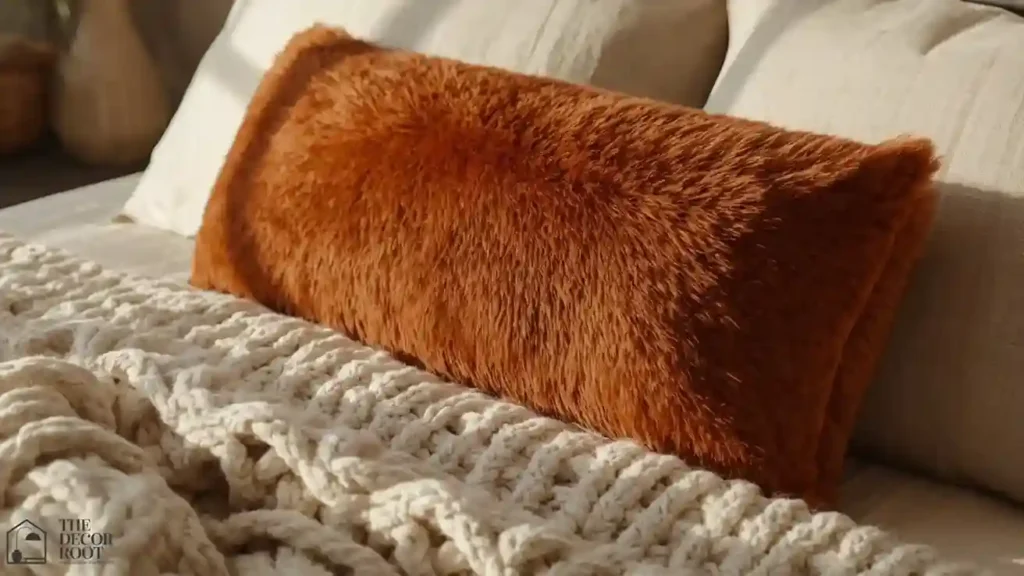
A quilted cotton coverlet folded at the foot of the bed, or layered fully over the duvet, adds both warmth and visual texture without the bulk of a second full comforter. This is the layer that turns a flat, single-comforter bed into something that reads as intentionally styled rather than just “made,” and it’s easy to fold back at night if the room runs warm while still being right there for the early morning chill.
6. Choose a Duvet Cover in a Warm, Matte Texture
Your duvet cover’s fabric matters as much as its color. A matte, slightly textured cotton or linen duvet cover reads warmer visually than a glossy sateen one, even at the same thermal weight, and it photographs with more depth for the same reason. Warm neutrals oatmeal, terracotta, rust, deep cream read as intentionally seasonal rather than simply swapped for winter, and they pair naturally with the flannel and knit layers elsewhere on this list.
7. Add a Chunky Knit Throw at the Foot of the Bed
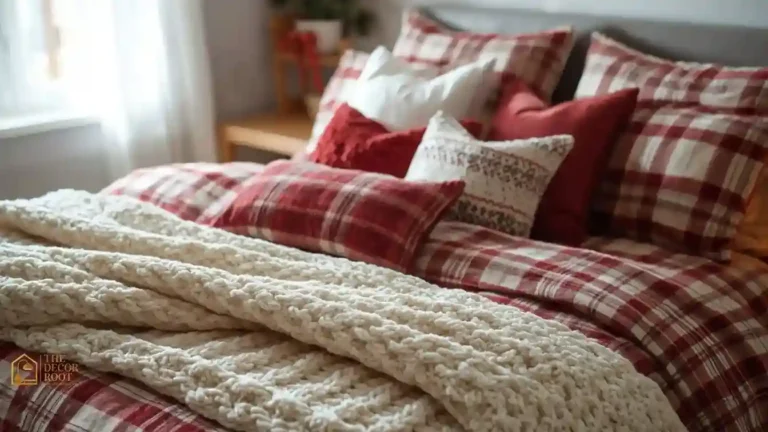
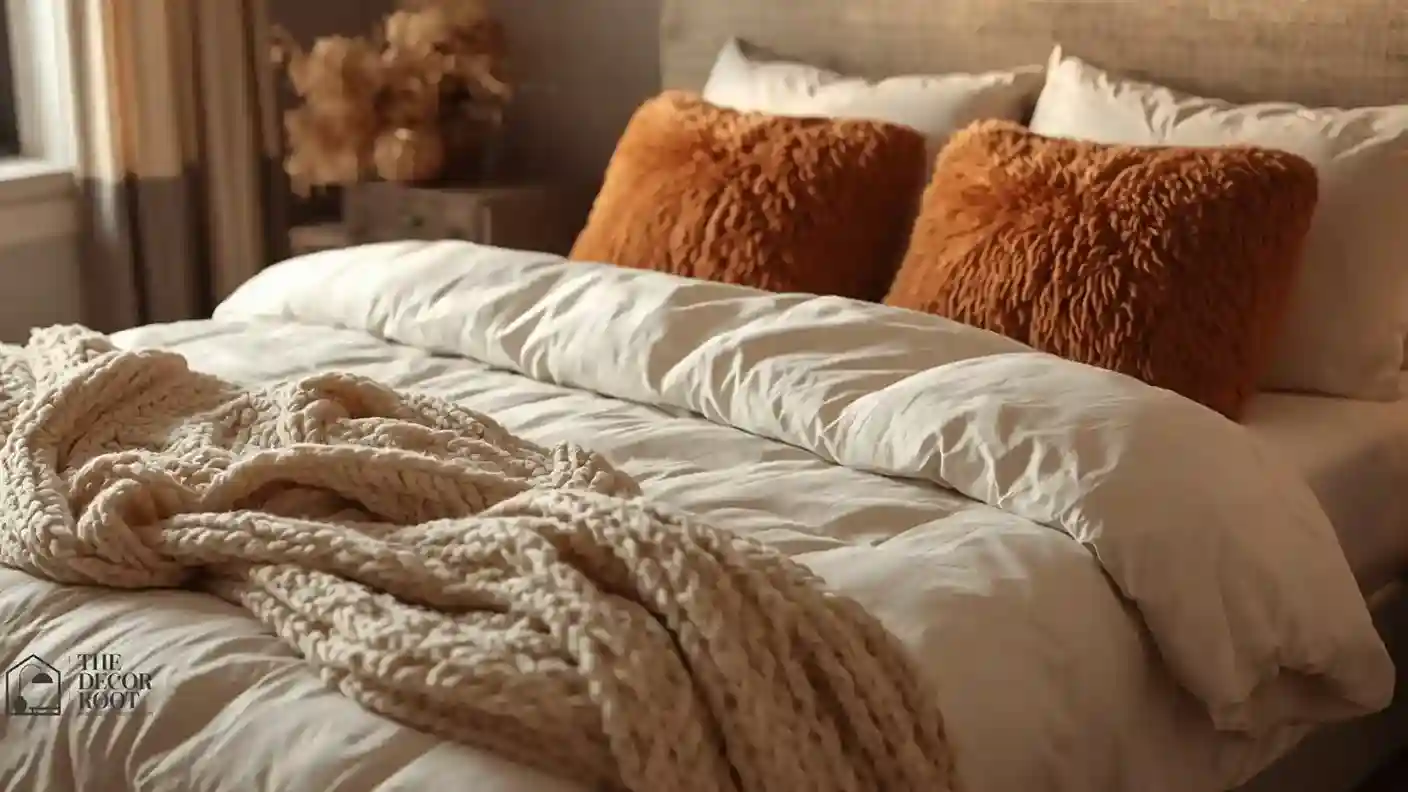
A folded or draped chunky knit throw at the foot of the bed is the single most-styled layered bedding element on Pinterest, and it earns that popularity honestly; it’s genuinely useful as a grab-and-go layer for reading in bed or an extra pull-up layer in the middle of the night, and it adds real textural contrast against a smoother duvet cover. Choose a cream, oatmeal, or rust-toned chunky knit so it stands out as its own layer rather than blending into the duvet beneath it.
8. Layer in a Faux Shearling or Sherpa Throw
A faux shearling or sherpa throw adds a completely different texture than a knit throw: dense, plush, and genuinely warm rather than primarily decorative. Layering both a knit and a sherpa throw at the foot of the bed (rather than picking just one) gives you two distinct warmth options depending on how cold the actual night turns out to be. Drape one loosely rather than folding it precisely for a more lived-in, cozy look rather than a stiffly styled one. Layered bedding is the foundation of a cozy fall bedroom. These cozy fall bedroom ideas show how the bedding layers connect to the wider bedroom styling of deeper accent colours, heavier curtains, and warmer lighting to create a bedroom that feels completely transformed for autumn rather than simply having an extra blanket on the end of the same summer bed.
9. Add a Weighted Knit Throw for Extra Coziness
For genuinely cold nights, a weighted knit throw blanket combines the visual texture of a chunky knit with the actual gentle pressure of a weighted blanket, which many people find genuinely helps them fall asleep faster in addition to the warmth. Fold it at the foot of the bed as a decorative layer during the day and pull it up as your outermost layer at night. This is a slightly bigger investment than a standard throw, but it does double duty as both styling and function in a way most throws don’t.
EDITOR’S PICK
🛒Weighted Knit Throw Blanket
A weighted knit throw adds chunky texture and gentle pressure that can aid sleep, folding as decor by day and as an outer layer at night, a dual-function investment beyond a standard throw.
(paid link)
10. Mix at Least Three Distinct Textures
The visual difference between a bed that looks “styled” and one that looks “piled with blankets” almost always comes down to texture variety. Aim for at least three distinct textures across your layers: smooth flannel or cotton, a nubby chunky knit, and a plush faux fur or sherpa rather than three blankets that all feel roughly the same. This is the same principle interior stylists use for throw pillows on a sofa, applied to a bed: contrast, not repetition, is what reads as intentional.
11. Add Two Pillow Layers: Sleeping Pillows and Euro Shams
A cold-weather bed benefits from a genuine two-tier pillow arrangement: your standard sleeping pillows in front, and larger, firmer Euro shams stacked behind them against the headboard. Beyond the visual fullness this creates, the extra pillow layer adds a small but real insulating buffer at the head of the bed, where cold air often settles first in a drafty room. Choose Euro shams in a texture that contrasts with your pillowcases a knit or velvet sham against flannel pillowcases, for example to keep the layering principle consistent all the way to the top of the bed.
12. Add a Lumbar Pillow in a Warm Accent Texture
A single lumbar pillow, long and narrow, placed in front of your other pillows adds a finishing textural accent and a pop of warm color without overcrowding the bed. Faux fur, corduroy, and boucle are the strongest choices for a fall bedding scheme specifically because they contrast well against the smoother flannel and cotton layers beneath them. Keep it to one or two lumbar pillows maximum; more than that starts to compete with the rest of your carefully layered textures rather than accenting them.
13. Choose a Warm, Muted Color Palette Across All Layers
Layered bedding only reads as cohesive if the colors are chosen together rather than piece by piece. Stick to a warm, muted palette terracotta, rust, oatmeal, deep cream, warm brown across your sheets, duvet cover, and throws, and let texture (not color contrast) do most of the visual work. This is the difference between a bed that looks like a curated fall refresh and one that looks like mismatched blankets accumulated over several winters.
14. Upgrade to a Down-Alternative Insert for Better Warmth-to-Weight
If your current duvet insert feels heavy but isn’t actually warm, the fill type is likely the problem, not the amount of fill. A quality down-alternative duvet insert traps significantly more warm air per ounce than a cheaper polyester-fill option, which means you get real warmth without the heavy, pinning-you-down feeling of an overstuffed low-quality insert. This is worth prioritizing over adding yet another throw blanket if your current setup already feels bulky but still cold.
EDITOR’S PICK
🛒Down-Alternative Duvet Insert, Queen
A down alternative duvet insert offers more warmth per ounce than cheap polyester, solving the heavy but cold problem without the bulky feeling, and is a better upgrade than adding another throw.
(paid link)
15. Add a Bed Runner for a Finished, Layered Look
A bed runner, a narrow textile piece laid across the foot of the bed, under or over your folded throws, is a small addition that makes the whole layered arrangement look intentional rather than accumulated. Choose a textured or patterned runner in a tone from your existing palette, and use it as the anchor point you build your folded throws and blankets around, rather than an afterthought added last.
16. Layer a Vintage or Patterned Quilt Over a Solid Duvet
If your duvet cover is a solid warm neutral, layering a vintage-style or subtly patterned quilt over the top third of the bed adds visual interest without overwhelming the room, and it introduces the kind of collected-over-time look that reads as considered rather than matched-set generic. Fold it back diagonally or drape it loosely rather than laying it perfectly flat, which keeps the bed looking lived-in rather than staged for a catalog photo.
17. Choose Warm Metal or Wood Bed Frame Accents
Bedding isn’t the only thing that reads warm or cold; the bed frame and any visible hardware matter too. A warm wood frame or brass/bronze bed frame details pair naturally with a layered fall bedding scheme, while cool chrome or stark white frames can undercut the cozy effect no matter how well the textiles are layered. If replacing the frame isn’t practical, warm-toned bedside lamps and a wood bench at the foot of the bed can bridge the gap.
18. Add Warm Ambient Lighting Near the Bed
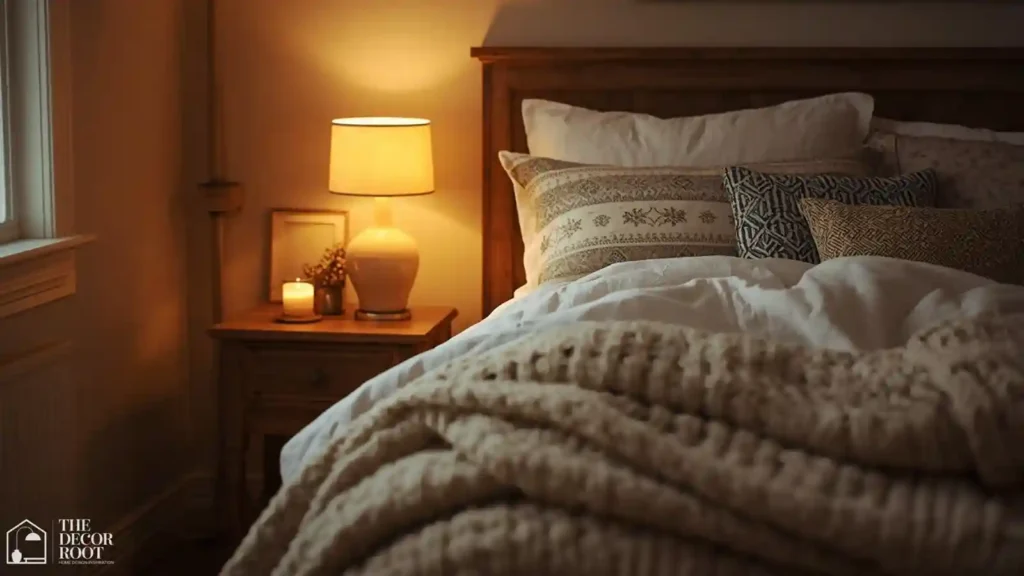
Layered bedding is as much about how the room feels as how it looks, and warm, low bedside lighting (2700K bulbs, a fabric-shaded lamp) reinforces the cozy effect your textile layers are creating. A cool white overhead light undercuts even the best-styled bed, making the room feel clinical despite the warm textures on it. Keep bedside lamps warm-toned and dimmable so the room can shift from bright enough to read by to low enough to sleep in without switching fixtures.
19. Finish With a Faux-Fur Accent Pillow or Throw
The final texture layer is often the one that gets the most attention, and a faux-fur lumbar pillow placed at the front of your pillow arrangement adds a genuinely tactile, plush finishing note that photographs beautifully and feels as good as it looks. Keep it to one accent piece rather than several, so it reads as a deliberate final layer rather than another item competing with the rest of your palette.
EDITOR’S PICK
🛒Faux-Fur Lumbar Pillow
A single faux fur lumbar pillow at the front of your arrangement adds a final plush, tactile layer that photographs beautifully and feels deliberate, not cluttered.
(paid link)
20. Rotate Your Top Layer Seasonally, Not Just for Photos
The whole point of layered bedding is flexibility, so build the system with rotation in mind from the start: a lighter quilt for early fall evenings that swaps for a heavier throw as it gets genuinely cold, without touching the base sheet and duvet layers underneath. Store your off-season top layers in a labeled bin under the bed so swapping takes two minutes rather than becoming a full bedding overhaul every time the temperature shifts. This is what makes a layered bed last functionally through the whole season instead of just looking good for one styled photo in early October.
Pair this bedding refresh with our companion guide, 24 Flannel and Textured Bedroom Ideas for Fall, for the rest-of-room styling that matches this same warm, layered approach.
Quick Action Plan
- Start with the two layers that do the most thermal work: swap to flannel sheets (Idea 4) and check that your duvet insert’s fill weight actually matches fall temperatures (Idea 3 and Idea 14).
- This weekend, add texture variety with a chunky knit throw and one contrasting pillow layer (Ideas 7 and 12), aiming for at least three distinct textures across the whole bed (Idea 10).
- Once the base is solid, finish with the details: a bed runner, warm lighting, and a rotation plan for your top layer, so the whole system holds up through the entire season, not just one cold weekend.
Frequently Asked Questions
Conclusion
Layered bedding isn’t about piling on more blankets until you stop feeling cold; it’s about building a flexible system where each layer does a specific job, so you can adjust warmth through the night instead of waking up either freezing or overheated. Start with the sheets, build up from there, and let the textures do the rest.
💾 Save this to your Pinterest bedroom board, so you have this layering order ready when the temperature drops.