25 Fall Fireplace Mantel Ideas for Cozy Warmth
Fall Fireplace Mantel Ideas for Warmth. A mantel has one job that no other surface in the house really shares: it has to look good whether the fire is lit or not, in daylight and in lamp light, for roughly four straight months. That’s a lot of pressure for one shelf. The mantels that pull it off consistently share a few things in common: layered height, a mix of warm materials, and enough restraint that the space doesn’t feel like a craft display. Fireplace mantel ideas for early fall warmth are some of the most seasonally specific home decorating ideas available; the first weeks of autumn are when a fireplace transforms from an architectural feature to the room’s most important design element, and the mantel styling that marks that transition is the moment when a living room earns its reputation as genuinely cosy.
The Real Reason This Works
A mantel is essentially a long, narrow shelf, which means the biggest styling challenge is almost always the same one: filling that width without creating a flat, evenly-spaced row of identical-height objects. The mantels that actually look designed use an uneven rhythm: one large anchor piece off to one side (usually a mirror or artwork leaned against the wall), then groups of varying heights cascading away from it, rather than a symmetrical lineup. A styled mantel and a properly draped throw blanket are the two elements that turn a living room with a fireplace into an autumn room that people genuinely want to sit in. These fireside living room styling ideas show how to position the throw on the nearest sofa or armchair so it reads as an invitation to sit by the fire rather than a decorating prop placed in proximity to one.
Mantel as Focal Point
A fireplace mantel is the living room’s primary focal point; browse all our living room decorating ideas to see how mantel styling connects with candle arrangements, Candles are the most important element in a fall mantel display, these mantel candle styling ideas show how to combine tapers of varying heights, pillar candles of different diameters, and clustered votives to create a mantel composition that produces as much warmth and light as the fire below it, and how to position the candles so the arrangement reads as composed from every angle of the room. throw blankets, wool rugs, and the wider autumn color palette, making the fire the starting point of every other design decision.
1. Start With a Large Leaning Mirror or Piece of Art
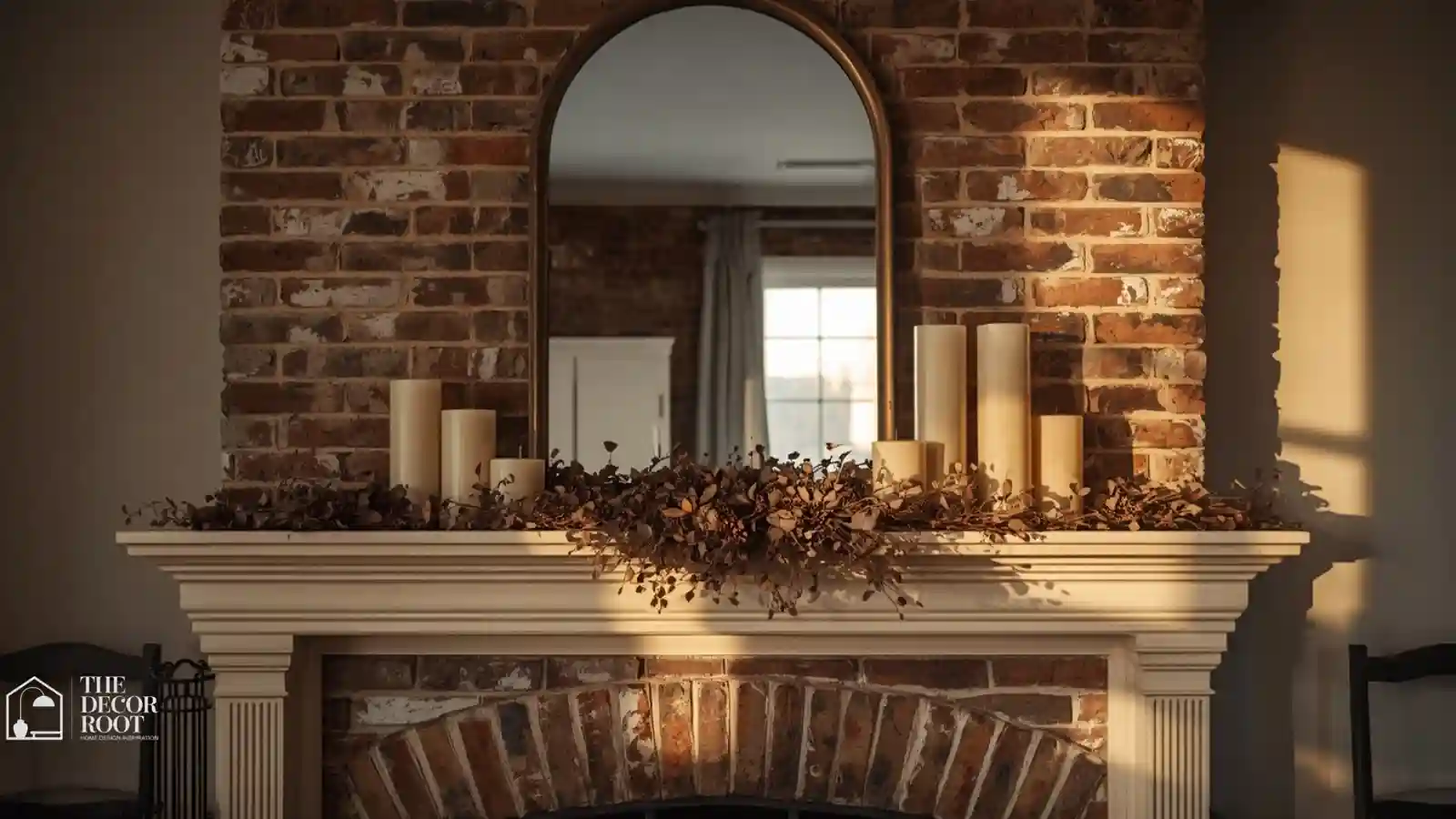
Before adding a single seasonal item, lean a large mirror or framed art piece against the wall above the mantel, angled slightly rather than perfectly flush. This becomes your anchor the biggest, tallest element the rest of your styling builds around and leaning it rather than hanging it flush against the wall gives the whole mantel a more relaxed, collected-over-time feeling instead of a stiff, showroom look. An arched mirror works particularly well for fall, since the rounded top softens the straight lines of the mantel and fireplace surround beneath it, and the reflective surface bounces extra light around the room during shorter fall days.
2. Push Your Anchor Piece Off-Center, Not Centered
Resist placing your large mirror or art dead center on the mantel; instead, position it about two-thirds of the way to one side, leaving the shorter side of the mantel for a taller, narrower stack of smaller objects. This off-center anchor is one of the most reliable tricks for making a mantel look professionally styled rather than symmetrically decorated, because true visual balance rarely comes from literal symmetry. The shorter side then becomes your build-up zone for candles, vases, and stacked objects, creating the asymmetrical, cascading height rhythm that makes a mantel interesting to look at instead of just evenly filled.
3. Layer Pillar Candles in Three Different Heights
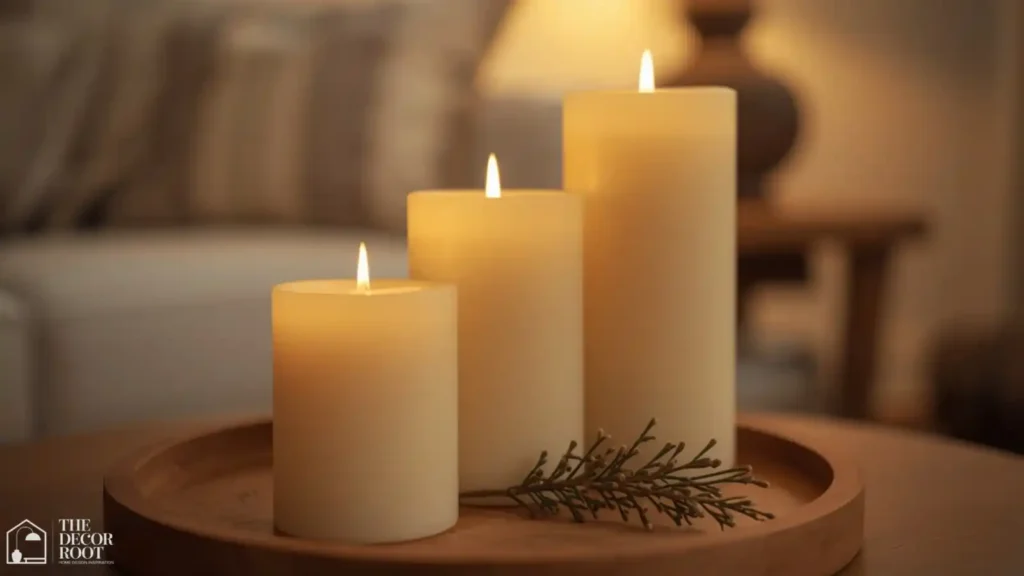
On the shorter side of your mantel, opposite your anchor mirror, group three pillar candles in noticeably different heights tall, medium, short- rather than matching sizes. A set of varying-height pillar candles in warm ivory or taupe gives you an instant height gradient that works whether the candles are lit or not, which matters since many people don’t burn mantel candles regularly. Cluster them close together rather than spacing them evenly across the shelf; tight clustering reads as an intentional grouping, while evenly spaced candles tend to look more like a row of leftover birthday candles than a styled vignette.
EDITOR’S PICK
🛒Pillar Candle Set, Varying Heights, Warm Ivory
A tight cluster of tall, medium, and short ivory or taupe pillar candles on the shorter mantel side creates a height gradient that reads as intentional whether lit or not.
(paid link)
4. Add a Stack of Books Beneath a Shorter Candle
Beneath your shortest pillar candle, add a small stack of two or three books to bring that object’s height back up into a similar range as its neighbors, while also adding another texture and material into the mix. This trick of elevating a shorter object on a book stack is one of the most common tools stylists use across every kind of surface, not just mantels, because it lets you use pieces you already own to solve height problems without buying new decor. Choose books with quieter, more muted covers so they support the candle rather than pulling attention away from it.
5. Bring in Warmth With a Loose Garland Along the Mantel Edge
A loose, slightly draped garland of dried eucalyptus, magnolia leaves, or a simple mixed-greenery strand laid along the front edge of the mantel adds a soft, organic line that ties the whole styled area together underneath the taller objects sitting on top. Let it drape unevenly rather than pinning it perfectly straight, with a slight dip in the middle and the ends trailing gently past the mantel’s edges. This is one of the easiest ways to make a mantel feel more finished without adding height, since its job is horizontal softness rather than vertical impact, balancing out all the taller pieces above it.
6. Use a Small Vase With a Single Dried Branch for Height Variation
Instead of another candle or another book stack, add a tall, narrow vase holding a single dried branch or a few stems of dried grass on the side with your anchor mirror, giving that side just enough additional height to feel intentional without competing with the mirror itself. A single branch or stem reads as more sculptural and modern than a full, dense floral arrangement, and it takes up very little visual weight, which keeps it from distracting from your main anchor piece. Choose a vase in a matte ceramic or textured glass finish that complements the warm tones already established elsewhere on the mantel.
7. Add a Textural Garland With Wood Beads or Felted Details
For a slightly more tactile, less “fresh floral” look, a garland made from wood beads, felt balls, or dried natural fibers offers texture without the upkeep of fresh greenery, and it can be reused every year without wilting or drying out further. A wood bead or felt garland in warm neutral tones drapes along the mantel edge the same way a floral garland would, but adds a different textural note rounded, tactile, slightly rustic that pairs particularly well against the smoother surfaces of candles, glass vases, and a mirror.
EDITOR’S PICK
🛒Wood Bead Or Felted Garland, Neutral Tones
A warm neutral wood bead or felt garland offers reusable, tactile texture along the mantel, pairing rounded rustic warmth with smoother candles, glass, and mirrors.
(paid link)
8. Group Small Objects in Odd-Numbered Clusters
Wherever you’re placing smaller decorative objects mini pumpkins, small ceramic pieces, little dishes group them in clusters of three rather than pairs or single scattered pieces. This rule shows up constantly in professional styling for a reason: odd numbers read as more visually interesting because the eye can’t easily divide them into a simple, static pattern the way it can with an even number. Keep each cluster tight, with pieces close enough to touch or nearly touch, rather than spaced evenly apart, which is what actually creates the “grouped” effect rather than just several small items placed in the same general area.
9. Balance Warm Tones With One Cooler Neutral
An entirely warm-toned mantel all cream, rust, and wood- can start to feel slightly flat without at least one cooler element breaking it up, whether that’s a charcoal-toned vase, a piece of black metal candle hardware, or a gray stone object. This single cooler note acts almost like a punctuation mark, giving the eye a place to land and making the surrounding warm tones read as richer by contrast. You don’t need much of it; one object is usually enough, but skipping this step entirely is a common reason an otherwise well-composed mantel can still feel slightly one-note in photos.
10. Use a Runner or Scarf Along the Mantel Shelf
A slim table runner or fabric scarf, laid along the length of the mantel beneath your other objects, adds a soft textural base layer the same way a runner works on a dining table or a coffee table. This is a particularly good trick if your mantel material is a hard, cool surface like stone or painted MDF, since the fabric softens the base of the whole vignette. Let a few inches hang past each end of the mantel for a slightly looser, more finished look, and choose a fabric in linen or waffle weave that echoes textures used elsewhere in the room, like your throw blankets or pillows.
11. Lean a Second, Smaller Mirror Behind Your Candle Cluster
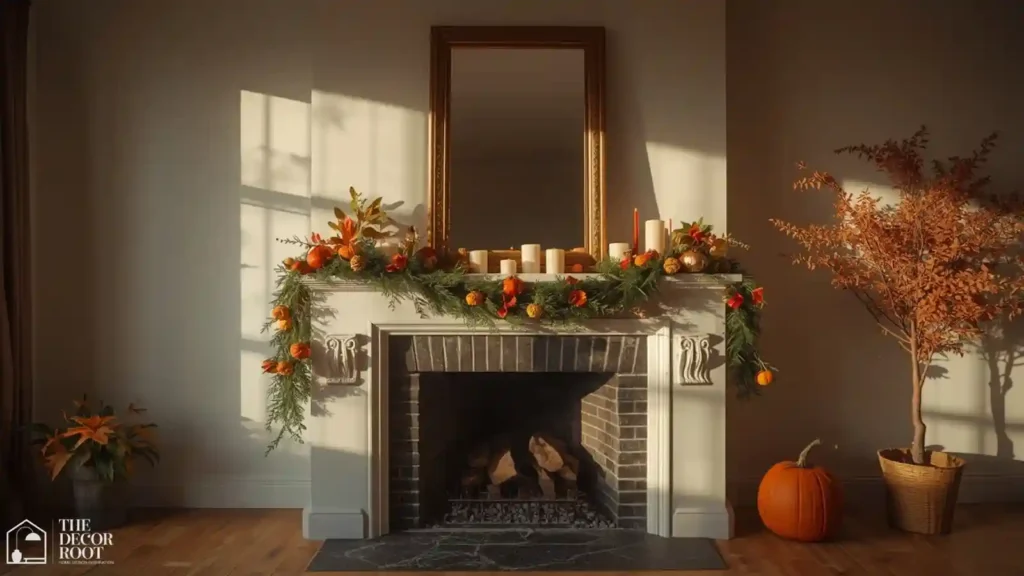
On the candle side of the mantel, lean a small, simply framed mirror behind your pillar candle cluster to add reflected light and a subtle sense of depth without competing with your main anchor mirror on the other side. A small round or arched mirror in a slim brass or black frame works well here, since it echoes the shape of your main mirror in miniature, creating a subtle visual rhyme between the two sides of the mantel without making them feel identical or overly matched.
EDITOR’S PICK
🛒Small Leaning Mirror, Brass Or Black Frame
A small round or arched mirror in a slim brass or black frame, leaned behind the pillar candles, adds depth and reflected light while subtly echoing the main mirror on the opposite mantel side without matching it exactly.
(paid link)
12. Add a Ceramic Pumpkin or Gourd (If You Want a Literal Nod to Fall)
If you do want a more literal seasonal touch, a single ceramic or stoneware pumpkin rather than a plastic or overly bright orange one fits into a warm neutral mantel palette without looking like it belongs in a completely different decor style than everything around it. Choose one in a muted cream, sage, or terracotta glaze rather than classic orange, and place it as part of your smaller object cluster rather than as a standalone centerpiece. One well-chosen ceramic pumpkin does more for a mantel’s seasonal feeling than five plastic ones scattered evenly across the shelf.
13. Vary Candle Holder Materials Across the Cluster
If you’re using multiple candles, don’t put them all in identical holders; mix a glass hurricane, a brass candlestick, and a plain pillar sitting directly on the mantel surface, so the materials themselves add variation even before you consider flame or wax color. This small choice keeps a candle cluster from looking like a matched set bought in one trip, which, much like the throw blanket layering principle, tends to read as more curated and collected over time. Keep the overall metal and glass tones within the same warm family so the variation feels intentional rather than mismatched.
14. Add Height With a Tall, Narrow Lantern
A tall glass lantern, whether it holds a real pillar candle or a flameless LED version, brings genuine height to a mantel cluster and works particularly well as a stand-in anchor on the candle side if you want more height there without adding another mirror. Its glass sides also catch and reflect the warm light of your other candles nearby, adding a subtle glow effect even when the lantern itself isn’t lit. Place it toward the back of your cluster rather than the front, letting shorter candles and small objects sit in front of it so its height reads as a backdrop rather than blocking the smaller pieces behind it.
15. Bring in a Woven or Rattan Lantern for Texture
For a softer, more textural alternative to glass, a woven rattan or seagrass lantern brings warmth and natural texture to the mantel while still functioning as a height element. A woven rattan lantern pairs particularly well against the smoother, cooler surfaces of a mirror and glass candle holders, giving the whole cluster a wider range of textures to work with. This is a good substitute for a second glass lantern if your mantel is already glass-heavy and could use a warmer, more tactile material to balance things out.
EDITOR’S PICK
🛒Woven Rattan Lantern, Natural Finish
A woven rattan lantern adds warmth and natural texture to glass-heavy mantels, offering height and a balanced contrast against smooth mirror and candle surfaces.
(paid link)
16. Use Taper Candles in Mismatched Holders for Height Variety
A pair of tall taper candles in individual, slightly mismatched candlestick holders adds thin, elegant height that contrasts nicely against the bulkier forms of pillar candles and vases elsewhere on the mantel. Choose holders in a similar metal tone but different exact shapes; this small variation keeps the pair from looking like a boxed matching set, which again supports that “collected over time” feeling that makes styled surfaces look less staged. Taper candles also tend to read as slightly more formal than pillars, so they’re a good choice if you want your mantel to feel a touch more elevated without a full styling overhaul.
17. Add a Framed Piece of Art Leaning in Front of Your Mirror
For extra depth on your anchor side, lean a smaller framed piece of art partially in front of your large mirror, overlapping the two slightly. This layering trick with art in front of a mirror is a favorite among professional stylists because it adds real depth and dimension in a way that a single flat mirror alone can’t achieve, and it also means you’re not relying on one single piece to carry the entire anchor role. Choose art with warm, muted tones or a simple botanical print so it complements rather than competes with the reflective surface behind it.
18. Add a Small Stack of Linens or Napkins as a Textural Base
Similar to the coffee table technique, a small folded stack of linen napkins or a mini textile piece tucked near your candle cluster adds a soft, tactile element among what’s often an otherwise all-hard-surface vignette of glass, ceramic, and metal. This is a small, easy-to-miss detail, but it’s one of the things that separates mantels that feel fully considered from ones that feel like they’re missing a layer, even when the objects themselves are all individually well-chosen.
19. Add a Delicate Wood Bead Garland Draped With the Greenery
If you’re already using a fresh or dried greenery garland along the mantel edge, layer a slimmer wood bead garland on top of or alongside it rather than choosing one or the other. A slim wood bead garland draped with a slightly looser dip than the greenery creates two overlapping horizontal lines instead of one, adding subtle depth to the base of the mantel the same way layering does for a throw blanket arrangement: more than one texture, arranged with intentional overlap rather than each element existing in its own separate space.
EDITOR’S PICK
🛒Wood Bead Garland, Natural Tones
Layering a slimmer wood bead garland with a looser dip alongside a greenery garland adds depth through intentional overlap, similar to how layered throw blankets create a more finished, textured look.
(paid link)
20. Keep the Fireplace Opening Itself Simple
Whatever you do on the mantel shelf, resist over-styling the actual fireplace opening beneath it if you’re not using it; a few oversized logs stacked neatly, or a single tall candle inside a hurricane, is usually enough. An overly decorated fireplace opening competes visually with everything you’ve carefully arranged above it on the mantel, and it can also look impractical if you do want to use the fireplace once the weather turns colder. Simple and functional beats elaborate here; the mantel shelf itself is where the real styling should happen.
21. Use a Single Bold Color Accent Sparingly
Choose one accent color a deep rust vase, a burgundy candle, a single piece of art with a bolder tone and use it in exactly one place on the mantel, rather than repeating that color three or four times across different objects. A single, well-placed bold note reads as a deliberate design choice, while the same color repeated everywhere starts to feel more like a themed display than a naturally styled space. This is especially useful if you’re worried your mostly-neutral mantel needs “more fall” often; one good accent piece solves that feeling without requiring a full palette overhaul. Fall mantel styling is only as effective as the fireplace architecture it sits on; these fireplace mantel design and proportion ideas show how the depth, width, and material of a mantel shelf determine how much object weight the display can carry before it looks overloaded, and how a well-proportioned fireplace surround makes every season’s styling look effortless.
22. Vary the Depth, Not Just the Height, of Your Objects
Beyond height, pay attention to how far forward or back each object sits on the mantel shelf. Placing some pieces closer to the front edge, and others tucked further back against the wall creates a sense of depth that a perfectly aligned front row of objects can’t achieve. This is a subtler trick than height variation, but it matters just as much for photographs, where depth reads as dimension while a flat front row reads as, well, flat. Let your tallest, boldest pieces sit slightly further back so shorter items can sit in front of them without being hidden.
23. Add One More Dried Floral Stem for a Final Layer of Softness
Once your main structure is in place, tuck one additional small stem of dried floral or grass into an empty gap somewhere in your arrangement, often right at the base of your candle cluster or beside your smaller mirror. A bundle of mixed dried floral stems gives you extra material to fill these small gaps without needing an entirely new vase, since a single stem tucked in among your existing objects softens hard edges and fills negative space that might otherwise look unintentionally empty rather than intentionally minimal.
EDITOR’S PICK
🛒Dried Floral Stems Bundle, Mixed Neutral Tones
A single dried stem tucked into an empty gap near candles or a mirror softens edges and fills space, turning unintentional emptiness into intentional minimalism.
(paid link)
24. Step Back and Check the Mantel From Across the Room
Just like with a coffee table, the true test of a mantel arrangement isn’t how it looks up close; it’s how it reads from across the room, since that’s the distance most people will actually view it from. Step back to where you’d normally sit on the sofa and look at the overall silhouette: does the height variation read clearly from here, does one side feel noticeably heavier than the other, is there a gap that looks unintentional rather than restful? Adjust from this distance rather than fine-tuning up close, since small adjustments that look meaningful up close often disappear entirely from normal viewing distance.
25. Refresh the Candles and Garland Every Few Weeks
A mantel gets more visual wear than almost any other surface in the house simply because it’s a focal point everyone looks at constantly, so candles burn down unevenly and dried garland can start to shed or flatten after a few weeks. Plan on a quick refresh, replacing a burned-down candle, fluffing or re-draping the garland, and dusting the mirror roughly every two to three weeks through the season, rather than styling it once in September and leaving it completely untouched through November. This small maintenance habit is what keeps a mantel looking intentionally styled all season rather than gradually drifting into neglect.
For more early fall styling built around the same layered, textural approach, see 22 Fall Throw Blanket Layering Ideas That Look Designer and 21 Fall Candle Arrangement Ideas for Living Rooms, both of which use the same height-and-cluster principles applied here to the mantel.
Quick Action Plan
- Lean a large mirror off-center on one side of the mantel, cluster three varying-height pillar candles on the opposite side, and lay a loose garland along the front edge beneath everything.
- That three-part structure– anchor, cluster, base layer- covers the core of every idea on this list, and it’s achievable in under thirty minutes using pieces you likely already own or a single trip to buy candles and a garland strand.
FAQs
Conclusion
A great mantel isn’t about how much you put on it; it’s about an off-center anchor, real height variation, and enough texture to make the whole shelf feel collected rather than assembled in one trip. Build that structure once, and you can restyle the details every season without starting from scratch.
💾 Save this to your Fall Mantel Ideas board for whenever you’re ready to restyle.