21 Fall Candle Arrangement Ideas for Living Rooms
Fall Candle Arrangement Ideas. A single candle sitting alone on a side table doesn’t do much for a room. Group three or four together with a little thought behind their height and placement, and suddenly you’ve got a genuine focal point that makes the whole space feel warmer, even before anything’s lit. Candles are one of the most affordable ways to shift a living room’s mood for fall, but most people either scatter them one at a time across every surface or cluster them without any real plan for height and spacing. Fall candle arrangement ideas for living rooms are one of the most multi-sensory home decorating ideas of the season. A well-considered candle arrangement does more than look beautiful; it changes the quality of light in the room, introduces the scent of autumn, and creates a sense of occasion that makes any ordinary autumn evening feel like something worth marking.
This post contains affiliate links. As an Amazon Associate, I earn from qualifying purchases. If you buy through these links, I may earn a small commission at no extra cost to you.
Where to Start Mentally
Before choosing a single candle, decide which surfaces in your living room actually deserve a candle arrangement, rather than defaulting to “wherever there’s space.” A coffee table, a mantel, a console table, and maybe one bookshelf are usually enough; spreading candles across every available surface in the room dilutes the impact of each grouping. A candle arrangement on a bookshelf is one of the most effective autumn living room styling moves. These autumn living room display ideas show how positioning candles within a bookshelf composition adds warmth, light, and depth to a flat arrangement of books and objects, and how the amber glow against dark spines creates the atmospheric quality that defines a fall living room.
Set a Candlelit Autumn Scene
Candles are the living room’s most atmospheric seasonal tool; browse all our living room decorating ideas to see how candle arrangements connect to mantel styling, A candle arrangement and a fall mantel are natural partners, these candle and mantel focal point ideas show how tapers, pillars, and clusters of votives work in relation to the botanical and harvest objects on a mantel so the candle light enhances the display and the display frames the candles, creating a focal point that is both beautiful to look at and genuinely warm to be near. Coffee table composition, throw blankets, and the wider autumn color palette for a living room that engages every sense.
1. Choose One Surface as Your Primary Candle Moment
Pick the surface in your living room that gets the most visual attention usually the coffee table or the mantel and commit to your largest, most elaborate candle cluster there, rather than spreading your best candles thin across several spots. This primary cluster becomes the room’s main “candle statement,” and everything else you add elsewhere in the room should feel like a smaller echo of it rather than a competing focal point. Deciding this upfront saves you from the common mistake of buying candles one at a time with no real plan for where the bulk of the visual impact should land.
2. Group Candles in Odd Numbers of Three or Five
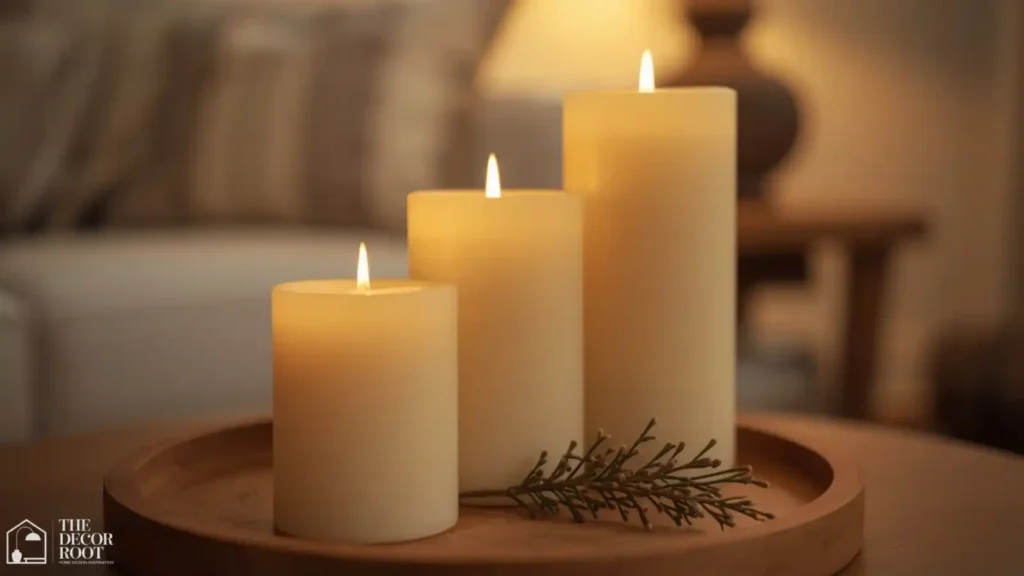
Whatever surface you’re styling, group your candles in clusters of three or five rather than pairs or scattered singles. This odd-number principle applies to candle arranging the same way it applies to vases or decorative objects elsewhere in the home. An odd-numbered cluster reads as a considered grouping rather than a random collection, and it’s genuinely one of the fastest visual upgrades available, since it costs nothing beyond rearranging candles you may already own into a tighter, odd-numbered group instead of a loose, even-numbered scatter.
3. Build Your Main Cluster With a Height Gradient
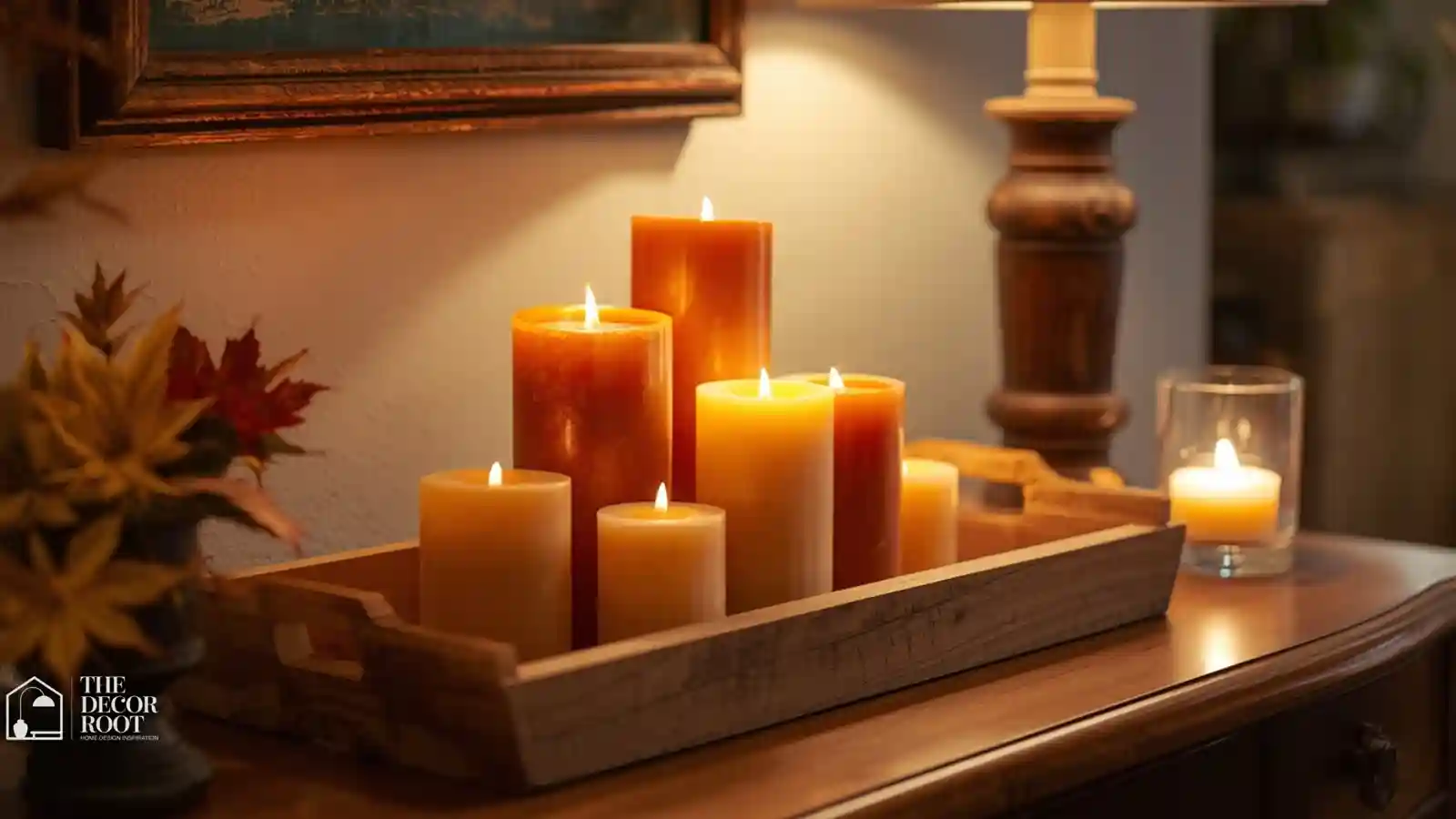
Within each candle cluster, use three distinct heights: a tall pillar, a medium pillar, and a short votive or tea light arranged so the height steps down gradually from one side to the other rather than placing the tallest candle in the center. A pillar candle trio in graduated heights makes this easy to achieve in one purchase, and the stepped height creates a small visual “staircase” effect that reads as intentional from across the room, which a row of same-height candles simply can’t replicate no matter how nicely they’re spaced.
EDITOR’S PICK
🛒Pillar Candle Trio, Graduated Heights, Warm Neutral
Arrange a tall, medium, and short candle in a gradual step down within each cluster for a visual staircase effect that reads as intentional, unlike a row of same-height candles.
(paid link)
4. Contain Your Cluster on a Tray, Not Directly on the Table
Always place a grouped candle cluster on a tray or plate rather than directly on the bare table surface. This single step does more to make a candle grouping look styled than almost anything else on this list, since the tray visually “frames” the cluster and also catches dripped wax, which matters more than people expect once candles are actually burned regularly. A wood or metal tray in a warm tone works well for most fall palettes, and it also makes the whole cluster easier to move as one unit when you’re cleaning or restyling the table around it.
5. Mix Candle Materials Within One Cluster
Instead of using three candles in identical glass jars, mix materials within a single cluster: a glass jar candle, an unwrapped wax pillar sitting directly on the tray, and a candle in a ceramic vessel, so the textures themselves add variation the way mixed candle holders do on a mantel. This small choice keeps a grouped candle moment from reading as a matching set bought in a single trip, and it gives your eye more to look at even before any candle is actually lit, which matters given how much of the day these candles will spend unlit on a side table.
6. Add a Small Dried Botanical Sprig Tucked Into the Cluster
A single small sprig of dried greenery or a few dried berries, tucked in among the base of your candle cluster, softens the hard edges of the candles and tray with a touch of organic texture, similar to how a small floral stem softens a mantel arrangement. Keep it genuinely small and tucked low; this is meant to be a subtle textural detail rather than a competing focal point, so a single three-inch sprig does more good here than a full bundle that starts overshadowing the candles themselves.
7. Use a Glass Hurricane for Your Tallest Candle
For the tallest candle in your primary cluster, a glass hurricane vessel protects the flame, adds a touch of height and shine that a bare pillar candle doesn’t have, and creates a subtle glow effect on the glass itself once lit in the evening. A glass hurricane candle holder in a slightly textured or ribbed glass style also catches and reflects lamp light even when unlit, which keeps your tallest cluster piece visually interesting throughout the day, not just after dark.
EDITOR’S PICK
🛒Glass Hurricane Candle Holder, Textured Glass
A textured glass hurricane adds height, flame protection, and day-long visual interest to your tallest candle cluster piece, glowing softly when lit and catching light when not.
(paid link)
8. Choose a Cohesive Scent Family Across the Room
If you’re using scented candles, pick two or three complementary scents from the same general family warm woods, spice, or amber rather than a completely different scent on every surface, which can create a slightly chaotic, competing effect once several candles are lit at once in the same open room. A cohesive scent family, even across different candle brands and containers, makes the whole room feel like one considered atmosphere rather than several separate impulse purchases layered on top of each other. Autumn scent is as important to a seasonal home as autumn color; these autumn scent and atmosphere ideas show how the candle fragrances that warm a living room connect to the diffusers and linen sprays that transform a bathroom, and how designing the scent journey from the entrance to the most private room in the home creates the most complete seasonal atmosphere available.
9. Add a Small Bowl of Cinnamon Sticks Near (Not On) Your Cluster
Near your main candle cluster, not mixed directly into it, a small bowl of cinnamon sticks or star anise adds a complementary natural scent and texture without needing to be lit itself. This is a nice option for rooms where you don’t want to burn candles constantly but still want that warm, spiced feeling present in the styling. Keep it as its own small grouping beside the candle cluster rather than blended in, so each element the candles and the bowl reads as its own intentional detail rather than a jumble of unrelated objects.
10. Layer a Second, Smaller Cluster Elsewhere in the Room
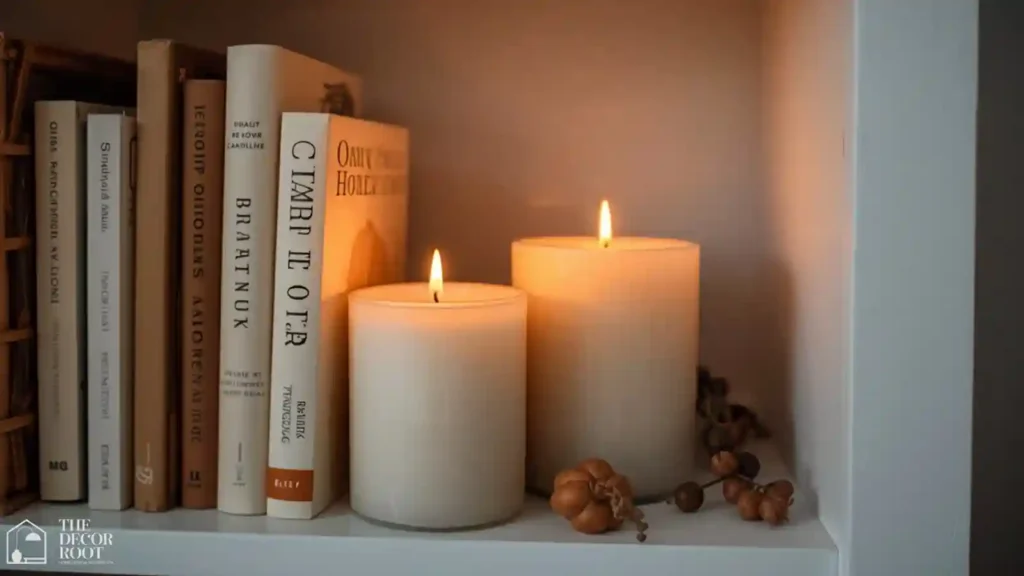
Once your primary cluster is set, add one smaller secondary cluster elsewhere in the room a bookshelf, a side table, or a windowsill using just two candles in different heights rather than a full three-piece grouping. This echoes your main cluster’s height-variation principle on a smaller scale without competing with it for attention, giving the room a sense of consistency as your eye moves from one candle grouping to another rather than one big moment surrounded by isolated single candles scattered elsewhere.
11. Use a Wood Tray as a Base for Every Grouped Cluster
Consistency across your candle clusters using the same tray material or a coordinated set of trays throughout the room helps tie multiple candle groupings together into one cohesive styling choice rather than several unrelated decisions. A round or rectangular wood tray works well across most surfaces and price points, and buying two or three of the same material means your primary and secondary clusters visually relate to each other even from across the room, reinforcing the sense that the whole space was styled with one plan in mind.
EDITOR’S PICK
🛒Wood Candle Tray, Round Or Rectangular
Coordinated wood trays across candle clusters create visual unity, tying primary and secondary groupings together into one cohesive room-wide styling plan.
(paid link)
12. Position Your Primary Cluster Off-Center on the Coffee Table
If your primary cluster lives on the coffee table, place it off to one side rather than dead center; this leaves room for the other coffee table styling elements covered elsewhere (books, a vase, a small bowl) without everything competing for the same central spot. An off-center candle cluster also naturally creates the same kind of asymmetrical balance that works well on a mantel, giving the coffee table a more considered, less rigidly centered feel overall.
13. Vary Candle Color Subtly Within a Warm Palette
Rather than using identical ivory candles throughout a cluster, introduce subtle color variation: one candle in warm cream, one in a soft amber or honey tone, one in a muted terracotta while staying within the same overall warm family. This creates gentle depth within the cluster itself, since even unlit, slightly varied wax tones catch light differently and avoid the flat, uniform look of an all-identical set. Keep the variation subtle rather than using starkly different colors, which can start to look more like a rainbow assortment than a cohesive fall palette.
14. Add a Taper Candle Pair for a More Formal Secondary Moment
On a dining-adjacent console table or a more formal side surface, a pair of tall taper candles in simple candlestick holders offers a more elegant, restrained candle moment than a clustered pillar grouping, which suits a slightly more formal surface better than a casual grouped cluster would. Keep the pair simple: two candlesticks, minimal additional styling, since tapers already carry a certain visual weight on their own and don’t need much support from other objects to look intentional.
15. Use Slim Taper Candles in Mismatched Holders for Texture
A set of slim taper candles works especially well when the holders themselves are slightly varied in shape or material rather than a boxed matching pair. A taper candle set with assorted holders in a shared metal tone but different silhouettes gives this pairing the same “collected, not matched” quality that makes throw blanket and mantel arrangements look more considered, applied here to a smaller, more formal candle moment.
EDITOR’S PICK
🛒Taper Candle And Holder Set, Assorted Silhouettes
Slim taper candles with assorted holders in a shared metal tone but varied silhouettes create a curated, designer look for a formal candle arrangement.
(paid link)
16. Place a Single Statement Candle on a Bookshelf
A bookshelf benefits from one well-placed candle tucked among the books and small objects already there, rather than a full cluster that would overwhelm the shelf’s existing styling. Choose a candle in an interesting vessel a ceramic jar or a carved wood-look holder that can stand on its own as a single accent piece, positioned at a slightly different height than the books around it so it still reads as a considered addition rather than just another object crammed onto a crowded shelf.
17. Add Votive Candles in a Cluster of Small Glass Holders
For a softer, more ambient lighting layer, a small cluster of votive candles in individual glass holders, grouped tightly together on a small plate or tray, creates a warm glow that’s different from the bolder statement of larger pillar candles. This works particularly well on a lower surface like a coffee table or hearth, where the smaller scale of votives feels proportionate, and grouping several compensates for their individually smaller size, creating collective visual impact rather than getting lost as single small objects.
18. Rotate Candle Scents With the Time of Day in Mind
Consider using a lighter, less intense scent for daytime candles left burning while you’re around the house, and save a richer, spicier scent for evening use, since scent intensity that’s pleasant for a few hours can start to feel overwhelming by the end of a full day. This isn’t a styling trick so much as a livability one, but it directly affects how much you actually enjoy and use your candle arrangements rather than letting them sit unlit because the scent feels like too much for all-day burning.
19. Add an Amber or Smoked Glass Jar Candle for Warmth
An amber or smoked glass jar candle brings a warm, glowing color to the container itself, which adds visual interest even before it’s lit and continues to glow warmly through the glass once it is. An amber glass jar candle fits naturally into almost any fall-toned room and pairs well as a secondary piece within a larger pillar candle cluster, adding both a different material and a warmer glow tone than a plain glass or white wax candle would.
EDITOR’S PICK
🛒Amber Glass Jar Candle, Warm Scent
An amber glass jar candle adds warm visual and lit glow, fits fall decor, and serves as a textural, warmer alternative to plain glass or white wax in a candle cluster.
(paid link)
20. Keep Wick Trims and Candle Maintenance Part of the Styling Routine
An unglamorous but genuinely important detail: trim candle wicks to about a quarter inch before each burn, and remove any dried wax drips from the tray or table promptly, since built-up wax mess undoes the polished look of even a beautifully arranged cluster fairly quickly. This kind of small maintenance is part of what keeps a candle arrangement looking intentionally styled rather than gradually messy after a few weeks of regular use, the same way a mantel or coffee table needs periodic refreshing to stay photo-ready.
21. Step Back and Check the Room’s Overall Candle Balance
Once your primary and secondary clusters are in place, walk through the living room and note where your eye lands first, second, and third. A well-balanced room usually has one clear main candle moment, one smaller supporting one, and maybe a single accent piece, rather than five or six competing groupings scattered with no clear hierarchy. If everything feels equally weighted, pick your strongest cluster and consider slightly scaling back the others, since a room with one clear candle “star” almost always reads as more intentional than one where every surface is trying equally hard.
For more ways to build this same grouped, height-varied styling approach across the rest of your fall living room, see 20 Fall Coffee Table Styling Ideas Beyond Pumpkins and 25 Fireplace Mantel Ideas for Early Fall Warmth, both of which apply the same clustering principles used here.
Quick Action Plan
- Pick one primary surface, most likely your coffee table or mantel, and build a three-candle cluster with a clear height gradient on a wood tray, mixing at least one material (glass, ceramic, or bare wax) within the group.
- Add one smaller two-candle secondary cluster elsewhere in the room to echo the main moment.
- That combination alone gives the whole living room a cohesive, intentional candle presence in under twenty minutes, using pieces you likely already have on hand.
Frequently Asked Questions
Concluison
A candle arrangement that actually looks styled comes down to grouping, height variation, and a tray to hold it all together, the same handful of principles that work on a mantel, a coffee table, or a bookshelf. Once you build one strong primary cluster and let a smaller one echo it elsewhere, the whole room starts to feel warmer, even before a single wick is lit.
💾 Save this to your Fall Candle Ideas board so it’s ready whenever you want to restyle.