24 Wool Rug Ideas for a Warmer Fall Living Room
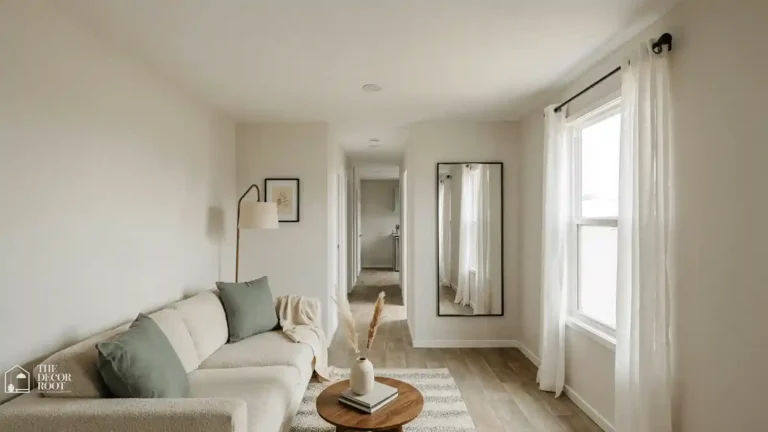
Wool Rug Ideas for Fall Living Room. Your living room hits different in September than it does in July, and usually not in a good way. The air conditioning stops running, the light gets lower and softer, and suddenly every hard surface in the room, floors included, reads as cold instead of clean. If you’ve been standing in your living room lately thinking it looks fine but feels off, the rug is very likely the reason. A thin, flat, low-pile rug does nothing to trap warmth or soften a space once the temperature drops, and it’s one of the fastest style tells that a room hasn’t been updated for the season.
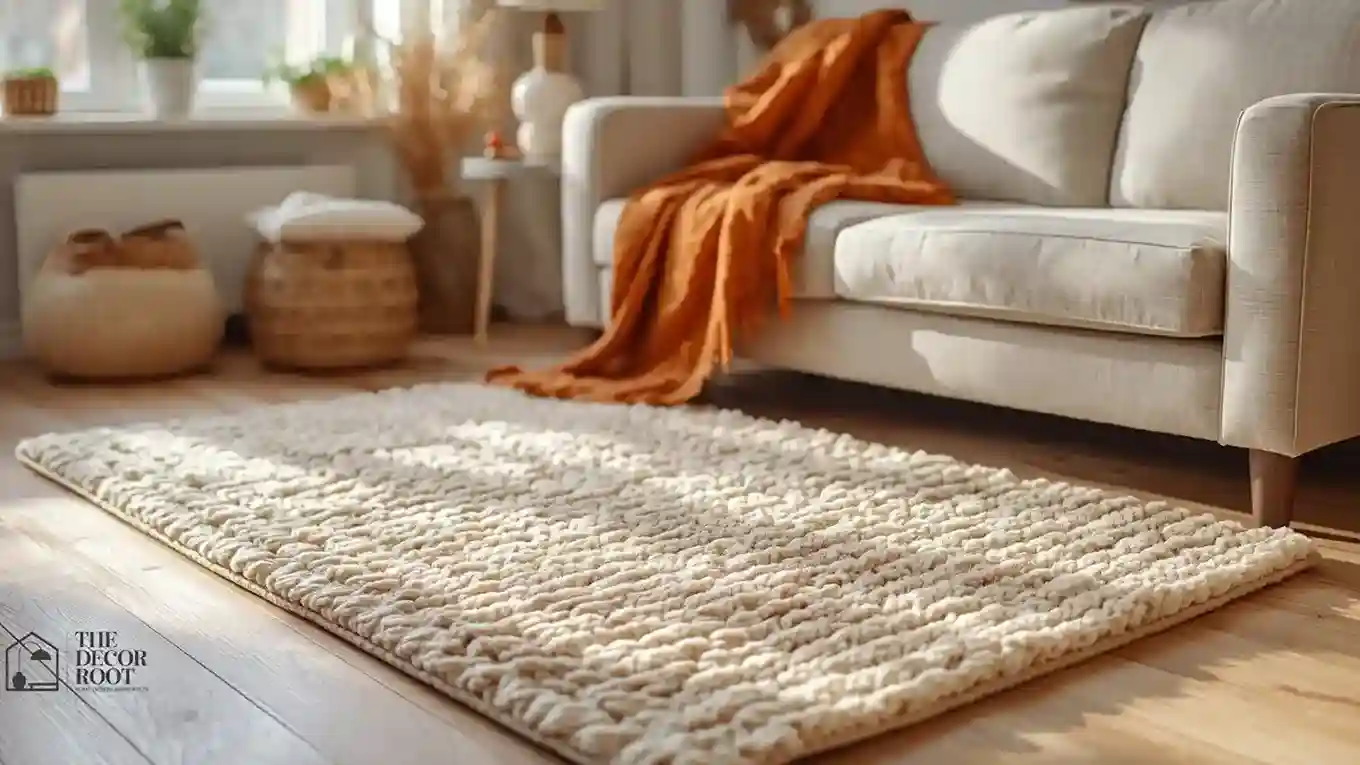
Wool rug ideas for a warmer fall living room are one of the most underestimated home decorating ideas of the season, a rug change is the single furniture-scale decision that most completely alters the feel of a room, and switching from the flatwoven or natural fiber of summer to the pile warmth of a wool or wool-blend rug transforms the living room’s baseline temperature and atmosphere before a single other seasonal change is made.
This post contains affiliate links. As an Amazon Associate, I earn from qualifying purchases. If you buy through these links, I may earn a small commission at no extra cost to you.
The Thinking Behind This
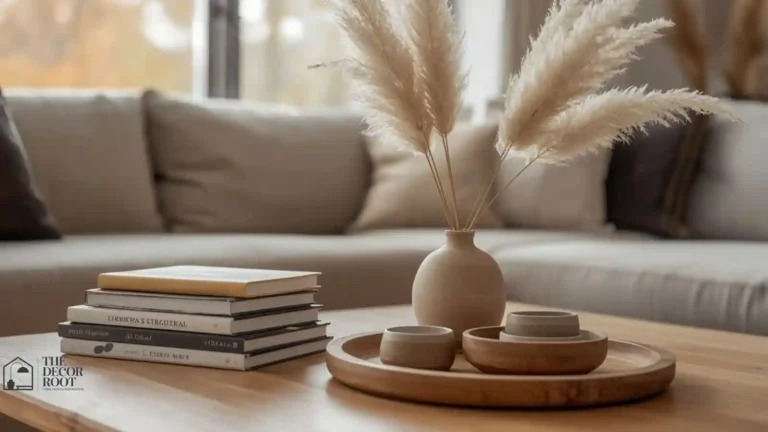
A rug is the single largest piece of “fabric” in most living rooms, larger than your sofa or your curtains, which means it has outsized influence on how warm or cold a room reads at a glance. Cooler months call for pile height and depth of color to do work that lighting alone can’t. The mistake most people make is treating the rug as an afterthought purchase something to cover the floor rather than as the base layer that everything else in the room gets built on top of. A wool rug and a styled coffee table are designed together: the rug defines the zone, the coffee table anchors the center of it, and the objects on the table read most clearly when the rug beneath creates a clear visual boundary. These rug and coffee table zone ideas show how rug size, positioning, and tone affect the reading of the coffee table composition above it.
Rug Grounds Autumn Living Room
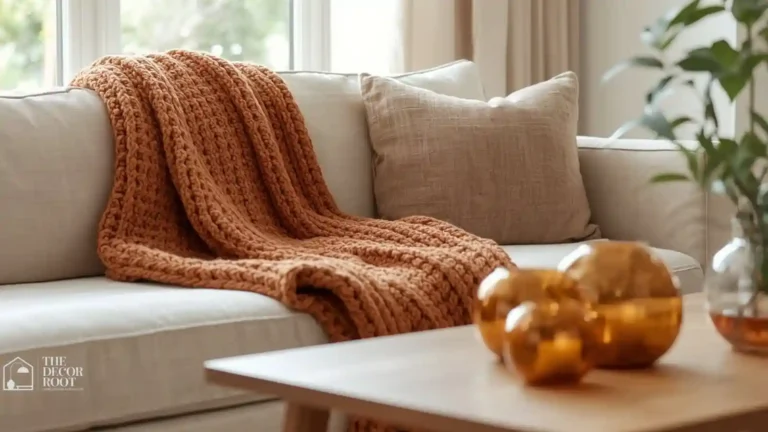
A rug is the living room’s largest surface and its most foundational design decision. Browse all our living room decorating ideas to see how a wool rug connects to throw blankets, “A wool rug and a layered throw blanket are the two textile decisions that produce the most immediate autumn transformation in a living room, these autumn textile layering ideas show how to coordinate the rug pile weight, tone, and texture with the throw material and color so the two pieces feel like a considered pair rather than two separate seasonal acquisitions. Coffee table styling, fireplace arrangements, and the autumn color palette for a living room that feels warm from the floor up.
1. Go Chunky Before You Go Colorful
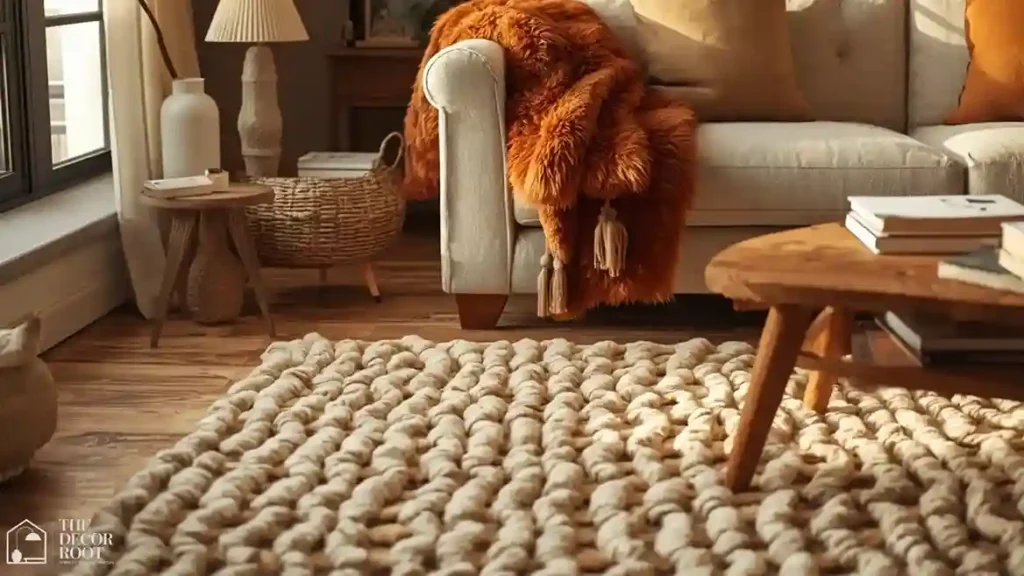
Before worrying about pattern or hue, prioritize pile height and yarn thickness. A chunky, hand-knotted or hand-tufted wool rug with a visible loop or braid texture reads as “warm” from across the room in a way that a flat woven rug never will, regardless of color. This texture-first approach also means a neutral chunky rug does more seasonal heavy lifting than a patterned flat-weave in a “fall” color. If you only make one change this list, make it this one swap: flat for chunky in whatever colorway you already own, and reassess the room before buying anything else.
2. Layer a Vintage-Style Rug Over Sisal
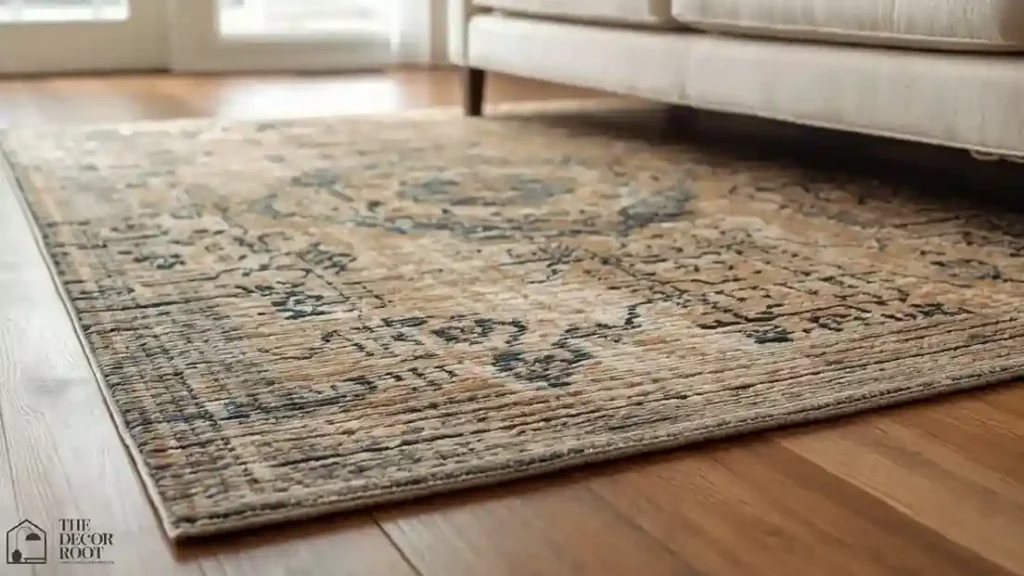
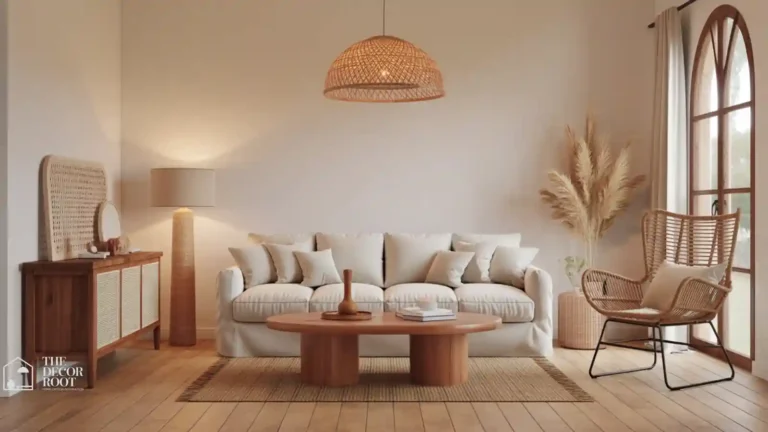
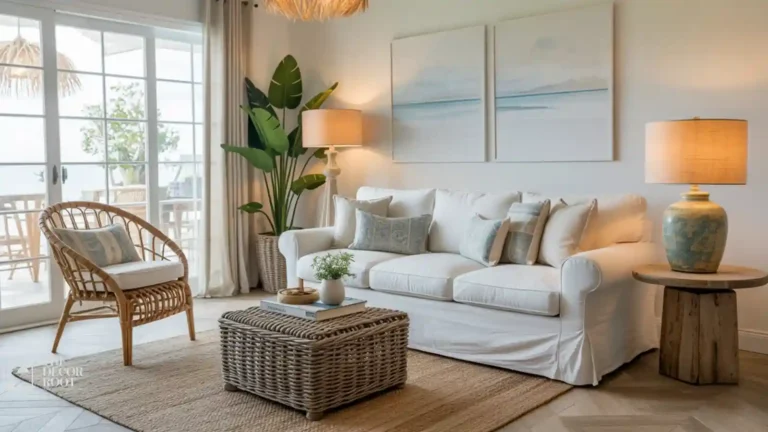
Sisal and jute base rugs are popular for their texture, but on their own they can feel a little stiff and beachy for fall. Layering a smaller vintage-look wool rug with faded Persian or Turkish-inspired patterns works especially well directly on top, softening that effect instantly. The natural fiber underneath peeks out at the edges, giving you depth and two textures in one footprint, which reads more expensive and more intentional than either rug would alone. This is one of the fastest ways to make a room look “designed” rather than “purchased.”
3. Choose a Warm Undertone, Not Just a Warm Color
It’s easy to assume any rug in rust, cinnamon, or terracotta will automatically warm up a room, but undertone matters more than the base color itself. A terracotta rug with a slightly gray or muted undertone can actually read cooler than a soft oatmeal rug with warm golden undertones. Before buying, look at the rug in natural light, not just under store lighting or a product photo. If your existing furniture already leans warm wood tones, brass, cream upholstery, match the rug’s undertone to that palette rather than chasing a specific “fall” color name.
4. Try a Wool-Jute Blend for Budget-Friendly Texture
Pure wool rugs at large sizes get expensive fast, and a wool-jute blend gets you most of the textural benefit at a meaningfully lower price point. The jute adds structure and a slightly nubby hand-feel, while the wool content softens it underfoot and helps it hold dye better than jute alone. These blends are also more forgiving in high-traffic living rooms since jute fiber resists crushing. For an 8×10 living room space, this is often the most practical entry point into the “chunky wool” look without a four-figure price tag. A wool-jute blend area rug in a large living-room size is one of the easiest upgrades on this list to execute this weekend.
EDITOR’S PICK
🛒Wool-Jute Blend Area Rug, Large Living-Room Size
A wool-jute blend rug delivers chunky wool texture at a lower price, with jute adding structure and crush resistance, making it a practical choice for large living rooms.
(paid link)
5. Anchor the Room With a Rug That Extends Under Furniture
A common fall styling mistake is buying a rug sized only for the open floor space, leaving furniture legs off the rug entirely. This makes even a warm-colored rug feel disconnected from the seating area instead of anchoring it. For a cohesive, grounded look, size up so at least the front legs of your sofa and chairs sit on the rug. This single sizing fix does more to make a living room feel “finished” for the season than almost any decor accessory you could add on top of it.
6. Use a Herringbone Weave for Subtle Movement
A herringbone or chevron weave pattern in wool adds visual texture without introducing a busy pattern that fights with your existing decor. Because the pattern is created through the weave itself rather than printed dye, it catches light differently depending on the angle you’re viewing it from, which gives the rug a subtle, almost woodgrain-like movement across the floor. This works particularly well in living rooms with plain, solid-colored sofas, since it adds interest to the floor plane without requiring any other pattern changes in the room.
7. Go Darker Underfoot in North-Facing Rooms
Rooms with north-facing windows get flatter, cooler light for most of the day, and a light oatmeal or ivory rug can end up looking washed out rather than cozy in that light. A deeper wool rug think espresso, deep clay, or charcoal grounds the space and actually reads warmer in low-light conditions than a pale rug does. If your living room has always felt a little flat or gray no matter what you put in it, the rug color relative to your natural light exposure is worth troubleshooting before anything else.
8. Round Rugs Soften Boxy Furniture Layouts
If your living room furniture is arranged in a tight rectangle sofa, two chairs, coffee table all at right angles, a round wool rug breaks up that rigidity in a way a second rectangular rug can’t. The circular shape draws the eye toward the center of the seating area rather than the corners of the room, which makes even a small living room feel less boxed-in. Round wool rugs in a chunky braided style are widely available in sizes from 5 feet up to 8 feet, enough to comfortably anchor a full seating group.
9. Bring In a Beni Ourain Style Pattern
The Beni Ourain look, a cream background with sparse black or brown geometric lines, has stayed popular for good reason: it’s warm without being a strong seasonal color statement, so it won’t feel dated once winter turns to spring. The diamond or line motifs also add just enough visual interest to keep a neutral living room from feeling flat, without competing with patterned throw pillows or artwork. This style pairs especially well with mid-century or Scandinavian-influenced furniture, but reads just as well in a more traditional or transitional living room. A Beni Ourain style wool area rug is one of the more timeless picks on this list; it works well past fall into full winter styling too. A wool rug is the highest-impact single change in a summer-to-fall living room transition. These fall living room transition ideas show how swapping the rug before making any other seasonal change immediately shifts the room’s baseline temperature and atmosphere, creating a foundation onto which every other autumn styling element lands more naturally and more convincingly.
EDITOR’S PICK
🛒Beni Ourain Style Wool Area Rug
A cream Beni Ourain style rug with black or brown geometric lines adds warm, timeless visual interest that pairs with mid-century or traditional decor and transitions easily through seasons.
(paid link)
10. Try a Two-Tone Braided Rug for Casual Warmth
Braided wool rugs in two complementary tones, think oatmeal and rust, or cream and olive, bring in color variation without the formality of a printed pattern. The braided construction itself adds texture and durability, making these a practical pick for living rooms that see daily use from kids or pets. Because the color shift happens gradually across the braid rather than in blocks, the effect reads more organic than a striped rug, and tends to hide dirt and shedding better between deep cleanings.
11. Match the Rug to Your Curtain Undertone, Not the Sofa
Most people size a new rug against their sofa color, but curtains actually cover more visible wall space and get more consistent natural light exposure throughout the day, which makes them a better undertone reference. If your curtains lean warm cream or soft rust, echo that undertone in the rug rather than matching strictly to a gray or cool-toned sofa. This creates a warmth thread that runs through the whole room at eye level and floor level simultaneously, rather than leaving the rug feeling like an unrelated, separate decision.
12. Add a Smaller Accent Rug Under the Coffee Table Only
In larger living rooms, a single oversized area rug can start to feel like one flat expanse of texture with nothing to break it up. Adding a second, smaller wool rug specifically under the coffee table, layered on top of the main rug, creates a defined “center” to the seating arrangement and adds a layer of texture contrast if the two rugs differ slightly in weave or pile. This works especially well in open-concept living rooms where the seating area needs a visual boundary that furniture placement alone doesn’t fully create.
13. Choose Flatweave Wool for High-Traffic Entry-Adjacent Rooms
If your living room doubles as a walkway to another part of the house, a deep chunky pile can trap dirt and show wear paths faster than a flatweave wool rug. Flatweave wool still carries the warmth and dye richness of thicker wool rugs, just in a lower, more durable profile. Look for a tight, dense weave rather than a loose flatweave, since density is what determines how well the rug resists crushing and flattening in the specific spots where foot traffic concentrates, like in front of a doorway or hallway opening.
14. Get a Rug Pad Before You Get Attached to Placement
A wool rug without a proper pad underneath will slide, bunch at the edges, and wear out significantly faster, especially over hardwood or tile, which are common in living rooms with an open floor plan. A quality rug pad also adds a slight cushioning effect underfoot, which matters more with wool than with synthetic rugs since wool fiber compresses with use. Buy the pad at the same time as the rug rather than treating it as optional; it’s one of the cheapest ways to protect an investment-level purchase.
EDITOR’S PICK
🛒Non-Slip Felt-And-Rubber Rug Pad, Sized To Match Rug
A properly sized non-slip rug pad should go under any wool rug on a hard floor from day one, not after the first time it slides.
(paid link)
15. Use a Diamond or Trellis Pattern for Traditional Rooms
For living rooms with more traditional furniture rolled-arm sofas, wood side tables, brass lighting a hand-knotted wool rug in a diamond or trellis pattern complements the formality of the furniture better than a casual braided or shag style would. These patterns read as classic rather than trendy, which matters if you’re not planning to replace the rug again next season. Stick to a muted, tonal colorway within the pattern (rust-on-rust, or cream-on-taupe) rather than high contrast, so the pattern reads as texture first and pattern second.
16. Try a Border Rug to Frame an Awkward Room Shape
Living rooms with irregular proportions too long and narrow, or with a jog in the wall can be visually corrected with a wool rug that has a distinct woven border. The border creates a defined rectangle that the eye reads as the “true” shape of the seating area, effectively overriding the odd proportions of the room itself. This is a more affordable fix than furniture rearranging or structural changes, and it works particularly well in rental living rooms where you can’t modify the space itself.
17. Go Monochrome With Texture Instead of Pattern
Not every fall rug needs visible pattern or a strong color shift to read as seasonal. A rug in a single warm neutral, say, a deep oatmeal, but with mixed pile heights woven into the same tone creates shadow and texture entirely through construction rather than dye. This is a strong option if you already have a busy room with patterned pillows, art, or wallpaper and don’t want the floor competing for attention. The texture alone is enough to signal “cozy” without adding another visual pattern to the mix.
18. Pair a Wool Rug With a Faux Fur Throw on the Same Sofa
This isn’t a rug placement tip exactly, but a styling pairing that makes the rug’s warmth read even stronger: draping a faux fur or sherpa throw over the arm of the sofa closest to the rug creates a visual “texture bridge” between the floor and the seating. The eye connects the two soft surfaces even though they’re on different planes, which makes the whole corner of the room feel intentionally cozy rather than like two separate purchases that happen to share a room.
19. Layer a Wool Runner Along a Long Wall
If your living room has a long, underused stretch of wall behind a sofa, or along a media console, a wool runner rug laid parallel to that wall (rather than perpendicular) adds warmth to a part of the room that a single central area rug won’t reach. This works especially well in open-concept spaces where the living room bleeds into a dining or entry area, giving each functional zone its own textural definition without needing to install a physical divider
EDITOR’S PICK
🛒Wool Runner Rug, Warm Neutral Tone
A wool runner rug in a warm tone is a low-cost way to extend the cozy-floor effect into a hallway or long wall stretch.
(paid link)
20. Consider a Hand-Tufted Rug for the Best Warmth-to-Cost Ratio
Hand-tufted wool rugs sit at a sweet spot between hand-knotted (expensive, slow to produce) and machine-made (cheaper but flatter and less textural). They offer genuine wool pile height and hand-finished edges at a fraction of the cost of a fully hand-knotted rug, making them the most common recommendation for anyone trying to get real fall warmth into a living room on a realistic budget. Check the backing when shopping; a cotton canvas backing tends to hold shape better over time than a latex-coated one.
21. Use Color Blocking Within One Rug for a Custom Look
Some wool rugs are designed with large, soft color-blocked zones rather than an all-over pattern; for example, a rug that transitions from oatmeal to soft rust across its length. These work well in living rooms where you want to visually “zone” a large open space, subtly signaling where the seating area ends, without adding furniture or a second rug. It also gives you two color options to pull accent pieces from, which is useful if you’re mixing pillow and throw colors from different collections.
22. Don’t Skip the Corners: Use a Rug Anchor or Weight
Thick wool rugs, especially newer ones, tend to curl at the corners before they’ve had time to relax into their final shape. Left unaddressed, curled corners are one of the fastest ways a genuinely nice rug starts to look neglected. Rug corner weights or grippers, tucked discreetly underneath, solve this in the first few weeks while the rug settles, and can simply be removed once the fibers have relaxed into flat, uncurled corners on their own, usually within a month of regular foot traffic.
23. Vacuum Wool Differently Than You Vacuum Synthetic Rugs
Wool fiber sheds naturally, especially in the first few months, and aggressive vacuuming with a beater bar can pull more fiber loose than necessary and prematurely thin the pile. Use a vacuum with an adjustable or removable beater bar, and set it to a higher pile height setting, or use suction-only mode on very plush rugs. This single habit change extends the visible life of a wool rug significantly compared to running the same settings you’d use on a flat synthetic rug.
EDITOR’S PICK
🛒Wool-Safe Rug And Upholstery Spot Cleaner
A gentle, wool-safe rug and upholstery cleaner spray handles spot cleaning without stripping the natural lanolin that keeps wool fiber soft.
(paid link)
24. Rotate the Rug Seasonally Instead of Buying New Every Year
If budget allows for two rugs a lighter-weight one for spring and summer, and a chunky wool one for fall and winter rotating rather than layering saves the wool rug from a full year of sun exposure, which is what causes most fading. Store the off-season rug rolled (not folded) in a breathable bag to prevent creasing and moth damage. This approach also means your “warm season” rug always looks intentional and fresh precisely when you need the warmth-boosting effect the most, rather than looking tired by the time fall actually arrives.
Related reading: For color pairing beyond the rug itself, see our guide to luxury living room color palettes and how color choices affect mood in our color psychology breakdown.
Quick Action Plan
- Start with the rug you already own. If it’s flat and thin, that’s very likely your biggest seasonal styling gap, so prioritize a chunky wool or wool-blend replacement before buying any other fall decor.
- Measure your seating area first (front furniture legs should sit on the rug), add a proper rug pad at the same time as purchase, and choose undertone based on your curtains rather than your sofa.
- If budget is tight, start with a smaller layered accent rug under the coffee table rather than replacing the full area rug; it delivers a surprising amount of the same visual warmth for a fraction of the cost.
Frequently Asked Questions
Concluison
A fall living room refresh doesn’t have to mean new furniture, new paint, or a full redesign. In most homes, the rug is doing more silent damage to the “cozy factor” than anything else in the room, and it’s also the fastest thing to fix.
💾 Save this to your Fall Living Room Ideas board on Pinterest so you have it on hand when you’re ready to shop.