24 Fall Entryway Bench Ideas With Hidden Storage
Fall Entryway Bench Ideas With Hidden Storage. A bench by the door sounds simple until you actually live with one. Somewhere between putting on boots and rushing out for school pickup, most entryway benches turn into a landing pad: bags on top, shoes underneath, and a growing pile that never quite gets put away. The problem usually isn’t the bench itself; it’s that it’s only doing one job when fall demands it do three: give you somewhere to sit, hide the shoe pile, and hold the extra gear that shows up once temperatures drop.
“Fall entryway bench ideas with hidden storage are some of the most space-efficient home decorating ideas for an autumn entryway; a bench that provides seating for boot removal, concealed storage for seasonal accessories, and a styled top surface for a tray, a candle, and a small plant does the work of three separate pieces of furniture within the footprint of one.
This post contains affiliate links. As an Amazon Associate, I earn from qualifying purchases. If you buy through these links, I may earn a small commission at no extra cost to you.
What Ties These Ideas Together
The benches that actually get used long-term all share one trait: the storage is exactly as accessible as the seat. If lifting a heavy lid to grab your shoes is more annoying than just leaving them on the floor, people stop using it within a month; that’s true whether it’s a lift-top design, a drawer, or a cubby. As you go through this list, pay attention to how each storage style opens, not just how much it holds. A bench with less capacity that’s genuinely easy to use every day will outperform a bigger one that becomes a chore. A storage bench is the single most effective piece of furniture in a small entryway. These small entryway bench and storage ideas show how a slim bench with lift-lid or drawer storage makes a tight entry functional for an entire season’s worth of scarves, gloves, and seasonal accessories without consuming the floor space that a small entry cannot afford to give up.
Anchoring Your Entryway Bench
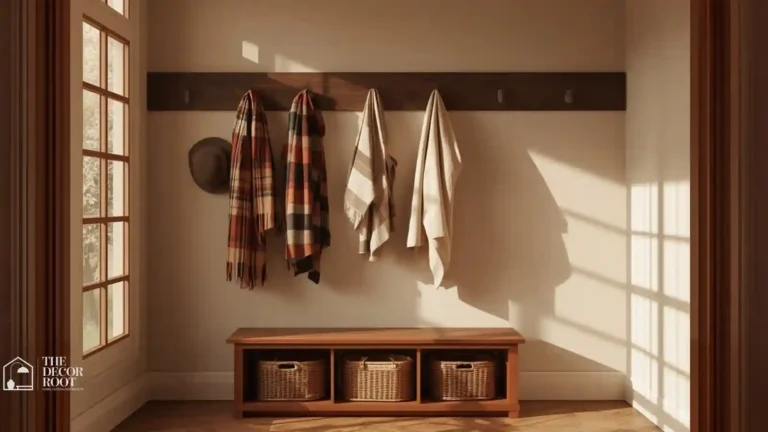
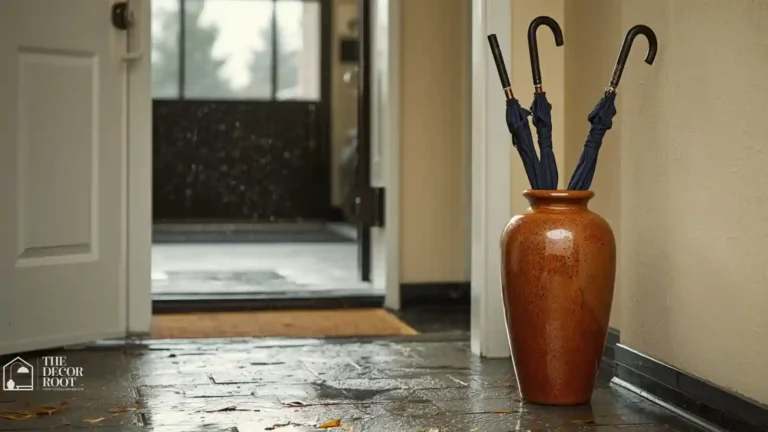
A fall entryway bench is the anchor piece of an autumn entry; browse all our spaces decorating ideas to see how a storage bench connects to coat hooks, A storage bench and a coat hook system are designed as a pair, these fall entryway storage and hook ideas show how to position the bench below the hooks so a visitor can sit to remove boots while reaching up to hang a coat, and how to choose a bench depth and hook spacing that accommodates an entire family’s autumn outerwear without the entryway feeling congested. Umbrella stands, small entryway solutions, and the wider autumn home organisation system for a first room that handles the season completely.
1. Classic Lift-Top Storage Bench
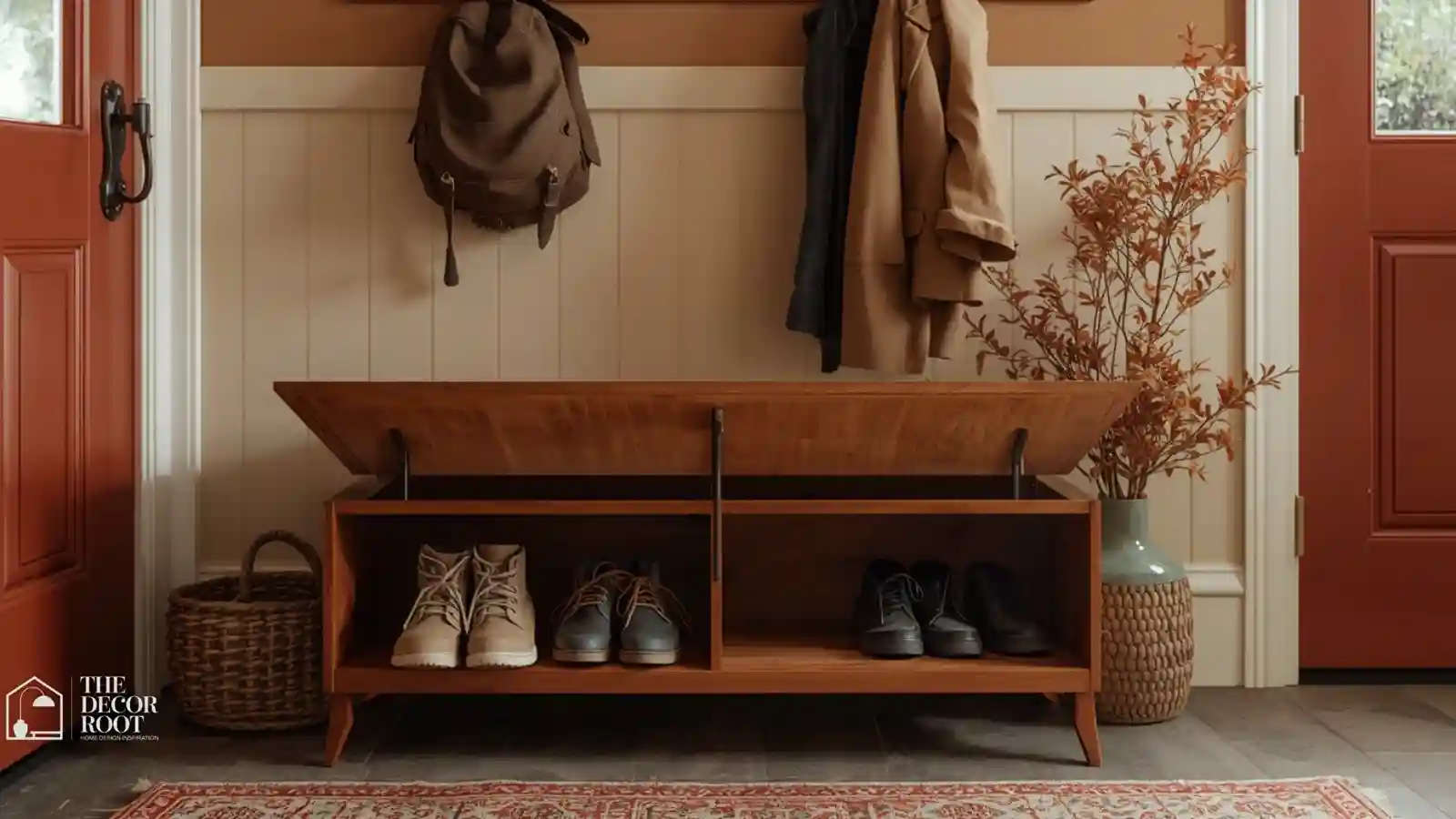
The most straightforward option on this list: a hinged bench lid over a single open cavity, big enough for several pairs of shoes or boots. Look for soft-close hinges specifically, since a lid that slams shut is both annoying and eventually damages the hinge mechanism. A 40-inch-wide bench comfortably fits four to six pairs of shoes standing upright, which covers most two-person households. This style works best when the storage doesn’t need to be accessed multiple times per outing better for off-season shoes or extra boots than for the pair you’re grabbing on your way out the door every morning.
2. Bench With Front-Facing Shoe Cubbies
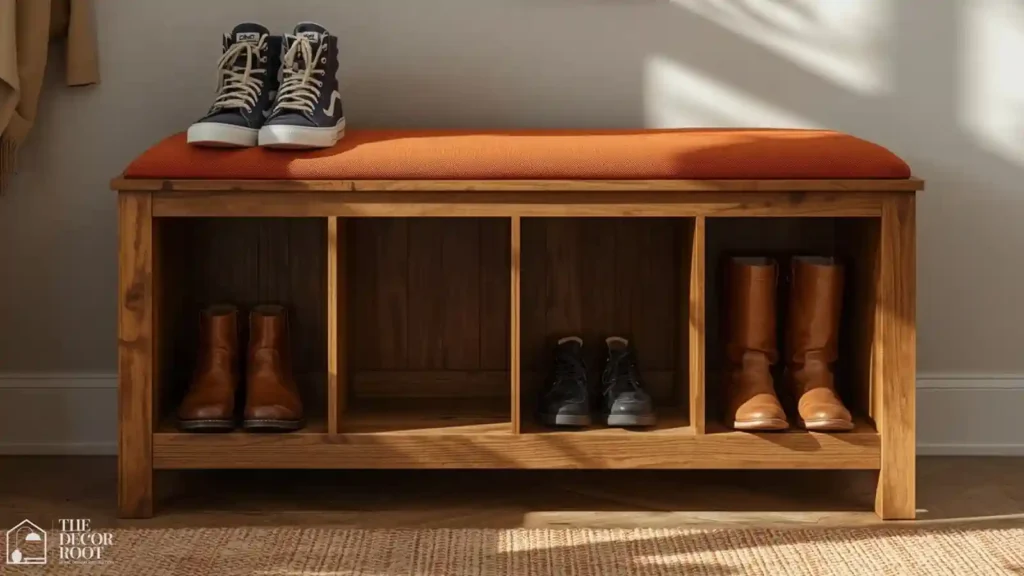
Rather than lifting a lid, a bench with open cubbies along the front lets you slide shoes in and out without disturbing the seat at all genuinely faster for daily use. Cubbies also naturally sort shoes by size or by person if you assign specific slots, which cuts down on the “whose boot is this” hunt during a busy fall morning. Choose a bench with at least 10-inch-tall cubby openings so taller fall and winter boots actually fit without being wedged in sideways.
3. Upholstered Bench Over a Concealed Storage Base
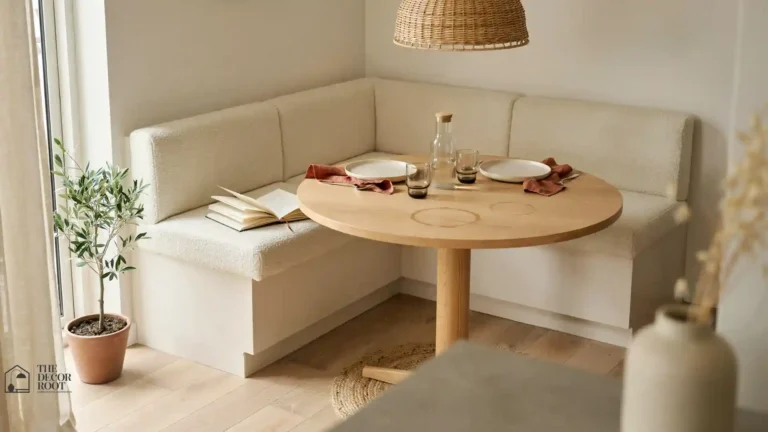
For a more furniture-forward look, an upholstered bench seat sits on top of a solid wood base with a hidden compartment accessed from the side or back rather than by lifting the cushion itself. This keeps the seat feeling like real seating no lid to lift, no risk of sitting on something hard while the storage stays completely out of sight. It’s a strong pick for entryways that double as a more formal foyer, where you want the bench to read as furniture first and storage second.
4. Add a Deep Lift-Top Bench for Bulk Boot Storage
For households in colder climates where boots pile up fast, a deep lift-top storage bench with at least 14 inches of interior depth handles tall winter boots standing upright, not just sneakers laid flat. This extra depth is the detail most people skip when bench-shopping and then regret once real winter boots arrive in November. Measure your tallest pair before buying; most standard bench interiors max out around 10 to 12 inches, which isn’t enough for over-the-calf boots.
EDITOR’S PICK
🛒Deep Lift-Top Storage Bench For Boots
A deep 14-inch lift-top storage bench holds tall winter boots upright, unlike standard shallow benches, so measure your tallest pair first.
(paid link)
5. Use a Bench With Built-In Drawer Storage
A bench with one or two drawers underneath the seat, rather than a single open cavity, gives you sorted storage without needing bins inside one drawer for gloves and hats, one for shoe care supplies like a brush and waterproofing spray. Drawers also keep smaller items from disappearing into a deep open cavity, which is a common complaint with lift-top benches once they’re more than half full. This style tends to cost more than open-cavity benches but pays off in daily usability if your household has a lot of small accessories to store.
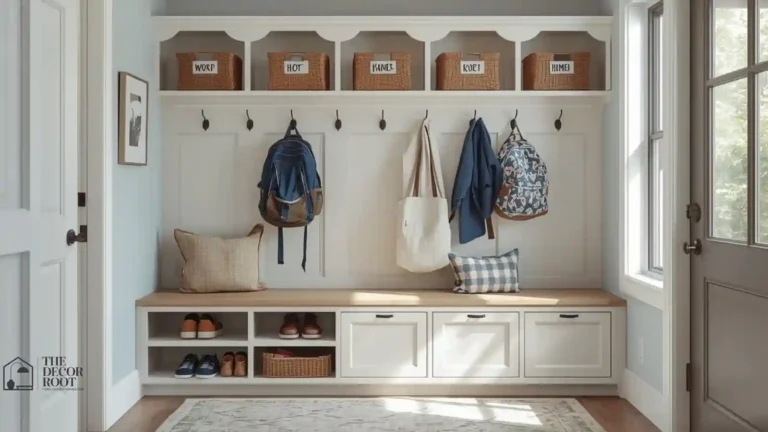
6. Build a Custom Mudroom Bench With Individual Lockers
If you’re doing any kind of built-in project, individual locker-style compartments above a bench seat, one per family member, are the gold standard for households with three or more people. Each person gets a cubby for shoes below and a hook-and-shelf combo above, which removes nearly all the “whose stuff is this” friction that causes fall entryway pileup in bigger families. This is a bigger investment than a store-bought bench, but it’s also the version most likely to actually stay organized long-term, since the system is built around your specific household rather than a generic layout.
7. Use a Narrow Bench With a Single Deep Drawer
For entryways under 30 inches wide, a narrow bench with one full-width drawer underneath still gives you real hidden storage without needing depth you don’t have. A single drawer, even a shallow one, is enough for a rotating set of gloves, hats, and a dog leash the small stuff that otherwise ends up loose on top of the bench. This is one of the better options for apartment entryways or narrow hallway entries where a full mudroom bench simply won’t fit.
8. Add a Storage Bench With a Hinged Seat and Interior Dividers
Interior dividers inside a lift-top bench turn one big cavity into two or three sorted zones shoes on one side, scarves and gloves on the other without needing separate bins. This solves the common complaint that a single open cavity turns into a jumbled pile within a few weeks. Some benches come with dividers built in; others can be retrofitted with a simple wood or wire insert. Either way, this small addition meaningfully extends how long a lift-top bench stays organized.
9. Use a Two-Tier Cubby Bench for Shoes and Boots
A bench with two stacked rows of open cubbies a shorter row for shoes on top and a taller row for boots below doubles your storage without doubling your footprint. This two-tier shoe and boot cubby bench is especially useful for households transitioning between fall sneakers and winter boots, since both can stay accessible at once instead of swapping seasonal storage back and forth. Look for cubbies with a slight downward slope or drip tray at the bottom row specifically, which helps wet boots dry without pooling water inside the bench.
EDITOR’S PICK
🛒Two-Tier Shoe And Boot Cubby Storage Bench
A two-tier shoe-and-boot cubby bench with sloped trays doubles entry storage while handling seasonal transitions and wet drying.
(paid link)
10. Choose a Bench With a Removable Storage Basket Insert
Rather than a fixed interior, some lift-top benches come with a large removable basket or bin that slides in and out as one unit. This makes seasonal swaps easier: pull the whole basket out to declutter or wash it, rather than digging through a fixed compartment. It’s a small design detail, but it matters more than it sounds like once you’re actually maintaining the bench month to month through a full fall and winter season.
11. Use a Bench That Doubles as a Blanket Chest
A wider, deeper storage bench originally designed as a blanket chest can just as easily hold fall entryway gear and bulkier items like winter accessories, extra scarves, or seasonal decor that isn’t in daily rotation. Because blanket chests are usually built with sturdier hinges and thicker wood than entry-specific benches, they also tend to hold up better to daily sitting weight over time. This is a good option if you’re repurposing an existing piece of furniture rather than buying something new for the entryway specifically.
12. Add a Bench With a Pull-Out Shoe Tray
A shallow pull-out tray beneath the bench, similar to a drawer but open on top, gives you fast-access shoe storage without a lid to lift. This works especially well for the shoes you wear daily, since you can slide the tray out, grab a pair, and slide it back in one motion. Pair it with a separate lift-top or drawer section for less-frequently-used items, and you’ve got a bench that handles both daily and occasional storage without either function slowing the other down.
13. Use a Storage Bench With a Slatted or Vented Lid
For households where wet shoes and boots are a near-daily occurrence, a bench with a slatted or vented lid rather than solid wood or upholstery allows some airflow into the storage cavity, cutting down on the musty smell that builds up when damp shoes sit in an enclosed space. This is a smaller detail most retailers don’t highlight, so it’s worth specifically searching for “vented” or “slatted” storage bench if moisture is a real issue in your climate.
14. Pair a Storage Ottoman With a Console Table as a Bench Substitute
If a traditional bench doesn’t fit your entryway’s proportions, a storage ottoman pushed against a narrow console table gives you the same seat-plus-storage function in a more flexible, movable format. Ottomans are also easier to reposition seasonally: pull it closer to the door for boot season, tuck it elsewhere the rest of the year. Choose one with a removable lid rather than a zippered top for genuinely easy daily access, since zippers slow you down in exactly the moment you’re trying to get out the door.
EDITOR’S PICK
🛒Storage Ottoman For Entryway Seating
A storage ottoman with a removable lid paired with a narrow console offers flexible entryway seating and storage, easily repositioned for boot season.
(paid link)
15. Use a Bench With a Boot Tray Built Into the Base
Some benches come with a shallow, water-resistant tray built directly into the base or bottom shelf, specifically designed to catch drips and salt residue from wet boots before they’re stored. This is one of the more practical fall-specific features on this list, since it protects both the bench itself and your floor from water damage over a full wet season. If your current bench doesn’t have this built in, a simple rubber boot tray placed on the lowest shelf achieves the same result.
16. Add a Corner Bench With an L-Shaped Storage Base
For entryways with an awkward corner rather than a straight wall run, an L-shaped corner bench maximizes storage in a footprint most furniture doesn’t use well. The corner shape typically means more interior storage volume than a straight bench of the same overall width, since it captures depth in two directions instead of one. This is a strong option for larger mudrooms or entryways with an underused corner near the door.
17. Use Two Smaller Benches Instead of One Large One
Rather than a single long bench, two smaller benches on opposite walls (or flanking a doorway) can work better for households where multiple people get ready at once. Each bench gets its own storage, cutting down on the bottleneck of everyone needing the same six feet of seating and cavity space during a busy morning. This layout also tends to suit narrower entryways better, since two 24-inch benches fit around doors and corners in ways one 48-inch bench can’t.
18. Choose a Bench With a Woven or Rattan Storage Base
A bench with a woven rattan or wicker base beneath an upholstered or wood seat brings natural texture into the entryway while still functioning as real storage, usually via a removable seat cushion or side-access panel. This style tends to suit boho, coastal, or farmhouse-leaning fall palettes especially well, and reads as considerably softer than an all-wood or upholstered bench if that’s the direction your entryway decor is heading.
19. Use a Bench With a Hidden Drawer Base for Seasonal Swaps
A bench with a full-width hidden drawer base is specifically useful for fall-to-winter seasonal swaps. Store your lighter fall accessories in the drawer as you transition heavier winter gear into your main hook and cubby zones. Rather than a full seasonal storage overhaul, the drawer becomes a simple holding zone you rotate through as the weather shifts, which is a lot more sustainable than a single big changeover in November.
EDITOR’S PICK
🛒Entryway Bench With Hidden Drawer Base
A hidden drawer bench offers gradual, sustainable fall-to-winter accessory rotation, avoiding a single seasonal overhaul.
(paid link)
20. Build a Window Seat Bench With Storage Underneath
If your entryway has a window, a built-in window seat with a lift-top or drawer base underneath turns unused space into both a design feature and functional storage. This is a bigger project than a store-bought bench, but it makes exceptional use of a spot that’s otherwise often wasted, since window seats rarely get built anywhere except entryways and reading nooks. Pair it with a fitted cushion in a fall-appropriate fabric to keep it feeling intentional rather than purely utilitarian.
21. Use a Bench With Fabric Bin Inserts Instead of a Solid Interior
Rather than one large open cavity, a bench fitted with two or three fabric bin inserts lets you sort by category (shoes, gloves, dog gear) while keeping everything easy to pull out and check at a glance. This is an easy upgrade to an existing bench if you already have one, but it’s turned into a single disorganized pile; the bins alone can fix that without replacing the whole piece of furniture.
22. Choose a Convertible Bench That Extends for Guests
For households that host more during fall gathering season, a bench with a pull-out or extendable seat section gives you extra seating for guest coat-and-boot changes without a second piece of furniture living in your entryway year-round. The storage base stays the same size; only the seat extends. This is a smart pick if your entryway needs to flex between everyday use and occasional larger gatherings.
23. Use a Bench With a Chalkboard or Message Panel on the Side
A small functional addition rather than a storage style change: a chalkboard or magnetic panel on the side of a storage bench gives your household a spot for reminders: “boots are wet, dry before storing,” school pickup times, whatever fall logistics come up. It doesn’t add storage capacity, but it does reduce the number of items left on top of the bench because there’s now a dedicated spot for notes instead. A fall entryway bench and a back-to-school entry organiser solve the same problem at two different points in the school year. These entryway bench and seasonal organisation ideas show how the same bench-and-hook infrastructure that handles the morning chaos of the school run becomes the seasonal anchor for the coat-scarf-boot chaos of autumn when the weather turns.
24. Finish With a Bench-and-Boot-Tray Combo Set
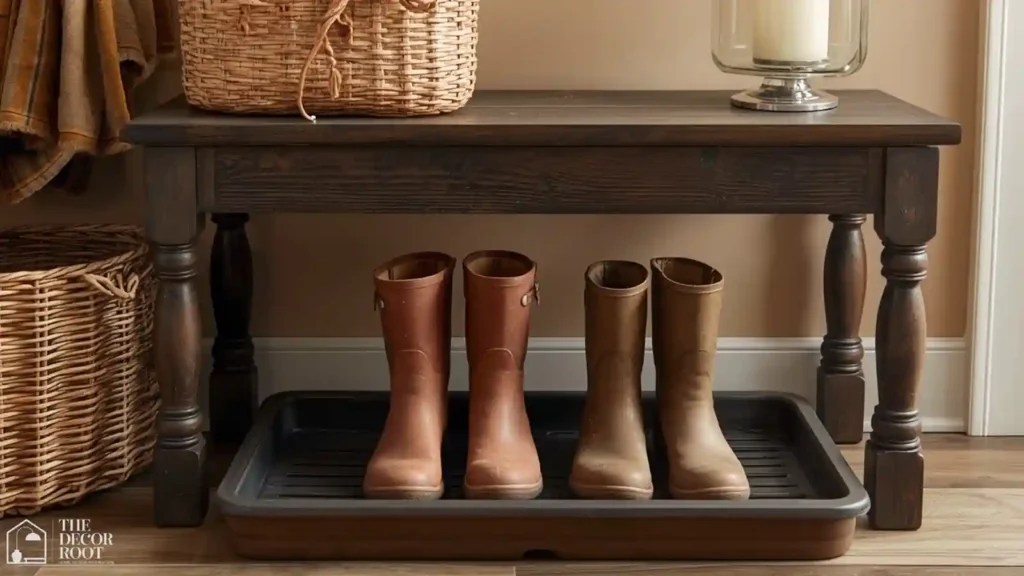
The most fall-specific pairing on this list: a storage bench sold or styled together with a matching boot tray positioned just in front of it, so wet boots have a designated spot to dry before going into hidden storage. A bench and boot tray combo set keeps the whole system visually cohesive rather than looking like mismatched pieces added over time, and it directly solves the “wet boots in enclosed storage” problem that causes most bench-related odor complaints.
EDITOR’S PICK
🛒Entryway Bench And Boot Tray Combo Set
A bench and matching boot tray combo keeps wet boots from entering enclosed storage, preventing odor while maintaining cohesive entryway styling.
(paid link)
Related Reading: Pair your new bench with a dedicated coat and scarf system; see 20 Coat and Scarf Storage Ideas for Fall Entryways for hook and hanging solutions that work above whichever bench style you choose.
Quick Action Plan
- Start by measuring your actual entryway width and depth before picking a style; that alone rules out half of this list and saves you from buying something that technically fits but blocks the door when open.
- If daily shoe access matters most, prioritize a cubby or pull-out tray style (Ideas 2, 9, or 12) over a lift-top design.
- If you’re mainly storing off-season or occasional-use items, a deep lift-top bench (Idea 4) or storage ottoman (Idea 14) will hold more per dollar.
- And if wet boots are a real fall issue in your household, don’t skip the ventilation and boot-tray details (Ideas 13, 15, and 24); they’re small features that prevent the most common long-term complaint with enclosed entryway storage.
Frequently Asked Questions
Conclusion
The right entryway bench doesn’t just give you somewhere to sit; it quietly absorbs most of the shoe, boot, and gear chaos that fall brings into your home. Match the storage style to how your household actually uses the space, prioritize daily accessibility over sheer capacity, and you’ll end up with a bench that’s still working for you well past the first cold snap. This post contains affiliate links. If you purchase through them, I may earn a small commission at no extra cost to you.
💾 Save this to your Entryway & Mudroom Storage board on Pinterest so you have it ready when you’re shopping for your own bench.