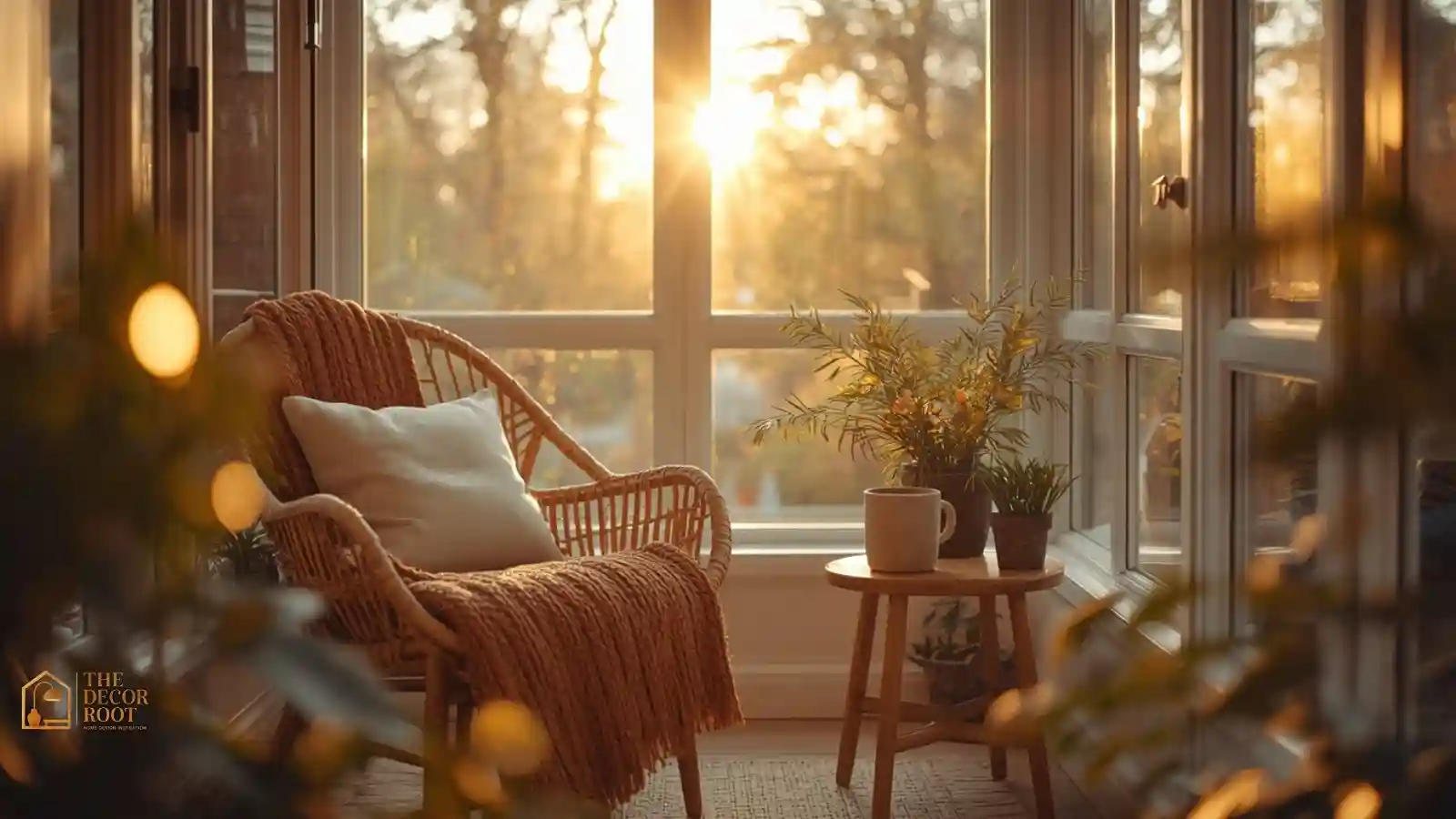
21 Sunroom Ideas for Enjoying Fall Light
Sunroom Ideas for Fall: Light hits differently than summer light; it’s lower in the sky, softer, and it turns everything gold for a longer stretch of the afternoon. A sunroom is the one room in the house built specifically to catch that light, and yet most sunrooms stay styled for summer well past the point where the light itself has already changed. These 21 ideas are about adjusting the space to actually take advantage of what fall light does best: casting long warm shadows, making textures pop, and turning an ordinary afternoon into something worth sitting still for. None of these require a renovation; most are seating, textile, and small styling changes you can make in a weekend.
This post contains affiliate links. As an Amazon Associate, I earn from qualifying purchases. If you buy through these links, I may earn a small commission at no extra cost to you.
The Real Reason This Works
A sunroom’s whole job is to let light in, but light alone doesn’t make a room feel cozy; what you put in that light’s path does. Fall light is lower-angle and warmer in color temperature than summer light, which means it interacts differently with materials than you might expect: it catches texture (knits, rattan, wood grain) far more dramatically than it catches flat, smooth surfaces, and it makes warm colors glow while making cool colors look slightly muted by comparison. That’s the entire logic behind every idea on this list: lean into texture and warm tones so the room actively works with the light instead of just letting it pass through untouched. A sunroom styled for summer (glossy surfaces, cool blues, bare floors) can feel strangely flat once fall light arrives, even though nothing about the room’s structure changed. Swap in texture and warmth, and the same low afternoon sun suddenly does all the styling work for you.
1. Angle Your Main Seating Toward the Afternoon Light, Not Away From It
Most sunroom furniture gets arranged around a TV or a conversation circle, which often means the best seat faces away from the windows entirely. For fall, rearrange at least one chair or the end of a sofa so it directly faces the strongest afternoon light source. This single change does more for how “used” a sunroom feels in fall than almost any decor swap, since the whole point of the room is undermined if no one’s actually positioned to enjoy the light it was built to capture. Test this at 3-4 pm on a clear day and adjust based on where the light actually lands, since sun angles shift noticeably from September into November.
2. Layer a Jute or Sisal Rug Under Existing Furniture for Texture
Sunroom flooring is often tile, painted concrete, or hardwood, all of which can feel a little cold and bare once summer’s bright, airy mood shifts toward fall. A jute or sisal rug adds warm, natural texture that low fall light catches beautifully, creating visible shadow and grain detail that a bare floor simply can’t. Choose a natural, undyed tone rather than a bold pattern so it reads as a texture layer rather than a competing design statement. This is a relatively low-cost swap that also makes the space feel warmer underfoot as outdoor temperatures start to drop.
3. Swap Sheer Summer Curtains for Bamboo or Woven Roman Shades Bamboo Roman Shades, Natural Woven
EDITOR’S PICK
🛒Bamboo Roman Shades For Filtering And Warming Afternoon Sunroom Light
Bamboo or woven Roman shades, partially raised, filter softer fall light into striped shadows while adding natural texture that pairs with rattan and wood furniture.
(paid link)
Sheer summer curtains let in maximum bright light, but fall light is already softer and lower, so you can afford window treatments with more texture without losing brightness. Bamboo or woven roman shades filter light through natural material, casting subtle striped shadows across the floor and walls in the afternoon that plain glass alone doesn’t create. Raise them partway rather than fully open or closed, which lets you control exactly how much direct light hits your seating area while still keeping the room bright. This swap also adds a natural, textural layer that pairs well with rattan or wood furniture already common in sunroom spaces.
4. Add a Low Wood Coffee Table to Anchor the Seating Area
Sunrooms often skip a proper coffee table in favor of keeping the space open and airy for summer, but a low wood table gives fall styling books, a stoneware mug, a small vase of dried stems somewhere to actually live. Choose a warm-toned wood rather than a glass or acrylic top, since glass reflects and slightly cools the warm afternoon light rather than absorbing and grounding it the way wood does. Keep the table low enough that it doesn’t block the sightline to the windows from the main seating area.
5. Introduce a Woven Basket for Blankets Near the Seating Area
A large woven basket positioned near your main chair or sofa gives extra throws and blankets an intentional home instead of leaving them draped awkwardly or, worse, packed away entirely once the weather cools. Fill it with two or three knit or sherpa throws in varying warm tones so it becomes a visual styling element on its own, not just storage. This is a practical addition for fall specifically, since sunrooms, despite the sun, often get genuinely chilly once the sun dips, and having blankets within arm’s reach keeps the space usable later into the afternoon and evening.
6. Add a Small Bistro or Side Table for a Coffee-and-Book Corner
If your sunroom is large enough for more than one seating zone, carve out a small secondary spot with just one comfortable chair and a narrow side table specifically for reading or morning coffee. This “second zone” idea works especially well in fall because shorter days mean people are more likely to use a sunroom in short, deliberate sessions (morning coffee, afternoon reading) rather than long stretches, and a smaller, more intimate corner suits that pattern better than one large open seating area designed for groups.
7. Swap Bright Summer Cushion Covers for Deeper Autumn Tones
Outdoor-rated or indoor/outdoor cushion fabric on sunroom furniture often comes in bright, sun-friendly colors meant for peak summer. Swap those covers for the same warm rust, olive, and cinnamon tones used elsewhere in fall styling, ideally in a slightly heavier or textured weave than the lightweight summer fabric. Because sunrooms get more direct light exposure than most interior rooms, choose fade-resistant fabric where possible, since this space will see more sun hours per day than a typical living room even as the season changes.
8. Add a Chunky Knit Throw Specifically for the Main Reading Chair
EDITOR’S PICK
🛒Chunky Knit Throw For The Sunroom’s Main Reading Chair
A chunky knit throw in oatmeal, cinnamon, or camel, draped on a main chair in afternoon light, becomes a classic cozy fall focal point.
(paid link)
Beyond the basket of blankets, dedicate one specific chunky knit throw to your main reading or lounging chair, draped so it’s always ready rather than folded away in storage. This single throw, positioned in direct afternoon light, becomes one of the most photographed and most-used items in the whole room, since the combination of visible texture and warm low light is genuinely one of the most classic “cozy fall” visual cues that exist. Choose a neutral warm tone like oatmeal, cinnamon, or camel, so it works with whatever other colors are already in the space.
9. Bring in a Stoneware Planter for a Statement Fall Plant
A single larger plant in a warm stoneware or terracotta planter a fiddle leaf fig, rubber plant, or even a faux olive tree adds height and organic shape that pure furniture and textiles can’t provide on their own. Position it where it partially frames the window view rather than blocking it, so the plant becomes part of the “looking out” experience rather than an obstruction. Fall light coming through leaves creates dappled shadow patterns on the floor that shift throughout the afternoon, adding a subtle, ever-changing visual element to the room at no ongoing cost.
10. Add a Wood or Rattan Ladder Shelf for Layered Styling
A narrow ladder-style shelf leaned against a wall (rather than a bulky bookcase) gives you tiered surfaces for books, small plants, and candles without taking up much floor space, which matters in a sunroom where floor space near windows is precious. Style each tier with slightly different heights and one or two items rather than crowding every shelf, since sunroom light is strong enough to wash out overly busy, cluttered displays. Wood or rattan materials continue the warm, textural theme running through the rest of the room’s fall styling.
11. Hang a Woven Wall Hanging or Macrame Piece Between Windows
The wall space between sunroom windows is often left bare since the windows themselves are the main feature, but a woven wall hanging or macrame piece in natural jute or cream tones adds texture at eye level without blocking any light. Choose a piece with visible knot and fringe texture, since that’s exactly the kind of detail low fall light catches most dramatically, creating small shadow patterns across the piece itself throughout the day.
12. Swap Any Metal or Glass Side Tables for Wood or Rattan Ones
Continuing the material logic from earlier in this list, cool materials like glass and polished metal reflect fall light rather than absorbing its warmth, which can make a sunroom feel slightly sterile even in beautiful light. Swap glass or chrome side tables for wood, rattan, or wicker versions wherever possible. This is a smaller, often-overlooked swap compared to bigger furniture pieces, but stacked with the rug, throw, and shade swaps earlier in this list, it removes one more “cool” visual note that was quietly working against the room’s fall mood.
13. Add a Rattan or Wicker Accent Chair as a Secondary Seat
EDITOR’S PICK
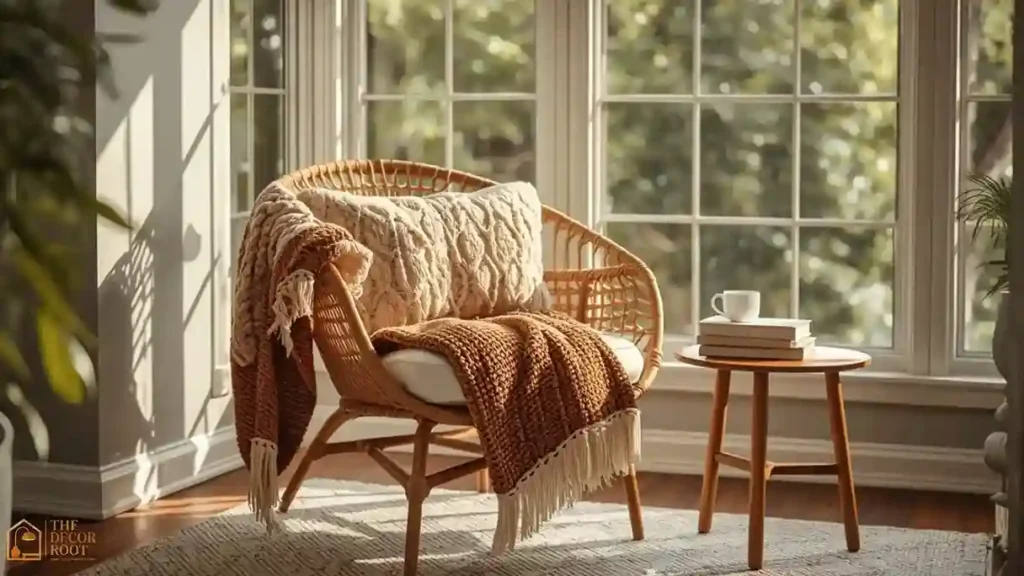
🛒Rattan Accent Chair For Extra Sunroom Seating
A rattan or wicker accent chair with a warm cushion, angled toward the main seating, adds a textural second seat that catches fall light beautifully and encourages relaxed conversation.
(paid link)
If your sunroom’s current seating is limited to one piece, a rattan or wicker accent chair adds a second seat that photographs beautifully in fall light thanks to the material’s natural woven texture and the shadow patterns it casts. Pair it with a warm cushion and a single throw pillow rather than over-styling it, letting the chair’s natural texture stay the visual focus. Position it at an angle to the main seating rather than directly facing it, which creates a more relaxed, conversational layout than a stiff face-to-face arrangement.
14. Add Warm-Toned Table Lamps for Early Evening Ambiance
Fall days get shorter fast, and a sunroom that only works during peak daylight hours loses a lot of its usefulness once the sun sets earlier. Add one or two table lamps with warm-toned (not cool white) bulbs positioned near the main seating area, so the room transitions smoothly from natural fall light in the afternoon to warm artificial light in the early evening without a jarring shift in mood. Choose lamp bases in wood, ceramic, or rattan to stay consistent with the room’s other material choices.
15. Style an Open Shelf or Console with a Curated Fall Vignette
Rather than scattering fall decor throughout the whole sunroom, concentrate a few pieces faux stems in a stoneware vase, a stack of books, a small candle on one console or open shelf as a single curated vignette. This concentrated approach tends to look more intentional than spreading a little decor everywhere, and it gives your eye one clear focal point to land on when entering the room, which matters even more in a bright, open sunroom where there’s less wall space competing for attention than in a typical enclosed room.
16. Add a Small Outdoor-Rated Rug for the Entry Point of the Sunroom
If your sunroom connects directly to an outdoor patio or deck, a small transition rug at that threshold helps ground the space and signals a shift from outdoor to semi-indoor zone. Choose an outdoor-rated rug in a warm, simple pattern that can handle moisture and foot traffic, since this specific spot gets more wear than the rest of the room. This small addition also helps visually anchor a space that can otherwise feel like it’s floating between indoor and outdoor without any clear delineation.
17. Add Warm-Glow String Lights Along a Window Frame or Beam
EDITOR’S PICK
🛒Warm-Glow String Lights For Sunroom Window Or Beam Styling
Warm white LED string lights draped along a window, beam, or bookshelf extend cozy evening light without tools, offering low-cost continuity with fall’s golden mood.
(paid link)
String lights aren’t just for outdoor patios draped along a window frame, exposed beam, or the top of a bookshelf; warm white LED string lights extend the room’s warm-light mood into the evening once natural light fades. Choose warm white rather than cool white or multicolor, since the goal is continuity with the golden fall light theme running through the rest of the room, not a separate decorative statement. This is one of the lowest-cost additions on this entire list and one of the easiest to install without any tools.
18. Add a Woven Pouf as Flexible Extra Seating or a Footrest
A woven or rattan pouf tucked near the main seating area gives you flexible extra seating for guests or a footrest for solo lounging, without committing floor space to a full second chair. Choose a natural fiber material that continues the textural theme, and position it where it can slide easily between “footrest” and “extra seat” depending on the day. This is a genuinely practical addition for a room that tends to see more casual, spontaneous use in fall as people gather for shorter, cozier stretches of time.
19. Add a Stack of Fall-Toned Throw Pillows in Varying Textures
Beyond a single accent pillow, build a small stack of two or three pillows in different textures: a knit, a boucle, and a subtle woven pattern, all in the same warm color family. This layered-texture approach (rather than one flat pillow) reads as considerably more styled in photos and in person, and it gives the main seating area more visual weight to balance against the openness of a typically window-heavy sunroom.
20. Frame the Window View with a Simple Botanical or Landscape Print
If wall space allows, hang one warm-toned botanical or landscape print near, but not blocking, a window, so it echoes the outdoor view rather than competing with it. This works especially well if your sunroom overlooks trees that are actively changing color in fall, since the print can pick up similar warm tones and create a subtle visual bridge between the actual outdoor view and the room’s interior styling.
21. Add a Tiered Plant Stand for Multiple Small Plants Near the Brightest Window
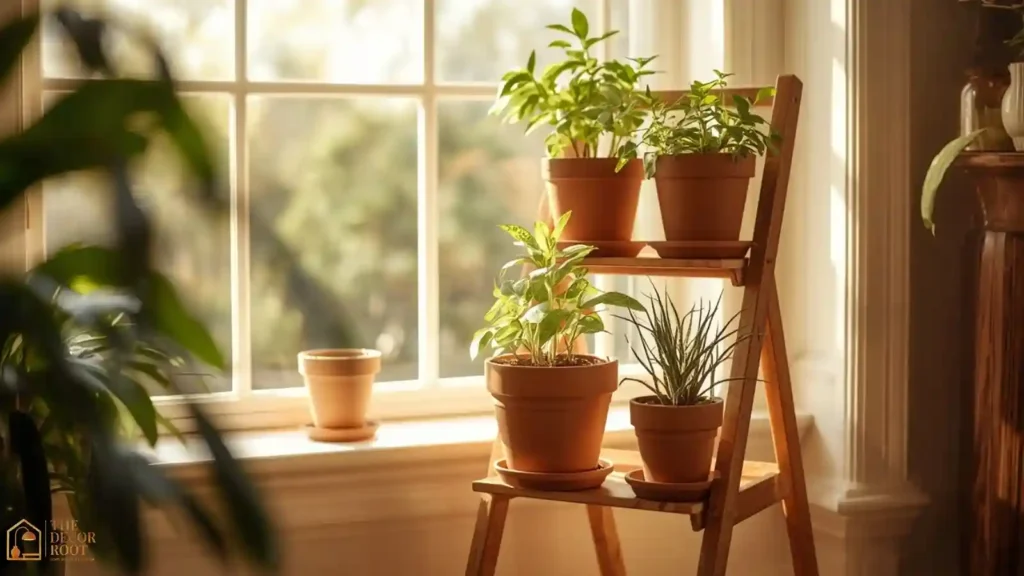
EDITOR’S PICK
🛒Tiered Wood Plant Stand For Grouping Small Plants Near Sunroom Light
Tiered plant stand groups plants for layered light and lush impact in sunrooms.
(paid link)
A three-tier wood plant stand near your brightest window lets you group several smaller plants together for maximum visual impact without spreading pots across the whole room individually. Grouped plants at varying heights create a more lush, layered look than the same number of plants placed separately, and the tiered structure means every plant still gets adequate light exposure. This is a strong final addition for a sunroom specifically, since it makes full use of the exact resource, direct light, that makes a sunroom different from every other room in the house.
Quick Action Plan
- Start by simply re-angling your main seating toward the afternoon light (#1); it’s free and takes five minutes, but it immediately changes how much the room gets used.
- From there, prioritize the rug (#2) and window treatment swap (#3), since flooring and window coverings have the largest surface area of any change on this list and set the tone for everything layered on top.
- Add the throw and pillow layering (#8, #19) next since those are the lowest-cost, highest-visual-impact items, and finish with lighting (#14, #17) so the room stays usable once the sun goes down earlier in the fall.
Frequently Asked Questions
Conclusion
Fall light in a sunroom is a genuinely limited-time resource, lower, warmer, and softer than summer’s, and gone earlier each day as the season goes on, so the goal of every idea on this list is simply making sure the room is set up to actually enjoy it while it’s here.