22 Exterior House Color Trends for 2026 (That Actually Work)
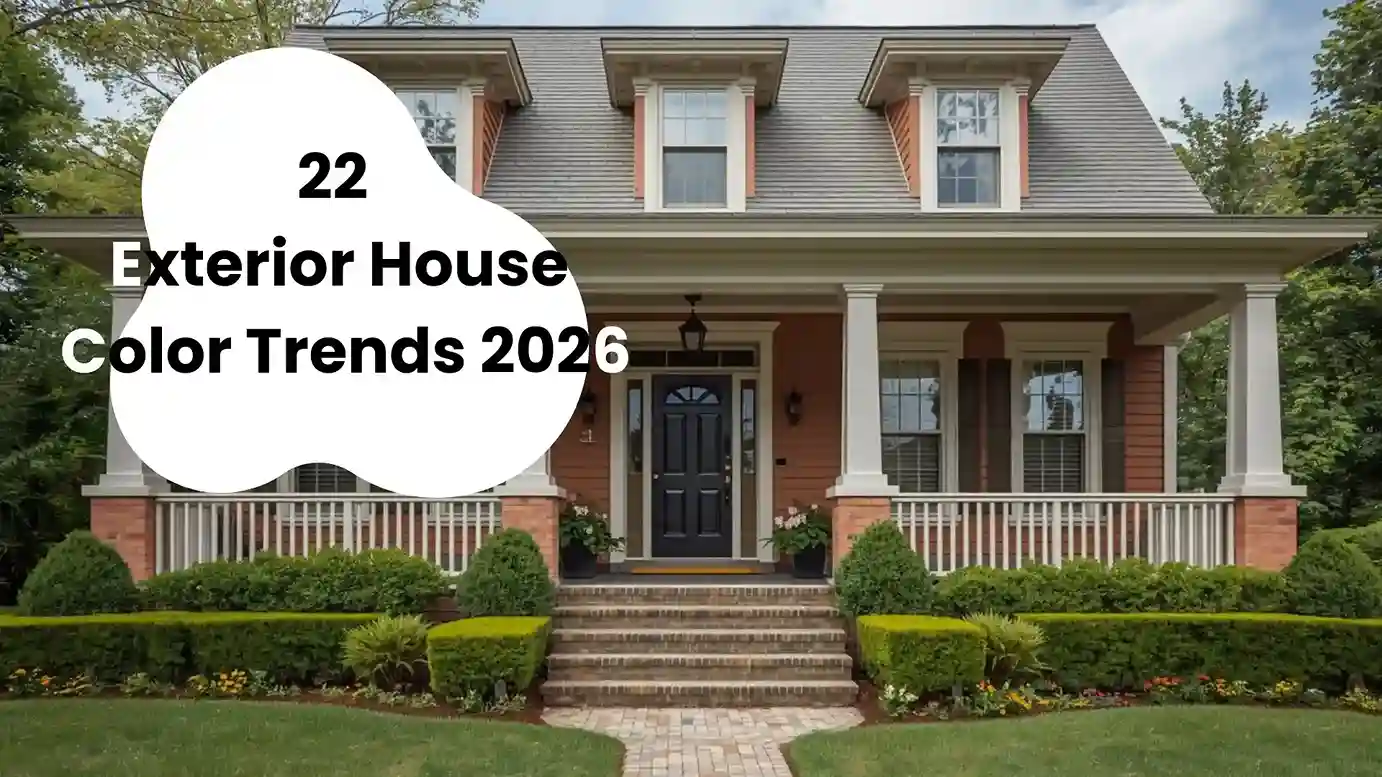
If your home’s exterior is still wearing the same greige it had five years ago, 2026 might be the year to make a change, and the options have never been more exciting. Exterior house color trends 2026 are leaning boldly into warmth, character, and individuality. Muted greens, earthy reds, deep charcoals, and unexpected blues: this year’s palette moves away from the cold minimalism of the previous decade and toward colors that feel rooted, welcoming, and alive. Whether you’re planning a full repaint or just swapping out a front door, these 22 trends will show you exactly where curb appeal is heading in 2026, with real pairing advice for trim, hardware, and architectural style baked into every single one. Exterior color trends are some of the most actionable home decorating ideas you can follow in a single weekend with a paintbrush, and the right 2026 shade can completely change how a property reads from the street, often before you’ve touched a single piece of landscaping or furniture.
This post contains affiliate links. As an Amazon Associate, I earn from qualifying purchases. If you buy through these links, I may earn a small commission at no extra cost to you.
The Real Reason This Works
The overarching thread in 2026 exterior color trends is a cultural pivot toward warmth and authenticity. After years of cool grays and stark whites dominating the market, homeowners and designers are gravitating toward colors that feel connected to nature: terracotta, sage, olive, rust, warm taupe, and deep forest tones. This shift mirrors the broader wellness-and-nature movement that’s already reshaped interiors, now finally making its way outside. Curb appeal isn’t just vanity, either: it directly affects your home’s resale value, your neighbors’ impression of the street, and your own daily sense of pride pulling into the driveway. Studies on real estate appraisals consistently show exterior color is one of the top factors in first impressions and perceived value, and painting an exterior remains one of the highest-ROI home improvements available, often returning more than its resale cost. Knowing which exterior house color trends in 2026 are leading the market puts you ahead of the curve before your neighbors catch on. Color is the single most immediate exterior upgrade available, full stop. Browse all our outdoor decorating ideas for fencing, decking, landscaping, and lighting that work alongside your new palette.
1. Warm Terracotta & Clay
Terracotta is the color of the moment, and for good reason: it feels simultaneously ancient and completely fresh, like it was pulled straight from sun-baked Mediterranean hillsides yet somehow still reads as current. It works beautifully across stucco, brick, and wood siding alike, which is part of why it’s showing up on such a wide range of architectural styles this year. Pair it with crisp white trim for a clean Southwestern feel, or lean into warm cream and bronze hardware for a fuller Mediterranean vibe with more depth. On stucco especially, terracotta catches afternoon light in a way that shifts subtly through the day, adding a dimension that flatter colors can’t match. Before committing to a full repaint, order exterior paint sample kits or peel-and-stick paint swatches so you can watch how the shade behaves in your own light. Terracotta can read noticeably more orange or more rust-red depending on your home’s sun exposure and surrounding tree cover.
EDITOR’S PICK
🛒Exterior Paint Sample Kits
Terracotta brings ancient, Mediterranean warmth to stucco, brick, or wood; pair with white or cream trim, test samples in your own light, as it shifts orange or rust‑red with exposure.
(paid link)
The boldest 2026 exterior trends are being led by alternative home styles that never had to play by traditional suburban color rules. These bold exterior design ideas from the barndominium world show how dark, high-contrast, and mixed-material palettes are influencing mainstream residential design, and terracotta pairs especially well with the black metal roofing and warm wood accents common to that style.
2. Sage Green With Warm Undertones
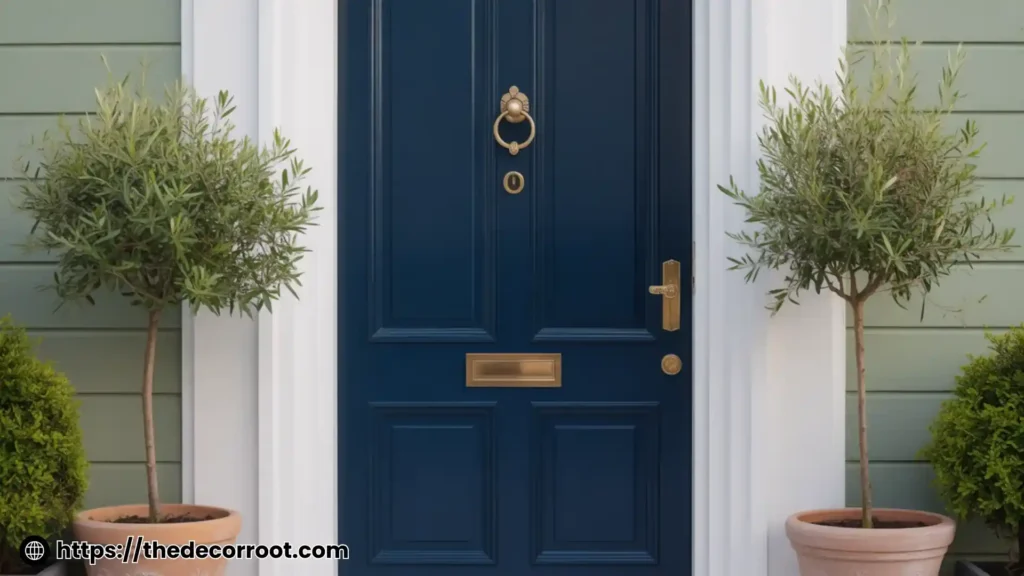
Move over, cool sage: 2026’s favorite green leans yellow-warm rather than gray-cool, and that subtle shift changes everything about how it reads on a house. Where cool sage can feel a little clinical or spa-adjacent, warm sage feels earthy, lived-in, and grounded, almost like it grew there rather than being applied. It shows up most often on craftsman bungalows, farmhouse builds, and traditional colonials, where its softness balances out sharper architectural lines. Pair it with natural wood accents on the porch think unfinished cedar posts or a stained front door plus cream trim and dark bronze hardware for a palette that feels timeless rather than trend-chasing. One detail worth noting: warm sage can shift subtly toward olive in low light and toward a fresher mint in direct sun, so it’s worth observing your test patch at both morning and evening light before finalizing.
3. Deep Charcoal With Warm Undertones
Not quite black, not quite gray, this nuanced deep charcoal is one of the most sophisticated exterior house color trends 2026 offers, and it’s become a favorite among designers specifically because it avoids the starkness of true black without losing any of the drama. It reads as bold and intentional from the street but never harsh or cold, which makes it far more livable day-to-day than a true matte black exterior. Pair it with bright white trim for maximum contrast and a crisp, almost architectural look, or go with warm cream trim instead for a softer, more traditional feel that still keeps the drama of the charcoal body. This color performs especially well on modern farmhouse and contemporary builds with clean lines, where the deep tone emphasizes the architecture’s geometry rather than competing with it.
4. Off-White With Warm Creamy Undertones
Pure white is stepping aside for its warmer, creamier cousin in 2026; think shades like Benjamin Moore’s White Dove or Sherwin-Williams Alabaster applied across the full exterior rather than just the trim. This warm off-white works on virtually any architectural style, from colonial to craftsman to contemporary, and it instantly feels more welcoming than a stark, cool white that can read as sterile in bright daylight. The key difference from a standard builder-grade white is the underlying warmth: these shades carry a whisper of yellow or beige that keeps them from looking flat or clinical against green landscaping. It’s also one of the most forgiving trend colors on this list for resale purposes, since it pairs with literally any trim, shutter, or door color a future buyer might want to add.
5. Dusty Olive Green
This muted, complex green has one foot in the earth and one in the army, and that tension is exactly what makes it interesting rather than expected. Dusty olive works especially well on Tudor, craftsman, and farmhouse-style homes, where its slightly grayed-down tone complements exposed timber and stone accents instead of fighting them for attention. Pair it with black hardware and a natural cedar shake or dark walnut wood accent somewhere on the facade a garage door, a porch ceiling, a set of shutters for a look that feels deeply rooted in the landscape rather than applied on top of it. Olive also tends to age gracefully as paint weathers slightly over the years, fading toward a softer sage rather than looking patchy or dated the way brighter greens sometimes can.
6. Warm Mocha & Brown Tones
Brown is officially back, and it’s more refined than ever in exterior house color trends for 2026. Warm mocha, dark walnut, and rich chocolate-brown tones on board-and-batten or shingle exteriors evoke a cabin-luxury feel that’s becoming increasingly popular even in suburban neighborhoods that would never have considered brown a decade ago. The trick to making brown feel intentional rather than dated (think 1970s ranch houses) is in the hardware and trim pairing: matte black or brushed brass reads current, while dull builder-grade bronze can drag the whole look backward. Update your front door hardware alongside the repaint for the fastest visual upgrade: door hardware sets in matte black or brushed brass instantly modernize a brown exterior, along with a matching mailbox refresh so the small details don’t undercut the bigger investment.
EDITOR’S PICK
🛒Door Hardware Sets
Warm mocha, walnut, and chocolate brown exteriors with matte black or brass hardware modernize cabin-luxury homes; update door hardware and mailbox together for a cohesive refresh.
(paid link)
7. Faded Red Brick (The Natural Route)
Instead of painting over brick, 2026 is celebrating its natural tone but with updated trim and hardware that make the classic red brick look intentional and current rather than simply untouched. This is a genuinely budget-smart trend, since it requires zero exterior repainting; all the transformation comes from what surrounds the brick. Update the front door to deep navy or hunter green, swap old builder-grade brass fixtures for matte black, and add fresh shutters in a complementary dark tone to transform a tired-looking brick exterior in a single weekend. This approach works particularly well for anyone weighing whether to paint brick at all, since painted brick is notoriously difficult and expensive to reverse; leaning into the natural material while modernizing everything around it sidesteps that risk entirely while still delivering a real curb-appeal shift.
8. Navy Blue With White Trim
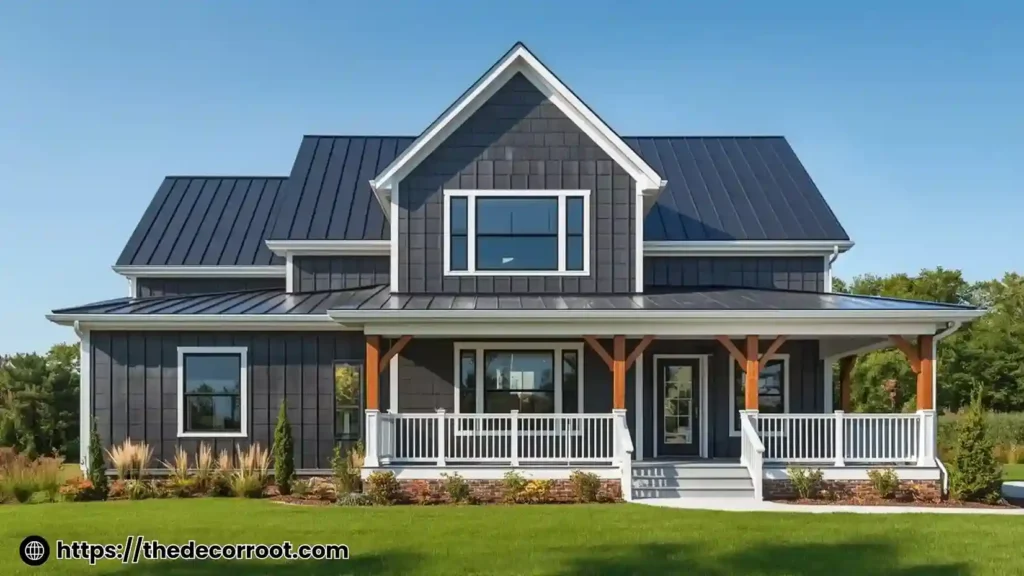
A perennial classic that’s surging in popularity again as homeowners seek timeless choices over fleeting trends. Deep navy feels classic and instantly recognizable on colonial and Cape Cod-style homes especially, where its crisp formality matches the architecture’s symmetry. Pair it with bright white trim for the traditional, high-contrast look, and finish with a red, mustard yellow, or natural wood front door for a pop of personality against all that navy and white. Navy also has a practical advantage worth knowing: it hides dirt, pollen, and weathering noticeably better than lighter colors, which matters if your home sits near trees or in a dustier climate. It photographs exceptionally well too, which is part of why it consistently performs among the most-saved exterior colors on Pinterest year after year.
9. Warm Putty & Greige 2.0
While cool greige is fading fast from favor, warm putty, a beige that leans rosier and more golden than its predecessor, is one of the most wearable exterior house color trends 2026 has to offer. It works in virtually any climate and lighting condition, photographs beautifully in both overcast and bright sun, and pairs with almost any trim color from bright white to warm cream to matte black. This is the trend to reach for if you want something that feels current without risking a dated look in five years, since warm neutrals tend to age far more gracefully than the stark cool grays that dominated the last decade. It’s also one of the safest choices for resale-focused homeowners, since it appeals to the widest range of buyer taste.
10. Hunter Green
Deep, lush hunter green feels like the English countryside translated into an American suburban context, and it’s having a real resurgence in 2026. On wood siding or brick, hunter green reads rich and grounded rather than dark or heavy, especially against a backdrop of mature landscaping. This color trends particularly well on Victorian, craftsman, and new-build farmhouse styles, where its depth complements decorative trim work instead of flattening it visually. Hunter green also has a practical seasonal advantage: it looks equally striking against summer greenery and winter’s bare branches, so the exterior never feels mismatched to its surroundings the way some trend colors can during a change of season.
11. Pale Yellow Cottage Tones
A soft butter or wheat yellow is quietly trending on cottage-style and Victorian homes in 2026 not the loud lemon-yellows of the 1990s, but muted, almost greyed-down pale yellows that feel warm and cheerful without tipping into loud or juvenile territory. This is a genuinely underused trend right now, which means a pale yellow exterior tends to stand out on a street full of neutrals in a good way, without reading as an outlier the way a bright primary yellow would. It pairs beautifully with white trim, black shutters, and a deep green or navy front door for contrast. Before starting any exterior repaint project, a quality paint brush and roller kit makes a real difference in finish quality, especially on trim and shutter detail work where a cheap brush leaves visible streaking.
EDITOR’S PICK
🛒Exterior Paint Brush And Roller Kit
Muted butter yellow is a warm, underused 2026 trend for cottage and Victorian exteriors; pair with white trim and a deep green or navy door, using quality brushes to avoid streaky detail work.
(paid link)
12. Washed Denim Blue
A desaturated, almost faded medium blue is emerging as one of the most unexpected exterior house color trends 2026 has brought forward. It feels like sun-bleached coastal wood even on homes nowhere near the coast, wears beautifully on shingle and clapboard siding where its texture catches the slight variation in tone, and pairs stunningly with white trim and soft copper accents like gutters or light fixtures. Washed denim blue tends to photograph differently depending on the time of day: cooler and more gray at midday, warmer and softer at golden hour, which is part of its appeal for anyone who wants an exterior that feels a little different each time they see it.
13. Black With Warm Trim
All-black or near-black exteriors are having a real moment in contemporary and modern farmhouse architecture, but the execution matters enormously here. To keep an all-black exterior from feeling cold or severe, pair it with warm cream or aged white trim rather than pure stark white, and add warm wood garage doors or porch elements to soften the overall effect. Black also demands more from its landscaping than most colors; bare black siding against bare winter branches can look stark, so homes that commit to this trend tend to invest more heavily in evergreen structure and warm-toned hardscaping to balance it year-round. Done well, though, few colors on this list make as strong or memorable a first impression.
14. Desert Sand & Adobe
Warm sandy tones inspired by southwestern landscapes feel completely at home in any climate in 2026, not just the desert Southwest where they originated. This is a particularly smart choice in sun-belt climates specifically, where it naturally reflects the surrounding landscape rather than fighting it, and where lighter colors also help manage heat absorption on the exterior walls. Pair it with turquoise or cobalt blue accents on the door and in planted pots for a palette that feels authentic and genuinely joyful rather than themed or costume-like. This combination works because sand and adobe tones are inherently neutral enough to let a bold accent color do all the personality work, which keeps the overall look from feeling overdone.
15. Moody Plum & Aubergine
For the bold homeowner, deep plum or eggplant on a Victorian or craftsman exterior is a genuine show-stopping choice among 2026’s house color trends, and yes, it works, especially when balanced carefully with crisp cream trim and brass or antique bronze hardware to keep the overall effect elegant rather than heavy. Plum performs best on homes with substantial architectural detail (gingerbread trim, decorative brackets, multi-pane windows) since the color’s depth makes those details pop rather than disappear the way they might against a flatter neutral. This is not a color for the risk-averse, but on the right home with the right trim pairing, it consistently ranks among the most complimented and most photographed exteriors in its neighborhood.
16. Warm Slate Blue-Gray
This complex color lives somewhere between blue, gray, and green, and that ambiguity is exactly why it works so well; it reads differently in different lights throughout the day, always looking intentional and sophisticated rather than simply gray. It’s especially popular on colonial and Cape Cod homes paired with white trim and dark shutters, where its subtlety lets the architecture’s symmetry take center stage. For anyone tackling a full exterior repaint themselves, an exterior paint sprayer dramatically speeds up coverage on larger wall sections compared to rolling by hand, while brushes stay reserved for trim and detail work a combination that professional painters use for exactly this reason.
EDITOR’S PICK
🛒Exterior Paint Sprayer
This blue‑gray‑green hue shifts beautifully in changing light, suits Cape Cod exteriors with white trim and dark shutters, and pairs an exterior sprayer for walls with brushes for trim.
(paid link)
17. Aged Copper & Mint-Adjacent Greens
The color of a vintage copper pot left out in the rain is a complex, slightly grayed green-teal that feels like it genuinely belongs on a historic home rather than a modern reproduction of one. This is a nuanced, personality-forward exterior house color trend for 2026 that works especially well on Victorians and older colonials with existing period detail, where a more expected sage or hunter green might feel too safe. It’s a harder color to sample accurately from a paint chip alone, since its complexity only really reveals itself at full scale against real sunlight; a large test patch is worth the extra effort here more than almost any other color on this list.
18. Pale Blush Pink (Tonal & Muted)
Before you scroll past assuming this isn’t for you, the 2026 blush exterior is nothing like the pastel houses of the 1950s. Modern exterior blush is heavily desaturated, almost white with just a warm rosy undertone, and it looks genuinely striking on stucco Mediterranean or Southwest-style homes where warm, sun-washed tones are already architecturally at home. The desaturation is what keeps it sophisticated rather than sweet; a true bubblegum pink would look costume-like on a house, but this muted version reads more like weathered clay or aged plaster. Pair it with black or bronze window frames and natural wood accents to keep the overall palette grounded and adult rather than precious.
19. Two-Tone Body and Trim in the Same Family
Instead of high contrast, a tonal two-tone approach where the body and trim are the same color family but different values- one lighter and one darker is one of the most sophisticated exterior house color trends 2026 designers are specifying for clients right now. Think a dark olive body paired with a medium sage trim, or a deep charcoal body against a mid-gray trim, rather than the classic dark-body-white-trim formula. This approach reads as more cohesive and more expensive-looking than high contrast, since the eye reads the whole exterior as one considered palette rather than two competing decisions. It’s a particularly strong choice for homes with less architectural detail, since the tonal shift alone creates visual interest without needing ornate trim work to lean on.
20. Bright White Farmhouse (Refreshed)
True bright white isn’t going anywhere on farmhouse-style homes in 2026, but this year refreshes the formula with better, less expected pairings: black metal roofing, warm cedar porch elements, and dark navy or forest green shutters instead of the tired all-white-everything approach that dominated modern farmhouse builds for the past several years. The white itself hasn’t changed much, but everything around it has gotten warmer and more textural, which keeps the classic farmhouse look from feeling flat or overly done. Homeowners updating an existing white farmhouse exterior can often skip repainting the body entirely and get most of this refresh simply by swapping shutter color and adding warm wood accents to the porch.
21. Rust & Iron Red
A deep, slightly muted iron-red or rust that carries more warmth than traditional barn red is one of the bolder exterior house color trends 2026 brings to the table. On brick-and-shingle combination homes or traditional colonials, it feels distinguished and genuinely distinctive in a sea of greige and off-white that still dominates most neighborhoods. Rust performs especially well against green landscaping, where the color relationship (roughly complementary on the color wheel) makes both the house and the plantings look more vivid without either fighting for attention. It’s a strong option for anyone who wants their home to stand out on the street without going as dark or dramatic as full black or deep plum.
22. Warm Stone & Natural Limestone Tones
Inspired by European country estates, warm stone tones in exterior house color trends 2026 are emerging as the sophisticated alternative to cold gray or flat beige. Think the color of Cotswold limestone: a warm, slightly golden off-white with sandy undertones that shifts subtly depending on the light. It looks equally at home on a modern new build or a traditional colonial, which is part of what’s driving its crossover popularity this year. Because warm stone sits in such a specific, narrow color range, getting the exact shade right matters more than usual. Exterior trim paint, color matching guides, and virtual paint-try-on tools are worth using together before committing, since a shade that’s even slightly too cool or too yellow can miss the intended stone effect entirely.
EDITOR’S PICK
🛒Color Matching Guides
Warm Cotswold‑inspired stone tones, shifting in light, suit both new and traditional exteriors; use color‑matching guides and virtual try‑on tools to get the exact shade right.
(paid link)
You don’t need a traditional home to follow 2026 color trends, either. These exterior transformation ideas show how manufactured and mobile home owners are applying these same trending palettes to completely reinvent their curb appeal, often on a fraction of a traditional repaint budget.
Quick Action Plan
- Before committing to any exterior color from this list, order at least three peel-and-stick samples or paint a two-by-two-foot test patch directly on your actual exterior wall; paint chips alone are never reliable enough for a decision this size.
- Watch that test patch at different times of day- morning, midday, and dusk– and ideally in both sunny and overcast weather, since several of 2026’s trending colors (warm slate, aged copper, terracotta) shift noticeably depending on the light.
- Take a walk or drive through your own neighborhood first, too, so your new color complements rather than clashes with what’s already on the street.
- If a full repaint feels like too big a commitment right now, start smaller: updating just the front door in one of this year’s trend colors is a low-risk way to test your appetite for a bigger change before you commit an entire weekend and budget to the full exterior.
You don’t need a traditional home to follow 2026 color trends; these exterior transformation ideas show how manufactured and mobile home owners are applying the same trending palettes to completely reinvent their curb appeal.
FAQs
Conclusion
From bold terracottas to tonal stone palettes, exterior house color trends 2026 offer something for every home style and personality. The overarching lesson this year? Color should feel personal and connected to the landscape, to the architecture, and to the people who live inside. Pick the trend that speaks to you, test it on your wall, and trust your instincts.
📌 Save this to your Curb Appeal Pinterest board; you’ll want to come back to these color ideas before you pick up a paintbrush!